The 'claw sign' in barium enema study favours the diagnosis of :
Among the following, which is the investigation of choice for evaluation of common bile duct (CBD)?
'Chain of Lakes' appearance due to sacculation with intervening short strictures of pancreatic duct is seen on:
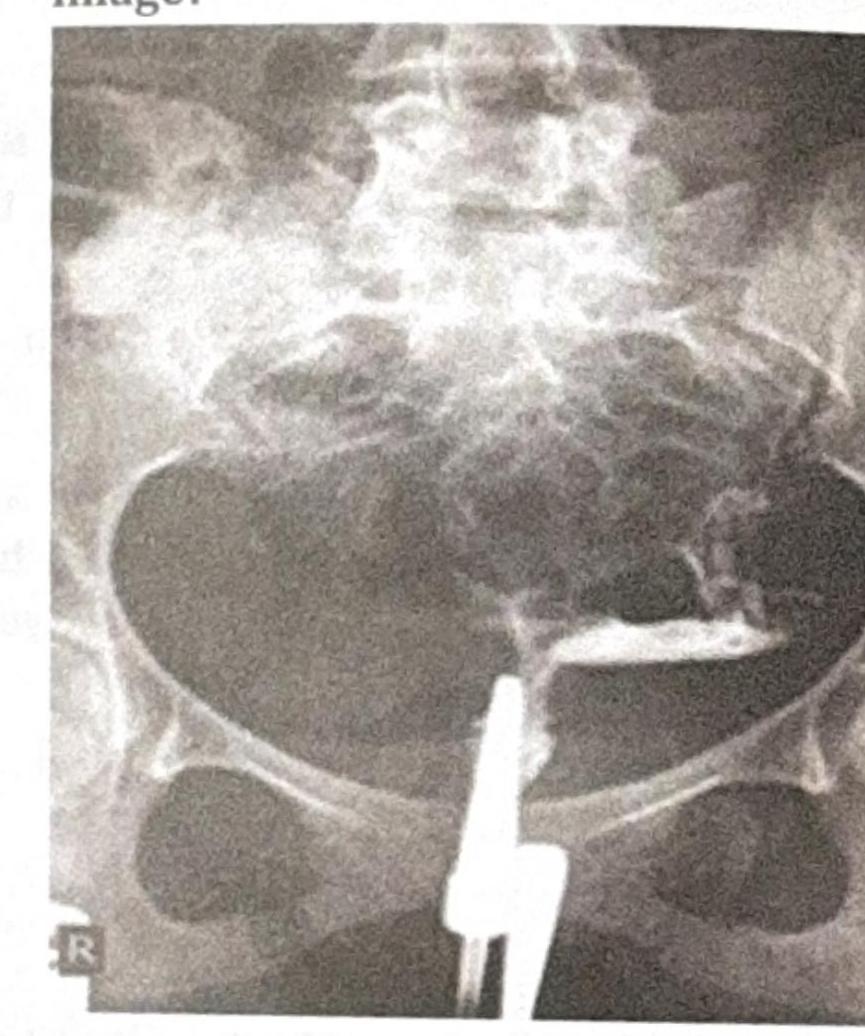
Identify the investigation being carried out in the image.
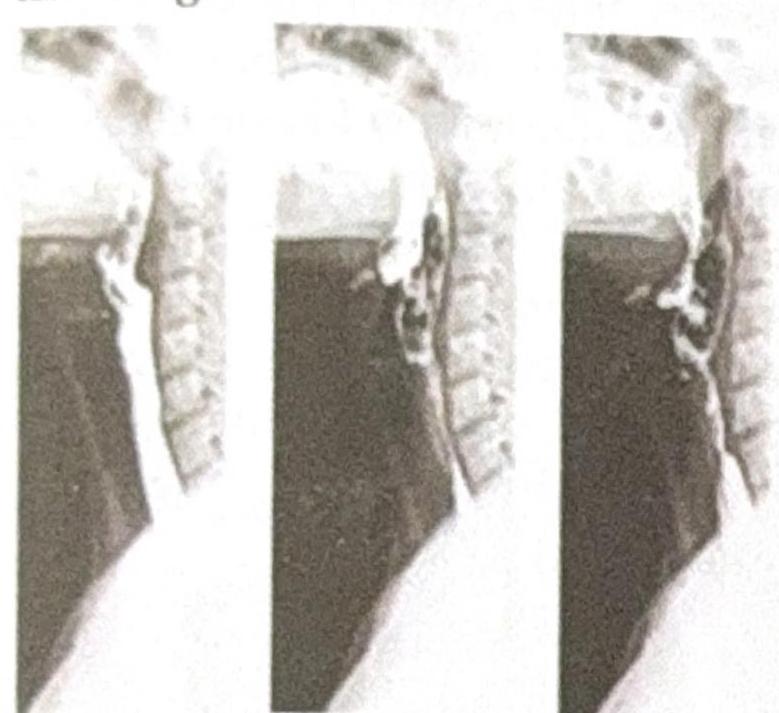
What is the modality of the test shown in the image?
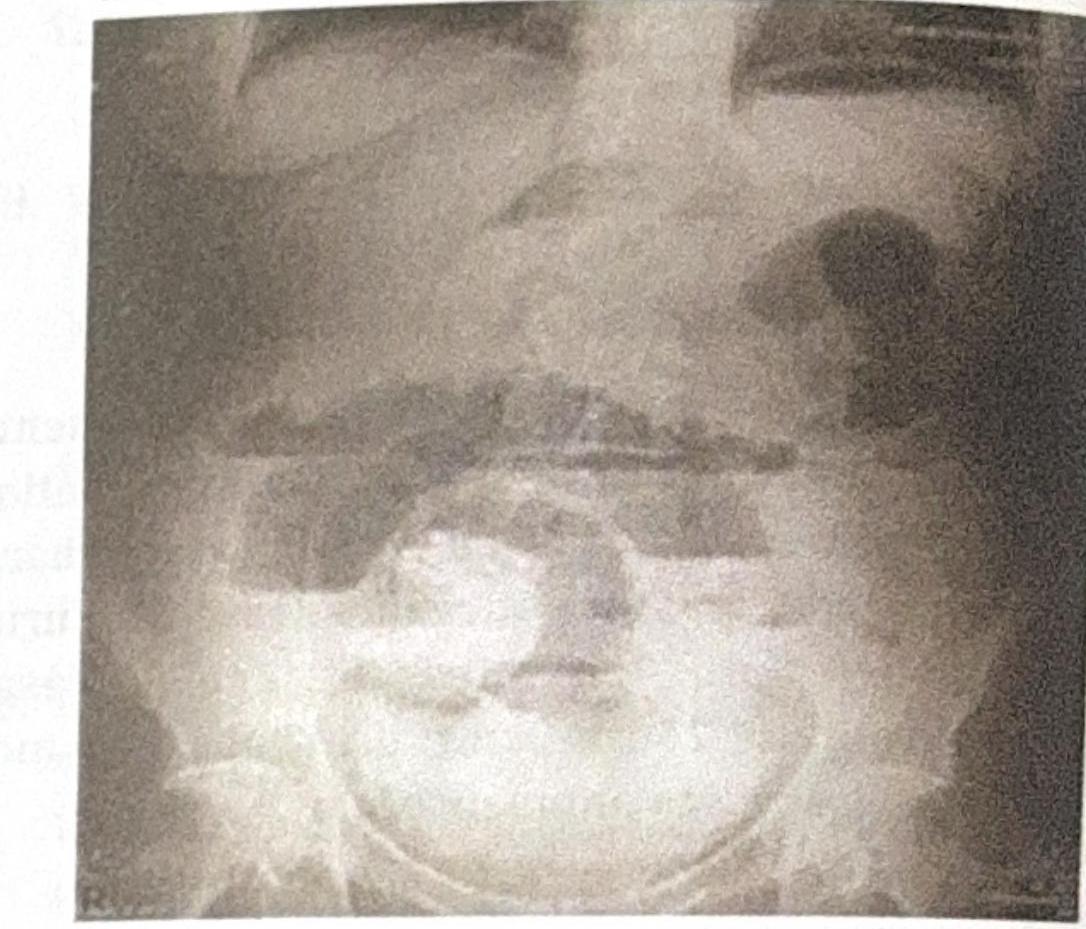
Examine the abdominal X-ray shown. What is the most likely diagnosis based on the findings?
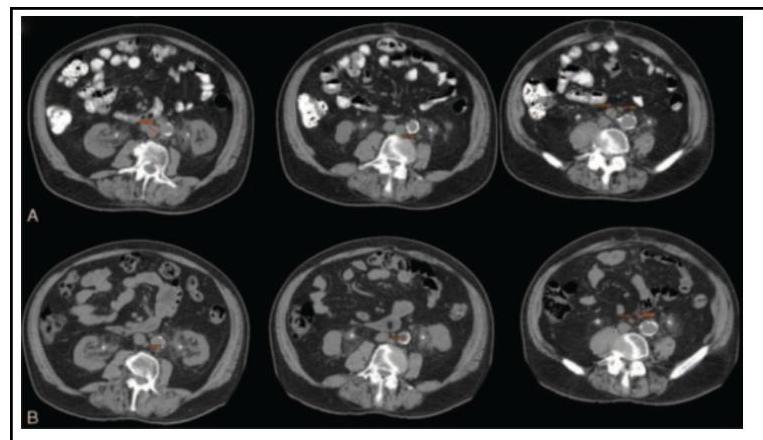
During rounds, your senior was discussing the given image. Which of the following investigations does this image represent?
A 71-year-old man is brought to the emergency department because of severe, progressive left leg pain and tingling for 8 hours. The symptoms began while he was watching television. For several months, the patient has noticed calf cramping when going for long walks, as well as occasional foot tingling and numbness, but did not seek medical attention. He has no history of recent injuries. He has poorly-controlled hypertension, hyperlipidemia, type 2 diabetes mellitus, and osteoarthritis. He smoked one pack of cigarettes daily for 35 years but quit 15 years ago. He drinks three beers every night. Current medications include lisinopril, metoprolol succinate, atorvastatin, metformin, and ibuprofen. He appears to be in severe pain and is clutching his left leg. His temperature is 37.4°C (99.3°F), pulse is 110/min, respirations are 18/min, and blood pressure is 163/94 mm Hg. The lungs are clear to auscultation. There is a harsh II/VI systolic ejection murmur best heard at the right upper sternal border. The abdomen is soft and nontender. The left leg is cool to the touch with decreased popliteal, posterior tibial, and dorsalis pedis pulses. There is 5/5 strength on left hip, knee, and ankle testing. The left hip, knee, and ankle show no gross effusion, erythema, or tenderness to palpation. The remainder of the examination shows no abnormalities. Which of the following is most likely to confirm the diagnosis?
Which of the following is a gold standard investigation for diagnosis of renal stone?
The dye used for OCG is:
Explanation: ***Intussusception*** - The **"claw sign"**, or sometimes called the **"crescent sign"** or **"meniscus sign,"** on a barium enema is indicative of intussusception, where the contrast material fills the space between the intussusceptum and intussuscipiens, creating a claw-like appearance. - This sign represents the barium outlining the leading edge of the **intussusceptum** as it telescopes into the more distal bowel. *Sigmoid volvulus* - Sigmoid volvulus typically presents with a **"coffee bean sign"** or **"omega loop sign"** on plain abdominal radiographs due to the massively dilated, air-filled sigmoid colon. - Barium enema in sigmoid volvulus would show a **"bird's beak"** or **"ace of spades"** appearance at the site of the twist, representing the tapered narrowing. *Crohn's disease* - Crohn's disease is characterized by various findings on barium studies, such as **"skip lesions,"** **cobblestoning**, and **ulcerations**, but not a claw sign. - Strictures, fistulas, and thickened bowel walls are also common in Crohn's disease, creating different radiological patterns. *Gastro colic fistula* - A gastrocolic fistula is an abnormal connection between the stomach and the colon, most commonly seen in advanced gastric carcinoma or Crohn's disease. - On barium enema or upper GI series, it would be identified by the direct visualization of contrast flowing from the colon into the stomach or vice versa, not by a claw sign.
Explanation: ***Correct: MRCP*** - **Magnetic Resonance Cholangiopancreatography (MRCP)** is the investigation of choice for comprehensive CBD evaluation - **Non-invasive technique** with high sensitivity (95%) and specificity (97%) for biliary pathology - **Provides detailed anatomical visualization** of the entire biliary tree without radiation or contrast agents - **Superior for detecting** CBD stones, strictures, and obstructions *Incorrect: CECT Abdomen* - Can visualize the CBD but provides less detailed luminal information compared to MRCP - More useful for assessing surrounding structures, tumor staging, and vascular involvement - Not the primary investigation of choice for biliary tree evaluation *Incorrect: HIDA scan* - Hepatobiliary Iminodiacetic Acid scan is a functional study that assesses gallbladder function and cystic duct patency - Tracks radioactive tracer flow but does not provide detailed anatomical imaging - Cannot visualize the cause of obstruction, making it unsuitable for primary CBD evaluation *Incorrect: Ultrasonography* - Initial screening modality that is readily available and non-invasive - Can detect CBD dilation and some stones but has limited sensitivity - Limited by bowel gas interference and operator dependency - Provides less detail than MRCP, especially for distal CBD segments
Explanation: ***ERCP*** - **Endoscopic Retrograde Cholangiopancreatography (ERCP)** is an invasive imaging technique that directly visualizes the bile and pancreatic ducts by injecting contrast, allowing for the classic "chain of lakes" appearance (dilatation and stricturing) seen in chronic pancreatitis. - This characteristic appearance on ERCP is a definitive sign of advanced **chronic pancreatitis**, indicating ductal irregularity, strictures, and dilations. *Ultrasonography* - While ultrasonography can show features of chronic pancreatitis like **pancreatic calcifications** and **ductal dilation**, it typically does not provide the detailed luminal view necessary to appreciate the "chain of lakes" pattern. - Its utility in visualizing the pancreatic duct can be limited by **bowel gas** and patient body habitus, making it less sensitive for intricate ductal changes. *CECT abdomen* - **Contrast-Enhanced Computed Tomography (CECT) of the abdomen** can identify pancreatic calcifications, **atrophy**, and **ductal dilation** in chronic pancreatitis but is generally not as precise as ERCP in delineating the intricate "chain of lakes" pattern within the duct itself. - CECT is more effective for assessing parenchymal changes and complications like **pseudocysts** rather than the fine ductal morphology. *Plain X-ray abdomen* - A plain X-ray of the abdomen primarily visualizes **calcifications** within the pancreas, which are a common feature of chronic pancreatitis. - However, it does not provide any information about the **ductal anatomy** or the "chain of lakes" appearance, as it is a 2D image without contrast in the ducts.
Explanation: ***Barium Swallow*** - The image shows a contrast material, characteristic of **barium**, flowing through the esophagus, captured as a sequence of X-ray images, which is the definition of a barium swallow study. - This **dynamic imaging** allows for evaluation of swallowing function and esophageal motility. *Fluoroscopy* - While a barium swallow uses **fluoroscopy** to visualize the movement of barium, fluoroscopy itself is the technique, not the specific investigation being performed. The image depicts the result of a specific type of fluoroscopic examination. - Fluoroscopy is a general term for real-time X-ray imaging, whereas "Barium Swallow" specifies the type of study being done on the upper GI tract. *X-ray after alkali ingestion* - This scenario would typically involve viewing the effects of **corrosive injury** to the esophagus, which would appear as mucosal damage, narrowing, or perforation. The image does not show these features; instead, it shows smooth passage of contrast. - There is no visible evidence of an acute or chronic injury pattern consistent with **alkali ingestion**, which often leads to severe burns or strictures. *X-ray after acid ingestion* - Similar to alkali ingestion, acid ingestion also causes **corrosive injury**, typically affecting the stomach more severely than the esophagus. The image does not demonstrate these pathological changes. - The smooth, unobstructed flow of contrast in multiple frames is indicative of normal esophageal function rather than the sequelae of corrosive ingestion.
Explanation: ***Hysterosalpingography*** - The image shows a **contrast-filled uterus and fallopian tubes**, characteristic of a **hysterosalpingogram (HSG)**. - An HSG uses **X-rays** and **radiopaque contrast media** to visualize the uterine cavity and assess fallopian tube patency. *Hysteroscopy* - **Hysteroscopy** involves direct visualization of the uterine cavity using a **fiber optic endoscope** inserted through the cervix. - It does not produce an X-ray image with contrast filling the fallopian tubes. *Laparoscopy* - **Laparoscopy** is a minimally invasive surgical procedure that involves inserting a **laparoscope** through an incision in the abdominal wall to view pelvic organs externally. - This image clearly depicts an internal view of the uterus and tubes through contrast, not an external, endoscopic view. *Saline infusion sonography* - **Saline infusion sonography (SIS)**, also known as sonohysterography, uses **ultrasound** imaging during the infusion of saline into the uterus. - While it assesses the uterine cavity, it is an ultrasound-based technique and does not involve X-ray contrast passing through the fallopian tubes, as seen in the image.
Explanation: ***Intestinal Obstruction*** - The abdominal X-ray demonstrates **distended loops of bowel** with **multiple air-fluid levels**, which are classic radiographic signs of intestinal obstruction. - The presence of multiple, wide air-fluid levels visible in a **stepladder pattern** is a hallmark of bowel obstruction. - **Valvulae conniventes** (transverse folds crossing the entire width of bowel) suggest **small bowel** involvement when visible with distension. *Small bowel ileus* - While ileus can show distended bowel loops, it typically presents with **gas distributed throughout the small and large bowel** without a clear transition point. - Ileus shows **less pronounced air-fluid levels** and lacks the characteristic stepladder pattern seen in mechanical obstruction. - The clinical context and presence of multiple distinct air-fluid levels favor mechanical obstruction over ileus. *Large bowel obstruction* - Large bowel obstruction would show **dilated colon** with **haustrations** (incomplete folds that don't cross the entire lumen). - The obstruction would typically show dilation **proximal to the obstruction** with collapsed bowel distally. - The pattern in this image is more consistent with small bowel or generalized intestinal obstruction rather than isolated large bowel obstruction. *Pneumoperitoneum* - Pneumoperitoneum (free air in the peritoneal cavity) appears as **air under the diaphragm** on upright films or as **Rigler's sign** (both sides of bowel wall visible) on supine films. - This is a sign of **bowel perforation**, not obstruction with air-fluid levels within the bowel lumen. - The air-fluid levels seen here are **intraluminal**, not free intraperitoneal air.
Explanation: ***CT scan*** - The image shows multiple **axial slices** with detailed cross-sectional anatomy of the abdomen, which is characteristic of a **Computed Tomography (CT) scan**. - CT scans provide excellent detail of both **soft tissues** and **bone structures** in cross-sectional format, which is the standard appearance of abdominal CT imaging. *X-ray* - Plain X-rays produce **2D projection images**, not the axial cross-sectional slices seen here. - While CT technology uses X-rays, in medical terminology **"X-ray"** refers to conventional radiographs, not cross-sectional imaging. *Contrast Dye study* - This is **not an imaging modality** but rather an enhancement technique used with various imaging methods. - **Contrast agents** improve visualization but don't define the type of investigation being performed. *Angiography* - Angiography is specifically designed to visualize **blood vessels**, often using contrast injection. - This image shows comprehensive **abdominal anatomy**, not the focused vascular imaging typical of angiographic studies.
Explanation: ***Ankle-brachial index*** - An **ankle-brachial index (ABI)** compares blood pressure in the ankles to blood pressure in the arms and is a primary diagnostic tool for **peripheral artery disease (PAD)**, which is strongly suggested by the patient's symptoms of acute limb ischemia superimposed on chronic claudication, risk factors, and physical exam findings. - A low ABI (<0.9) would confirm the presence of **occlusive arterial disease**, explaining the acute pain, coolness, and diminished pulses in the left leg. *Fibrin degradation products* - **Fibrin degradation products (FDPs)**, including **D-dimer**, are markers of **fibrinolysis** and are primarily used to diagnose or rule out **thrombotic events** like deep vein thrombosis (DVT) or pulmonary embolism (PE). - While an arterial occlusion might involve thrombosis, FDPs are not the most direct or specific test for confirming the diagnosis of **acute limb ischemia** caused by PAD. *Creatine kinase concentration* - **Creatine kinase (CK)** levels are elevated in cases of **muscle damage** or **rhabdomyolysis**, which can occur secondary to severe and prolonged acute limb ischemia, but it is not a diagnostic test for the underlying vascular condition itself. - An elevated CK would indicate **tissue necrosis**, which is a consequence of severe ischemia, rather than a diagnostic tool for confirming the presence of **arterial occlusion**. *Compartment pressures* - Measuring **compartment pressures** is indicated to diagnose **acute compartment syndrome**, a condition where increased pressure within a confined fascial space compromises circulation and nerve function. - Although severe ischemia can lead to muscle swelling and potentially compartment syndrome, the primary problem here is the **arterial occlusion itself**, and direct measurement of compartment pressures is not the initial or most appropriate test to confirm the underlying diagnosis of acute limb ischemia in this context.
Explanation: ***Helical CT with Non-contrast*** - **Non-contrast helical CT** (also known as CT KUB) is considered the **gold standard** due to its high sensitivity and specificity for detecting all types of urinary tract calculi, regardless of their composition. - It rapidly identifies stones, their location, size, and associated complications like **hydronephrosis**, without the need for IV contrast. *USG* - **Ultrasound** is a good initial screening tool and can detect larger stones and hydronephrosis, but its sensitivity is lower than CT, especially for smaller stones or those in the ureters. - Its diagnostic accuracy is highly **operator-dependent**, and it may miss stones obscured by bowel gas or bone. *Helical CT with contrast* - While helical CT is excellent, the use of **IV contrast** is generally avoided for routine stone detection as it can obscure the highly dense stones from the contrast-enhanced renal collecting system. - Contrast is primarily useful for evaluating **renal masses**, infection, or vascular abnormalities, not for primary stone diagnosis. *MRI* - **MRI** has limited utility in detecting typical renal stones because most calculi are not well-visualized on standard MRI sequences due to their lack of free water and low signal intensity. - It may be considered in specific populations, such as **pregnant women** or children, to avoid radiation exposure, but it is not the gold standard for stone detection.
Explanation: ***Iopanoic acid*** - **Iopanoic acid** is a common oral contrast agent used for **oral cholecystography (OCG)**. - It is an **iodinated organic acid** that is absorbed from the GI tract, concentrated in the liver, and excreted into the bile, allowing visualization of the gallbladder. *Sodium diatrozite* - **Sodium diatrizoate** is primarily used as an **intravenous contrast agent** for studies like excretory urography or CT scans. - It is not typically administered orally for OCG as it is not effectively absorbed and concentrated for gallbladder visualization. *Biligraffin* - **Biligrafin** (also known as sodium iodipamide) is an **intravenous cholangiographic agent**. - While it visualizes bile ducts, it is not an oral agent for direct gallbladder opacification as performed in OCG. *Meglumine iodothalamate* - **Meglumine iodothalamate** is an **intravenous ionic contrast agent** used for various angiographic and urographic procedures. - It is not suitable for oral administration in OCG due to its pharmacological properties and route of excretion.
Iodinated Contrast Media
Practice Questions
MRI Contrast Agents
Practice Questions
Ultrasound Contrast Agents
Practice Questions
Adverse Reactions to Contrast Media
Practice Questions
Management of Contrast Reactions
Practice Questions
Contrast-Induced Nephropathy
Practice Questions
Barium Studies
Practice Questions
Intravenous Urography
Practice Questions
Angiography Techniques
Practice Questions
Lymphangiography
Practice Questions
Contrast Administration Protocols
Practice Questions
Pretesting and Premedication
Practice Questions
Get full access to all questions, explanations, and performance tracking.
Start For Free