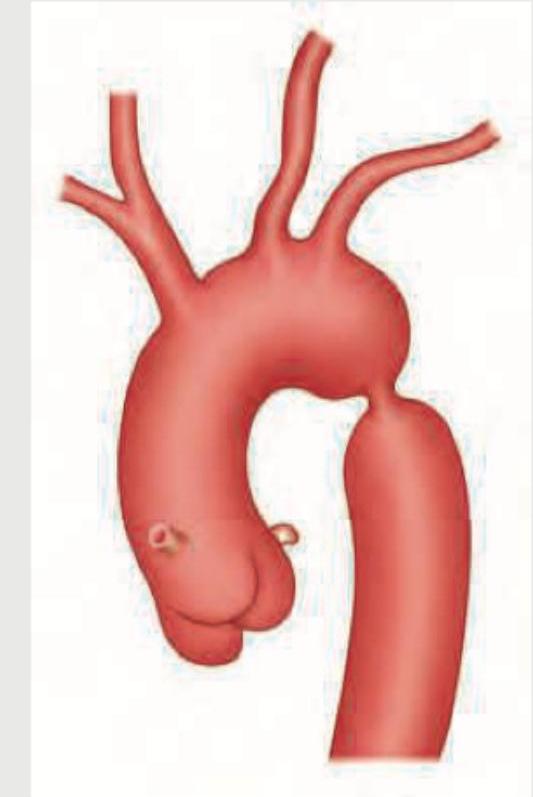
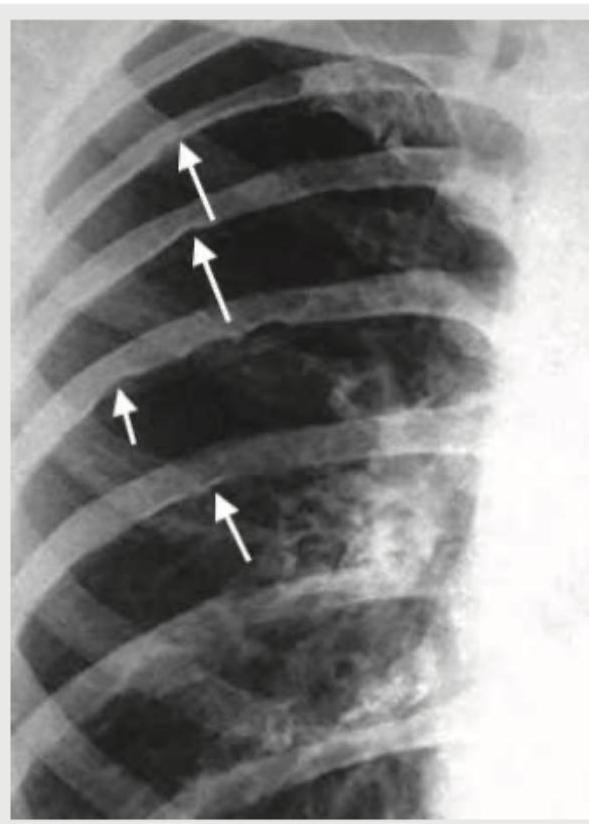
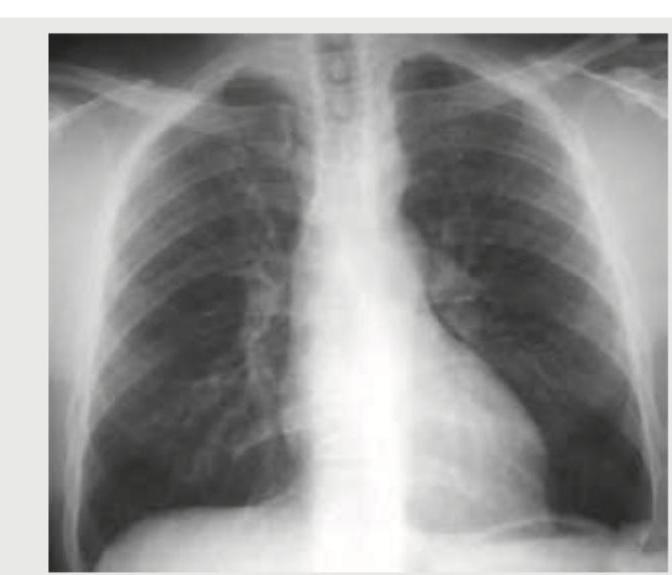
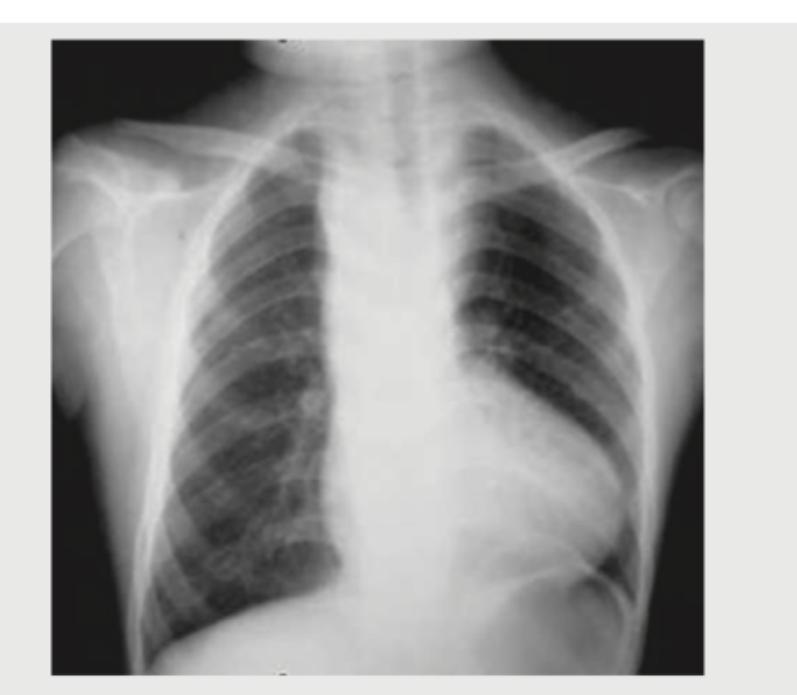
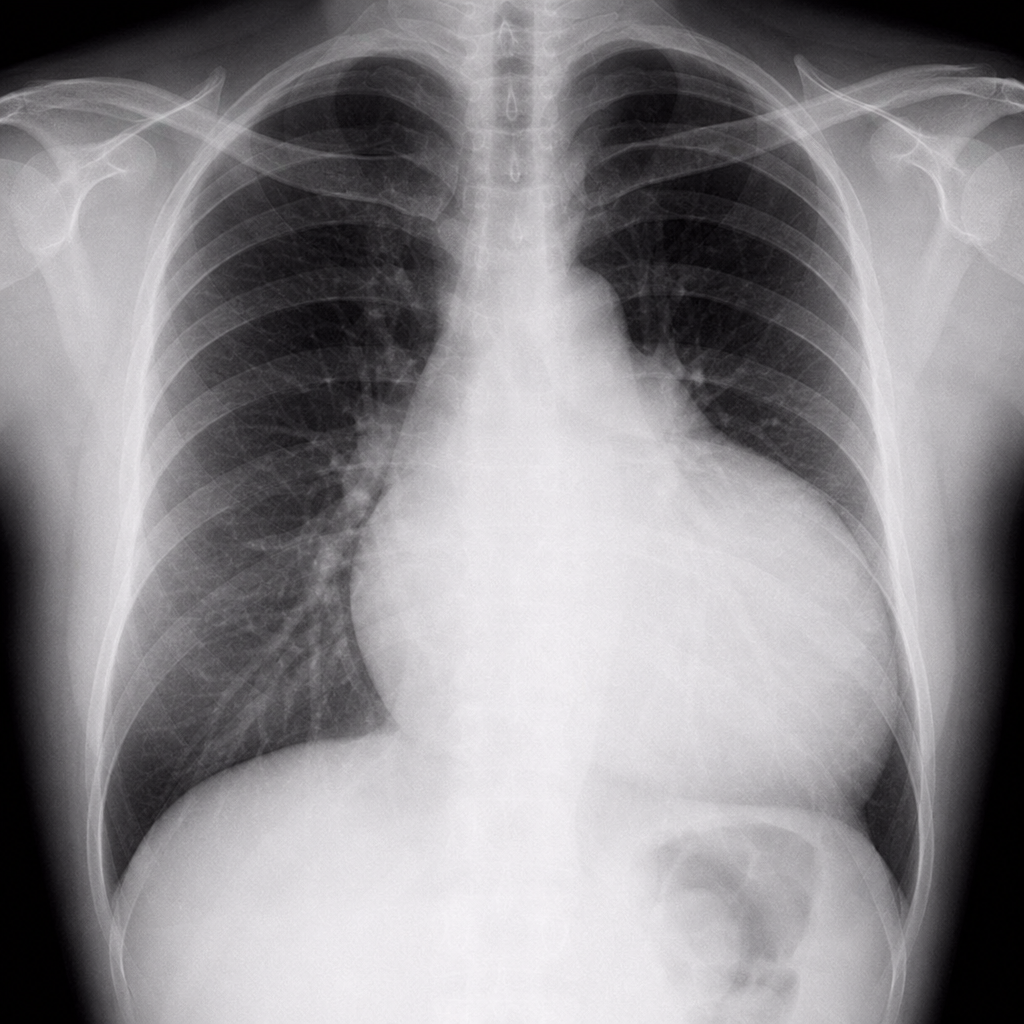
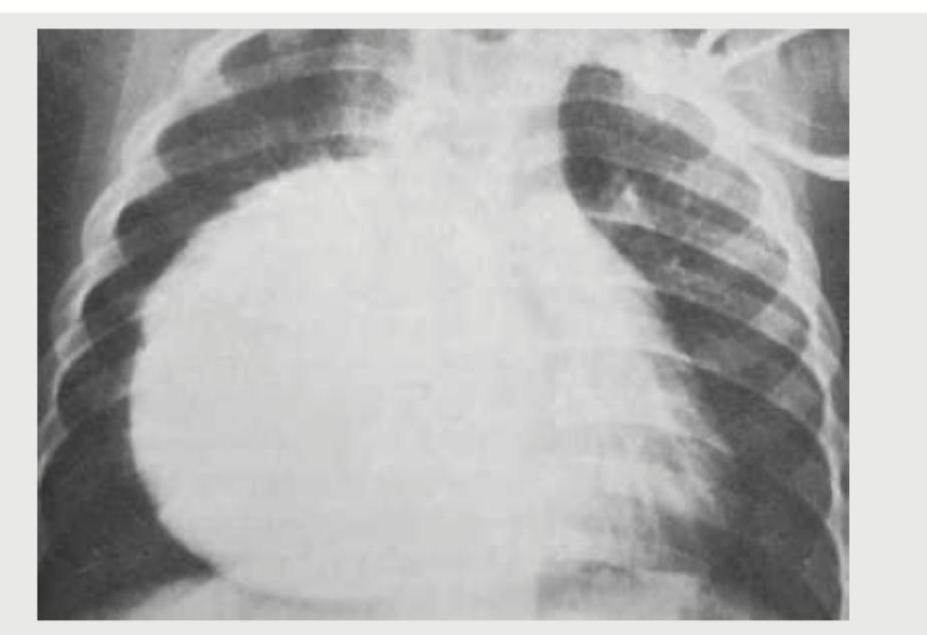
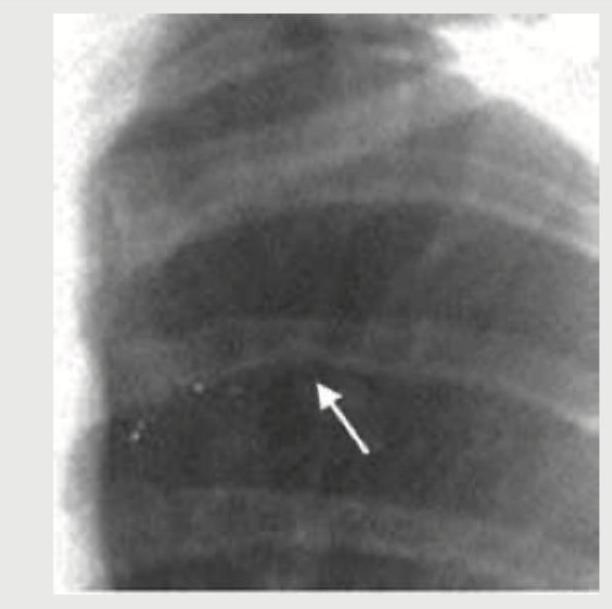
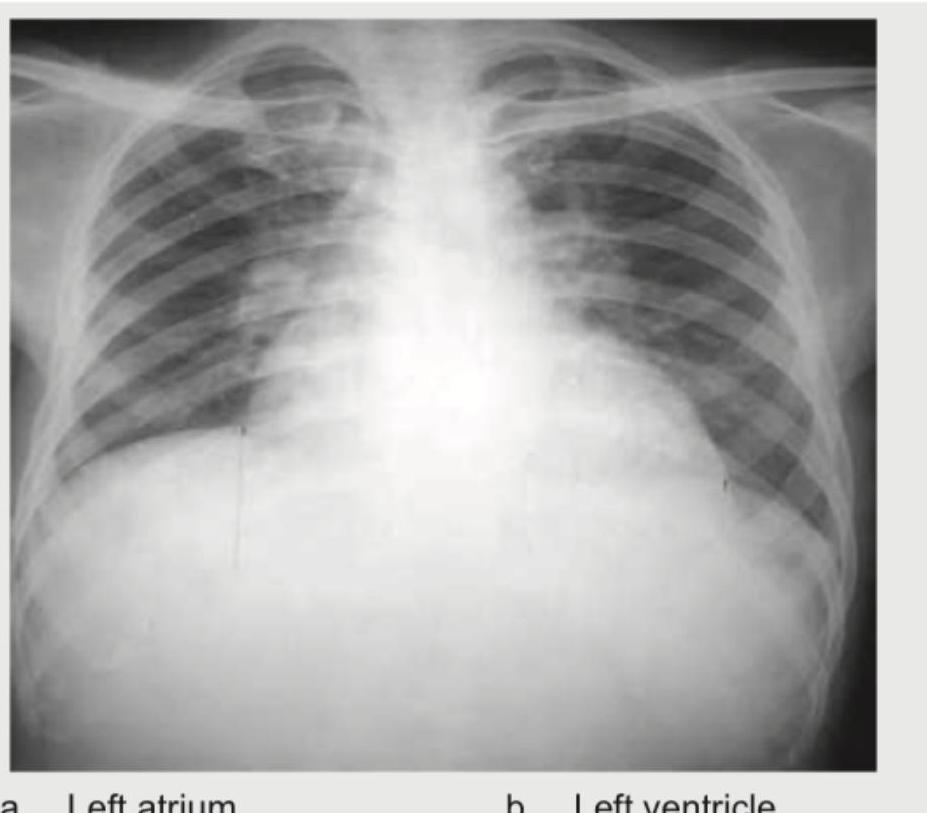
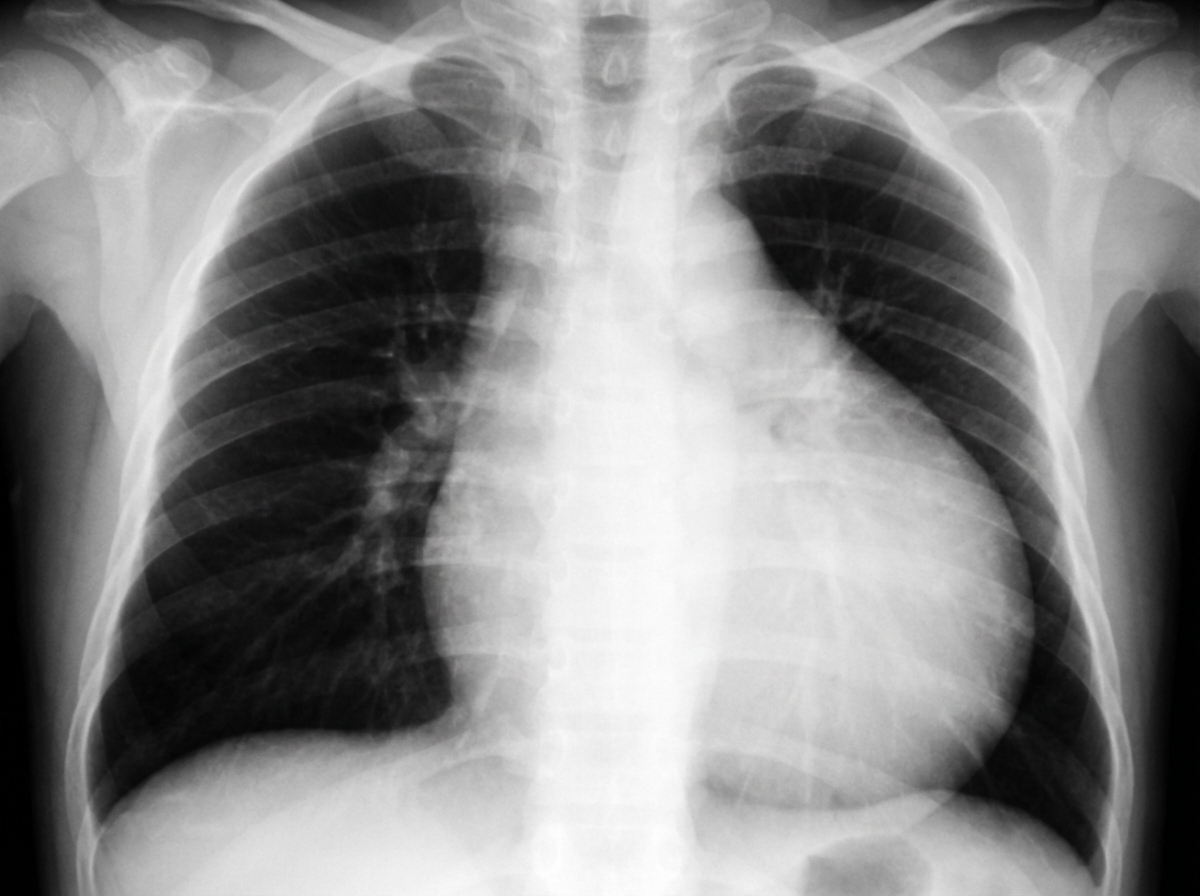
Notching of ribs is characteristic of which condition?
In which aspect is transesophageal echocardiography superior to transthoracic echocardiography?
String sign in angiography is suggestive of which condition?
A 69-year-old male, a heavy smoker (60 cigarettes/day for 40 years), presented with a 12-hour episode of slurred speech that resolved. He had a single episode of haemoptysis 4 weeks prior and has known lung cancer with brain metastases. An ECG revealed new atrial fibrillation, and all blood tests, including cardiac biomarkers, were normal. A chest CT was performed. Based on the clinical presentation and CT findings, which of the following is the most probable diagnosis?
Which condition is most likely associated with the following angiography findings?

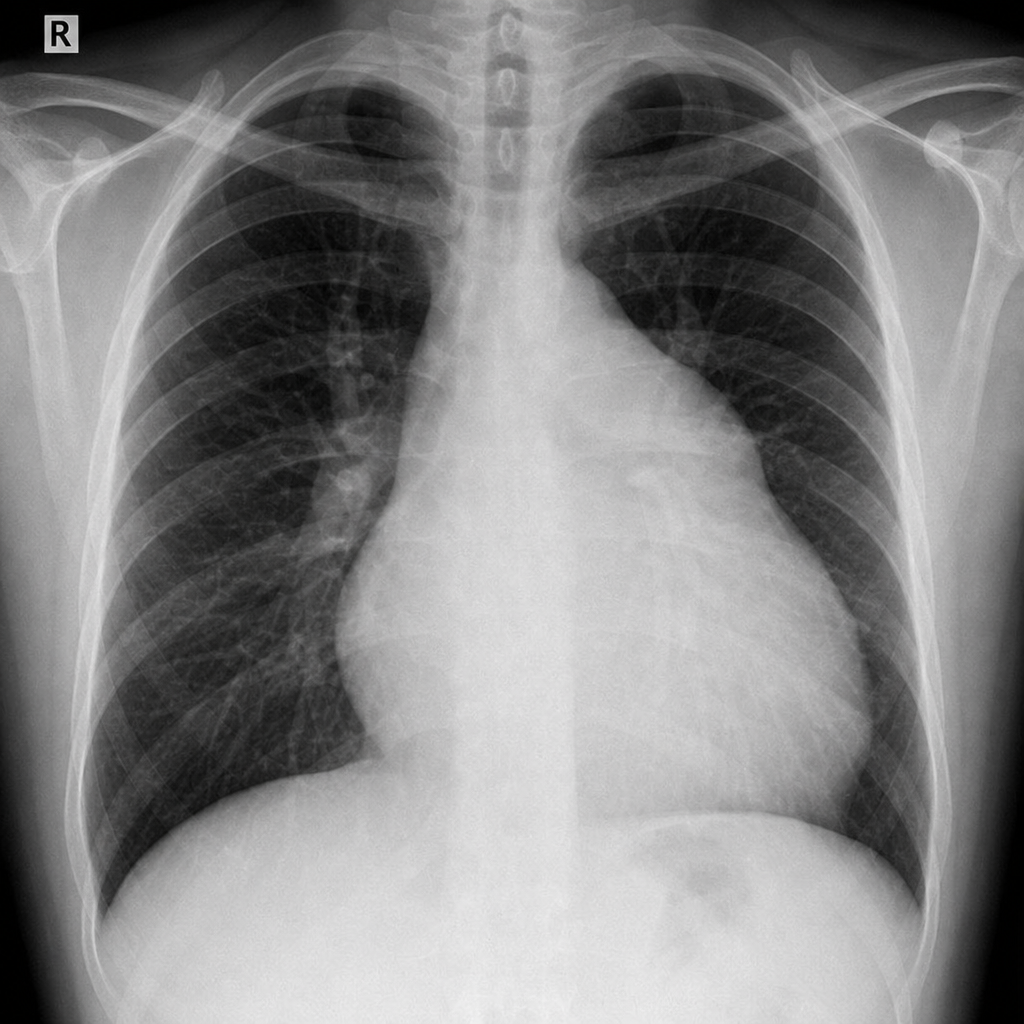
The cardiac silhouette can have an "egg on side" appearance in which of the following conditions?
What is the most important sign of significance of renal artery stenosis on an angiogram?
Bilateral rib notching is seen in which of the following conditions?
What is the best investigation for pericardial effusion?
What is the characteristic X-ray finding in Atrial Septal Defect (ASD)?
Explanation: **Explanation:** **Coarctation of the Aorta** is the classic cause of rib notching. In the post-ductal type of coarctation, there is a narrowing of the aorta distal to the origin of the left subclavian artery. To bypass this obstruction, the body develops **collateral circulation** via the intercostal arteries. The pressure-overloaded, dilated, and tortuous intercostal arteries erode the inferior margins of the **3rd to 8th ribs**, leading to the characteristic "Roesler’s sign" or rib notching seen on a chest X-ray. **Analysis of Incorrect Options:** * **Double Aortic Arch:** This is a vascular ring anomaly that typically presents with tracheal or esophageal compression (stridor or dysphagia). On imaging, it shows a "reverse S-shape" or bilateral indentations on a barium swallow, but not rib notching. * **Tetralogy of Fallot (TOF):** Characterized by a "boot-shaped heart" (coeur en sabot) due to right ventricular hypertrophy and an upturned apex. It does not involve the collateral intercostal circulation required for rib notching. * **Patent Ductus Arteriosus (PDA):** Presents with increased pulmonary vascular markings and cardiomegaly due to a left-to-right shunt, but lacks the specific arterial collaterals seen in coarctation. **High-Yield Clinical Pearls for NEET-PG:** * **Roesler’s Sign:** Rib notching (usually 3rd–8th ribs). The 1st and 2nd ribs are spared because their intercostal arteries arise from the costocervical trunk, proximal to the coarctation. * **Figure-of-3 Sign:** Seen on CXR, formed by pre-stenotic dilation, the coarctation site, and post-stenotic dilation. * **Reverse 'E' or '3' Sign:** The corresponding indentation seen on a Barium swallow. * **Clinical finding:** Radio-femoral delay and upper limb hypertension.
Explanation: **Explanation:** Transesophageal Echocardiography (TEE) is superior to Transthoracic Echocardiography (TTE) primarily due to the **anatomical proximity** of the esophagus to the posterior structures of the heart. The esophagus lies directly behind the **left atrium (LA)**, allowing for the use of higher-frequency transducers that provide superior spatial resolution without interference from the chest wall, ribs, or lungs. 1. **Why Option B is Correct:** The **Left Atrial Appendage (LAA)** is a common site for thrombus formation, especially in patients with atrial fibrillation. Because the LAA is a posterior structure, it is often poorly visualized on TTE. TEE is the "Gold Standard" for detecting LAA thrombi before procedures like cardioversion or catheter ablation. 2. **Why Options A, C, and D are Incorrect:** * **Left Ventricle (A):** The LV is an anterior structure; TTE usually provides excellent visualization of LV size and function. * **Pericardial Fluid (C):** TTE is the initial and preferred modality for diagnosing pericardial effusion and tamponade as it easily visualizes the pericardial space surrounding the heart. * **Commissural Fusion (D):** While TEE provides detail, TTE (especially 3D-TTE) is generally sufficient and the primary tool for grading mitral stenosis and assessing the Wilkins score. **High-Yield Clinical Pearls for NEET-PG:** * **TEE Indications:** Best for LAA thrombus, Infective Endocarditis (detecting small vegetations/abscesses), Prosthetic valve dysfunction, and Aortic Dissection. * **Posterior-most structure:** Left Atrium (closest to the esophagus). * **Anterior-most structure:** Right Ventricle (closest to the sternum). * **Safety:** TEE is invasive; the most common serious complication is esophageal perforation (rare but critical).
Explanation: In **Aortic Dissection**, the "String Sign" refers to the angiographic appearance of the **true lumen** when it is severely compressed by the expanding false lumen. As blood enters the media through an intimal tear, the resulting intramural hematoma (false lumen) creates high pressure that narrows the original channel (true lumen) to a thin, thread-like opacification, resembling a string. ### Explanation of Options: * **Aortic Dissection (Correct):** The hallmark of dissection is the presence of an intimal flap. When the false lumen becomes larger or more pressurized than the true lumen, the true lumen collapses, appearing as a "string" on conventional angiography. * **Aortic Aneurysm:** This involves a localized or diffuse dilation of all three layers of the vessel wall. Angiography typically shows a widened lumen or a saccular outpouching, not a narrowed "string" appearance. * **Stroke:** While a "string sign" can be seen in carotid artery dissections or severe carotid stenosis (leading to stroke), in the context of general cardiovascular radiology and the specific options provided, it is a classic descriptor for the narrowed true lumen in aortic dissection. ### High-Yield Clinical Pearls for NEET-PG: * **Gold Standard Investigation:** While angiography shows the string sign, **CT Angiography (CTA)** is the current gold standard for diagnosis due to its speed and ability to visualize the intimal flap and false lumen. * **Double Barrel Aorta:** Another radiological term for aortic dissection where both lumens are opacified. * **Stanford Classification:** Type A involves the ascending aorta (surgical emergency); Type B involves only the descending aorta (medical management). * **Differential Diagnosis:** Do not confuse this with the "String sign of Kantor," which is seen in Crohn’s disease (terminal ileum narrowing) on Barium studies.
Explanation: ***Left atrial thrombus*** - **New atrial fibrillation** leads to blood stasis in the **left atrial appendage**, promoting thrombus formation that can embolize to cause **transient ischemic attack (TIA)**. - **Contrast-enhanced chest CT** would show a **filling defect** in the left atrial appendage, consistent with thrombus formation. *Left atrial myxoma* - **Primary cardiac tumor** that typically presents with constitutional symptoms and is **not associated with atrial fibrillation**. - Usually appears as a **mobile, pedunculated mass** attached to the **interatrial septum** on imaging, not related to new AF. *Infective endocarditis* - Would present with **fever**, **elevated inflammatory markers**, and **positive blood cultures**, which are absent in this case. - **Normal cardiac biomarkers** and lack of systemic infection signs make this diagnosis unlikely. *Rhabdomyoma* - **Benign cardiac tumor** predominantly seen in **pediatric patients** and associated with **tuberous sclerosis**. - **Multiple cardiac masses** are typical, and this tumor does not cause atrial fibrillation or embolic events.
Explanation: ***Polyarteritis nodosa*** - Classic angiographic finding shows **multiple microaneurysms** at branch points of medium-sized vessels, particularly in **renal**, **hepatic**, and **mesenteric arteries**. - The **"beading" or "rosary" appearance** on angiography is pathognomonic for PAN, caused by segmental necrotizing inflammation. *Kawasaki disease* - Angiographic findings typically show **coronary artery aneurysms** rather than systemic vessel involvement. - Affects **large coronary arteries** in children, not the medium-sized visceral vessels characteristic of PAN. *Takayasu arteritis* - Angiography reveals **smooth stenosis** and **occlusions** of large vessels like the **aorta** and its major branches. - Shows **long segment narrowing** without the multiple small aneurysms seen in PAN. *Giant cell arteritis* - Primarily affects **large vessels** including the **temporal**, **ophthalmic**, and **vertebral arteries**. - Angiographic findings include **smooth stenosis** and **occlusions**, not the microaneurysmal pattern of PAN.
Explanation: ### Explanation The "egg-on-a-string" or **"egg-on-side"** appearance is a classic radiographic sign of **Transposition of the Great Arteries (TGA)**. **1. Why Transposition of Great Vessels (TGA) is correct:** The characteristic silhouette is caused by two anatomical changes: * **The "Egg":** The main body of the heart appears globular and enlarged (cardiomegaly) due to right ventricular hypertrophy and right atrial enlargement. * **The "String":** The superior mediastinum appears narrow. In a normal heart, the pulmonary artery and aorta are side-by-side or overlapping; in TGA, the aorta is positioned directly anterior to the pulmonary artery. Additionally, there is often thymic atrophy due to stress. This creates a narrow vascular pedicle, resembling a string from which the "egg" (heart) hangs. **2. Why the other options are incorrect:** * **Tetralogy of Fallot (TOF):** Characterized by a **"Boot-shaped heart"** (*Coeur en sabot*). This is due to an upturned apex (right ventricular hypertrophy) and a concave pulmonary segment (pulmonary stenosis). * **Ventricular Septal Defect (VSD) & Patent Ductus Arteriosus (PDA):** These typically present with non-specific cardiomegaly and increased pulmonary vascular markings (plethora). They do not produce the specific narrow mediastinum seen in TGA. **3. High-Yield Clinical Pearls for NEET-PG:** * **TGA** is the most common cause of cyanotic heart disease presenting in the **neonatal period** (first 24 hours). * **Snowman Appearance / Figure of 8:** Total Anomalous Pulmonary Venous Connection (TAPVC) - Supracardiac type. * **Box-shaped Heart:** Ebstein’s Anomaly (due to massive right atrial enlargement). * **Sitting Swan Sign:** Persistent Left Superior Vena Cava. * **Shmoo Sign:** Left Ventricular Hypertrophy (prominent rounded LV apex).
Explanation: **Explanation:** The significance of renal artery stenosis (RAS) is determined by its functional impact on renal perfusion rather than just the anatomical degree of narrowing. **Why "Presence of Collaterals" is the correct answer:** In the context of an angiogram, the presence of **collateral circulation** (e.g., from ureteric, adrenal, or capsular arteries) is the most definitive sign of a **hemodynamically significant** stenosis. Collaterals only develop when the pressure drop across a stenosis is severe enough to trigger compensatory pathways to maintain renal blood flow. This indicates that the stenosis is likely causing renovascular hypertension or nephropathy. **Analysis of Incorrect Options:** * **A. Percentage diameter stenosis >70%:** While a >70% narrowing is often used as a threshold for intervention, anatomical narrowing does not always correlate with functional impairment. An angiogram is a 2D representation of a 3D vessel, and "pseudo-stenosis" can occur due to vessel overlap. * **C. Systolic pressure gradient >20 mmHg:** While a pressure gradient is a physiological measure of significance, it is a **hemodynamic measurement**, not a "sign on an angiogram" (which is a visual/morphological study). * **D. Post-stenotic dilatation:** This is a common finding in RAS due to the Jet effect (Turbulence), but it can occur even with non-significant lesions and does not necessarily imply a threat to renal perfusion. **High-Yield Clinical Pearls for NEET-PG:** * **Gold Standard Investigation:** Digital Subtraction Angiography (DSA) remains the gold standard for diagnosing RAS. * **Most Common Cause:** Atherosclerosis (older males, involves the ostium) followed by Fibromuscular Dysplasia (younger females, "string of beads" appearance, involves distal 2/3rd). * **Screening Tool of Choice:** Doppler Ultrasound (look for "Tardus Parvus" pulse). * **Goldblatt Kidney:** The physiological model explaining renin-mediated hypertension in RAS.
Explanation: **Explanation:** **1. Why Coarctation of Aorta is correct:** Rib notching (specifically involving the **3rd to 8th ribs**) is a classic radiological sign of post-ductal Coarctation of the Aorta. Due to the narrowing of the aorta, the body develops collateral circulation to bypass the obstruction. Blood flows from the subclavian arteries into the internal mammary arteries, then into the **intercostal arteries**. These intercostal arteries become dilated, tortuous, and pulsatile. The constant pressure and pulsation of these enlarged arteries cause pressure erosion (notching) on the inferior borders of the ribs. This is known as **Roesler’s Sign**. **2. Why the other options are incorrect:** * **PDA:** While PDA involves a left-to-right shunt, it does not necessitate the development of systemic collateral pathways that erode the ribs. * **TAPVC:** This is a cyanotic congenital heart disease characterized by abnormal pulmonary venous drainage. It presents with signs like the "Snowman" or "Figure-of-8" heart (in the supracardiac type) but does not cause rib notching. **3. High-Yield Clinical Pearls for NEET-PG:** * **Roesler’s Sign:** Rib notching in Coarctation (usually bilateral). * **Unilateral Rib Notching:** If notching is seen only on the **right side**, the coarctation is proximal to the left subclavian artery. * **"3" Sign:** Seen on Chest X-ray in Coarctation, formed by the pre-stenotic dilation of the aortic arch and post-stenotic dilation of the descending aorta. * **Reverse "3" or "E" Sign:** The corresponding indentation seen on a Barium swallow study. * **Ribs 1 & 2:** These are usually spared because their intercostal arteries arise from the costocervical trunk, not the aorta.
Explanation: **Explanation:** **Echocardiography** is the gold standard and **investigation of choice** for pericardial effusion. Its superiority lies in its high sensitivity and specificity for detecting even small amounts of fluid (as little as 15–20 ml). More importantly, it provides real-time functional assessment, allowing clinicians to detect signs of **cardiac tamponade** (such as right ventricular diastolic collapse) and guide emergency pericardiocentesis. **Analysis of Incorrect Options:** * **X-ray:** While a "Water-bottle" or "Money-bag" heart appearance is classic, X-rays are insensitive. Cardiomegaly is only visible after at least 200–250 ml of fluid has accumulated. * **CT Scan:** Highly sensitive and excellent for detecting loculated effusions or pericardial thickening/calcification, but it is not the first-line due to radiation, cost, and lack of real-time hemodynamic data. * **MRI:** The most accurate for characterizing fluid composition (e.g., hemorrhagic vs. chylous) and diagnosing constrictive pericarditis, but it is time-consuming and impractical in emergency settings. **High-Yield Clinical Pearls for NEET-PG:** 1. **Initial Investigation:** Echocardiography. 2. **Most Sensitive Investigation:** Echocardiography/MRI (MRI is better for tissue characterization). 3. **Electrical Alternans:** A pathognomonic ECG finding in large effusions due to the "swinging heart" motion. 4. **Beck’s Triad (Tamponade):** Hypotension, Jugular Venous Distension, and Muffled heart sounds. 5. **Echocardiographic Sign of Tamponade:** Early diastolic collapse of the Right Ventricle (highly specific).
Explanation: ### Explanation **Correct Option: C. Pulmonary plethora** Atrial Septal Defect (ASD) is a **left-to-right shunt** at the atrial level. Because the pressure in the left atrium (LA) is higher than in the right atrium (RA), blood flows into the right side of the heart. This leads to increased pulmonary blood flow (recirculation through the lungs). On a chest X-ray, this manifests as **pulmonary plethora** (increased bronchovascular markings extending to the outer third of the lung fields and enlargement of the pulmonary trunk/arteries). **Why Incorrect Options are Wrong:** * **A & B (Enlarged Left Ventricle/Atrium):** In ASD, the shunt occurs *before* blood reaches the left ventricle. Furthermore, the left atrium decompresses into the right atrium, so it typically does not enlarge. ASD is primarily a **volume overload state of the right heart** (RA and RV enlargement). * **D (Pulmonary Arterial Hypertension):** While chronic ASD can eventually lead to PAH (and potentially Eisenmenger syndrome), PAH is a *complication* rather than the characteristic initial finding. On X-ray, PAH is characterized by "pruning" (peripheral tapering of vessels), which is the opposite of plethora. **High-Yield Clinical Pearls for NEET-PG:** * **Classic X-ray Triad for ASD:** 1. Small aortic arch (due to decreased systemic output), 2. Enlarged pulmonary artery/plethora, 3. Right ventricular enlargement. * **Most common type:** Ostium secundum (located in the region of the fossa ovalis). * **Auscultation:** Characterized by a **fixed, wide splitting of S2** and a mid-systolic flow murmur at the pulmonary area. * **ECG finding:** Right Bundle Branch Block (RBBB) and right axis deviation are common.
Cardiovascular Anatomy
Practice Questions
Cardiac CT Techniques
Practice Questions
Cardiac MRI Techniques
Practice Questions
Ischemic Heart Disease Imaging
Practice Questions
Valvular Heart Disease
Practice Questions
Cardiomyopathies
Practice Questions
Pericardial Diseases
Practice Questions
Congenital Heart Disease
Practice Questions
Aortic and Great Vessel Imaging
Practice Questions
Peripheral Vascular Imaging
Practice Questions
Cardiovascular Interventional Procedures
Practice Questions
Post-Surgical Cardiovascular Imaging
Practice Questions
Get full access to all questions, explanations, and performance tracking.
Start For Free