A patient presents with headaches, palpitations, hypertension, and urine VMA positivity. The biopsy findings are shown in the image. Which of the following statements is correct?
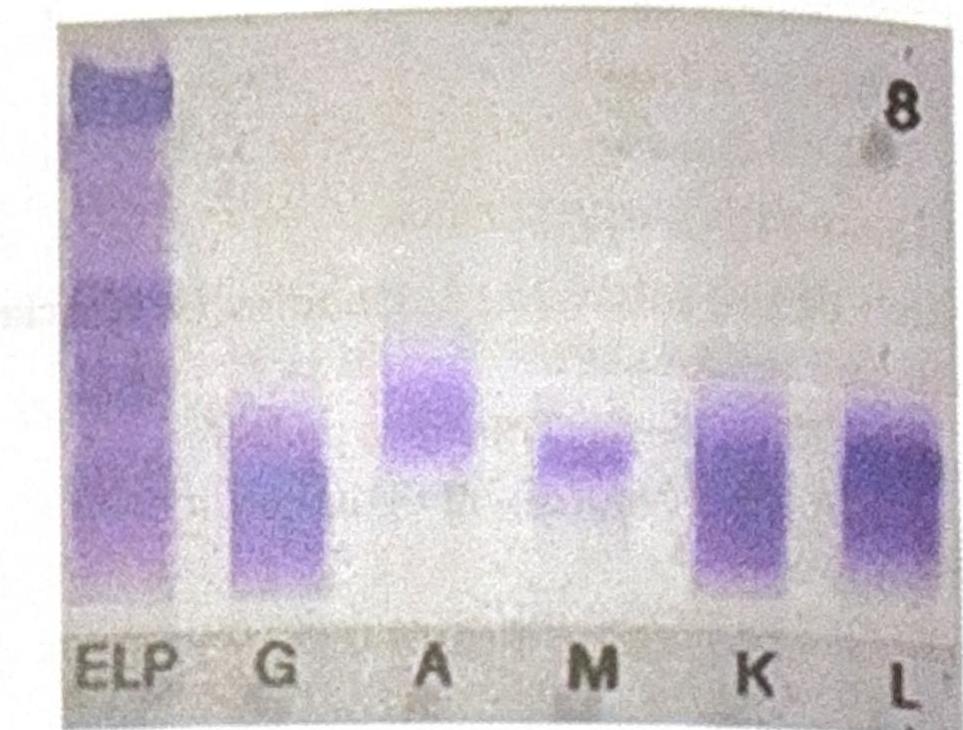
Pheochromocytoma is characterized by excessive secretion of:
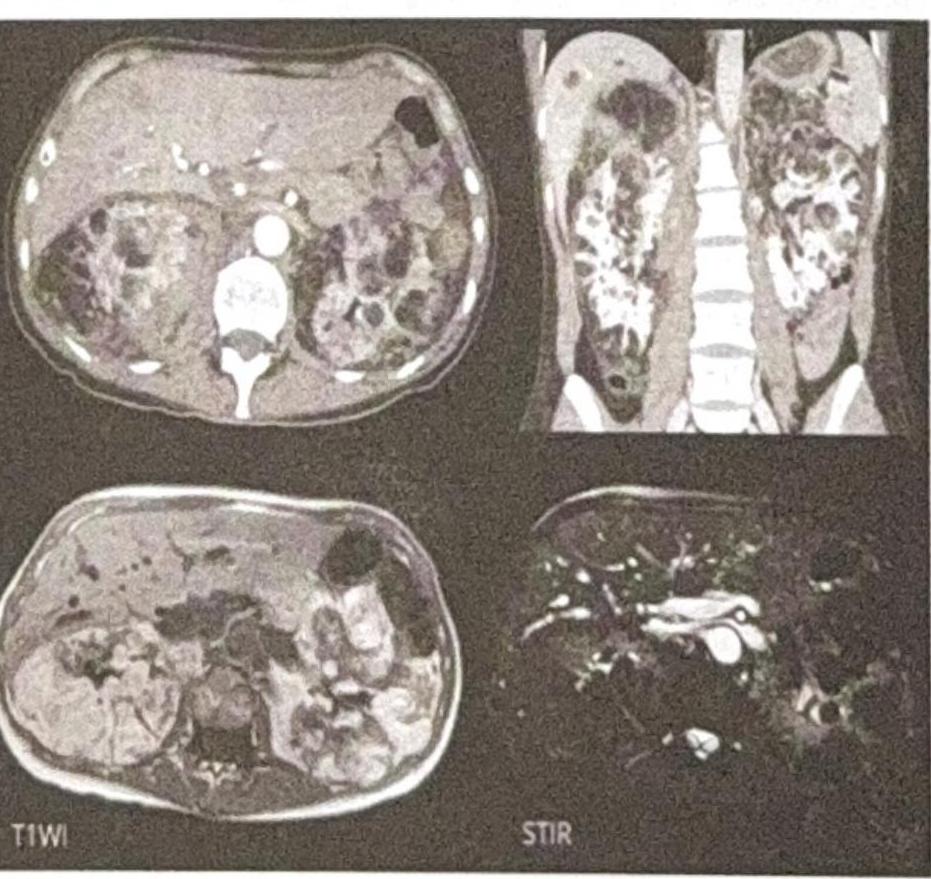
What is the Diagnosis based on the CT Scan given below?
Enhancement in CT contrast is due to -
Which of the following statements about CT imaging is the MOST accurate?
What is the best investigation for diagnosis and staging of renal cell carcinoma with thrombus extending into the IVC?
A pseudo gestational sac is seen on ultrasonography in which of the following conditions?
Which of the following radiographic presentations cannot be seen in a patient with intussusception?
Which of the following conditions typically presents with a 'pseudokidney sign' on ultrasound?
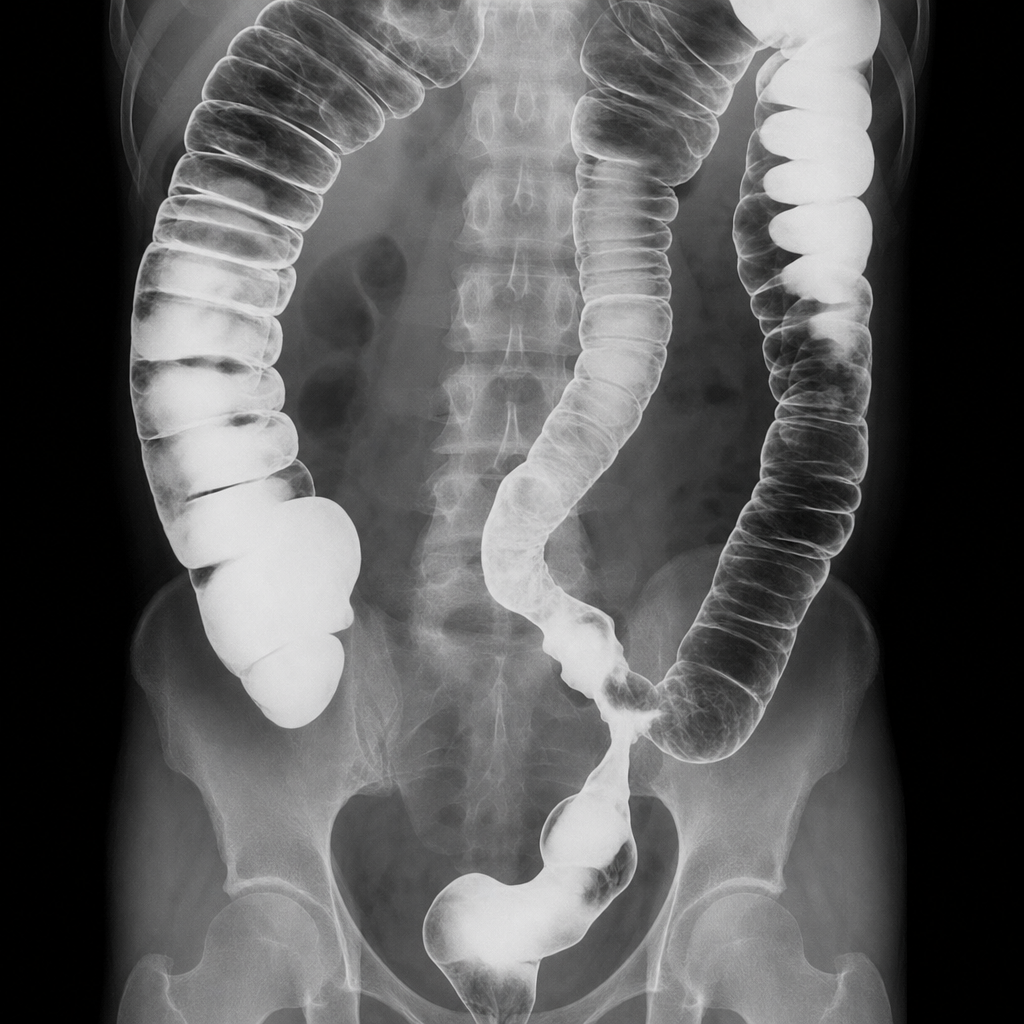
What condition is indicated by the thumb print sign on an abdominal radiograph?
Explanation: ***Associated with MEN 2A*** - The clinical presentation (headaches, palpitations, hypertension) and positive **urine VMA (vanillylmandelic acid)** strongly suggest a **pheochromocytoma**. - Pheochromocytomas are tumors of the adrenal medulla that secrete catecholamines and are frequently associated with **Multiple Endocrine Neoplasia Type 2A (MEN 2A)**, along with medullary thyroid carcinoma and primary hyperparathyroidism. *Mostly malignant* - Pheochromocytomas are generally benign, with approximately **10% being malignant** ("rule of 10s"). - Malignancy is difficult to predict based on histology alone and is usually defined by the presence of **metastases**. *Mostly in children* - While pheochromocytomas can occur at any age, they are **more common in adults**, typically between 30 and 50 years old. - When they do occur in children, they are more often bilateral, extra-adrenal, or associated with genetic syndromes. *Mostly bilateral* - The majority of pheochromocytomas (approximately **90%**) are **unilateral**. - Bilateral pheochromocytomas are often seen in genetic syndromes such as **MEN 2**, von Hippel-Lindau disease, and neurofibromatosis type 1.
Explanation: ***Catecholamines*** - **Pheochromocytoma** is a tumor of the **adrenal medulla** that secretes excessive amounts of **catecholamines**, primarily **epinephrine** and **norepinephrine** [1]. - This overproduction leads to classic symptoms such as **hypertension**, **tachycardia**, palpitations, sweating, and anxiety [1]. *Dopamine* - While dopamine is a **precursor** to norepinephrine and epinephrine, and some pheochromocytomas can secrete dopamine, it is not the primary or most characteristic hormone excessively secreted [1]. - Excessive dopamine secretion is more commonly associated with tumors like **neuroblastomas** or **ganglioneuromas**. *Aldosterone* - **Aldosterone** is a mineralocorticoid primarily secreted by the **adrenal cortex** (zona glomerulosa), not the adrenal medulla, and is involved in regulating blood pressure and electrolyte balance [1]. - Excessive aldosterone secretion is indicative of conditions like **primary hyperaldosteronism** (Conn's syndrome) or secondary hyperaldosteronism. *Glucocorticoids* - **Glucocorticoids**, such as **cortisol**, are hormones secreted by the **adrenal cortex** (zona fasciculata) and are vital for metabolism, immune function, and stress response [2]. - Excessive glucocorticoid secretion is characteristic of **Cushing's syndrome**, not pheochromocytoma [2].
Explanation: ***Polycystic kidney disease*** - The CT scan images show **enlarged kidneys** replaced by numerous **cysts of varying sizes**, which is the hallmark appearance of polycystic kidney disease. - The presence of multiple cysts **bilaterally** and diffusely throughout the renal parenchyma is characteristic of this genetic disorder. *Renal cyst* - A single renal cyst is a common benign finding, appearing as a **well-defined, fluid-filled** structure. - The images clearly demonstrate **multiple cysts** affecting both kidneys, ruling out a solitary renal cyst. *Renal tumor* - A renal tumor (e.g., renal cell carcinoma) typically appears as a **solid mass**, often with heterogeneous enhancement after contrast. - The lesions seen in the image are predominantly **cystic** and multifocal, which is inconsistent with a typical renal tumor. *Renal angiomyolipoma* - Renal angiomyolipomas are benign tumors containing **fat, smooth muscle, and blood vessels**, and they characteristically show **macroscopic fat** on CT scans. - While they can be multiple, especially in tuberous sclerosis, the dominant feature in the image is widespread cystic transformation, not fat-containing solid masses.
Explanation: ***Iodine*** - **Iodine-based contrast agents** are commonly used in CT scans to enhance the visualization of blood vessels, organs, and certain lesions due to their **high atomic number** and ability to absorb X-rays. - The degree of enhancement observed on a CT image is directly proportional to the concentration of **iodine** in the tissue or blood. *Gadolinium* - **Gadolinium-based contrast agents** are predominantly used in **Magnetic Resonance Imaging (MRI)**, not CT scans. - Gadolinium works by altering the **magnetic properties** of water molecules in tissues, thereby improving MRI signal intensity. *Mercury* - **Mercury** is a highly toxic heavy metal and is **not used as a contrast agent** in any imaging modality due to its severe health risks. - While historically used in some medical applications, it has been replaced by safer alternatives. *Silver* - **Silver** is not used as a contrast agent in medical imaging; it has no suitable properties for enhancing images in CT or other common modalities. - It is known for its **antimicrobial properties** and is sometimes used in wound dressings.
Explanation: ***Water has a Hounsfield unit (HU) of zero.*** - The **Hounsfield unit (HU)** scale is a quantitative scale used to describe radiodensity in CT scans, where **water is defined as 0 HU**. - This establishes a crucial reference point for measuring the attenuation of other tissues, which can range from approximately **-1000 HU for air** to **+1000 HU or more for dense bone**. *CT head dose remains constant regardless of the protocol used.* - The **radiation dose** in CT scans is highly variable and depends significantly on the **protocol used**, including factors like mA, kVp, pitch, and scan length. - **Dose optimization techniques** and protocol adjustments are routinely employed to minimize patient exposure while maintaining diagnostic image quality. *CT cannot detect gallstones under any circumstances.* - While **ultrasound (US)** is the primary modality for detecting gallstones, CT can visualize them, especially if they are **calcified** or of mixed composition. - **Non-calcified gallstones** may be more challenging to detect on CT, but they are not impossible to see, particularly with current generation scanners and appropriate windowing. *CT uses unfiltered x-ray beams.* - CT scanners use **filtered x-ray beams** to provide higher quality images and reduce patient dose. - **Filtration (e.g., aluminum or copper)** removes low-energy x-rays, which would otherwise be absorbed by the patient without contributing to image formation.
Explanation: ***CT scan*** - **CT scan** with contrast is the gold standard for diagnosing renal cell carcinoma and evaluating the extent of tumor thrombus into the **IVC**. - It provides detailed anatomical information on the tumor, staging, and involvement of adjacent structures. *Angiography* - **Angiography** is an invasive procedure primarily used for mapping the vascular supply of the tumor preoperatively or for embolization, not as a primary diagnostic tool. - It carries risks associated with contrast agents and catheterization and provides less comprehensive detail on tumor extension compared to CT. *Colour doppler imaging* - While useful for detecting blood flow and confirming the presence of a thrombus, **color Doppler imaging** (ultrasound) has limitations in accurately assessing the cranial extent of an IVC thrombus. - Its diagnostic accuracy is highly operator-dependent and less reliable for deep structures like the IVC compared to CT. *IVP* - **Intravenous Pyelogram (IVP)** assesses the urinary tract's structure and function but has limited utility in detecting soft tissue masses like renal cell carcinoma or IVC thrombus. - It involves radiation exposure and contrast material, and has largely been replaced by more advanced imaging techniques like CT and MRI for renal masses.
Explanation: **Explanation:** In **Ectopic Gestation**, a **pseudo gestational sac** is a common sonographic pitfall. It represents an intra-uterine fluid collection (blood or secretions) surrounded by a single layer of decidua, mimicking an early pregnancy. Unlike a true gestational sac, it is **centrally located** within the endometrial cavity and lacks the "Double Decidual Sign" (the two concentric rings representing the decidua capsularis and decidua parietalis). **Analysis of Options:** * **Ectopic Gestation (Correct):** Hormonal changes in ectopic pregnancy cause the endometrium to undergo a decidual reaction. Fluid or blood trapped within this decidualized endometrium creates the pseudo-sac appearance. * **Missed Abortion:** This involves a non-viable **true** gestational sac (often with a fetal pole but no cardiac activity) that remains within the uterus. It is not a "pseudo" sac. * **Complete Abortion:** On ultrasound, this typically shows an empty uterus with a thin, regular endometrial stripe. No sac-like structures (true or pseudo) should be visible if the products of conception are entirely expelled. * **Hematometra:** This is a collection of blood within the uterine cavity, usually due to an imperforate hymen or cervical stenosis. While it is a fluid collection, it lacks the specific decidualized rim and clinical context of a pregnancy-related sac. **High-Yield Clinical Pearls for NEET-PG:** * **Double Decidual Sign:** The hallmark of a **true** intrauterine pregnancy (IUP) on USG. * **Yolk Sac:** Its presence is the first definitive sign of an IUP (visible at ~5.5 weeks). * **Intrauterine Fluid + Empty Adnexa:** In a patient with positive β-hCG, always differentiate between a very early IUP and a pseudo-sac of ectopic pregnancy. * **Location:** True sacs are usually **eccentric** (embedded in the decidua); pseudo-sacs are **central**.
Explanation: **Explanation:** Intussusception occurs when a proximal segment of the bowel (intussusceptum) invaginates into a distal segment (intussuscipiens). **Why Corkscrew Sign is the Correct Answer:** The **Corkscrew sign** is a classic radiological finding seen on a barium swallow or follow-through in cases of **Midgut Volvulus** (associated with malrotation). It represents the spiral appearance of the distal duodenum and jejunum as they wrap around the superior mesenteric artery (SMA). It is not a feature of intussusception. **Analysis of Incorrect Options:** * **Target Sign (or Bull’s eye sign):** This is a hallmark of intussusception. On a plain radiograph or CT, it represents the layers of the intussusceptum and intussuscipiens seen in cross-section. On ultrasound, it is often called the "Doughnut sign." * **Crescent Sign (Meniscus sign):** This occurs when the leading edge of the intussusceptum protrudes into a gas-filled pocket in the distal bowel, creating a crescent-shaped lucency. It is a highly specific sign for intussusception on plain X-rays. * **Normal Radiograph:** In the early stages of intussusception, up to **25% of plain abdominal radiographs can appear completely normal**. A normal X-ray does not rule out the diagnosis, which is why ultrasound is the gold standard for screening. **Clinical Pearls for NEET-PG:** * **Gold Standard Investigation:** Ultrasound (look for the "Pseudokidney" or "Target" sign). * **Classic Triad:** Colicky abdominal pain, palpable sausage-shaped mass, and "red currant jelly" stools (though the full triad is seen in <40% of cases). * **Treatment:** Non-operative reduction using **Hydrostatic (saline/barium)** or **Pneumatic (air) enema** is the first-line treatment in stable patients. * **Lead Point:** In children, it is usually idiopathic (hypertrophied Peyer’s patches); in adults, it is usually due to a pathological lead point (e.g., malignancy or Meckel’s diverticulum).
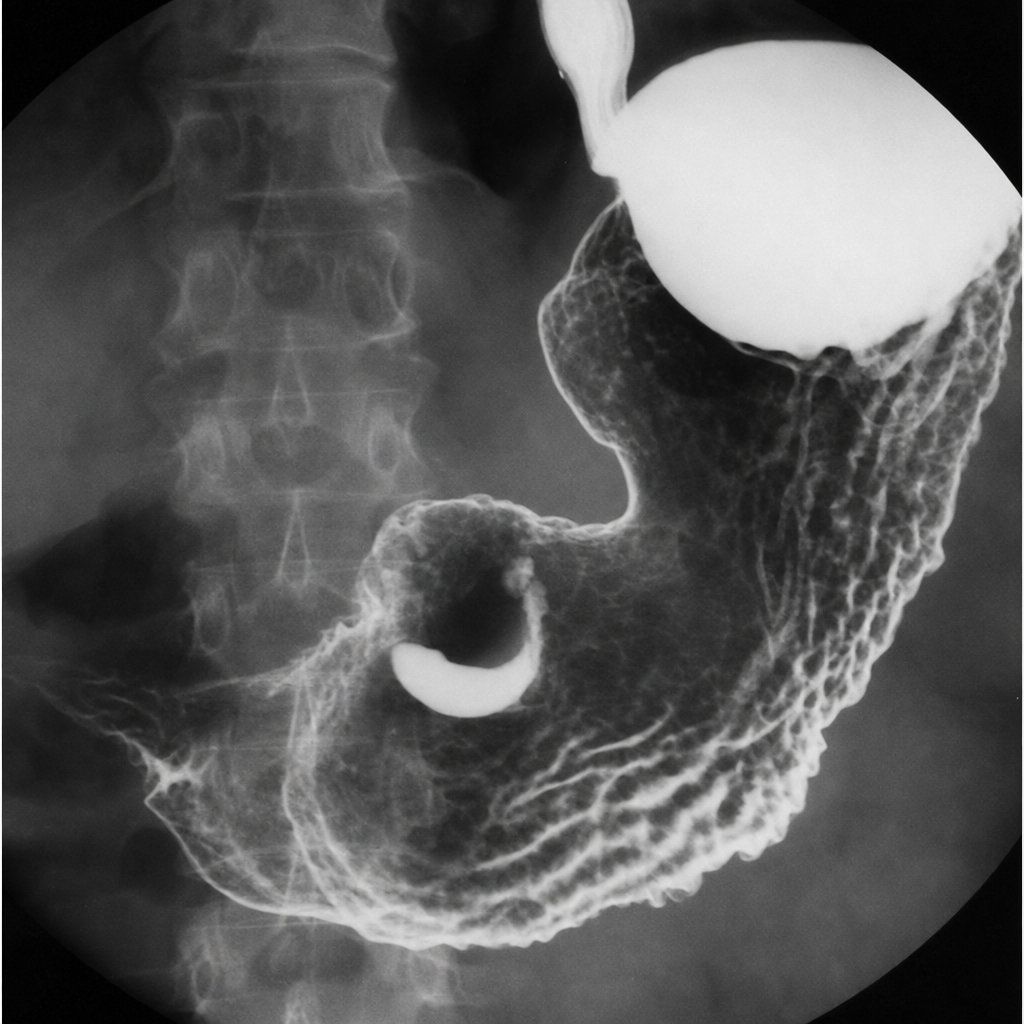
Explanation: ### Explanation The **'Pseudokidney sign'** is a classic ultrasonographic finding characterized by a hypoechoic (dark) peripheral rim and a central hyperechoic (bright) core. This appearance mimics the normal anatomy of a kidney (where the cortex is hypoechoic and the renal sinus is hyperechoic). **1. Why Carcinoma of the Stomach is Correct:** The sign occurs when there is significant **concentric or eccentric thickening of the gastrointestinal wall**. In gastric carcinoma, the thickened, infiltrated wall of the stomach represents the hypoechoic rim, while the narrowed lumen containing air, mucus, or debris represents the hyperechoic center. While most commonly associated with **intussusception**, it is a hallmark of **gastrointestinal malignancies** (stomach or colon) and inflammatory conditions like Crohn’s disease. **2. Analysis of Incorrect Options:** * **Trichobezoar (A):** Typically presents as a highly echogenic arcuate line with dense posterior acoustic shadowing (the "Stomach Wall-Gas-Interface" or "Shell" sign) rather than a kidney-like structure. * **Carcinoma of the Kidney (C):** This would present as a solid mass arising *from* the kidney, often distorting the normal renal architecture, rather than "mimicking" a kidney. * **Polycystic Kidney Disease (D):** This presents as bilateral, massively enlarged kidneys replaced by multiple thin-walled, anechoic cysts. It does not produce the specific "target" or "pseudokidney" morphology. **3. NEET-PG High-Yield Pearls:** * **Pseudokidney Sign:** Also known as the **"Target sign"** or **"Donut sign"** on transverse ultrasound/CT sections. * **Differential Diagnosis:** Intussusception (most common cause in children), Gastric/Colonic Adenocarcinoma (most common cause in elderly), Crohn’s disease, and Volvulus. * **Clinical Context:** If you see this sign in an elderly patient with weight loss, think **Malignancy**; in a child with red currant jelly stools, think **Intussusception**.
Explanation: **Explanation:** The **"Thumbprinting sign"** is a classic radiologic finding on a plain abdominal X-ray that represents **focal thickening of the colonic wall** due to submucosal edema and hemorrhage. On a radiograph, the haustral folds appear thickened and blunted, resembling the impression of a thumb pressed into the bowel wall. **Why "All of the above" is correct:** Thumbprinting is a non-specific sign of **severe colonic wall inflammation**. It occurs when any pathological process causes significant submucosal fluid accumulation: * **Ischemic Colitis (Option A):** This is the most common association. Reduced blood flow leads to submucosal hemorrhage and edema. * **Crohn’s Disease (Option B):** Transmural inflammation during an acute flare-up can cause significant wall thickening and edema. * **Pseudomembranous Colitis (Option C):** Severe *Clostridioides difficile* infection causes profound mucosal edema and "shaggy" wall thickening, often presenting with prominent thumbprinting. **Clinical Pearls for NEET-PG:** 1. **Differential Diagnosis:** Beyond the options provided, thumbprinting can also be seen in **Ulcerative Colitis**, **Amoebic Colitis**, and **Lymphoma**. 2. **Clinical Correlation:** While the sign is non-specific, the clinical context is key. Sudden onset abdominal pain in an elderly patient with thumbprinting highly suggests **Ischemic Colitis**. 3. **Next Step:** If thumbprinting is seen on a plain film, the next gold-standard imaging is usually a **CT scan with IV contrast** to better visualize bowel wall enhancement and mesenteric vessels. 4. **Lead Pipe Appearance:** Contrast this with the "Lead Pipe" colon (loss of haustrations), which is characteristic of chronic Ulcerative Colitis.
Get full access to all questions, explanations, and performance tracking.
Start For Free