A patient consuming 120 ml of alcohol daily for the past 12 years is diagnosed with alcohol-dependent syndrome. Which of the following drugs should be avoided in its management?
Which of the following is NOT a feature of caffeine withdrawal?
What is the drug of choice for managing alcohol withdrawal?
Which of the following medications is used for long-term management of alcohol withdrawal?
What is true about delirium tremens?
What is the most common psychiatric illness?
A 45-year-old alcoholic male presents for deaddiction treatment. He has alcohol-induced hepatitis with other blood parameters within normal limits. Which drug should NOT be chosen for relapse prevention?
What does 'etheromanias' refer to?
A patient with a known history of alcohol dependence develops seizures for the first time 12 to 18 hours after their last drink. The LFTs are within normal limits. What is the most appropriate pharmacological treatment for this patient?
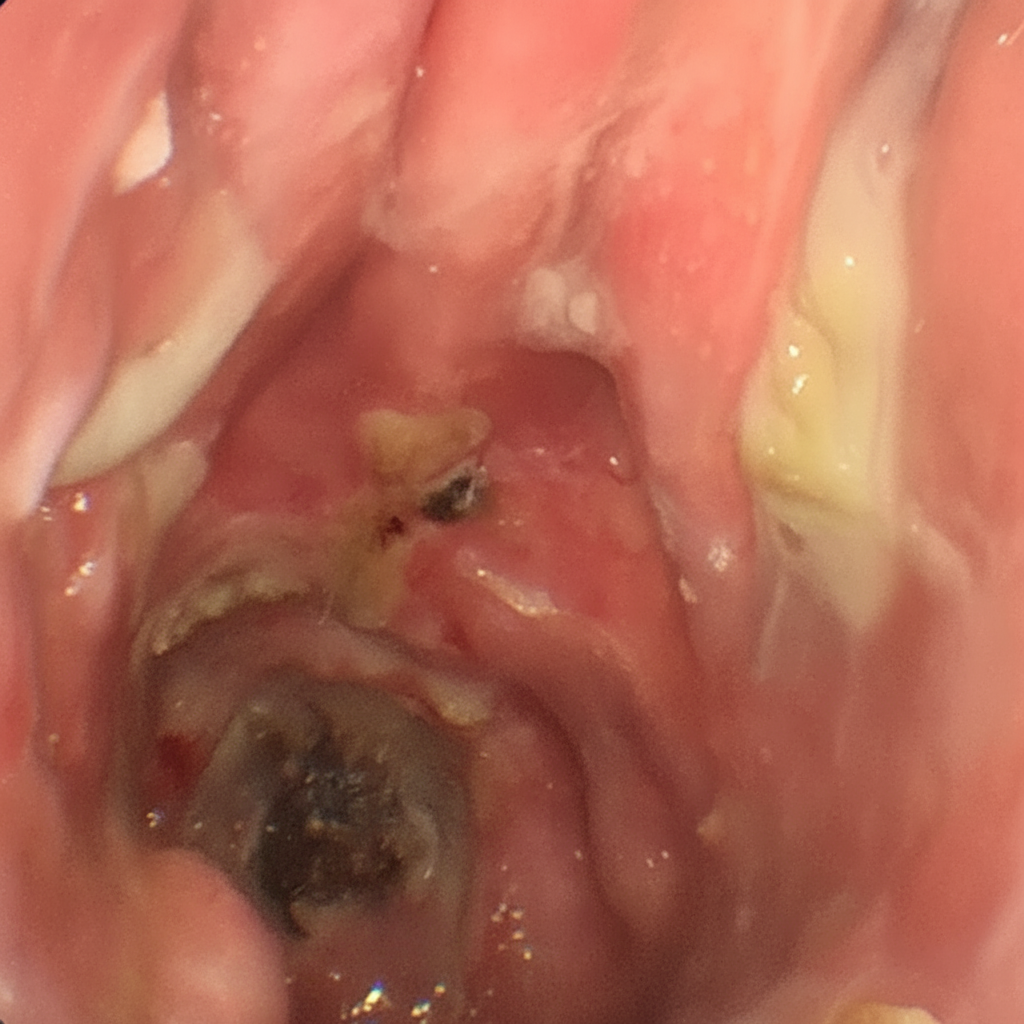
Which one of the following drugs of abuse is most typically associated with the illustrated complication?
Explanation: **Explanation:** The correct answer is **Disulfiram**. In the management of Alcohol Dependence Syndrome (ADS), the primary goal is to achieve abstinence or reduce craving. However, **Disulfiram** is an aversive agent that works by inhibiting the enzyme **aldehyde dehydrogenase**. This leads to the accumulation of acetaldehyde if alcohol is consumed, causing a distressing "Disulfiram-Ethanol Reaction" (nausea, tachycardia, flushing). The key clinical contraindication for Disulfiram is its use in patients who are **actively consuming alcohol** or have consumed it within the last 12–24 hours. Since the patient in the vignette is currently consuming 120 ml of alcohol daily, initiating Disulfiram would trigger a severe, potentially life-threatening reaction. It should only be started after at least 24 hours of abstinence. **Analysis of Incorrect Options:** * **Phenytoin:** While not a primary treatment for dependence, it is often used to manage alcohol-withdrawal seizures (rum fits). It is not contraindicated. * **Naltrexone:** An opioid antagonist that reduces the "reward" or euphoria associated with drinking. It can be started while the patient is still drinking to help reduce consumption. * **Acamprosate:** A NMDA antagonist/GABA agonist used to maintain abstinence. It is safe and does not cause a reaction with alcohol. **High-Yield Clinical Pearls for NEET-PG:** * **First-line for Craving:** Naltrexone (especially if there is a family history or heavy craving). * **Safe in Liver Disease:** Acamprosate (excreted renally) is preferred over Naltrexone/Disulfiram if transaminases are >3x normal. * **Disulfiram-like reaction:** Also seen with Metronidazole, Griseofulvin, and Cefotetan. * **Wernicke’s Encephalopathy:** Always give Thiamine *before* Glucose in alcoholic patients to prevent precipitating acute neurological symptoms.
Explanation: Caffeine is a central nervous system (CNS) stimulant that acts primarily as an **adenosine receptor antagonist**. When caffeine intake is abruptly stopped or significantly reduced in a regular user, it leads to a characteristic withdrawal syndrome. **Explanation of the Correct Answer:** * **B. Hallucinations:** Hallucinations are **not** a feature of caffeine withdrawal. Hallucinations are typically associated with withdrawal from CNS depressants (like Alcohol or Benzodiazepines) or intoxication with stimulants/hallucinogens. Caffeine withdrawal symptoms are generally non-psychotic and focus on autonomic and mood disturbances. **Explanation of Incorrect Options:** * **A. Headache:** This is the **most common** and hallmark symptom of caffeine withdrawal. It is caused by cerebral vasodilation following the removal of caffeine’s vasoconstrictive effects. * **C. Depression:** Caffeine withdrawal often manifests as dysphoric mood, irritability, or mild depressive symptoms due to the sudden drop in dopamine and norepinephrine stimulation. * **D. Weight gain:** While not the most prominent symptom, increased appetite and subsequent weight gain are recognized features of caffeine withdrawal (similar to nicotine withdrawal). **High-Yield Clinical Pearls for NEET-PG:** * **Onset:** Symptoms usually begin **12–24 hours** after the last dose. * **Peak Intensity:** Occurs at **1–2 days**. * **Duration:** Symptoms can last for **2–9 days**. * **DSM-5 Criteria:** Requires at least three of the following: Headache, fatigue/drowsiness, dysphoric mood/irritability, difficulty concentrating, and flu-like symptoms (nausea/muscle pain). * **Treatment:** Gradual tapering of caffeine intake is the preferred management strategy.
Explanation: **Explanation:** The management of alcohol withdrawal focuses on counteracting the CNS hyperexcitability caused by the sudden cessation of alcohol (a GABA agonist). **1. Why Chlordiazepoxide is Correct:** Benzodiazepines (BZDs) are the **gold standard and drug of choice (DOC)** for alcohol withdrawal. They act via cross-tolerance with alcohol, binding to GABA-A receptors to enhance inhibitory neurotransmission. **Chlordiazepoxide** and **Diazepam** are preferred because they are long-acting, providing a "self-tapering" effect that ensures a smooth detoxification process and effectively prevents complications like seizures and delirium tremens. **2. Why the Other Options are Incorrect:** * **Haloperidol:** This is an antipsychotic. While it may be used as an adjunct for severe agitation or hallucinations, it is **not** first-line because it lowers the seizure threshold, increasing the risk of withdrawal seizures. * **Naltrexone:** This is an opioid antagonist used for **relapse prevention** (reducing cravings) after the withdrawal phase is over. It has no role in managing acute withdrawal symptoms. * **Disulfiram:** This is an aversive agent used for **sobriety maintenance**. It inhibits aldehyde dehydrogenase; if taken during withdrawal or while drinking, it causes a toxic buildup of acetaldehyde (Disulfiram-like reaction), which can be life-threatening. **Clinical Pearls for NEET-PG:** * **Liver Disease Exception:** If a patient has significant liver cirrhosis or failure, use short-acting BZDs that bypass hepatic oxidation: **Lorazepam, Oxazepam, or Temazepam** (Mnemonic: **LOT**). * **Wernicke’s Encephalopathy:** Always administer **Thiamine (B1)** before or along with Glucose to prevent precipitating Wernicke’s. * **Delirium Tremens:** Occurs 48–96 hours after the last drink; characterized by autonomic instability and clouded consciousness.
Explanation: **Explanation:** The long-term management of Alcohol Use Disorder (AUD) focuses on **relapse prevention** and maintaining abstinence after the acute withdrawal phase (detoxification) is complete. While benzodiazepines are the gold standard for acute withdrawal, the drugs mentioned in the options are FDA-approved for long-term maintenance. **Breakdown of Options:** * **Acamprosate:** It is a GABA agonist and NMDA antagonist. It helps reduce "protracted withdrawal" symptoms (insomnia, anxiety, restlessness) by restoring the chemical balance in the brain. It is the drug of choice for maintaining abstinence in patients with liver disease (as it is renally excreted). * **Disulfiram:** An **aversion therapy** agent. It inhibits the enzyme **aldehyde dehydrogenase**, leading to the accumulation of acetaldehyde if alcohol is consumed. This causes the unpleasant "Disulfiram-Ethanol Reaction" (flushing, tachycardia, nausea), deterring the patient from drinking. * **Naltrexone:** An **opioid antagonist** that blocks the mu-opioid receptors. It reduces the "reward" or euphoria associated with drinking and significantly decreases alcohol cravings. **Clinical Pearls for NEET-PG:** * **First-line for Cravings:** Naltrexone is generally preferred first-line due to its efficacy in reducing heavy drinking days. * **Liver Safety:** Naltrexone is contraindicated in acute hepatitis or liver failure; Acamprosate is the safer alternative here. * **Disulfiram Requirement:** It should only be administered to highly motivated patients under supervision, at least 12 hours after the last drink. * **Topiramate & Baclofen:** These are off-label second-line agents used for relapse prevention.
Explanation: **Explanation:** Delirium Tremens (DT) is the most severe form of alcohol withdrawal, typically occurring 48–96 hours after the last drink. It is a medical emergency characterized by a state of severe autonomic hyperactivity and cognitive impairment. * **Clouding of Consciousness:** This is a hallmark feature of any delirium. In DT, the patient experiences disorientation to time, place, and person, along with fluctuating levels of awareness and impaired attention. * **Coarse Tremors:** Alcohol withdrawal causes a hyper-adrenergic state. While mild withdrawal presents with fine tremors, DT is characterized by "coarse," high-amplitude tremors that can affect the hands, head, and trunk. * **Chronic Delirious Behavior:** While the acute episode is time-limited, the term "chronic" in this context (often debated in older texts) refers to the prolonged and persistent nature of the behavioral disturbances (agitation, hallucinations, and global confusion) that last several days if not treated aggressively. **High-Yield Clinical Pearls for NEET-PG:** 1. **Timeline:** DT usually peaks at **72 to 96 hours** after cessation of alcohol. 2. **Hallucinations:** Most commonly **visual** (e.g., Lilliputian hallucinations—seeing small animals or people) or tactile (formication). 3. **Risk Factors:** History of prior DT, concurrent illness, or heavy daily intake. 4. **Treatment:** **Benzodiazepines** (Chlordiazepoxide or Diazepam) are the gold standard. In patients with liver failure, use **LOT** (Lorazepam, Oxazepam, Temazepam). 5. **Mortality:** Without treatment, the mortality rate is approximately 5–15%, usually due to cardiovascular collapse or hyperthermia.
Explanation: **Explanation:** **Correct Answer: A. Depression** Depression (specifically Major Depressive Disorder) is recognized globally and in India as the most common psychiatric illness. Epidemiological studies, including the National Mental Health Survey (NMHS), consistently show that depressive disorders have the highest prevalence among all mental health conditions, affecting approximately 5-10% of the general population at any given time. It is a leading cause of disability worldwide and is more common in females than in males (ratio 2:1). **Why other options are incorrect:** * **B. Bipolar Disorder:** While significant, its lifetime prevalence is much lower (approximately 1%) compared to depression. * **C. Mania:** This is a clinical state/episode usually occurring within Bipolar Disorder. Isolated "Unipolar Mania" is rare and far less common than depressive episodes. * **D. Cyclothymia:** This is a chronic, fluctuating mood disturbance involving hypomanic and depressive symptoms that do not meet full criteria for Bipolar Disorder. It is relatively uncommon in the general population. **High-Yield Clinical Pearls for NEET-PG:** * **Most common psychiatric disorder in the elderly:** Depression. * **Most common psychiatric symptom in general practice:** Anxiety (however, as a diagnosed *illness* category, Depression remains the top answer). * **Most common comorbid psychiatric disorder with Alcoholism:** Depression. * **Lifetime risk of Depression:** 10-25% for women and 5-12% for men. * **Genetic association:** The risk of depression is 2-3 times higher in first-degree relatives of affected individuals.
Explanation: **Explanation:** The core clinical challenge in this question is managing alcohol deaddiction in the presence of **liver pathology (Alcoholic Hepatitis)**. **Why Naltrexone is the correct answer:** Naltrexone is an opioid antagonist used to reduce cravings and the "reward" of drinking. However, it is primarily metabolized by the liver and is known to be **hepatotoxic**. It is strictly contraindicated in patients with acute hepatitis or liver failure. Since the patient has alcohol-induced hepatitis, Naltrexone should NOT be chosen. **Analysis of Incorrect Options:** * **Disulfiram (Option A):** While Disulfiram can be hepatotoxic in rare cases, it is not an absolute contraindication in stable hepatitis compared to Naltrexone. However, in clinical practice, it is used with caution. * **Chlordiazepoxide (Option B):** This is a long-acting benzodiazepine used for managing **acute withdrawal**, not typically for long-term relapse prevention. While it requires hepatic metabolism, it is not the primary drug for "relapse prevention" in this context. * **Acamprosate (Option D):** This is the **drug of choice** for this patient. Acamprosate is excreted unchanged by the kidneys and does not undergo hepatic metabolism, making it safe for patients with liver disease. **High-Yield Clinical Pearls for NEET-PG:** * **Safe in Liver Disease:** Acamprosate (Relapse prevention) and Lorazepam/Oxazepam (Withdrawal management—"**L**iver **O**kay"). * **Safe in Renal Failure:** Naltrexone (Avoid Acamprosate if CrCl <30 ml/min). * **Disulfiram Mechanism:** Inhibits Aldehyde Dehydrogenase, leading to accumulation of Acetaldehyde (causing the Disulfiram-Ethanol Reaction). * **Naltrexone Mechanism:** Blocks $\mu$-opioid receptors; best for reducing "heavy drinking" days.
Explanation: **Explanation:** **Etheromania** is a historical and clinical term used to describe the **compulsive inhalation or ingestion of diethyl ether**, commonly known as **ether addiction**. 1. **Why Option B is Correct:** Ether was historically used as a general anesthetic, but its rapid onset of euphoria, disinhibition, and sedative effects led to its recreational abuse. The suffix "-mania" in psychiatric terminology often refers to an obsession or excessive preoccupation; in this context, it denotes the pathological craving and dependence on ether. While rare today due to the availability of modern substances, it remains a classic term in toxicology and addiction psychiatry. 2. **Why Other Options are Incorrect:** * **Option A:** While ether can cause post-operative delirium or emergence agitation, "etheromania" specifically refers to the chronic addictive behavior, not a transient psychotic episode following medical anesthesia. * **Option C:** Excessive use during anesthesia would be termed "ether overdose" or "toxicity," leading to respiratory depression or cardiovascular collapse, rather than a "mania." 3. **High-Yield Clinical Pearls for NEET-PG:** * **Mechanism:** Ether acts as a CNS depressant, primarily modulating GABA and NMDA receptors. * **Presentation:** Chronic users may exhibit "ether sniffer's encephalopathy," characterized by irritability, cognitive decline, and peripheral neuropathy. * **Historical Context:** Ether was the first successful volatile anesthetic (demonstrated by W.T.G. Morton in 1846). * **Differential:** Do not confuse with **Dipsomania** (uncontrollable craving for alcohol) or **Morphinomania** (morphine addiction).
Explanation: **Explanation:** The patient is presenting with **Alcohol Withdrawal Seizures** (Rum fits), which typically occur 6–48 hours after the last drink. These are usually generalized tonic-clonic seizures and occur as a result of CNS hyperexcitability due to the sudden removal of alcohol’s GABAergic inhibitory effect. **Why Chlordiazepoxide is correct:** Benzodiazepines (BZDs) are the gold standard for managing alcohol withdrawal. They show cross-tolerance with alcohol, acting on GABA-A receptors to provide a "pharmacological bridge" that prevents withdrawal symptoms and seizures. **Chlordiazepoxide** is a long-acting BZD and is the drug of choice in patients with **normal liver function** (as indicated by normal LFTs in this case) because its long half-life provides a smoother "self-tapering" effect, reducing the risk of breakthrough seizures. **Why other options are incorrect:** * **Phenytoin:** It is **ineffective** for alcohol withdrawal seizures. These seizures are metabolic/withdrawal-related, not epileptic. * **Thiamine:** While essential to prevent Wernicke’s Encephalopathy, it has no anticonvulsant properties and will not stop or prevent withdrawal seizures. * **Lorazepam:** Although a BZD, it is short-acting. It is preferred only if the patient has **liver failure** (since it undergoes direct glucuronidation) or is elderly. Since LFTs are normal here, a long-acting agent is superior. **High-Yield Clinical Pearls for NEET-PG:** * **Drug of Choice (General):** Chlordiazepoxide or Diazepam. * **Drug of Choice (Liver Failure/Elderly):** **L**orazepam, **O**xazepam, **T**emazepam (Mnemonic: **LOT**). * **Delirium Tremens:** Occurs 48–96 hours after the last drink; characterized by autonomic instability and clouded consciousness. * **Kindling Effect:** Repeated withdrawal episodes increase the risk and severity of future seizures.
Explanation: ***Cocaine*** - **Chronic intranasal use** causes **vasoconstriction** and **ischemic necrosis** of the nasal septum, leading to **septal perforation**. - The **midline destructive lesion** is a pathognomonic finding of chronic cocaine snorting due to its potent **local anesthetic** and **vasoconstrictive** properties. *Ketamine* - Primarily associated with **ketamine cystitis** (chronic bladder inflammation) rather than nasal complications. - Causes **urinary frequency**, **dysuria**, and **hematuria** with chronic use, not septal perforation. *Heroin* - Characteristic complications include **track marks** from intravenous use and **infective endocarditis**. - Associated with **respiratory depression**, **constipation**, and **infectious complications** rather than nasal septal damage. *Phencyclidine* - Known for causing **dissociative episodes** and **violent behavior** during intoxication. - Complications include **hyperthermia**, **hypertension**, and **psychotic episodes**, not nasal septal perforation.
Neurobiology of Addiction
Practice Questions
Alcohol Use Disorder
Practice Questions
Opioid Use Disorder
Practice Questions
Cannabis Use Disorder
Practice Questions
Stimulant Use Disorders
Practice Questions
Sedative, Hypnotic, and Anxiolytic Use Disorders
Practice Questions
Tobacco Use Disorder
Practice Questions
Hallucinogen-Related Disorders
Practice Questions
Substance Withdrawal Syndromes
Practice Questions
Pharmacotherapy for Substance Use Disorders
Practice Questions
Psychosocial Interventions
Practice Questions
Dual Diagnosis Management
Practice Questions
Get full access to all questions, explanations, and performance tracking.
Start For Free