Term psychoanalysis was coined by?
Freud is known for
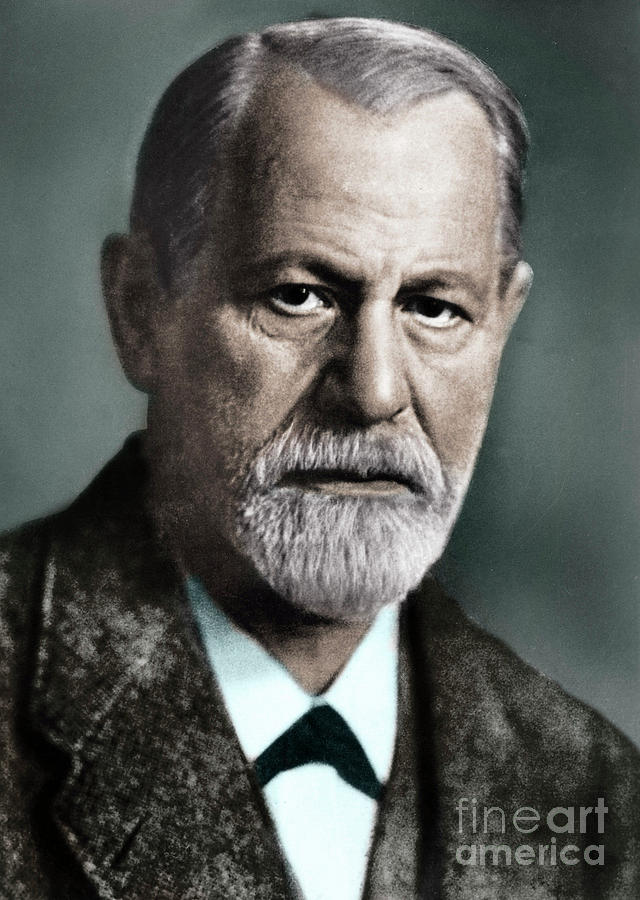
Who is the founder of Psychoanalysis shown in the image?
Therapeutic exposure is a form of_______ therapy.
Reciprocal inhibition is done by -
Which of the following is treated with aversion therapy?
A child gets good marks in his exam and his father gives him a bicycle as a reward. The child then started to study well. What is this line of therapy?
A child performs well in the class exam, and the teacher gives a reward of 500 rupees. Subsequently, the child continues to study hard and achieves good grades consistently. Which principle of operant conditioning is being applied?
Any behavior that is associated with an aversive response is associated with a decrease in the frequency of the behavior. This is called:
A fundamental technique used in psychoanalysis is -
Explanation: ***Freud*** - **Sigmund Freud** is credited with coining the term **psychoanalysis** and developing it into a comprehensive theory of the human psyche. - His work focused on the influence of **unconscious drives**, conflicts, and early childhood experiences on behavior and mental health. *Adler* - **Alfred Adler** developed **individual psychology**, which emphasized the importance of social interest and striving for superiority. - He was initially a student of Freud but later diverged, establishing his own school of thought distinct from psychoanalysis. *Jung* - **Carl Jung** founded **analytical psychology**, introducing concepts such as the collective unconscious and archetypes. - While a prominent figure in early psychoanalytic circles, he also broke with Freud, developing a distinct therapeutic approach. *Eysenck* - **Hans Eysenck** was a prominent figure in **trait theory** and a behaviorist, known for his research on personality dimensions (e.g., extraversion, neuroticism). - His work focused on empirical measurement and statistical analysis of personality, a different approach than the interpretative nature of psychoanalysis.
Explanation: ***Psychoanalysis*** - **Sigmund Freud** is widely recognized as the founder of **psychoanalysis**, a school of thought and a set of therapeutic techniques that originated in the late 19th and early 20th centuries. - Psychoanalysis focuses on uncovering **unconscious thoughts**, motivations, and conflicts that influence behavior and emotional states, often through methods like **free association** and dream analysis. *Counselling* - While counseling involves therapeutic conversations, it is a broader term encompassing various approaches to help individuals cope with emotional or psychological issues. - Counseling as a distinct field is not singularly attributed to Freud, but rather includes many different modalities and theorists. *Flooding* - **Flooding** is a specific technique used in **behavioral therapy**, particularly for phobias and anxiety disorders. - It involves exposing an individual to a feared object or situation for a prolonged period to reduce anxiety through extinction and is associated with **behavioral psychology**, not Freud's psychoanalysis. *Cognitive therapy* - **Cognitive therapy** (CT) and **Cognitive Behavioral Therapy (CBT)**, pioneered by figures like **Aaron T. Beck**, focus on identifying and changing distorted thinking patterns and maladaptive behaviors. - This approach evolved significantly later than Freud's work and represents a distinct theoretical and practical orientation in psychotherapy.
Explanation: ***Sigmund Freud*** - The image clearly depicts **Sigmund Freud**, the Austrian neurologist who founded **psychoanalysis**. - He is widely recognized for his theories on the **unconscious mind**, dream analysis, and defense mechanisms. *John Weyer* - **Johann Weyer** was a Dutch physician and occultist who argued against the persecution of witches in the 16th century. - He is not associated with the founding or development of psychoanalysis. *Franz Alexander* - **Franz Alexander** was a Hungarian-American psychoanalyst and physician, notable for his contributions to **psychosomatic medicine** and the application of psychoanalysis to medical conditions. - While an important figure in psychoanalytic history, he is not the founder and does not match the person in the image. *Eugen Bleuler* - **Eugen Bleuler** was a Swiss psychiatrist who coined the term "**schizophrenia**" and introduced concepts like autism and ambivalence. - He was a contemporary of Freud but focused more on classifying and understanding psychotic disorders, rather than founding psychoanalysis.
Explanation: ***Behavioural*** - **Therapeutic exposure** is a core technique in **behavioral therapy**, particularly in the treatment of anxiety disorders, phobias, and PTSD. - It involves **gradually confronting feared objects, situations, or thoughts** to reduce anxiety and avoidance behaviors through processes like **habituation** and **extinction**. *Supportive* - **Supportive therapy** focuses on providing **empathy, encouragement, and practical advice** to help individuals cope with stressors and improve their functioning. - While it can involve discussing difficult situations, it does not typically involve **direct, structured exposure** to feared stimuli. *Cognitive* - **Cognitive therapy** primarily targets **maladaptive thought patterns** and beliefs, aiming to identify and restructure them. - While insights gained in cognitive therapy can support exposure work, **exposure itself is a behavioral technique**, not a cognitive one. *Psychoanalytical* - **Psychoanalytical therapy** explores **unconscious conflicts, early childhood experiences, and defense mechanisms** to gain insight into present psychological difficulties. - This approach relies heavily on **free association, dream analysis, and transference**, rather than direct exposure methods.
Explanation: ***Systematic desensitization*** - **Reciprocal inhibition** is a core principle in **systematic desensitization**, where a *relaxation response* is used to *inhibit* an *anxiety response*. - This technique involves gradually exposing an individual to their feared stimulus while maintaining a state of **relaxation**, eventually reducing the anxiety associated with it. *Behaviour therapy* - **Behaviour therapy** is a broad category, and while systematic desensitization is a type of behavior therapy, it's not the *only* one. - This option is too general as reciprocal inhibition is a specific mechanism within certain behavioral therapies, not synonymous with the entire field. *All of the options* - This option is incorrect because reciprocal inhibition is a specific mechanism primarily associated with **systematic desensitization**, not with either behavior therapy as a whole or flooding. - Flooding, for example, operates on a different principle of **extinction** through prolonged exposure to intense fear. *Flooding* - **Flooding** involves *prolonged and intense exposure* to a feared stimulus without the use of relaxation techniques until anxiety subsides due to exhaustion and habituation. - This method relies on the principle of **extinction** rather than reciprocal inhibition, as it does not actively introduce an incompatible positive response.
Explanation: ***Paraphilia*** - **Aversion therapy** aims to reduce unwanted behaviors by associating them with unpleasant stimuli, making it suitable for treating **paraphilias** by creating a negative association with the deviant sexual urges. - This therapy is used to help individuals develop an aversion to the stimuli that trigger their maladaptive sexual interests. *Suicidal tendencies* - Suicidal tendencies are serious and require immediate and comprehensive interventions, often involving **crisis intervention**, **medication**, and various forms of **psychotherapy** like cognitive-behavioral therapy (CBT) or dialectical behavior therapy (DBT). - Aversion therapy would be inappropriate and potentially harmful, as it could exacerbate distress and is not designed to address the underlying psychological pain associated with suicidal thoughts. *Depression* - Depression is typically treated with **antidepressant medications** and different forms of **psychotherapy** such as cognitive-behavioral therapy (CBT), interpersonal therapy, or psychodynamic therapy, which focus on mood regulation, thought patterns, and emotional processing. - Aversion therapy is not an effective or recommended treatment for depression, as it does not address the core symptoms of low mood, anhedonia, or cognitive distortions. *Mania* - Mania, often associated with **bipolar disorder**, is primarily treated with **mood stabilizers** (e.g., lithium, valproate) and antipsychotics to manage acute episodes and prevent recurrence. - Aversion therapy is irrelevant to the treatment of mania, as it does not target the biochemical imbalances or extreme mood states characteristic of bipolar disorder.
Explanation: ***Correct: Positive reinforcement*** - **Positive reinforcement** involves adding a desirable stimulus (the bicycle) after a behavior (studying well/getting good marks), which increases the likelihood of that behavior occurring again. - The child received a **reward** for good performance, motivating him to continue studying well. - This is a fundamental principle of **operant conditioning** (B.F. Skinner). *Incorrect: Negative reinforcement* - **Negative reinforcement** would involve removing an aversive stimulus to increase a desired behavior (e.g., stopping nagging when the child starts to study). - In this scenario, something desirable was **added** (bicycle), not something aversive removed. *Incorrect: Omission* - **Omission training** (negative punishment) refers to withholding or removing a reward after an undesirable behavior to decrease that behavior. - This scenario involves **increasing** a desirable behavior through adding a reward, not decreasing behavior by withholding something. *Incorrect: Punishment* - **Punishment** involves either applying an aversive stimulus (positive punishment) or removing a desirable stimulus (negative punishment) to **decrease** an undesirable behavior. - Giving a bicycle is a reward intended to **increase** desired behavior, not decrease undesirable behavior.
Explanation: ***Positive reinforcement*** - **Positive reinforcement** involves adding a **desirable stimulus** (the 500 rupees reward) to increase the likelihood of a desired behavior (studying hard and achieving good grades) in the future. - This is a classic example of **operant conditioning** where the reward strengthens the association between good academic performance and positive outcomes. - The child receives something pleasant (money) contingent upon the desired behavior, thus motivating continued academic effort. *Negative reinforcement* - **Negative reinforcement** involves the **removal of an aversive stimulus** to increase a desired behavior. For example, if the teacher stopped assigning extra homework after the child achieved good grades. - This scenario describes adding something positive (reward), not removing something negative. *Omission* - **Omission**, also known as **response cost** or **negative punishment**, involves **removing a desirable stimulus** to decrease an undesirable behavior. For example, taking away privileges when a child misbehaves. - This situation involves giving a reward to increase behavior, not taking something away to decrease behavior. *Punishment* - **Punishment** involves either **adding an aversive stimulus** (positive punishment) or **removing a desirable stimulus** (negative punishment) to decrease the likelihood of an undesired behavior. - This example describes an intervention that increases a desired behavior, not one that decreases an undesired behavior.
Explanation: ***Punishment*** - **Punishment** is defined as any consequence that reduces the future probability of a behavior. - The association of a behavior with an **aversive response** (something unpleasant) is the classic definition of punishment in operant conditioning, as it decreases the frequency of that behavior. - This can be either **positive punishment** (adding an aversive stimulus) or **negative punishment** (removing a pleasant stimulus). *Negative Reinforcement* - **Negative reinforcement** increases (not decreases) the frequency of a behavior by removing an aversive stimulus. - For example, taking an aspirin (behavior) to relieve a headache (aversive stimulus) increases the likelihood of taking aspirin again. - Key distinction: reinforcement always increases behavior, while punishment decreases it. *Omission* - **Omission** (also called negative punishment or omission training) involves removing a pleasant stimulus following a behavior to decrease its frequency. - This is a type of punishment, but the question specifically describes an **aversive response being associated** with the behavior, which more directly defines general punishment. - Example: Taking away TV privileges (removing pleasant stimulus) rather than adding an unpleasant consequence. *Positive Reinforcement* - **Positive reinforcement** increases the frequency of a behavior by presenting a desirable stimulus after the behavior occurs. - For example, giving a child praise or a reward for good behavior makes them more likely to repeat that behavior. - This is the opposite of what the question describes (increases vs. decreases behavior).
Explanation: ***Correct: Free association*** - This is a core technique in psychoanalysis where the patient is encouraged to speak freely about whatever comes to mind, without censoring thoughts or feelings. - It aims to explore the **unconscious mind** and uncover hidden conflicts, desires, and memories. - Developed by **Sigmund Freud** as the fundamental method replacing hypnosis in psychoanalytic practice. *Incorrect: Concentration* - While focus is important in therapy, **concentration** as a specific technique is not fundamental to psychoanalysis. - Psychoanalysis emphasizes uninhibited thought flow rather than directed attention on a particular issue. *Incorrect: Empathy* - **Empathy** is crucial in all therapeutic relationships for building rapport and understanding the patient's experience. - However, it's a general therapeutic quality, not a unique or fundamental technique specific to psychoanalysis. *Incorrect: Hypnosis* - While Freud initially explored **hypnosis** as a therapeutic tool, he later abandoned it in favor of free association. - Hypnosis is not a fundamental technique of classical psychoanalysis.
Principles of Psychotherapy
Practice Questions
Psychodynamic Psychotherapy
Practice Questions
Cognitive-Behavioral Therapy
Practice Questions
Interpersonal Psychotherapy
Practice Questions
Supportive Psychotherapy
Practice Questions
Group Psychotherapy
Practice Questions
Family Therapy
Practice Questions
Couple Therapy
Practice Questions
Brief Psychotherapies
Practice Questions
Mindfulness-Based Therapies
Practice Questions
Integration of Psychotherapy and Pharmacotherapy
Practice Questions
Evidence-Based Psychotherapy Practices
Practice Questions
Get full access to all questions, explanations, and performance tracking.
Start For Free