One of the important defense mechanisms is:
A pilot whose plane is about to crash, spends five minutes explaining the technical details of the engine malfunction to his copilot. The defense mechanism that the pilot is using is?
What is considered the most effective treatment for Borderline Personality Disorder?
Provision of the Mental Health Act 2017, based on WHO guidelines, includes all, except:
Feed forward mechanism is seen in:
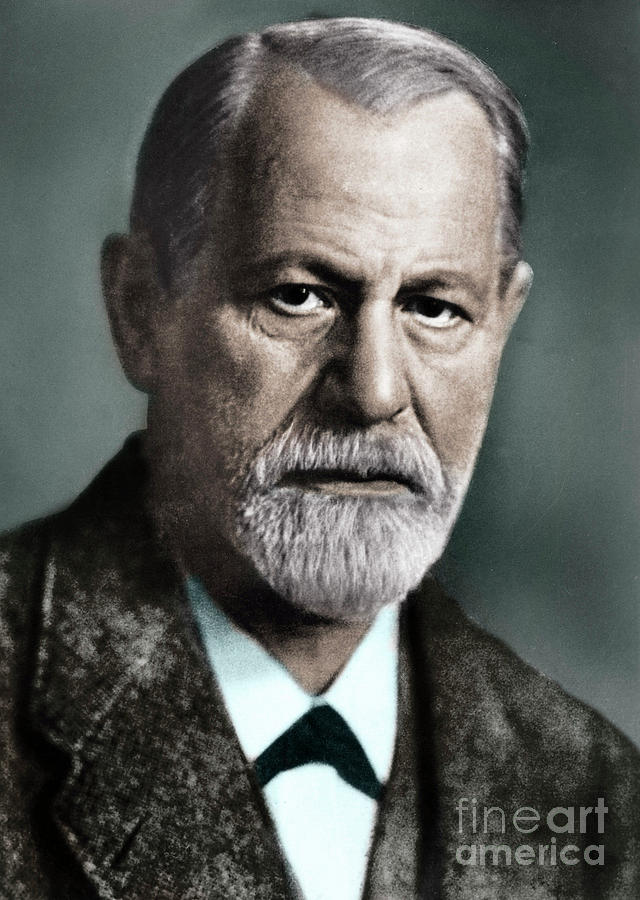
Who is the founder of Psychoanalysis shown in the image?
In which of the following patients would supportive therapy be most challenging to implement effectively?
Which one of the following factors is the most significant as a risk factor for post-partum psychosis?
Systematic desensitization is a therapeutic technique used in which of the following conditions?
What are the indications for Electroconvulsive Therapy (ECT)?
Explanation: ***Repression*** - **Repression** is a primary ego defense mechanism where unacceptable thoughts, feelings, or memories are unconsciously excluded from conscious awareness. - It plays a crucial role in protecting the individual from psychological distress and maintaining the ego's integrity by pushing disturbing content into the **unconscious mind**. - Considered one of the most **important and fundamental** defense mechanisms in psychoanalytic theory, forming the basis for neurotic symptom formation. *Alienation* - **Alienation** refers to a feeling of being isolated, estranged, or disconnected from oneself, others, or society. - While it can be a psychological state or response to stress, it is not considered a **defense mechanism** in the psychoanalytic sense. *Confabulation* - **Confabulation** is the act of producing distorted or fabricated memories without the conscious intention to deceive. - It is often seen in conditions like **Korsakoff's syndrome** and is a symptom of memory impairment rather than a defense mechanism. *Suppression* - **Suppression** is the conscious, voluntary decision to push unwanted thoughts or feelings out of immediate awareness. - Unlike **repression**, which operates unconsciously, suppression involves **deliberate effort** and awareness. - While suppression is also classified as a defense mechanism (a mature one), **repression** is considered more fundamental and "important" as it operates at the unconscious level and is central to psychoanalytic theory.
Explanation: ***Intellectualization*** - This defense mechanism involves **overthinking** and focusing on the **intellectual and technical details** of a stressful situation, rather than acknowledging the emotional impact. - The pilot is using an academic approach to manage anxiety by concentrating on the mechanical aspects of the malfunction, thereby avoiding the overwhelming fear of crashing. *Sublimation* - **Sublimation** is a mature defense mechanism where unacceptable urges or feelings are unconsciously transformed into socially acceptable behaviors. - It involves channeling potentially harmful impulses into constructive activities, which is not what the pilot is doing in this critical situation. *Dissociation* - **Dissociation** involves a detachment from one's immediate surroundings, thoughts, or feelings, often as a response to trauma. - The pilot is actively engaged and focused on the problem, rather than experiencing a disconnection from reality. *Repression* - **Repression** is an unconscious mechanism that keeps disturbing or threatening thoughts, memories, or feelings out of conscious awareness. - The pilot is actively processing and verbalizing information about the malfunction, indicating that the threatening situation is very much in his conscious awareness, not being pushed away.
Explanation: ***Dialectical Behaviour Therapy (DBT)*** - **DBT** is the **gold standard** and most evidence-based psychotherapy specifically developed for Borderline Personality Disorder - Developed by **Marsha Linehan** specifically to target the core symptoms of BPD including emotional dysregulation, impulsivity, and interpersonal difficulties - Combines **cognitive-behavioral techniques** with mindfulness, distress tolerance, emotion regulation, and interpersonal effectiveness skills - Has the **strongest research evidence** for reducing suicidal behavior, self-harm, and improving overall functioning in BPD patients - Multiple RCTs demonstrate DBT's superiority in treating BPD compared to standard care *Cognitive Behavioural Therapy (CBT)* - While **CBT** is effective for many mental health conditions and can help with certain BPD symptoms, it was not specifically designed for BPD - DBT is actually a specialized adaptation of CBT tailored for BPD, making it more targeted and effective for this specific condition - Generic CBT may help with co-occurring conditions like depression or anxiety but lacks the comprehensive approach needed for core BPD features *Combination of DBT and pharmacotherapy* - This combination is clinically useful, especially when treating **co-morbid conditions** like depression, anxiety, or severe mood instability - However, psychotherapy (particularly DBT) remains the **cornerstone** of BPD treatment, with medications serving an adjunctive role - The question asks for the single most effective treatment, which is DBT alone *Pharmacotherapy alone* - **No medication** is FDA-approved specifically for BPD - Pharmacotherapy may help manage specific symptoms (mood swings, impulsivity, brief psychotic episodes) but does not address the core **personality pathology** - Generally not recommended as monotherapy for BPD; should always be combined with psychotherapy
Explanation: ***Screening family members*** - The Mental Health Act 2017 focuses on the **rights, treatment, and support of individuals with mental illness**, not routine screening of their family members. - The Act does not contain provisions mandating **screening of asymptomatic family members**, though family history may be relevant for clinical assessment. - This is **not a provision** outlined in the Act based on WHO guidelines. *Human rights* - The Act is explicitly grounded in the **protection and promotion of human rights** for persons with mental illness (Chapter I). - Ensures care with **dignity, respect, and freedom from discrimination** as core principles. - Aligns with WHO's mental health action plan and human rights framework. *Communication regarding care and treatment* - **Section 4** emphasizes the right to information and **informed consent** for all treatment decisions. - Patients must receive clear communication about their **diagnosis, treatment options, and care plans**. - Includes provisions for **advance directives** and involvement in treatment decisions. *Social support* - **Chapter V** addresses rehabilitation and community-based services, emphasizing the role of **social support systems**. - Promotes **community integration** and access to social resources for recovery. - Recognizes family and community support as essential for long-term mental health management.
Explanation: ***Salivation on smelling food*** - This is a classic example of a **feedforward mechanism** because the body anticipates a future event (eating) based on a sensory cue (smelling food) and initiates a preparatory physiological response (salivation). - The response occurs *before* the actual need for digestion arises, demonstrating proactive regulation. - Part of the **cephalic phase of digestion** mediated by parasympathetic nervous system activation. *Increase in heart rate on standing up* - This is an example of a **feedback mechanism** mediated by baroreceptors and the autonomic nervous system. - When standing, blood pools in lower extremities causing a transient drop in blood pressure, which is detected by baroreceptors. - The body responds by increasing heart rate and peripheral resistance to maintain adequate blood pressure - a reactive response to detected change. *Feeling thirsty while walking in hot temperature* - Thirst in response to hot temperatures is typically a **feedback mechanism** where the body detects increased dehydration (e.g., via osmoreceptors) and signals the need for fluid intake. - It is a reaction to an existing physiological imbalance rather than an anticipation of future needs. *Shivering on exposure to cold temperature* - Shivering is a **feedback mechanism** where the body responds to a drop in core body temperature by generating heat to restore thermal homeostasis. - The body reacts to the cold stimulus *after* the temperature change has occurred, rather than anticipating it.
Explanation: ***Sigmund Freud*** - The image clearly depicts **Sigmund Freud**, the Austrian neurologist who founded **psychoanalysis**. - He is widely recognized for his theories on the **unconscious mind**, dream analysis, and defense mechanisms. *John Weyer* - **Johann Weyer** was a Dutch physician and occultist who argued against the persecution of witches in the 16th century. - He is not associated with the founding or development of psychoanalysis. *Franz Alexander* - **Franz Alexander** was a Hungarian-American psychoanalyst and physician, notable for his contributions to **psychosomatic medicine** and the application of psychoanalysis to medical conditions. - While an important figure in psychoanalytic history, he is not the founder and does not match the person in the image. *Eugen Bleuler* - **Eugen Bleuler** was a Swiss psychiatrist who coined the term "**schizophrenia**" and introduced concepts like autism and ambivalence. - He was a contemporary of Freud but focused more on classifying and understanding psychotic disorders, rather than founding psychoanalysis.
Explanation: ***Patient who is severely ill and uncooperative*** - A **severely ill** patient who is **uncooperative** presents the most **immediate and direct barrier** to implementing supportive therapy effectively. Their **active resistance** to therapeutic interventions (refusing medication, declining to engage, missing appointments) makes it practically impossible to deliver care. - **Uncooperativeness** represents active opposition to treatment, requiring resolution before any therapeutic work can proceed. Without patient engagement, even the most basic supportive interventions cannot be implemented. - While other patients may have limitations, an uncooperative patient fundamentally blocks the therapeutic alliance necessary for any psychotherapy. *Patient who is severely ill and has significant ego dysfunction* - **Ego dysfunction** (impaired reality testing, poor impulse control, weak sense of self) is indeed challenging and represents a relative contraindication to insight-oriented therapies. - However, patients with ego dysfunction may still **passively participate** in supportive therapy, especially when the therapy is structured and focused on basic stabilization rather than insight. - The key difference: ego dysfunction is a **structural limitation** requiring adaptation of technique, whereas uncooperativeness is an **active barrier** preventing any intervention. A patient with ego dysfunction can still potentially benefit from modified supportive approaches, but an uncooperative patient cannot be engaged at all. *Person who is motivated and has good self-control* - This patient would be the **easiest to treat** with supportive therapy due to their intrinsic motivation and ability to manage their own behavior. - Their **motivation** and **self-control** would facilitate adherence to treatment plans and active participation in their care, making implementation straightforward. *Person with good cognitive and functional abilities* - This patient would be **highly amenable to supportive therapy** as their cognitive and functional capacities allow them to understand and participate in treatment. - Good cognitive and functional abilities enable them to comprehend instructions, manage their own care, and engage effectively with healthcare providers, presenting minimal implementation challenges.
Explanation: ***History of post-partum psychosis*** - A **prior episode of postpartum psychosis** is the strongest risk factor for recurrence, with recurrence rates estimated to be as high as 50-70%. - This indicates a heightened **biological vulnerability** to the hormonal and psychosocial stresses of the postpartum period. *Primiparity* - While primiparity can be associated with increased stress, it is a **less significant risk factor** for postpartum psychosis compared to a history of the condition. - The stress of a first pregnancy and childbirth can contribute to other perinatal mood disorders, but does not carry the same high recurrence risk as previous psychosis. *Undesired pregnancy* - An undesired pregnancy is often associated with **increased maternal stress, anxiety, and depression**, but it is generally a **weaker predictor** of postpartum psychosis than a personal history of the disorder. - While it can complicate the perinatal period, it doesn't confer the same high risk for a severe psychotic episode. *Unmarried status* - Unmarried status may increase the risk of **postpartum depression** due to lack of social support or increased stress, but it is **not a primary risk factor** for postpartum psychosis itself. - The familial and social support systems are important for overall well-being, but a previous psychotic episode is a much stronger predictor.
Explanation: **Explanation:** **Systematic Desensitization** is a behavioral therapy technique developed by **Joseph Wolpe**, based on the principle of **Classical Conditioning** (specifically **Reciprocal Inhibition**). The core concept is that a person cannot be anxious and relaxed at the same time. It involves three steps: training in deep muscle relaxation (Jacobson’s Progressive Muscle Relaxation), constructing a hierarchy of anxiety-provoking stimuli, and gradual exposure to these stimuli while maintaining a relaxed state. * **Why Phobia is Correct:** Systematic desensitization is the treatment of choice for **Specific Phobias** (e.g., fear of heights, spiders). By pairing the feared object with relaxation, the "anxiety response" is replaced by a "relaxation response" (Counter-conditioning). **Analysis of Incorrect Options:** * **Dissociation:** Managed primarily through supportive psychotherapy, hypnosis, or "Amobarbital interviews" to recover repressed memories, rather than behavioral conditioning. * **Schizoid Personality:** This is a personality disorder characterized by social detachment. Treatment focuses on social skills training or supportive therapy; desensitization is ineffective as there is no specific phobic stimulus. * **Psychosis:** Conditions like Schizophrenia require pharmacotherapy (Antipsychotics). Behavioral therapies are used only for social rehabilitation, not for treating core psychotic symptoms. **High-Yield Clinical Pearls for NEET-PG:** * **Founder:** Joseph Wolpe. * **Basis:** Reciprocal Inhibition / Counter-conditioning. * **Hierarchy:** Uses the **SUD scale** (Subjective Units of Distress) to rank fears. * **In-vivo vs. Imaginal:** While Wolpe used imaginal exposure, **In-vivo exposure** (real-life) is now considered more effective for most phobias. * **Flooding:** A related technique where the patient is exposed to the maximum intensity of the feared stimulus immediately (preventing the avoidance response).
Explanation: **Explanation:** Electroconvulsive Therapy (ECT) is a biological treatment involving the induction of a generalized seizure through electrical stimulation. In modern psychiatry, the primary indication for ECT is when a **rapid clinical response** is required or when pharmacological treatments have failed. **Why Option B is Correct:** Severe **Depression with suicidal tendency** is the absolute first-line indication for ECT. When a patient is actively suicidal, the 2–4 week lag period of antidepressants is too risky. ECT provides the fastest reduction in depressive symptoms and suicidal ideation, making it a life-saving intervention in emergency psychiatry. Other major indications include severe catatonia and treatment-resistant mania. **Why Other Options are Incorrect:** * **A. Paranoid Schizophrenia:** While ECT can be used as an adjunct in schizophrenia (especially if catatonic or affective symptoms are present), it is not the primary or first-line treatment. Antipsychotics remain the mainstay. * **C. Neurotic Depression:** Also known as Dysthymia or Persistent Depressive Disorder, this condition is characterized by low-grade, chronic symptoms often linked to personality and psychosocial stressors. It responds better to psychotherapy and SSRIs; ECT is generally ineffective for non-psychotic, neurotic-level depression. **High-Yield Clinical Pearls for NEET-PG:** * **Most common side effect:** Retrograde amnesia (usually resolves). * **Absolute Contraindication:** There are no absolute contraindications, but **Increased Intracranial Pressure (ICP)** is the most significant relative contraindication due to the risk of brain herniation. * **Modified ECT:** Involves the use of an anesthetic (Thiopental/Propofol) and a muscle relaxant (**Succinylcholine**) to prevent bone fractures. * **Electrode Placement:** Bilateral (Gold standard for efficacy) vs. Unilateral (Lower cognitive side effects).
Get full access to all questions, explanations, and performance tracking.
Start For Free