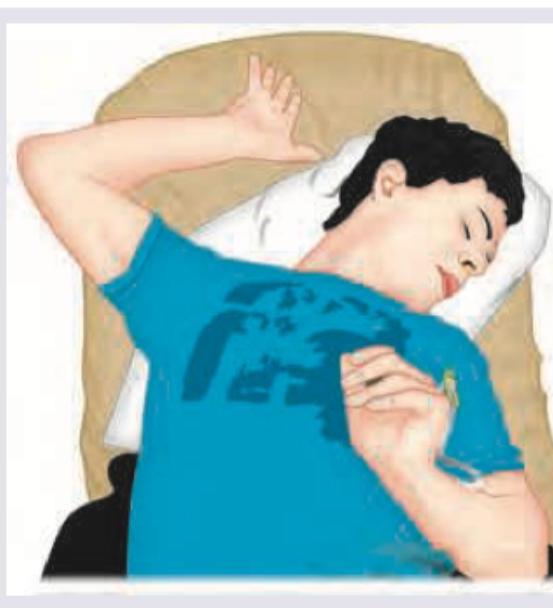
A patient on haloperidol for 2 years presents with orofacial dyskinesia and extrapyramidal symptoms. What is the appropriate treatment?
A patient on long-term antipsychotics develops involuntary mouth and lip movements (perioral dyskinesia). What is the best treatment?
A 29 year old lady came to psychiatry OPD with symptoms of hypomania. She has a past history of manic episode. Now, she is planning to conceive. Which drug should be avoided for being highly teratogenic to the fetus?
Which of the following is not an off-label use of risperidone?
Drug of choice for treatment of akathisia is:-
The drug of choice for obsessive-compulsive disorder:
Electroconvulsive therapy is not useful in which of the following conditions?
Treatment modality NOT used in ADHD includes
Drug of choice for initial pharmacological treatment of Tourette syndrome -
Which of the following antidepressants can be safely used in elderly depression?
Explanation: ***Tardive dyskinesia - valbenazine*** - The patient's presentation of **orofacial dyskinesia** following **long-term use** (2 years) of a high-potency antipsychotic like haloperidol is highly characteristic of **Tardive Dyskinesia (TD)**, a chronic EPS. - **Valbenazine** (a VMAT2 inhibitor) is one of the primary, FDA-approved treatments specifically used to reduce the severity of abnormal movements in TD. *Acute dystonia - ropinirole* - **Acute dystonia** is an immediate reaction (hours to days) involving severe muscle spasms, not a delayed presentation of dyskinesia. - The treatment for acute dystonia is typically an **anticholinergic** (e.g., benztropine) or diphenhydramine; **ropinirole** is a dopamine agonist used for Parkinson's disease. *Akathisia - propranolol* - **Akathisia** is defined by a subjective feeling of restlessness and an objective inability to sit still, which is different from the involuntary, choreiform movements of **dyskinesia**. - Although **propranolol** is the appropriate treatment for akathisia, the symptom cluster (orofacial dyskinesia) indicates a diagnosis of **TD**. *Parkinsonism - amantadine* - Drug-induced **Parkinsonism** involves bradykinesia, rigidity, and resting tremor, rather than the prominent abnormal mouth and face movements (dyskinesia) seen here. - While **amantadine** is used for drug-induced parkinsonism, it is generally ineffective or potentially worsens the movements associated with **Tardive Dyskinesia**.
Explanation: ***Stop antipsychotic and give tetrabenazine*** - Managing **Tardive Dyskinesia (TD)** involves either switching to a less potent antipsychotic (like clozapine) or, ideally, reducing or discontinuing the offending antipsychotic if clinically feasible. - **Tetrabenazine** (or its analogues valbenazine/deutetrabenazine) are **VMAT2 inhibitors** that decrease presynaptic dopamine release, making them the **first-line pharmacological treatment** for established TD. - This combination represents the most definitive approach when the underlying psychiatric condition allows antipsychotic discontinuation. *Increase the antipsychotic dose* - Increasing the antipsychotic dose temporarily masks TD by increasing central dopamine receptor blockade, but this worsens the underlying **striatal dopamine receptor upregulation** that causes TD. - This strategy only delays definitive treatment and prolongs the risk of severe, irreversible dyskinesia. - While it may suppress movements transiently, it is **never** appropriate long-term management. *Start benzodiazepines* - **Benzodiazepines** (GABA agonists) are generally ineffective for the core involuntary movements of established **Tardive Dyskinesia**. - They may be useful for acute movement disorders or anxiety but lack efficacy against chronic, persistent dopamine-related dyskinesia. *Give anticholinergics* - **Anticholinergic drugs** (e.g., benztropine, trihexyphenidyl) are the treatment of choice for **acute dystonia** and drug-induced Parkinsonism. - These agents are generally **contraindicated** in Tardive Dyskinesia because they often worsen or reveal underlying dyskinetic movements.
Explanation: ***Valproate*** - **Valproate** is highly **teratogenic** and is associated with multiple birth defects, including **neural tube defects** (e.g., spina bifida), cardiac anomalies, and craniofacial defects. - Due to its significant risks, it is generally **contraindicated** in women of childbearing potential, especially during pregnancy, unless no other suitable alternatives exist. *Oxcarbazepine* - While it has some teratogenic risk (e.g., cleft palate), the risk is generally considered **lower than valproate**. - It is often favored over valproate in pregnant women requiring mood stabilizers, but still requires careful risk-benefit assessment. *Lithium* - **Lithium** is associated with an increased risk of **Ebstein's anomaly**, a specific cardiac defect, if used during the first trimester. - However, the overall risk of major malformations is still **lower than valproate**, and it can be used with careful monitoring if other options are not viable. *Olanzapine* - **Olanzapine** is an **atypical antipsychotic** that can be used as a mood stabilizer and is considered to have a **relatively lower teratogenic risk** compared to anticonvulsants like valproate. - While it's not entirely risk-free (associated with gestational diabetes and fetal growth issues), it's often a safer option in pregnancy for bipolar disorder than valproate.
Explanation: ***Bipolar disorder*** - **Risperidone** is FDA-approved for the treatment of **bipolar I disorder**, both as monotherapy and adjunctive therapy for acute manic or mixed episodes. - This means its use for bipolar disorder is an **on-label indication**, not an off-label use. *PTSD* - The use of risperidone for **post-traumatic stress disorder (PTSD)** is considered an **off-label use**, as it is not specifically approved by the FDA for this condition. - While atypical antipsychotics may be used in some cases for severe PTSD symptoms, especially those involving psychosis or severe agitation, it is not a primary or approved treatment. *OCD* - The use of risperidone as an adjunct in **obsessive-compulsive disorder (OCD)**, particularly in treatment-resistant cases, is an **off-label use**. - While some studies support its use for augmenting SSRIs in OCD, it is not an FDA-approved indication. *Dementia* - Using risperidone for behavioral symptoms associated with **dementia** (e.g., aggression, agitation) is generally considered an **off-label use**. - Although it may be prescribed for these symptoms, there are significant concerns regarding increased mortality risk in elderly patients with dementia-related psychosis, leading to specific warnings and limited official indications.
Explanation: ***Propranolol*** - **Beta-blockers** like propranolol are considered first-line for treating **akathisia**, especially in cases induced by antipsychotics. - They work by reducing the **adrenergic hyperactivity** and the sensation of inner restlessness characteristic of akathisia. *Haloperidol* - Haloperidol is a **first-generation antipsychotic** that is a common cause of drug-induced **akathisia**. - Administering it would likely **worsen** rather than treat the condition. *Fluoxetine* - Fluoxetine is a **selective serotonin reuptake inhibitor (SSRI)** used to treat depression and anxiety disorders. - It is not indicated for the treatment of **akathisia** and can sometimes induce or worsen motor restlessness. *Lithium* - Lithium is a **mood stabilizer** primarily used for bipolar disorder. - It is not a treatment for **akathisia** and can itself cause various neurological side effects, though akathisia is less common.
Explanation: ***Fluoxetine*** - **Fluoxetine** is a **selective serotonin reuptake inhibitor (SSRI)** and is considered a first-line treatment for **obsessive-compulsive disorder (OCD)** due to its efficacy in reducing obsessive thoughts and compulsive behaviors. - SSRIs, including fluoxetine, help increase serotonin levels in the brain, which is thought to be dysregulated in OCD. *Imipramine* - **Imipramine** is a **tricyclic antidepressant (TCA)** primarily used for depression and sometimes panic disorder. - While TCAs can have some serotonergic effects, they are generally less effective and have more side effects than SSRIs for treating OCD. *Chlorpromazine* - **Chlorpromazine** is a **first-generation antipsychotic** mainly used to treat psychosis, such as in schizophrenia, and severe agitation. - It works primarily by blocking dopamine receptors and is not indicated as a primary treatment for OCD, though it might be used as an adjunct in severe, treatment-refractory cases. *Benzodiazepine* - **Benzodiazepines** are anxiolytics used for short-term relief of anxiety and panic attacks. - They provide symptomatic relief from anxiety associated with OCD but do not address the core obsessive-compulsive symptoms and are not considered a primary treatment due to potential for dependency and lack of effect on underlying mechanisms.
Explanation: ***Panic attacks*** - ECT has **no established role** in the treatment of panic disorder or panic attacks. - **First-line treatments** include SSRIs, benzodiazepines, and cognitive behavioral therapy (CBT). - ECT is not indicated for **anxiety-predominant disorders** and there is no evidence supporting its use in panic attacks. *Depression* - ECT is a **highly effective** treatment for **severe major depression**, particularly: - **Treatment-resistant depression** (failed multiple antidepressant trials) - **Psychotic depression** (depression with psychotic features) - **Severe melancholic or catatonic depression** - Depression with **high suicide risk** requiring rapid response - ECT is considered one of the most effective treatments in psychiatry for severe depression. *Seizures* - ECT **induces controlled therapeutic seizures** to achieve psychiatric benefits, but it is **not a treatment for epilepsy** or seizure disorders. - The therapeutic effect in psychiatric conditions is mediated through the induced seizure and its neurobiological effects. - ECT does **not treat or prevent epileptic seizures**; patients with epilepsy can safely receive ECT with appropriate precautions. *Delirium* - ECT can be used in **highly selected cases** of refractory delirium, particularly: - Delirium with **severe agitation** unresponsive to medical management - Delirium in the context of **catatonia** - While not a first-line treatment, ECT **has documented efficacy** in specific refractory cases of delirium when conventional treatments have failed.
Explanation: ***Haloperidol*** - **Haloperidol** is an **antipsychotic medication** primarily used to treat psychotic disorders (e.g., schizophrenia) and severe behavioral problems, tics, or Tourette's syndrome, not ADHD. - Its mechanism of action involves **dopamine D2 receptor antagonism**, which is not the primary pharmacological target for ADHD symptom management. *Atomoxetine* - **Atomoxetine** is a **selective norepinephrine reuptake inhibitor (SNRI)** and is a non-stimulant medication approved for the treatment of ADHD. - It works by increasing the levels of **norepinephrine** in the brain, improving attention and reducing impulsivity. *Dexamphetamine* - **Dexamphetamine** is a **central nervous system stimulant** used in the treatment of ADHD. - It works by increasing levels of **dopamine** and **norepinephrine** in the brain, leading to improved focus and reduced hyperactivity. *Clonidine* - **Clonidine** is an **alpha-2 adrenergic agonist** that can be used off-label or as an adjunct therapy for ADHD, particularly for managing hyperactivity, impulsivity, and sleep disturbances associated with the disorder. - It helps to regulate neurotransmitters that influence attention and behavior, although it is not a first-line treatment for core ADHD symptoms compared to stimulants.
Explanation: ***Clonidine*** - **Clonidine** is often considered a first-line treatment for Tourette syndrome, especially in children and adolescents, due to its favorable side effect profile compared to typical antipsychotics. - As an **alpha-2 adrenergic agonist**, it helps reduce tic severity and associated symptoms like ADHD and impulsivity by modulating neurotransmitter release in the brain. *B complex* - **B vitamins** are generally not indicated for the treatment of Tourette syndrome, as there is no robust scientific evidence to support their efficacy in managing tics. - While essential for overall neurological health, they do not directly address the pathophysiology of tic disorders. *Haloperidol* - **Haloperidol**, a **first-generation antipsychotic**, is highly effective in reducing tics but is generally reserved for severe cases due to its significant side effects, including extrapyramidal symptoms and sedation. - It works by blocking **dopamine D2 receptors** but its adverse effects limit its use as an initial agent of choice. *Valproate* - **Valproate** is an anticonvulsant and mood stabilizer primarily used for epilepsy, bipolar disorder, and migraine prevention. - It is not a standard or preferred treatment for Tourette syndrome, as its efficacy in tic reduction is limited and it carries significant side effects.
Explanation: ***Mirtazapine*** - Mirtazapine is often a good choice in elderly patients because it has a relatively **favorable side effect profile** in this population, causing less anticholinergic effects and orthostatic hypotension compared to many other antidepressants. - Its **sedating properties** can be beneficial for elderly patients who also suffer from insomnia, and its **appetite-stimulating effects** can help those with poor nutritional intake. *Phenelzine* - Phenelzine is a **monoamine oxidase inhibitor (MAOI)**, which carries a significant risk of **hypertensive crisis** due to interactions with tyramine-rich foods and many medications, making it generally unsafe for elderly use. - It also has a high incidence of other side effects, including **orthostatic hypotension** and **sedation**, which are particularly dangerous in older adults. *Fluoxetine* - Fluoxetine, an **SSRI**, has a very **long half-life** and can accumulate in elderly patients, increasing the risk of side effects like hyponatremia, gastrointestinal upset, and agitation. - While effective, its **activating properties** can exacerbate anxiety or insomnia in some elderly individuals, and there's a risk of **drug-drug interactions** due to its potent CYP2D6 inhibition. *Trazodone* - Trazodone is primarily used off-label at low doses for **insomnia** due to its prominent sedative effects, but it can cause significant **orthostatic hypotension** and cardiac arrhythmias in the elderly at antidepressant doses. - There is also a risk of **priapism** in men, and its strong sedative properties can lead to increased falls risk and daytime sleepiness, which are undesirable in the elderly.
Principles of Psychopharmacology
Practice Questions
Antipsychotic Medications
Practice Questions
Antidepressant Medications
Practice Questions
Mood Stabilizers
Practice Questions
Anxiolytics and Hypnotics
Practice Questions
Stimulants and Cognitive Enhancers
Practice Questions
Pharmacokinetics and Pharmacodynamics
Practice Questions
Drug Interactions
Practice Questions
Adverse Effects and Management
Practice Questions
Pharmacogenomics in Psychiatry
Practice Questions
Special Populations Considerations
Practice Questions
Treatment Algorithms and Guidelines
Practice Questions
Get full access to all questions, explanations, and performance tracking.
Start For Free