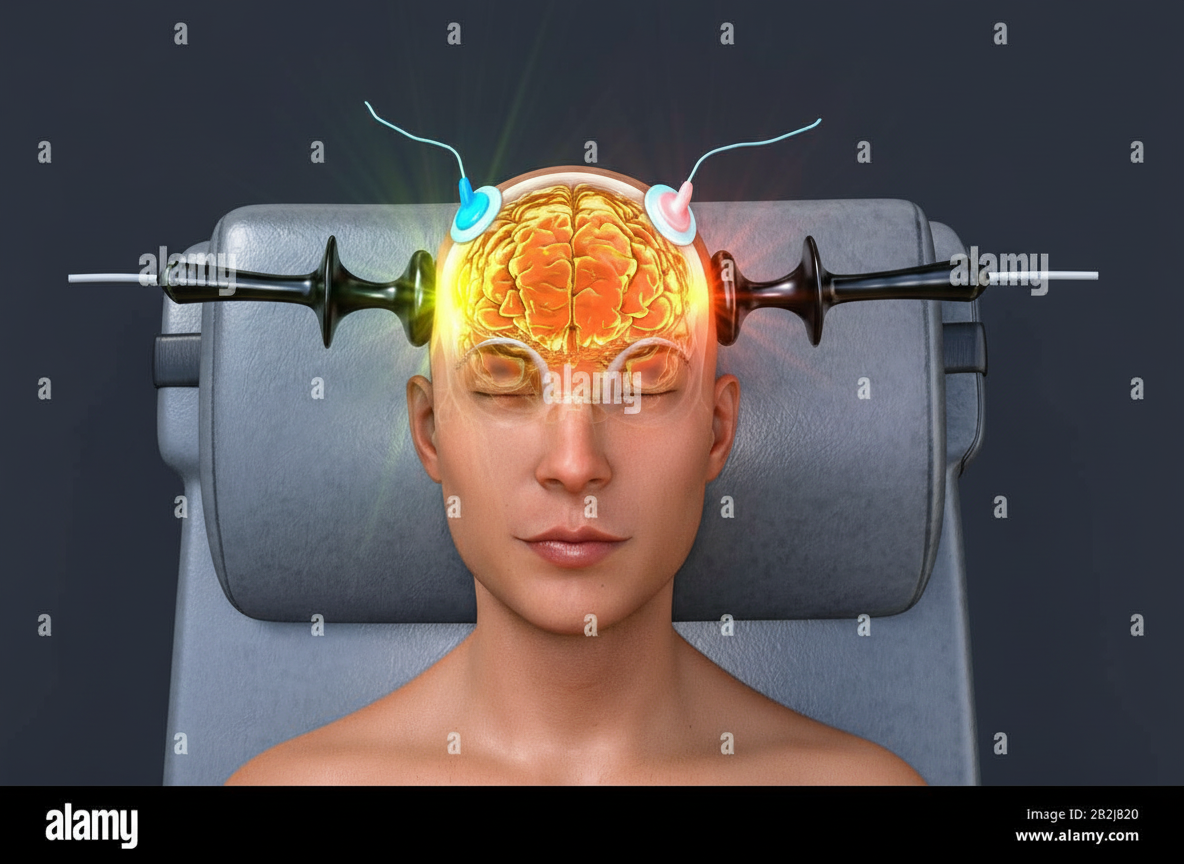
Which of the following is a true statement regarding lithium toxicity?
What is true about neuroleptic malignant syndrome?
A patient on antipsychotic for the past 4 weeks presents to the emergency department with acute onset of fever, excessive sweating, confusion, rigidity of limbs, and decreased communication. Examination reveals a temperature of 104°F, pulse rate of 120/min, blood pressure of 150/100 mmHg, and disorientation. What is the most probable diagnosis?
Which of the following is NOT used in the management of tardive dyskinesia?
Which of the following drugs is known to cause hypothyroidism?
A psychiatric patient taking medication develops tremor, thyroid enlargement, and leukocytosis. Which drug is most likely implicated?
What is the therapeutic serum level of lithium in acute mania?
Long term use of lithium is known to cause which of the following?
A 28-year-old woman with bipolar disorder has a lithium level of 2.3 mEq/L (normal range 0.6-1.25 mEq/L). Which of the following side effects is most likely to occur?
Which of the following medications is known to cause sialorrhea?
Explanation: **Explanation:** The correct answer is **B: Toxicity is increased by decreased serum sodium levels.** **Mechanism of Action:** Lithium is a monovalent cation that is handled by the kidneys in a manner very similar to sodium. It is filtered by the glomerulus and approximately 80% is reabsorbed in the **proximal convoluted tubule (PCT)**. Lithium and sodium compete for the same transport mechanisms. When serum sodium levels are low (hyponatremia), the body attempts to conserve sodium by increasing its reabsorption in the PCT. Consequently, the kidneys inadvertently increase the reabsorption of lithium as well, leading to toxic serum levels. **Analysis of Incorrect Options:** * **Option A:** Increased serum sodium levels (hypernatremia) or high salt intake actually promote lithium excretion, thereby *decreasing* lithium levels. * **Option C:** While renal failure affects lithium clearance, the question specifically asks for a "true statement regarding lithium toxicity" in the context of physiological triggers. While ATN reduces clearance, the relationship with sodium (Option B) is a more fundamental pharmacological principle frequently tested in NEET-PG. * **Option D:** Lithium has a **narrow therapeutic index** (0.6–1.2 mEq/L). Toxicity does not require "triple" the dose; clinical signs of toxicity can appear at levels as low as 1.5 mEq/L, and severe toxicity occurs above 2.0 mEq/L. **High-Yield Clinical Pearls for NEET-PG:** * **Drugs that increase Lithium levels:** Thiazide diuretics (most common trigger), NSAIDs (except Aspirin/Sulindac), and ACE inhibitors. * **Early signs of toxicity:** Coarse tremors (fine tremors are a side effect), nausea, vomiting, and diarrhea. * **Late signs:** Ataxia, dysarthria, seizures, and coma. * **Management:** Hemodialysis is the treatment of choice for severe toxicity (levels >3.5 mEq/L or >2.5 mEq/L with symptoms).
Explanation: **Neuroleptic Malignant Syndrome (NMS)** is a life-threatening idiosyncratic reaction to antipsychotic medications, characterized by a tetrad of clinical features: mental status changes, muscular rigidity, hyperthermia, and autonomic instability. **Explanation of Options:** * **Option A:** While all dopamine antagonists can cause NMS, **first-generation (typical) antipsychotics** (e.g., Haloperidol, Fluphenazine) are more frequently associated with the condition due to their potent D2 receptor antagonism. * **Option B:** The clinical presentation typically includes "lead-pipe" **rigidity**, high-grade **fever** (hyperpyrexia), and signs of autonomic dysfunction such as **palpitations** (tachycardia), labile blood pressure, and diaphoresis. * **Option C:** Management begins with immediate discontinuation of the offending agent and supportive care. Pharmacologically, **Dantrolene** (a direct-acting muscle relaxant) is used to reduce hyperthermia and rigidity. Dopamine agonists like **Bromocriptine** or Amantadine are also used to restore dopaminergic tone. Since all statements are clinically accurate, **Option D** is the correct answer. **High-Yield NEET-PG Pearls:** 1. **Laboratory Hallmark:** Significantly elevated **Creatine Phosphokinase (CPK)** levels due to rhabdomyolysis. Leukocytosis and metabolic acidosis are also common. 2. **Mnemonic (FEVER):** **F**ever, **E**ncephalopathy, **V**itals unstable, **E**levated CPK, **R**igidity. 3. **Differential Diagnosis:** Unlike Serotonin Syndrome (which presents with hyperreflexia and myoclonus), NMS is characterized by **hyporeflexia** and "lead-pipe" rigidity. 4. **Risk Factors:** Rapid dose escalation, high-potency drugs, and dehydration.
Explanation: ### Explanation **Correct Option: D. Neuroleptic Malignant Syndrome (NMS)** The clinical presentation is a classic triad of **Neuroleptic Malignant Syndrome (NMS)**, a life-threatening idiosyncratic reaction to antipsychotics (neuroleptics). The diagnosis is based on the presence of: 1. **Hyperthermia:** High-grade fever (104°F). 2. **Autonomic Instability:** Tachycardia (120/min), hypertension (150/100 mmHg), and diaphoresis. 3. **Muscle Rigidity:** Characteristically described as "lead-pipe" rigidity. 4. **Altered Mental Status:** Confusion, disorientation, and decreased communication (mutism). NMS typically occurs within the first few weeks of starting or increasing the dose of dopamine antagonists. The underlying pathophysiology involves massive dopamine blockade in the nigrostriatal pathway (rigidity) and hypothalamus (temperature dysregulation). **Why Incorrect Options are Wrong:** * **A. Lithium toxicity:** Usually presents with gastrointestinal symptoms (vomiting, diarrhea), coarse tremors, ataxia, and seizures. It does not typically cause "lead-pipe" rigidity or extreme hyperthermia. * **B. Aggravation of psychosis:** While patients may be confused, psychosis alone does not cause autonomic instability, high fever, or muscular rigidity. * **C. Dystonia:** This is an Extrapyramidal Side Effect (EPS) characterized by sudden, involuntary muscle contractions (e.g., torticollis, oculogyric crisis). It does not involve systemic symptoms like fever or autonomic dysfunction. **High-Yield Clinical Pearls for NEET-PG:** * **Key Lab Finding:** Elevated **Creatine Phosphokinase (CPK)** levels and leukocytosis are common. * **Treatment of Choice:** Immediate discontinuation of the offending drug, aggressive cooling, and pharmacological intervention with **Dantrolene** (muscle relaxant) or **Bromocriptine** (dopamine agonist). * **Mnemonic (FEVER):** **F**ever, **E**ncephalopathy, **V**itals unstable, **E**levated enzymes (CPK), **R**igidity.
Explanation: **Explanation:** **Tardive Dyskinesia (TD)** is a delayed-onset extrapyramidal side effect caused by the long-term blockade of dopamine (D2) receptors, leading to **dopamine receptor supersensitivity** in the nigrostriatal pathway. **Why Flupenthixol is the correct answer:** Flupenthixol is a **typical (first-generation) antipsychotic** that acts as a potent D2 receptor antagonist. Since TD is caused by prolonged D2 blockade and subsequent receptor up-regulation, administering more D2 antagonists like Flupenthixol will eventually worsen the underlying pathophysiology, even if it temporarily "masks" the symptoms. Therefore, it is contraindicated in the management of TD. **Analysis of other options:** * **Clonazepam:** Benzodiazepines are used as adjunctive therapy to reduce the severity of dyskinetic movements by enhancing GABAergic inhibitory neurotransmission. * **Vitamin E:** It is used based on the theory that TD involves free-radical-mediated neuronal damage. High-dose Vitamin E (Alpha-tocopherol) acts as an antioxidant to prevent further damage. * **Ondansetron:** This 5-HT3 receptor antagonist has shown efficacy in some clinical trials for reducing TD symptoms, likely through its indirect modulation of the dopaminergic system. **High-Yield Clinical Pearls for NEET-PG:** 1. **First step in management:** Prevention is key. If TD occurs, the first step is to **taper and stop** the offending antipsychotic or switch to **Clozapine** (the antipsychotic with the lowest risk of TD). 2. **Drug of Choice:** **VMAT-2 inhibitors** (e.g., Valbenazine, Deutetrabenazine) are now considered the first-line FDA-approved treatments for TD. 3. **Risk Factors:** Old age, female gender, and the use of first-generation antipsychotics. 4. **Note:** Anticholinergics (like Trihexyphenidyl) **worsen** TD, unlike other extrapyramidal symptoms where they are used as treatment.
Explanation: **Explanation** **Lithium carbonate** is the correct answer. Lithium is a mood stabilizer primarily used for Bipolar Affective Disorder (BPAD). It is well-known for its endocrine side effects, specifically its ability to cause **hypothyroidism** and goiter. **Mechanism:** Lithium interferes with thyroid function at multiple levels: 1. It inhibits the uptake of iodine into follicular cells. 2. It interferes with the iodination of tyrosine. 3. Most significantly, it **inhibits the release of thyroid hormones (T3 and T4)** from the thyroid gland by interfering with thyroglobulin pinocytosis. This leads to a compensatory rise in TSH, which can cause a goiter. **Analysis of Incorrect Options:** * **Haloperidol (A):** A typical antipsychotic (D2 blocker). Its primary side effects are Extrapyramidal Symptoms (EPS) and hyperprolactinemia, not thyroid dysfunction. * **Clozapine (B):** An atypical antipsychotic. Its "dreaded" side effects include agranulocytosis, seizures, and metabolic syndrome (weight gain, diabetes), but it does not cause hypothyroidism. * **Amoxapine (D):** A tricyclic antidepressant (TCA) with dopamine-blocking properties. It is associated with EPS and anticholinergic effects, but not thyroid suppression. **High-Yield Clinical Pearls for NEET-PG:** * **Monitoring:** Before starting Lithium, baseline **Thyroid Function Tests (TFTs)** and Renal Function Tests (RFTs) are mandatory. * **Management:** If a patient develops hypothyroidism on Lithium, you do **not** necessarily stop the drug. Instead, continue Lithium and add **Levothyroxine** supplementation. * **Other Endocrine Effect:** Lithium can also cause **hyperparathyroidism** (leading to hypercalcemia). * **Renal Effect:** It is a common cause of **Nephrogenic Diabetes Insipidus** (treated with Amiloride).
Explanation: **Explanation:** The correct answer is **Lithium**. This classic triad of symptoms—**fine tremors, goiter (thyroid enlargement), and leukocytosis**—is a hallmark of Lithium therapy. 1. **Why Lithium is correct:** * **Tremors:** Fine hand tremors are the most common side effect of Lithium. (Coarse tremors, however, indicate toxicity). * **Thyroid Enlargement:** Lithium inhibits the release of thyroid hormones (T3 and T4) by interfering with iodination and coupling. This leads to increased TSH levels, resulting in goiter and potentially hypothyroidism. * **Leukocytosis:** Lithium causes a benign, reversible increase in the white blood cell count (specifically neutrophils) by stimulating granulopoiesis. This is sometimes used therapeutically in Felty’s syndrome. 2. **Why other options are incorrect:** * **Clomipramine (TCA):** Typically causes anticholinergic side effects (dry mouth, blurred vision, constipation) and cardiac arrhythmias in overdose. * **Haloperidol (Typical Antipsychotic):** Primarily causes Extrapyramidal Symptoms (EPS) like acute dystonia, parkinsonism (resting tremor), and akathisia, but not thyroid enlargement or leukocytosis. * **Olanzapine (Atypical Antipsychotic):** Associated with significant weight gain, dyslipidemia, and metabolic syndrome. **NEET-PG High-Yield Pearls:** * **Therapeutic Index:** Lithium has a narrow therapeutic index (0.6–1.2 mEq/L). * **Teratogenicity:** Causes **Ebstein’s Anomaly** (atrialization of the right ventricle). * **Renal Side Effect:** Can cause Nephrogenic Diabetes Insipidus (treated with Amiloride). * **L-nemonic:** **L**eukocytosis, **I**nsipidus (Diabetes), **T**remors/Teratogenic, **H**ypothyroidism.
Explanation: **Explanation:** Lithium is the gold-standard mood stabilizer used for the treatment of Bipolar Affective Disorder (BPAD). It has a **narrow therapeutic index**, meaning the difference between a therapeutic dose and a toxic dose is very small, necessitating regular Therapeutic Drug Monitoring (TDM). 1. **Why Option B is Correct:** In the **acute phase of mania**, higher serum levels are required to control symptoms effectively. The established therapeutic range is **0.8 to 1.2 mEq/L** (often extended up to **1.5 mEq/L** in severe cases). Once the patient is stabilized, the maintenance dose is lower, typically **0.6 to 1.2 mEq/L**. 2. **Why Other Options are Incorrect:** * **Option A (0.2-0.5 mEq/L):** These levels are sub-therapeutic and will not provide clinical improvement in mania. * **Option C (1-2 mEq/L):** While it overlaps with the therapeutic range, levels above 1.5 mEq/L are generally considered the threshold for early toxicity. * **Option D (2-5 mEq/L):** These are toxic levels. Levels >2.0 mEq/L indicate severe toxicity, and levels >3.5 mEq/L are life-threatening emergencies requiring hemodialysis. **High-Yield Clinical Pearls for NEET-PG:** * **Sampling Time:** Blood for TDM should be drawn **12 hours after the last dose** (Steady-state is reached in 4-5 days). * **Side Effects:** Most common acute side effect is **fine tremors**; most common endocrine side effect is **hypothyroidism**. * **Teratogenicity:** Causes **Ebstein’s Anomaly** (atrialization of the right ventricle) if taken during pregnancy. * **Toxicity Precipitants:** Dehydration, low sodium intake, and drugs like **NSAIDs, Thiazides, and ACE inhibitors** can increase lithium levels.
Explanation: **Explanation:** Lithium is the gold-standard mood stabilizer for Bipolar Affective Disorder (BPAD), but its long-term use is associated with specific endocrine and renal side effects due to its narrow therapeutic index. **Why Hypothyroidism is Correct:** Lithium interferes with thyroid function at multiple levels. It inhibits the uptake of iodine into follicular cells, interferes with the iodination of tyrosine, and—most significantly—**inhibits the release of T3 and T4** from the thyroid gland. Over time, this leads to a compensatory rise in Thyroid Stimulating Hormone (TSH), resulting in **Lithium-induced hypothyroidism** (seen in 5–15% of patients) and occasionally a non-toxic goiter. **Analysis of Incorrect Options:** * **A. Peripheral neuropathy:** This is not a classic side effect of Lithium. Lithium toxicity typically presents with central nervous system symptoms like coarse tremors, ataxia, and dysarthria. * **C. Anaemia:** Lithium does not cause anemia; in fact, it is known to cause **leukocytosis** (increased WBC count) by stimulating granulopoiesis, which is sometimes used therapeutically in Felty’s syndrome. * **D. Jaundice:** Lithium is not metabolized by the liver (it is excreted unchanged by the kidneys); therefore, it is not hepatotoxic and does not cause jaundice. **High-Yield Clinical Pearls for NEET-PG:** * **Renal Side Effects:** Long-term use can cause **Nephrogenic Diabetes Insipidus** (resistance to ADH) and chronic interstitial nephritis. * **Monitoring:** Before starting Lithium, baseline **Thyroid Function Tests (TFTs)** and **Renal Function Tests (RFTs)** are mandatory. * **Teratogenicity:** Use in pregnancy is linked to **Ebstein’s Anomaly** (atrialization of the right ventricle). * **Therapeutic Range:** 0.6–1.2 mEq/L (Prophylaxis: 0.6–0.8; Acute Mania: 0.8–1.2). Toxicity usually starts >1.5 mEq/L.
Explanation: **Explanation:** The patient presents with **Lithium Toxicity**, as evidenced by a serum lithium level of **2.3 mEq/L**. The therapeutic range for lithium is narrow (0.6–1.2 mEq/L), and levels above 1.5 mEq/L are generally considered toxic. **Why Tremor is Correct:** Tremors are a hallmark side effect of lithium. While a **fine resting tremor** can occur at therapeutic doses, a **coarse (gross) intention tremor** is a classic sign of worsening lithium toxicity. As levels rise (especially >2.0 mEq/L), neurological symptoms become prominent, including ataxia, dysarthria, confusion, and seizures. **Analysis of Incorrect Options:** * **A & B (Mania/Depression):** Lithium is a mood stabilizer used to *treat* these conditions. While toxicity indicates the drug is at dangerous levels, it does not typically trigger an acute switch into mania or depression; rather, it causes systemic and neurological dysfunction. * **D (Hyponatremia):** Lithium does not cause hyponatremia; instead, **hyponatremia causes lithium toxicity**. Because lithium is handled by the kidneys similarly to sodium, low sodium levels lead to increased proximal tubule reabsorption of lithium, raising serum levels to toxic ranges. **NEET-PG High-Yield Pearls:** * **Therapeutic Range:** 0.6–1.2 mEq/L (Prophylaxis: 0.6–0.8; Acute Mania: 0.8–1.2). * **Toxicity Levels:** >1.5 (Mild), >2.0 (Moderate), >3.5 (Severe/Life-threatening). * **Management:** For levels >2.5 mEq/L (or >4.0 in chronic users), **Hemodialysis** is the treatment of choice. * **Drug Interactions:** Thiazides, NSAIDs, and ACE inhibitors increase lithium levels (the "TAN" mnemonic). * **Early Sign of Toxicity:** Persistent GI upset (nausea/vomiting) often precedes neurological signs.
Explanation: **Explanation:** **Clozapine** is the correct answer. While most antipsychotics cause dry mouth (xerostomia) due to potent muscarinic blockade, Clozapine is unique for causing **sialorrhea (excessive salivation)**, particularly at night. **Underlying Mechanism:** The exact mechanism is paradoxical. Although Clozapine has anticholinergic properties, its metabolite acts as a **full agonist at M1 receptors** and an **antagonist at alpha-2 adrenergic receptors**. Alpha-2 blockade prevents the inhibition of salivary secretion, leading to hypersecretion. Additionally, Clozapine impairs the swallowing reflex during sleep, causing "wet pillow syndrome." **Analysis of Incorrect Options:** * **Amisulpride:** A substituted benzamide that primarily blocks D2/D3 receptors. It has minimal affinity for muscarinic receptors and is more likely to cause hyperprolactinemia than salivary changes. * **Olanzapine:** A thienobenzodiazepine derivative. Like most atypical antipsychotics, its side effect profile includes weight gain and metabolic syndrome, but it typically causes dry mouth due to anticholinergic activity. * **Aripiprazole:** A partial D2 agonist. It is generally "weight-neutral" and has a low side-effect profile regarding autonomic symptoms; it does not cause sialorrhea. **High-Yield Clinical Pearls for NEET-PG:** 1. **Management of Clozapine Sialorrhea:** Treat with sublingual **Atropine drops** or oral **Glycopyrrolate** (peripherally acting anticholinergics). 2. **Clozapine Monitoring:** Mandatory WBC count monitoring is required due to the risk of **Agranulocytosis** (most serious side effect). 3. **Seizures:** Clozapine is associated with dose-dependent lowering of the seizure threshold. 4. **Indication:** It is the gold standard for **Treatment-Resistant Schizophrenia**.
Principles of Psychopharmacology
Practice Questions
Antipsychotic Medications
Practice Questions
Antidepressant Medications
Practice Questions
Mood Stabilizers
Practice Questions
Anxiolytics and Hypnotics
Practice Questions
Stimulants and Cognitive Enhancers
Practice Questions
Pharmacokinetics and Pharmacodynamics
Practice Questions
Drug Interactions
Practice Questions
Adverse Effects and Management
Practice Questions
Pharmacogenomics in Psychiatry
Practice Questions
Special Populations Considerations
Practice Questions
Treatment Algorithms and Guidelines
Practice Questions
Get full access to all questions, explanations, and performance tracking.
Start For Free