A doctor asked the patient what her age is and she told him that she is married to an older man, and she has 2 kids of 15 and 18 years, and she is 39 years old. What is the disorder present?
Which of the following does not suggest a medical cause of mental illness?
The Mental State Examination (100-7) examines which of the following mental functions?
A patient with schizophrenia says, "Lord Hanuman was celibate, I am celibate too, so I am Lord Hanuman." Which thought abnormality is present in this patient?
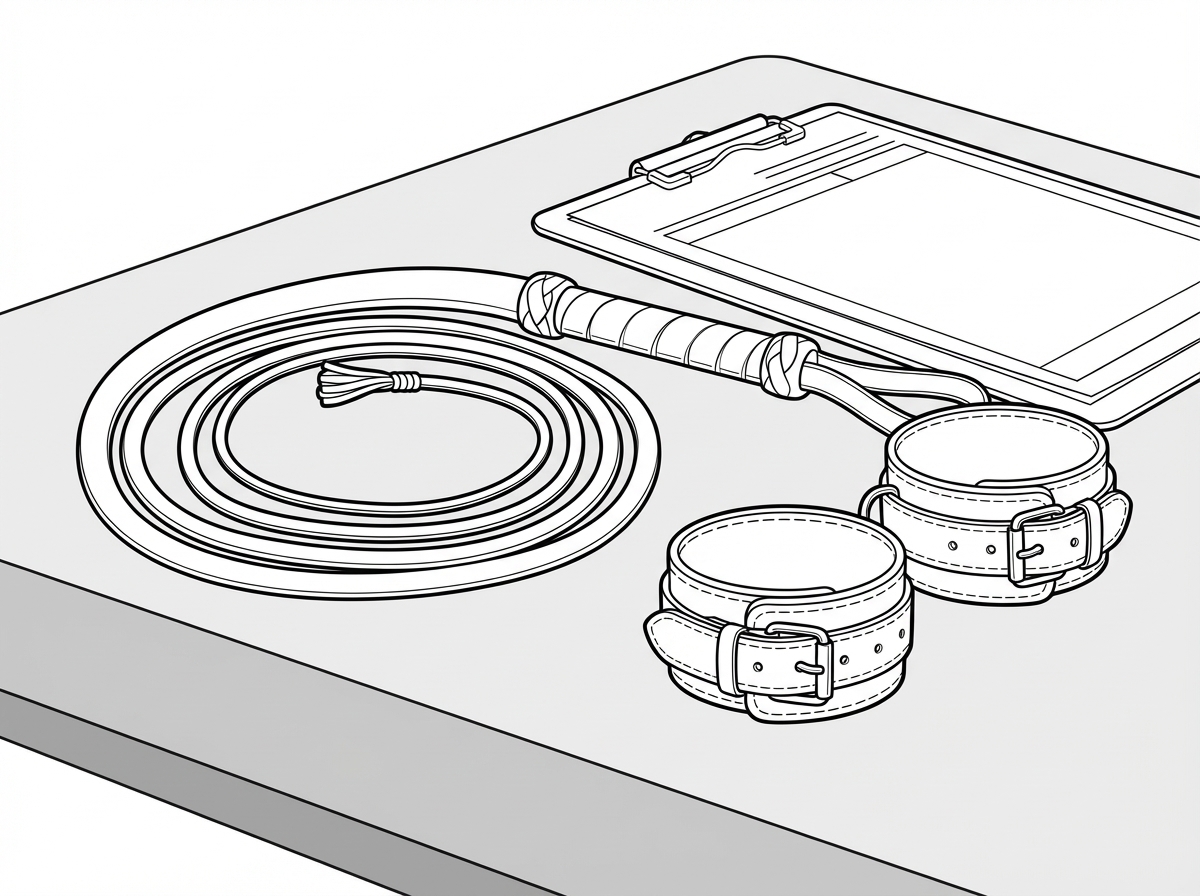
What is the sexual perversion depicted below?
The 4AT is a screening tool for detection of delirium. Which THREE of the following parameters listed below are included in the 4AT tool? I. Alertness II. Apnoea III. Abbreviated Mental Test (AMT4) IV. Attention Select the correct answer using the code given below:
Which of the following are clinical features of Fronto-Temporal dementia ? I. Personality change II. Language disturbance III. Memory may be preserved in early stages IV. Anti-cholinesterases are the drug of choice for treatment Select the correct answer using the code given below :
A patient with schizophrenia is asked to participate in a minimal-risk observational study. The patient demonstrates good understanding of the study procedures and potential benefits but has some difficulty with abstract concepts. Analyze the capacity determination for research participation.
A 75-year-old patient with mild cognitive impairment is asked to participate in a clinical trial. The patient shows variable understanding of the study when questioned at different times. Family members are eager for the patient to participate. Analyze the ethical considerations in determining study eligibility.
A 17-year-old patient presents with depression and suicidal ideation. The patient's parents want to be informed about all treatment decisions, but the patient refuses to allow disclosure. The patient demonstrates good understanding of treatment options. Analyze the competing ethical principles and determine the most appropriate course of action.
Explanation: ***Circumstantial speech***- This thought process is characterized by including **excessive, irrelevant details** in the conversation before finally reaching the point or answering the question.- The patient eventually answered the question (age 39) but only after providing unnecessary associated details (married to an older man, kids' ages).*Derailment*- Also known as **loose associations**, this involves a continuous shifting from one subject to another in a way that is illogical or completely unrelated.- In derailment, the main point or question is usually completely lost as the flow moves to an entirely new, unlinked topic.*Flight of ideas*- This involves a rapid, continuous succession of thoughts where the shift between topics is based on **distractibility or recognizable associations** (like rhyming or wordplay).- It is typically characterized by **pressured speech** and is often seen in the manic phase of **Bipolar Disorder**.*Tangentiality*- This speech pattern occurs when the patient responds to a question in an obliquely relevant way but **never provides the actual answer** or reaches the main point.- The thread of conversation moves away from the initial topic (takes a tangent) and does not return, unlike **circumstantial speech**.
Explanation: ***Auditory hallucination***- **Auditory hallucinations** (especially voices commenting or conversing) are highly characteristic features of **primary psychiatric disorders** like schizophrenia.- In contrast, hallucinations associated with underlying medical conditions (organic causes or delirium) are typically **visual**, **tactile**, or **olfactory**.*Elderly age*- New onset of psychiatric symptoms (e.g., psychosis, acute confusion) in an **elderly patient** should raise suspicion for a **medical or neurological etiology** until proven otherwise.- The risk of conditions like **delirium**, **vascular dementia**, or adverse drug effects contributing to psychiatric symptoms is significantly higher in this age group.*Loss of consciousness*- **Loss of consciousness (LOC)** is a critical sign of a **neurological insult** or severe systemic medical illness (e.g., seizures, syncope, metabolic coma).- Primary psychiatric illnesses, by definition, do not cause true **unresponsiveness** or **altered sensorium** associated with genuine LOC.*Acute onset*- A syndrome that appears with **acute or sudden onset** (especially involving cognitive changes, confusion, or marked mood shifts) is often highly suggestive of **delirium** or an **acute medical/toxic etiology**.- Many classic primary psychiatric disorders, such as **Schizophrenia**, typically have a more **insidious** or gradual development, often over months or years.
Explanation: ***Concentration***- The **'100 minus 7' serial subtraction task** is a core component of the Mental State Examination (MSE) specifically designed to test a patient's **concentration** and sustained attention. - Successful completion requires maintaining focus and managing working memory, making it an excellent measure of this cognitive function. *Judgment* - **Judgment** is typically evaluated by asking patients how they would respond to hypothetical situations (e.g., finding a lost wallet or envelope). - This component assesses the patient's ability to understand consequences, make reasoned decisions, and apply social norms. *Language* - **Language** assessment involves testing fluency, comprehension (ability to follow commands), repetition, and naming objects. - The 100-7 task is a test of attention and arithmetic, not of fundamental linguistic abilities. *Orientation* - **Orientation** assesses the patient's awareness of **person**, **place**, and **time** (P-P-T). - This function is tested by asking direct questions about identity, current location, and the date, distinct from computational tasks like 100-7.
Explanation: ***Autistic thinking*** - This term, introduced by **Eugen Bleuler**, refers to **preoccupation with an internal private world** (fantasy and delusion) and ignoring external reality, leading to illogical and idiosyncratic thought processes. - The patient's statement is an example of **paralogical thinking** where two unrelated or loosely related concepts (celibacy and being Lord Hanuman) are equated based on a forced, self-referential interpretation. *Verbigeration* - This refers to the **meaningless, often rhythmic, repetition of specific words or phrases**, similar to a verbal tic. - It is a disorder of speech (not primarily content) and does not explain the illogical content or structure of the patient's statement. *Neologism* - This involves the **creation of new words** or the appropriation of existing words to mean something entirely new, which is incomprehensible to others. - The patient's statement uses existing words and is structurally a complete (though illogical) sentence, not a newly coined word. *Loosening of association* - This refers to a **disturbance in the logical progression of thought** where there is a lack of connection between successive ideas, often leading to derailment or tangentiality. - While the statement is illogical, the central idea (faulty identification) is maintained; the primary pathology lies in the content and structure of the thought (faulty logic = **autistic thinking**), not the sequence of ideas.
Explanation: ***Sadomasochism*** - The image depicts a person in **leather attire** holding a **whip**, which are classic symbols associated with **sadomasochism (BDSM)** practices - This paraphilia involves deriving sexual arousal from giving or receiving **pain**, humiliation, or bondage - The visual cues (leather clothing, whip) are pathognomonic for sadomasochistic behavior *Fetishism* - Involves sexual arousal from **non-living objects** (e.g., shoes, underwear, rubber items) - While leather can be a fetish object, the presence of a whip and the overall context suggest sadomasochism rather than simple fetishism *Exhibitionism* - Involves deriving sexual pleasure from **exposing one's genitals** to unsuspecting strangers - The image does not depict exposure behavior - More common in males *Voyeurism* - Involves sexual arousal from **watching unsuspecting people** who are naked, disrobing, or engaging in sexual activity - The image shows active participation with props, not observation - Also known as "scopophilia"
Explanation: ***I, III and IV*** - The 4AT screening tool specifically includes **Alertness**, **AMT4 (Abbreviated Mental Test)**, and **Attention** as key parameters for detecting delirium. - The **AMT4** component assesses **cognitive function**, while **Alertness** and **Attention** evaluate the patient's state of consciousness and focus. *I, II and IV* - This option incorrectly includes **Apnoea**. While apnoea is a significant medical condition, it is not a direct parameter in the **4AT delirium screening tool**. - The 4AT focuses on cognitive and neurological signs of delirium, not respiratory patterns. *I, II and III* - This option also incorrectly includes **Apnoea** as one of the parameters in the 4AT tool. - The 4AT is designed to assess **delirium**, which primarily manifests through altered mental status, rather than respiratory issues. *II, III and IV* - This option is incorrect as it includes **Apnoea** and omits **Alertness**, which is a fundamental component of the **4AT delirium screening tool**. - **Alertness** is crucial for evaluating the patient's level of consciousness, a primary sign of delirium.
Explanation: ***Correct Answer: I, II and III*** - **Fronto-temporal dementia (FTD)** is characterized by prominent **personality and behavioral changes** (disinhibition, apathy, loss of empathy) and **language disturbances** (progressive non-fluent aphasia or semantic variant aphasia). - Unlike Alzheimer's disease, **memory is often relatively preserved in the early stages** of FTD, with executive function, behavior, and social cognition being more affected initially. - **Statement IV is incorrect**: Anti-cholinesterases (donepezil, rivastigmine, galantamine) are the treatment for Alzheimer's disease and are **generally ineffective or may even worsen behavioral symptoms in FTD**. There is no FDA-approved pharmacological treatment specifically for FTD; management focuses on behavioral interventions and symptomatic treatment. *Incorrect: II, III and IV* - This option incorrectly includes **Statement IV (anti-cholinesterases)** as a clinical feature or appropriate treatment. - Anti-cholinesterases are not the drug of choice for FTD and may exacerbate behavioral symptoms. *Incorrect: I, III and IV* - This option incorrectly includes **Statement IV (anti-cholinesterases)** while missing the important language disturbance feature. - Language disturbances are a core feature of FTD, particularly in the language-variant subtypes. *Incorrect: I, II and IV* - This option incorrectly includes **Statement IV (anti-cholinesterases)** while missing the fact that memory preservation in early stages is characteristic. - The preservation of memory early on is a key distinguishing feature between FTD and Alzheimer's disease.
Explanation: ***The patient has capacity if they understand the concrete aspects of the study*** - For **minimal-risk research**, ability to understand the **concrete aspects** of the study (e.g., procedures, risks, benefits) is often sufficient for capacity, even if abstract reasoning is impaired. - The patient demonstrates **good understanding** of procedures and potential benefits, which are key components of informed consent for participation. *The patient needs a guardian's consent for any research participation* - This is not automatically true; the need for a guardian depends on a formal determination of **incapacity**, which has not been definitively made based on the provided information. - Impairment in **abstract concepts** alone does not automatically equate to a global lack of capacity sufficient to require a guardian for all research. - A psychiatric diagnosis, such as **schizophrenia**, does not automatically mean a person lacks **decision-making capacity** for research. *The patient should be excluded from all research* - This is an overly broad and discriminatory conclusion; individuals with psychiatric diagnoses who retain decision-making capacity should not be **systematically excluded** from research. - **Exclusion from all research** would limit opportunities for an individual to contribute to medical advancements and potentially benefit from study participation. *The patient's capacity fluctuates and cannot be determined* - While capacity can fluctuate in psychiatric conditions, the scenario explicitly states the patient "demonstrates **good understanding**" of key study elements, suggesting capacity *can* be assessed at this point. - The ability to understand the study procedures and potential benefits indicates a **measurable level of capacity** at the time of assessment.
Explanation: ***A formal capacity assessment should be conducted*** - A **formal capacity assessment** is crucial to determine if the patient can understand the study details, risks, and benefits, especially with **variable understanding**. - This assessment helps ensure decisions align with the patient's best interests and respects their **autonomy**, even if impaired. *The patient should be enrolled based on family consent* - **Family consent** alone is insufficient for enrollment of an adult with *variable cognitive function* unless the patient has been definitively found to **lack decision-making capacity**. - Enrolling without assessing the patient's individual capacity violates the principle of **respect for persons** and their potential for *autonomous decision-making*. - While family input is important, the patient's **autonomy** must be prioritized until *incapacity* is formally established. *The patient can be enrolled with simplified consent procedures* - **Simplified consent procedures** are not appropriate for a patient with *variable understanding* of a clinical trial, as it may compromise their ability to make an **informed decision**. - The complexity of a clinical trial requires a thorough understanding, and *simplified procedures* risk failing to adequately protect vulnerable individuals. *The patient should be excluded due to cognitive impairment* - **Excluding the patient solely based on cognitive impairment** without a formal capacity assessment can be discriminatory and may deny them potential benefits from the trial. - The presence of *mild cognitive impairment* and *variable understanding* necessitates an individual assessment, not automatic exclusion.
Explanation: ***Provide crisis intervention while negotiating family involvement*** - This option prioritizes the **immediate safety** of the patient by addressing the suicide risk while simultaneously working towards a **collaborative solution** that respects both patient autonomy and parental concerns. - Negotiating family involvement allows for an attempt to bridge the gap between confidentiality and the parents' desire to be informed, potentially leading to better long-term support for the patient. - This approach balances **beneficence** (duty to help), **non-maleficence** (duty not to harm), **autonomy** (patient's right to confidentiality), and **justice** (fair consideration of all stakeholders). *Inform parents immediately due to safety concerns* - While parents have a legitimate concern for their child's safety, immediately informing them against the patient's wishes would **breach confidentiality** and could damage the therapeutic relationship, potentially leading the patient to withdraw from care. - The patient, despite being a minor, demonstrates a **good understanding of treatment options**, suggesting a level of maturity that warrants consideration of their autonomy. - In many jurisdictions, mature minors have the right to confidential mental health treatment. *Seek court intervention for treatment authorization* - This is an **extreme measure** that should be reserved for situations where the patient lacks decision-making capacity or refuses life-saving treatment, which is not clearly indicated here. - Court intervention can be a **traumatic and lengthy process** that might further alienate the patient from seeking necessary care and delay critical treatment. *Respect patient confidentiality and treat without parental involvement* - While respecting the patient's confidentiality is important, their age (17) and the presence of suicidal ideation introduce a **duty to protect**, which may necessitate some level of parental involvement for adequate support and safety planning. - The parents' desire to be informed highlights their role in the patient's care, and completely excluding them could hinder the effectiveness of long-term treatment and support, especially for environmental safety measures at home.
Clinical Interview Techniques
Practice Questions
Mental Status Examination
Practice Questions
Diagnostic Formulation
Practice Questions
Rating Scales and Questionnaires
Practice Questions
Psychological Testing
Practice Questions
Neuropsychological Assessment
Practice Questions
Risk Assessment
Practice Questions
Laboratory Investigations in Psychiatry
Practice Questions
Neuroimaging in Clinical Assessment
Practice Questions
Cultural Considerations in Assessment
Practice Questions
Developmental Assessment
Practice Questions
Diagnostic Classification Systems
Practice Questions
Get full access to all questions, explanations, and performance tracking.
Start For Free