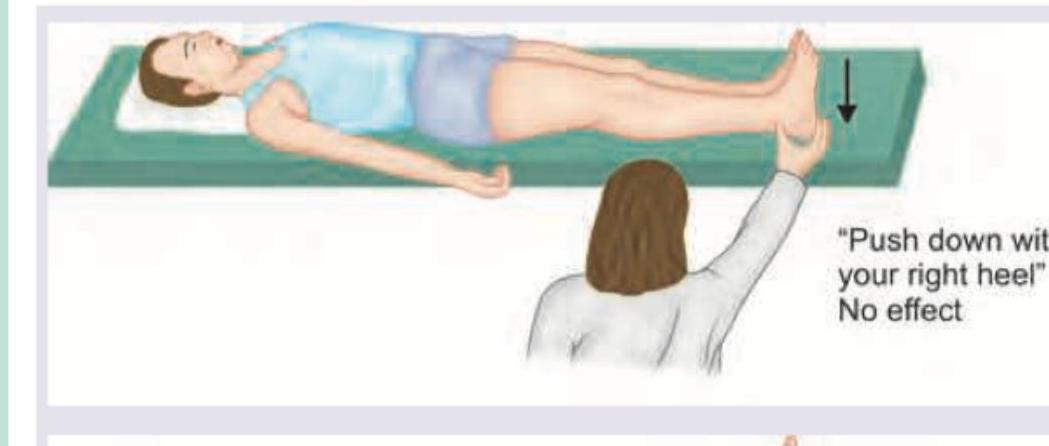
Phantom limb is an example of a disorder of which of the following?
Which of the following is true regarding a phantom limb?
Delirium is distinguished from dementia by the presence of which of the following?
Kleptomania is a disorder of what category?
Which of the following is known as Munchausen Syndrome?
What is the best test for the diagnosis of an organic mental disorder?
When a person is asked about his blood sugar level, he answers with unrelated information before finally stating his blood sugar. This is an example of?
Repetition of movements, acts, words, or phrases is:
The psychopathology of delusion is associated with a disorder of which of the following?
The Rorschach inkblot test is classified as:
Explanation: **Explanation:** **Phantom limb** is a phenomenon where a patient continues to experience sensations (such as pain, itching, or movement) in a limb that has been surgically removed or lost. It is classified as a **disorder of perception** because it involves a sensory experience in the absence of an external stimulus. 1. **Why Perception is Correct:** Perception is the process of interpreting sensory information. In phantom limb, the brain’s cortical homunculus (the somatosensory map) continues to receive or generate signals as if the limb were still present. This "false" sensory experience—occurring without a peripheral object—makes it a type of **hallucination** (specifically, a somatic or tactile hallucination), which is a primary disorder of perception. 2. **Why Other Options are Incorrect:** * **Thought:** Disorders of thought involve disturbances in the flow, form, or content of ideas (e.g., delusions, loosening of associations). Phantom limb is a sensory experience, not a belief or a logic error. * **Cognition:** Cognitive disorders involve deficits in memory, orientation, attention, or executive function (e.g., Dementia, Delirium). While the brain is involved, phantom limb does not represent a loss of intellectual faculty. **High-Yield Clinical Pearls for NEET-PG:** * **Phantom Limb vs. Stump Pain:** Phantom limb is the sensation of the missing part; stump pain is localized pain at the site of the surgical scar. * **Mirror Box Therapy:** This is a high-yield treatment modality used to "trick" the brain into reorganizing the cortical map to reduce phantom pain. * **Cortical Reorganization:** The underlying pathophysiology is the neuroplastic reorganization of the primary somatosensory cortex.
Explanation: **Explanation:** **Phantom Limb** is a sensory phenomenon where an individual continues to experience sensations (such as touch, pressure, or pain) in a limb or organ that has been surgically removed or lost through trauma. 1. **Why Option B is Correct:** The underlying mechanism is **neuroplasticity**. Following **amputation**, the primary somatosensory cortex undergoes reorganization. The cortical area previously dedicated to the missing limb is "invaded" by neighboring sensory maps (e.g., the face area). When the face is touched, the brain misinterprets the signals as coming from the missing limb. It is reported by nearly 80-100% of amputees. 2. **Why Other Options are Incorrect:** * **Option A (Leprosy):** While leprosy involves peripheral nerve damage and auto-amputation of digits, the term "phantom limb" specifically refers to the vivid sensation of a missing body part, which is not a hallmark feature of leprosy-related sensory loss. * **Option C (Psychiatric Illness):** Phantom limb is a **neurological/neuropsychiatric** phenomenon, not a primary psychiatric illness like schizophrenia or conversion disorder. However, it can lead to psychological distress. * **Option D (Filariasis):** Filariasis causes lymphedema (elephantiasis), where the limb becomes enlarged but remains attached. There is no loss of the limb to trigger phantom sensations. **High-Yield Clinical Pearls for NEET-PG:** * **Phantom Limb Pain:** A subtype where the sensations are painful (burning, cramping). It is often treated with **Mirror Box Therapy**, which helps "retrain" the brain. * **Pharmacotherapy:** Neuropathic pain agents like **Gabapentin, Pregabalin, or TCAs** (Amitriptyline) are first-line treatments. * **Distinction:** Do not confuse this with **"Stump Pain,"** which occurs at the actual site of the surgical scar due to neuromas or local tissue damage.
Explanation: **Explanation:** The hallmark feature that distinguishes **Delirium** from **Dementia** is the **Clouding of Consciousness** (also referred to as an altered level of awareness or sensorium). 1. **Why "Clouding of Consciousness" is correct:** Delirium is an acute neuropsychiatric syndrome characterized by a fluctuating course and a primary disturbance in **attention and awareness**. "Clouding of consciousness" refers to the patient's inability to focus, sustain, or shift attention, often accompanied by a reduced orientation to the environment. In contrast, patients with early-to-moderate Dementia are typically alert and have a clear sensorium until the very late stages of the disease. 2. **Why other options are incorrect:** * **Impaired Judgment & Impaired Memory (A & B):** These are common to **both** delirium and dementia. While memory impairment is the hallmark of dementia, a delirious patient also exhibits significant memory deficits due to their inability to register new information (poor attention). * **Thought Disorder (D):** Disorganized thinking can occur in both conditions (and is a core feature of Schizophrenia). While delirium often involves fragmented or incoherent speech, it is not the pathognomonic feature used to differentiate it from dementia. **High-Yield Clinical Pearls for NEET-PG:** * **Onset:** Delirium is **acute** (hours to days); Dementia is **chronic/insidious** (months to years). * **Reversibility:** Delirium is usually reversible (secondary to medical illness/toxins); Dementia is typically progressive and irreversible. * **Sleep-Wake Cycle:** Markedly disturbed (often reversed) in Delirium; relatively normal in early Dementia. * **EEG Finding:** Delirium typically shows **generalized slowing** of background activity (except in Delirium Tremens, which shows low-voltage fast activity). EEG is usually normal in early Dementia.
Explanation: **Explanation:** **Kleptomania** is classified as an **Impulse Control Disorder**. The core medical concept involves a repetitive failure to resist the urge to steal items that are not needed for personal use or monetary value. 1. **Why Option A is Correct:** In Impulse Control Disorders, the patient experiences a specific cycle: an increasing sense of **tension** before committing the act, followed by **pleasure, gratification, or relief** at the time of committing the theft. Unlike professional shoplifting, the act is unplanned and ego-dystonic (the person often feels guilt or depression afterward). 2. **Why Other Options are Incorrect:** * **Mood Disorders (B):** While patients with kleptomania often have comorbid depression or anxiety, the primary pathology is the inability to control a specific behavioral urge, not a primary disturbance in affect. * **Behavioral Disorders (C):** While kleptomania involves a "behavior," it is a broad and non-specific term. In psychiatric nomenclature (DSM-5/ICD-11), it is specifically categorized under "Disruptive, Impulse-Control, and Conduct Disorders." **High-Yield Clinical Pearls for NEET-PG:** * **Gender Ratio:** More common in females (approx. 3:1). * **Treatment:** Cognitive Behavioral Therapy (CBT) is the mainstay. Pharmacotherapy includes **SSRIs** or **Naltrexone** (to reduce the "rush" or urge). * **Differential Diagnosis:** Must be distinguished from **Shoplifting** (motivated by profit) and **Antisocial Personality Disorder** (part of a broader pattern of law-breaking). * **Associated Conditions:** High comorbidity with Bulimia Nervosa and Obsessive-Compulsive Disorder (OCD).
Explanation: **Explanation:** **Munchausen Syndrome** is the historical and most severe form of **Factitious Disorder** (specifically Factitious Disorder Imposed on Self). In this condition, a patient intentionally produces, feigns, or exaggerates physical or psychological symptoms. Unlike malingering, the primary motivation is not external gain (like money or avoiding work) but rather the **"sick role"**—the desire for medical attention, sympathy, and care. Patients often undergo invasive procedures and move from hospital to hospital ("hospital hopping"). **Analysis of Incorrect Options:** * **B. Mood Disorder:** These are characterized by disturbances in emotional state (e.g., Depression or Bipolar Disorder) and do not involve the intentional fabrication of symptoms for psychological gain. * **C. Somatoform Disorder:** In these disorders (now largely classified as Somatic Symptom Disorder), the patient experiences genuine distress from physical symptoms that are **not** intentionally produced. The symptoms are unconscious and involuntary. * **D. PTSD:** This is a stressor-related disorder following exposure to a traumatic event; it involves flashbacks and hyperarousal, not the falsification of illness. **High-Yield Clinical Pearls for NEET-PG:** * **Munchausen by Proxy:** Now termed "Factitious Disorder Imposed on Another," where a caregiver (usually a mother) fabricates illness in a child. This is a form of child abuse. * **Key Differentiator:** In **Factitious Disorder**, the motive is internal (the sick role). In **Malingering**, the motive is external (secondary gain). * **Common Presentation:** Patients often have extensive medical knowledge and surgical scars ("gridiron abdomen").
Explanation: **Explanation:** The diagnosis of **Organic Mental Disorders** (now often referred to under Neurocognitive Disorders in DSM-5) requires the assessment of cognitive impairment, particularly visuospatial abilities, memory, and motor coordination, which are often compromised due to structural brain damage. **Why Bender Gestalt Test (BGT) is correct:** The Bender Visual-Motor Gestalt Test is a **neuropsychological screening tool** used to evaluate "visual-motor maturity" and screen for signs of organic brain dysfunction. It involves asking the patient to copy nine geometric designs. Patients with organic brain damage (e.g., lesions in the parietal lobe) typically struggle with these tasks, showing signs like rotation of figures, fragmentation, or perseveration. It is highly sensitive for detecting organic impairment compared to purely personality-based tests. **Analysis of Incorrect Options:** * **A. Sentence Completion Test:** This is a **projective personality test** where patients complete stems (e.g., "I feel..."). It is used to assess personality structure, conflicts, and attitudes, not organic brain damage. * **C. Rorschach Test:** A famous **projective test** using inkblots to analyze a patient's personality characteristics and emotional functioning. It is not a diagnostic tool for organicity. * **D. Thematic Apperception Test (TAT):** Another **projective test** where patients tell stories about ambiguous pictures. It reveals underlying needs, motives, and interpersonal dynamics rather than cognitive/organic deficits. **Clinical Pearls for NEET-PG:** * **Other tests for Organicity:** PGI Memory Scale, Wechsler Memory Scale, and Luria-Nebraska Neuropsychological Battery. * **Mini-Mental State Examination (MMSE):** The most common bedside clinical tool for screening cognitive impairment/dementia. * **BGT Key Fact:** It is also used in developmental pediatrics to assess visual-motor development in children.
Explanation: **Explanation:** The correct answer is **Circumstantiality**. This is a formal thought disorder characterized by a pattern of speech that is indirect and delayed in reaching the goal. The patient includes excessive, unnecessary, and tedious details (parenthetical remarks) but, crucially, **eventually returns to the original point** and answers the question. In this scenario, the patient provides unrelated information first but finally states his blood sugar level, which is the hallmark of circumstantiality. **Analysis of Incorrect Options:** * **A. Tangentiality:** Similar to circumstantiality, the patient moves away from the topic with irrelevant details. However, the key difference is that in tangentiality, the patient **never returns** to the original point or answers the question. * **C. Flight of Ideas:** This is characterized by rapid, continuous speech with quick shifts from one topic to another. While the connections between ideas are usually based on understandable links (like puns or rhyming/clang associations), the goal is often lost in the speed of thought. It is most commonly seen in Mania. * **D. Loosening of Association (Knight’s Move Thinking):** This is a severe thought disorder where there is a lack of logical connection between sequential thoughts. The shift from one frame of reference to another is idiosyncratic and incomprehensible to the listener. It is a hallmark of Schizophrenia. **Clinical Pearls for NEET-PG:** * **Circumstantiality** is often seen in Obsessive-Compulsive Disorder (OCD), Epilepsy (specifically interictal personality), and sometimes in normal individuals under stress. * **Memory Aid:** In **C**ircumstantiality, the speaker goes in a **C**ircle but eventually hits the target. In **T**angentiality, they go off on a **T**angent and never come back. * **Flight of ideas** + **Pressure of speech** = Classic presentation of a Manic Episode.
Explanation: **Explanation:** **Perseveration** (Option C) is the persistent repetition of a specific response (such as a word, phrase, or gesture) despite the absence or cessation of the original stimulus. In clinical practice, the patient may correctly answer the first question but continues to give the same answer to subsequent, different questions. It is a hallmark sign of **organic brain disorders** (like dementia or frontal lobe lesions) and is also seen in schizophrenia. **Analysis of Incorrect Options:** * **Fusion (Option A):** A thought disorder seen in schizophrenia where two or more heterogeneous concepts are joined together to form a new, often illogical, idea. * **Mannerism (Option B):** These are abnormal, repetitive, goal-directed movements that are performed in an exaggerated or bizarre fashion (e.g., a formal salute while greeting someone). Unlike perseveration, they are not necessarily triggered by a specific prior stimulus. * **Stereotypy (Option D):** These are repetitive, non-goal-directed, non-functional motor activities or speech (e.g., body rocking or repetitive grunting). While similar to perseveration, stereotypies are spontaneous and rhythmic, whereas perseveration is a "stuck" response to a previous stimulus. **Clinical Pearls for NEET-PG:** * **Palilalia:** Repetition of one’s own words with increasing frequency (seen in Parkinson’s). * **Echolalia:** Senseless repetition of words spoken by the examiner (seen in Catatonia and Autism). * **Logoclonia:** Repetition of the last syllable of a word. * **Verbigeration:** Also known as "word salad" or "palilalia," it refers to the senseless repetition of words/phrases without a stimulus.
Explanation: **Explanation:** **1. Why Belief is Correct:** A **delusion** is clinically defined as a **fixed, false belief** that is firmly held despite incontrovertible evidence to the contrary and is out of keeping with the individual’s social, cultural, and educational background. In psychopathology, the mental functions are categorized into domains; since a delusion represents a disturbance in the *content* of a person’s thoughts and convictions, it is classified as a **disorder of belief (thought content).** **2. Why Other Options are Incorrect:** * **Perception:** Disorders of perception involve sensory experiences without external stimuli (**Hallucinations**) or misinterpretations of real stimuli (**Illusions**). While delusions can occur alongside hallucinations, they are fundamentally different processes. * **Insight:** Insight refers to a patient’s awareness of their own mental illness. While most patients with delusions lack insight, "insight" is a clinical judgment of awareness, not the primary psychopathological category of the delusion itself. * **Cognition:** This is a broad term covering memory, orientation, and intelligence. While delusions occur in a clear sensorium (unlike delirium), they are specific to thought content rather than a general failure of cognitive faculties. **Clinical Pearls for NEET-PG:** * **Form vs. Content:** Delusion is a disorder of **Thought Content**. In contrast, Schizophrenia often involves disorders of **Thought Form** (e.g., Loosening of associations). * **Overvalued Idea:** Unlike a delusion, an overvalued idea is a solitary, abnormal belief that is neither delusional nor obsessional but takes precedence over all other ideas. It is less "fixed" than a delusion. * **Primary vs. Secondary:** A primary delusion (Autochthonous) arises suddenly without a preceding mental event, whereas secondary delusions are understandable in the context of other symptoms like mood or hallucinations.
Explanation: ### Explanation **Correct Answer: A. Projective** **Why it is correct:** The Rorschach Inkblot Test is the most widely used **projective personality test**. The underlying medical concept is the **"Projective Hypothesis,"** which suggests that when an individual is presented with an ambiguous, unstructured stimulus (like an inkblot), they "project" their unconscious thoughts, motives, conflicts, and personality dynamics onto the stimulus to make sense of it. Developed by Hermann Rorschach in 1921, it consists of 10 standardized cards (5 achromatic, 2 black/red, and 3 multicolored). **Why incorrect options are wrong:** * **B. Subjective:** While the *interpretation* of the test requires clinical skill, the test category itself is not "subjective" in psychometric terms. Subjective tests usually refer to self-report inventories (like the MMPI) where the patient describes their own feelings. * **C. Both:** This is incorrect because "Projective" and "Objective/Subjective" are distinct classifications in psychometry. The Rorschach is strictly categorized under projective techniques. **High-Yield Clinical Pearls for NEET-PG:** * **Exner’s Comprehensive System:** The most common standardized method used for scoring the Rorschach test. * **Other Projective Tests:** * **Thematic Apperception Test (TAT):** Uses ambiguous pictures; assesses interpersonal relationships and "needs/press." * **Sentence Completion Test:** Assesses personality by having patients finish stems. * **Draw-A-Person Test:** Often used in children to assess intelligence and personality. * **Word Association Test:** Developed by **Carl Jung**, another important projective tool. * **Primary Use:** These tests are particularly useful in psychiatry for bypassing "faking" or "guarding," as there are no obvious "right" or "wrong" answers.
Clinical Interview Techniques
Practice Questions
Mental Status Examination
Practice Questions
Diagnostic Formulation
Practice Questions
Rating Scales and Questionnaires
Practice Questions
Psychological Testing
Practice Questions
Neuropsychological Assessment
Practice Questions
Risk Assessment
Practice Questions
Laboratory Investigations in Psychiatry
Practice Questions
Neuroimaging in Clinical Assessment
Practice Questions
Cultural Considerations in Assessment
Practice Questions
Developmental Assessment
Practice Questions
Diagnostic Classification Systems
Practice Questions
Get full access to all questions, explanations, and performance tracking.
Start For Free