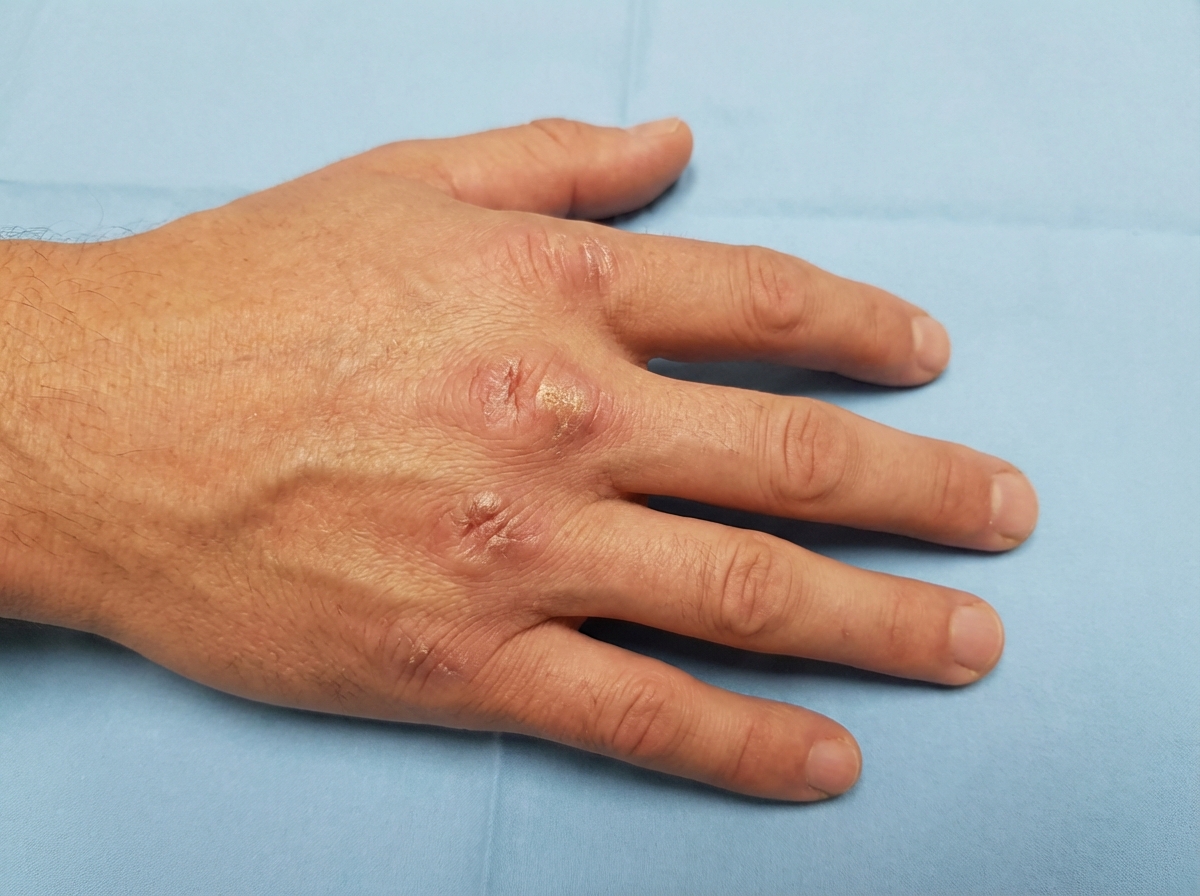
What is the most appropriate drug for the treatment of bulimia nervosa?
Which of the following statements is not true about Rumination disorder?
True about anorexia nervosa are all EXCEPT:
Which of the following is associated with anorexia nervosa?
A 22-year-old woman presents with repeated bouts of vomiting. Physical examination reveals dental caries, tooth erosion, and enlarged parotid glands. Laboratory studies show hypokalemia, metabolic alkalosis, and increased serum bicarbonate. A chest radiograph reveals air in the mediastinum. Which of the following will most likely be present in this patient?
Bulimia nervosa is associated with which of the following?
Which of the following is associated with the management of anorexia nervosa?
Which of the following features is least characteristic of Anorexia Nervosa?
What is the percentage of mortality in anorexia nervosa?
Which of the following disorders is more common in females compared to males?
Explanation: **Explanation:** **1. Why Fluoxetine is Correct:** Fluoxetine, a Selective Serotonin Reuptake Inhibitor (SSRI), is the **only FDA-approved pharmacological treatment** for Bulimia Nervosa (BN). It is effective in reducing the frequency of binge-eating and purging episodes, even in patients without comorbid depression. The mechanism involves increasing synaptic serotonin, which enhances satiety and impulse control. * **High-Yield Note:** The dosage used for BN (60 mg/day) is typically higher than the standard dose used for depression (20 mg/day). **2. Why Other Options are Incorrect:** * **Amitriptyline:** While Tricyclic Antidepressants (TCAs) can reduce binge-purge cycles, they are considered second-line due to a poor side-effect profile (anticholinergic effects, sedation) and high lethality in overdose. * **Lithium:** Lithium is a mood stabilizer used primarily for Bipolar Disorder. It has no established role in treating the core symptoms of BN and carries a risk of toxicity if the patient is dehydrated due to purging. * **Sertraline:** Although an SSRI, it is not the first choice because it lacks the specific FDA approval and robust clinical trial evidence that supports Fluoxetine for this specific indication. **3. Clinical Pearls for NEET-PG:** * **First-line Treatment:** Nutritional rehabilitation + Cognitive Behavioral Therapy (CBT-BN) is the gold standard. Fluoxetine is the first-line pharmacological adjunct. * **Contraindication:** **Bupropion** is strictly contraindicated in Bulimia and Anorexia Nervosa because it lowers the seizure threshold, especially in patients with electrolyte imbalances from purging. * **Anorexia vs. Bulimia:** Unlike BN, pharmacotherapy (including SSRIs) has limited efficacy in treating the core symptoms of Anorexia Nervosa while the patient is underweight.
Explanation: **Explanation:** **Rumination Disorder** is characterized by the repeated, effortless regurgitation of food after eating, which may be re-chewed, re-swallowed, or spit out. **Why Option B is the correct answer (False statement):** Rumination disorder typically has an onset between **3 and 12 months of age** in infants. While it can occur in older children, adolescents, or adults (particularly those with intellectual disabilities), the classic presentation described in pediatric psychiatry occurs much earlier than the 3–5 year range mentioned in the option. **Analysis of other options:** * **Option A (Failure to thrive):** This is a common and serious complication. Because food is frequently spit out or not properly digested, infants often suffer from severe malnutrition, weight loss, and growth retardation. * **Option C (Regurgitation of food):** This is the hallmark clinical feature. Unlike vomiting, this is a functional process where food is brought back up into the mouth shortly after a meal. * **Option D (No nausea):** A key diagnostic criterion is that the regurgitation is **not** preceded by nausea, retching, or gastrointestinal distress. It is often described as an effortless or even "pleasurable" habit for the infant. **Clinical Pearls for NEET-PG:** * **Duration:** Symptoms must persist for at least **one month**. * **Exclusion:** It must not be due to a gastrointestinal condition (like GERD or pyloric stenosis) or another eating disorder like Anorexia or Bulimia. * **Behavioral Aspect:** In infants, it is often associated with a lack of stimulation or a strained parent-child relationship. * **Positioning:** During the act, infants may arch their backs and hold their heads back (straining), which can be mistaken for seizures or Sandifer syndrome.
Explanation: **Explanation:** The correct answer is **A (Female:male ratio is 2:1)** because this statement is epidemiologically incorrect. Anorexia Nervosa (AN) has a much more significant gender disparity; the female-to-male ratio is typically cited as **10:1 to 20:1**. It most commonly affects adolescent girls and young women (peak onset 14–18 years). **Analysis of other options:** * **Leukopenia (B):** This is a common hematological complication of starvation in AN. Bone marrow hypocellularity and gelatinous transformation lead to leukopenia (specifically neutropenia), anemia, and thrombocytopenia. * **Self-induced vomiting (C):** While primarily associated with Bulimia Nervosa, self-induced vomiting is a diagnostic feature of the **Binge-eating/Purging type** of Anorexia Nervosa. Patients use this compensatory behavior to maintain a body weight significantly below the minimum normal level. * **Amenorrhea (D):** Though no longer a mandatory DSM-5 diagnostic criterion to allow for inclusion of males and pre-menarcheal girls, amenorrhea remains a classic clinical hallmark of AN in females. It results from hypothalamic-pituitary-ovarian axis suppression due to low body fat. **High-Yield Clinical Pearls for NEET-PG:** * **DSM-5 Criteria:** 1. Restriction of energy intake leading to significantly low body weight; 2. Intense fear of gaining weight; 3. Disturbance in body image. * **Most Common Cause of Death:** Suicide or medical complications (most commonly **cardiac arrhythmias** due to electrolyte imbalances like hypokalemia). * **Physical Signs:** Lanugo hair, bradycardia, hypotension, and "Russell’s sign" (calluses on knuckles from induced vomiting). * **Treatment:** Nutritional rehabilitation is the priority. **Fluoxetine** is only effective once a healthy weight is achieved to prevent relapse.
Explanation: **Explanation:** **Anorexia Nervosa (AN)** is a severe eating disorder characterized by an intense fear of gaining weight, a distorted body image, and self-imposed starvation leading to significantly low body weight. **Why ECG changes is the correct answer:** Severe malnutrition and electrolyte imbalances (especially hypokalemia from purging or starvation) lead to significant cardiovascular complications. Common ECG findings in AN include **Sinus Bradycardia** (the most common), **Prolonged QT interval**, ST-segment depression, and T-wave inversion. These changes are critical as they increase the risk of sudden cardiac death due to ventricular arrhythmias. **Why the other options are incorrect:** * **A & C (Obesity/Overweight):** By definition, Anorexia Nervosa requires a BMI significantly below the normal range (typically <18.5 kg/m²). Patients have a pathological dread of fatness despite being underweight. * **D (Metabolic Syndrome):** This is a cluster of conditions (hypertension, high blood sugar, excess body fat around the waist, and abnormal cholesterol levels) associated with insulin resistance and obesity. AN presents with the opposite clinical picture: hypotension, hypoglycemia, and low lipid levels. **High-Yield NEET-PG Pearls:** * **Most common cause of death in AN:** Cardiac complications (arrhythmias) or Suicide. * **Endocrine hallmark:** Hypogonadotropic hypogonadism leading to **Amenorrhea** (though no longer a mandatory DSM-5 criterion, it remains a classic sign). * **Physical signs:** Lanugo hair (fine neonatal-like hair), Russell’s sign (calluses on knuckles if purging), and parotid gland swelling. * **Laboratory findings:** Hypokalemic hypochloremic metabolic alkalosis (if vomiting), leukopenia, and increased growth hormone (due to starvation resistance).
Explanation: **Explanation:** The patient presents with classic signs of **Bulimia Nervosa** (dental caries, parotid gland enlargement, hypokalemia, and metabolic alkalosis) complicated by a life-threatening emergency. The presence of **air in the mediastinum (pneumomediastinum)** following repeated vomiting is the hallmark of **Boerhaave Syndrome**. **1. Why the Correct Answer is Right:** **Boerhaave Syndrome (Option A)** is a **full-thickness rupture** of the distal esophagus, typically caused by a sudden increase in intra-esophageal pressure during forceful vomiting or retching. The rupture allows air and gastric contents to enter the mediastinum, leading to pneumomediastinum, mediastinitis, and potentially septic shock. This is a surgical emergency. **2. Analysis of Incorrect Options:** * **Option B (Mallory-Weiss Syndrome):** These are **longitudinal mucosal lacerations** at the gastroesophageal junction. While also caused by vomiting, they are partial-thickness tears and typically present with hematemesis, not pneumomediastinum. * **Option C (Esophageal Varices):** These are dilated submucosal veins caused by portal hypertension (e.g., liver cirrhosis). They present with painless, massive hematemesis. * **Option D (Eosinophilic Esophagitis):** This is an inflammatory condition characterized by "stacked rings" or "feline esophagus" on endoscopy, usually associated with dysphagia and food impaction, not acute rupture from vomiting. **Clinical Pearls for NEET-PG:** * **Mackler’s Triad (Boerhaave Syndrome):** Vomiting, chest pain, and subcutaneous emphysema. * **Metabolic Profile in Bulimia:** Hypokalemia, hypochloremia, and metabolic alkalosis (due to loss of HCl in vomitus). * **Russell’s Sign:** Calluses on the knuckles from self-induced vomiting (common in Bulimia). * **Diagnosis:** Gastrografin (water-soluble) swallow is the initial diagnostic test of choice for esophageal rupture.
Explanation: **Explanation:** **Bulimia Nervosa (BN)** is characterized by recurrent episodes of binge eating followed by compensatory behaviors to prevent weight gain. The most common compensatory mechanism is self-induced vomiting. **Why Russell's Sign is Correct:** **Russell’s sign** refers to calluses, scars, or abrasions on the knuckles or the back of the hand. These are caused by repeated friction against the incisor teeth when an individual uses their fingers to stimulate the gag reflex for self-induced vomiting. It is a classic physical exam finding in purging-type eating disorders. **Analysis of Incorrect Options:** * **A. Metabolic Syndrome:** BN is typically associated with electrolyte imbalances (hypokalemia, metabolic alkalosis) rather than the cluster of hypertension, hyperglycemia, and dyslipidemia seen in metabolic syndrome. * **C. Obesity:** While patients with Binge Eating Disorder (BED) are often obese, patients with Bulimia Nervosa usually maintain a **normal or slightly above-normal body weight** (BMI ≥ 18.5 kg/m²), distinguishing it from Anorexia Nervosa (low BMI). * **D. Veraguth Fold:** This is a triangular fold in the nasal corner of the upper eyelid associated with **Depression**, not primarily with eating disorders. **High-Yield Clinical Pearls for NEET-PG:** * **Acid-Base Balance:** Self-induced vomiting leads to **Hypokalemic, Hypochloremic Metabolic Alkalosis**. * **Parotid Gland Enlargement:** Chronic vomiting causes "chipmunk cheeks" (sialadenosis). * **Dental Erosion:** Perimolysis (erosion of tooth enamel) occurs due to gastric acid exposure. * **Drug of Choice:** **Fluoxetine** (SSRI) is the only FDA-approved medication for Bulimia Nervosa. * **Contraindication:** **Bupropion** is strictly contraindicated in BN/Anorexia due to an increased risk of seizures.
Explanation: ### **Explanation** **Anorexia Nervosa (AN)** is a psychiatric disorder characterized by a restriction of energy intake, an intense fear of gaining weight, and a distorted body image. While it is primarily classified into two types—**Restricting** and **Binge-eating/Purging**—the management of both requires strict behavioral monitoring. **Why Option B is Correct:** Patients with Anorexia Nervosa (particularly the purging subtype) often attempt to compensate for caloric intake by inducing vomiting or using laxatives immediately after meals. A critical nursing and behavioral intervention in inpatient management is **supervised post-prandial monitoring**. Patients are restricted from using the restroom for **at least 1 to 2 hours after food intake** to prevent purging behaviors and to ensure nutritional absorption. **Why Incorrect Options are Wrong:** * **Options A, C, and D (Obesity, Overweight, Metabolic Syndrome):** These are clinically inconsistent with Anorexia Nervosa. By definition (DSM-5), AN requires a **significantly low body weight** (BMI <18.5 kg/m² in adults). Obesity and Metabolic Syndrome are more commonly associated with **Binge Eating Disorder (BED)**, where there is no compensatory purging, leading to weight gain. --- ### **High-Yield Clinical Pearls for NEET-PG** * **Refeeding Syndrome:** The most dangerous complication during management. It is characterized by **Hypophosphatemia** (hallmark), hypokalemia, and hypomagnesemia due to insulin surge. * **First-line Treatment:** Nutritional rehabilitation and psychotherapy (Family-Based Therapy is the gold standard for adolescents). * **Pharmacotherapy:** SSRIs (like Fluoxetine) are **not effective** when the patient is underweight; they are only used for maintenance after weight restoration or for comorbid depression/OCD. * **Physical Signs:** Lanugo hair, bradycardia, hypotension, and **Russell’s sign** (calluses on knuckles from self-induced vomiting).
Explanation: **Explanation:** In the context of DSM-5 diagnostic criteria for **Anorexia Nervosa (AN)**, the diagnosis is defined by specific behavioral and cognitive patterns rather than general personality traits. While **low self-esteem** is frequently comorbid with eating disorders, it is considered a non-specific psychological feature rather than a core diagnostic requirement. Many patients with AN may actually derive a sense of "pseudo-self-esteem" or a feeling of mastery and superior self-control from their ability to maintain a low weight. **Analysis of Options:** * **B, C, and D (Incorrect Options):** These constitute the **triad of core diagnostic criteria** for Anorexia Nervosa according to DSM-5: * **Restricted energy intake (C):** Leading to a significantly low body weight relative to age, sex, and physical health. * **Intense fear of weight gain (B):** Or persistent behavior that interferes with weight gain, even though at a significantly low weight. * **Disturbed body image (D):** Disturbance in the way one's body weight or shape is experienced, or undue influence of weight on self-evaluation. **Clinical Pearls for NEET-PG:** * **Subtypes:** AN is divided into **Restricting type** (fasting/exercise) and **Binge-eating/purging type** (self-induced vomiting/laxatives). * **Severity:** Based on **BMI** (Mild: $\geq$ 17; Moderate: 16–16.99; Severe: 15–15.99; Extreme: < 15 $kg/m^2$). * **Physical Signs:** Lanugo hair, bradycardia, hypotension, and amenorrhea (though amenorrhea is no longer a mandatory DSM-5 criterion). * **Refeeding Syndrome:** The most serious complication of treatment, characterized by **Hypophosphatemia**.
Explanation: **Explanation:** Anorexia Nervosa (AN) has the highest mortality rate of any psychiatric disorder. According to longitudinal studies and standard psychiatric textbooks (such as Kaplan & Sadock), the mortality rate is estimated to be approximately **5% to 10%** over a 10-year period. The specific figure of **8%** is frequently cited in medical literature and competitive exams as the representative mean. Death in Anorexia Nervosa typically occurs due to two primary reasons: 1. **Medical Complications:** Most commonly cardiac arrhythmias (due to electrolyte imbalances like hypokalemia) or congestive heart failure. 2. **Suicide:** Patients with AN have a significantly higher risk of completed suicide compared to the general population. **Analysis of Options:** * **Option B (8%):** This is the correct statistical estimate for long-term mortality in AN. * **Option A (75%) & C (45%):** These figures are excessively high. While AN is severe, modern medical and nutritional interventions prevent such extreme fatality rates. * **Option D (25%):** While some very long-term studies (20+ years) suggest mortality can climb toward 15-20%, 25% remains an overestimation for standard clinical reporting. **High-Yield Clinical Pearls for NEET-PG:** * **Most common cause of death:** Cardiac complications (Arrhythmias). * **Refeeding Syndrome:** A critical risk during treatment characterized by **Hypophosphatemia**, Hypomagnesemia, and Hypokalemia. * **Indicators for Hospitalization:** Weight <75% of expected, heart rate <40 bpm, or BP <80/50 mmHg. * **Psychiatric Comorbidity:** Depression is present in up to 65% of cases.
Explanation: **Explanation:** The correct answer is **Eating Disorder**. In psychiatry, gender distribution is a high-yield topic for competitive exams. Eating disorders, including Anorexia Nervosa and Bulimia Nervosa, show a significant female preponderance, with a female-to-male ratio often cited as **10:1**. This disparity is attributed to a combination of sociocultural pressures regarding body image, hormonal influences, and genetic predispositions. **Analysis of Options:** * **Eating Disorders (Correct):** These are predominantly seen in females. For instance, the lifetime prevalence of Anorexia Nervosa is approximately 0.9% in women compared to 0.3% in men. * **Conduct Disorder (Incorrect):** This is significantly more common in **males**. It is characterized by a repetitive pattern of violating the basic rights of others and societal norms. * **Oppositional Defiant Disorder (ODD) (Incorrect):** ODD is more prevalent in **males** (ratio approx. 1.4:1) prior to puberty, though the gender gap narrows in adolescence. * **Antisocial Personality Disorder (ASPD) (Incorrect):** This is much more common in **males** (3:1 ratio). It is characterized by a disregard for laws and the rights of others, often evolving from a childhood history of Conduct Disorder. **High-Yield Clinical Pearls for NEET-PG:** * **Female Predominance:** Depressive disorders, Anxiety disorders, Eating disorders, and Somatoform disorders. * **Male Predominance:** Substance use disorders, Antisocial Personality Disorder, ADHD, and Autism Spectrum Disorder. * **Equal Prevalence:** Bipolar Affective Disorder (BPAD) and Schizophrenia (though males often have an earlier onset and worse prognosis). * **Key Fact:** The most common eating disorder in the general population is actually **Binge Eating Disorder**, which has a less skewed gender ratio (approx. 3:2) compared to Anorexia.
Anorexia Nervosa
Practice Questions
Bulimia Nervosa
Practice Questions
Binge Eating Disorder
Practice Questions
Avoidant/Restrictive Food Intake Disorder
Practice Questions
Pica and Rumination Disorder
Practice Questions
Medical Complications of Eating Disorders
Practice Questions
Inpatient Management
Practice Questions
Outpatient Treatment Approaches
Practice Questions
Family-Based Treatment
Practice Questions
Cognitive-Behavioral Therapy for Eating Disorders
Practice Questions
Pharmacotherapy
Practice Questions
Prevention Strategies
Practice Questions
Get full access to all questions, explanations, and performance tracking.
Start For Free