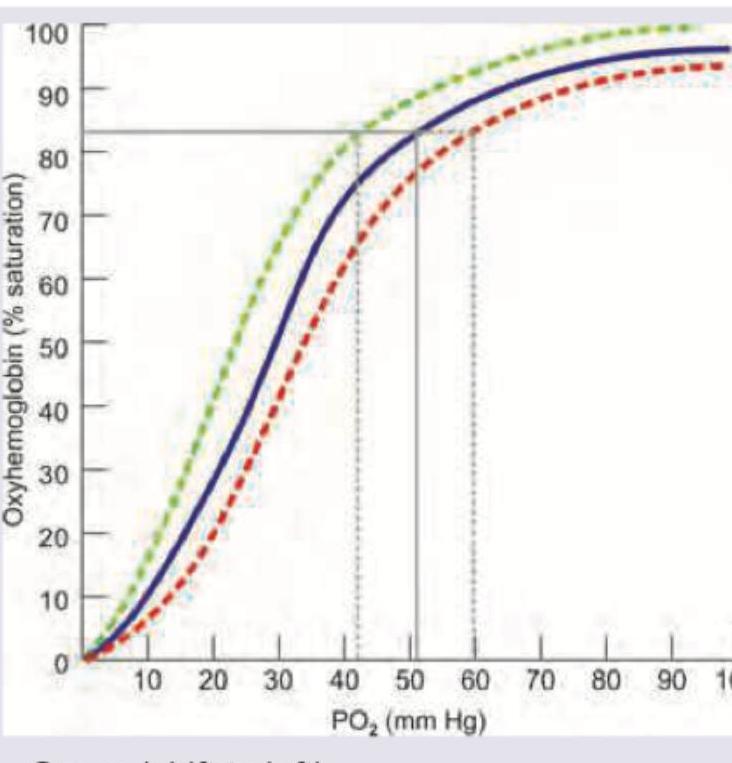
All the following factors shift the oxygen dissociation curve to the right except:
Cyanosis may be seen in which of the following types of hypoxia?
All of the following lead to increased dissociation of O2 from Hb except?
In a man weighing 200 pounds, what is the approximate volume of his anatomic dead space?
Calculate the alveolar ventilation per minute of a patient with a respiratory rate of 14/min and a tidal volume of 500 ml.
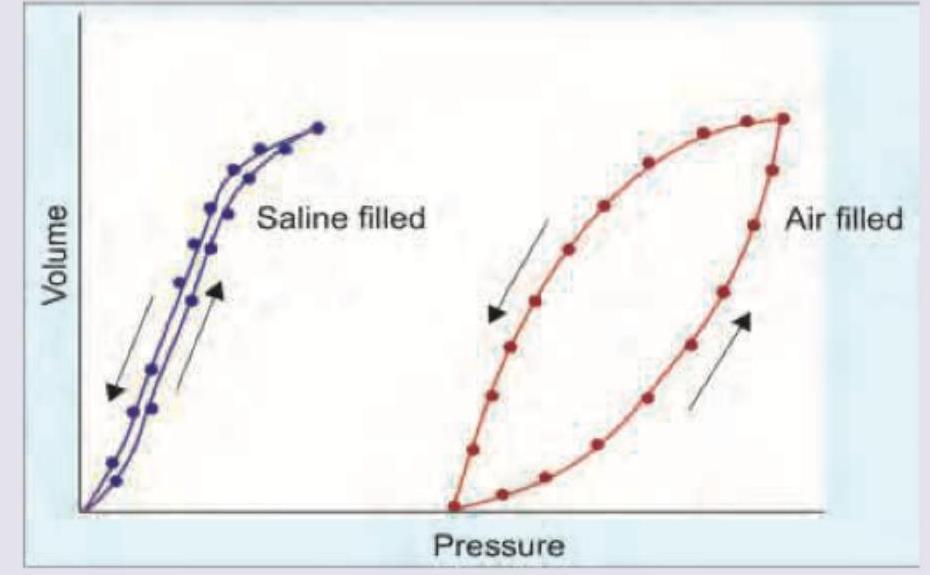
Lung compliance is defined as:
Maximum amount of smooth muscle, in relation to wall thickness, is present in which part of the respiratory tract?
Regarding pulmonary function tests, all statements are true EXCEPT?
Which of the following statements regarding lung volumes during pregnancy is true?
Which of the following is FALSE regarding pulmonary circulation?
Explanation: The Oxygen Dissociation Curve (ODC) represents the relationship between the partial pressure of oxygen ($PO_2$) and the percentage saturation of hemoglobin. A **shift to the right** indicates a decreased affinity of hemoglobin for oxygen, facilitating oxygen unloading to the tissues. ### **Explanation of the Correct Answer** **D. pH:** This is the correct answer because an **increase in pH** (alkalosis) actually shifts the curve to the **left**, not the right. According to the **Bohr Effect**, a decrease in pH (increased $H^+$ concentration/acidosis) shifts the curve to the right. Therefore, "pH" as a standalone factor is the exception here because its increase and decrease have opposite effects, whereas the other options specifically list factors that, when increased, cause a right shift. ### **Why the Other Options are Incorrect** * **A. Carbon dioxide ($CO_2$):** An increase in $PCO_2$ (hypercapnia) shifts the curve to the right. This occurs in metabolically active tissues, helping release oxygen where it is needed most. * **B. Temperature:** Increased body temperature (e.g., during fever or exercise) shifts the curve to the right by decreasing the stability of the oxyhemoglobin bond. * **C. 2,3-DPG:** This byproduct of glycolysis binds to the beta chains of deoxyhemoglobin, stabilizing the "T" (Tense) state and shifting the curve to the right. Levels increase in chronic hypoxia or at high altitudes. ### **High-Yield Clinical Pearls for NEET-PG** * **Mnemonic for Right Shift:** **"CADET, face Right!"** (**C**O2, **A**cid, **D**PG, **E**xercise, **T**emperature). * **Left Shift Factors:** Decreased $CO_2$, decreased temperature, decreased 2,3-DPG, increased pH (alkalosis), and presence of **Fetal Hemoglobin (HbF)** or **Carbon Monoxide (CO)**. * **P50 Value:** The $PO_2$ at which hemoglobin is 50% saturated. A right shift **increases** the P50 (normal is ~26.7 mmHg).
Explanation: **Explanation:** Cyanosis is the bluish discoloration of the skin and mucous membranes caused by an excessive amount of **reduced hemoglobin (deoxyhemoglobin)** in the subpapillary venous plexus. For cyanosis to be clinically apparent, the concentration of reduced hemoglobin must exceed **5 g/dL**. **Why Stagnant Hypoxia is the correct answer:** In **stagnant (ischemic) hypoxia**, blood flow to the tissues is slowed (e.g., heart failure or local obstruction). Because the blood spends more time in the capillaries, the tissues extract a maximal amount of oxygen. This leads to a significant increase in the concentration of reduced hemoglobin in the venous end, often exceeding the 5 g/dL threshold, thus manifesting as cyanosis (typically peripheral). **Why the other options are incorrect:** * **Anemic Hypoxia:** Cyanosis is notably **absent**. In anemia, the total hemoglobin content is low. Even if all the hemoglobin were deoxygenated, it is difficult to reach the absolute value of 5 g/dL of reduced hemoglobin without the patient reaching a critically low oxygen-carrying capacity that is incompatible with life. * **Histotoxic Hypoxia:** Cyanosis is **absent**. In this condition (e.g., cyanide poisoning), the tissues cannot utilize oxygen, so the venous blood remains highly oxygenated. The skin often appears "cherry red" rather than blue. * **Hypoxic Hypoxia:** (Not an option, but relevant) This is the most common cause of **central cyanosis** due to low arterial $PO_2$. **High-Yield Clinical Pearls for NEET-PG:** * **The "5 g/dL" Rule:** Cyanosis depends on the *absolute* amount of reduced Hb, not the *percentage*. Polycythemic patients develop cyanosis easily, while anemic patients rarely do. * **Central vs. Peripheral:** Stagnant hypoxia usually causes peripheral cyanosis (cold extremities), while Hypoxic hypoxia causes central cyanosis (tongue and lips). * **Histotoxic Hypoxia:** Characterized by a narrow Arterio-Venous (A-V) $O_2$ difference.
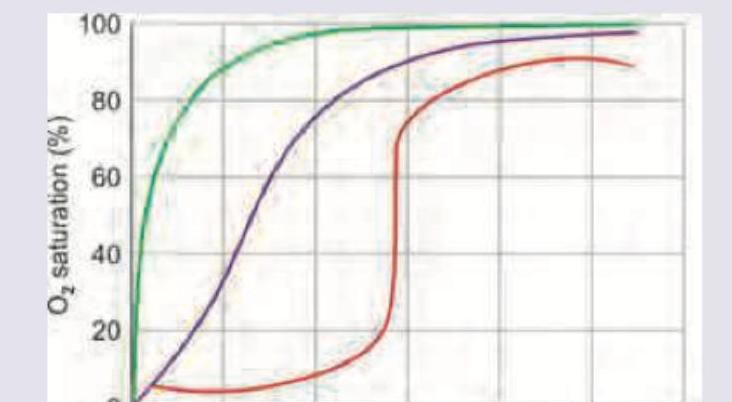
Explanation: This question tests your understanding of the **Oxyhemoglobin Dissociation Curve (ODC)** and the factors that shift it. ### **Understanding the Concept** Increased dissociation of $O_2$ from Hemoglobin (Hb) means the affinity of Hb for oxygen has decreased, allowing oxygen to be released more easily to the tissues. This is represented by a **Right Shift** of the ODC. Conversely, an increased affinity (holding onto $O_2$ tighter) is represented by a **Left Shift**. ### **Why Option A is Correct** **Fetal Hemoglobin (HbF)** consists of two alpha and two gamma chains ($\alpha_2\gamma_2$). Unlike adult hemoglobin (HbA), HbF does not bind effectively to **2,3-BPG**. Since 2,3-BPG normally promotes $O_2$ release, its lack of binding to HbF causes HbF to have a **higher affinity** for oxygen. This results in a **Left Shift** of the curve (decreased dissociation), ensuring the fetus can extract oxygen from maternal blood. ### **Why Other Options are Incorrect** Options B, C, and D are classic components of the **Bohr Effect**, which shifts the curve to the **Right** (increasing dissociation): * **Increased $CO_2$ (B) & Increased $H^+$ (C):** High metabolic activity in tissues produces $CO_2$ and lactic acid. These bind to Hb, stabilizing the "Tense" (T) state and forcing the release of $O_2$. * **Increased Temperature (D):** Higher temperatures (as seen in exercising muscle or fever) decrease the stability of the $Hb-O_2$ bond, facilitating $O_2$ unloading. ### **High-Yield Clinical Pearls for NEET-PG** * **Mnemonic for Right Shift (CADET, face Right!):** **C**O2, **A**cid ($H^+$), **D**PG (2,3-BPG), **E**xercise, **T**emperature. * **$P_{50}$ Value:** The partial pressure of $O_2$ at which Hb is 50% saturated. Normal is **26.7 mmHg**. A Right shift **increases** $P_{50}$; a Left shift **decreases** $P_{50}$. * **Carbon Monoxide (CO):** Causes a **Left Shift** and decreases the oxygen-carrying capacity (plateau height), leading to severe tissue hypoxia.
Explanation: **Explanation:** **1. Why Option C is Correct:** The anatomic dead space refers to the volume of the conducting airways (from the nose/mouth down to the terminal bronchioles) where no gas exchange occurs. A well-established clinical "rule of thumb" used in respiratory physiology is that the **anatomic dead space in milliliters is approximately equal to a person’s ideal body weight in pounds (lb).** In this case, the man weighs 200 pounds; therefore, his estimated anatomic dead space is **200 mL**. **2. Why Other Options are Incorrect:** * **Option A (100 mL):** This would be the expected dead space for an individual weighing approximately 100 lbs (e.g., a child or a very small adult). * **Option B (150 mL):** This is the "textbook average" dead space for a standard 70 kg (154 lb) male. While 150 mL is often cited as the default value, it does not apply here because the question specifies a weight of 200 lbs. * **Option D (250 mL):** This value would correspond to a much larger individual (250 lbs) or could represent an increase in physiological dead space due to pathology (e.g., pulmonary embolism or COPD). **3. NEET-PG High-Yield Pearls:** * **Fowler’s Method:** Used to measure **Anatomic Dead Space** (using single-breath nitrogen washout). * **Bohr’s Equation:** Used to measure **Physiologic Dead Space** (using arterial and expired $CO_2$ levels). * **Physiologic vs. Anatomic:** In healthy individuals, anatomic and physiologic dead space are nearly equal. Physiologic dead space increases in lung diseases where ventilation-perfusion ($V/Q$) mismatch occurs. * **Dead Space Calculation:** $V_D = V_T \times \frac{PaCO_2 - PeCO_2}{PaCO_2}$ (where $V_T$ is Tidal Volume).
Explanation: ### Explanation **1. Understanding the Correct Answer (A: 4900 ml)** To calculate **Alveolar Ventilation ($V_A$)**, we must distinguish it from Minute Ventilation. Alveolar ventilation represents the actual volume of fresh air that reaches the gas-exchange units (alveoli) per minute. It accounts for the **Anatomical Dead Space ($V_D$)**, which is the air remaining in the conducting airways (trachea, bronchi) that does not participate in gas exchange. * **Formula:** $V_A = (\text{Tidal Volume} - \text{Dead Space}) \times \text{Respiratory Rate}$ * **Standard Value:** In a healthy adult, the anatomical dead space is approximately **150 ml** (or 2 ml/kg). * **Calculation:** $(500\text{ ml} - 150\text{ ml}) \times 14\text{/min} = 350\text{ ml} \times 14 = \mathbf{4900\text{ ml/min}}$. **2. Analysis of Incorrect Options** * **B (2000 ml):** This value is too low for a healthy adult and does not correlate with standard physiological parameters. * **C (7700 ml):** This would result if the dead space was ignored and the respiratory rate was much higher, or if calculating a different lung capacity. * **D (7000 ml):** This represents the **Minute Ventilation** ($V_E$), calculated as $\text{Tidal Volume} \times \text{Respiratory Rate}$ ($500 \times 14$). It is incorrect because it fails to subtract the dead space. **3. NEET-PG High-Yield Pearls** * **Dead Space Rule of Thumb:** If not provided in the question, always assume anatomical dead space is **150 ml**. * **Alveolar vs. Minute Ventilation:** Rapid shallow breathing (low TV, high RR) significantly reduces alveolar ventilation even if minute ventilation remains constant, because a larger fraction of each breath stays in the dead space. * **Physiological Dead Space:** In healthy individuals, anatomical and physiological dead space are nearly equal. In lung diseases (like PE or COPD), physiological dead space increases due to "wasted" ventilation in non-perfused alveoli.
Explanation: ### Explanation **1. Understanding the Correct Answer (B: dV/dP)** In respiratory physiology, **Compliance (C)** is a measure of the lung's distensibility or "stretchability." It is defined as the change in lung volume (**dV**) per unit change in transpulmonary pressure (**dP**). Mathematically, it is expressed as: $$C = \frac{\Delta V}{\Delta P}$$ A high compliance means the lungs expand easily with little pressure change, whereas low compliance indicates a "stiff" lung that requires significant effort to inflate. **2. Why Other Options are Incorrect** * **Option A (dP/dV):** This is the mathematical inverse of compliance, known as **Elastance**. Elastance represents the resistance to deformation and the tendency of the lung to recoil to its original size. * **Options C & D (dP-dV / dP+dV):** These are mathematically irrelevant to the physiological definition of compliance, which describes a ratio of change rather than a sum or difference. **3. High-Yield Clinical Pearls for NEET-PG** * **Normal Value:** Total compliance of both lungs in a healthy adult is approximately **200 mL/cm H₂O**. * **Increased Compliance:** Seen in **Emphysema**. Due to the destruction of alveolar septa and elastic fibers, the lung loses its elastic recoil and becomes overly distensible. * **Decreased Compliance:** Seen in **Restrictive Lung Diseases** (e.g., Pulmonary Fibrosis, ARDS) and **Pulmonary Edema**. In these conditions, the lungs become "stiff." * **Surfactant:** Increases compliance by reducing surface tension, preventing alveolar collapse (atelectasis). * **Specific Compliance:** Compliance divided by the Functional Residual Capacity (FRC). It is used to compare compliance between individuals with different lung sizes (e.g., child vs. adult).
Explanation: **Explanation:** The correct answer is **Terminal Bronchioles**. **1. Why Terminal Bronchioles are correct:** The distribution of smooth muscle varies significantly along the respiratory tree. While the absolute amount of smooth muscle is greater in larger airways, the **relative amount (ratio of muscle thickness to wall thickness)** is highest in the terminal bronchioles. At this level, the cartilaginous support found in the trachea and bronchi disappears completely, leaving a wall dominated by smooth muscle. This anatomical arrangement allows terminal bronchioles to significantly alter their resistance to airflow, making them the primary site for regulating airway resistance (similar to the role of arterioles in the circulatory system). **2. Why other options are incorrect:** * **Trachea:** Contains the most absolute smooth muscle (Trachealis muscle), but it is a large-diameter tube supported by thick C-shaped cartilage. The muscle-to-wall thickness ratio is low. * **Bronchi:** These possess plates of cartilage and a relatively thick submucosa. While they have smooth muscle, the presence of cartilage means the muscle does not constitute the majority of the wall thickness. * **Respiratory Bronchioles:** These are transitional zones where gas exchange begins. Their walls are interrupted by alveoli, leading to a progressive loss of the continuous smooth muscle layer compared to terminal bronchioles. **3. NEET-PG High-Yield Pearls:** * **Resistance Point:** The greatest resistance to airflow actually occurs in the **medium-sized bronchi** (generations 2-5), not the smallest bronchioles, because the total cross-sectional area of the bronchioles is massive. * **Control:** Smooth muscle in the bronchioles is highly sensitive to **epinephrine** (via $\beta_2$ receptors causing bronchodilation) and **acetylcholine** (via $M_3$ receptors causing bronchoconstriction). * **Histology Tip:** The transition from the conducting zone to the respiratory zone occurs at the **respiratory bronchioles**. Cartilage and goblet cells disappear by the time you reach the bronchioles.
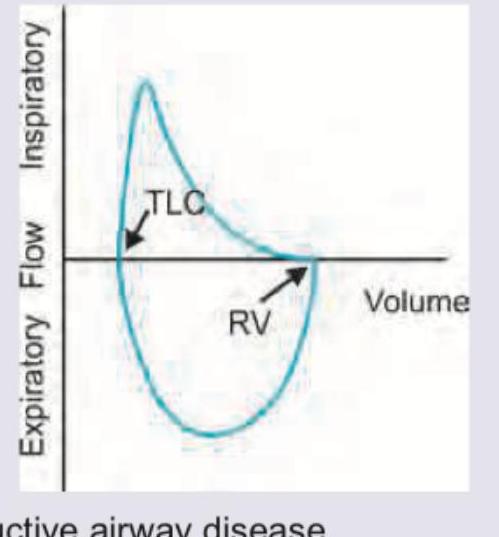
Explanation: **Explanation** In the context of this question, the "correct" answer is the statement that is technically incorrect or incomplete compared to the physiological definitions used in pulmonary function testing. **1. Why Option D is the "Except" (Incorrect Statement):** While **FEV1** does stand for Forced Expiratory Volume in 1 second, in the context of pulmonary physiology and NEET-PG questions, it is defined as the volume of air exhaled during the **first second of a forced exhalation from the level of Maximum Inspiration (Total Lung Capacity)**. If a statement omits the starting point (TLC), it is considered less accurate than the physiological definitions of compliance and lung volumes. **2. Analysis of Other Options:** * **Option A (True):** In **Emphysema**, there is destruction of alveolar walls and loss of elastic recoil. This leads to air trapping and hyperinflation, which **increases** the Total Lung Capacity (TLC) and Residual Volume (RV). * **Option B (True):** **Interstitial Lung Disease (ILD)** is a restrictive lung disease. The deposition of fibrous tissue makes the lungs "stiff," thereby **decreasing compliance** (the lungs resist expansion). * **Option C (True):** **Compliance** is defined as the change in volume per unit change in pressure ($\Delta V / \Delta P$). It is a direct measure of the distensibility or "stretchability" of the lung tissue and chest wall. **Clinical Pearls for NEET-PG:** * **FEV1/FVC Ratio:** This is the most important parameter to differentiate Obstructive (Ratio < 0.7) from Restrictive (Ratio Normal or Increased) lung diseases. * **Compliance:** It is **increased** in Emphysema (easy to inflate, hard to deflate) and **decreased** in Pulmonary Fibrosis and Pulmonary Edema. * **Helium Dilution/Body Plethysmography:** These are required to measure RV, FRC, and TLC, as they cannot be measured by simple spirometry.
Explanation: During pregnancy, the respiratory system undergoes significant physiological adaptations to meet the increased oxygen demands of the fetus and the mother. ### **Explanation of the Correct Answer** **A. Tidal Volume (TV) is increased:** This is the most significant change in respiratory physiology during pregnancy, increasing by approximately **30–40%**. This increase is primarily driven by **Progesterone**, which acts as a direct respiratory stimulant, increasing the sensitivity of the respiratory center to $CO_2$. This results in deeper breaths (increased TV) rather than a significantly faster respiratory rate, leading to the "physiologic hyperventilation" of pregnancy. ### **Why the Other Options are Incorrect** * **B & C. FRC and Residual Volume:** As the uterus enlarges, it elevates the diaphragm by about 4 cm. This mechanical shift reduces the **Functional Residual Capacity (FRC)** and **Residual Volume (RV)** by approximately 20%. * **D. Lung Compliance:** Despite the elevation of the diaphragm, lung compliance remains **unchanged**. However, **chest wall compliance decreases** due to the increased abdominal pressure and changes in the rib cage configuration. ### **High-Yield NEET-PG Pearls** * **Vital Capacity (VC):** Remains **unchanged** (the decrease in FRC is compensated by the increase in Tidal Volume). * **Inspiratory Capacity (IC):** Increases by about 5–10%. * **Acid-Base Balance:** Pregnancy is characterized by **Chronic Respiratory Alkalosis** (due to hyperventilation), with compensatory renal excretion of bicarbonate ($HCO_3^-$). * **Minute Ventilation:** Increases by 40% (mainly due to increased TV, not RR). * **Airway Resistance:** Decreases due to progesterone-induced relaxation of bronchial smooth muscle.
Explanation: ### Explanation **1. Why Option C is the Correct (False) Statement:** Vital capacity (VC) actually **decreases** when moving from a standing to a supine position. The question asks for the **FALSE** statement; however, the provided key marks Option C as the answer. In physiological terms, when a person lies down, the abdominal viscera push the diaphragm cephalad (upward), and there is an increase in intrathoracic blood volume. Both factors limit lung expansion, leading to a reduction in VC (typically by 5-10%). Therefore, the statement "Vital capacity decreases when assuming a supine position" is actually **TRUE**. *Note: In competitive exams like NEET-PG, if all individual statements (A, B, and C) are physiologically true, the intended answer is usually "All of the above are true" (Option D). If the key insists on C, it is likely a technical error in the question stem or key.* **2. Analysis of Other Options:** * **Option A (True):** The global V/Q ratio is ~0.8. While alveolar ventilation is ~4.2 L/min and pulmonary blood flow is ~5.0 L/min, the ratio ($4.2/5.0$) equals 0.84. * **Option B (True):** Due to gravity, both ventilation and perfusion increase from the apex to the base. However, the increase in perfusion is much steeper than the increase in ventilation. Thus, the base has the highest absolute ventilation, but the lowest V/Q ratio. **3. High-Yield Clinical Pearls for NEET-PG:** * **V/Q Gradient:** The V/Q ratio is highest at the **apex** (~3.0) and lowest at the **base** (~0.6). * **Postural Changes:** Functional Residual Capacity (FRC) shows the most significant decrease in the supine position compared to other lung volumes. * **West Zones:** Pulmonary blood flow is distribution-dependent; Zone 3 (base) has the highest flow because $Pa > Pv > PA$. * **Hypoxic Pulmonary Vasoconstriction:** Unlike systemic vessels, pulmonary arterioles constrict in response to low $O_2$ to divert blood to better-ventilated areas.
Mechanics of Breathing
Practice Questions
Pulmonary Ventilation
Practice Questions
Pulmonary Circulation
Practice Questions
Gas Exchange in the Lungs
Practice Questions
Oxygen and Carbon Dioxide Transport
Practice Questions
Control of Breathing
Practice Questions
Respiratory Adjustments in Health and Disease
Practice Questions
High Altitude Physiology
Practice Questions
Diving Physiology
Practice Questions
Respiratory Function Tests
Practice Questions
Get full access to all questions, explanations, and performance tracking.
Start For Free