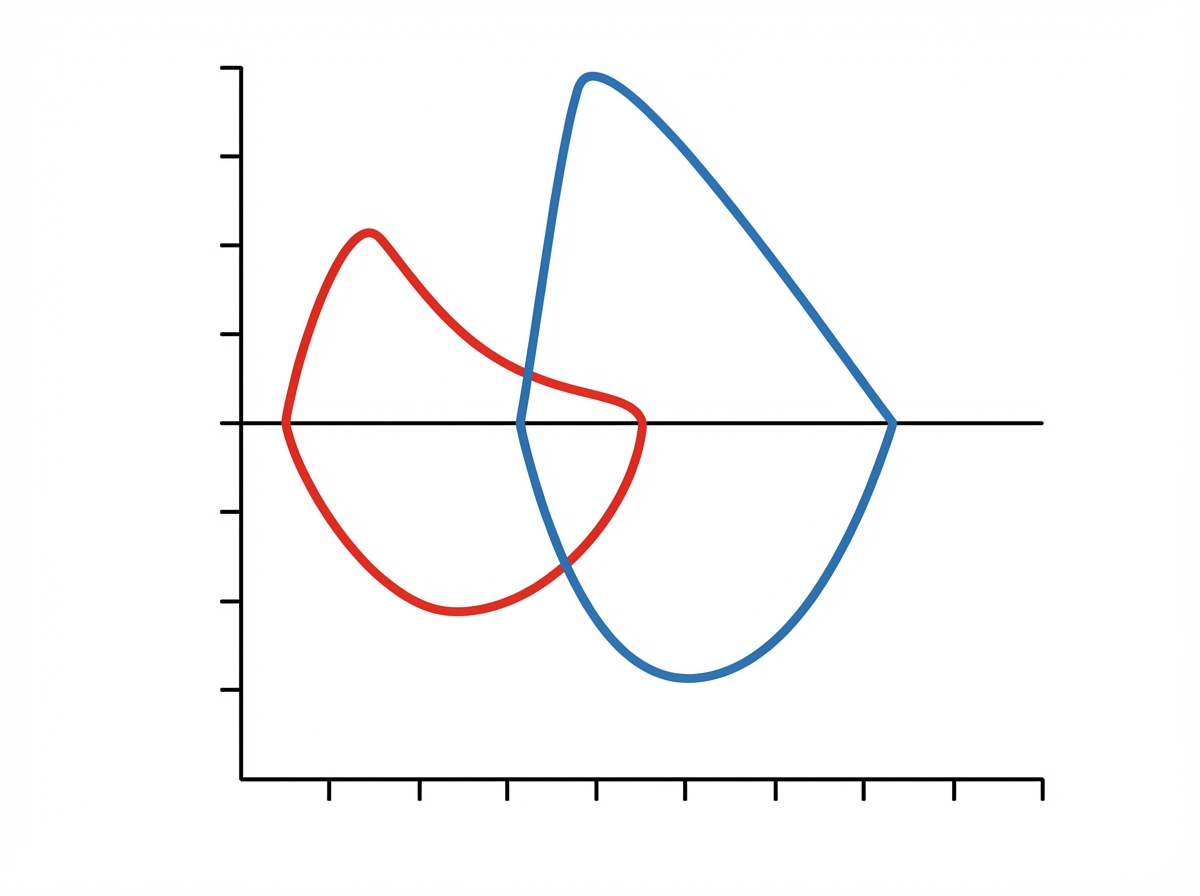
Pulmonary function tests show decreased FEV1, and an increased or normal FEV1/FVC ratio, along with decreased lung tissue compliance. Which condition is this characteristic of?
As compared to a 10-year-old child, a 1-year-old child will have higher?
Which of the following statements is true about physiological dead space?
Section of the vagus nerve results in what?
Damage to the pneumotaxic center produces what change in respiration?
What is the normal diffusion of CO2 at rest?
How is carbon dioxide transported in venous blood?
Which of the following statements about the Ventilation/Perfusion (V/Q) ratio is true?
Which of the following lung capacities is the largest?
At the start of inspiration, what is the intrapleural pressure at the base of the lungs?
Explanation: ### Explanation **1. Why Restrictive Lung Disease is Correct:** In **Restrictive Lung Disease (RLD)**, the primary pathology is the inability of the lungs to expand fully, often due to interstitial fibrosis or chest wall deformities. This leads to: * **Decreased Compliance:** The lung tissue becomes "stiff," requiring more pressure to inflate. * **Decreased FVC and FEV1:** Since total lung capacity is reduced, both the Forced Vital Capacity (FVC) and Forced Expiratory Volume in 1 second (FEV1) decrease. * **Normal or Increased FEV1/FVC Ratio:** Because the decrease in FVC is often more pronounced than or proportional to the decrease in FEV1, the ratio remains **>0.7 (or 70%)**. In some cases of fibrosis, increased radial traction on the airways keeps them open, actually increasing the ratio. **2. Why Other Options are Incorrect:** * **A, B, & C (Obstructive Diseases):** Bronchial asthma and Emphysema are types of **Obstructive Lung Diseases**. The hallmark of obstruction is increased airway resistance, leading to a **decreased FEV1/FVC ratio (<0.7)**. * **Emphysema (B):** Specifically shows **increased lung compliance** due to the destruction of elastic fibers (loss of elastic recoil), which is the opposite of the "stiff lung" described in the question. **3. NEET-PG High-Yield Pearls:** * **The Ratio Rule:** If FEV1/FVC is low = Obstructive. If FEV1/FVC is normal/high = Restrictive. * **Flow-Volume Loops:** Restrictive disease shows a "Witch’s Hat" appearance (narrow, tall loop shifted to the right). Obstructive disease shows a "Scooped-out" appearance. * **Compliance:** Compliance is inversely proportional to elastance ($C = 1/E$). In Fibrosis (Restrictive), elastance is high, so compliance is low.
Explanation: **Explanation:** The correct answer is **Oxygen consumption (VO2)**. **1. Why Oxygen Consumption is Higher:** In infants and young children, the metabolic rate is significantly higher compared to older children and adults. A 1-year-old child has a higher surface-area-to-body-mass ratio and rapidly growing tissues, leading to an oxygen consumption rate of approximately **6–8 mL/kg/min**. In contrast, a 10-year-old or an adult consumes about **3–4 mL/kg/min**. To meet this high metabolic demand, infants maintain a higher respiratory rate because their stroke volume (tidal volume) is limited by a compliant chest wall and immature alveoli. **2. Why Other Options are Incorrect:** * **B, C, and D (FRC, Tidal Volume, Vital Capacity):** These are all **lung volumes and capacities**. Lung volumes are directly proportional to body size and height. As a child grows from age 1 to 10, the lungs increase in size, the number of alveoli increases (alveolarization continues until age 8), and the chest wall becomes less compliant. Therefore, a 10-year-old will have significantly larger absolute values for FRC, Tidal Volume, and Vital Capacity than a 1-year-old. **High-Yield Clinical Pearls for NEET-PG:** * **Respiratory Rate:** Inversely proportional to age. (Infant: 30–40 bpm; Adult: 12–16 bpm). * **Closing Capacity:** In infants, the closing capacity is higher than the FRC, making them prone to early airway closure and atelectasis. * **Compliance:** Infants have high chest wall compliance (floppy ribs) but low lung compliance (less surfactant/small alveoli), leading to "retractions" during respiratory distress. * **Diaphragm:** The infant diaphragm has fewer Type I (slow-twitch, fatigue-resistant) muscle fibers, making them prone to respiratory muscle fatigue.
Explanation: **Explanation:** **Physiological dead space** refers to the total volume of the respiratory system that does not participate in gas exchange. It is the sum of **Anatomic dead space** (volume of conducting airways) and **Alveolar dead space** (alveoli that are ventilated but not perfused). **Why Option C is Correct:** In a healthy individual, physiological dead space is nearly equal to anatomic dead space because alveolar dead space is negligible. However, in **lung diseases** (such as COPD, pulmonary embolism, or fibrosis), there is a significant **Ventilation-Perfusion (V/Q) mismatch**. Alveoli may be ventilated but lack adequate blood flow, leading to a marked increase in alveolar dead space, and thus, an increase in total physiological dead space. **Analysis of Incorrect Options:** * **Option A:** Physiological dead space is measured using **Bohr’s Equation**, which utilizes **arterial PCO2** ($PaCO_2$) and expired PCO2 ($PeCO_2$), not PO2. * **Option B:** Physiological dead space is **equal to or greater** than anatomic dead space. It can never be smaller because it includes the anatomic dead space by definition. * **Option D:** This describes **Anatomic dead space**, which is determined by the structural geometry of the nose, pharynx, trachea, and bronchi. Physiological dead space is determined by both anatomy and functional V/Q status. **High-Yield Clinical Pearls for NEET-PG:** 1. **Bohr’s Equation:** $Vd/Vt = (PaCO_2 - PeCO_2) / PaCO_2$. Remember: "Physio is CO2." 2. **Anatomic Dead Space** is measured by **Fowler’s Method** (Nitrogen washout). 3. **Positioning:** Physiological dead space increases when standing (due to increased V/Q mismatch at the lung apex) compared to supine. 4. **Instrumental Dead Space:** Using a snorkel or ventilator tubing increases dead space, necessitating increased tidal volume to maintain alveolar ventilation.
Explanation: ### Explanation The correct answer is **D. Increases in breath-holding time.** **1. Why the correct answer is right:** Breath-holding time is limited by two main factors: chemical stimuli (rising $PaCO_2$ and falling $PaO_2$) and mechanical stimuli (afferent signals from the lungs). The **Vagus nerve (CN X)** carries sensory information from pulmonary stretch receptors to the respiratory centers in the medulla. These receptors normally signal the brain about lung inflation, contributing to the "breaking point" of breath-holding. When the vagus nerve is sectioned (vagotomy), this inhibitory feedback loop is interrupted. The brain no longer receives the mechanical signal that the lungs are stretched or stationary, allowing the individual to tolerate higher levels of $CO_2$ and lower levels of $O_2$ before the urge to breathe becomes irresistible. **2. Why the incorrect options are wrong:** * **A & B (Rate and Depth):** Sectioning the vagus nerve actually leads to **slow and deep breathing** (decreased rate and increased depth). This occurs because the **Hering-Breuer Inflation Reflex** is abolished; without vagal feedback to terminate inspiration, the inspiratory phase is prolonged. * **C (Irregular breathing):** Vagotomy does not cause irregularity. Breathing remains rhythmic but shifts to a different pattern (hyperpnea with bradycardia-like frequency). Irregular patterns (like Cheyne-Stokes or Biot’s) usually involve brainstem lesions or metabolic derangements. **3. Clinical Pearls & High-Yield Facts for NEET-PG:** * **Hering-Breuer Reflex:** This reflex prevents over-inflation of the lungs. Vagal afferents inhibit the apneustic center and dorsal respiratory group (DRG) to terminate inspiration. * **Vagotomy Effect:** Remember the mnemonic **"Slow and Deep"** for post-vagotomy breathing. * **Breaking Point:** The point at which breathing can no longer be voluntarily inhibited. It is primarily driven by hypercapnia ($PaCO_2 > 50$ mmHg). * **Pneumotaxic Center:** Located in the upper pons; it functions similarly to the vagus by limiting inspiration. If both the vagus nerves and the pneumotaxic center are destroyed, **apneustic breathing** (prolonged inspiratory gasps) occurs.
Explanation: The **pneumotaxic center**, located in the upper pons (nucleus parabrachialis), plays a critical role in the neural control of breathing by acting as an "off-switch" for inspiration. ### 1. Why "Deep and Slow" is Correct The primary function of the pneumotaxic center is to limit the duration of inspiration by inhibiting the **apneustic center** and the dorsal respiratory group (DRG). * **Effect on Depth:** When the pneumotaxic center is damaged, the "off-switch" is delayed. This allows the inspiratory ramp signal to continue for a longer duration, leading to an increased tidal volume (**Deep respiration**). * **Effect on Rate:** Because each breath (inspiration) lasts longer, the total number of breaths per minute decreases (**Slow respiration**). ### 2. Analysis of Incorrect Options * **A & C (Fast Respiration):** Damage to the pneumotaxic center increases the duration of inspiration, which inherently slows down the respiratory rate. Fast respiration (tachypnea) would only occur if the center were overstimulated. * **C & D (Shallow Respiration):** Shallow breathing occurs when the inspiratory ramp is cut off prematurely. Since damage to this center removes the inhibitory signal, the breath becomes deeper, not shallower. ### 3. High-Yield Clinical Pearls for NEET-PG * **Apneustic Center:** Located in the lower pons. It promotes inhalation. If the pneumotaxic center is destroyed and the Vagus nerve is also cut, it results in **Apneusis** (prolonged inspiratory gasps). * **Hering-Breuer Reflex:** This is a protective reflex triggered by lung stretch receptors to prevent over-inflation, acting similarly to the pneumotaxic center but via the Vagus nerve. * **Location Summary:** * Pneumotaxic & Apneustic centers: **Pons** * Dorsal (Inspiratory) & Ventral (Expiratory) groups: **Medulla**
Explanation: **Explanation** The correct answer is **D (300-400 mL/min/mm Hg)**. **1. Underlying Medical Concept** The diffusing capacity ($D_L$) of a gas measures the volume of gas that diffuses through the respiratory membrane each minute for a pressure gradient of 1 mm Hg. According to **Fick’s Law of Diffusion**, the rate of diffusion is directly proportional to the solubility of the gas. Carbon dioxide (CO₂) is approximately **20 to 24 times more soluble** than Oxygen (O₂). While the diffusing capacity of Oxygen ($D_{LO2}$) at rest is roughly **21 mL/min/mm Hg**, the diffusing capacity of CO₂ is calculated by multiplying the $D_{LO2}$ by the diffusion coefficient ratio. * Calculation: $21 \text{ mL/min/mm Hg} \times 20 \approx 420 \text{ mL/min/mm Hg}$. In clinical physiology (Guyton & Hall), the resting value for CO₂ diffusion is typically cited between **400 and 450 mL/min/mm Hg**, making Option D the most accurate choice. **2. Analysis of Incorrect Options** * **Option A (20-25 mL/min/mm Hg):** This represents the normal diffusing capacity of **Oxygen ($O_2$)** at rest. * **Option B (50-100 mL/min/mm Hg):** This represents the diffusing capacity of Oxygen during **strenuous exercise** (due to increased surface area from recruited capillaries). * **Option C (100-200 mL/min/mm Hg):** This value is too high for Oxygen and too low for Carbon Dioxide. **3. High-Yield NEET-PG Pearls** * **Diffusion Limitation:** CO₂ diffusion is so efficient that it is rarely the limiting factor in gas exchange, even in diseased lungs; hypoxemia (low $O_2$) always precedes hypercapnia (high $CO_2$) in interstitial lung diseases. * **Exercise Effect:** During exercise, $D_{LCO2}$ can rise significantly, exceeding **1200 mL/min/mm Hg**. * **Measurement:** Clinically, $D_L$ is measured using **Carbon Monoxide (DLCO)** because it is entirely diffusion-limited, with a resting value of about **17-25 mL/min/mm Hg**.
Explanation: **Explanation:** Carbon dioxide ($CO_2$) is transported in the blood via three primary mechanisms. The correct answer is **Option B** because the majority of $CO_2$ (**approximately 70%**) is transported in the form of **bicarbonate ions ($HCO_3^-$)**. 1. **Why Option B is correct:** When $CO_2$ enters the Red Blood Cells (RBCs), it reacts with water to form carbonic acid ($H_2CO_3$), catalyzed by the enzyme **carbonic anhydrase**. This acid dissociates into $H^+$ and $HCO_3^-$. The bicarbonate then exits the RBC into the plasma in exchange for chloride ions (the **Chloride Shift** or Hamburger phenomenon), where it serves as a major pH buffer. 2. **Why Option A is incorrect:** Only about **23%** of $CO_2$ is carried by hemoglobin as **carbaminohemoglobin**. Note that $CO_2$ binds to the amino groups of globin chains, not the heme iron. 3. **Why Option C is incorrect:** $CO_2$ is lipid-soluble and **crosses the blood-brain barrier (BBB) easily**. Once across, it reacts with water to form $H^+$, which is the primary stimulus for **central chemoreceptors** to regulate ventilation. 4. **Why Option D is incorrect:** While the statement itself is physiologically true (carbonic anhydrase does convert $CO_2$ to bicarbonate), it describes a *mechanism* of conversion rather than the *mode of transport* in venous blood. Option B directly answers "how" it is transported (the form it takes). **NEET-PG High-Yield Pearls:** * **Haldane Effect:** Deoxygenated hemoglobin has a higher affinity for $CO_2$ than oxygenated hemoglobin. This facilitates $CO_2$ loading in systemic tissues (venous blood). * **Dissolved Form:** About **7%** of $CO_2$ is transported physically dissolved in plasma (more soluble than $O_2$). * **Carbonic Anhydrase:** It is one of the fastest enzymes known; Type II is the predominant isoform in RBCs.
Explanation: The Ventilation/Perfusion (V/Q) ratio is a critical concept in respiratory physiology, representing the balance between air reaching the alveoli (V) and blood reaching the pulmonary capillaries (Q). ### **Explanation of the Correct Answer** **Option D** is correct because gas exchange requires both ventilation and perfusion. When the V/Q ratio approaches **infinity** (typically due to a total lack of perfusion, where Q = 0), the air in the alveoli cannot exchange gases with the blood. Similarly, when V/Q is **zero** (no ventilation), no fresh oxygen enters. Therefore, at either extreme of the V/Q spectrum, effective gas exchange ceases. ### **Analysis of Incorrect Options** * **Option A & B:** While physiologically true (obstruction leads to V/Q = 0; embolism leads to V/Q = ∞), these are **specific clinical scenarios** rather than universal physiological statements. In the context of this specific question's construction, Option D serves as the most fundamental physiological definition regarding gas exchange. * **Option C:** This is incorrect. A V/Q ratio of **zero** (V=0) indicates a **Shunt** (blood flows but isn't oxygenated). A V/Q ratio of **infinity** (Q=0) indicates **Dead Space** (ventilation occurs but no blood picks up oxygen). ### **High-Yield NEET-PG Pearls** * **Normal V/Q Ratio:** The average resting V/Q for the whole lung is approximately **0.8**. * **Regional Differences:** Both V and Q are higher at the **base** of the lung than the apex due to gravity. However, perfusion (Q) increases more significantly than ventilation (V) at the base. * **Apex vs. Base:** * **Apex:** Higher V/Q ratio (~3.3) → High $P_O2$, Low $P_CO2$. * **Base:** Lower V/Q ratio (~0.6) → Low $P_O2$, High $P_CO2$. * **Clinical Correlation:** *Mycobacterium tuberculosis* prefers the lung **apices** because the high V/Q ratio provides a high-oxygen environment.
Explanation: **Explanation:** To identify the largest capacity, we must understand the relationship between lung volumes and capacities. Lung capacities are the sum of two or more lung volumes. **1. Why Vital Capacity (VC) is the correct answer:** Vital Capacity is the maximum volume of air a person can exhale after a maximum inhalation. It is the sum of three volumes: **Inspiratory Reserve Volume (IRV) + Tidal Volume (TV) + Expiratory Reserve Volume (ERV)**. * **Typical Value:** ~4600 mL (in a healthy adult male). Because it encompasses almost all mobile air in the lungs (excluding only the Residual Volume), it is mathematically the largest value among the given options. **2. Analysis of Incorrect Options:** * **A. Inspiratory Reserve Volume (IRV):** This is a single volume (~3000 mL). While it is the largest single *volume*, it is only one component of the Vital Capacity. * **B. Functional Residual Capacity (FRC):** This is the sum of ERV + Residual Volume (RV). Its typical value is ~2300 mL, which is significantly smaller than VC. * **C. IRV + ERV:** This combination excludes the Tidal Volume (TV). Since VC = IRV + ERV + TV, this option is inherently smaller than the Vital Capacity by approximately 500 mL. **Clinical Pearls for NEET-PG:** * **Total Lung Capacity (TLC):** The only capacity larger than VC is TLC (VC + Residual Volume), which is ~5800-6000 mL. * **Spirometry:** All volumes and capacities can be measured via simple spirometry **except** those containing Residual Volume (RV, FRC, and TLC). These require helium dilution or body plethysmography. * **VC in Disease:** VC is decreased in restrictive lung diseases (e.g., pulmonary fibrosis) and due to respiratory muscle weakness.
Explanation: ### Explanation **1. Understanding the Concept (The Correct Answer)** Intrapleural pressure (IPP) is the pressure within the pleural cavity, which is normally negative (sub-atmospheric) due to the opposing elastic recoil forces of the lungs (pulling inward) and the chest wall (pulling outward). At the **start of inspiration** (Functional Residual Capacity), the average IPP is approximately **-5 cm H₂O** (or -3.7 mm Hg). However, gravity creates a vertical pressure gradient. Because the lungs are heavy and "hang" from the apex, the base of the lung is more compressed. This results in a **less negative** pressure at the base compared to the apex. * **At the base:** IPP is approx. **-2.5 cm H₂O** (or -1.8 to -2.5 mm Hg). * **At the apex:** IPP is approx. **-10 cm H₂O** (or -7.5 mm Hg). Thus, **2.5 mm Hg** (negative) is the standard physiological value for the lung base at the start of inspiration. **2. Analysis of Incorrect Options** * **A & B (1.5 and 1 mm Hg):** These values are too low. While IPP is less negative at the base, it rarely approaches zero under normal physiological conditions at FRC. * **D (6 mm Hg):** This value is closer to the IPP at the **end of inspiration** or the average IPP during quiet breathing, but it is too high (too negative) for the lung base at the *start* of the cycle. **3. NEET-PG High-Yield Pearls** * **The Gradient:** IPP increases (becomes less negative) by approximately **0.25 cm H₂O per cm** of distance from the apex to the base. * **Ventilation vs. Perfusion:** Because the IPP is less negative at the base, the alveoli there are less expanded at FRC (higher compliance). This is why **both ventilation and perfusion are greater at the base** than at the apex. * **Pneumothorax:** If IPP becomes equal to atmospheric pressure (0 mm Hg), the lung collapses (Atelectasis).
Mechanics of Breathing
Practice Questions
Pulmonary Ventilation
Practice Questions
Pulmonary Circulation
Practice Questions
Gas Exchange in the Lungs
Practice Questions
Oxygen and Carbon Dioxide Transport
Practice Questions
Control of Breathing
Practice Questions
Respiratory Adjustments in Health and Disease
Practice Questions
High Altitude Physiology
Practice Questions
Diving Physiology
Practice Questions
Respiratory Function Tests
Practice Questions
Get full access to all questions, explanations, and performance tracking.
Start For Free