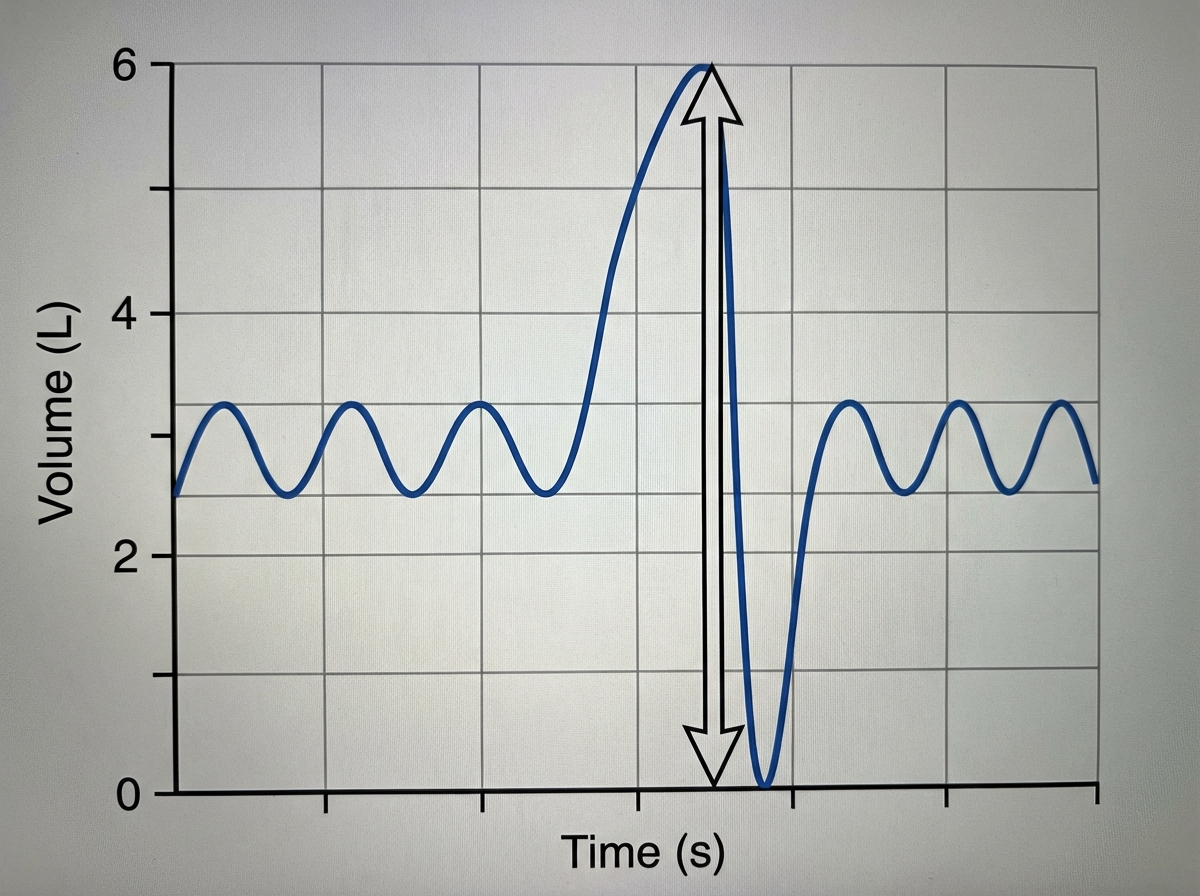
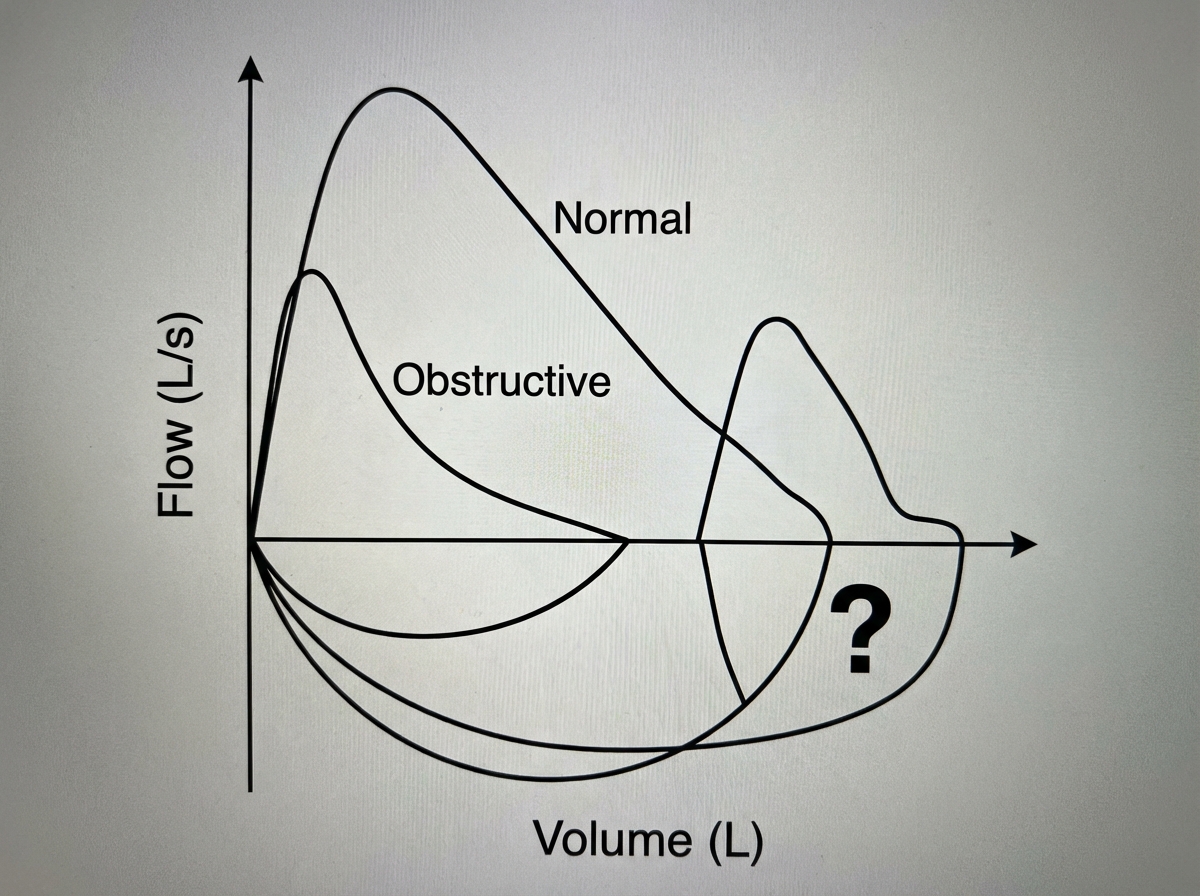
During standing, pulsatile blood flow is found in which zone of the healthy lung?
What is true about caisson's disease?
Total lung capacity is dependent upon which of the following factors?
Which of the following is seen in pneumothorax?
Spontaneous rhythmic respiration is initiated in which of the following areas?
During inspiration, what is the main pathway of airflow in a normal nasal cavity?
Which of the following is FALSE regarding restrictive lung disease?
What is the ciliary movement rate of the nasal mucosa?
The respiratory centre is primarily located in which part of the brain?
Holding one's breath after hyperventilating for some time is dangerous because:
Explanation: **Explanation:** The distribution of pulmonary blood flow is determined by the relationship between **Alveolar pressure (PA)**, **Arterial pressure (Pa)**, and **Venous pressure (Pv)**. In a standing position, gravity causes these pressures to vary from the apex to the base of the lung. **Why Zone 2 is correct:** In **Zone 2** (middle of the lung), the pressure relationship is **Pa > PA > Pv**. During **systole**, arterial pressure rises enough to exceed alveolar pressure, allowing blood to flow. However, during **diastole**, arterial pressure falls below alveolar pressure, causing the capillaries to be compressed (the "Starling Resistor" effect). This intermittent collapse and opening of vessels result in **pulsatile blood flow**. **Analysis of Incorrect Options:** * **Zone 1 (Apex):** Here, **PA > Pa > Pv**. Alveolar pressure is higher than arterial pressure, completely compressing the capillaries. This results in **no flow** (physiological dead space). This zone is usually absent in healthy individuals but appears during hemorrhage or positive pressure ventilation. * **Zone 3 (Base):** Here, **Pa > Pv > PA**. Both arterial and venous pressures exceed alveolar pressure. The vessels remain permanently open, resulting in **continuous (non-pulsatile) flow**. * **Zone 4:** This is a pathological zone found at the extreme lung base where interstitial pressure is high, potentially narrowing the vessels despite high intravascular pressures. **High-Yield Facts for NEET-PG:** * **West’s Zones:** Pulmonary blood flow increases linearly from the apex to the base. * **V/Q Ratio:** Highest at the apex (~3.3) and lowest at the base (~0.6). * **Exercise effect:** During exercise, increased cardiac output raises pulmonary arterial pressure, converting Zone 1 and 2 into Zone 3, ensuring recruitment of all capillaries for gas exchange.
Explanation: **Explanation:** **Caisson’s Disease**, also known as Decompression Sickness (DCS) or "the bends," is governed by **Henry’s Law**, which states that the amount of gas dissolved in a liquid is proportional to its partial pressure. **Why Option C is Correct:** When a diver or underwater worker (caisson worker) stays at high pressure, large amounts of **Nitrogen** (which is physiologically inert) are forced into solution in the body’s fat and tissues. If the person ascends to the surface too rapidly, the ambient pressure drops quickly. This causes the dissolved Nitrogen to come out of solution and form **bubbles** in the blood and tissues (similar to opening a carbonated soda bottle). These bubbles cause mechanical damage, block blood flow, and trigger inflammatory responses. **Why Other Options are Incorrect:** * **Options A & B (Oxygen and CO2):** While these gases are present, they do not cause Caisson's disease. Oxygen is rapidly metabolized by tissues, and CO2 is highly soluble and easily buffered/exhaled, preventing the formation of significant bubbles during decompression. * **Option D (Hydrogen):** Hydrogen is not a significant component of atmospheric air and does not play a role in standard decompression sickness. **High-Yield Clinical Pearls for NEET-PG:** * **Clinical Features:** "The Bends" (joint/muscle pain), "The Chokes" (shortness of breath/pulmonary edema), and neurological deficits (paralysis). * **Type I DCS:** Involves skin, joints, and lymphatics (mild). * **Type II DCS:** Involves CNS, vestibular, or cardiorespiratory systems (serious). * **Treatment:** Immediate **Hyperbaric Oxygen Therapy (HBOT)** to force nitrogen back into solution and improve tissue oxygenation. * **Prevention:** Slow ascent and "decompression stops" to allow nitrogen to be exhaled gradually.
Explanation: **Explanation:** **Total Lung Capacity (TLC)** is the maximum volume of air the lungs can hold after a maximal inspiratory effort. It is primarily determined by the balance between the outward pull of the chest wall and the inward elastic recoil of the lungs. **Why Lung Compliance is Correct:** Compliance refers to the "distensibility" or the ease with which the lungs expand. TLC is directly dependent on the ability of the lung parenchyma to stretch. * **In Restrictive Lung Diseases** (e.g., Pulmonary Fibrosis), lung compliance decreases (stiff lungs), making it difficult for the lungs to expand, thereby **decreasing TLC**. * **In Obstructive Diseases** (e.g., Emphysema), there is a loss of elastic recoil (increased compliance), leading to hyperinflation and an **increased TLC**. **Analysis of Incorrect Options:** * **A. Size of the airway:** This affects airway resistance and flow rates (like FEV1) but does not determine the static volume capacity of the lungs. * **B. Closing volume:** This is the volume at which small airways in the dependent parts of the lung begin to close during expiration. It is a measure of airway stability, not total capacity. * **D. Residual volume (RV):** While RV is a *component* of TLC (TLC = VC + RV), it is a resultant volume rather than a primary physiological determinant of the lung's total expansion limit. **High-Yield Clinical Pearls for NEET-PG:** * **TLC Formula:** TLC = Inspiratory Reserve Volume + Tidal Volume + Expiratory Reserve Volume + Residual Volume. * **Helium Dilution & Body Plethysmography:** These are the gold standard methods to measure TLC, as spirometry cannot measure Residual Volume. * **Surfactant:** Increases compliance by reducing surface tension; a deficiency (as seen in ARDS/NRDS) leads to decreased compliance and decreased TLC.
Explanation: In **pneumothorax**, air enters the pleural space, causing the intrapleural pressure to rise from its normal negative value toward atmospheric pressure. This leads to the collapse of the lung and expansion of the chest wall. ### **Explanation of the Correct Answer** **B. Reduced concentration of surfactant:** Surfactant is produced by Type II pneumocytes and its primary role is to reduce surface tension. In a collapsed lung (atelectasis) resulting from pneumothorax, the surface area of the alveoli decreases significantly. This leads to a **reduction in the synthesis and secretion of surfactant**, and the existing surfactant becomes less effective as the alveolar film is disrupted. This further decreases lung compliance and makes re-expansion difficult. ### **Analysis of Incorrect Options** * **A. Over expanded chest wall:** While the chest wall does move outward (recoiling to its resting position) because the inward pull of the lung is lost, "over-expansion" is a clinical sign rather than the primary physiological hallmark compared to surfactant changes in the context of this specific question's logic. * **C. More negative intrapleural pressure:** In pneumothorax, intrapleural pressure becomes **less negative** (moving toward 0 mmHg or becoming positive in tension pneumothorax). * **D. Increased lung compliance:** Lung compliance **decreases** in pneumothorax because the lung is collapsed and surfactant is depleted, making the lung "stiffer" and harder to inflate. ### **High-Yield Clinical Pearls for NEET-PG** * **Transmural Pressure Gradient:** In pneumothorax, this gradient is lost, allowing the lung to collapse (due to elastic recoil) and the chest wall to spring out. * **Tension Pneumothorax:** Characterized by a "one-way valve" effect, leading to positive intrapleural pressure, mediastinal shift, and hypotension. * **Radiology:** Look for the "deep sulcus sign" on a supine X-ray and the absence of lung markings peripherally.
Explanation: ### Explanation **1. Why Pre-Bötzinger Complex is Correct:** The **Pre-Bötzinger complex (pre-BötC)**, located in the ventrolateral medulla between the nucleus ambiguus and the lateral reticular nucleus, is considered the **pacemaker of respiration**. It contains a cluster of interneurons that discharge spontaneously and rhythmically. These neurons initiate the basic respiratory rhythm, similar to how the SA node initiates the heart rate. It is the primary site for the generation of the respiratory pattern in mammals. **2. Why the Other Options are Incorrect:** * **Dorsal Respiratory Group (DRG):** Located in the nucleus tractus solitarius (NTS), the DRG is primarily responsible for **inspiration**. While it sends the "ramp signal" to the diaphragm, it is not the site of rhythm initiation; it receives input from the pre-BötC. * **Pneumotaxic Centre:** Located in the upper pons (nucleus parabrachialis), its primary role is to act as an **"off-switch"** for inspiration. It limits the duration of inspiration, thereby increasing the respiratory rate. * **Apneustic Centre:** Located in the lower pons, it promotes inhalation by exciting the DRG. If the pneumotaxic center is damaged, the apneustic center causes prolonged inspiratory gasps (apneusis). **3. High-Yield Clinical Pearls for NEET-PG:** * **Location:** Both the DRG and VRG (which contains the pre-BötC) are in the **medulla**. * **Hering-Breuer Reflex:** This reflex prevents over-inflation of the lungs via stretch receptors and vagal afferents, terminating inspiration (similar to the pneumotaxic center's function). * **Chemical Control:** The **central chemoreceptors** (medulla) are primarily sensitive to **H+ ions** (derived from CO2), while **peripheral chemoreceptors** (carotid/aortic bodies) are the only ones sensitive to **low PO2** (<60 mmHg).
Explanation: **Explanation:** The nasal cavity is designed to optimize the conditioning (warming, humidifying, and filtering) of inspired air. During normal, quiet inspiration, the primary stream of air does not travel along the floor of the nose; instead, it rises and passes through the **middle part of the cavity** (between the turbinates and the septum), following a **parabolic curve**. **Why Option A is correct:** The anatomy of the nasal conchae (turbinates) creates resistance and directs the bulk of the airflow through the widest part of the nasal passage—the middle meatus area. The air rises from the nostrils, reaches its highest point in the middle of the cavity, and then curves downward toward the posterior choanae. This parabolic path increases the surface area contact with the respiratory mucosa, ensuring maximum humidification and temperature regulation. **Why other options are incorrect:** * **Option B:** The lower part (inferior meatus) is primarily a drainage pathway for the nasolacrimal duct and does not accommodate the main inspiratory stream. * **Option C & D:** The superior part of the cavity contains the **olfactory area**. Under normal breathing conditions, only a small fraction of air reaches this high. To direct air to the olfactory epithelium, one must "sniff" (forced inspiration), which creates higher velocity and turbulence. **High-Yield NEET-PG Pearls:** * **Airflow Type:** Airflow in the nasal cavity is normally **laminar** at low flow rates but becomes **turbulent** near the turbinates to facilitate heat and moisture exchange. * **Nasal Resistance:** The nose contributes approximately **50% of the total respiratory resistance**. * **Conditioning:** By the time air reaches the nasopharynx, it is already warmed to 31–37°C and saturated with 75–95% humidity.
Explanation: In restrictive lung disease (RLD), the hallmark is a **reduction in lung volumes** due to decreased compliance (e.g., pulmonary fibrosis) or chest wall limitations (e.g., kyphoscoliosis). ### Why Option A is the Correct (False) Statement In RLD, both FEV1 (Forced Expiratory Volume in 1 second) and FVC (Forced Vital Capacity) are decreased. However, because the lung tissue is stiff, the elastic recoil is often increased, allowing the lungs to empty rapidly. Consequently, the **FVC decreases more significantly than the FEV1**, leading to a **normal or even increased FEV1/FVC ratio** (typically >0.7 or 70%). A decreased ratio is the characteristic finding of *obstructive* lung disease (e.g., Asthma, COPD). ### Analysis of Other Options * **B. FVC is decreased:** This is a defining feature of RLD. The total amount of air that can be forcibly exhaled is limited by the reduced lung expansion. * **C. TLC is decreased:** Total Lung Capacity (TLC) is the gold standard for diagnosing restriction. A TLC <80% of the predicted value confirms RLD. * **D. FEV1 is decreased:** (Note: The option says "increased," but in the context of the question, FEV1 is typically decreased or normal in RLD; however, the most definitive "False" statement in clinical exams is the ratio change). *Correction: In RLD, FEV1 is typically decreased, but the ratio remains preserved.* ### High-Yield Clinical Pearls for NEET-PG * **Obstructive vs. Restrictive:** * **Obstructive:** FEV1 ↓↓↓, FVC ↓, **Ratio ↓** * **Restrictive:** FEV1 ↓, FVC ↓↓↓, **Ratio Normal/↑** * **Flow-Volume Loop:** In RLD, the loop is shifted to the right, appearing narrow and tall ("Witch’s Hat" appearance). * **DLCO:** Decreased in intrinsic RLD (e.g., Idiopathic Pulmonary Fibrosis) but normal in extrinsic RLD (e.g., Obesity, Myasthenia Gravis).
Explanation: **Explanation:** The respiratory epithelium, specifically in the nasal mucosa, is lined with pseudostratified ciliated columnar epithelium. This system acts as a "mucociliary escalator," a vital defense mechanism that traps inhaled particles and pathogens in mucus and transports them toward the nasopharynx to be swallowed or expectorated. **1. Why Option C is Correct:** In a healthy adult, the cilia beat rhythmically at a frequency of approximately 10–15 Hz. This coordinated movement propels the overlying mucus layer at a rate of **5–10 mm/min**. This velocity is optimal for clearing the nasal cavity of debris every 10 to 20 minutes, ensuring the airway remains protected and humidified. **2. Why Other Options are Incorrect:** * **Option A (1-2 mm/min):** This rate is too slow and is typically seen in pathological states, such as chronic sinusitis or in heavy smokers where ciliary activity is depressed. * **Option B (2-5 mm/min):** While closer to the range, this represents the lower end of normal or slightly impaired clearance. * **Option D (10-12 mm/min):** This exceeds the standard physiological rate for the nasal mucosa, though such speeds may occasionally be reached in the lower trachea under certain stimulated conditions. **High-Yield Clinical Pearls for NEET-PG:** * **Kartagener’s Syndrome:** A subset of Primary Ciliary Dyskinesia (PCD) characterized by the triad of situs inversus, chronic sinusitis, and bronchiectasis due to defective dynein arms in cilia. * **Factors decreasing ciliary rate:** Cigarette smoke, hypoxia, dehydration, and extreme cold. * **Direction of flow:** In the nose, cilia move mucus **posteriorly** toward the pharynx; in the lower respiratory tract, they move it **superiorly** toward the larynx.
Explanation: **Explanation:** The regulation of respiration is a complex process controlled by the brainstem. The **Medulla Oblongata** is the primary site of the respiratory centers because it contains the rhythmic generators essential for life. **Why Medulla Oblongata is correct:** The medulla houses two critical functional groups: 1. **Dorsal Respiratory Group (DRG):** Located in the nucleus tractus solitarius, it primarily controls inspiration and generates the basic rhythm of breathing. 2. **Ventral Respiratory Group (VRG):** Contains the **Pre-Bötzinger complex**, which acts as the "pacemaker" of respiration. It remains inactive during quiet breathing but becomes active during forceful expiration. **Why the other options are incorrect:** * **Spinal Cord:** While it contains the motor neurons (like the phrenic nerve at C3-C5) that innervate respiratory muscles, it does not possess the centers that generate or regulate the respiratory rhythm. * **Midbrain:** This area is involved in visual and auditory reflexes but has no direct role in the primary regulation of breathing. * **Hypothalamus:** It can influence respiration during emotional states (e.g., gasping in fear) or temperature changes, but it is not the primary site for rhythmic control. **High-Yield Clinical Pearls for NEET-PG:** * **Pons:** While the medulla generates the rhythm, the Pons contains the **Pneumotaxic center** (upper pons) which limits inspiration (the "off-switch") and the **Apneustic center** (lower pons) which prolongs inspiration. * **Chemoreceptors:** Central chemoreceptors are located on the ventral surface of the medulla and are primarily sensitive to changes in **H+ concentration and PCO2** in the CSF. * **Ondine’s Curse:** A clinical condition (Congenital Central Hypoventilation Syndrome) where automatic control of breathing (medullary function) is lost, requiring the patient to consciously remember to breathe.
Explanation: **Explanation:** The primary drive for respiration in a healthy individual is the arterial partial pressure of carbon dioxide ($PCO_2$) acting on central chemoreceptors. When a person hyperventilates, they "wash out" $CO_2$, leading to **hypocapnia**. If that person then holds their breath, the $CO_2$ levels start at a very low baseline. It takes a significant amount of time for $CO_2$ to accumulate back to the "threshold" required to stimulate the respiratory center and create the "urge to breathe." During this prolonged interval, oxygen levels ($PO_2$) continue to drop steadily. Because the $CO_2$ drive is absent, the person may not feel the need to breathe until $PO_2$ falls to dangerously low levels, leading to **hypoxic blackout** or unconsciousness before the hypercapnic drive ever kicks in. **Analysis of Incorrect Options:** * **Option A:** While hypocapnia does shift the Oxygen-Dissociation Curve (ODC) to the left (Haldane effect/Bohr effect inverse), this increases hemoglobin's affinity for $O_2$. While this hinders $O_2$ release to tissues, it is not the primary reason why breath-holding after hyperventilation is *dangerous* in this context. * **Option B:** Respiratory alkalosis (due to low $CO_2$) causes a decrease in ionized calcium, which can indeed cause tetany. However, tetany is a neuromuscular complication, not the life-threatening respiratory risk associated with this specific scenario. * **Option C:** $CO_2$ Narcosis occurs due to extreme hypercapnia (usually $PCO_2 > 70-80$ mmHg), typically seen in chronic Type II respiratory failure. Hyperventilation causes the exact opposite (hypocapnia). **High-Yield Clinical Pearls for NEET-PG:** * **Breaking Point:** The point at which breathing can no longer be voluntarily inhibited. It is usually reached when $PaCO_2$ rises to about 50 mmHg. * **Shallow Water Blackout:** A clinical manifestation of this phenomenon where divers drown because they hyperventilate before diving to stay underwater longer, only to lose consciousness due to hypoxia. * **Chemoreceptors:** Central chemoreceptors respond to $H^+$ (via $CO_2$); Peripheral chemoreceptors (Carotid/Aortic bodies) are the primary responders to $PO_2$ (hypoxia).
Mechanics of Breathing
Practice Questions
Pulmonary Ventilation
Practice Questions
Pulmonary Circulation
Practice Questions
Gas Exchange in the Lungs
Practice Questions
Oxygen and Carbon Dioxide Transport
Practice Questions
Control of Breathing
Practice Questions
Respiratory Adjustments in Health and Disease
Practice Questions
High Altitude Physiology
Practice Questions
Diving Physiology
Practice Questions
Respiratory Function Tests
Practice Questions
Get full access to all questions, explanations, and performance tracking.
Start For Free