What is the approximate total number of primordial follicles present at birth?
Males and females show differences in the age of onset of puberty. The difference in the age of onset of puberty amongst males may be explained by:
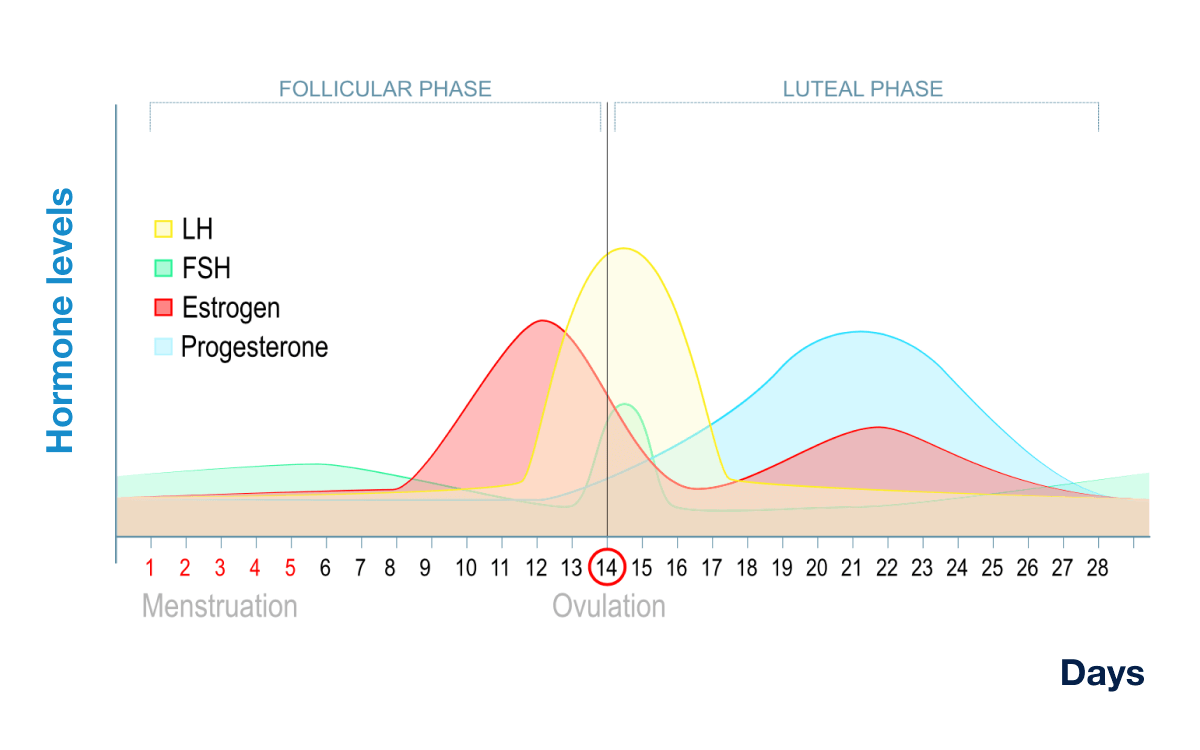
Which of the following statements is FALSE regarding hormonal variations during a normal menstrual cycle?
Which of the following characterizes the mid-follicular phase of the menstrual cycle?
Physiological amenorrhea is present in all the following situations except:
In a standard 40-day menstrual cycle, on which day does ovulation typically occur?
Granulosa cells produce estrogen with the help of which enzyme?
The enzyme 5a-reductase mediated conversion of testosterone to dihydrotestosterone is NOT required for which of the following actions?
Which of the following endocrine structures does not produce progesterone?
Maximum fertilizable life span of an oocyte is:
Explanation: **Explanation** The correct answer is **1-2 Million (Option D)**. This question tests the understanding of the chronological decline of germ cells in the female reproductive system, a high-yield topic for NEET-PG. **1. Why Option D is Correct:** During fetal development, primordial germ cells migrate to the gonadal ridge and undergo rapid mitosis. The number of germ cells peaks at **6–7 million** by the **20th week of gestation**. Following this peak, a process of programmed cell death (atresia) begins. By the time of **birth**, the total number of primordial follicles is reduced to approximately **1–2 million**. **2. Why Other Options are Incorrect:** * **Options A and B (2,000–40,000):** These numbers are far too low for birth. By the time a girl reaches **menopause**, the count drops below 1,000. * **Option C (1–2 Lakhs):** This range is closer to the number of follicles present at **puberty**. By the onset of menarche, the count has further depleted to approximately **300,000–400,000**. **3. Clinical Pearls & High-Yield Facts:** * **Peak Germ Cells:** 6–7 million (at 20 weeks gestation). * **At Birth:** 1–2 million. * **At Puberty:** 300,000–400,000. * **Total Ovulated:** Only about **400–500** follicles will actually undergo ovulation during a woman's entire reproductive lifespan; the rest undergo atresia. * **Meiotic Arrest:** Primordial follicles are arrested in the **Prophase of Meiosis I (Diplotene stage)** until ovulation begins after puberty. * **Menopause:** Occurs when the follicular pool is exhausted (typically <1,000 follicles remaining).
Explanation: **Explanation:** The timing of puberty is governed by the reactivation of the hypothalamic-pituitary-gonadal (HPG) axis. In males, the onset of puberty is generally later than in females. This delay is primarily attributed to the feedback mechanisms of the pituitary-gonadal axis, specifically involving **Inhibin**. **Why "Increased Inhibin levels" is correct:** Inhibin (specifically Inhibin B in males) is produced by the Sertoli cells of the testes. Its primary physiological role is the **negative feedback inhibition of FSH** (Follicle-Stimulating Hormone) secretion from the anterior pituitary. In the prepubertal period, males maintain higher levels of Inhibin compared to females. This sustained suppression of FSH keeps the HPG axis in a "quiescent" state for a longer duration, thereby delaying the physiological triggers required for the onset of puberty. **Analysis of Incorrect Options:** * **A & B (Activin and Follistatin):** Activin stimulates FSH release, while Follistatin binds and neutralizes Activin. While they play roles in follicular/spermatogenic development, they are not the primary systemic regulators responsible for the gender-based timing difference in pubertal onset. * **D (Easily releasable FSH pool):** Females actually demonstrate a more "easily releasable" or sensitive FSH response to GnRH pulses in early puberty compared to males. A larger FSH pool would theoretically accelerate puberty, not explain the delay seen in males. **High-Yield NEET-PG Pearls:** * **Inhibin B** is the primary marker of spermatogenesis and Sertoli cell function in males. * **Inhibin A** is the dominant form in females (secreted by the corpus luteum). * The first sign of puberty in males is **testicular enlargement** (>4ml volume), driven by FSH-induced growth of seminiferous tubules. * The "gonadostat" theory suggests puberty begins when the hypothalamus becomes *less* sensitive to negative feedback from sex steroids.
Explanation: ### Explanation **1. Why Option D is the Correct (False) Statement:** The statement is false because **Inhibin B inhibits FSH secretion**, it does not stimulate it. During the follicular phase, the developing follicles secrete Estrogen and Inhibin B. Both exert **negative feedback** on the anterior pituitary to decrease FSH levels. This decline in FSH is crucial for "follicular selection," where only the most sensitive follicle (the dominant follicle) survives while others undergo atresia. **2. Analysis of Other Options:** * **Option A (True):** Estrogen typically exerts negative feedback on FSH. However, when estrogen levels remain high (>200 pg/mL) for approximately 48 hours, it switches to **positive feedback**, triggering the **LH surge**. * **Option B (True):** LH levels are generally low due to negative feedback (first phase), but rise sharply during the pre-ovulatory surge (second phase) due to the positive feedback of estrogen. * **Option C (True):** FSH is essential for the maturation of the follicle. One of its critical roles is upregulating **LH receptors** on granulosa cells, preparing them to respond to the LH surge for ovulation and subsequent luteinization. **3. High-Yield Clinical Pearls for NEET-PG:** * **Inhibin B vs. Inhibin A:** Remember **B** for **B**efore ovulation (follicular phase) and **A** for **A**fter ovulation (luteal phase, secreted by the corpus luteum). Both inhibit FSH. * **The "Two-Cell, Two-Gonadotropin" Theory:** LH acts on **Theca cells** (producing androgens), while FSH acts on **Granulosa cells** (converting androgens to estrogens via aromatase). * **LH Surge:** It is the definitive trigger for ovulation and occurs 24–36 hours after the estrogen peak and 10–12 hours before the actual release of the oocyte.
Explanation: ### Explanation In the **mid-follicular phase** (days 5–10), the selection of the dominant follicle occurs. This phase is characterized by a shift in the hormonal feedback loop from the pituitary to the ovaries. **Why "Increased Inhibin" is correct:** As the follicles grow under the influence of FSH, the granulosa cells begin to secrete increasing amounts of **Inhibin B**. Inhibin B serves a specific physiological role: it provides negative feedback to the anterior pituitary to selectively **decrease FSH secretion**. This ensures that only the most sensitive follicle (the dominant follicle) continues to grow, while others undergo atresia. **Analysis of Incorrect Options:** * **A. Decreased Estrogen:** Incorrect. During the mid-follicular phase, estrogen levels are **rising** steadily as granulosa cells proliferate and aromatize androgens. * **B. Increased FSH:** Incorrect. FSH levels actually **decline** during the mid-to-late follicular phase due to negative feedback from rising estrogen and Inhibin B. * **C. Decreased LH:** Incorrect. LH levels remain relatively stable or show a **slight increase** during this phase, eventually leading to the LH surge. It does not decrease. **NEET-PG High-Yield Pearls:** * **Inhibin B vs. Inhibin A:** Remember **B** for **B**efore ovulation (follicular phase) and **A** for **A**fter ovulation (luteal phase, secreted by the corpus luteum). * **Two-Cell, Two-Gonadotropin Theory:** LH stimulates **Theca cells** to produce androgens; FSH stimulates **Granulosa cells** to convert those androgens into estrogens (aromatization). * **The Switch:** Estrogen exerts negative feedback throughout most of the cycle, but when it exceeds a threshold (>200 pg/mL for ~48 hours), it switches to **positive feedback**, triggering the LH surge.
Explanation: **Explanation:** **Physiological amenorrhea** refers to the natural, non-pathological absence of menstruation during specific stages of a woman's life cycle. 1. **Why "Post-puberty" is the correct answer:** Post-puberty marks the onset of **menarche** and the establishment of regular cyclic hormonal changes (the hypothalamic-pituitary-ovarian axis). In a healthy, non-pregnant, non-lactating female of reproductive age, the absence of menstruation is considered **pathological** (Primary or Secondary Amenorrhea), not physiological. Therefore, post-puberty is the state where menstruation is expected to occur. 2. **Analysis of Incorrect Options:** * **Pre-puberty:** Before puberty, the GnRH pulse generator is dormant, and gonadotropin levels (FSH/LH) are too low to stimulate follicular development or endometrial growth. * **Pregnancy:** This is the most common cause of physiological amenorrhea. High levels of **placental hormones (hCG, Estrogen, and Progesterone)** provide negative feedback to the pituitary, inhibiting the cyclic shedding of the endometrium. * **Lactation:** Elevated **Prolactin** levels during breastfeeding inhibit the pulsatile release of GnRH, leading to "Lactational Amenorrhea." This serves as a natural (though not foolproof) contraceptive mechanism. * *Note:* **Menopause** is the fourth major cause of physiological amenorrhea due to the depletion of ovarian follicles. **High-Yield Clinical Pearls for NEET-PG:** * **Lactational Amenorrhea Method (LAM):** Is most effective only if the mother is exclusively breastfeeding, is less than 6 months postpartum, and remains amenorrheic. * **First sign of Puberty:** Thelarche (breast development), followed by Pubarche, and finally Menarche. * **Primary Amenorrhea definition:** Absence of menarche by age 13 (without secondary sexual characteristics) or age 15 (with secondary sexual characteristics).
Explanation: **Explanation:** The key to solving this question lies in understanding the phases of the menstrual cycle. A menstrual cycle consists of two main phases: the **Follicular Phase** (variable) and the **Luteal Phase** (constant). 1. **The Constant Luteal Phase:** In human reproductive physiology, the lifespan of the corpus luteum is relatively fixed. Therefore, the luteal phase (the period from ovulation to the first day of the next menses) almost always lasts **14 days**, regardless of the total cycle length. 2. **The Calculation:** To determine the day of ovulation, use the formula: * **Day of Ovulation = Total Cycle Length – 14 days** * For a 40-day cycle: $40 - 14 = \mathbf{26}$. Thus, ovulation occurs on the **26th day**. **Analysis of Incorrect Options:** * **Option A (14th day):** This is only correct for a "textbook" 28-day cycle ($28 - 14 = 14$). It is a common misconception that ovulation always occurs on day 14. * **Option B (20th day):** This would be the ovulation day for a 34-day cycle. * **Option D (30th day):** This would be the ovulation day for a 44-day cycle. **High-Yield Clinical Pearls for NEET-PG:** * **Variable Phase:** The variation in cycle length between different women (or different cycles in the same woman) is due to the variability of the **Follicular Phase**. * **Mittelschmerz Sign:** Some women experience pelvic pain mid-cycle due to follicular rupture; this is a clinical marker for ovulation. * **Basal Body Temperature (BBT):** After ovulation, progesterone causes a thermogenic effect, raising the BBT by **0.5°F to 1.0°F**. * **LH Surge:** Ovulation occurs **24–36 hours** after the peak of the LH surge and **10–12 hours** after the LH peak.
Explanation: **Explanation:** The production of estrogen in the ovary is best explained by the **"Two-Cell, Two-Gonadotropin Theory."** 1. **The Mechanism:** LH (Luteinizing Hormone) stimulates **Theca cells** to convert cholesterol into androgens (androstenedione and testosterone). These androgens then diffuse across the basement membrane into the **Granulosa cells**. 2. **The Role of Aromatase:** Under the influence of FSH (Follicle-Stimulating Hormone), Granulosa cells express the enzyme **Aromatase** (CYP19A1). This enzyme catalyzes the conversion (aromatization) of androgens into estrogens (estradiol and estrone). Therefore, Aromatase is the rate-limiting enzyme for estrogen synthesis in the follicle. **Analysis of Incorrect Options:** * **Alkaline Phosphatase (ALP):** A marker of osteoblastic activity and biliary obstruction; it is not involved in steroidogenesis. * **Acid Phosphatase:** Primarily found in the prostate and lysosomes; used as a marker for prostatic carcinoma (PSA is now preferred). * **Glucuronidase:** An enzyme involved in the breakdown of complex carbohydrates and the conjugation/metabolism of drugs and hormones in the liver, not their synthesis. **High-Yield Clinical Pearls for NEET-PG:** * **FSH** acts on Granulosa cells (increases Aromatase). * **LH** acts on Theca cells (increases Androgen precursors). * **Aromatase Inhibitors** (e.g., Letrozole, Anastrozole) are used clinically to treat estrogen-dependent breast cancer and to induce ovulation in PCOS. * **Inhibin B** is also produced by Granulosa cells and serves as a marker of ovarian reserve.
Explanation: ### Explanation The conversion of **Testosterone (T)** to **Dihydrotestosterone (DHT)** is mediated by the enzyme **5α-reductase**. While both are androgens, they have distinct roles based on their affinity for the androgen receptor and the tissue type. **Why Spermatogenesis is the Correct Answer:** Spermatogenesis is primarily dependent on **Testosterone** and **Follicle-Stimulating Hormone (FSH)**. High local concentrations of testosterone within the seminiferous tubules (maintained by Androgen Binding Protein from Sertoli cells) are essential for the maturation of sperm. DHT is not required for this process; in fact, men with 5α-reductase deficiency can still produce sperm, although they may face delivery issues due to anatomical abnormalities. **Analysis of Incorrect Options:** * **A. Formation of male external genitalia:** In the fetus, DHT is absoluteley required for the differentiation of the urethral folds and labioscrotal swellings into the **penis and scrotum**. Without DHT, a genetic male will have female-appearing external genitalia. * **B. Prostatic hypertrophy:** The prostate gland is highly sensitive to DHT. It is the primary mediator of both normal prostatic growth and **Benign Prostatic Hyperplasia (BPH)** in elderly males. This is why 5α-reductase inhibitors (e.g., Finasteride) are used to treat BPH. * **C. Pubertal changes:** DHT is responsible for many secondary sexual characteristics during puberty, including **facial/body hair growth**, acne, and temporal recession of the hairline (male pattern baldness). **High-Yield Clinical Pearls for NEET-PG:** * **5α-reductase Type 1:** Found in skin and liver. * **5α-reductase Type 2:** Found in the urogenital tract, liver, and hair follicles. * **Internal Genitalia (Epididymis, Vas deferens, Seminal vesicles):** Developed via **Testosterone** (Wolffian duct stimulation). * **External Genitalia & Prostate:** Developed via **DHT**. * **Mnemonic:** "Testosterone for the Inside, DHT for the Outside."
Explanation: **Explanation:** The correct answer is **C. Endometrium**. In reproductive physiology, it is crucial to distinguish between structures that *produce* hormones and those that act as *target tissues*. **1. Why Endometrium is the correct answer:** The endometrium is the mucosal lining of the uterus. It does not synthesize progesterone; rather, it is a **target organ** for progesterone. Under the influence of progesterone, the endometrium undergoes "secretory changes" (increased vascularity and glycogen storage) to prepare for implantation. While it produces local factors like prostaglandins, it lacks the steroidogenic enzymes (like 3β-HSD) required to synthesize progesterone. **2. Analysis of incorrect options:** * **Placenta:** After the "luteal-placental shift" (around 7–9 weeks of gestation), the syncytiotrophoblast of the placenta becomes the primary source of progesterone to maintain pregnancy. * **Follicle:** Specifically, the **Corpus Luteum** (formed from the ruptured follicle after ovulation) is the main source of progesterone during the luteal phase of the menstrual cycle. * **Adrenal Cortex:** The adrenal glands produce small amounts of progesterone as an intermediate precursor in the synthesis of cortisol and androgens. **High-Yield NEET-PG Pearls:** * **Luteal-Placental Shift:** Occurs between 7–10 weeks; before this, the Corpus Luteum of pregnancy is essential. * **Progesterone Function:** It is often called the "Hormone of Pregnancy" because it decreases uterine excitability (quiescence). * **Diagnostic Marker:** A serum progesterone level >3 ng/mL is a reliable indicator that ovulation has occurred.
Explanation: **Explanation:** The fertilizable life span of an oocyte refers to the duration after ovulation during which the secondary oocyte remains viable and capable of being fertilized by a sperm. 1. **Why 24 hours is correct:** After ovulation, the secondary oocyte is picked up by the fimbriae and moves into the ampulla of the fallopian tube. Its viability is relatively short-lived. Most physiological studies and standard textbooks (like Guyton and Ganong) state that the human oocyte must be fertilized within **12 to 24 hours** of its release. Beyond 24 hours, the oocyte undergoes degenerative changes, the zona pellucida hardens, and it loses its capacity to respond to sperm penetration. 2. **Why other options are incorrect:** * **12 hours (Option A):** While the oocyte is most fertile during the first 12 hours, its maximum window extends up to 24 hours. * **36 & 48 hours (Options C & D):** These durations are too long for an oocyte. While **spermatozoa** can survive in the female reproductive tract for 48 to 72 hours (sometimes up to 5 days), the oocyte is much more fragile and degrades significantly by the 36-hour mark. **High-Yield Clinical Pearls for NEET-PG:** * **Site of Fertilization:** Ampulla of the Fallopian tube. * **Sperm Viability:** 48–72 hours (longer than the oocyte). * **Fertile Window:** The period starting 5 days before ovulation until 1 day after. * **Meiotic State:** At the time of ovulation, the oocyte is arrested in **Metaphase of Meiosis II**. It only completes meiosis II if fertilization occurs. * **Capacitation:** The process sperm must undergo in the female tract (taking ~7 hours) to become capable of fertilizing the oocyte.
Male Reproductive Physiology
Practice Questions
Spermatogenesis and Sperm Function
Practice Questions
Female Reproductive Physiology
Practice Questions
Menstrual Cycle
Practice Questions
Ovulation and Fertilization
Practice Questions
Physiology of Pregnancy
Practice Questions
Parturition
Practice Questions
Lactation
Practice Questions
Sexual Differentiation and Development
Practice Questions
Reproductive Aging
Practice Questions
Get full access to all questions, explanations, and performance tracking.
Start For Free