What is the primary function of the preoptic nucleus of the hypothalamus?
What is the rate-limiting step in cholinergic transmission?
Uncontrolled flailing of an arm is a symptom of which condition?
Which of the following proteins is responsible for the flexibility of red blood cells?
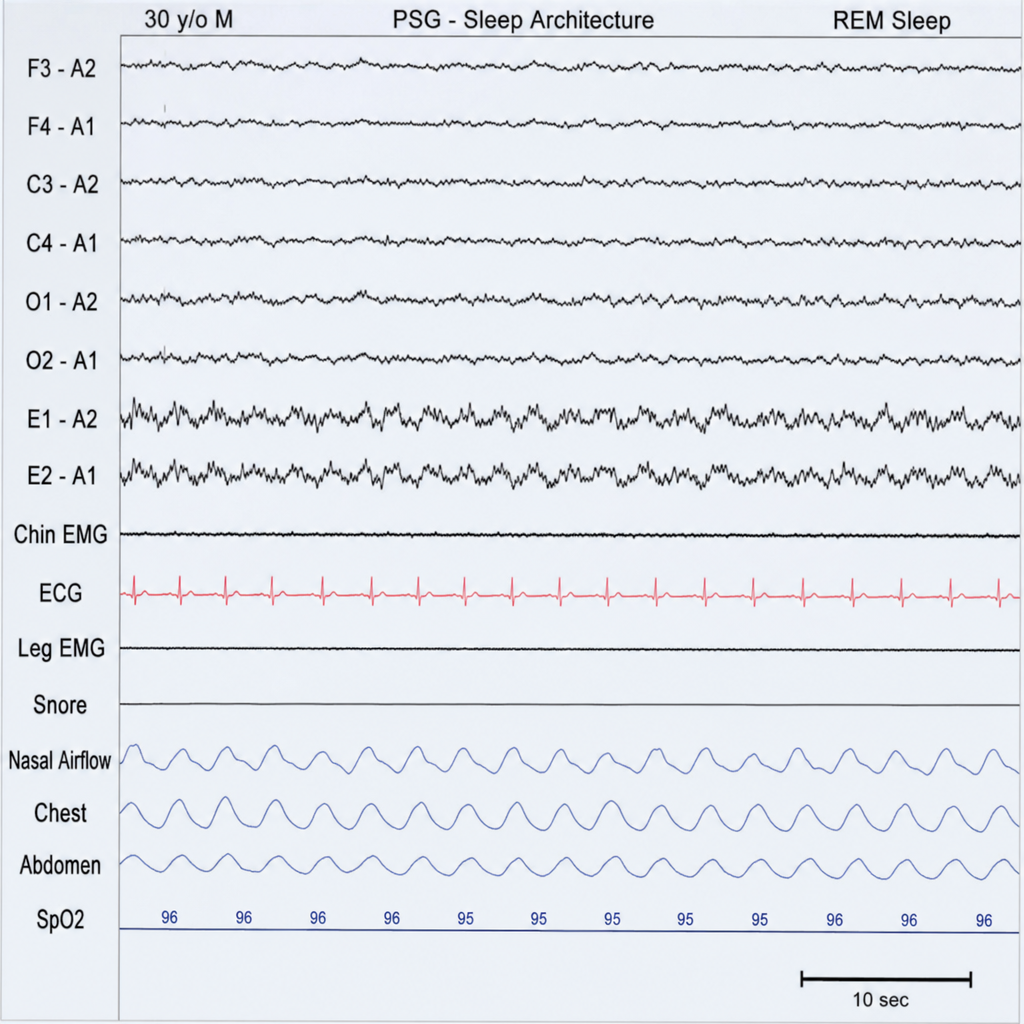
Which of the following neurotransmitters is MOST important for the induction of REM sleep?
Theta waves are characteristically seen in which stage of sleep?
Which cortical area is primarily responsible for the control of emotion?
Which part of the hypothalamus is involved in sexual behavior?
Which one of the following pituitary hormones is an opioid peptide?
Key regulators of sleep are located in which brain region?
Explanation: The **preoptic nucleus** of the hypothalamus acts as the body’s primary **thermostat**. It contains thermosensitive neurons that monitor blood temperature and receive input from skin receptors. When body temperature rises, this nucleus triggers heat-loss mechanisms, such as cutaneous vasodilation and sweating. ### Why the other options are incorrect: * **Thirst sensation:** This is primarily regulated by the **Lateral Hypothalamus** (thirst center) and the **Organum Vasculosum of the Lamina Terminalis (OVLT)**, which senses changes in plasma osmolarity. * **Gastrointestinal stimulation:** Parasympathetic control of the GI tract is generally associated with the **Anterior Hypothalamus**, while the **Dorsomedial Nucleus** is involved in GI stimulation (specifically gastric acid secretion) in response to emotional stress. * **Satiety centre:** This is located in the **Ventromedial Nucleus (VMN)**. Lesions here lead to hyperphagia and obesity. Conversely, the **Lateral Hypothalamus** is the "Feeding Center," and its lesion leads to aphagia. ### High-Yield Clinical Pearls for NEET-PG: * **Mnemonic for Temperature:** **A**nterior/Preoptic = **A**C (Cooling/Heat loss); **P**osterior = **P**roduces heat (Heating/Shivering). * **Lesion Effect:** A lesion in the preoptic area leads to **hyperthermia**, while a lesion in the posterior hypothalamus leads to **poikilothermia** (inability to regulate temperature at all). * **Circadian Rhythm:** The **Suprachiasmatic Nucleus (SCN)**, located just above the optic chiasm, is the master pacemaker for circadian rhythms.
Explanation: **Explanation:** The rate-limiting step in the biosynthesis of Acetylcholine (ACh) is the **active uptake of choline into the presynaptic nerve terminal**. This process is mediated by a high-affinity, sodium-dependent choline transporter (CHT1). Since the concentration of choline in the extracellular fluid is low and the synthesis of ACh depends entirely on the availability of intracellular choline, the speed of this transport determines the overall rate of cholinergic transmission. **Analysis of Options:** * **Option A:** While the synthesis of ACh (catalyzed by Choline Acetyltransferase) is the final chemical step, it is not rate-limiting because the enzyme is usually present in excess; the bottleneck is the substrate (choline) availability. * **Option C:** The uptake of ACh into vesicles is mediated by the Vesicular Acetylcholine Transporter (VAChT). While essential for storage and protection from degradation, it does not dictate the primary rate of synthesis. * **Option D:** The release of ACh is a calcium-dependent process triggered by an action potential. While it is the "effector" step, it is not the "rate-limiting" metabolic step of the pathway. **High-Yield Clinical Pearls for NEET-PG:** * **Hemicholinium:** A drug that pharmacologically blocks the high-affinity choline transporter, thereby inhibiting ACh synthesis. * **Vesamicol:** A drug that inhibits the vesicular uptake of ACh (VAChT). * **Botulinum Toxin:** Acts by cleaving SNARE proteins, preventing the fusion of synaptic vesicles with the presynaptic membrane, thus inhibiting ACh release. * **Pseudocholinesterase vs. Acetylcholinesterase:** ACh action is terminated by rapid hydrolysis in the synaptic cleft by Acetylcholinesterase (AChE), not by reuptake of the whole neurotransmitter molecule. Only the metabolite (choline) is recycled.
Explanation: **Explanation:** **Hemiballismus** is characterized by sudden, wild, large-amplitude, and uncontrolled flailing movements of the limbs on one side of the body. This condition is a classic example of a hyperkinetic movement disorder. **Why Hemiballismus is correct:** The underlying pathology is a lesion of the **contralateral subthalamic nucleus (STN)**, most commonly due to a lacunar stroke. In the indirect pathway of the basal ganglia, the STN normally provides excitatory input to the Globus Pallidus internus (GPi), which inhibits the thalamus. A lesion in the STN reduces this inhibition, leading to an overactive motor cortex and the characteristic violent, "ballistic" movements. **Why the other options are incorrect:** * **Amyotrophic Lateral Sclerosis (ALS):** A progressive neurodegenerative disease affecting both Upper and Lower Motor Neurons. It presents with muscle weakness, wasting, and spasticity, not hyperkinetic flailing. * **Lower Motor Neuron (LMN) Syndrome:** Characterized by flaccid paralysis, muscle atrophy, fasciculations, and loss of reflexes. * **Dysdiadochokinesia:** A sign of **cerebellar dysfunction** defined as the inability to perform rapid, alternating movements (e.g., pronation/supination). **High-Yield Clinical Pearls for NEET-PG:** * **Site of Lesion:** Contralateral Subthalamic Nucleus (STN). * **Most Common Cause:** Vascular (Hemorrhagic or Ischemic stroke). * **Neurotransmitter:** Loss of glutamatergic output from the STN. * **Management:** Dopamine antagonists (like Haloperidol) are often used to control symptoms. * **Comparison:** Unlike Chorea (dance-like, distal), Ballismus is proximal, violent, and large-amplitude.
Explanation: **Explanation:** The flexibility and biconcave shape of Red Blood Cells (RBCs) are maintained by a complex **cytoskeletal network** located just beneath the lipid bilayer. This network allows the RBC to undergo extreme deformation while passing through narrow capillaries (as small as 3 µm) and return to its original shape. * **Spectrin (Option A):** This is the primary structural protein of the RBC cytoskeleton. It consists of $\alpha$ and $\beta$ chains that form a long, flexible hexagonal lattice. It acts like a "spring," providing the membrane with its essential tensile strength and elasticity. * **Ankyrin (Option B):** This protein acts as the primary "bridge" or anchor. It attaches the spectrin lattice to the transmembrane protein, Band 3. Without ankyrin, the cytoskeleton would detach from the lipid bilayer. * **Band 3 (Option C):** This is a multipass transmembrane protein (anion exchanger). While its primary role is exchanging $Cl^-$ and $HCO_3^-$, it serves as a crucial anchoring point for the underlying cytoskeleton. **Why "All of the above" is correct:** The flexibility of the RBC is not dependent on a single protein but on the **vertical and horizontal interactions** between these proteins. A defect in any of these components disrupts the structural integrity of the membrane, leading to a loss of deformability. **Clinical Pearls for NEET-PG:** 1. **Hereditary Spherocytosis:** Most commonly caused by a deficiency in **Ankyrin** (followed by Spectrin or Band 3). This leads to a loss of membrane surface area, resulting in rigid, spherical cells that are destroyed in the spleen. 2. **Hereditary Elliptocytosis:** Primarily caused by defects in **Spectrin** (disruption of horizontal interactions). 3. **Band 3** is also known as the Anion Exchanger 1 (AE1) and is vital for the "Chloride Shift" (Hamburger phenomenon).
Explanation: **Explanation:** The regulation of the sleep-wake cycle depends on the complex interplay between various neurotransmitters in the brainstem. **1. Why Acetylcholine is correct:** Acetylcholine (ACh) is the primary neurotransmitter responsible for the **induction and maintenance of REM (Rapid Eye Movement) sleep**. During REM sleep, "REM-on" cholinergic neurons in the **pontine tegmentum** (specifically the pedunculopontine and laterodorsal tegmental nuclei) become highly active. This cholinergic surge triggers the characteristic features of REM, including cortical desynchrony (beta waves) and muscle atonia. **2. Why the other options are incorrect:** * **Norepinephrine (NE):** Produced in the **Locus Coeruleus**, NE is a "REM-off" neurotransmitter. Its activity is highest during wakefulness and lowest (virtually silent) during REM sleep. High levels of NE inhibit the transition into REM. * **Dopamine:** While dopamine plays a role in arousal and the reward system, it is not the primary driver for REM induction. Increased dopamine is generally associated with wakefulness. * **Epinephrine:** This is primarily a peripheral hormone of the adrenal medulla involved in the "fight or flight" response; it does not play a direct role in the induction of REM sleep stages within the CNS. **Clinical Pearls & High-Yield Facts for NEET-PG:** * **Mnemonic:** "REM-on" cells are **Cholinergic**; "REM-off" cells are **Aminergic** (Norepinephrine and Serotonin). * **Serotonin (5-HT):** Like NE, serotonin levels are lowest during REM sleep. * **PGO Spikes:** Pontine-Geniculate-Occipital spikes are the earliest signs of REM sleep, triggered by cholinergic activity. * **Drugs:** Anticholinergic drugs (like atropine) decrease REM sleep, while acetylcholinesterase inhibitors can increase it.
Explanation: ### Explanation **Correct Option: C. Stage 1 NREM** The correct answer is **Stage 1 NREM** because this stage marks the transition from wakefulness to sleep. During this phase, the high-frequency Alpha waves (8–13 Hz) seen during relaxed wakefulness are replaced by low-voltage, mixed-frequency **Theta waves (4–7 Hz)**. Theta waves are the hallmark of light sleep and are characteristic of Stage 1 NREM. **Analysis of Incorrect Options:** * **Stage 2 NREM (Option D):** While some theta activity persists, Stage 2 is specifically characterized by the appearance of **Sleep Spindles** (bursts of 12–14 Hz activity) and **K-complexes**. These are the "high-yield" EEG markers for this stage. * **REM Sleep (Options A & B):** REM sleep is characterized by "paradoxical" EEG activity. The waves are low-voltage and high-frequency, resembling the **Beta waves** of an awake, alert state (often described as "sawtooth waves"). Note: REM sleep is not typically divided into "Stage 1" or "Stage 2" in standard physiological classifications (like the Rechtschaffen and Kales or AASM systems). **High-Yield Clinical Pearls for NEET-PG:** * **EEG Wave Frequencies:** * **Beta (>13 Hz):** Alert/Active thinking. * **Alpha (8–13 Hz):** Relaxed with eyes closed. * **Theta (4–7 Hz):** Stage 1 NREM. * **Delta (<4 Hz):** Stage 3 NREM (Deep/Slow-wave sleep). * **Bruxism** (teeth grinding) occurs mostly in Stage 2. * **Sleepwalking (Somnambulism), Night Terrors, and Enuresis** occur during Stage 3 NREM (Deep Sleep). * **Dreaming and Muscle Atonia** are characteristic of REM sleep.
Explanation: **Explanation:** The **Limbic System** (often referred to as the "emotional brain") is a complex set of structures located on the medial aspect of the cerebral hemispheres. It is the primary cortical and subcortical region responsible for emotional behavior, motivation, and long-term memory. While it consists of various components, the **Limbic Cortex** (including the cingulate gyrus and parahippocampal gyrus) specifically coordinates the cortical control of emotional expression. **Analysis of Options:** * **Limbic Area (Correct):** This is the most comprehensive answer. It integrates the "Papez Circuit," which is the fundamental anatomical pathway for emotional processing. * **Hippocampus (Incorrect):** While part of the limbic system, its primary function is **memory consolidation** (converting short-term to long-term memory) and spatial navigation, rather than the primary control of emotion. * **Cingulate Gyrus (Incorrect):** This is a *component* of the limbic area. While it plays a role in emotional processing and attention, "Limbic Area" is the broader, more accurate anatomical designation for the control center. * **Pre-central Gyrus (Incorrect):** This is the site of the **Primary Motor Cortex (Brodmann area 4)**, responsible for the execution of voluntary motor movements on the contralateral side of the body. **High-Yield NEET-PG Pearls:** * **Amygdala:** The specific nucleus within the limbic system responsible for **fear, anxiety, and aggression**. * **Klüver-Bucy Syndrome:** Results from bilateral destruction of the amygdala, characterized by hyperorality, hypersexuality, and a lack of fear (placidity). * **Papez Circuit Path:** Hippocampus → Fornix → Mammillary bodies → Anterior thalamic nucleus → Cingulate gyrus → Entorhinal cortex → Hippocampus.
Explanation: The **Preoptic area (POA)**, specifically the medial preoptic nucleus, is the primary hypothalamic region governing sexual behavior and reproduction. ### 1. Why the Preoptic Area is Correct The POA acts as a central integration hub for sexual arousal and behavior. In males, it is essential for copulatory behavior; in females, it regulates the cyclic release of gonadotropins. It contains a high density of androgen and estrogen receptors. A specific sub-region, the **Sexually Dimorphic Nucleus (SDN)**, is significantly larger in males than in females, a feature determined by prenatal testosterone exposure. ### 2. Analysis of Incorrect Options * **Supraoptic area:** This region contains the supraoptic nucleus, which is primarily responsible for the synthesis of **Vasopressin (ADH)** and some Oxytocin. Its main function is water balance and plasma osmolality regulation. * **Hypothalamus:** This is the general anatomical structure. While correct in a broad sense, the question asks for the specific "part" or nucleus. In NEET-PG, always choose the most specific anatomical landmark provided. * **Posterior hypothalamus:** This area is primarily involved in **thermoregulation** (response to cold/shivering) and maintaining wakefulness. Lesions here typically lead to hypersomnia and poikilothermia. ### 3. High-Yield Clinical Pearls for NEET-PG * **Kallmann Syndrome:** Failure of GnRH-producing neurons to migrate from the olfactory placode to the **Preoptic area**, leading to hypogonadotropic hypogonadism and anosmia. * **Thermoregulation:** The **Anterior Hypothalamus/Preoptic area** handles heat loss (cooling), while the **Posterior Hypothalamus** handles heat conservation (heating). * **Satiety vs. Hunger:** Remember **V**entral **M**edial = **V**ery **M**uch full (Satiety); **L**ateral = **L**ean/Hungry (Feeding center).
Explanation: **Explanation:** The correct answer is **Beta-endorphin**. The underlying concept lies in the post-translational processing of the precursor molecule **Pro-opiomelanocortin (POMC)**. POMC is a large pro-hormone synthesized in the anterior and intermediate lobes of the pituitary gland. It undergoes tissue-specific enzymatic cleavage by prohormone convertases to produce several biologically active peptides. **Beta-endorphin** is one of these derivatives and is classified as an **endogenous opioid peptide**. It acts primarily on $\mu$-opioid receptors to produce analgesic effects and a sense of well-being. **Analysis of Options:** * **ACTH (Adrenocorticotropic Hormone):** While derived from POMC, ACTH is a polypeptide hormone that stimulates the adrenal cortex to produce cortisol; it does not possess opioid activity. * **Alpha and Beta-MSH (Melanocyte Stimulating Hormones):** These are also derivatives of POMC (formed by the cleavage of ACTH and Beta-lipotropin, respectively). Their primary function is stimulating melanin production in melanocytes; they are not opioid peptides. **High-Yield Clinical Pearls for NEET-PG:** * **POMC Derivatives:** Remember the "family" — ACTH, $\beta$-endorphin, $\alpha$-MSH, $\beta$-MSH, and $\gamma$-MSH. * **Common Origin:** Because ACTH and MSH share the same precursor (POMC), conditions with high ACTH (like Addison’s disease or Nelson’s Syndrome) often present with **hyperpigmentation**. * **Opioid Receptors:** Beta-endorphin has the highest affinity for **$\mu$ (mu) receptors**. * **Site of Synthesis:** POMC is mainly produced in the **corticotrophs** of the anterior pituitary.
Explanation: The **Hypothalamus** is the primary center for sleep-wake regulation, housing several nuclei that act as a "master switch" for consciousness. ### Why Hypothalamus is Correct: The hypothalamus contains two critical regions that regulate sleep: 1. **Suprachiasmatic Nucleus (SCN):** Known as the "Master Biological Clock," it receives light input from the retina to entrain circadian rhythms. 2. **Ventrolateral Preoptic Nucleus (VLPO):** Often called the "Sleep Switch," it uses GABA and Galanin to inhibit the arousal systems (like the reticular activating system), thereby inducing sleep. 3. **Lateral Hypothalamus:** Produces **Orexin (Hypocretin)**, which stabilizes wakefulness. A deficiency in orexin leads to Narcolepsy. ### Why Other Options are Incorrect: * **Thalamus:** While it acts as a "gatekeeper" that filters sensory information during sleep to prevent arousal, it does not regulate the sleep-wake cycle itself. * **Putamen:** Part of the basal ganglia primarily involved in motor control and reinforcement learning; it has no direct role in primary sleep regulation. * **Limbic Cortex:** Involved in emotion and memory. While emotional states can influence sleep quality, the limbic system is not the anatomical regulator of the sleep cycle. ### High-Yield NEET-PG Pearls: * **Melatonin:** Secreted by the **Pineal Gland** under the direction of the SCN; it helps in sleep induction. * **PPRF (Paramedian Pontine Reticular Formation):** The center for **REM sleep** (Rapid Eye Movement). * **EEG Waves:** Remember the sequence: **B**eta (Awake), **A**lpha (Relaxed), **T**heta (N1), **S**pindles/K-complex (N2), **D**elta (N3), **B**eta (REM) — Mnemonic: "**BATS D**rink **B**lood."
Neurons and Glial Cells
Practice Questions
Synaptic Transmission
Practice Questions
Sensory Processing
Practice Questions
Motor Control Systems
Practice Questions
Autonomic Nervous System
Practice Questions
Hypothalamus and Limbic System
Practice Questions
Cerebral Cortex Functions
Practice Questions
Electroencephalography
Practice Questions
Neuroplasticity
Practice Questions
Sleep and Wakefulness
Practice Questions
Get full access to all questions, explanations, and performance tracking.
Start For Free