Which part of the brain is stimulated in vagus nerve stimulation?
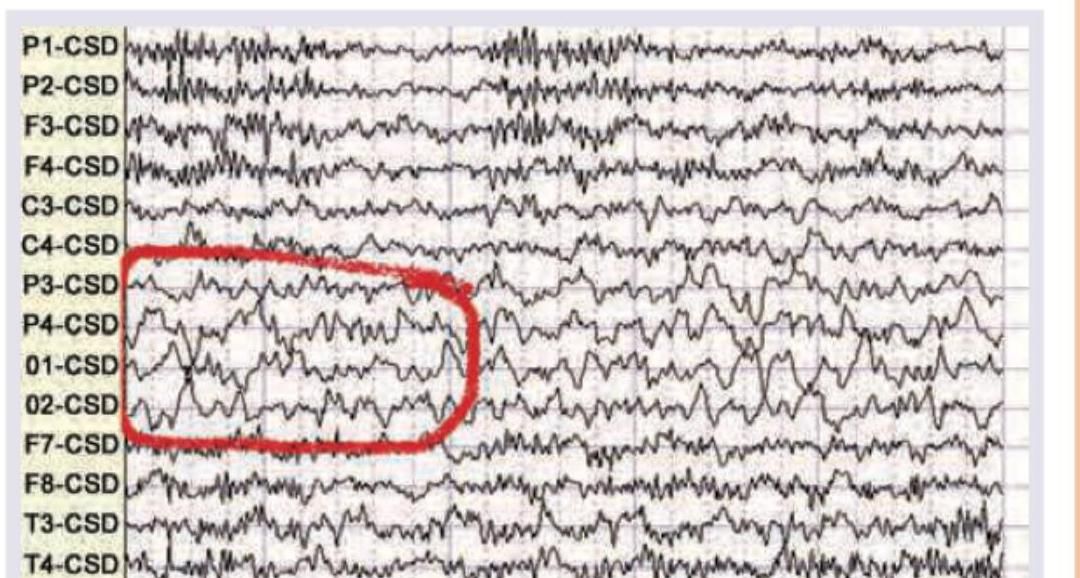
What are the EEG waves recorded from the parieto-occipital region when the subject is awake and has their eyes closed?
What is the normal rate of cerebrospinal fluid production per minute?
Autonomic ganglia are primarily associated with which neurotransmitter?
Which of the following is true about explicit memory?
All of the following act as gaseous neurotransmitters except?
True about experimental sham rage is?
Which of the following reflexes tests the integrity of the nucleus ambiguus?
What is the approximate total volume of cerebrospinal fluid in an adult?
What is the most likely EEG pattern in an awake adult with mind wandering and closed eyes?
Explanation: **Explanation:** The **Vagus Nerve (CN X)** carries approximately 80% afferent (sensory) fibers. These fibers primarily project to the **Nucleus Tractus Solitarius (NTS)** in the medulla. From the NTS, signals are relayed to several key neuromodulatory nuclei in the brainstem, most notably the **Raphe Nucleus** (serotonergic) and the **Locus Coeruleus** (noradrenergic). Stimulation of the Raphe nucleus leads to the release of serotonin throughout the forebrain, which is the primary mechanism behind the antidepressant and anti-epileptic effects of Vagus Nerve Stimulation (VNS). **Analysis of Options:** * **Raphe Nucleus (Correct):** As a direct relay point from the NTS, it is significantly activated during VNS, modulating mood and seizure thresholds via serotonergic pathways. * **Amygdala:** While VNS eventually influences the limbic system (including the amygdala) to regulate emotions, it is a downstream target rather than the primary brainstem site stimulated. * **Cingulate Bundle:** This is a white matter tract involved in the limbic system. It is not a direct target of VNS; however, it is a target for Deep Brain Stimulation (DBS) in refractory depression. * **Corpus Callosum:** This is the primary commissural bundle connecting the two hemispheres. It has no direct anatomical or functional relationship with vagal afferent stimulation. **High-Yield Clinical Pearls for NEET-PG:** * **FDA Indications for VNS:** Refractory Epilepsy (partial-onset seizures) and Treatment-Resistant Depression (TRD). * **The "Relay Station":** The Nucleus Tractus Solitarius (NTS) is the first-order relay for all visceral afferents of the Vagus nerve. * **Neurotransmitters involved:** VNS primarily increases levels of **Serotonin** (via Raphe Nucleus) and **Norepinephrine** (via Locus Coeruleus).
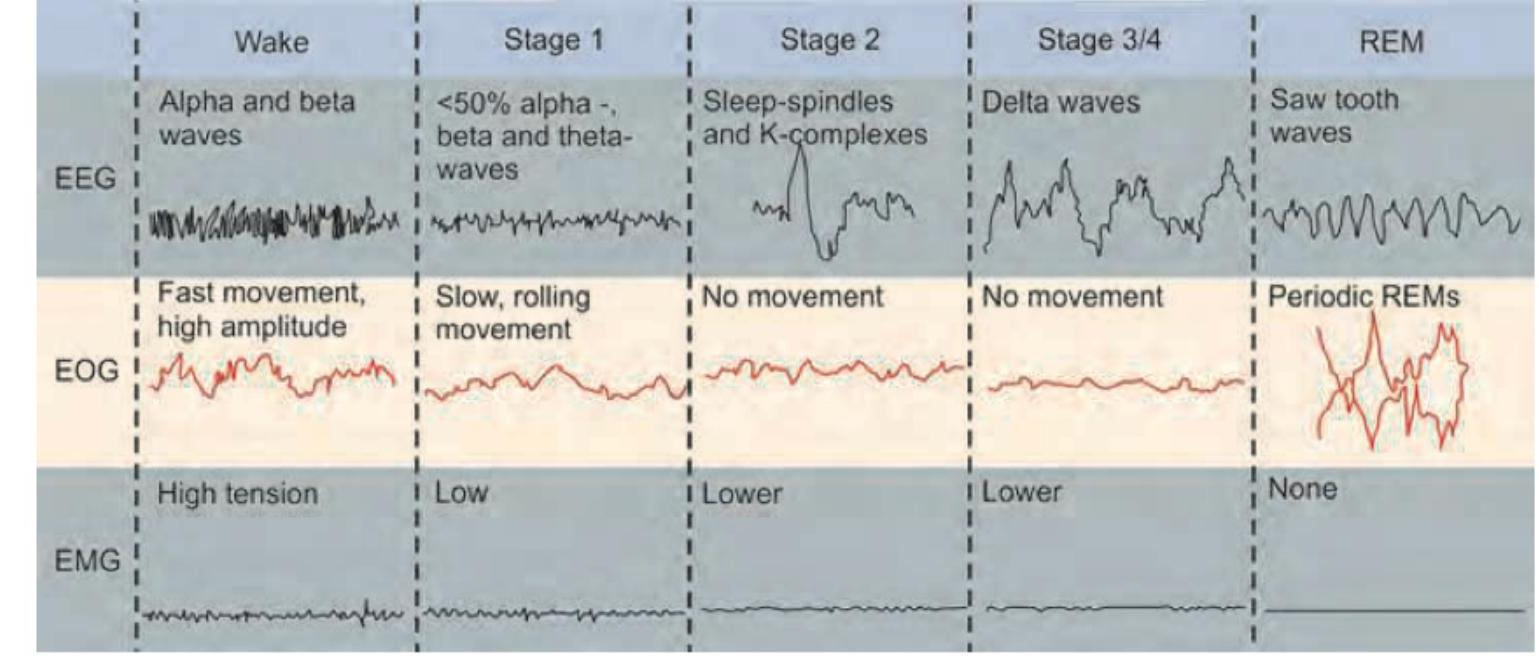
Explanation: **Explanation:** The correct answer is **Alpha waves**. **1. Why Alpha waves are correct:** Alpha waves (8–13 Hz) are the characteristic rhythm of an adult who is **awake, relaxed, and has their eyes closed**. They are most prominent in the **parieto-occipital region**. The key physiological concept here is "alpha block" or "desynchronization": when the subject opens their eyes or focuses on a mental task, the synchronized alpha rhythm is replaced by fast, low-voltage beta activity. **2. Why other options are incorrect:** * **Beta waves (14–30 Hz):** These are seen when the subject is **awake and alert** with eyes open, or during intense mental concentration. They are most prominent in the frontal and parietal regions. * **Theta waves (4–7 Hz):** These are seen during **Stage N1 sleep** (light sleep) and are normal in children. In awake adults, they may indicate emotional stress or pathological states. * **Delta waves (<3.5 Hz):** These are the slowest, highest-amplitude waves. They are characteristic of **Stage N3 (Deep/Slow-wave) sleep** and are normal in infants. In an awake adult, they indicate organic brain disease. **3. High-Yield Clinical Pearls for NEET-PG:** * **Frequency Hierarchy:** Beta (Fastest) > Alpha > Theta > Delta (Slowest). * **REM Sleep:** The EEG mimics the awake state (Beta waves), which is why it is called "paradoxical sleep." * **Epilepsy:** Absence seizures (Petit mal) show a classic **3 Hz spike-and-wave** pattern. * **Brain Death:** Characterized by a "flat" or isoelectric EEG.
Explanation: ### Explanation **1. Why the Correct Answer is Right:** Cerebrospinal fluid (CSF) is primarily produced by the **choroid plexus** (about 70%) located within the ventricles of the brain, with the remainder formed by the ependymal lining and the brain parenchyma. In a healthy adult, the rate of CSF production is approximately **0.30 to 0.35 ml/min**. This translates to roughly **20 ml per hour** and a total of **500 ml per day**. Since the total volume of CSF in the subarachnoid space and ventricles is only about **150 ml**, the entire CSF volume is turned over and replaced approximately 3 to 4 times daily. **2. Analysis of Incorrect Options:** * **Option B (0.5 ml/min):** This value is slightly higher than the physiological average. While production can fluctuate, 0.5 ml/min would result in 720 ml/day, which exceeds standard textbook values. * **Options C & D (1 ml/min and 2 ml/min):** These rates are significantly higher than normal. Such high production rates would likely overwhelm the arachnoid villi's resorptive capacity, leading to increased intracranial pressure (ICP) or communicating hydrocephalus. **3. High-Yield Clinical Pearls for NEET-PG:** * **Specific Gravity of CSF:** 1.005. * **CSF Pressure:** 5–15 mmHg (or 60–150 mmH₂O) in the lateral recumbent position. * **Absorption:** CSF is absorbed into the venous circulation via **arachnoid villi/granulations** into the superior sagittal sinus. Absorption is a pressure-dependent process. * **Composition:** Compared to plasma, CSF has **lower** glucose, **lower** protein, **lower** K⁺, but **higher** Cl⁻ and Mg²⁺ levels. * **Function:** Provides buoyancy (reducing the effective weight of the brain from 1400g to ~50g) and acts as a shock absorber.
Explanation: **Explanation:** The correct answer is **Cholinergic (Option A)**. In the autonomic nervous system (ANS), **Acetylcholine (ACh)** is the universal neurotransmitter for all preganglionic neurons. Whether the system is sympathetic or parasympathetic, the preganglionic fibers release ACh, which then binds to **Nicotinic (Nn) receptors** located on the cell bodies of the postganglionic neurons within the autonomic ganglia. **Analysis of Options:** * **Adrenergic (Option B):** Norepinephrine is the primary neurotransmitter for most **sympathetic postganglionic** neurons (except sweat glands and some blood vessels). It is not the primary transmitter within the ganglia themselves. * **Dopaminergic (Option C):** While dopamine is found in Small Intense Fluorescent (SIF) cells in some ganglia (acting as an interneuron), it is not the primary neurotransmitter for ganglionic transmission. * **Serotonergic (Option D):** Serotonin (5-HT) is primarily involved in the Enteric Nervous System (ENS) and Central Nervous System (CNS) but does not mediate primary autonomic ganglionic transmission. **NEET-PG High-Yield Pearls:** 1. **The "All-Pre" Rule:** All preganglionic fibers (Sympathetic & Parasympathetic) are **Cholinergic**. 2. **Parasympathetic Postganglionic:** Always Cholinergic (Muscarinic receptors). 3. **Sympathetic Postganglionic:** Mostly Adrenergic, **EXCEPT** sweat glands (Cholinergic/Muscarinic) and the Adrenal Medulla (which acts as a modified ganglion releasing Epinephrine/Norepinephrine directly into the blood). 4. **Ganglionic Blockers:** Drugs like Hexamethonium and Trimethaphan block Nn receptors at the ganglia, affecting both sympathetic and parasympathetic outflow.
Explanation: **Explanation:** Memory is broadly classified into **Explicit (Declarative)** and **Implicit (Non-declarative)** memory. **Why Option A is Correct:** Explicit memory refers to the conscious, intentional recollection of factual information, previous experiences, and concepts. It is "declarative" because it can be stated in words. It is further divided into **Episodic memory** (events/personal experiences) and **Semantic memory** (facts/knowledge). **Analysis of Incorrect Options:** * **Option B:** Working memory is a short-term system for temporary manipulation of information (e.g., mental arithmetic). Explicit memory is a form of **Long-term memory**. * **Option C:** Sensory memory is the shortest element of memory (lasting <1 second), acting as a buffer for stimuli received through the five senses (e.g., iconic memory). * **Option D:** Explicit memory is primarily processed in the **Hippocampus** and **Medial Temporal Lobe**. The **Striatum** (part of the basal ganglia) is the primary site for **Procedural memory** (a type of implicit memory involving motor skills like riding a bike). **High-Yield Facts for NEET-PG:** * **Anatomical Hub:** The Hippocampus is essential for converting short-term explicit memory into long-term memory (consolidation). * **Clinical Correlation:** Lesions in the hippocampus (as seen in early Alzheimer's or bilateral temporal lobectomy) result in **Anterograde Amnesia** (inability to form new explicit memories), while implicit memory remains intact. * **Implicit Memory Sites:** * *Procedural:* Striatum/Basal Ganglia. * *Priming:* Neocortex. * *Classical Conditioning:* Amygdala (emotional) and Cerebellum (motor).
Explanation: **Explanation:** In neurophysiology, **gaseous neurotransmitters** (gasotransmitters) are a unique class of signaling molecules. Unlike classical neurotransmitters, they are not stored in synaptic vesicles; instead, they are synthesized on demand and diffuse directly across cell membranes to act on neighboring neurons. **1. Why Oxygen (A) is the correct answer:** While **Oxygen (O₂)** is vital for cellular respiration and aerobic metabolism in the brain, it does not function as a neurotransmitter. It does not trigger specific intracellular signaling cascades or bind to receptors to modulate neuronal excitability in the way gasotransmitters do. **2. Analysis of incorrect options (The Gasotransmitters):** * **Nitric Oxide (NO):** The most well-known gasotransmitter. It is synthesized from L-arginine by Nitric Oxide Synthase (NOS). It activates **guanylyl cyclase**, increasing cGMP levels. It plays a crucial role in Long-Term Potentiation (LTP) and vasodilation. * **Carbon Monoxide (CO):** Produced endogenously by the action of **Heme Oxygenase-2 (HO-2)** on heme. Like NO, it stimulates cGMP production and is involved in olfactory signaling and circadian rhythms. * **Hydrogen Sulfide (H₂S):** Produced from L-cysteine by enzymes like Cystathionine β-synthase (CBS). It modulates NMDA receptor activity and acts as a neuroprotective agent. **Clinical Pearls for NEET-PG:** * **Retrograde Signaling:** NO is a classic "retrograde messenger," traveling from the postsynaptic neuron back to the presynaptic terminal to enhance transmitter release. * **Storage:** Gasotransmitters are **never stored** in vesicles (due to their lipid solubility). * **Inactivation:** They are not inactivated by reuptake or enzymatic degradation; they simply decay spontaneously or are washed away.
Explanation: **Explanation:** **Sham Rage** is a state of extreme, unprovoked aggression observed in experimental animals. It occurs when the inhibitory influence of the cerebral cortex on the lower emotional centers is removed. **1. Why Option A is Correct:** Sham rage occurs in **decorticate animals** (animals where the cerebral cortex has been removed). Under normal conditions, the cortex exerts an inhibitory effect on the hypothalamus. Once the cortex is removed, the hypothalamus becomes "disinhibited" or overactive, leading to violent emotional outbursts (hissing, biting, clawing) in response to even minor, non-noxious stimuli. **2. Why the other options are incorrect:** * **Option B (Goal-directed):** Sham rage is **not goal-directed**. Unlike true anger, the aggression is random and not aimed at the specific source of provocation. * **Option C (Removal of hypothalamus):** The **hypothalamus must be intact** (specifically the posterior and lateral nuclei) for sham rage to occur. If the hypothalamus is removed or the section is made below the hypothalamus, the rage response disappears. * **Option D (Appears/fades slowly):** Sham rage is characterized by a **sudden onset and rapid subsidence**. The rage ends almost immediately once the stimulus is removed, as it lacks the cognitive "after-discharge" provided by the cortex. **High-Yield Pearls for NEET-PG:** * **Key Structure:** The **Hypothalamus** is the primary center for the expression of sham rage. * **Inhibitory Center:** The **Cerebral Cortex** (and parts of the Limbic system) normally inhibits these primitive rage responses. * **Clinical Correlation:** In humans, similar "fits of rage" can be seen in lesions affecting the **ventromedial nucleus** of the hypothalamus or certain frontal lobe injuries (e.g., Phineas Gage). * **Level of Section:** A transection **above** the hypothalamus produces sham rage; a transection **below** the hypothalamus (midbrain level) abolishes it.
Explanation: The **Gag reflex** (Pharyngeal reflex) is the correct answer because its motor component is mediated by the **Nucleus Ambiguus**. ### 1. Why Gag Reflex is Correct The gag reflex is a protective mechanism to prevent choking. * **Afferent (Sensory) limb:** Glossopharyngeal nerve (CN IX). * **Center:** Medulla oblongata. * **Efferent (Motor) limb:** Vagus nerve (CN X). The motor fibers of the Vagus nerve that innervate the muscles of the soft palate, pharynx, and larynx originate from the **Nucleus Ambiguus**. Therefore, a lesion in this nucleus results in a lost or diminished gag reflex. ### 2. Analysis of Incorrect Options * **A. Jaw jerk:** This is a monosynaptic stretch reflex. The sensory and motor components are both mediated by the **Trigeminal nerve (CN V)**, specifically the mesencephalic nucleus (sensory) and the motor nucleus of CN V. * **B. Stapedial reflex:** This reflex protects the inner ear from loud noises. The afferent is CN VIII, but the efferent limb is the **Facial nerve (CN VII)**, originating from the **Superior Salivatory Nucleus** and the motor nucleus of CN VII. * **C. Corneal reflex:** This involves blinking in response to corneal stimulation. The afferent is the Ophthalmic nerve (V1), and the efferent is the **Facial nerve (CN VII)**, originating from the **Motor Nucleus of CN VII**. ### 3. High-Yield Clinical Pearls for NEET-PG * **Nucleus Ambiguus** provides motor supply to the muscles of the 4th and 6th branchial arches (CN IX, X, and XI). * **Lesion of Nucleus Ambiguus:** Leads to dysphagia (difficulty swallowing), dysarthria (speech difficulty), and deviation of the uvula to the contralateral (normal) side. * **Rule of 4s:** Nucleus Ambiguus is located in the **Medulla**. It is a key structure involved in **Lateral Medullary Syndrome (Wallenberg Syndrome)**.
Explanation: **Explanation:** The correct answer is **150 ml**. Cerebrospinal fluid (CSF) is a clear, colorless liquid that fills the ventricles of the brain and the subarachnoid space. In a healthy adult, the total volume of CSF is approximately **150 ml**, distributed with about 25 ml in the ventricles and 125 ml in the subarachnoid space. **Why the correct answer is right:** The CSF is produced primarily by the **choroid plexus** at a rate of approximately **0.3–0.5 ml/min** (roughly 500–600 ml per day). Since the total volume remains constant at ~150 ml, it implies that the entire volume of CSF is replaced about 3.5 to 4 times every 24 hours. This turnover is crucial for removing metabolic waste and maintaining intracranial pressure. **Analysis of incorrect options:** * **50 ml (A):** This is too low for an adult; however, it is closer to the total CSF volume found in a newborn. * **100 ml (B):** While closer, it underestimates the capacity of the subarachnoid space in a fully developed adult. * **275 ml (D):** This exceeds the normal physiological range. Such volumes are typically seen in pathological states like hydrocephalus. **High-Yield Clinical Pearls for NEET-PG:** * **Specific Gravity of CSF:** 1.005 to 1.007. * **Normal CSF Pressure:** 5–15 mmHg (or 60–150 mmH₂O) in a lateral recumbent position. * **Absorption:** Occurs via **arachnoid villi/granulations** into the superior sagittal sinus. * **Composition:** Compared to plasma, CSF has **higher** levels of Chloride and Magnesium, but **lower** levels of Glucose, Proteins, and Potassium.
Explanation: ### Explanation The correct answer is **Alpha rhythm**. **1. Why Alpha rhythm is correct:** The Alpha rhythm (8–13 Hz) is the characteristic EEG pattern of an **awake, relaxed adult with eyes closed**. It is most prominent in the parieto-occipital regions. The physiological basis for this rhythm is "cortical idling"—a state where the mind is wandering or at rest, but the individual is still conscious. The moment the eyes are opened or the person focuses on a specific mental task (like solving a math problem), the alpha rhythm disappears and is replaced by faster, lower-voltage activity; this phenomenon is known as **Alpha Block** or **Desynchronization**. **2. Why the other options are incorrect:** * **Beta rhythm (13–30 Hz):** These are high-frequency, low-voltage waves seen during **active mental concentration**, alertness, or when the eyes are open. They represent a "synchronized" state of active processing. * **Theta rhythm (4–7 Hz):** These are normal in children but in adults, they typically signify **early stages of sleep (N1)** or severe emotional stress/frustration. * **Delta waves (<4 Hz):** These are the slowest, highest-amplitude waves. They are characteristic of **deep sleep (N3/Slow-wave sleep)** or pathological states like brain tumors or metabolic coma in awake adults. **3. High-Yield Clinical Pearls for NEET-PG:** * **Frequency Hierarchy:** Beta (>13) > Alpha (8–13) > Theta (4–7) > Delta (<4). (Mnemonic: **B**etter **A**sk **T**he **D**octor). * **Alpha Block:** Occurs due to **Ascending Reticular Activating System (ARAS)** stimulation. * **Sleep Spindles & K-complexes:** Pathognomonic for **Stage N2** sleep. * **Sawtooth waves:** Characteristic of **REM sleep**.
Neurons and Glial Cells
Practice Questions
Synaptic Transmission
Practice Questions
Sensory Processing
Practice Questions
Motor Control Systems
Practice Questions
Autonomic Nervous System
Practice Questions
Hypothalamus and Limbic System
Practice Questions
Cerebral Cortex Functions
Practice Questions
Electroencephalography
Practice Questions
Neuroplasticity
Practice Questions
Sleep and Wakefulness
Practice Questions
Get full access to all questions, explanations, and performance tracking.
Start For Free