Sequence the events in neuromuscular action potential conduction: 1. Sodium channels open in the end plate 2. Calcium enters at the nerve terminal 3. Release of acetylcholine
Assertion: RMP depends on proteins and phosphate ions. Reason: Diffusion potential can be calculated using nernst equation. Choose the best statement regarding the assertion and reason.
Arrange the following parts of sarcomere from periphery to center. 1. Z line 2. M line 3. A band 4. H zone
What is the order of bands in a sarcomere from the Z-disc toward the center?
Which ion flux is primarily responsible for the depolarization phase of smooth muscle action potentials?
During which phase of the action potential is the membrane most excitable?
Which ion channel type is primarily responsible for the resting membrane potential in neurons?
In skeletal muscle, which step of excitation-contraction coupling requires ATP?
During a nerve conduction study, which of the following ions is primarily responsible for the rapid upstroke of the action potential?
Which muscle tendon is stretched in patellar tendon reflex?
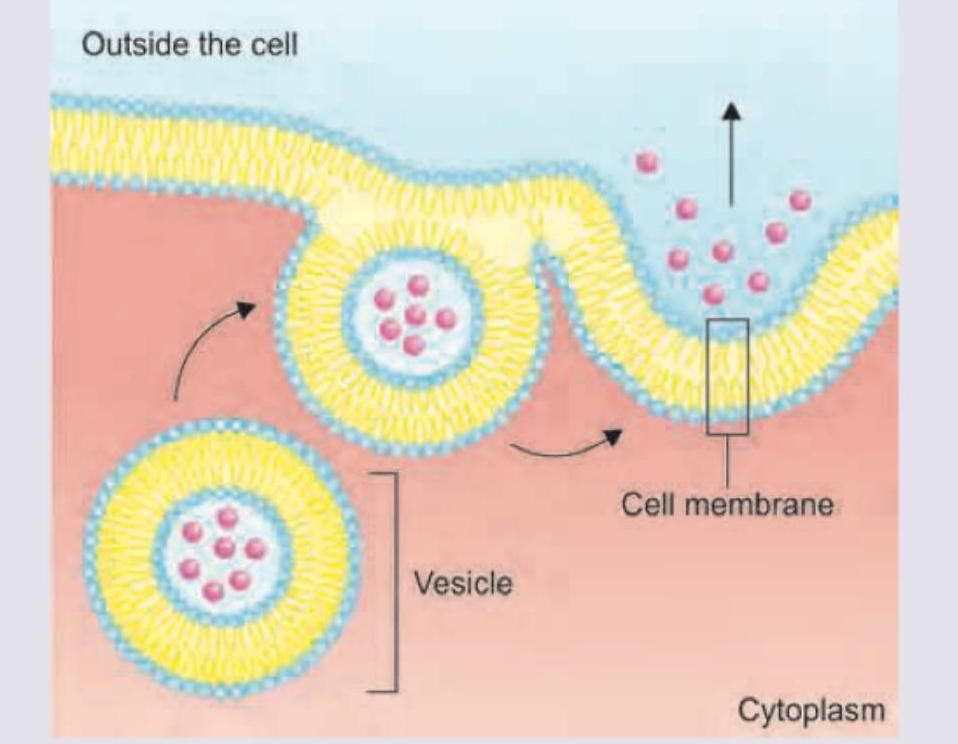
Explanation: ***Correct: $2 \rightarrow 3 \rightarrow 1$*** - **Calcium entry at the nerve terminal** is the initial trigger - when an action potential reaches the presynaptic nerve terminal, voltage-gated calcium channels open, allowing Ca²⁺ influx - **Acetylcholine release** follows - the increased intracellular calcium causes synaptic vesicles containing acetylcholine to fuse with the presynaptic membrane and release the neurotransmitter into the synaptic cleft - **Sodium channels open in the end plate** last - acetylcholine binds to nicotinic receptors on the motor end plate, opening ligand-gated sodium channels, which depolarizes the muscle membrane and triggers muscle contraction *Incorrect: $1 \rightarrow 2 \rightarrow 3$* - Places sodium channel opening first, which is physiologically impossible - Sodium channels at the motor end plate only open in response to acetylcholine binding - Cannot occur before acetylcholine is released from the nerve terminal *Incorrect: $1 \rightarrow 3 \rightarrow 2$* - Incorrectly sequences sodium channel opening before calcium entry - Violates the fundamental principle that calcium influx is required for neurotransmitter release - Acetylcholine cannot be released without prior calcium entry *Incorrect: $3 \rightarrow 2 \rightarrow 1$* - Places acetylcholine release before calcium entry, which is impossible - Calcium-triggered exocytosis is an absolute requirement for neurotransmitter release - Without calcium influx, vesicles cannot fuse with the presynaptic membrane
Explanation: ***Both true, Reason is not the explanation of assertion*** - The **Assertion is TRUE**: The resting membrane potential (RMP) does depend on intracellular **proteins and phosphate ions**, which are large, non-diffusible anions that remain trapped inside the cell. These molecules contribute significantly to the **net negative charge** of the intracellular compartment and create the **Gibbs-Donnan effect**. At physiological pH, most intracellular proteins are negatively charged, and phosphate ions (HPO₄²⁻, H₂PO₄⁻) are major intracellular anions. While the primary determinants of RMP are the concentration gradients and membrane permeabilities of K⁺, Na⁺, and Cl⁻ ions, the presence of non-diffusible anions (proteins and phosphates) is essential for establishing the baseline negative intracellular environment. - The **Reason is TRUE**: The **Nernst equation** (E = RT/zF × ln[ion]out/[ion]in) is indeed used to calculate the **equilibrium potential** (also called diffusion potential) for a single permeable ion. This equation determines the membrane potential at which the electrical gradient exactly balances the concentration gradient for that specific ion, resulting in no net ion movement. - **However, the Reason does NOT explain the Assertion**: The Nernst equation calculates equilibrium potentials for diffusible ions like K⁺, Na⁺, and Cl⁻. It does NOT explain the contribution of **non-diffusible** anions (proteins and phosphates) to the RMP. The actual RMP, which involves multiple ions with different permeabilities, is calculated using the **Goldman-Hodgkin-Katz (GHK) equation**, not the Nernst equation. The two statements are independently true but address different aspects of membrane potential physiology. *Assertion false, Reason true* - This is **incorrect** because the assertion is actually TRUE. Intracellular proteins and phosphate ions do contribute to the RMP by providing fixed negative charges that influence the distribution of diffusible ions and create the electrochemical environment necessary for RMP establishment. *Both true, Reason is the explanation of assertion* - This is **incorrect** because while both statements are true, the Nernst equation (Reason) does not explain how proteins and phosphate ions contribute to RMP (Assertion). The Nernst equation applies only to permeable ions, whereas proteins and phosphates are impermeant molecules whose role is explained by the Gibbs-Donnan equilibrium and their contribution to fixed negative charges. *Assertion true, Reason false* - This is **incorrect** because the reason is TRUE. The Nernst equation is a fundamental and valid equation in membrane physiology that accurately calculates the equilibrium potential for any permeable ion based on its concentration gradient.
Explanation: ***1,3,4,2*** - The **Z line** is found at the **periphery** of the sarcomere, defining its boundaries and anchoring the **actin filaments**. - Moving inwards, the **A band** is next, representing the entire length of the **myosin filament**, which may also overlap with actin. - The **H zone** is located within the A band, comprising only **myosin filaments** without actin overlap. - Finally, the **M line** is at the **center** of the sarcomere, bisecting the H zone and anchoring the myosin filaments. *2,3,4,1* - This sequence is incorrect because the **M line** is at the **center** and the **Z line** is at the **periphery**, which is the reverse of the expected order for from periphery to center. - Such an arrangement would place the innermost structure first and outermost last, not reflecting the correct spatial organisation. *4,2,3,1* - This order is incorrect as the **H zone** and **M line** are more central, while the **Z line** is peripheral. - Placing structures like the H zone and M line at the beginning does not align with arrangement from periphery to center. *3,1,4,2* - This option is incorrect because the **A band** includes both actin and myosin filaments, while the **Z line** is at the periphery of the sarcomere. - The given order does not represent a progression from the periphery to the center of the sarcomere.
Explanation: ***Z-A-H-M*** - This sequence accurately represents the arrangement of bands within a **sarcomere** when moving from the **Z-disc** towards the central **M-line**. - The **Z-disc** anchors **actin (thin) filaments**, which extend into the **A-band**, partially overlapping with myosin (thick) filaments. The **H-zone** is within the A-band, and the **M-line** bisects the H-zone. *Z-M-A-H* - This order incorrectly places the **M-line** immediately after the **Z-disc** and before the A and H bands. - The **M-line** is located at the very center of the sarcomere, a significant distance from the Z-disc. *Z-H-A-M* - This sequence incorrectly places the **H-zone** before the entire **A-band**. - The **H-zone** is a region *within* the **A-band**, specifically where only myosin (thick) filaments are present without actin (thin) overlap. *Z-H-M-A* - This order incorrectly places the **H-zone** and **M-line** before the **A-band**. - The **A-band** encompasses the entire length of the myosin (thick) filaments and includes the **H-zone** and **M-line** centrally.
Explanation: ***Calcium influx*** - The depolarization phase in smooth muscle action potentials is primarily driven by the opening of **voltage-gated calcium channels**, allowing **calcium ions** to flow into the cell. - This influx of positive charge causes the membrane potential to become more positive, leading to depolarization and subsequent muscle contraction. *Chloride efflux* - While chloride ions can influence membrane potential, **chloride efflux** typically contributes to hyperpolarization or stabilization of the resting potential, not depolarization. - In many excitable cells, chloride channels open during repolarization or to inhibit excitability. *Potassium efflux* - The efflux of **potassium ions** is primarily responsible for the **repolarization phase** of action potentials, as it carries positive charge out of the cell, returning the membrane potential to its resting state. - It hyperpolarizes the membrane, rather than depolarizing it. *Sodium influx* - In many excitable tissues, such as skeletal muscle and neurons, **sodium influx** is the primary driver of depolarization during an action potential. - However, in smooth muscle cells, voltage-gated **calcium channels** play a more prominent role than sodium channels for depolarization.
Explanation: ***Correct: Late repolarization*** - During **late repolarization** (also called the **supernormal period**), the membrane is **most excitable**. - At this phase, **Na+ channels have recovered from inactivation** and are available to open again. - However, the membrane potential is still slightly depolarized compared to resting potential, meaning it is **closer to threshold**. - Therefore, a **smaller stimulus** than normal is required to reach threshold and trigger another action potential. - This represents the period of **increased excitability** during the relative refractory period. *Incorrect: Hyperpolarization* - During hyperpolarization (afterhyperpolarization), the membrane potential becomes **more negative** than the resting potential. - This occurs due to continued **K+ efflux** through slow-closing potassium channels. - The membrane is **farther from threshold**, requiring a **stronger stimulus** to elicit an action potential. - This represents a period of **decreased excitability**, not increased. *Incorrect: Peak* - At the **peak** of the action potential, the membrane potential is at its most positive value. - All voltage-gated **Na+ channels are inactivated** at this point. - This corresponds to the **absolute refractory period**, during which the membrane is **completely unexcitable**. - No stimulus, regardless of strength, can trigger another action potential. *Incorrect: Rising phase* - The **rising phase** involves rapid **depolarization** due to Na+ influx through open voltage-gated Na+ channels. - The membrane is already undergoing an action potential during this phase. - Na+ channels are either **opening or becoming inactivated**, and the membrane enters the absolute refractory period. - The membrane cannot respond to another stimulus during this phase.
Explanation: ***Leak K+ channels*** - **Leak potassium channels** are constitutively open, allowing K+ ions to flow down their concentration gradient out of the cell. - This efflux of positive charge creates the **negative resting membrane potential** in neurons, as the cell becomes more negative inside relative to the outside. *Ca2+ channels* - **Calcium channels** are primarily involved in synaptic transmission, muscle contraction, and intracellular signaling. - While they can influence membrane potential, they are not the primary determinant of the **resting state**. *Voltage-gated Na+ channels* - **Voltage-gated sodium channels** are essential for the **rising phase of the action potential** by allowing a rapid influx of Na+. - They are mostly closed at rest and thus do not significantly contribute to the **resting membrane potential**. *Voltage-gated K+ channels* - **Voltage-gated potassium channels** are crucial for the **repolarization phase of the action potential**, opening in response to membrane depolarization. - They remain largely closed at rest and play a minor role in establishing the **resting potential**.
Explanation: ***Cross-bridge cycling*** - ATP is essential for two key actions in **cross-bridge cycling**: the **detachment of myosin heads from actin** and the **re-cocking of the myosin heads** for the next power stroke. - Without ATP, myosin heads remain attached to actin, leading to **rigor mortis**. *Action potential propagation* - This process involves the flow of **ions (Na+ and K+)** across the sarcolemma through voltage-gated channels, which is a passive event down their electrochemical gradients. - While ion pumps (like the Na+/K+ pump) maintain these gradients over time, the **propagation itself is not a direct ATP-dependent step** in the immediate sense of the action potential. *Troponin binding to calcium* - The binding of **calcium to troponin C** is a passive chemical interaction driven by the *concentration gradient* of calcium ions. - This binding triggers a **conformational change** in the troponin-tropomyosin complex, exposing actin binding sites, and does not directly consume ATP. *Calcium release from SR* - The release of calcium from the **sarcoplasmic reticulum (SR)** into the sarcoplasm occurs through **ryanodine receptors**, which are mechanically or voltage-gated channels. - This is a passive efflux down the **calcium concentration gradient**, and does not directly consume ATP.
Explanation: ***Sodium*** - The rapid upstroke of an **action potential** (depolarization) in nerves is primarily due to the rapid influx of **sodium ions** (Na+) into the cell. - This influx occurs through **voltage-gated sodium channels** that open in response to a threshold stimulus. *Calcium* - **Calcium ions** (Ca2+) play a significant role in neurotransmitter release at the **synaptic terminals** and in cardiac and smooth muscle action potentials. - However, they are not the primary ion responsible for the initial rapid **depolarization** in peripheral nerve conduction. *Chloride* - **Chloride ions** (Cl-) are generally involved in maintaining the resting membrane potential and mediating **inhibitory postsynaptic potentials** (IPSPs) by causing hyperpolarization or preventing depolarization. - They do not contribute to the rapid upstroke of an **action potential**. *Potassium* - **Potassium ions** (K+) are primarily responsible for the **repolarization phase** of the action potential. - The efflux of K+ through **voltage-gated potassium channels** causes the membrane potential to return to its resting state.
Explanation: ***Quadriceps femoris*** - The patellar tendon reflex is an example of a **stretch reflex**, where striking the patellar tendon directly stretches the quadriceps femoris muscle. - This stretch activates **muscle spindles** within the quadriceps, leading to its contraction and subsequent leg extension. *Biceps femoris* - The biceps femoris is part of the **hamstring muscle group**, located on the posterior aspect of the thigh. - Its primary action is **knee flexion** and hip extension, and it is not directly stretched during the patellar tendon reflex. *Semitendinosus* - The semitendinosus is also a **hamstring muscle** and functions in knee flexion and hip extension. - It is located medially on the posterior thigh and is not involved in the patellar tendon reflex arc. *Adductor magnus* - The adductor magnus is a large muscle on the **medial side of the thigh**, primarily responsible for **hip adduction**. - It is not directly stretched by tapping the patellar tendon and does not participate in the patellar reflex.
Resting Membrane Potential
Practice Questions
Action Potential Generation and Propagation
Practice Questions
Neuromuscular Junction
Practice Questions
Skeletal Muscle Contraction
Practice Questions
Smooth Muscle Physiology
Practice Questions
Cardiac Muscle Properties
Practice Questions
Muscle Metabolism and Fatigue
Practice Questions
Motor Unit Function
Practice Questions
Neurotransmitters and Receptors
Practice Questions
Electrophysiological Measurements
Practice Questions
Get full access to all questions, explanations, and performance tracking.
Start For Free