All are examples of negative feedback except
Which of the following structures is the primary regulator of circadian rhythms in the body?
All of the following are under the control of hypothalamus EXCEPT:
Hormonal secretions are tightly controlled by the time of day due to an inbuilt biological clock in human body. This rhythmic secretion is controlled by:
What is the freezing point of normal human plasma?
Which of the following mechanisms is seen in the baroreceptor reflex?
Feed forward mechanism is seen in:
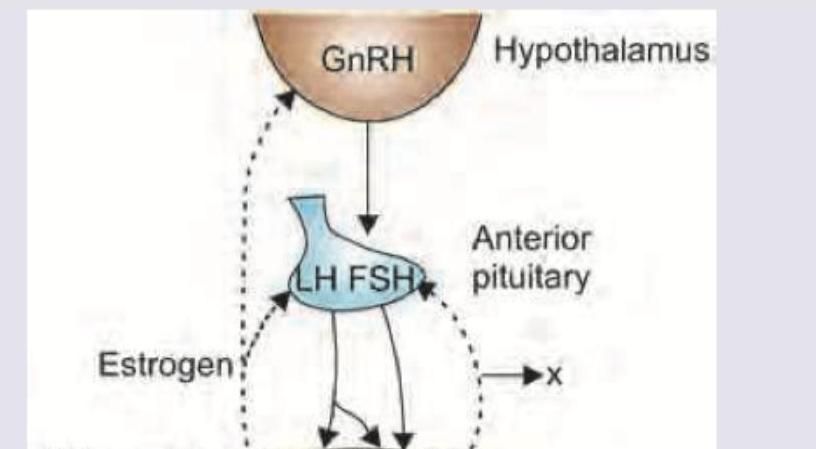
Which of the following is correct about the feedback hormone marked as $X$ ?
Which causes raised angiotensin in blood?
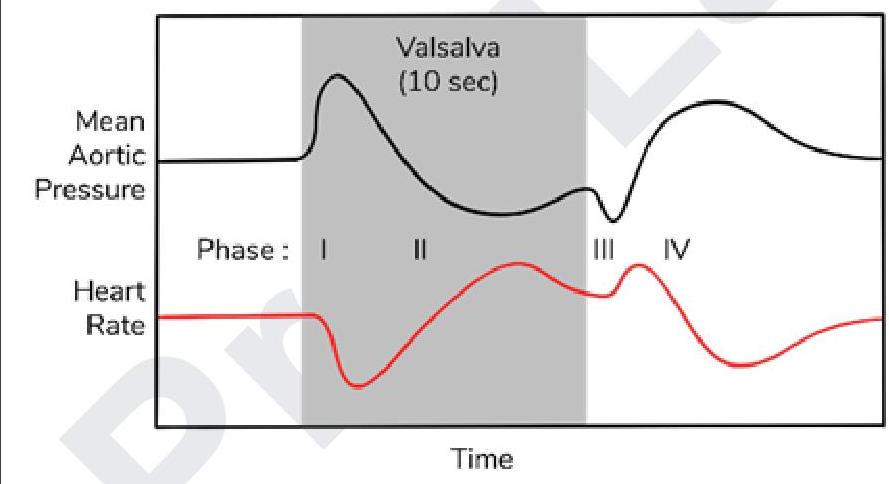
Blood pressure changes in radial artery were measured. Which of the following is the reason for initial rise in BP while performing Valsalva maneuver?
Explanation: ***Coagulation of the blood*** - **Blood coagulation** is a classic example of **positive feedback**, where the initial clotting process amplifies itself until bleeding stops - Platelets aggregate and release factors that promote further platelet aggregation and activation of the clotting cascade, thereby **accelerating the response** rather than diminishing it - This is the exception among the options, as it represents positive feedback while all others are negative feedback *Regulation of blood CO2 level* - The regulation of **blood CO2 levels** is a vital example of **negative feedback**, where an increase in CO2 stimulates breathing to expel excess CO2 - This mechanism works to return the blood CO2 concentration to its homeostatic set point, thus **counteracting the initial stimulus** - Central and peripheral chemoreceptors detect elevated CO2 and trigger increased ventilation *Regulation of pituitary hormones* - The regulation of **pituitary hormones** involves **negative feedback loops**, where high levels of target gland hormones inhibit the release of stimulating hormones from the pituitary and hypothalamus - For example, high thyroid hormone levels inhibit TSH release from the pituitary and TRH from the hypothalamus - This effectively **reduces the initial stimulus** and maintains hormonal balance *Regulation of blood pressure* - The regulation of **blood pressure** is primarily controlled by **negative feedback mechanisms** involving baroreceptors, which detect changes in pressure - If blood pressure rises, baroreceptors in the carotid sinus and aortic arch signal the medulla to reduce heart rate and dilate blood vessels - This response **lowers the pressure back to the set point**, maintaining cardiovascular homeostasis
Explanation: ***Suprachiasmatic nucleus*** - The **suprachiasmatic nucleus (SCN)** is the primary **circadian pacemaker** in mammals, regulating various daily rhythms including the sleep-wake cycle, hormone secretion, and body temperature. - It receives direct input from the retina about light exposure, allowing it to synchronize the body's internal clock with the external light-dark cycle. *Ventromedial nucleus* - The **ventromedial nucleus (VMN)** of the hypothalamus is primarily involved in regulating **satiety** and is often referred to as the "satiety center." - Damage to the VMN can lead to **hyperphagia** (overeating) and obesity, rather than disturbances in daily rhythms. *Supraoptic nucleus* - The **supraoptic nucleus (SON)**, along with the paraventricular nucleus, is responsible for producing **vasopressin (ADH)** and **oxytocin**. - These hormones are then transported to the posterior pituitary for release, influencing water balance and social bonding, respectively, not daily rhythms. *Dorsomedial nucleus* - The **dorsomedial nucleus (DMN)** of the hypothalamus is involved in various functions including **feeding, drinking, and activity levels**. - While it can influence aspects of activity, it is not the primary regulator of the **circadian rhythm** itself; it receives input from the SCN.
Explanation: ***Increases heart rate with exercise*** - While the hypothalamus plays a role in overall autonomic function, the immediate increase in heart rate during exercise is primarily controlled by the **cardiovascular control center in the brainstem** (medulla oblongata) responding to muscle activity and metabolic needs. - The hypothalamus can influence heart rate indirectly through its role in the **stress response** and emotional states, but it's not the primary direct controller for exercise-induced tachycardia. *Pituitary hormone regulation* - The hypothalamus directly controls the release of hormones from both the **anterior and posterior pituitary gland** through releasing and inhibiting hormones or neuronal projections. - It secretes various **releasing and inhibiting hormones** (e.g., GnRH, TRH, CRH, GHRH, somatostatin, dopamine) that regulate anterior pituitary function, and also produces **ADH and oxytocin** which are stored and released by the posterior pituitary. *Food intake* - The hypothalamus contains crucial nuclei, such as the **arcuate nucleus**, that integrate signals related to hunger, satiety, and body weight regulation. - It plays a central role in sensing **nutrient levels** and hormonal signals (e.g., leptin, ghrelin, insulin) to control feeding behavior. *Temperature regulation* - The **preoptic area** of the hypothalamus acts as the body's primary thermoregulatory center, setting the body's 'thermostat'. - It initiates responses such as **sweating, shivering, and blood vessel dilation/constriction** to maintain core body temperature.
Explanation: ***Suprachiasmatic nucleus*** - The **suprachiasmatic nucleus (SCN)**, located in the hypothalamus, is the primary pacemaker of the body's **circadian rhythms**, controlling the timing of hormonal secretions, sleep-wake cycles, and other daily oscillations. - It receives direct input from the **retina** about light-dark cycles, allowing it to synchronize the body's internal clock with the external environment. *Ventrolateral nucleus* - The **ventrolateral preoptic nucleus (VLPO)** is involved in **sleep regulation** and promoting non-REM sleep, but it does not act as the primary circadian pacemaker. - It receives input from the SCN and collaborates in regulating sleep, but its role is primarily inhibitory to wakefulness. *Supraoptic nucleus* - The **supraoptic nucleus** is primarily involved in the production and secretion of **vasopressin (ADH)** and **oxytocin**, which are neurohormones regulating fluid balance and social bonding, respectively. - It does not directly control the rhythmic aspect of general hormonal secretions or act as the central circadian clock. *Posterolateral nucleus* - This term is less commonly used in the context of circadian rhythm control; however, if referring to a thalamic nucleus, the **posterolateral nucleus** is generally associated with sensory processing, particularly somatosensory information. - It has no known role as a central pacemaker for hormonal secretions or circadian rhythms.
Explanation: ***–0.54° C*** - The **freezing point depression** of normal human plasma is approximately **–0.54° C**, which is a key physical property used to assess plasma osmolality. - This specific value reflects the **total concentration of solutes** (like electrolytes, glucose, and urea) in the plasma. *0° C* - This is the freezing point of **pure water**, which does not account for the dissolved solutes in human plasma. - Due to the presence of solutes, the freezing point of plasma is **depressed below 0° C**. *–1.54° C* - This value represents a significantly **lower freezing point depression**, suggesting a much higher concentration of solutes than found in normal human plasma. - Such a low freezing point would indicate a state of **severe hyperosmolality**. *4° C* - This temperature is above the freezing point of water and human plasma, typically used for **refrigeration** rather than indicating freezing point. - Plasma would be in a **liquid state** at this temperature.
Explanation: ***Negative feedback*** - The **baroreceptor reflex** detects changes in blood pressure and initiates responses that counteract those changes, thereby **returning blood pressure to its set point**. - This mechanism is a hallmark of negative feedback, where the output of a system (e.g., increased blood pressure) inhibits the original stimulus. *Feedforward* - **Feedforward control** anticipates changes and adjusts the system preemptively, rather than reacting to existing deviations. - The baroreceptor reflex primarily responds to actual changes in blood pressure, making it a reactive rather than a purely anticipatory system. *Positive feedback* - **Positive feedback** amplifies an initial stimulus, leading to an increasing deviation from the set point. - This would result in unstable blood pressure, which is detrimental for homeostasis and not characteristic of the baroreceptor reflex. *Adaptive control regulation* - **Adaptive control regulation** involves mechanisms that can adjust their control strategy over time based on changing conditions or learning. - While the baroreceptor reflex can exhibit some adaptation to sustained pressure changes, its primary and immediate mechanism for maintaining blood pressure is **negative feedback**, not adaptive learning of control strategies.
Explanation: ***Salivation on smelling food*** - This is a classic example of a **feedforward mechanism** because the body anticipates a future event (eating) based on a sensory cue (smelling food) and initiates a preparatory physiological response (salivation). - The response occurs *before* the actual need for digestion arises, demonstrating proactive regulation. - Part of the **cephalic phase of digestion** mediated by parasympathetic nervous system activation. *Increase in heart rate on standing up* - This is an example of a **feedback mechanism** mediated by baroreceptors and the autonomic nervous system. - When standing, blood pools in lower extremities causing a transient drop in blood pressure, which is detected by baroreceptors. - The body responds by increasing heart rate and peripheral resistance to maintain adequate blood pressure - a reactive response to detected change. *Feeling thirsty while walking in hot temperature* - Thirst in response to hot temperatures is typically a **feedback mechanism** where the body detects increased dehydration (e.g., via osmoreceptors) and signals the need for fluid intake. - It is a reaction to an existing physiological imbalance rather than an anticipation of future needs. *Shivering on exposure to cold temperature* - Shivering is a **feedback mechanism** where the body responds to a drop in core body temperature by generating heat to restore thermal homeostasis. - The body reacts to the cold stimulus *after* the temperature change has occurred, rather than anticipating it.
Explanation: **Correct: Inhibin B** - The diagram shows a feedback loop where "X" is produced downstream and inhibits the anterior pituitary. This fits the role of **Inhibin B**, which is primarily secreted by the **granulosa cells** of the ovary and **Sertoli cells** of the testis. - **Inhibin B** selectively inhibits the secretion of **FSH** from the anterior pituitary, as indicated by the negative feedback arrow pointing towards the pituitary. - Inhibin B is the key hormone in the follicular phase that provides selective FSH feedback control. *Incorrect: Inhibin A* - **Inhibin A** is predominantly secreted by the **corpus luteum** during the luteal phase of the menstrual cycle and is involved in placental function during pregnancy. - Its levels peak later in the cycle compared to Inhibin B during the follicular phase, and its primary role is not the selective inhibition of FSH shown in this diagram's context for follicular development. *Incorrect: Progesterone* - **Progesterone** is a steroid hormone primarily involved in preparing the uterus for pregnancy and maintaining it during early pregnancy. - While it exerts negative feedback on GnRH and LH/FSH, it is typically secreted by the corpus luteum after ovulation, and the diagram appears to depict a more general inhibitory feedback on FSH. *Incorrect: Estrone* - **Estrone** is one of the three major naturally occurring estrogens but is less potent than estradiol. - While estrogens provide feedback on the hypothalamus and pituitary, the diagram specifically labels "Estrogen" separately, and "X" represents a distinct feedback hormone, making estrone an unlikely specific fit for "X."
Explanation: ***Decreased blood pressure*** - A decrease in blood pressure is the **primary physiological trigger** that signals the kidneys to release **renin**, initiating the **renin-angiotensin-aldosterone system (RAAS)**. - Renal baroreceptors in the juxtaglomerular apparatus sense decreased renal perfusion pressure and stimulate renin release. - Renin converts **angiotensinogen** to **angiotensin I**, which is then converted to **angiotensin II** (the active form) by **angiotensin-converting enzyme (ACE)**. - This represents the most direct and important mechanism for raising angiotensin levels in response to hemodynamic changes. *Raised cardiac output* - **Increased cardiac output** generally leads to **increased blood pressure**, which would suppress renin release and reduce angiotensin levels. - The body's homeostatic mechanisms aim to lower blood pressure in response to increased cardiac output, not raise angiotensin. - This has the opposite effect on the RAAS system. *Increased sympathetic tone* - While **increased sympathetic tone does stimulate renin release** via β1-adrenergic receptors on juxtaglomerular cells, it is typically a **secondary mechanism** that occurs in response to decreased blood pressure. - Sympathetic stimulation is one of three major stimuli for renin release, but in physiological terms, it usually acts as part of the compensatory response to hypotension rather than as an independent primary cause. - The question asks for the cause of raised angiotensin, and decreased blood pressure is the more direct and primary trigger. *Increased blood volume* - **Increased blood volume** results in **elevated blood pressure**, which would suppress renin release and consequently lower angiotensin levels. - Atrial natriuretic peptide (ANP) is released in response to increased blood volume, which inhibits renin secretion. - This has the opposite effect on angiotensin levels.
Explanation: ***Increase in aortic pressure*** - During the initial phase (Phase I) of the Valsalva maneuver, the sudden **increase in intrathoracic pressure** is transmitted directly to the aorta and other large arteries. - This transient increase in external pressure on the great vessels directly causes a brief **rise in aortic blood pressure** before other compensatory mechanisms take effect. *Increase in Left ventricular volume* - The Valsalva maneuver actually **decreases left ventricular volume** over time due to reduced venous return. - An increase in left ventricular volume would typically lead to a sustained increase in cardiac output and blood pressure, which is not what is observed initially during the Valsalva maneuver. *Increase in Left ventricular pressure* - While increased intrathoracic pressure can transiently affect left ventricular pressure, the initial blood pressure rise is primarily due to direct compression of the **aorta and systemic arteries**, not an intrinsic increase in myocardial contractility or ventricular filling pressure. - Ultimately, the Valsalva maneuver generally leads to a decrease in **left ventricular preload** and subsequent decrease in stroke volume during the prolonged straining phase. *Decrease in aortic pressure* - The graph clearly shows an **initial spike in mean aortic pressure** (Phase I) at the onset of the Valsalva maneuver. - A decrease in aortic pressure is characteristic of the later part of the straining phase (Phase II) due to **reduced cardiac output**.
Get full access to all questions, explanations, and performance tracking.
Start For Free