The pacemaker of the heart is located in which part of the heart?
Paneth cells in the mucosa of the small intestine secrete which of the following?
Bilirubin is secreted by:
Peptide YY is secreted by which part of the gastrointestinal tract?
Enterochromaffin cells in the gastrointestinal tract secrete which of the following?
Duodenum and Jejunum secrete ALL EXCEPT?
If the proportion of dietary fiber/roughage is high in a diet, what effect will it have?
Which of the following nerves provides the efferent impulses necessary for the esophageal actions that occur during swallowing?
Which of the following is the last site of fat loss during starvation?
The MOST abundant source of ghrelin is:
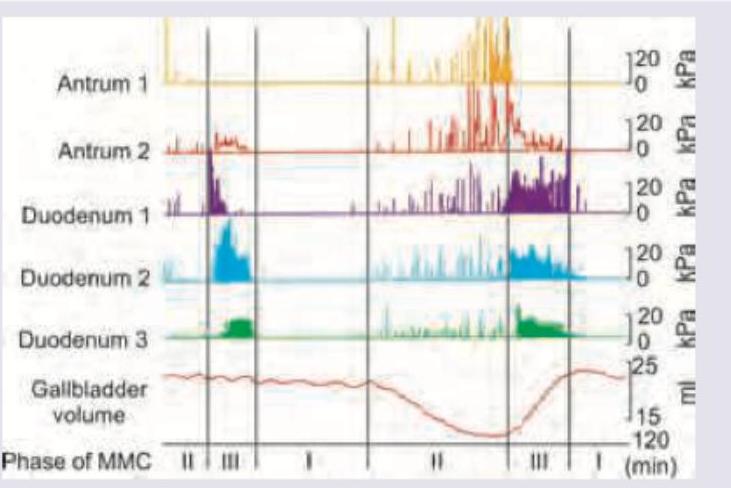
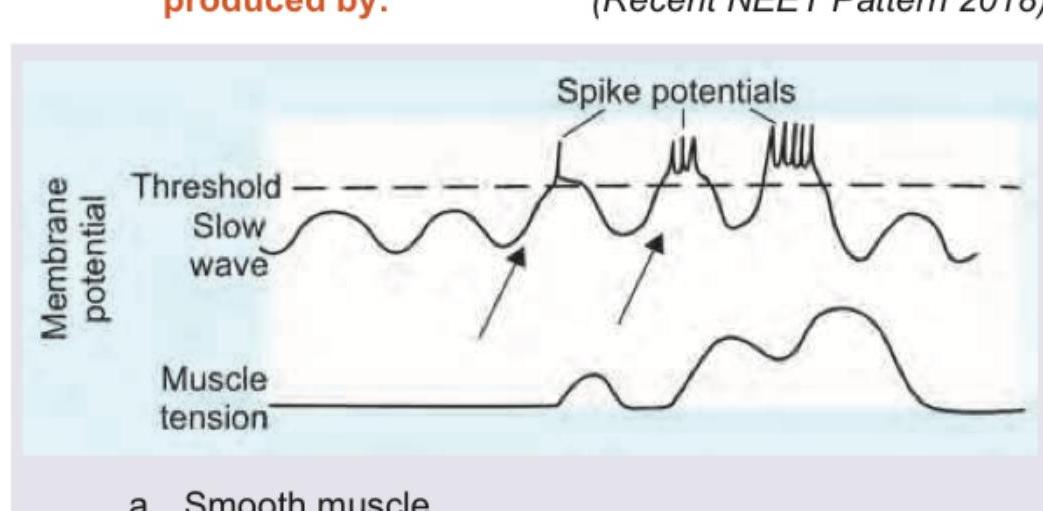
Explanation: **Explanation:** The **Sinoatrial (SA) node** is the correct answer because it serves as the primary **pacemaker of the heart**. Located in the wall of the right atrium near the opening of the superior vena cava, it possesses the highest degree of **automaticity** (spontaneous depolarization). It generates action potentials at an intrinsic rate of 60–100 beats per minute, which is faster than any other part of the cardiac conduction system, thereby overriding secondary pacemakers like the AV node or Purkinje fibers. **Analysis of Incorrect Options:** * **Option A & B:** While the gastrointestinal tract has its own pacemakers—the **Interstitial Cells of Cajal (ICC)**—they regulate the "Slow Waves" or Basal Electrical Rhythm (BER) of the gut, not the heart. The ICCs are located in the myenteric plexus between the longitudinal and circular muscle layers. * **Option D:** The Common Bile Duct (CBD) origin and its sphincters (Sphincter of Oddi) are regulated by hormonal (Cholecystokinin) and neural signals, but they do not house cardiac pacemaker tissue. **High-Yield Clinical Pearls for NEET-PG:** * **Hierarchy of Pacemakers:** SA Node (60-100 bpm) > AV Node (40-60 bpm) > Bundle of His/Purkinje fibers (25-40 bpm). * **Ionic Basis:** The "pacemaker potential" (Phase 4) is primarily due to the **Funny current ($I_f$)** mediated by HCN channels (sodium influx). * **Blood Supply:** In 60% of individuals, the SA node is supplied by the Right Coronary Artery; in 40%, it is supplied by the Left Circumflex Artery. * **P-wave:** On an ECG, the P-wave represents atrial depolarization initiated by the SA node.
Explanation: **Explanation:** **Paneth cells** are specialized secretory cells located at the base of the **Crypts of Lieberkühn** in the small intestine (most numerous in the ileum). They play a critical role in innate mucosal immunity. 1. **Why Option A is Correct:** Paneth cells contain large, eosinophilic apical granules filled with antimicrobial agents. The primary secretion is **Lysozyme**, an enzyme that digests the cell walls of certain bacteria. They also secrete **alpha-defensins** (cryptidins) and **zinc**, which collectively help maintain the sterility of the small intestinal lumen and regulate the gut microbiome. 2. **Why Other Options are Incorrect:** * **Option B:** Bioactive peptides and bioamines (like serotonin) are secreted by **Enteroendocrine cells** (e.g., Kulchitsky or Argentaffin cells) scattered throughout the GI tract. * **Option C:** Bicarbonate is primarily secreted by **Brunner’s glands** (in the duodenum) and the pancreas to neutralize acidic chyme. * **Option D:** Pepsin (from pepsinogen) and Rennin (in infants) are proteolytic enzymes secreted by the **Chief cells (Peptic cells)** of the gastric mucosa, not the small intestine. **High-Yield Clinical Pearls for NEET-PG:** * **Location:** Paneth cells are found in the small intestine but are notably **absent in the normal colon**. Their presence in the colon (Paneth cell metaplasia) is a diagnostic marker for Chronic Inflammatory Bowel Disease (IBD), such as **Ulcerative Colitis**. * **Zinc Content:** Paneth cells are rich in zinc; therefore, zinc deficiency can lead to impaired mucosal immunity. * **Stem Cell Niche:** They provide essential growth factors to the neighboring intestinal stem cells, aiding in the rapid regeneration of the intestinal epithelium.
Explanation: **Explanation:** The secretion of bilirubin into the bile canaliculi is the rate-limiting step of bilirubin metabolism. This process is primarily driven by **Bile Salts** through a mechanism known as **Bile Acid-Dependent Flow**. 1. **Why Bile Salts are correct:** Bile salts are actively secreted into the canaliculi by the Bile Salt Export Pump (BSEP). This creates an osmotic gradient that draws water and electrolytes into the bile. Bilirubin (specifically conjugated bilirubin) is then secreted into this flow via the **MRP2 transporter** (Multidrug Resistance-associated Protein 2). The presence of bile salts stimulates the overall secretory activity of the hepatocyte, facilitating the transport of bilirubin. 2. **Why other options are incorrect:** * **Bile Pigments:** Bilirubin *is* a bile pigment. A substance cannot be secreted "by" itself; it is the cargo, not the driver of the secretion process. * **Secretin:** This hormone primarily acts on the ductal cells (cholangiocytes) to increase the secretion of bicarbonate-rich watery fluid (Bile Acid-Independent Flow), rather than the direct secretion of bilirubin from hepatocytes. * **CCK (Cholecystokinin):** CCK causes gallbladder contraction and relaxation of the Sphincter of Oddi to release stored bile into the duodenum; it does not govern the cellular secretion of bilirubin from the hepatocyte into the canaliculi. **High-Yield Clinical Pearls for NEET-PG:** * **Rate-limiting step:** Conjugated bilirubin secretion into canaliculi is the slowest step in hepatic bilirubin metabolism. * **Dubin-Johnson Syndrome:** Caused by a mutation in the **MRP2 transporter**, leading to impaired secretion of conjugated bilirubin and a "black liver" due to pigment deposition. * **Rotor Syndrome:** Similar to Dubin-Johnson but involves a defect in OATP1B1/B3 transporters, and the liver is not pigmented. * **Enterohepatic Circulation:** 95% of bile salts are reabsorbed in the terminal ileum, which is crucial for maintaining the bile salt pool and continuous bilirubin excretion.
Explanation: **Explanation:** **Peptide YY (PYY)** is a 36-amino acid peptide belonging to the pancreatic polypeptide family. It is primarily synthesized and secreted by the **L-cells** of the distal small intestine (**Ileum**) and the **Colon** in response to the presence of fat and carbohydrates in the lumen. **Why Ileum is correct:** The density of L-cells increases progressively along the gastrointestinal tract, reaching its peak in the terminal ileum and large intestine. PYY acts as an "ileal brake"—a feedback mechanism that inhibits gastric emptying and intestinal motility to ensure efficient nutrient absorption. **Why other options are incorrect:** * **Stomach:** The stomach primarily secretes **Ghrelin** (from P/D1 cells), which stimulates hunger, the opposite effect of PYY. * **Duodenum:** While the proximal small intestine contains some L-cells, it is the primary site for **Cholecystokinin (CCK)** and **Secretin**. PYY levels only rise significantly once chyme reaches the distal segments. * **Pancreas:** The pancreas secretes **Pancreatic Polypeptide (PP)** from F-cells, which is structurally related to PYY but functionally distinct. **High-Yield NEET-PG Pearls:** * **Function:** PYY is an **anorexigenic hormone** (satiety signal). It acts on the hypothalamus to inhibit NPY neurons and stimulate POMC neurons, reducing appetite. * **The "Ileal Brake":** Along with GLP-1, PYY slows gastric emptying. * **Clinical Relevance:** PYY levels are often low in obese individuals and significantly elevated after **Bariatric surgery** (e.g., Roux-en-Y gastric bypass), contributing to post-operative weight loss and appetite suppression.
Explanation: **Explanation:** The correct answer is **C (Both serotonin and histamine)**. **Medical Concept:** Enterochromaffin (EC) cells and Enterochromaffin-like (ECL) cells are types of enteroendocrine cells found in the gastrointestinal mucosa. 1. **Enterochromaffin (EC) cells:** These are the primary source of **Serotonin (5-HT)** in the body (containing ~90% of total body serotonin). They respond to mechanical stimulation or luminal irritants to increase gut motility and secretion. 2. **Enterochromaffin-like (ECL) cells:** These are found primarily in the gastric corpus and are responsible for secreting **Histamine**. Histamine acts on H2 receptors of parietal cells to stimulate gastric acid secretion. In many medical entrance exams, including NEET-PG, the term "Enterochromaffin cells" is often used as a broad category encompassing both EC and ECL cells, making "Both" the most accurate choice. **Analysis of Options:** * **Option A & B:** While EC cells primarily secrete serotonin and ECL cells secrete histamine, selecting only one would be incomplete as both are derived from the same lineage of argentaffin/argyrophil cells in the GI tract. * **Option D:** Incorrect, as these cells are the major neuroendocrine regulators of the gut. **High-Yield Clinical Pearls for NEET-PG:** * **Carcinoid Syndrome:** Arises from tumors of EC cells (usually in the ileum), leading to excessive serotonin. Symptoms include flushing, diarrhea, and right-sided heart failure. * **Gastrin Connection:** Gastrin (from G cells) stimulates ECL cells to release histamine, which is the most potent physiological stimulus for HCl secretion. * **Markers:** These cells are identified using **Chromogranin A** (a universal marker for neuroendocrine tumors).
Explanation: ### Explanation The gastrointestinal tract produces various hormones and neurotransmitters. The distinction between **hormones** (secreted into the bloodstream by endocrine cells) and **neurocrines** (secreted by neurons) is a high-yield concept for NEET-PG. **Why VIP is the Correct Answer:** **Vasoactive Intestinal Peptide (VIP)** is not a hormone secreted by the mucosal cells of the duodenum or jejunum. Instead, it is a **neurotransmitter (neurocrine)** found in the neurons of the enteric nervous system (Meissner’s and Auerbach’s plexuses). While it is present throughout the GI tract, it is released by nerve endings in response to distension and vagal stimulation, rather than being secreted by the intestinal mucosa into the portal circulation. **Analysis of Incorrect Options:** * **A. CCK (Cholecystokinin):** Secreted by **'I' cells** located primarily in the duodenum and jejunum in response to fatty acids and amino acids. * **B. Secretin:** Secreted by **'S' cells** in the duodenum and jejunum. It is released in response to acidic chyme (pH < 4.5) entering the duodenum. * **C. GIP (Glucose-dependent Insulinotropic Peptide):** Secreted by **'K' cells** in the duodenum and jejunum. It stimulates insulin release and inhibits gastric acid secretion. **High-Yield Clinical Pearls for NEET-PG:** * **VIPoma (WDHA Syndrome):** A pancreatic tumor secreting excess VIP leads to **W**atery **D**iarrhea, **H**ypokalemia, and **A**chlorhydria (also known as Verner-Morrison syndrome). * **VIP Function:** It relaxes GI smooth muscle (including the LES) and stimulates the secretion of water and electrolytes into the intestinal lumen. * **Mnemonic for Locations:** Most major GI hormones (CCK, Secretin, GIP) are concentrated in the **Duodenum and Jejunum**, whereas **Gastrin** is primarily in the Antrum and **Motilin** is throughout the upper GI tract.
Explanation: ### Explanation **1. Why Option A is Correct:** Dietary fiber, particularly insoluble fiber (like cellulose and hemicellulose), increases stool bulk by absorbing water and adding non-digestible physical mass. This increased bulk distends the colonic wall, which stimulates **mechanoreceptors**. This triggers the **myenteric reflex**, leading to increased peristaltic activity. Consequently, the **stool transit time decreases** (meaning stool moves faster through the colon), which helps prevent constipation and reduces the exposure of the colonic mucosa to potential carcinogens. **2. Why the Other Options are Incorrect:** * **Option B:** Fiber, especially soluble fiber (like pectin and gums), increases the viscosity of chyme. This actually **increases** (slows down) the transit time in the small intestine, allowing for a more gradual absorption of nutrients. * **Option C:** High fiber intake **decreases** the glycemic response. By slowing gastric emptying and creating a "gel-like" matrix in the small intestine, fiber slows the rate of glucose absorption, preventing rapid postprandial blood sugar spikes. * **Option D:** Fiber **decreases** the entero-hepatic circulation of bile. Fiber binds to bile acids in the gut and promotes their excretion in feces. This forces the liver to synthesize new bile acids from cholesterol, which is a key mechanism by which fiber lowers serum LDL cholesterol levels. **Clinical Pearls for NEET-PG:** * **Recommended Daily Intake:** Approximately 25–35 grams/day. * **Diverticulosis:** A low-fiber diet is a major risk factor for diverticular disease due to increased intraluminal pressure required to move small, hard stools. * **Colorectal Cancer:** High fiber is protective as it dilutes carcinogens and reduces their contact time with the bowel wall (decreased transit time). * **Short-Chain Fatty Acids (SCFAs):** Colonic bacteria ferment fiber into SCFAs (butyrate, propionate, acetate), which serve as the primary energy source for colonocytes.
Explanation: **Explanation:** The process of swallowing (deglutition) is coordinated by the swallowing center in the medulla and pons. The **Vagus nerve (CN X)** is the primary nerve responsible for the **efferent (motor) limb** of the esophageal phase of swallowing. 1. **Why Vagus is Correct:** The Vagus nerve provides motor innervation to the striated muscle of the upper third of the esophagus (via the recurrent laryngeal nerve) and the smooth muscle of the lower two-thirds (via the esophageal plexus). It coordinates the primary peristaltic wave and the relaxation of the Lower Esophageal Sphincter (LES) through the release of VIP and Nitric Oxide. 2. **Why Other Options are Incorrect:** * **Glossopharyngeal (CN IX):** While it carries sensory (afferent) impulses from the pharynx to initiate the swallow reflex and provides motor supply to the stylopharyngeus, it does not control esophageal actions. * **Hypoglossal (CN XII):** This nerve provides motor supply to the intrinsic and extrinsic muscles of the tongue, primarily involved in the oral (voluntary) phase of swallowing. * **Spinal Accessory (CN XI):** This nerve supplies the sternocleidomastoid and trapezius muscles; it has no direct role in esophageal peristalsis. **High-Yield Clinical Pearls for NEET-PG:** * **Swallowing Center:** Located in the Nucleus Tractus Solitarius (NTS) and Nucleus Ambiguus. * **Achalasia Cardia:** Failure of the Vagus-mediated relaxation of the LES due to loss of myenteric (Auerbach’s) plexus. * **Phases of Swallowing:** Oral (voluntary), Pharyngeal (involuntary), and Esophageal (involuntary). The Vagus nerve dominates the latter two.
Explanation: **Explanation:** The distribution and mobilization of adipose tissue during starvation follow a specific physiological hierarchy. Fat is categorized into **subcutaneous fat** (easily mobilized) and **visceral/structural fat** (preserved for organ protection). **Why Pericardial is Correct:** Pericardial fat is considered **structural fat**. During prolonged starvation or malnutrition (like Marasmus), the body first mobilizes storage fat from subcutaneous sites to meet energy demands. Structural fat, which provides mechanical cushioning and support to vital organs, is the last to be depleted. The pericardial fat, along with fat in the palms, soles, and retro-orbital space, is highly resistant to mobilization because its primary function is protective rather than caloric storage. **Analysis of Incorrect Options:** * **Buttocks (Option C):** This is a primary site of subcutaneous storage fat. It is one of the earliest areas to show wasting in protein-energy malnutrition. * **Omental (Option D):** This is visceral storage fat. While more metabolically active than subcutaneous fat, it is mobilized relatively early to provide free fatty acids to the liver via portal circulation. * **Periorbital (Option A):** While orbital fat is also structural, clinical studies and forensic pathology indicate that epicardial/pericardial fat remains the most resilient "last resort" fat depot in the body. **NEET-PG High-Yield Pearls:** * **Order of Fat Loss:** Subcutaneous (Face/Limbs) → Visceral (Omental/Mesenteric) → Structural (Pericardial/Retro-orbital). * **Bichat’s Fat Pad:** The buccal pad of fat in the cheeks is also a form of structural fat, which is why the face often retains a "rounded" look until advanced stages of starvation. * **Clinical Sign:** The "Monkey facies" seen in Marasmus is due to the eventual loss of even the buccal and periorbital fat pads.
Explanation: **Explanation:** **1. Why Gastric Fundus is Correct:** Ghrelin, often referred to as the "hunger hormone," is a 28-amino acid peptide primarily secreted by specialized neuroendocrine cells known as **P/D1 cells** (in humans) or **X/A-like cells** (in rats). The highest density of these cells is found in the **oxyntic mucosa of the gastric fundus**. Ghrelin acts on the hypothalamus to stimulate appetite (orexigenic effect) and promotes the secretion of Growth Hormone from the anterior pituitary. **2. Why Other Options are Incorrect:** * **Gastric Body:** While the body of the stomach contains some ghrelin-producing cells, the concentration is significantly lower than in the fundus. The fundus accounts for approximately 80% of the stomach's ghrelin production. * **Gastric Pylorus & Duodenum:** These areas contain a much smaller population of ghrelin cells. As you move distally from the fundus toward the duodenum, jejunum, and ileum, the concentration of ghrelin-producing cells decreases progressively. **3. High-Yield Clinical Pearls for NEET-PG:** * **Bariatric Surgery:** The dramatic weight loss seen after **Sleeve Gastrectomy** is partly attributed to the surgical removal of the gastric fundus, which leads to a significant drop in circulating ghrelin levels, thereby reducing hunger. * **Prader-Willi Syndrome:** This is a high-yield association where patients have fasting hyperghrelinemia, contributing to hyperphagia and obesity. * **Opposing Hormone:** Remember that **Leptin** (produced by adipose tissue) is the functional antagonist to Ghrelin; Leptin induces satiety, while Ghrelin induces hunger. * **Sleep Deprivation:** Lack of sleep increases ghrelin levels and decreases leptin levels, often leading to weight gain.
Gastrointestinal Motility
Practice Questions
Gastrointestinal Secretions
Practice Questions
Digestion and Absorption
Practice Questions
Gastrointestinal Hormones
Practice Questions
Hepatobiliary Physiology
Practice Questions
Pancreatic Exocrine Function
Practice Questions
Gastrointestinal Circulation
Practice Questions
Intestinal Immune System
Practice Questions
Gut Microbiome
Practice Questions
Regulation of Food Intake
Practice Questions
Get full access to all questions, explanations, and performance tracking.
Start For Free