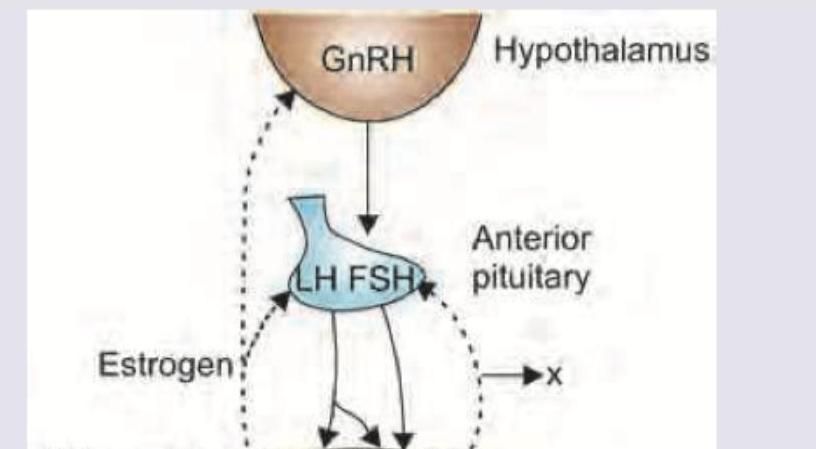
Which of the following pituitary hormones does NOT decrease the stimulatory control of the pituitary?
The posterior part of the hypothalamus is primarily concerned with which of the following functions?
Proopiomelanocortin is released from which gland?
Which adrenergic beta receptor has a role in lipolysis in fat cells?
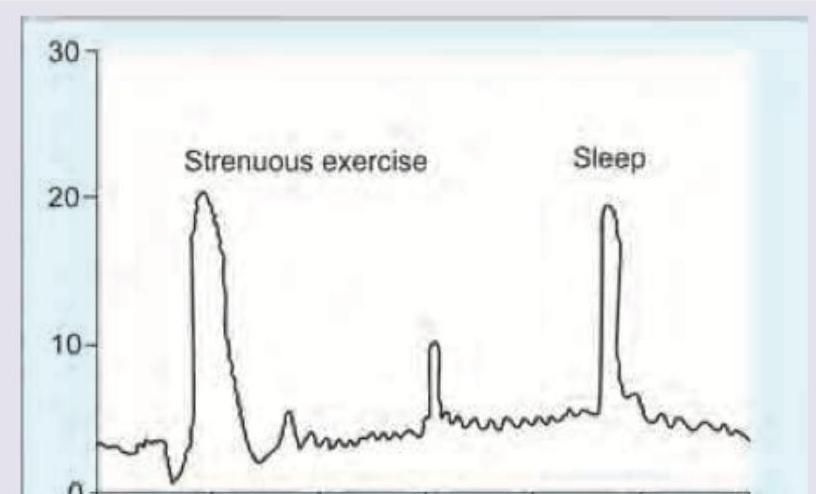
All of the following hormones are increased during stress except?
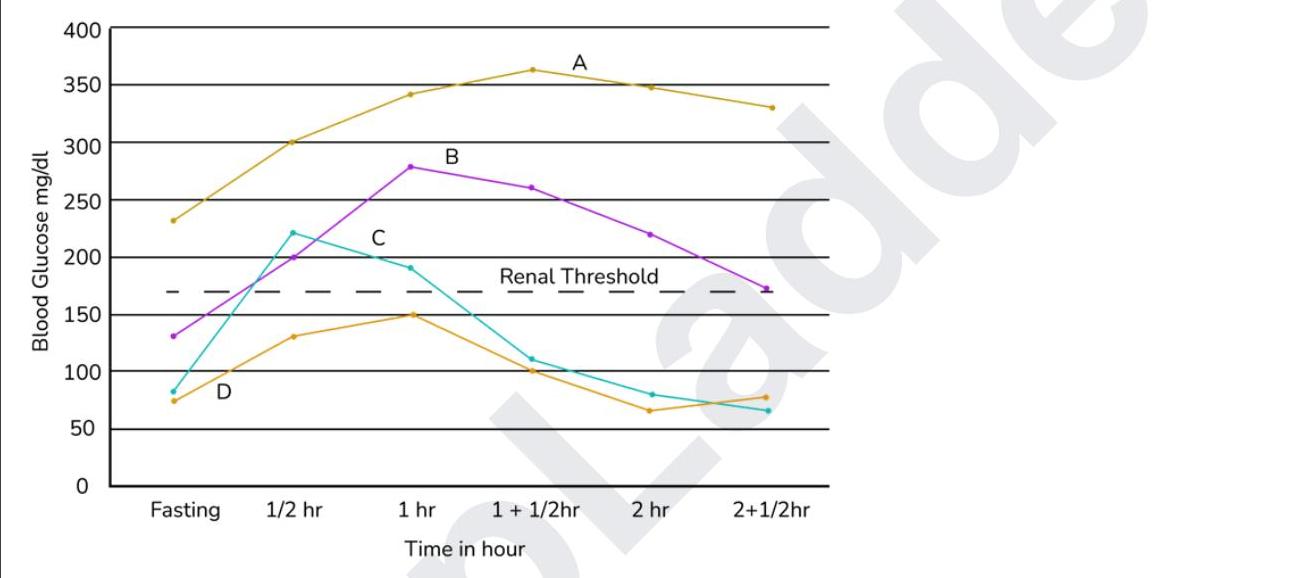
Insulin secretion is decreased by which of the following hormones?
Basal Metabolic Rate depends most closely on which of the following?
Sudden decrease in serum calcium is associated with which of the following?
Increased body temperature after ovulation is due to which hormone?
Which of the following statements about thyroid stimulating hormone (TSH) is FALSE?
Explanation: ### Explanation The regulation of the pituitary gland primarily follows a **negative feedback mechanism**. In most endocrine axes, the pituitary hormone (or the peripheral hormone it stimulates) inhibits the hypothalamus to decrease further stimulation. **Why Prolactin is the Correct Answer:** Unlike most anterior pituitary hormones, **Prolactin** is unique because it is under **tonic inhibitory control** by the hypothalamus via **Dopamine** (Prolactin-Inhibiting Hormone). Prolactin does not decrease the "stimulatory control" because its primary regulator is an inhibitor. When Prolactin levels rise, they stimulate the hypothalamus to increase the secretion of Dopamine, which further *inhibits* the pituitary. It lacks a classic stimulatory releasing hormone (like TRH or GnRH) as its primary regulator. **Analysis of Incorrect Options:** * **FSH and LH (Options B & C):** These gonadotropins are regulated by **GnRH** (Gonadotropin-Releasing Hormone). Through the "short-loop" feedback mechanism, high levels of FSH and LH inhibit the hypothalamus, decreasing the stimulatory release of GnRH. * **Oxytocin (Option D):** While Oxytocin is known for **positive feedback** (e.g., Ferguson reflex during labor), in the context of the hypothalamic-pituitary axis, it does not function under a tonic inhibitory tone like Prolactin. **High-Yield Clinical Pearls for NEET-PG:** * **Dopamine is the primary Prolactin-Inhibiting Hormone (PIH).** Any drug that blocks Dopamine (e.g., Antipsychotics like Haloperidol or Metoclopramide) will cause **Hyperprolactinemia**. * **Stalk Effect:** Damage to the pituitary stalk interrupts the flow of Dopamine to the anterior pituitary, leading to a decrease in all pituitary hormones *except* Prolactin, which rises. * **TRH (Thyrotropin-Releasing Hormone)** can act as a minor prolactin-releasing factor; hence, patients with primary hypothyroidism (high TRH) often present with galactorrhea.
Explanation: ### Explanation The hypothalamus is anatomically and functionally divided into three regions: the anterior (supraoptic), middle (tuberal), and posterior (mammillary) regions. **Why Option C is Correct:** The **posterior region** of the hypothalamus contains the **mammillary bodies**. These structures are a vital component of the **Papez circuit** (limbic system). The mammillary bodies receive primary input from the hippocampus via the fornix and are involved in processing emotional responses and memory. Crucially, they play a significant role in the **regulation of responses to smell** (olfactory reflexes), such as licking or swallowing in response to pleasant food odors. **Analysis of Incorrect Options:** * **Option A (Sexual function):** Primarily regulated by the **Preoptic nucleus** in the anterior hypothalamus, which releases GnRH. * **Option B (Circadian rhythm):** This is the specific function of the **Suprachiasmatic Nucleus (SCN)**, located in the anterior hypothalamus. It acts as the body’s "biological clock" by receiving light input from the retina. * **Option C (Posterior pituitary hormones):** ADH (Vasopressin) and Oxytocin are synthesized in the **Supraoptic** and **Paraventricular nuclei**, respectively. Both are located in the anterior hypothalamus and are transported via axons to the posterior pituitary for storage. **High-Yield NEET-PG Pearls:** * **Posterior Hypothalamus & Temperature:** It is the center for **heat conservation** (sympathetic response, shivering). Lesions here result in *poikilothermia* (inability to regulate temperature). * **Wernicke-Korsakoff Syndrome:** Classically involves hemorrhage/atrophy of the **mammillary bodies** due to Thiamine (B1) deficiency, leading to anterograde amnesia and confabulation. * **Satiety vs. Hunger:** The **Ventromedial nucleus** is the satiety center (lesion = obesity), while the **Lateral hypothalamus** is the hunger center (lesion = anorexia).
Explanation: **Explanation:** **Proopiomelanocortin (POMC)** is a large precursor polypeptide synthesized primarily in the **corticotrophs of the anterior pituitary** and the **arcuate nucleus of the Hypothalamus**. In the hypothalamus, POMC neurons play a critical role in energy homeostasis; they are processed into **α-MSH** (alpha-melanocyte-stimulating hormone), which acts on MC3/MC4 receptors to inhibit food intake (anorexigenic effect). **Analysis of Options:** * **A. Hypothalamus (Correct):** As mentioned, POMC is synthesized in the arcuate nucleus. It is also produced in the anterior pituitary (precursor to ACTH) and the intermediate lobe of the pituitary. * **B. Liver:** The liver is involved in the synthesis of proteins like albumin, clotting factors, and Angiotensinogen, but it does not produce POMC. * **C. Adrenal:** The adrenal cortex is the *target* for ACTH (a derivative of POMC), where it stimulates cortisol production. It does not synthesize the POMC precursor itself. * **D. Lung:** While small cell carcinoma of the lung can produce ACTH ectopically (paraneoplastic syndrome), the lung is not a physiological site of POMC release. **High-Yield Clinical Pearls for NEET-PG:** 1. **Post-translational Processing:** POMC is cleaved by **Prohormone Convertases (PC1 and PC2)**. PC1 leads to ACTH production (Pituitary), while PC2 leads to α-MSH production (Hypothalamus). 2. **Derivatives:** POMC is the parent molecule for **ACTH, β-endorphin, α-MSH, and γ-LPH**. 3. **Hyperpigmentation:** In Addison’s disease, high levels of POMC/ACTH lead to skin hyperpigmentation because ACTH shares a structural sequence with MSH and can bind to melanocortin-1 receptors. 4. **Appetite Regulation:** Leptin stimulates POMC neurons in the hypothalamus to decrease appetite. Mutations in the POMC gene can lead to early-onset severe obesity.
Explanation: **Explanation:** The correct answer is **Beta 3 (Option D)**. Adrenergic receptors are G-protein coupled receptors (GPCRs) that mediate the effects of catecholamines. The **Beta-3 ($\beta_3$) receptor** is primarily located in **adipose tissue** (both brown and white fat). When stimulated by norepinephrine, it activates the $G_s$ protein-adenylyl cyclase pathway, increasing intracellular cAMP. This activates Protein Kinase A, which phosphorylates **hormone-sensitive lipase (HSL)**, leading to the breakdown of triglycerides into free fatty acids and glycerol (**lipolysis**). In brown adipose tissue, $\beta_3$ stimulation also promotes thermogenesis via Uncoupling Protein 1 (UCP1/Thermogenin). **Analysis of Incorrect Options:** * **Alpha 1 ($\alpha_1$):** Linked to $G_q$ proteins; primarily causes smooth muscle contraction (vasoconstriction, pupillary dilation, and intestinal sphincter contraction). * **Alpha 2 ($\alpha_2$):** Linked to $G_i$ proteins; acts as a presynaptic autoreceptor to inhibit norepinephrine release. In fat cells, $\alpha_2$ stimulation actually **inhibits** lipolysis (antagonistic to $\beta_3$). * **Beta 1 ($\beta_1$):** Primarily located in the **heart** (increases heart rate and contractility) and the juxtaglomerular apparatus of the kidney (increases renin release). **High-Yield Clinical Pearls for NEET-PG:** * **Mirabegron:** A selective $\beta_3$ agonist used clinically for the treatment of **overactive bladder** (causes detrusor muscle relaxation). * **Lipolysis hierarchy:** While $\beta_3$ is the classic answer for fat cells, $\beta_1$ also contributes to lipolysis in humans, but $\beta_3$ is the specific "metabolic" receptor often tested. * **Mnemonic:** $\beta_1$ (1 Heart), $\beta_2$ (2 Lungs), $\beta_3$ (3 letters in FAT).
Explanation: **Explanation:** The body’s response to stress (the "fight or flight" response) is designed to mobilize energy substrates—primarily glucose and free fatty acids—to meet increased metabolic demands. This is achieved through the activation of the **Sympathetic Nervous System (SNS)** and the **Hypothalamic-Pituitary-Adrenal (HPA) axis**. **Why Insulin is the correct answer:** Insulin is an **anabolic hormone** that promotes glucose storage (glycogenesis) and uptake into peripheral tissues. During stress, the body needs to maintain high blood glucose levels for the brain and muscles. Therefore, insulin secretion is **inhibited** by the sympathetic nervous system (via $\alpha_2$-adrenergic receptors on pancreatic beta cells). This state of "stress-induced hyperglycemia" ensures glucose availability. **Why the other options are incorrect:** * **Cortisol (Option A):** Known as the primary "stress hormone," it increases gluconeogenesis and protein catabolism to provide energy during prolonged stress. * **Adrenaline & Noradrenaline (Options C & D):** These catecholamines are released immediately during acute stress. They stimulate glycogenolysis in the liver and lipolysis in adipose tissue to rapidly elevate blood glucose and fatty acid levels. **NEET-PG High-Yield Pearls:** * **Glucagon and Growth Hormone** are also increased during stress; both are "counter-regulatory" hormones that oppose insulin action. * **Catecholamine effect on Insulin:** While $\beta_2$ stimulation can increase insulin, the **$\alpha_2$ inhibitory effect predominates** during stress, leading to a net decrease in insulin levels. * **ADH (Vasopressin):** Also increases during stress to maintain blood pressure and fluid volume.
Explanation: **Explanation:** The regulation of insulin secretion is a complex process involving nutrients, autonomic nerves, and gastrointestinal hormones. **Why Somatostatin is correct:** Somatostatin, secreted by the **Delta (δ) cells** of the pancreatic islets, acts as a potent universal inhibitor. It exerts a **paracrine effect** on neighboring Beta (β) cells to **decrease insulin secretion** and on Alpha (α) cells to decrease glucagon secretion. It acts via G-protein coupled receptors (SSTR-2 and SSTR-5) which decrease intracellular cAMP and inhibit calcium influx, thereby preventing exocytosis of insulin granules. **Why the other options are incorrect:** * **Glucagon:** While it has the opposite metabolic effect of insulin, glucagon actually **stimulates** insulin secretion. This ensures that as glucagon mobilizes glucose into the bloodstream, insulin is available to facilitate its utilization by peripheral tissues. * **Gastrin and Secretin:** These are gastrointestinal hormones (Incretins/Enterogastrones). The "Incretin effect" describes how oral glucose causes a higher insulin response than intravenous glucose. Gastrin, Secretin, CCK, and GIP all act to **increase** insulin secretion in anticipation of rising blood glucose levels following a meal. **High-Yield Clinical Pearls for NEET-PG:** * **Most potent stimulator** of insulin: Glucose. * **Most potent inhibitor** of insulin: Somatostatin (Physiological) and Epinephrine (via α2 receptors during stress). * **Incretin Effect:** Primarily mediated by **GLP-1** (Glucagon-like peptide-1) and **GIP** (Glucose-dependent insulinotropic peptide). * **Drug Link:** Octreotide is a synthetic somatostatin analogue used clinically to treat insulinomas and acromegaly due to its inhibitory properties.
Explanation: **Explanation:** **1. Why Lean Body Mass (LBM) is correct:** Basal Metabolic Rate (BMR) is the energy expenditure required to maintain essential physiological functions at rest. The primary determinant of BMR is the amount of metabolically active tissue in the body. **Lean Body Mass (LBM)**, which includes skeletal muscle, internal organs (liver, brain, kidneys), and bone, accounts for approximately 70-80% of the variance in BMR. Muscle tissue is significantly more metabolically active than adipose tissue; therefore, individuals with a higher percentage of LBM have a higher BMR. **2. Why other options are incorrect:** * **Body Surface Area (BSA):** While BMR was historically expressed in terms of BSA (Rubner’s Surface Law), modern physiology recognizes that BSA is a proxy for heat loss rather than the driver of heat production. LBM is a more accurate physiological predictor. * **Body Mass Index (BMI):** BMI is a simple ratio of weight to height. It does not differentiate between fat mass and muscle mass. Two individuals with the same BMI can have vastly different BMRs depending on their body composition. * **Obesity:** Adipose tissue is metabolically sluggish. While an obese person may have a higher absolute BMR due to the extra work required to move a larger frame, their BMR *per unit of body weight* is lower than a lean individual. **3. High-Yield Clinical Pearls for NEET-PG:** * **Thyroid Status:** Thyroid hormone is the most important hormonal regulator of BMR. * **Gender:** Males generally have a 5-10% higher BMR than females, primarily because they possess a higher proportion of Lean Body Mass. * **Age:** BMR is highest in infancy (due to growth) and gradually declines with age as LBM is replaced by fat (sarcopenia). * **Starvation:** BMR decreases during prolonged fasting/starvation as a compensatory mechanism to conserve energy.
Explanation: **Explanation:** The correct answer is **C. Increased excitability of muscle and nerve.** **Mechanism of Action:** Serum calcium plays a critical role in stabilizing the resting membrane potential of excitable tissues. Calcium ions normally bind to the external surface of sodium channels, increasing the voltage threshold required to open them. When serum calcium levels drop (**Hypocalcemia**), this "stabilizing" effect is lost. The sodium channels become much easier to open (lower threshold), leading to an influx of sodium ions and spontaneous depolarization. This results in **hyperexcitability** of nerves and muscles, clinically manifesting as tetany, carpopedal spasm, and seizures. **Analysis of Incorrect Options:** * **Option A:** Hypocalcemia stimulates **Parathyroid Hormone (PTH)** secretion via calcium-sensing receptors (CaSR), but it has no direct stimulatory effect on **Thyroxine (T4)**. * **Option B:** In the most common cause of hypocalcemia (Hypoparathyroidism), phosphate levels actually **increase** because PTH is not present to inhibit phosphate reabsorption in the proximal tubule. However, the *sudden decrease* in calcium itself does not cause increased phosphate; rather, the two often coexist depending on the underlying pathology. * **Option D:** While hypocalcemia does cause ECG changes (specifically **prolongation of the QT interval**), "increased excitability" is the more direct and classic physiological hallmark of acute hypocalcemia. **NEET-PG High-Yield Pearls:** * **Chvostek’s sign:** Facial muscle twitching upon tapping the facial nerve. * **Trousseau’s sign:** Carpopedal spasm induced by inflating a BP cuff above systolic pressure (more sensitive than Chvostek’s). * **ECG Finding:** Hypocalcemia = **Prolonged QT interval**; Hypercalcemia = **Shortened QT interval**. * **PTH Action:** Increases bone resorption, increases renal Ca2+ reabsorption, and increases renal phosphate excretion (phosphaturic effect).
Explanation: **Explanation:** The correct answer is **Progesterone**. **Mechanism:** The slight rise in basal body temperature (BBT)—typically **0.5°F to 1.0°F (0.3°C to 0.6°C)**—following ovulation is a hallmark of the luteal phase. This thermogenic effect is mediated by **Progesterone**, which is secreted in large quantities by the **Corpus Luteum** after the egg is released. Progesterone acts directly on the **hypothalamus**, the body’s thermostat, to increase the set-point temperature. This shift occurs approximately 1–2 days after ovulation and persists until menstruation begins. **Analysis of Incorrect Options:** * **Estrogen (A):** Estrogen actually has a mild **hypothermic** (temperature-lowering) effect. It dominates the follicular phase, which is why BBT is lower before ovulation. * **FSH (C):** Follicle-Stimulating Hormone is responsible for the maturation of ovarian follicles but has no direct effect on the hypothalamic thermoregulatory center. * **LH (D):** While the **LH surge** triggers ovulation, the hormone itself does not cause the temperature rise. The rise is a secondary effect of the progesterone produced by the LH-induced Corpus Luteum. **NEET-PG High-Yield Pearls:** * **Biphasic Pattern:** A normal ovulatory cycle shows a biphasic BBT chart (lower in the follicular phase, higher in the luteal phase). A monophasic chart suggests anovulation. * **Clinical Use:** Tracking BBT is a component of the "Rhythm Method" for contraception or to identify the "fertile window" for conception. * **Metabolism:** Progesterone increases the Basal Metabolic Rate (BMR), which contributes to the rise in body temperature.
Explanation: ### Explanation **1. Why Option C is the Correct (False) Statement:** While the hypothalamus regulates TSH via **Thyrotropin-Releasing Hormone (TRH)**, the secretion is not *entirely* under its control. The most critical regulatory mechanism is the **negative feedback loop** exerted by free T3 and T4 directly on the anterior pituitary. Additionally, substances like **Somatostatin** and **Dopamine** inhibit TSH secretion, while peripheral factors and systemic illness (e.g., Euthyroid Sick Syndrome) also influence its levels. **2. Analysis of Incorrect Options:** * **Option A (Pulsatile nature):** TSH secretion is indeed pulsatile and follows a **circadian rhythm**, with peak levels occurring at night (around midnight) and nadir levels in the afternoon. * **Option B (Plasma levels):** The standard reference range for TSH is approximately **0.5 to 5.0 μIU/mL**. (Note: While some labs use 0.2-0.5 as the lower limit, the statement is generally considered a "true" representation of physiological ranges in the context of this question). * **Option D (Function):** TSH binds to G-protein coupled receptors on thyroid follicular cells, stimulating every step of thyroid hormone metabolism: iodide trapping, organification, coupling, and endocytosis of colloid for hormone release. **3. High-Yield Clinical Pearls for NEET-PG:** * **Most Sensitive Test:** TSH is the single best screening test for both hyperthyroidism and hypothyroidism. * **Trophic Effect:** TSH causes hypertrophy and hyperplasia of thyroid follicular cells; chronically high levels (as in iodine deficiency) lead to **Goiter**. * **Wolff-Chaikoff Effect:** An autoregulatory phenomenon where high levels of circulating iodide inhibit the organification of iodine, temporarily reducing thyroid hormone synthesis. * **Subclinical Hypothyroidism:** Characterized by elevated TSH with normal free T3/T4 levels.
Principles of Endocrine Regulation
Practice Questions
Hypothalamus and Pituitary Gland
Practice Questions
Thyroid Physiology
Practice Questions
Adrenal Cortex and Medulla
Practice Questions
Pancreatic Hormones and Glucose Metabolism
Practice Questions
Calcium and Phosphate Homeostasis
Practice Questions
Growth Hormone and Growth Factors
Practice Questions
Endocrine Regulation of Metabolism
Practice Questions
Hormone Receptors and Signaling
Practice Questions
Assessment of Endocrine Function
Practice Questions
Get full access to all questions, explanations, and performance tracking.
Start For Free