Where is the enzyme catalase primarily found within the cell?
Protein molecules are synthesized in which organelle?
Steroid synthesis takes place at?
Which of the following occurs along with glucose transport into a cell?
Active transport across the cell membrane is mediated by which of the following mechanisms?
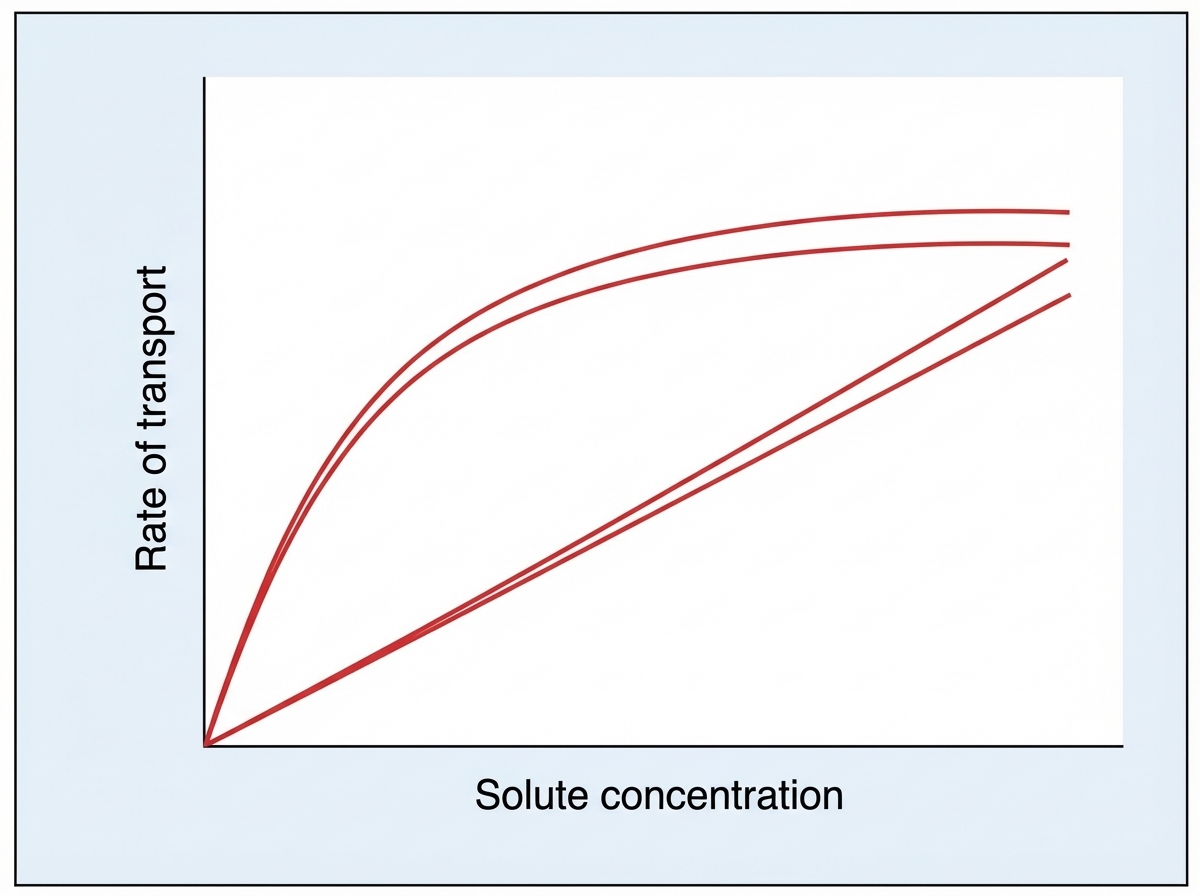
Which of the following statements about facilitated diffusion is true?
Cells maintain a low intracellular Na+ concentration and a high intracellular K+ concentration by the sodium-potassium pump, which is an example of:
Which of the following events occurs in the rough endoplasmic reticulum?
In mammals, DNA synthesis occurs in which part of the cell cycle?
Which glucose transporter is present in Red Blood Cells (RBCs)?
Explanation: **Explanation:** **1. Why Peroxisomes are the Correct Answer:** Peroxisomes (also known as microbodies) are membrane-bound organelles specialized for oxidative reactions. They contain high concentrations of **catalase**, an enzyme essential for cellular safety. During the oxidation of organic substrates (like long-chain fatty acids), hydrogen peroxide ($H_2O_2$) is produced as a toxic byproduct. Catalase facilitates the decomposition of $H_2O_2$ into water and oxygen ($2H_2O_2 \rightarrow 2H_2O + O_2$), thereby protecting the cell from oxidative damage. **2. Why Other Options are Incorrect:** * **Lysosomes:** These are the "suicide bags" of the cell containing **acid hydrolases** (e.g., cathepsins, nucleases) which function at an acidic pH to digest cellular debris. They do not contain catalase. * **Mitochondria:** Known as the "powerhouse," they contain enzymes for the TCA cycle, beta-oxidation, and the Electron Transport Chain (ETC). While they produce reactive oxygen species (ROS), their primary antioxidant enzyme is **Superoxide Dismutase (SOD)** and Glutathione Peroxidase, not catalase. * **Cytosol:** While some antioxidant activity occurs here, catalase is sequestered within peroxisomes to prevent the $H_2O_2$ it handles from damaging other cytosolic components. **3. NEET-PG High-Yield Pearls:** * **Zellweger Syndrome:** A high-yield clinical correlation where a defect in importing proteins into peroxisomes leads to "empty" peroxisomes, causing neurological and hepatic failure. * **Beta-Oxidation:** Peroxisomes are the primary site for the oxidation of **Very Long Chain Fatty Acids (VLCFA)**; defects lead to X-linked Adrenoleukodystrophy. * **Marker Enzyme:** Catalase is considered the biochemical marker enzyme for identifying peroxisomes in laboratory studies.
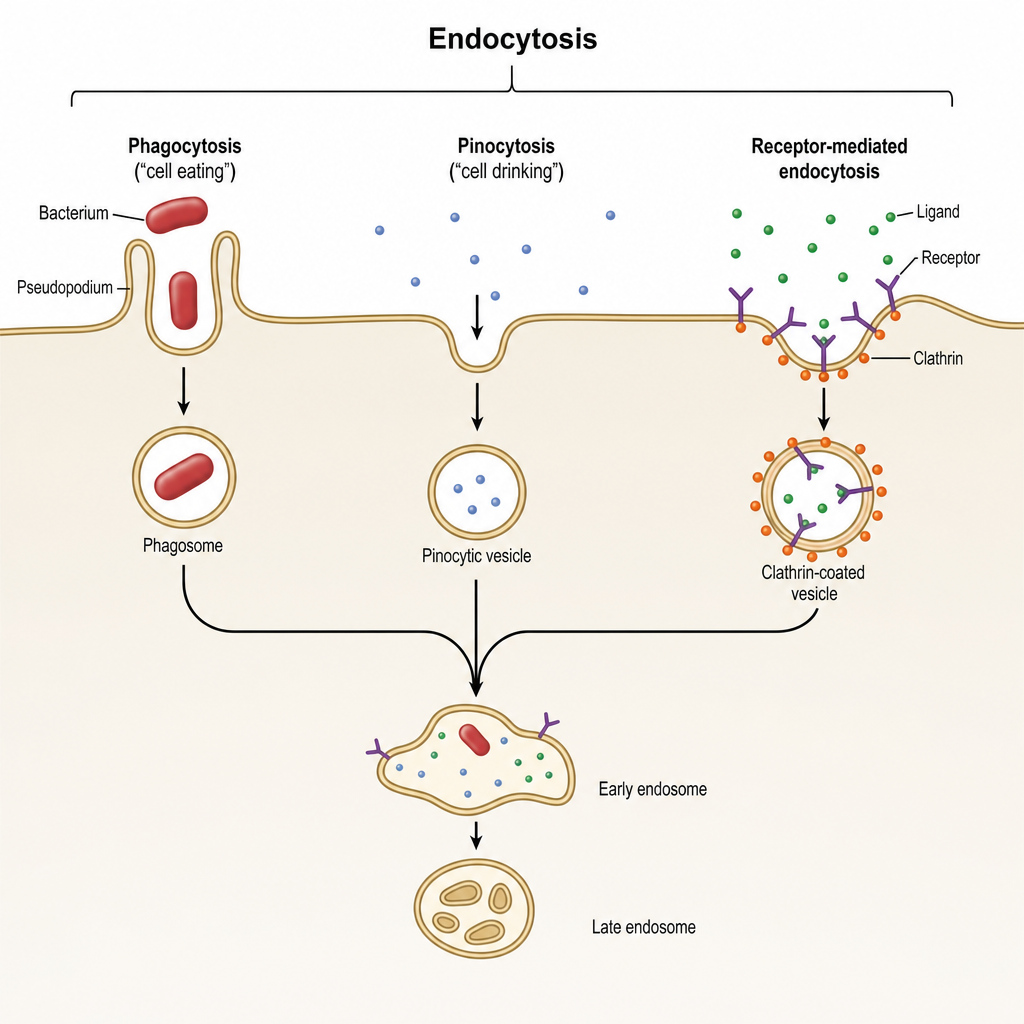
Explanation: **Explanation:** The correct answer is **Golgi apparatus**. While the primary site of initial protein translation is the ribosome (either free or on the Rough ER), the Golgi apparatus is the essential site for the **post-translational modification and final synthesis** of complex proteins. It is responsible for glycosylation (adding sugar moieties), sulfation, and phosphorylation, which are critical steps in transforming a polypeptide chain into a functional, mature protein. **Analysis of Options:** * **Golgi apparatus (Correct):** Often called the "post office" of the cell, it modifies, sorts, and packages proteins for secretion or delivery to other organelles. * **Mitochondria:** Primarily known as the "powerhouse" for ATP production via oxidative phosphorylation. While they contain their own DNA and ribosomes to synthesize a few internal proteins, they are not the general site for cellular protein synthesis. * **Nucleosome:** This is a structural unit of eukaryotic chromosomes, consisting of a length of DNA coiled around a core of histones. It is involved in DNA packaging, not protein synthesis. * **Endosome:** These are membrane-bound vesicles involved in the endocytic pathway. They function in sorting and transporting internalized material from the cell membrane to lysosomes for degradation. **High-Yield NEET-PG Pearls:** * **Rough Endoplasmic Reticulum (RER):** The site of synthesis for proteins destined for secretion, lysosomes, or cell membranes. * **Free Ribosomes:** Synthesize proteins intended for use within the cytosol, nucleus, or mitochondria. * **I-Cell Disease:** A clinical correlate where a deficiency in phosphorylating enzymes in the Golgi leads to the failure of proteins to be targeted to lysosomes, causing them to be secreted extracellularly instead.
Explanation: **Explanation:** The **Smooth Endoplasmic Reticulum (SER)** is the primary site for the synthesis of lipids, phospholipids, and **steroids**. Steroidogenesis involves the conversion of cholesterol into various hormones (like cortisol, testosterone, and estrogen). The SER contains the essential enzymes, such as the cytochrome P450 superfamily, required for these biosynthetic pathways. Consequently, cells that specialize in steroid production—such as those in the adrenal cortex, testes (Leydig cells), and ovaries—possess an extensively developed SER. **Analysis of Incorrect Options:** * **A. Ribosomes:** These are the sites of **protein synthesis** (translation). They do not contain the enzymatic machinery for lipid or steroid metabolism. * **C. Peroxisomes:** These organelles are involved in **beta-oxidation of very-long-chain fatty acids (VLCFA)**, hydrogen peroxide metabolism, and bile acid synthesis, but they are not the primary site for steroid hormone assembly. * **D. Lysosomes:** Known as the "suicidal bags" of the cell, these contain hydrolytic enzymes for the **degradation** of macromolecules and autophagy, rather than synthesis. **High-Yield Facts for NEET-PG:** * **Mitochondria Connection:** While the SER is the main site, the initial and rate-limiting step of steroidogenesis (conversion of cholesterol to pregnenolone) actually occurs in the **mitochondria**. Therefore, steroid-producing cells are characterized by abundant SER *and* mitochondria with tubular cristae. * **Rough ER (RER):** In contrast to SER, the RER is studded with ribosomes and is the site for synthesizing proteins destined for secretion or membrane insertion (e.g., insulin). * **Sarcoplasmic Reticulum:** A specialized form of SER in muscle cells that stores and releases **Calcium ($Ca^{2+}$)**, essential for contraction.
Explanation: **Explanation:** The transport of glucose into cells occurs via two primary mechanisms: **Facilitated Diffusion** (via GLUT transporters) and **Secondary Active Transport** (via SGLT transporters). **1. Why Sodium Symport is Correct:** In the intestinal mucosa and renal proximal tubules, glucose is transported against its concentration gradient using the **SGLT (Sodium-Glucose Linked Transporter)**. This is a classic example of **Secondary Active Transport (Symport/Co-transport)**. The process utilizes the energy stored in the electrochemical gradient of Sodium (Na+), which is maintained by the Na+-K+ ATPase pump. As Na+ moves down its gradient into the cell, it "drags" glucose along with it in the same direction. **2. Analysis of Incorrect Options:** * **B. Sodium Antiport:** In an antiport (counter-transport), substances move in opposite directions (e.g., Na+-H+ exchanger). Glucose and Sodium always move in the same direction during co-transport. * **C. Potassium Transport:** While the Na+-K+ ATPase pump is essential to maintain the gradient for glucose transport, Potassium itself is not directly co-transported with glucose. * **D. Amino Acid Transport:** Amino acids are also transported via sodium symport, but they use distinct transporters (like System L or A) and do not typically "accompany" glucose on the same carrier protein. **Clinical Pearls for NEET-PG:** * **SGLT-1:** Located in the **Small Intestine** (malfunction causes glucose-galactose malabsorption). It is the basis for **Oral Rehydration Solution (ORS)**, where Na+ is added to enhance water and glucose absorption. * **SGLT-2:** Located in the **S1 segment of the Renal PCT**. **SGLT-2 inhibitors** (e.g., Dapagliflozin) are modern drugs used to treat Diabetes Mellitus by inducing glucosuria. * **GLUT Transporters:** These are for facilitated diffusion (passive). **GLUT-4** is the only insulin-dependent transporter (found in skeletal muscle and adipose tissue).
Explanation: **Explanation:** **Mechanism of Active Transport:** Active transport is the movement of substances against their electrochemical gradient (from low to high concentration), requiring energy (ATP). This process **must** be mediated by **Carrier Proteins**. These proteins undergo conformational changes to "pump" molecules across the membrane. Unlike simple diffusion, carrier-mediated transport is saturable (shows $V_{max}$) and specific. **Analysis of Options:** * **Carrier Protein (Correct):** All forms of active transport (Primary and Secondary) require carrier proteins. These proteins have specific binding sites and change their shape to transport solutes. * **Na+-K+ ATPase (Incorrect):** While this is the classic example of a primary active transporter, it is a *specific type* of carrier protein. In MCQ patterns, "Carrier Protein" is the broader, more fundamental mechanism that encompasses all active transport pumps (including Ca²⁺ ATPase and H⁺-K⁺ ATPase). * **Channel Protein (Incorrect):** Channels facilitate **passive transport** (facilitated diffusion). They form open pores that allow ions to flow *down* their gradient at very high speeds. They cannot move substances against a gradient. * **G-proteins (Incorrect):** These are membrane-associated proteins involved in **signal transduction** (second messenger systems), not the direct transmembrane transport of solutes. **High-Yield NEET-PG Pearls:** 1. **Primary vs. Secondary:** Primary active transport uses direct ATP hydrolysis (e.g., Na+-K+ pump). Secondary active transport uses the energy stored in the Na+ gradient (e.g., SGLT-1 for glucose). 2. **Kinetics:** Carrier-mediated transport (both active and facilitated diffusion) exhibits **stereospecificity, saturation, and competitive inhibition.** 3. **Na+-K+ ATPase:** It pumps **3 Na+ OUT and 2 K+ IN**, making it electrogenic and essential for maintaining resting membrane potential.
Explanation: **Explanation:** Facilitated diffusion is a form of **carrier-mediated passive transport**. Unlike simple diffusion, where molecules pass directly through the lipid bilayer, facilitated diffusion requires specific **integral membrane proteins (carriers)** to move large or polar molecules across the cell membrane. 1. **Why Option B is Correct:** Facilitated diffusion relies on carrier proteins that undergo conformational changes to move solutes. A classic example is the **GLUT (Glucose Transporter)** family, which moves glucose into cells. 2. **Why Option A & D are Incorrect:** Facilitated diffusion is **passive**, meaning it moves solutes *down* their electrochemical gradient. Therefore, it does not require metabolic energy in the form of **ATP** or **Creatine Phosphate** (which is an energy reserve for ATP regeneration). 3. **Why Option C is Incorrect:** Unlike simple diffusion (which is linear), facilitated diffusion exhibits **saturation kinetics**. As the concentration gradient increases, the rate of transport increases only until all available carrier proteins are occupied (**Vmax**). Thus, the rate is not indefinitely proportionate to the gradient. **High-Yield NEET-PG Pearls:** * **Characteristics of Carrier-Mediated Transport:** Saturation (Vmax), Stereospecificity (e.g., D-glucose is transported, but L-glucose is not), and Competitive Inhibition. * **GLUT-4:** The only insulin-dependent glucose transporter, found in skeletal muscle and adipose tissue. * **SGLT (Sodium-Glucose Linked Transporter):** This is **Secondary Active Transport**, not facilitated diffusion, as it uses the sodium gradient established by the Na+/K+ ATPase.
Explanation: ### Explanation **1. Why Active Transport is Correct:** The Na+-K+ ATPase pump is the classic example of **Primary Active Transport**. It moves ions **against their electrochemical gradients** (pumping 3 Na+ out and 2 K+ in). Because this movement is energetically "uphill," it requires the direct hydrolysis of **ATP** to provide the necessary energy. This process is essential for maintaining the resting membrane potential and cellular volume. **2. Why the Other Options are Incorrect:** * **Passive Transport:** This refers to the movement of substances *down* their concentration gradient without the expenditure of energy. Examples include simple diffusion of gases. * **Facilitated Diffusion:** While this involves carrier proteins (like GLUT transporters), it is a form of passive transport where molecules move *down* a gradient. It does not require ATP. * **Osmosis:** This is specifically the passive movement of **water** molecules across a semi-permeable membrane from a region of low solute concentration to high solute concentration. **3. NEET-PG High-Yield Clinical Pearls:** * **Stoichiometry:** The pump moves **3 Na+ OUT** and **2 K+ IN**. This makes it **electrogenic**, contributing to the negativity inside the cell. * **Inhibitors:** The pump is specifically inhibited by **Cardiac Glycosides** (e.g., **Ouabain** and **Digoxin**). Digoxin is used in heart failure to increase intracellular Ca2+ indirectly via the Na+-Ca2+ exchanger. * **Energy Consumption:** In a resting individual, approximately **25-33%** of total body ATP is consumed by this pump alone. * **Insulin & Epinephrine:** Both hormones stimulate the Na+-K+ ATPase, shifting K+ into cells (used clinically to treat hyperkalemia).
Explanation: **Explanation:** The **Rough Endoplasmic Reticulum (RER)** is the primary site for the synthesis and initial modification of secretory, membrane-bound, and lysosomal proteins. **1. Why Option A is Correct:** **Core glycosylation** (specifically **N-linked glycosylation**) begins in the RER. This process involves the attachment of a pre-assembled 14-sugar precursor (oligosaccharide) to the nitrogen atom of an **Asparagine** residue. This is a critical step for proper protein folding and quality control. **2. Why Other Options are Incorrect:** * **B. O-linked glycosylation:** This occurs exclusively in the **Golgi apparatus**. It involves the addition of sugars to the oxygen atom of Serine or Threonine residues. * **C. Sulfation:** This post-translational modification occurs in the **Trans-Golgi Network (TGN)**. * **D. Protein sorting:** While the RER synthesizes proteins, the **Golgi apparatus** acts as the "Post Office" of the cell, responsible for sorting and packaging proteins into vesicles for their final destinations. **High-Yield Clinical Pearls for NEET-PG:** * **N-linked = Nitrogen = Asparagine (starts in RER).** * **O-linked = Oxygen = Serine/Threonine (occurs in Golgi).** * **Nissl bodies** in neurons are actually composed of RER and free ribosomes; they are responsible for protein synthesis. * **I-cell disease:** A clinical correlation where a defect in the Golgi (failure to add Mannose-6-Phosphate) leads to proteins being secreted extracellularly rather than being sorted to lysosomes.
Explanation: **Explanation:** The cell cycle is a highly regulated sequence of events that leads to cell division. It is divided into **Interphase** (G1, S, and G2) and the **M phase** (Mitosis). **Why S phase is correct:** The **S phase (Synthesis phase)** is the specific period during which **DNA replication** occurs. During this stage, the DNA content of the cell doubles (from 2n to 4n), ensuring that each daughter cell receives a complete set of chromosomes. This phase also involves the synthesis of **histone proteins**, which are essential for packaging the newly formed DNA. **Why other options are incorrect:** * **G1 phase (Gap 1):** This is the pre-synthetic phase. It is characterized by cell growth, RNA synthesis, and protein synthesis. It is the most variable phase in terms of duration. * **G2 phase (Gap 2):** This is the post-synthetic phase. The cell prepares for mitosis by synthesizing tubulin (for spindle fibers) and checking the replicated DNA for errors. * **M phase (Mitosis):** This is the shortest phase where actual nuclear and cytoplasmic division occurs. No DNA synthesis happens here; rather, the duplicated genetic material is separated. **High-Yield Facts for NEET-PG:** * **G1/S Checkpoint:** Also known as the **Restriction Point**, it is the most critical regulatory step. Once a cell passes this, it is committed to division. * **G0 phase:** Cells that cease dividing (e.g., neurons, skeletal muscle) enter this quiescent stage. * **Cyclins and CDKs:** These are the regulatory proteins. **Cyclin D/CDK4** is crucial for the G1 to S transition. * **Duration:** In a typical 24-hour human cell cycle, the S phase lasts about 8–10 hours.
Explanation: **Explanation:** Glucose enters cells via facilitated diffusion mediated by **Glucose Transporters (GLUT)**, which are integral membrane proteins. **1. Why GLUT 1 is Correct:** **GLUT 1** is the primary glucose transporter found in **Red Blood Cells (RBCs)** and the **Blood-Brain Barrier**. It has a high affinity for glucose (low Km), ensuring a constant basal uptake of glucose regardless of blood sugar levels. Since RBCs lack mitochondria and rely exclusively on anaerobic glycolysis for energy, a steady supply of glucose via GLUT 1 is vital for their survival. **2. Analysis of Incorrect Options:** * **GLUT 2:** Found in the **Liver, Pancreas (beta cells), and Small Intestine**. It has a low affinity (high Km) and acts as a "glucose sensor," allowing glucose entry only when blood levels are high. * **GLUT 3:** Primarily located in **Neurons**. Like GLUT 1, it has a high affinity to ensure the brain receives priority glucose supply. * **GLUT 4:** Found in **Skeletal Muscle and Adipose Tissue**. It is the only **insulin-dependent** transporter. In the absence of insulin, these transporters are sequestered inside the cell. **3. NEET-PG High-Yield Pearls:** * **SGLT vs. GLUT:** SGLT (Sodium-Glucose Linked Transporters) use **Secondary Active Transport** (found in kidneys/intestines), while GLUTs use **Facilitated Diffusion**. * **GLUT 5:** Specifically transports **Fructose** (found in spermatozoa and small intestine). * **Mnemonic:** "BRICK L" for GLUT 2 (Brain-limited, RBCs-none, **I**ntestine, **C**ornea, **K**idney, **L**iver) — *Note: While GLUT 2 is in these organs, GLUT 1 remains the hallmark of the RBC.*
Cell Membrane Structure and Function
Practice Questions
Membrane Transport Proteins
Practice Questions
Cellular Energetics and Metabolism
Practice Questions
Mitochondrial Function
Practice Questions
Cell Volume Regulation
Practice Questions
Cellular Responses to Stress
Practice Questions
Calcium Signaling
Practice Questions
Cell Cycle and Regulation
Practice Questions
Cellular Aging
Practice Questions
Apoptosis and Cell Death
Practice Questions
Get full access to all questions, explanations, and performance tracking.
Start For Free