What is the approximate percentage of HbF in a 6-month-old infant?
Interleukin-1 (IL-1) helps in which of the following functions?
What is the coagulation factor involved exclusively in the extrinsic coagulation system?
Which of the following are essential components of the intrinsic coagulation system?
ABO blood group is an example of?
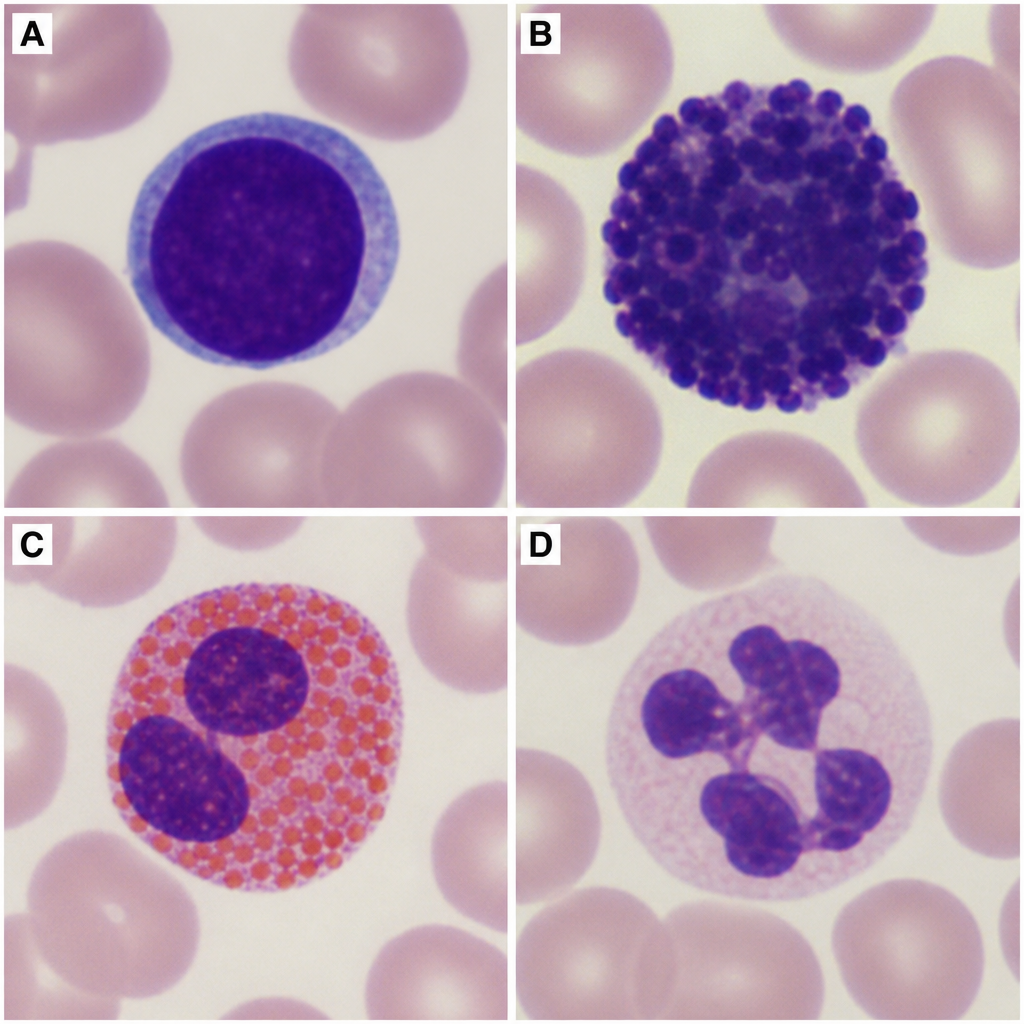
Which cell count is characteristically increased following splenectomy?
What parameter is used to measure the size of red blood cells?
Fetal erythropoietin production is inhibited by?
What is the normal life span of a red blood cell?
Platelet aggregation is caused by all of the following, except?
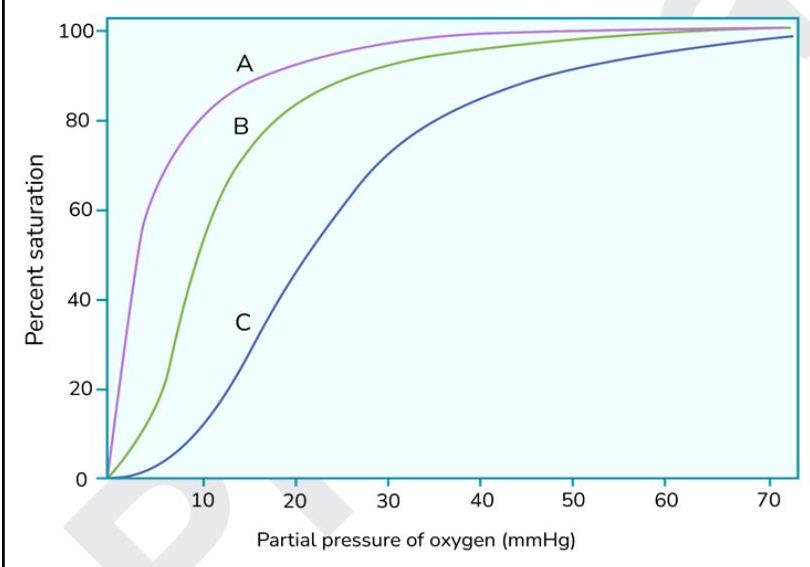
Explanation: ### Explanation **1. Understanding the Concept (Why A is correct):** Fetal Hemoglobin (HbF, $\alpha_2\gamma_2$) has a higher affinity for oxygen than adult hemoglobin (HbA, $\alpha_2\beta_2$), which is essential for oxygen transfer across the placenta. However, shortly before birth, a "switch" from $\gamma$-globin to $\beta$-globin synthesis begins. At birth, HbF constitutes approximately **60–80%** of total hemoglobin. This level declines rapidly as HbA production takes over. By **6 months of age**, the concentration of HbF typically drops to about **5–10%**. By the end of the first year (12 months), it reaches near-adult levels of less than 1–2%. **2. Analysis of Incorrect Options:** * **Option B (30%):** This level is typically seen around the age of 2–3 months as the rapid decline from birth levels occurs. * **Option C (50%):** This is too high for a 6-month-old; such levels are usually seen within the first few weeks of life. * **Option D (60%):** This represents the physiological level at the time of birth (full-term neonate). **3. High-Yield Clinical Pearls for NEET-PG:** * **The Switch:** The transition from HbF to HbA is clinically significant in hemoglobinopathies. Symptoms of **Sickle Cell Anemia** and **$\beta$-Thalassemia Major** typically manifest at **6 months of age**, coinciding with the physiological decline of protective HbF. * **P50 Value:** HbF has a lower P50 (approx. 19 mmHg) compared to HbA (approx. 27 mmHg), reflecting its higher oxygen affinity. * **2,3-BPG:** HbF binds poorly to 2,3-BPG because the $\gamma$-chain lacks the positively charged binding sites found in the $\beta$-chain. * **HbA2:** Adult hemoglobin also contains a small fraction of HbA2 ($\alpha_2\delta_2$), normally <3%.
Explanation: **Explanation:** Interleukin-1 (IL-1) is a key pro-inflammatory cytokine primarily produced by activated macrophages and monocytes. It serves as a critical mediator of the innate and adaptive immune responses. **1. Why Option A is Correct:** IL-1 acts as a "co-stimulator" for T-cell activation. When an Antigen-Presenting Cell (APC) presents an antigen to a T-helper (CD4+) cell, it releases IL-1. This cytokine induces the T-cell to express receptors for **Interleukin-2 (IL-2)** and stimulates the secretion of IL-2 itself, leading to T-cell proliferation and clonal expansion. **2. Why Other Options are Incorrect:** * **Option B:** IL-1 actually **stimulates** B-lymphocytes, promoting their proliferation and differentiation into antibody-secreting plasma cells. * **Option C:** IL-1 is a potent **pro-inflammatory** mediator. It increases the expression of adhesion molecules (like E-selectin) on vascular endothelium, thereby **promoting** the chemotaxis and emigration of neutrophils and macrophages to the site of infection. * **Option D:** IL-1 **increases** fibroblast activity (leading to collagen synthesis/scarring) and stimulates osteoclasts, which **increases** bone resorption. **High-Yield Clinical Pearls for NEET-PG:** * **Endogenous Pyrogen:** IL-1 is a primary mediator of fever; it acts on the anterior hypothalamus to increase prostaglandin E2 (PGE2) production, raising the thermal set-point. * **Acute Phase Response:** Along with IL-6 and TNF-α, IL-1 stimulates the liver to produce acute-phase reactants (e.g., CRP, Fibrinogen). * **Anakinra:** This is a recombinant IL-1 receptor antagonist used clinically in the treatment of Rheumatoid Arthritis.
Explanation: **Explanation:** The coagulation cascade is divided into the intrinsic, extrinsic, and common pathways. The **extrinsic pathway** is the shortest and simplest pathway, triggered by vascular injury that releases **Tissue Factor (Factor III)**. **Why Factor VII is correct:** Factor VII is the only clotting factor unique to the extrinsic pathway. When tissue damage occurs, Tissue Factor (TF) binds with Factor VII in the presence of calcium to form the **TF-VIIa complex**. This complex then directly activates Factor X, marking the beginning of the common pathway. Because Factor VII is the sole circulating factor dedicated to this specific limb of the cascade, it is the correct answer. **Analysis of Incorrect Options:** * **Factor II (Prothrombin):** This is part of the **Common Pathway**. Prothrombin is converted to thrombin by the prothrombinase complex (Xa, Va, Ca²⁺, and phospholipids). * **Factor V:** This is a cofactor in the **Common Pathway**. It works with Factor Xa to accelerate the conversion of prothrombin to thrombin. * **Factor VIII:** This is a cofactor involved exclusively in the **Intrinsic Pathway**. A deficiency in Factor VIII leads to Hemophilia A. **High-Yield NEET-PG Pearls:** * **Prothrombin Time (PT):** Measures the extrinsic and common pathways. Since Factor VII has the **shortest half-life** (approx. 4–6 hours), PT is the first lab value to become prolonged in Vitamin K deficiency or liver disease. * **Warfarin Monitoring:** PT/INR is used to monitor Warfarin therapy because Warfarin primarily inhibits the synthesis of Vitamin K-dependent factors (II, VII, IX, X), with Factor VII being affected first. * **Mnemonic:** "The **Extrinsic** pathway is **7**-eleven" (Factor VII is the key player).
Explanation: The coagulation cascade is divided into the Intrinsic, Extrinsic, and Common pathways. Understanding the specific factors involved in each is high-yield for NEET-PG. ### **Explanation of the Correct Answer** **Option A** is correct because the **Intrinsic Pathway** (Contact Activation Pathway) is initiated when blood comes into contact with a negatively charged surface (like collagen or glass). It involves: * **Contact Factors:** Factor XII (Hageman factor), **Pre-kallikrein**, and **High Molecular Weight Kininogen (HMWK)**. * **Cascade Factors:** Factor XI, Factor IX, and **Factor VIII** (which acts as a co-factor for IXa). The sequence follows: XII → XI → IX (+VIII) → X. ### **Analysis of Incorrect Options** * **Options B, C, and D** are incorrect because they include **Factor VII** and/or **Tissue Factor (Factor III)**. These are the hallmark components of the **Extrinsic Pathway**. * **Factor X** (mentioned in C and D) is the starting point of the **Common Pathway**, where both intrinsic and extrinsic pathways converge to eventually convert prothrombin to thrombin. ### **Clinical Pearls for NEET-PG** 1. **Laboratory Correlation:** The Intrinsic pathway is measured by **aPTT** (Activated Partial Thromboplastin Time), while the Extrinsic pathway is measured by **PT** (Prothrombin Time). 2. **The "12, 11, 9, 8" Rule:** A simple mnemonic to remember the intrinsic pathway factors in order of activation (skipping 10, which is common). 3. **HMWK & Pre-kallikrein:** While essential for *in vitro* clotting (aPTT), deficiencies in these or Factor XII usually do not cause clinical bleeding, unlike Factor VIII (Hemophilia A) or IX (Hemophilia B) deficiencies. 4. **Calcium (Factor IV):** Required for all steps except the initial stages of the intrinsic pathway.
Explanation: **Explanation:** **1. Why Co-dominance is correct:** The ABO blood group system is a classic example of **co-dominance** and **multiple allelism**. In co-dominance, both alleles in a heterozygote are fully expressed, and neither is masked by the other. The ABO system is governed by the *I* gene, which has three alleles: $I^A$, $I^B$, and $i$. * Alleles $I^A$ and $I^B$ are dominant over $i$. * However, when $I^A$ and $I^B$ are present together (Genotype $I^AI^B$), both are expressed equally, resulting in the production of both A and B antigens on the red blood cell surface. This results in the **AB blood group**. **2. Why other options are incorrect:** * **Autosomal Dominant/Recessive:** While the inheritance follows Mendelian principles (A and B are dominant over O), the term "Autosomal Dominant" usually refers to a trait where a single dominant allele determines the phenotype regardless of the other. ABO is more complex due to the simultaneous expression of two dominant alleles (Co-dominance). * **Mitochondrial Inheritance:** This refers to traits passed only from the mother to all offspring via mitochondrial DNA. ABO blood groups are nuclear-encoded and inherited from both parents. **3. High-Yield Clinical Pearls for NEET-PG:** * **Universal Donor:** O negative (lacks A, B, and Rh antigens). * **Universal Recipient:** AB positive (lacks anti-A, anti-B, and anti-Rh antibodies). * **Bombay Phenotype:** A rare condition where the H-substance is missing; the individual phenotypically tests as 'O' but cannot receive O-group blood because they produce anti-H antibodies. * **Chromosome Location:** The ABO gene is located on the long arm of **Chromosome 9 (9q34.2)**.
Explanation: **Explanation:** The spleen acts as a major reservoir for blood cells, particularly platelets. Under normal physiological conditions, approximately **one-third (30-33%) of the total body platelet pool** is sequestered within the splenic red pulp. Following a **splenectomy**, this sequestration site is removed, leading to a rapid redistribution of platelets into the systemic circulation. This results in **thrombocytosis** (increased platelet count), which typically peaks 1–2 weeks post-surgery. While the count often stabilizes over months, it may remain higher than the patient's baseline indefinitely. **Analysis of Options:** * **Platelets (Correct):** The immediate loss of the splenic reservoir causes a characteristic and significant rise in circulating platelets. * **Lymphocytes:** While the spleen is a lymphoid organ, peripheral lymphocyte counts do not show a characteristic or sustained increase post-splenectomy; rather, there is a loss of specific B-cell populations (marginal zone B-cells). * **Monocytes:** Monocyte counts are not significantly or characteristically altered by the absence of the spleen. * **Neutrophils:** A transient, mild neutrophilia may occur immediately post-operatively due to surgical stress and demargination, but it is not the hallmark hematological change associated with splenectomy. **Clinical Pearls for NEET-PG:** 1. **Howell-Jolly Bodies:** These are nuclear remnants in RBCs that are normally removed by the spleen; their presence on a peripheral smear is a classic sign of asplenia. 2. **OPSI (Overwhelming Post-Splenectomy Infection):** Patients are at high risk for infections by encapsulated organisms (*S. pneumoniae, H. influenzae, N. meningitidis*). 3. **Other Smear Findings:** Look for Pappenheimer bodies, Heinz bodies, and target cells post-splenectomy.
Explanation: ### Explanation **Correct Option: A. MCV (Mean Corpuscular Volume)** MCV is the parameter that directly measures the **average volume (size)** of a single red blood cell. It is calculated by dividing the Packed Cell Volume (PCV/Hematocrit) by the total RBC count. * **Formula:** $MCV = \frac{Hematocrit (\%) \times 10}{RBC\ count\ (millions/mm^3)}$ * **Normal Range:** 82–98 femtoliters (fL). * **Clinical Significance:** It is the primary index used to classify anemias into **Microcytic** (e.g., Iron Deficiency Anemia), **Normocytic**, or **Macrocytic** (e.g., Vitamin B12/Folate deficiency). **Incorrect Options:** * **B. MCHC (Mean Corpuscular Hemoglobin Concentration):** This measures the average concentration of hemoglobin in a given volume of packed red cells. It indicates the "intensity" of the red color (hypochromic vs. normochromic). * **C. ESR (Erythrocyte Sedimentation Rate):** This is a non-specific marker of inflammation. It measures how quickly RBCs sink to the bottom of a tube, influenced largely by plasma proteins like fibrinogen. * **D. MCH (Mean Corpuscular Hemoglobin):** This measures the average **weight** of hemoglobin in a single RBC. While it often correlates with size, it measures mass, not volume. **High-Yield Clinical Pearls for NEET-PG:** * **RDW (RBC Distribution Width):** While MCV measures average size, RDW measures the **variation** in size (Anisocytosis). A high RDW with low MCV is classic for early Iron Deficiency Anemia. * **Mentzer Index:** $MCV / RBC\ count$. If <13, it suggests Thalassemia trait; if >13, it suggests Iron Deficiency Anemia. * **Macrocytosis without Anemia:** Often seen in chronic alcoholism or hypothyroidism.
Explanation: **Explanation:** The primary stimulus for erythropoietin (EPO) production, both in the fetus and the adult, is **hypoxia**. However, various hormones modulate this response. **1. Why Estrogen is the Correct Answer:** Estrogen has an **inhibitory effect** on erythropoiesis. It acts by suppressing the production of erythropoietin in the liver (the primary site in the fetus) and kidneys. Additionally, estrogen can directly inhibit the proliferation of erythroid stem cells in the bone marrow. This hormonal difference is a key reason why adult females typically have lower hemoglobin levels and red cell counts compared to males. **2. Analysis of Incorrect Options:** * **Testosterone (A):** Testosterone **stimulates** EPO production and enhances the response of the bone marrow to EPO. This is why males have higher hematocrit levels post-puberty. * **Cortisol (C):** Glucocorticoids generally have a permissive or stimulatory effect on erythropoiesis; they do not inhibit fetal EPO production. * **Hypoxia (D):** Hypoxia is the **chief physiological stimulant** for EPO production. Low oxygen tension triggers Hypoxia-Inducible Factor (HIF-1α), which upregulates the EPO gene. **3. High-Yield Clinical Pearls for NEET-PG:** * **Site of EPO Production:** In the **fetus**, EPO is primarily produced in the **liver** (perisinusoidal cells). In **adults**, approximately 85-90% is produced in the **kidneys** (peritubular interstitial cells/fibroblasts) and 10-15% in the liver. * **Switching:** The transition from hepatic to renal EPO production occurs around the time of birth. * **Polycythemia:** Neonates often have high hemoglobin levels (Physiological Polycythemia) due to the relatively hypoxic intrauterine environment stimulating high EPO levels.
Explanation: **Explanation:** The correct answer is **B. 120 days**. **Why it is correct:** The average life span of a mature human erythrocyte (RBC) in peripheral circulation is approximately **120 days**. Unlike most cells, mature RBCs lack a nucleus, mitochondria, and ribosomes. As they age, their metabolic enzymes (like G6PD) deplete, and their cell membranes lose flexibility. Eventually, these "senescent" cells become fragile and are trapped and destroyed by the splenic sinusoids (the "graveyard of RBCs") via the mononuclear phagocytic system. **Why other options are incorrect:** * **A. 100 days:** While close, this is shorter than the physiological average for a healthy adult. * **C. 60 days:** This is significantly reduced. A life span of 60 days or less is typically seen in hemolytic anemias or certain hemoglobinopathies (e.g., Sickle Cell Anemia). * **D. 160 days:** This exceeds the functional capacity of the RBC’s metabolic machinery. **NEET-PG High-Yield Pearls:** 1. **Fetal RBC Life Span:** In neonates, the RBC life span is shorter, approximately **60–90 days**, contributing to physiological jaundice. 2. **Storage Life:** In a blood bank (CPDA-1 medium), RBCs can be stored for up to **35 days**. 3. **HbA1c Correlation:** The 120-day life span is the physiological basis for using Glycated Hemoglobin (HbA1c) to monitor glycemic control over the preceding 2–3 months. 4. **Erythropoiesis:** It takes approximately **7 days** for a committed stem cell to become a mature reticulocyte.
Explanation: ### Explanation The correct answer is **Prostacyclin (PGI2)**. **1. Why Prostacyclin (PGI2) is the correct answer:** Hemostasis is a balance between pro-aggregatory and anti-aggregatory factors. **Prostacyclin (PGI2)** is synthesized by healthy vascular endothelial cells. It acts as a potent **inhibitor of platelet aggregation** and a vasodilator. It functions by increasing intracellular **cAMP** levels within platelets, which stabilizes them and prevents activation. This ensures that blood clots do not form on healthy vessel walls. **2. Analysis of Incorrect Options (Pro-aggregatory factors):** * **Thromboxane A2 (TXA2):** Produced by activated platelets via the COX-1 pathway. It is a powerful vasoconstrictor and a primary mediator of platelet aggregation (it decreases cAMP). * **Serotonin (5-HT):** Released from the dense granules of activated platelets. It acts as a local vasoconstrictor and recruits more platelets to the site of injury. * **Thrombin:** Perhaps the most potent activator of platelets. It acts through Protease-Activated Receptors (PAR) to trigger a shape change and the release of granule contents, leading to rapid aggregation. **3. NEET-PG High-Yield Clinical Pearls:** * **The cAMP Rule:** Factors that **increase cAMP** (like PGI2) inhibit platelets; factors that **decrease cAMP** (like TXA2) promote aggregation. * **Aspirin Mechanism:** Low-dose aspirin irreversibly inhibits COX-1, shifting the balance in favor of PGI2 (from endothelium) over TXA2 (from platelets), leading to its anti-thrombotic effect. * **ADP:** Another major aggregator released from dense granules; it is the target of drugs like **Clopidogrel** (P2Y12 receptor blockers). * **GP IIb/IIIa:** This receptor is the "final common pathway" for platelet aggregation, as it binds fibrinogen to link platelets together.
Composition and Functions of Blood
Practice Questions
Erythrocytes and Hemoglobin
Practice Questions
Leukocytes and Immune Function
Practice Questions
Platelets and Hemostasis
Practice Questions
Blood Groups and Transfusion
Practice Questions
Coagulation and Fibrinolysis
Practice Questions
Hematopoiesis
Practice Questions
Innate Immunity
Practice Questions
Adaptive Immunity
Practice Questions
Immunological Memory and Tolerance
Practice Questions
Get full access to all questions, explanations, and performance tracking.
Start For Free