Aminophylline inhibits which of the following enzymes?
The activation of muscarinic receptors in bronchiolar smooth muscle is associated with:
Which of the following is NOT a beta-2 agonist?
All of the following drugs are used for the treatment of urinary incontinence except:
Which of the following antimicrobials should not be given to a chronic asthmatic patient managed on theophylline therapy?
What is a contraindication of antimuscarinic drugs?
Maximum effect of bronchodilatation in asthma is caused by -
Tamsulosin belongs to
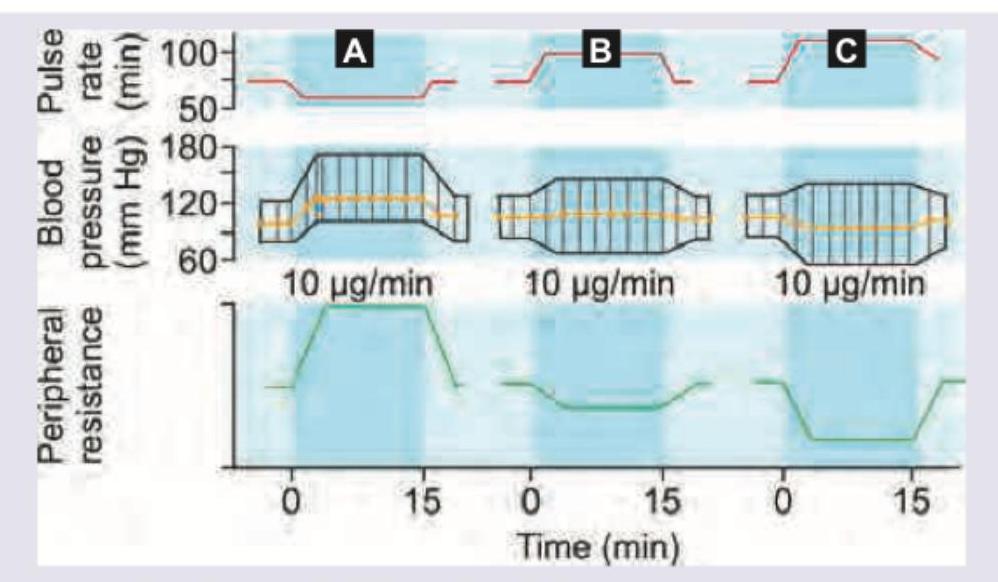
Which of the following statement is correct regarding the graph shown? (AllMS Nov 2016)
What is an atypical side effect of montelukast?
Explanation: ***Phosphodiesterase*** - **Aminophylline** is a methylxanthine derivative that primarily acts as a **phosphodiesterase (PDE) inhibitor** [1], [2]. - By inhibiting PDE, aminophylline increases intracellular levels of **cAMP** and **cGMP**, leading to **bronchodilation** and other effects [2], [3]. *MAO* - **MAO (monoamine oxidase)** inhibitors are antidepressants that prevent the breakdown of neurotransmitters like serotonin, norepinephrine, and dopamine. - Aminophylline does not significantly inhibit MAO. *Alcohol dehydrogenase* - **Alcohol dehydrogenase** is an enzyme responsible for metabolizing alcohol (ethanol) in the liver. - Aminophylline has no direct inhibitory effect on alcohol dehydrogenase. *Cytochrome P450* - **Cytochrome P450 (CYP450)** enzymes are a group of enzymes primarily involved in the metabolism of drugs and other xenobiotics in the liver [4]. - While aminophylline (and its active metabolite theophylline) can be metabolized by and *affect* certain **CYP450** isoenzymes (e.g., CYP1A2), it does not act as a general inhibitor of the entire CYP450 system; its primary therapeutic action is not through CYP450 inhibition.
Explanation: ***Increase in IP3 and DAG*** - **Muscarinic receptors** on bronchial smooth muscle (M3 receptors) are **Gq protein-coupled receptors** [1]. - Activation of **Gq proteins** leads to the activation of **phospholipase C**, which hydrolyzes **PIP2** into **IP3** and **DAG** [1, 3]. *Inhibition of protein kinase C* - **DAG** (diacylglycerol), produced from the breakdown of PIP2, **activates protein kinase C (PKC)**, rather than inhibiting it [2]. - This activation of PKC contributes to downstream cellular responses, including smooth muscle contraction [1]. *Activation of adenylyl cyclase* - **Adenylyl cyclase** is typically activated by **Gs protein-coupled receptors**, leading to an increase in **cAMP**. - **Muscarinic (M3) receptors** are **Gq-coupled**, so they do not activate adenylyl cyclase; instead, they operate through the phospholipase C pathway [1, 3]. *Opening of Na+/K+ cation channels* - While some neurotransmitter receptors are **ligand-gated ion channels** (e.g., nicotinic receptors), muscarinic receptors are **G protein-coupled receptors** [1]. - Their activation does not directly lead to the opening of **Na+/K+ cation channels**; rather, they initiate intracellular signaling cascades.
Explanation: ***Ketotifen*** - **Ketotifen** is an **oral anti-allergic drug** that acts as a **mast cell stabilizer** and **H1-antihistamine**, not a beta-2 agonist. - It is used for **prophylactic treatment** of asthma and allergic conditions, working through different mechanisms than bronchodilators. *Terbutaline* - **Terbutaline** is a **short-acting beta-2 agonist (SABA)** used for bronchodilation in asthma and COPD [2]. - Available in **oral, inhaled, and injectable forms** for rapid relief of bronchospasm. *Salbutamol* - **Salbutamol** (also known as albuterol) is a **short-acting beta-2 agonist (SABA)** and the most widely used rescue inhaler for asthma [1], [2]. - Provides **rapid bronchodilation** by stimulating beta-2 receptors in airway smooth muscles [3]. *Bambuterol* - **Bambuterol** is a **long-acting beta-2 agonist (LABA)** that is a prodrug of **terbutaline**. - It is slowly converted to the active form in the body, providing **sustained bronchodilation** for maintenance therapy.
Explanation: ***Ipratropium*** - **Ipratropium** is a short-acting muscarinic antagonist primarily used as a **bronchodilator** in obstructive lung diseases. - While it has anticholinergic properties, it is not typically used for **urinary incontinence** due to its limited systemic absorption and short duration of action, making it less effective for bladder control compared to other agents. *Oxybutynin* - **Oxybutynin** is a commonly prescribed **muscarinic antagonist** that acts by relaxing the bladder detrusor muscle, increasing bladder capacity and reducing involuntary contractions. - It is effective in treating **overactive bladder** and urge incontinence. *Tolterodine* - **Tolterodine** is a **muscarinic receptor antagonist** that specifically targets M2 and M3 receptors in the bladder, reducing bladder hyperreactivity. - It is used for the symptomatic treatment of **urge incontinence** and overactive bladder. *Darifenacin* - **Darifenacin** is a highly M3-selective muscarinic receptor antagonist, which means it primarily blocks the M3 receptors responsible for **detrusor muscle contraction**. - Its selectivity helps minimize side effects common to less selective anticholinergics and is used for the treatment of **overactive bladder** with symptoms of urgency, frequency, and urge incontinence.
Explanation: ***Erythromycin*** - **Erythromycin**, a macrolide antibiotic, is a potent inhibitor of the **cytochrome P450 (CYP450) enzyme system**, specifically **CYP1A2**, which is the primary enzyme responsible for theophylline metabolism. - Co-administration of erythromycin can significantly **increase theophylline levels**, leading to toxicity such as **nausea, vomiting, seizures, or cardiac arrhythmias.** - This interaction is clinically significant and erythromycin should be avoided in patients on theophylline therapy. *Amoxicillin* - **Amoxicillin** is a penicillin-class antibiotic that has minimal interaction with theophylline metabolism. - It does not significantly inhibit the **CYP1A2 enzyme** and is generally considered safe to use with theophylline. *Cefotaxime* - **Cefotaxime**, a third-generation cephalosporin, does not significantly affect the metabolism of theophylline. - It does not inhibit **CYP1A2 enzymes** and is safe for use in patients on theophylline therapy. *Cotrimoxazole* - **Cotrimoxazole** (trimethoprim/sulfamethoxazole) may slightly increase theophylline levels by inhibiting some CYP450 isoenzymes, but its effect is generally less pronounced than that of erythromycin. - While caution and monitoring are advised, it is not as strongly contraindicated as erythromycin due to a lower risk of significant toxicity in most cases.
Explanation: ***Correct: Glaucoma*** - Antimuscarinic drugs cause **mydriasis (pupil dilation)** and **cycloplegia**, which increases intraocular pressure, especially in individuals with **narrow-angle glaucoma**. - In narrow-angle glaucoma, pupil dilation causes the peripheral iris to bunch up and block the trabecular meshwork, obstructing aqueous humor outflow. - This can precipitate an **acute angle-closure glaucoma attack**, a medical emergency, making glaucoma an **absolute contraindication** to antimuscarinic drugs. - This is one of the most important contraindications to remember for all anticholinergic medications. *Incorrect: Peptic ulcer* - Antimuscarinic drugs were **historically used to treat** peptic ulcer disease by reducing gastric acid secretion and gastrointestinal motility. - While they are no longer first-line therapy (replaced by proton pump inhibitors and H2 blockers), peptic ulcer is **not a contraindication**. - The main reason they fell out of favor was due to side effects and less efficacy compared to modern alternatives, not because they worsen the condition. *Incorrect: Asthma* - Some antimuscarinics (e.g., **ipratropium, tiotropium**) are actually used as **bronchodilators** in asthma and COPD management. - They work by blocking muscarinic receptors in airway smooth muscle, causing bronchodilation. - Therefore, asthma is a **treatment indication**, not a contraindication. *Incorrect: Urinary incontinence* - Antimuscarinic drugs are the **primary pharmacological treatment** for overactive bladder and urge incontinence. - They work by blocking M3 muscarinic receptors in the detrusor muscle, reducing bladder contractions. - Common drugs include oxybutynin, tolterodine, and solifenacin. - Urinary incontinence is a **treatment indication**, not a contraindication.
Explanation: ***Beta 2-Agonist*** - **Beta-2 agonists** directly relax bronchial smooth muscle by stimulating beta-2 adrenergic receptors, leading to significant and rapid bronchodilation. - This direct action on airway muscle relaxation makes them the most potent and fastest-acting bronchodilators for acute asthma symptoms. *Corticosteroids* - **Corticosteroids** reduce airway inflammation and hypersensitivity over time but do not provide immediate or maximal bronchodilation. - Their primary role is in long-term control of asthma, preventing exacerbations rather than acutely reversing bronchospasm. *Theophylline* - **Theophylline** is a methylxanthine that causes modest bronchodilation by inhibiting phosphodiesterase and blocking adenosine receptors. - It has a narrow therapeutic index, numerous side effects, and is less effective than beta-2 agonists for bronchodilation. *Anticholinergic* - **Anticholinergics** (e.g., ipratropium) block muscarinic receptors, preventing acetylcholine-induced bronchoconstriction. - They provide bronchodilation but are generally less potent and have a slower onset of action compared to beta-2 agonists in asthma.
Explanation: ***α1a receptor blockers*** - Tamsulosin is a **selective alpha-1a adrenergic receptor blocker**, which is primarily found in the smooth muscle of the prostate, bladder neck, and urethra. - By blocking these receptors, it causes **relaxation of the smooth muscle**, leading to improved urine flow in conditions like benign prostatic hyperplasia (BPH). *α1a receptor agonist* - An **agonist** would activate the alpha-1a receptors, leading to **contraction of smooth muscle**, which would worsen urinary symptoms in BPH. - This action is contrary to the therapeutic effect of tamsulosin. *β-blockers* - **Beta-blockers** primarily affect the heart and blood vessels by blocking beta-adrenergic receptors and are used for conditions like hypertension or angina. - They do not directly target the alpha-1a receptors in the prostate and would not alleviate BPH symptoms. *5α-reductase inhibitors* - **5-alpha reductase inhibitors** (e.g., finasteride, dutasteride) reduce the size of the prostate by inhibiting the conversion of testosterone to dihydrotestosterone. - They have a different mechanism of action and are used for long-term management of BPH to reduce prostate volume, whereas tamsulosin provides symptomatic relief.
Explanation: ***Drug acting on graph B is isoproterenol*** - Graph B shows a definite **increase in pulse rate** and a **decrease in peripheral resistance**, while blood pressure remains largely unchanged due to the combined effects. - **Isoproterenol** is a non-selective β-adrenergic agonist that causes increased heart rate (β1 effect) and vasodilation leading to decreased peripheral resistance (β2 effect). - This unique hemodynamic profile is characteristic of isoproterenol and distinguishes it from other catecholamines. *Drug in graph A is epinephrine* - Graph A shows a **decrease in pulse rate**, which is **not characteristic** of epinephrine at the dose shown (10 μg/min). - Epinephrine typically causes **tachycardia** due to β1-adrenergic stimulation, not bradycardia. - The cardiovascular profile in graph A does not match epinephrine's expected effects. *Effect on heart in graph A can be overcome by antimuscarinic* - The decreased pulse rate in graph A suggests **reflex bradycardia** or parasympathetic stimulation. - However, without knowing the actual drug, we cannot definitively state whether antimuscarinic agents would reverse this effect. - This option makes assumptions that cannot be verified from the graph alone. *Drug acting on graph C is nor-epinephrine* - Graph C shows **increased pulse rate** and **decreased peripheral resistance** with slight drop in blood pressure. - **Norepinephrine** primarily acts on α1-receptors, causing **vasoconstriction and increased peripheral resistance**, not decreased. - Norepinephrine would also increase blood pressure significantly, which contradicts the graph. - This cardiovascular profile does not match norepinephrine.
Explanation: ***Churg-Strauss syndrome*** - The apparent development of **Churg-Strauss syndrome** (eosinophilic granulomatosis with polyangiitis) has been reported in patients treated with montelukast, although it is believed to be related more to the unmasking of the disease rather than a direct drug effect. - This typically occurs when **corticosteroids** are tapered or withdrawn as montelukast takes over, revealing the underlying vasculitis. *Goodpasture syndrome* - **Goodpasture syndrome** is an autoimmune disease causing rapidly progressive glomerulonephritis and pulmonary hemorrhage, characterized by anti-glomerular basement membrane (GBM) antibodies. - There is no established association between montelukast use and the development of Goodpasture syndrome. *Membranous glomerulonephritis* - **Membranous glomerulonephritis** is a common cause of nephrotic syndrome, characterized by immune complex deposition on the glomerular basement membrane. - This condition is not typically linked to the use of montelukast. *Bronchial asthma* - **Bronchial asthma** is the condition montelukast is used to treat, acting as a leukotriene receptor antagonist to reduce inflammation and bronchoconstriction. - It is a primary indication for the drug, not a side effect.
Get full access to all questions, explanations, and performance tracking.
Start For Free