Which drug can be safely used in lactating mothers?
What is the minimum dose of tetracycline that causes discoloration of teeth?
What is the most dangerous effect of belladonna in very young children?
Which drug is implicated for prolonging the QT interval in a premature baby?
A premature infant is born with a patent ductus arteriosus. Its closure can be stimulated by administration of:
All of the following are reasons for reducing drug dosage in the elderly, EXCEPT:
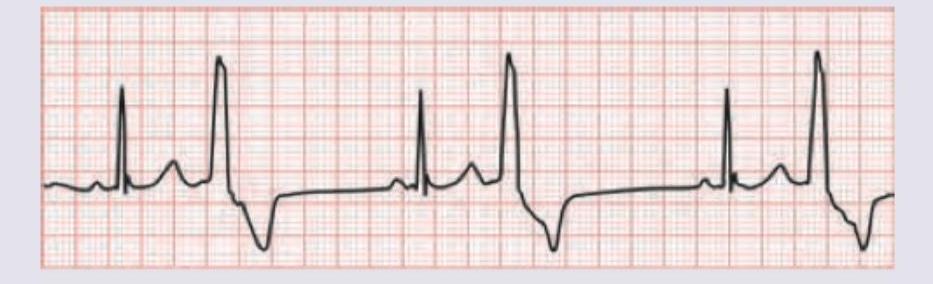
A 1-year-old child with moderate VSD is scheduled for surgery next month. For control of symptoms of CHF, a drug $X$ was given. The uneducated parents gave double the dose of drug resulting in the child developing listlessness and poor feeding. Based on the ECG shown, what is the drug prescribed and its side effect?
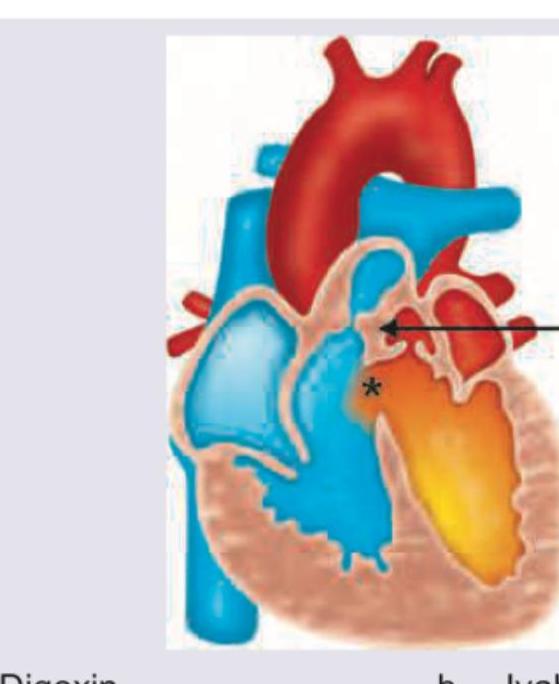
A neonate presents with a congenital heart disease as shown below. Which drug should be started immediately? (Recent NEET Pattern 2016-17)
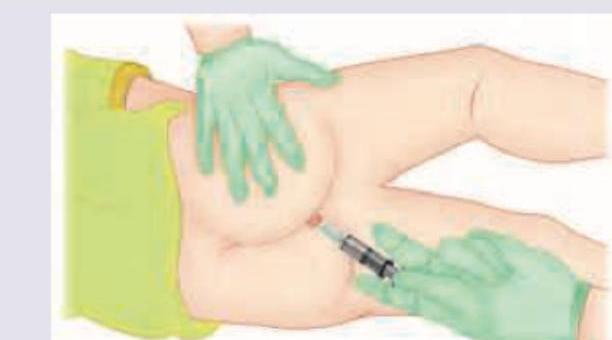
A 3-year-old child presents with febrile seizures. All of the following are correct about rectal administration of diazepam except:
Which of the following statements are correct about oral rotavirus vaccines? I. The storage should be at 2-8°C II. The vaccine should be used within 2 hours of reconstitution or opening III. Past history of intussusception is a contraindication IV. The vaccine can be given if the baby has ongoing diarrhoea Select the answer using the code given below :
Explanation: Explanation: The safety of drugs during lactation depends on the drug’s concentration in breast milk and its potential toxicity to the infant [2]. Erythromycin is considered the safest option among the choices provided. It is excreted in breast milk in very small amounts, and the American Academy of Pediatrics (AAP) classifies it as compatible with breastfeeding. While there is a theoretical risk of infantile hypertrophic pyloric stenosis (IHPS) with systemic macrolide use, it remains a preferred choice for maternal infections.Analysis of Incorrect Options: * Chloramphenicol (Option B): It is strictly contraindicated during lactation. It can cause bone marrow suppression in the infant and carries the risk of "Gray Baby Syndrome" due to the infant's immature glucuronidation pathway [1], [3].* Ciprofloxacin (Option C): Fluoroquinolones are generally avoided during breastfeeding due to concerns regarding arthropathy and potential damage to developing cartilage in the infant.* Ampicillin (Option A): While penicillins are generally safe, they are more likely than erythromycin to cause diarrhea, candidiasis, or allergic sensitization in the nursing infant [1].High-Yield Clinical Pearls for NEET-PG: * Safe Antibiotics in Lactation: Penicillins [1], Cephalosporins, and Erythromycin.* Drugs Contraindicated in Lactation: Lithium, Radioactive isotopes, Methotrexate, Ergotamine, and Amiodarone.* Rule of Thumb: Drugs with high molecular weight, high protein binding, and low lipid solubility are less likely to cross into breast milk [2].* Tetracyclines: Usually avoided for long-term use as they may cause dental staining or inhibit bone growth in the infant [2].
Explanation: **Explanation:** The correct answer is **B. 20 mg/kg body weight.** **Underlying Medical Concept:** Tetracyclines are known for their high affinity for calcium ions. They form a stable **tetracycline-calcium orthophosphate complex**, which is deposited in tissues undergoing active calcification, such as developing teeth and bones. When administered during the period of tooth mineralization (from the second trimester of pregnancy to 8 years of age), these complexes cause permanent **yellow-brown discoloration** and enamel hypoplasia. Clinical studies and pharmacological data indicate that a cumulative dose or a daily dose reaching **20 mg/kg** is the threshold at which significant clinical staining becomes evident. **Analysis of Options:** * **A. 10 mg/kg:** This dose is generally considered below the threshold for significant permanent staining, though any exposure during critical periods carries a risk. * **C & D. 30 mg/kg and 40 mg/kg:** While these higher doses will certainly cause discoloration, they are not the *minimum* dose required to trigger the effect. The question specifically asks for the lowest threshold (minimum dose). **High-Yield Clinical Pearls for NEET-PG:** * **Age Contraindication:** Tetracyclines are strictly contraindicated in children below **8 years** of age and in **pregnant women** (after the 4th month of gestation) to avoid dental staining and inhibition of bone growth. * **Exception:** **Doxycycline** is now considered safer than older tetracyclines and can be used for short durations (up to 21 days) in children for specific indications like Rickettsial infections (Rocky Mountain Spotted Fever), as it binds less readily to calcium. * **Mechanism of Discoloration:** The initial yellow stain is fluorescent under UV light; over time, it oxidizes to a non-fluorescent brown color due to light exposure.
Explanation: ### Explanation **Correct Option: D. Hyperthermia** Belladonna alkaloids (like Atropine and Scopolamine) are competitive antagonists of muscarinic receptors. In children, the most dangerous effect is **Atropine Fever** or severe hyperthermia. This occurs due to two primary mechanisms: 1. **Suppression of Sweating:** Atropine blocks $M_3$ receptors on eccrine sweat glands (which are under sympathetic cholinergic control). This inhibits evaporative heat loss. 2. **Central Effect:** It acts on the hypothalamus to dysregulate the body’s thermostat. Children are particularly susceptible because their surface-area-to-body-mass ratio is high, and their thermoregulatory centers are less mature. In toxic doses, this can lead to fatal hyperpyrexia. **Analysis of Incorrect Options:** * **A. Dehydration:** While belladonna causes "dryness" (dry mouth, dry eyes), it does not cause systemic fluid loss or dehydration. The danger arises from the inability to sweat, not the loss of body fluids. * **B. Hallucination:** Central nervous system effects like "Atropine madness" (delirium, hallucinations) are common in toxicity, but they are rarely life-threatening compared to the metabolic crisis of hyperthermia. * **C. Hypertension:** Atropine typically causes tachycardia. While a slight rise in blood pressure may occur due to increased heart rate, it is not the primary or most dangerous pediatric complication. **NEET-PG High-Yield Pearls:** * **Mnemonic for Atropine Poisoning:** "Red as a beet (flushing), Dry as a bone (anhidrosis), Blind as a bat (mydriasis), Mad as a hatter (delirium), and **Hot as a hare (hyperthermia)**." * **Antidote:** **Physostigmine** (a tertiary amine carbamate) is the drug of choice for belladonna poisoning as it crosses the blood-brain barrier to reverse both central and peripheral effects. * **Contraindication:** Atropine is contraindicated in patients with narrow-angle glaucoma and prostatic hypertrophy.
Explanation: **Explanation:** **Cisapride** is a prokinetic agent that acts as a serotonin (5-HT4) receptor agonist. It was historically used for gastroesophageal reflux disease (GERD) in infants. However, it is notorious for causing **QT interval prolongation** and life-threatening ventricular arrhythmias like **Torsades de Pointes**. This occurs because Cisapride blocks the **hERG (human Ether-à-go-go-Related Gene) potassium channels** in the heart, delaying ventricular repolarization. Premature babies are at higher risk due to immature hepatic metabolism (CYP3A4), leading to toxic drug accumulation. **Analysis of Incorrect Options:** * **Domperidone (A):** While it can also prolong the QT interval (especially at high doses or IV), it is generally considered safer than Cisapride and is not the "classic" drug implicated in pediatric QT prolongation in exam scenarios. * **Metoclopramide (B):** This D2-receptor antagonist is associated with extrapyramidal side effects (dystonias) in children, rather than cardiac arrhythmias. * **Omeprazole (D):** A Proton Pump Inhibitor (PPI) that is generally safe regarding cardiac conduction; its primary concerns in neonates are increased risk of infections (NEC or pneumonia). **High-Yield Clinical Pearls for NEET-PG:** * **Drug Interaction:** Cisapride toxicity is significantly increased when co-administered with **CYP3A4 inhibitors** (e.g., Erythromycin, Ketoconazole). * **Regulatory Status:** Due to the risk of sudden cardiac death, Cisapride has been withdrawn or highly restricted in most global markets. * **Other QT-prolonging drugs:** Macrolides, Fluoroquinolones, Antipsychotics (Haloperidol), and Class IA/III Anti-arrhythmics.
Explanation: **Explanation:** The patency of the **Ductus Arteriosus (DA)** in utero is actively maintained by high levels of circulating **Prostaglandins (specifically PGE2)**, which are produced by the placenta and the ductal tissue itself. PGE2 acts on EP4 receptors to cause vasodilation of the ductal smooth muscle. **Why the correct answer is right:** At birth, PGE2 levels normally fall, leading to functional closure of the ductus. In premature infants, if the ductus remains patent (PDA), pharmacological closure can be achieved by administering **Prostaglandin Inhibitors**, specifically non-selective **NSAIDs** like **Indomethacin** or **Ibuprofen**. These drugs inhibit the enzyme Cyclooxygenase (COX), thereby decreasing PGE2 synthesis and allowing the ductus to constrict and close. **Why the incorrect options are wrong:** * **A. Prostaglandin analogue:** Administering PGE1 (Alprostadil) would keep the ductus *open*. This is clinically indicated in cyanotic heart diseases (e.g., Transposition of Great Arteries) where a PDA is life-saving. * **B & C. Estrogen/Anti-estrogen:** These hormonal compounds have no direct physiological role in the acute contraction or relaxation of the ductus arteriosus smooth muscle. **High-Yield Clinical Pearls for NEET-PG:** * **Drug of Choice:** While Indomethacin was the traditional gold standard, **Ibuprofen** is often preferred now due to a lower risk of renal side effects and necrotizing enterocolitis (NEC). * **Alternative:** Recent studies suggest **Paracetamol (Acetaminophen)** is also effective for PDA closure with fewer side effects. * **Mnemonic:** To **K**eep the ductus open, give PGE (Alprostadil). To **C**lose it, give **C**OX inhibitors (Indomethacin).
Explanation: In geriatric pharmacology, the physiological changes associated with aging generally necessitate a reduction in drug dosage to avoid toxicity. [2] **Why Option C is the Correct Answer:** In the elderly, there is actually a **decrease** (blunting) of baroreceptor sensitivity. This means the body’s compensatory mechanism to maintain blood pressure during postural changes is impaired. Consequently, elderly patients are highly susceptible to **orthostatic (postural) hypotension**, especially when taking antihypertensives, diuretics, or TCAs. [3] Since the option states "increased" sensitivity, it is the incorrect physiological statement and thus the correct answer to the "EXCEPT" question. **Analysis of Incorrect Options:** * **A. Lean body mass and low body fat:** Aging is characterized by a decrease in total body water and lean body mass, while the **proportion of body fat increases**. This alters the volume of distribution ($V_d$); water-soluble drugs (e.g., Digoxin) have a smaller $V_d$, leading to higher plasma concentrations, requiring dose reduction. [4] * **B. Reduced renal function:** This is the most predictable change in the elderly. Glomerular filtration rate (GFR) and tubular secretion decline significantly, leading to the accumulation of renally excreted drugs (e.g., Aminoglycosides, Lithium). [4] * **D. Reduced hepatic metabolism:** Hepatic blood flow and mass decrease with age. Phase I reactions (oxidation/reduction) are often impaired, slowing the clearance of drugs like Diazepam and Theophylline. [1] **High-Yield Clinical Pearls for NEET-PG:** * **The "Golden Rule":** "Start low and go slow" when prescribing for the elderly. * **Serum Creatinine Trap:** In the elderly, serum creatinine may remain within "normal" limits due to reduced muscle mass, even if GFR is significantly reduced. Always calculate **Creatinine Clearance (CrCl)**. [2] * **Phase II Reactions:** Conjugation (Glucuronidation) is generally better preserved in the elderly than Phase I reactions. [1] * **Increased Sensitivity:** The elderly show increased CNS sensitivity to benzodiazepines and opioids, even at lower plasma levels.
Explanation: ***Digoxin toxicity, ventricular bigeminy*** - The ECG shows a regular rhythm with alternating normal sinus beats and **premature ventricular contractions (PVCs)**, indicating **ventricular bigeminy**. This is a classic arrhythmia associated with **digoxin toxicity**, especially in a child being treated for CHF. - **Digoxin** is commonly used in pediatric CHF to improve myocardial contractility, and overdose (as suggested by double dosing) can lead to symptoms like **listlessness and poor feeding** due to its narrow therapeutic window and central nervous system effects. *Spironolactone, hypokalemia* - **Spironolactone** is a potassium-sparing diuretic and would primarily cause **hyperkalemia**, not hypokalemia. - While used in CHF, it primarily acts on renal electrolyte balance and would not directly cause ventricular arrhythmias like bigeminy. *Furosemide, hypokalemia* - **Furosemide** is a loop diuretic that can cause **hypokalemia**, which is indeed a risk factor for arrhythmias, but the ECG pattern of **bigeminy** is more specific to **digoxin toxicity**. - While hypokalemia *can* predispose to arrhythmias, furosemide itself is not directly indicated by the bigeminy pattern; the symptoms of toxicity (listlessness, poor feeding) for furosemide overdose would primarily involve dehydration and electrolyte imbalances, not specifically cardiac rhythm disturbances like bigeminy. *Beta blocker, third-degree heart block* - **Beta-blockers** are used in some forms of CHF but an overdose typically causes **bradycardia** and **varying degrees of AV block**, potentially a third-degree heart block, but not **ventricular bigeminy**. - The ECG does not show dissociated P waves and QRS complexes characteristic of third-degree heart block; instead, it shows a patterned alternation of normal and ectopic beats.
Explanation: ***Alprostadil*** - The image shows a **transposition of the great arteries (TGA)** with the aorta originating from the right ventricle and the pulmonary artery from the left ventricle. In this condition, a patent ductus arteriosus (PDA) is crucial to maintain mixing of oxygenated and deoxygenated blood to ensure systemic circulation. - **Alprostadil (prostaglandin E1 analog)** is used to keep the **ductus arteriosus patent**, allowing for mixing of blood and improving systemic oxygenation in neonates with ductal-dependent congenital heart defects like severe TGA. *Digoxin* - **Digoxin** is a cardiac glycoside used to improve **cardiac contractility** and control heart rate in certain heart conditions, but it is not the immediate drug of choice for maintaining patency of the ductus arteriosus in TGA. - Its primary role is in managing heart failure symptoms or arrhythmias, not directly addressing the immediate ductal dependency of TGA. *Ivabradine* - **Ivabradine** is a hyperpolarization-activated cyclic nucleotide-gated (HCN) channel blocker that selectively reduces heart rate by acting on the **sinoatrial node**. - It is used in adults with chronic heart failure or stable angina, and is not indicated for the acute management of congenital heart defects like TGA in neonates. *Propranolol* - **Propranolol** is a non-selective beta-blocker used to reduce heart rate and blood pressure, or to manage conditions like **tetralogy of Fallot spells**. - It does not have any role in maintaining the patency of the ductus arteriosus, which is critical for survival in ductal-dependent congenital heart lesions like TGA.
Explanation: ***With child on side separate the buttocks and insert lubricated tubing up to distance of 5 cm and inject the drug*** - This statement is incorrect because for **rectal administration** in children, the lubricated tubing or applicator should be inserted only 2-3 cm (about 1 inch) into the anus to ensure drug delivery into the **rectum** without being expelled. - Inserting it up to 5 cm in a 3-year-old could be too deep, potentially causing discomfort or leading to drug administration into the colon, which might alter absorption. *Rate of drug delivery can be controlled* - The **rate of drug delivery** for rectal administration, especially with solutions or gels, can be controlled by how quickly the syringe plunger is depressed, allowing for a gradual administration. - This control helps prevent discomfort and ensures proper absorption by minimizing expulsion. *Attach soft plastic tube to syringe and push diazepam as prescribed* - For **rectal diazepam**, a soft plastic tube or applicator is typically attached to the syringe, aiding in safe and effective insertion into the rectum. - The medication is then administered as prescribed, which is a standard procedure for treating **febrile seizures**. *Remove tubing and hold buttock together* - After administering the medication, the tubing should be carefully **removed**. - **Holding the buttocks together** for a few minutes helps retain the medication in the rectum, optimizing absorption and preventing immediate expulsion.
Explanation: ***I and III*** * **Oral rotavirus vaccines** require storage at **2-8°C** to maintain potency (cold chain maintenance is essential). * A past history of **intussusception** is an **absolute contraindication** due to increased risk of recurrence. *I and II* * While statement I is correct, statement II is incorrect because oral rotavirus vaccines (Rotarix, RotaTeq) are **ready-to-use liquid formulations** that do **not require reconstitution**. Once the container is opened, the vaccine should be **administered immediately** during the same vaccination visit, not stored for 2 hours. *II and IV* * Statement II is incorrect as oral rotavirus vaccines are **ready-to-use** and should be **administered immediately** after opening, without any reconstitution. * Statement IV is incorrect because the vaccine **should be postponed** if the baby has ongoing **moderate to severe diarrhoea** or vomiting, as this may affect vaccine absorption and effectiveness. Mild diarrhea is not a contraindication, but significant gastroenteritis warrants deferral. *III and IV* * While statement III is correct, statement IV is incorrect because ongoing **moderate to severe diarrhoea** is a reason to **postpone** administration of the rotavirus vaccine until the child recovers.
Developmental Pharmacology
Practice Questions
Pediatric Dosing Principles
Practice Questions
Neonatal Pharmacology
Practice Questions
Pharmacotherapy in Children
Practice Questions
Age-Related Changes in Pharmacokinetics
Practice Questions
Age-Related Changes in Pharmacodynamics
Practice Questions
Polypharmacy in the Elderly
Practice Questions
Medication Adherence in Elderly
Practice Questions
Inappropriate Prescribing in Elderly
Practice Questions
Deprescribing Principles
Practice Questions
Get full access to all questions, explanations, and performance tracking.
Start For Free