Which of the following drugs has a covalent interaction with its target?
A standard normal distribution has which of the following characteristics?
Which of the following statements about Tacrolimus is incorrect?
Which of the following statements about biotransformation is NOT true?
According to the Drugs and Cosmetics Rules, match the following medications with their corresponding schedules: 1. Insulin, 2. Hepatitis B vaccine, 3. Morphine, 4. Veterinary drugs. Schedules: A. Schedule H, B. Schedule Z, C. Schedule G, D. Schedule X.
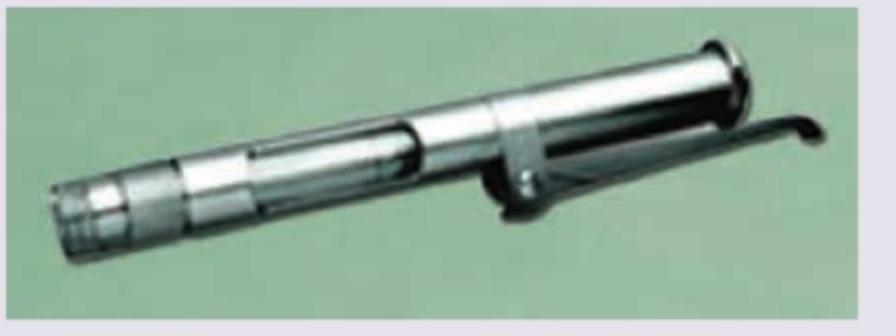
The image given below shows:
Which one of the following agents used in the treatment of inflammatory Bowel Disease acts by inhibiting the enzyme 'Janus Kinase'?
Which one of the following is correct regarding arginine vasopressin antagonist Tolvaptan?
Under which one of the following conditions, the HPA axis suppression is likely to result in crisis due to adrenal insufficiency following withdrawal of glucocorticoids?
Which of the following drugs can cause secondary weight gain? I. Insulin II. Propranolol III. Orlistat IV. Thyroxine Select the correct answer using the code given below :
Explanation: ### Explanation **1. Why Aspirin is Correct:** Aspirin (Acetylsalicylic acid) is a classic example of a drug that forms a **covalent, irreversible bond** with its target. It acts by transferring an acetyl group to a specific serine residue (Serine 529 in COX-1 and Serine 516 in COX-2) in the active site of the **Cyclooxygenase (COX)** enzyme. This permanent modification prevents the synthesis of Prostaglandins and Thromboxane A2 for the entire lifespan of the enzyme or the cell (e.g., the 7–10 day lifespan of a platelet). **2. Analysis of Incorrect Options:** * **Penicillin:** While Penicillin also binds covalently to Penicillin-Binding Proteins (PBPs), in the context of standard pharmacological classification and this specific question set, Aspirin is the primary prototype taught for covalent inhibition of human enzymes. * **Nitric Oxide:** This is a gaseous signaling molecule that acts via **reversible** binding to the heme group of soluble guanylyl cyclase, leading to increased cGMP. It does not form covalent bonds. * **Basanta:** This appears to be a distractor or a non-pharmacological term not associated with covalent drug-receptor interactions. **3. High-Yield Clinical Pearls for NEET-PG:** * **Irreversibility:** Because platelets cannot synthesize new proteins, Aspirin’s antiplatelet effect lasts for the life of the platelet (7–10 days). This is why it must be stopped 5–7 days before major surgery. * **Other Covalent Inhibitors:** Memorize these high-yield examples: * **Proton Pump Inhibitors (Omeprazole):** Covalent bond with H+/K+ ATPase. * **Organophosphates:** Covalent bond with Acetylcholinesterase. * **Phenoxybenzamine:** Irreversible alpha-blocker. * **Clopidogrel:** Irreversible P2Y12 receptor antagonist. * **Bond Strength:** Covalent bonds are the strongest chemical bonds (approx. -50 to -110 kcal/mol) and are generally not reversible under physiological conditions.
Explanation: ### Explanation In Biostatistics, a **Standard Normal Distribution** (also known as the **Z-distribution**) is a specific type of normal distribution used to standardize different sets of data for comparison. **1. Why Option B is Correct:** By definition, a standard normal distribution is a normal distribution that has been "standardized" such that the **Mean ($\mu$) is 0** and the **Standard Deviation ($\sigma$) is 1**. This allows any value ($x$) from a normal distribution to be converted into a **Z-score** using the formula: $Z = (x - \mu) / \sigma$. This transformation ensures that the center of the curve sits at zero and the spread is measured in units of 1. **2. Why the Other Options are Incorrect:** * **Option A:** While the standard deviation is 1, the mean must be 0. A mean of 1 would shift the entire bell curve to the right. * **Option C:** This is not a defining characteristic. In a standard normal distribution, the mean (0) is actually *smaller* than the standard deviation (1). * **Option D:** In a normal distribution, only approximately **68%** of scores fall within one standard deviation ($\pm 1\sigma$) of the mean, not all scores. **3. NEET-PG High-Yield Clinical Pearls:** * **Empirical Rule (68-95-99.7 Rule):** * $\pm 1\sigma$ covers **68.2%** of the area. * $\pm 2\sigma$ covers **95.4%** of the area. * $\pm 3\sigma$ covers **99.7%** of the area. * **Key Properties:** The curve is symmetrical, bell-shaped, and the **Mean = Median = Mode**. * **Z-score:** A Z-score of +1.96 corresponds to the 95% confidence interval boundary in a two-tailed test.
Explanation: **Explanation:** **1. Why Option B is the Correct (Incorrect Statement):** Tacrolimus is a **calcineurin inhibitor** (CNI). Its most significant and dose-limiting toxicity is **nephrotoxicity**, which occurs due to potent vasoconstriction of the afferent arterioles. Administering Tacrolimus with other nephrotoxic drugs (such as Aminoglycosides, Amphotericin B, or NSAIDs) creates a synergistic toxic effect, significantly increasing the risk of acute kidney injury (AKI). Therefore, it cannot be "safely administered" with such drugs; close monitoring of serum creatinine and drug levels is mandatory. **2. Analysis of Other Options:** * **Option A:** Tacrolimus is chemically classified as a **macrolide**, though it lacks antibacterial activity. It is derived from the fungus *Streptomyces tsukubaensis*. * **Option C:** Tacrolimus is known to cause **post-transplant diabetes mellitus (PTDM)**. It impairs glucose tolerance by inhibiting insulin secretion from pancreatic beta cells more significantly than Cyclosporine. * **Option D:** It is a first-line immunosuppressant used for the **prophylaxis of organ rejection** in liver, kidney, and heart transplants. **3. High-Yield Clinical Pearls for NEET-PG:** * **Mechanism of Action:** Binds to **FKBP-12** (FK-binding protein) $\rightarrow$ inhibits Calcineurin $\rightarrow$ prevents dephosphorylation of **NFAT** $\rightarrow$ inhibits IL-2 transcription. * **Side Effect Profile (The "3 H's"):** **H**yperglycemia, **H**yperkalemia, and **H**ypertension. * **Neurotoxicity:** Tacrolimus is more neurotoxic than Cyclosporine (causing tremors, seizures, and headache). * **Comparison:** Unlike Cyclosporine, Tacrolimus does **not** cause hirsutism or gum hyperplasia; it may actually cause alopecia.
Explanation: **Explanation:** The primary goal of **biotransformation (metabolism)** is to facilitate the excretion of drugs from the body. To achieve this, the body converts **lipid-soluble (non-polar)** compounds into **water-soluble (polar)** compounds. Polar compounds are less likely to be reabsorbed in the renal tubules and are easily excreted in urine. Therefore, the statement that biotransformation converts polar to less polar compounds is **incorrect**. **Analysis of Options:** * **Option B (Correct Answer):** As stated, metabolism aims to increase polarity. Converting a polar drug into a less polar (lipid-soluble) one would lead to its reabsorption into the systemic circulation, defeating the purpose of excretion. * **Option A & D:** While metabolism often inactivates drugs, it can also generate **active metabolites** from active drugs (e.g., Diazepam to Oxazepam) or activate an inactive **prodrug** (e.g., Enalapril to Enalaprilat). * **Option C:** This is the fundamental principle of Phase I and Phase II reactions—increasing hydrophilicity to ensure the drug is "trapped" in the urine. **NEET-PG High-Yield Pearls:** * **Phase I Reactions:** Include Oxidation (most common), Reduction, and Hydrolysis. They introduce/unmask a functional group. * **Phase II Reactions:** Include Glucuronidation (most common), Acetylation, and Methylation. These are **true detoxification** steps that significantly increase polarity. * **Exception to Polarity:** In rare cases, metabolism can make a drug less soluble, such as the **acetylation of sulfonamides**, which can lead to crystalluria. * **Prodrug Example:** Levopa is converted to Dopamine; Prednisone is converted to Prednisolone.
Explanation: ***1-C, 2-A, 3-D, 4-B*** - **Insulin** (1) is properly categorized under **Schedule G** (C), specifying drugs that must be taken only under the supervision of a registered medical practitioner. - The **Hepatitis B vaccine** (2) falls under **Schedule H** (A - general prescription drugs), **Morphine** (3) is correctly placed under **Schedule X** (D - narcotics/psychotropics), and **Veterinary drugs** (4) are covered by **Schedule Z** (B - proprietary veterinary medicines). *1-C, 2-D, 3-B, 4-A* - This option incorrectly assigns the **Hepatitis B vaccine** (2) to Schedule D (which deals with standards of imported drugs) instead of Schedule H. - It incorrectly places **Morphine** (3) under Schedule B (fees for tests and analysis) instead of the appropriate Schedule X. *1-B, 2-A, 3-D, 4-C* - This option incorrectly assigns **Insulin** (1) to Schedule B (fees for test or analysis by the Central Drugs Laboratory) instead of Schedule G. - It incorrectly places **Veterinary drugs** (4) under Schedule C (which deals with biological products intended for parenteral administration). *1-D, 2-B, 3-A, 4-C* - This option incorrectly assigns **Insulin** (1) to Schedule D (rules regarding the importation of drugs) and **Morphine** (3) to Schedule A (forms of application for licenses). - It also incorrectly links the **Hepatitis B vaccine** (2) to Schedule B (fees for tests rather than a drug category).
Explanation: ***Dermojet*** - This image displays a **dermojet**, which is a needle-free injection device used to administer medications, particularly for intradermal or subcutaneous injections, by forcing liquid medication through the skin at high pressure. - It's commonly used in dermatology for procedures like injecting local anesthetics or corticosteroids. *EpiPen* - An **EpiPen** is a brand name for an auto-injector specifically designed to deliver a dose of **epinephrine** rapidly during a severe allergic reaction (anaphylaxis). - Its appearance is distinct, typically a pen-like device with a safety cap and a clearly marked injection end, which is different from the device shown. *Glucometer* - A **glucometer** is a device used to measure the **concentration of glucose** in the blood, primarily by diabetics for monitoring their blood sugar levels. - It usually involves a small screen, a port for test strips, and a button, which does not resemble the metallic, pen-like device with a lever shown. *Intradermal pen* - While dermojets perform intradermal injections, an "intradermal pen" is not a standard, widely recognized medical device term for this specific instrument. - The device in the image is specifically known as a **dermojet**, characterized by its needle-free mechanism and pressure delivery system.
Explanation: ***Tofacitinib*** - **Tofacitinib** is an oral medication that functions as a small molecule **Janus Kinase (JAK) inhibitor**, primarily targeting JAK1 and JAK3. - By inhibiting JAK enzymes, tofacitinib disrupts the signaling pathways of several **cytokines** involved in inflammation, including those implicated in **inflammatory bowel disease (IBD)**. *Adalimumab* - **Adalimumab** is a monoclonal antibody that targets and neutralizes **tumor necrosis factor-alpha (TNF-α)**, a key inflammatory cytokine. - It is not a JAK inhibitor but rather works by blocking the interaction of TNF-α with its receptors on cell surfaces. *Vedolizumab* - **Vedolizumab** is an anti-integrin monoclonal antibody that selectively blocks the α4β7 integrin on lymphocytes. - This action prevents lymphocytes from migrating into the gastrointestinal tract, thereby reducing inflammation in IBD. *Infliximab* - **Infliximab** is a chimeric monoclonal antibody that, like adalimumab, targets and neutralizes **tumor necrosis factor-alpha (TNF-α)**. - It works by binding to soluble and transmembrane forms of TNF-α, preventing its pro-inflammatory effects.
Explanation: ***It is an oral drug*** - **Tolvaptan** is an **orally active selective vasopressin V2-receptor antagonist** used in the treatment of hyponatremia. - Its oral bioavailability makes it convenient for long-term management of conditions like **syndrome of inappropriate antidiuretic hormone (SIADH)**. *It is useful in hypovolemic hyponatremia* - **Tolvaptan** is primarily used to treat **euvolemic** and **hypervolemic hyponatremia** by promoting **free water excretion**, which is not ideal in hypovolemic states where fluid status needs to be increased. - In **hypovolemic hyponatremia**, the primary treatment is **fluid resuscitation** with isotonic saline, not free water excretion. *It antagonises the V1 receptor* - **Tolvaptan** is a **selective V2-receptor antagonist**, meaning it specifically blocks the action of vasopressin at the V2 receptors in the renal collecting ducts. - Blocking **V1 receptors** would primarily affect smooth muscle contraction and platelet aggregation, which is not the therapeutic target for tolvaptan in hyponatremia. *It should be used for at least 1 year* - The duration of **Tolvaptan** treatment is variable and depends on the underlying cause of hyponatremia and the patient's response. - There is no standard recommendation for a minimum usage period of at least one year; treatment is typically continued as long as necessary and tolerated.
Explanation: ***Correct: If glucocorticoids have been prescribed repeatedly within the previous year*** - While a **single short course** of glucocorticoids typically does not cause significant HPA axis suppression, **repeated exposure over time** (multiple courses within a year) can lead to **cumulative suppression** of the hypothalamic-pituitary-adrenal axis - This is particularly true if the courses are **frequent, prolonged, or at high doses** without adequate recovery periods between treatments - **Chronic or repeated suppression** impairs the body's ability to produce sufficient endogenous cortisol when exogenous glucocorticoids are withdrawn, increasing the risk of **adrenal insufficiency crisis** - Among the given options, this represents the **highest risk scenario** for HPA axis suppression requiring careful withdrawal management *Incorrect: If the dose is less than equivalent of 5 mg prednisolone per day* - Doses **< 5 mg prednisolone equivalent per day** are considered **physiologic replacement doses** - Such low doses do **NOT suppress** the HPA axis significantly - This represents a **low-risk scenario** for adrenal insufficiency - Standard teaching: HPA suppression risk increases with doses **> 20 mg/day prednisolone equivalent** *Incorrect: If glucocorticoids have been given by intravenous route for five days* - **Short-course therapy (< 7-10 days)**, even at high doses and by IV route, typically does **NOT cause prolonged HPA axis suppression** - The HPA axis usually **recovers rapidly** after brief exposure - Abrupt discontinuation after 5 days **does not typically require tapering** and is unlikely to cause adrenal crisis - The route of administration (IV vs oral) is less important than **duration and total dose** *Incorrect: If glucocorticoids have been administered orally for one week* - Similar to the IV scenario, **one week of oral therapy** is considered a **short course** - Such brief duration typically does not cause significant HPA axis suppression requiring taper - The adrenal glands usually maintain responsiveness after only **7 days** of treatment - **Duration > 3 weeks** at supraphysiologic doses is the traditional threshold for concern about HPA suppression
Explanation: ***I and II only*** - **Insulin** promotes glucose uptake and storage as glycogen or fat, and its therapeutic use can lead to **weight gain** due to increased fat deposition. - **Propranolol**, a non-selective beta-blocker, can decrease metabolic rate and physical activity tolerance due to slowed heart rate, contributing to **weight gain**. *I and III* - While **Insulin** causes weight gain, **Orlistat** specifically acts as a **lipase inhibitor** to *reduce* fat absorption, thereby *promoting weight loss*, not gain. *II, III and IV* - **Propranolol** can cause weight gain, but **Orlistat** facilitates weight loss. **Thyroxine**, used to treat hypothyroidism, generally *promotes weight loss* by increasing metabolism, not weight gain. *I, II and IV* - **Insulin** and **Propranolol** can cause weight gain. However, **Thyroxine** (levothyroxine) is used to correct hypothyroidism and typically leads to **weight loss** by normalizing metabolic rate, rather than causing weight gain.
Pharmacokinetics: Absorption and Distribution
Practice Questions
Pharmacokinetics: Metabolism and Excretion
Practice Questions
Pharmacodynamics and Receptor Theory
Practice Questions
Drug-Receptor Interactions and Dose-Response
Practice Questions
Pharmacogenetics and Personalized Medicine
Practice Questions
Adverse Drug Reactions and Toxicity
Practice Questions
Drug Interactions
Practice Questions
Drug Development and Regulation
Practice Questions
Pediatric and Geriatric Pharmacology
Practice Questions
Placental Transfer and Lactation
Practice Questions
Get full access to all questions, explanations, and performance tracking.
Start For Free