Which of the following is FALSE regarding the sublingual route of drug administration?
Which of the following is NOT a prodrug?
Which of the following is a prodrug?
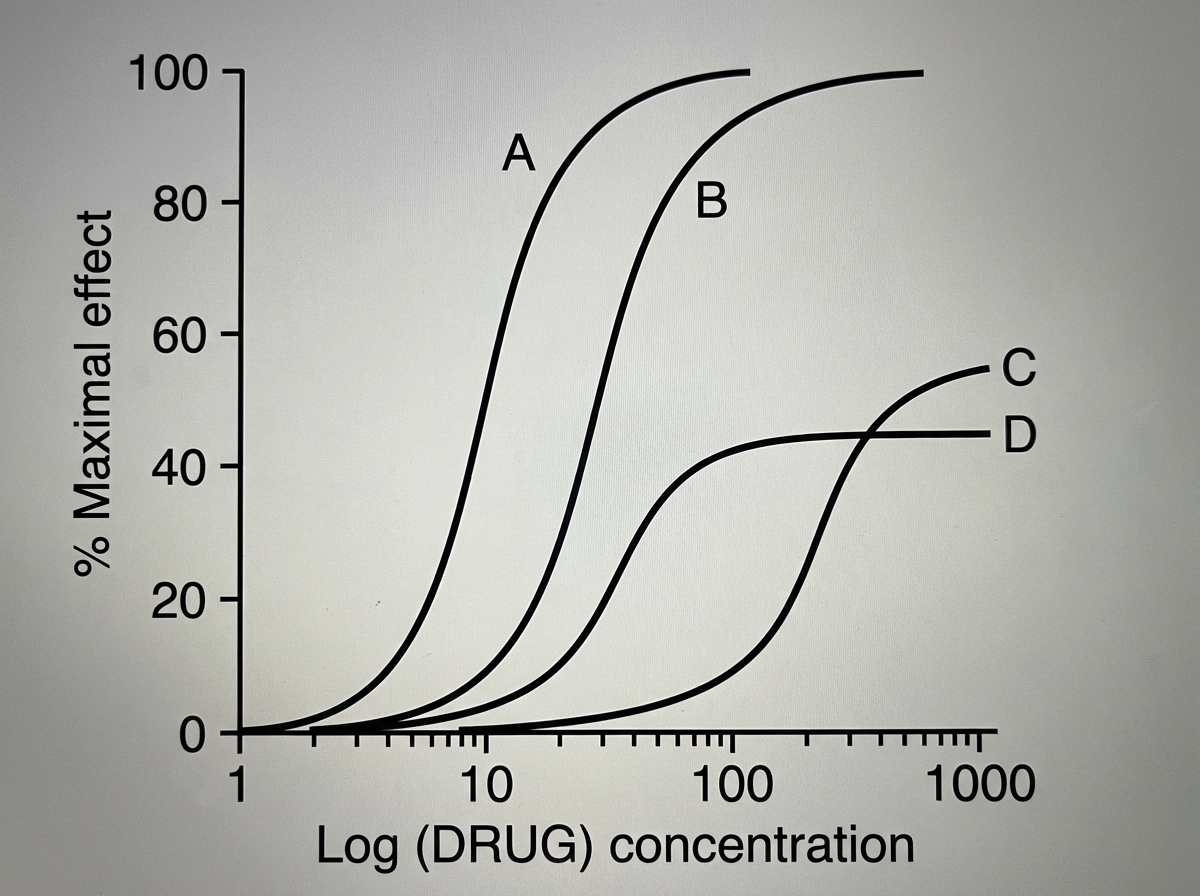
True regarding the following is?
Which of the following is a CYP-450 inducer?
Phase 4 clinical trials are carried out:
What advice should be given to a lactating mother regarding drug intake?
Which of the following drugs does NOT cause enzyme inhibition?
In new drug designing, what problem arises?
All of the following drugs act on ionic channels except?
Explanation: **Explanation** The sublingual route involves placing a drug under the tongue, where it dissolves and is absorbed through the highly vascularized oral mucosa directly into the systemic circulation. **Why Option B is False (The Correct Answer):** Not all drugs can be administered sublingually. To be effective via this route, a drug must be **lipid-soluble, non-irritating, and potent** (effective in small doses). Large, water-soluble molecules or drugs with an unpleasant taste are unsuitable. Furthermore, if a drug requires a large dose, the limited surface area of the sublingual mucosa makes absorption impractical. **Analysis of Other Options:** * **Option A (Bypasses first-pass metabolism):** This is **true**. Since the venous drainage from the mouth goes directly into the superior vena cava (bypassing the portal vein and liver), the drug avoids immediate hepatic degradation. * **Option C (Action can be terminated quickly):** This is **true**. If side effects occur or the desired effect is reached, the patient can simply spit out the remaining tablet, stopping further absorption. * **Option D (Rapid absorption):** This is **true**. Due to the thin epithelium and rich blood supply of the sublingual area, drugs reach the bloodstream quickly, making this route ideal for emergencies. **NEET-PG High-Yield Pearls:** * **Classic Examples:** Nitroglycerin (for Angina), Buprenorphine (opioid), and Nifedipine (though no longer preferred for hypertensive emergencies due to precipitous BP drops). * **Bioavailability:** Sublingual administration generally provides higher bioavailability compared to the oral route for drugs that undergo extensive first-pass metabolism. * **pH Influence:** The absorption is faster if the drug is in its **non-ionized form** (determined by the pKa of the drug and the pH of saliva).
Explanation: **Explanation:** A **prodrug** is a pharmacologically inactive compound that must undergo metabolic conversion (usually in the liver) to become an active metabolite. **Why Imipramine is the correct answer:** **Imipramine** is an active drug belonging to the Tricyclic Antidepressant (TCA) class. While it is metabolized into an active metabolite (**Desipramine**), the parent compound itself possesses significant pharmacological activity. Therefore, it is not classified as a prodrug. **Analysis of Incorrect Options:** * **Enalapril:** It is a classic prodrug converted by hepatic esterases into **Enalaprilat** (the active ACE inhibitor). Note: Captopril and Lisinopril are the only two ACE inhibitors that are *not* prodrugs. * **Sulphasalazine:** This drug is cleaved by colonic bacteria into **Sulphapyridine** and **5-Aminosalicylic acid (5-ASA)**. The 5-ASA is the active moiety used in treating Ulcerative Colitis. * **Cyclophosphamide:** An anticancer alkylating agent that is inactive in vitro. It requires activation by hepatic Cytochrome P450 enzymes (CYP2B6) into **Aldophosphamide** and **Phosphoramide mustard**. **High-Yield Clinical Pearls for NEET-PG:** * **Mnemonic for Prodrugs:** "**All P**referred **D**rugs **C**an **L**ower **B**lood **P**ressure **I**n **M**ost **S**ubjects" (**A**ce inhibitors except captopril/lisinopril, **P**urines/Pyrimidines, **D**opa/Levodopa, **C**yclophosphamide, **L**osartan, **B**acampicillin, **P**roguanil, **I**rinotecan, **M**ethyldopa, **S**ulindac/Sulphasalazine). * **Advantage of Prodrugs:** They are often designed to improve bioavailability, reduce gastric irritation, or prolong the duration of action. * **Exception:** Most ACE inhibitors are prodrugs *except* **Captopril** and **Lisinopril**.
Explanation: **Explanation:** A **prodrug** is a pharmacologically inactive compound that must undergo metabolic conversion (usually in the liver) to become an active metabolite. **Enalapril (Option B)** is a classic example of a prodrug. It is an ester that is hydrolyzed in the liver to its active form, **Enalaprilat**. This conversion is necessary because the active form (Enalaprilat) has poor oral bioavailability, whereas the prodrug (Enalapril) is well-absorbed from the GI tract. **Analysis of Incorrect Options:** * **Lisinopril (Option A):** This is a critical high-yield exception. Unlike most ACE inhibitors, Lisinopril (and Captopril) is **not** a prodrug; it is active as administered. * **Chlorpromazine (Option C):** This is a typical antipsychotic that is active in its parent form. * **Dopamine (Option D):** This is a direct-acting catecholamine. However, its precursor, **Levodopa**, is a famous prodrug used in Parkinsonism because it can cross the blood-brain barrier, whereas dopamine cannot. **High-Yield NEET-PG Pearls:** 1. **ACE Inhibitor Rule:** All ACE inhibitors are prodrugs **EXCEPT** Captopril and Lisinopril. 2. **Common Prodrugs (Mnemonic: "All Prefer Doing Most Medications In Simple Every Day"):** **A**CEIs (except Capto/Lisinopril), **P**roguanil, **D**ipivefrine, **M**ercaptopurine, **M**ethyldopa, **I**rinos/Isosorbide, **S**ulindac, **E**nalapril, **D**iazepam (some metabolites). 3. **Advantage:** Prodrugs are often designed to improve absorption, reduce side effects, or increase the duration of action.
Explanation: ***C is least potent*** - **Potency** is determined by the **EC50 value** - the dose required to produce 50% of the maximum response; **curve C** is positioned furthest to the right, indicating the **highest EC50** and therefore the **least potency**. - In dose-response curves, **rightward shift** indicates decreased potency, meaning higher doses are needed to achieve the same effect. *A has the highest efficacy* - **Efficacy** refers to the **maximum response (Emax)** achievable, represented by the **height** of the dose-response curve, not the horizontal position. - All curves appear to reach similar maximum heights, so **curve A does not have superior efficacy** compared to others. *A has the least potency* - **Curve A** is positioned furthest to the **left**, indicating the **lowest EC50** and therefore the **highest potency**, not the least. - **Leftward position** on dose-response curves indicates **greater potency**, requiring lower doses to achieve effects. *D has the highest potency* - **Curve D** is not positioned furthest to the left; **curve A** appears to have the **leftmost position** indicating the highest potency. - **Potency ranking** from highest to lowest appears to be: **A > B > D > C** based on their horizontal positions.
Explanation: The Cytochrome P450 (CYP450) enzyme system is the primary pathway for drug metabolism in the liver. **Enzyme Inducers** are substances that increase the synthesis and activity of these enzymes, leading to faster metabolism and decreased plasma levels of co-administered drugs [1]. **Why DDT is correct:** **DDT (Dichlorodiphenyltrichloroethane)**, an organochlorine insecticide, is a potent, long-acting inducer of hepatic microsomal enzymes. Although its clinical use is banned, it remains a classic pharmacological example of an environmental pollutant that stimulates the CYP450 system. Other common inducers include Rifampicin, Phenytoin, Carbamazepine, Phenobarbitone, and Chronic Alcoholism. **Why the other options are incorrect:** * **Cimetidine (A):** A classic H2-receptor blocker and a potent **CYP-inhibitor** [2]. It often leads to toxic levels of drugs like Warfarin and Theophylline. * **Ketoconazole (B):** An antifungal agent that is a well-known **CYP-inhibitor** (specifically CYP3A4) [1, 2]. * **Erythromycin (C):** A macrolide antibiotic that acts as a **CYP-inhibitor** [2]. (Note: Azithromycin is the exception among macrolides as it does not significantly inhibit CYP enzymes). **High-Yield Clinical Pearls for NEET-PG:** * **Mnemonic for Inducers (GPRS Cell Phone):** **G**riseofulvin, **P**henytoin, **R**ifampicin, **S**moking, **C**arbamazepine, **P**henobarbitone (and DDT). * **Mnemonic for Inhibitors (VITAMIN K):** **V**alproate, **I**soniazid, **T**urmeric, **A**miodarone, **M**acrolides, **I**ndinavir, **N**etupitant, **K**etoconazole (and Cimetidine/Grapefruit juice). * **Clinical Impact:** Inducers can lead to **therapeutic failure** (e.g., failure of oral contraceptives), while inhibitors can lead to **drug toxicity**.
Explanation: **Explanation:** **Phase 4 Clinical Trials**, also known as **Post-Marketing Surveillance (PMS)**, are conducted after a drug has received regulatory approval and is available on the market for the general population. 1. **Why Option B is Correct:** The primary objective of Phase 4 is to monitor the long-term safety and efficacy of a drug in a large, diverse population. Unlike Phases 1-3, which involve restricted cohorts, Phase 4 identifies **rare adverse drug reactions (ADRs)** and delayed toxicities that may not surface during shorter, controlled clinical trials. It also helps in identifying new indications or drug-drug interactions. 2. **Why Other Options are Incorrect:** * **Option A:** Trials conducted before marketing approval include Phase 1 (Safety/PK), Phase 2 (Efficacy/Dose-finding), and Phase 3 (Confirmatory/Multicentric). * **Option C:** Drugs used for rare diseases are called **Orphan Drugs**. While they undergo clinical trials, the term "Phase 4" specifically refers to the timing (post-marketing) rather than the rarity of the disease. * **Option D:** Pediatric trials are specialized studies (often called Phase 1b or bridging studies) to determine dosing in children; they are not synonymous with Phase 4. **High-Yield Clinical Pearls for NEET-PG:** * **Phase 0:** Also called **Microdosing studies**; uses sub-therapeutic doses to study human pharmacokinetics. * **Phase 1:** First-in-human trials; usually conducted on healthy volunteers (except for cytotoxic drugs). * **Phase 2:** First-in-patient trials; establishes the "Proof of Concept." * **Phase 3:** Large-scale, randomized, double-blind trials; the basis for filing a New Drug Application (NDA). * **Black Box Warnings:** Often added to a drug's labeling as a result of findings from Phase 4 surveillance.
Explanation: **Explanation:** The primary goal of prescribing medication to a lactating mother is to minimize the infant's exposure to the drug. **Why Option D is Correct:** The concentration of a drug in breast milk is generally proportional to the mother’s plasma concentration. By breastfeeding **just before the next dose**, the mother ensures that the drug levels in her systemic circulation (and consequently in the milk) are at their **trough (lowest) level**. This timing significantly reduces the total dose of the drug ingested by the infant. **Analysis of Incorrect Options:** * **Option A:** This is incorrect because most drugs are lipid-soluble and possess low molecular weight, allowing them to pass into breast milk via passive diffusion. * **Option B:** Drugs with a **longer half-life** stay in the system for an extended period, maintaining higher steady-state concentrations and increasing the risk of accumulation in the infant. Short-acting drugs are preferred. * **Option C:** Breastfeeding when the drug is "least efficacious" is vague and clinically impractical. The focus must be on the pharmacokinetic trough, not just the clinical effect. **High-Yield NEET-PG Pearls:** * **Drug Properties:** Drugs that are highly protein-bound, have high molecular weights, or are highly ionized (like Heparin or Insulin) do not cross into milk easily. * **Milk/Plasma (M/P) Ratio:** A ratio <1 is generally considered safe. * **pH Partitioning:** Breast milk is slightly more acidic (pH ~7.0) than plasma (pH 7.4). Therefore, **basic drugs** (e.g., morphine, erythromycin) can become "trapped" in milk due to ion trapping. * **Safe Drugs:** Paracetamol, Ibuprofen, and Penicillins are generally considered safe during lactation. * **Contraindicated Drugs:** Lithium, Anticancer drugs, Gold salts, and Amiodarone should be avoided.
Explanation: ### Explanation The core concept tested here is the distinction between **Microsomal Enzyme Inducers** and **Enzyme Inhibitors**. **Why Phenobarbitone is the Correct Answer:** Phenobarbitone is a classic, potent **Microsomal Enzyme Inducer**. It increases the synthesis of Cytochrome P450 enzymes (specifically CYP2B6 and CYP3A4) in the liver. This leads to an increased rate of metabolism for both itself and co-administered drugs (e.g., Warfarin, Oral Contraceptives), potentially reducing their therapeutic efficacy [3]. Therefore, it does **not** cause enzyme inhibition. **Analysis of Incorrect Options:** * **Omeprazole:** A Proton Pump Inhibitor (PPI) that acts as an enzyme inhibitor, particularly affecting CYP2C19. It can increase the levels of drugs like Diazepam and Phenytoin. * **Disulfiram:** A well-known inhibitor of the enzyme **Aldehyde Dehydrogenase**. It is used in alcohol aversion therapy because it causes the accumulation of acetaldehyde, leading to the "Disulfiram-like reaction." * **Diltiazem:** A Non-dihydropyridine Calcium Channel Blocker (CCB) that is a significant inhibitor of the **CYP3A4** enzyme, often leading to drug-drug interactions with Statins or Cyclosporine. **High-Yield Clinical Pearls for NEET-PG:** * **Mnemonic for Enzyme Inducers (GPRS Cell Phone):** **G**riseofulvin, **P**henytoin, **R**ifampicin, **S**moking, **C**arbamazepine, **P**henobarbitone. * **Mnemonic for Enzyme Inhibitors (VITAMIN K):** **V**alproate, **I**soniazid, **T**erfenadine, **A**miodarone, **M**ethylphenidate, **I**traconazole, **N**ight (Grapefruit juice), **K**etoconazole [1], [2]. (Also: Cimetidine, Erythromycin, and Ciprofloxacin) [1]. * **Clinical Note:** Enzyme **induction** usually takes 1–2 weeks to manifest (as it requires new protein synthesis), whereas enzyme **inhibition** occurs almost immediately.
Explanation: ### Explanation **Core Concept: Drug Selectivity and Off-Target Effects** In modern drug design, the primary challenge is achieving high **selectivity**. A drug is designed to bind to a specific "target protein" (receptor, enzyme, or ion channel) to produce a therapeutic effect. However, most drugs also bind to "non-target proteins" (off-targets). This interaction with non-target proteins is the fundamental cause of **adverse drug reactions (ADRs) and toxicity** [2][3]. Initial drug candidates often lack the desired specificity, requiring medicinal chemists to optimize molecules to minimize these effects [1]. As drug molecules become more complex, preventing these unintended interactions while maintaining efficacy remains the most significant hurdle in pharmaceutical development. **Analysis of Options:** * **Option B (Correct):** Increasing interaction with non-target proteins leads to side effects. For example, a drug designed to target $H_1$ receptors in the lung may also bind to $H_1$ receptors in the brain (causing sedation) or $hERG$ potassium channels in the heart (causing QT prolongation) [3]. Minimizing this "off-target" binding is the hardest part of drug design. * **Option A:** The goal of drug design is actually to *increase* the affinity and interaction with the target protein to ensure efficacy. Decreasing this interaction would make the drug a failure, but it is a design flaw rather than an inherent biological "problem" arising from the complexity of the body. * **Options C & D:** Potency refers to the amount of drug required to produce an effect. While high potency is desirable (smaller doses), a "decrease in potency" is not the primary *problem* in designing a new drug; rather, it is a parameter that is optimized during the lead discovery phase. **High-Yield Clinical Pearls for NEET-PG:** * **Selectivity vs. Specificity:** No drug is truly specific (acting on only one target); they are selective (preferring one target over others). Selectivity is usually dose-dependent [3]. * **Pharmacophore:** This is the precise molecular structure of a drug responsible for its biological activity. * **Structure-Activity Relationship (SAR):** The study of how changing the chemical structure of a drug affects its biological activity and selectivity [1]. * **hERG Channel Testing:** A critical step in new drug design to ensure the drug does not interact with non-target cardiac potassium channels, which prevents drug-induced arrhythmias.
Explanation: ### Explanation The correct answer is **Insulin (Option B)**. To answer this question, one must distinguish between the four major types of drug receptors: Ion channels, G-protein coupled receptors (GPCRs), Enzyme-linked receptors, and Intracellular receptors. **1. Why Insulin is the correct answer:** Insulin does not act on an ion channel. Instead, it binds to a **Tyrosine Kinase Receptor**, which is a type of **Enzyme-linked receptor**. Upon insulin binding, the intracellular domain of the receptor undergoes autophosphorylation, triggering a signaling cascade (via IRS-1/2 and PI3K pathways) that leads to the translocation of GLUT-4 transporters to the cell membrane. **2. Analysis of incorrect options:** * **Nicotine (Option A):** Acts on **Nicotinic Acetylcholine Receptors (nAChR)**, which are classic examples of **Ligand-gated ion channels** (ionotropic receptors). Binding allows the influx of sodium ($Na^+$) and potassium ($K^+$) ions. * **Glibenclamide (Option C):** This Sulfonylurea acts on the **ATP-sensitive Potassium ($K_{ATP}$) channels** in pancreatic beta cells. By closing these channels, it causes depolarization, leading to insulin release. * **Diazepam (Option D):** A Benzodiazepine that acts as a positive allosteric modulator of the **$GABA_A$ receptor**, which is a **Ligand-gated Chloride ($Cl^-$) channel**. **High-Yield Clinical Pearls for NEET-PG:** * **Fastest acting receptors:** Ligand-gated ion channels (milliseconds). * **Slowest acting receptors:** Nuclear/Intracellular receptors (hours to days). * **Enzyme-linked receptors:** Besides Insulin, Growth Factors (EGF, PDGF) and ANP also utilize this class. * **$K_{ATP}$ Channel:** Targeted by both Sulfonylureas (blockers) and Minoxidil/Diazoxide (openers).
Pharmacokinetics: Absorption and Distribution
Practice Questions
Pharmacokinetics: Metabolism and Excretion
Practice Questions
Pharmacodynamics and Receptor Theory
Practice Questions
Drug-Receptor Interactions and Dose-Response
Practice Questions
Pharmacogenetics and Personalized Medicine
Practice Questions
Adverse Drug Reactions and Toxicity
Practice Questions
Drug Interactions
Practice Questions
Drug Development and Regulation
Practice Questions
Pediatric and Geriatric Pharmacology
Practice Questions
Placental Transfer and Lactation
Practice Questions
Get full access to all questions, explanations, and performance tracking.
Start For Free