All are true about cyclosporine-A EXCEPT?
All of the following drugs act by blocking AMPA receptors of glutamate except?
What is the typical sequence of clinical trials for a new drug?
Which of the following is NOT a feature of drugs acting through receptors?
What is the shelf life of a drug?
Therapeutic index is defined as:
All the following regarding prostaglandin analogues are true except?
Which of the following is not a phase 1 reaction in drug metabolism?
Which of the following statements regarding biotransformation is NOT true?
Which of the following routes of drug administration will result in hepatic first-pass metabolism?
Explanation: **Explanation:** Cyclosporine-A is a potent immunosuppressant that revolutionized organ transplantation. The correct answer is **Option A** because it is a **false statement**. Cyclosporine can be administered both **orally and intravenously (IV)**. While the oral route is preferred for long-term maintenance, the IV route is utilized in the immediate post-operative period or for patients unable to tolerate oral medication. However, IV administration requires caution due to the risk of anaphylaxis (often attributed to the Cremophor EL vehicle) and increased nephrotoxicity. **Analysis of other options:** * **Option B:** Cyclosporine is a first-line agent indicated for the prophylaxis of graft rejection in **renal, hepatic, and cardiac transplantation**. * **Option C:** It is a **calcineurin inhibitor**. It binds to cyclophilin, inhibiting calcineurin, which prevents the dephosphorylation of NFAT (Nuclear Factor of Activated T-cells). This leads to decreased IL-2 production, selectively inhibiting **T-lymphocyte proliferation**. * **Option D:** **Nephrotoxicity** is the most common and dose-limiting adverse effect of cyclosporine, occurring in up to 80% of patients. **High-Yield Clinical Pearls for NEET-PG:** * **Adverse Effect Profile:** Remember the "6 H's": **H**ypertension, **H**ypertrichosis (hirsutism), **H**yperplasia of gums, **H**yperkalemia, **H**epatotoxicity, and **H**yperlipidemia (along with Nephrotoxicity). * **Metabolism:** It is metabolized by **CYP3A4**; therefore, grapefruit juice increases its toxicity, while enzyme inducers like Rifampin decrease its efficacy. * **Monitoring:** Therapeutic Drug Monitoring (TDM) is mandatory due to its narrow therapeutic index.
Explanation: **Explanation:** The question tests your knowledge of the specific molecular targets of anti-epileptic drugs (AEDs) acting on the glutamatergic system. **1. Why Felbamate is the Correct Answer:** Felbamate primarily acts as a potent antagonist at the **NMDA (N-methyl-D-aspartate)** receptor, specifically binding to the glycine site. While it has multiple mechanisms (including modulation of $GABA_A$ receptors), it does **not** have a significant inhibitory effect on AMPA receptors. Therefore, it is the "except" in this list. **2. Analysis of Incorrect Options (Drugs that DO block AMPA):** * **Perampanel:** This is a highly selective, **non-competitive AMPA receptor antagonist**. It is the prototype drug for this mechanism and is high-yield for exams. * **Topiramate:** This is a broad-spectrum AED. One of its multiple mechanisms of action includes the blockade of the **AMPA/Kainate** subtype of glutamate receptors. * **Phenobarbitone:** While primarily known as a $GABA_A$ facilitator (increasing the duration of chloride channel opening), at higher therapeutic concentrations, it also **suppresses glutamate release** by inhibiting AMPA receptors. **Clinical Pearls for NEET-PG:** * **Perampanel Side Effect:** It carries a "Black Box Warning" for serious neuropsychiatric events (aggression, anger, and suicidal ideation). * **Topiramate "Mnemonic":** Remember it as the "5-in-1" drug: 1. Blocks Na+ channels, 2. Blocks Ca2+ channels, 3. Increases GABA, 4. Blocks AMPA, 5. Carbonic anhydrase inhibition (leads to weight loss and kidney stones). * **NMDA vs. AMPA:** Most older AEDs target NMDA or GABA; Perampanel is unique as the primary AMPA-specific blocker.
Explanation: ### Explanation The drug development process is a highly regulated, multi-step sequence designed to ensure safety and efficacy before a drug reaches the general population. **1. Why the Correct Answer is Right:** The standard regulatory pathway involves several distinct phases. After successful **Phase 1, 2, and 3 clinical trials**, the pharmaceutical company compiles all data into a **New Drug Application (NDA)**. This application is submitted to the regulatory body (like the FDA in the US or CDSCO in India). If the review is successful, the drug receives **FDA approval**. Once approved, the drug enters the market, leading to **Phase 4**, also known as **Post-Marketing Surveillance (PMS)**. This phase is critical for detecting rare adverse effects and long-term complications in a large, diverse population. **2. Why the Other Options are Wrong:** * **Options A & B:** These suggest that NDA resubmission or multiple approvals are the standard sequence. In reality, an NDA is submitted *once* based on clinical trial data; resubmission only occurs if the initial application is rejected (Complete Response Letter). * **Option C:** This suggests marketing occurs *before* NDA submission. This is legally impossible for new chemical entities; a drug cannot be legally marketed until the NDA is reviewed and approved by the regulatory authority. **3. NEET-PG High-Yield Clinical Pearls:** * **Phase 0 (Microdosing):** Uses sub-therapeutic doses in humans (10–15 subjects) to study pharmacokinetics; it precedes Phase 1. * **Phase 1:** Focuses on **Safety and Tolerability** (usually in healthy volunteers). * **Phase 2:** Focuses on **Efficacy** and finding the optimal dose (small group of patients). * **Phase 3:** Confirms efficacy and safety in a **large multicentric** population (RCTs). * **Phase 4:** Identifies **rare side effects** (e.g., Phocomelia with Thalidomide was identified post-marketing). * **Teratogenicity** is usually evaluated during preclinical animal studies, but human data is gathered during Phase 4.
Explanation: **Explanation:** The majority of drugs produce their effects by binding to specific macromolecules called **receptors** [1]. This interaction is governed by specific pharmacological principles that distinguish receptor-mediated actions from non-specific chemical or physical actions. **Why Option D is the Correct Answer:** Dependence of action on **lipophilicity** is a characteristic of drugs that act through **non-specific physical mechanisms**, not receptors. For example, general anesthetics (Meyer-Overton theory) and osmotic diuretics (like Mannitol) depend on their physical properties (lipid solubility or osmotic activity) rather than binding to a specific protein receptor site. While lipophilicity helps a drug cross membranes to reach an intracellular receptor, the *action* itself is triggered by the binding affinity and intrinsic activity at the receptor site, not the lipid solubility. **Analysis of Incorrect Options:** * **A. Structural Specificity:** Receptors have specific binding pockets. Even minor changes in a drug's chemical structure (e.g., levo vs. dextro isomers) can drastically alter its affinity and effect [2]. * **B. High Potency:** Receptor-mediated drugs are usually effective at very low concentrations (micrograms or milligrams) because they trigger amplified biochemical cascades [4]. * **C. Competitive Antagonism:** This is a hallmark of receptor theory. A blocker (antagonist) can compete with an agonist for the same binding site, a phenomenon that does not occur in non-specific drug actions [3, 5]. **High-Yield Clinical Pearls for NEET-PG:** * **Non-receptor mediated drugs:** Antacids (chemical neutralization), Mannitol (osmosis), and Activated Charcoal (adsorption). * **Spare Receptors:** A phenomenon where maximal response is achieved by activating only a fraction of total receptors (e.g., Insulin receptors). * **Affinity vs. Efficacy:** Affinity is the ability to *bind* to a receptor; Efficacy (Intrinsic Activity) is the ability to *activate* the receptor and produce a response [1, 4].
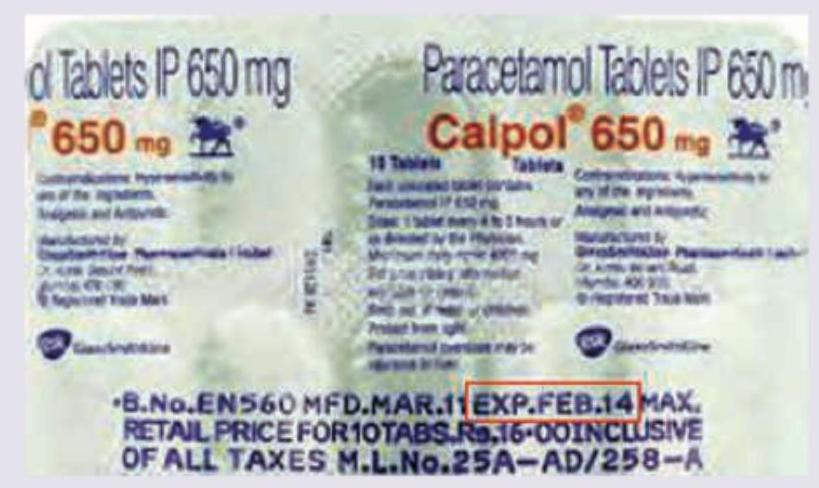
Explanation: **Explanation:** The **shelf life** of a drug is defined as the time interval during which a drug product is expected to remain within the approved specifications for identity, strength, quality, and purity, provided it is stored under defined conditions. 1. **Why Option A is correct:** In pharmaceutical practice, the **shelf life** and the **expiration dating period** are synonymous. The expiration date is the point at which the shelf life ends. Legally and scientifically, it represents the time during which the drug maintains at least **90% of its potency** (active ingredient concentration) without undergoing significant physical or chemical degradation. 2. **Why other options are incorrect:** * **Option B:** They are identical terms used to denote the period of drug stability. * **Option C:** A drug does not need to be "completely degraded" to be unusable. Most drugs are considered expired when they lose just **10%** of their original potency. * **Option D:** While some drugs (like tetracyclines) can become toxic after expiration (causing Fanconi syndrome), most drugs simply become **sub-therapeutic** (ineffective) rather than acutely harmful. **High-Yield NEET-PG Pearls:** * **T90:** Shelf life is often referred to as $t_{90}$, the time required for 10% of the drug to degrade. * **Storage Conditions:** Shelf life is highly dependent on temperature, light, and humidity. Accelerated stability studies are used to predict this period. * **Clinical Exception:** Expired **Tetracycline** can lead to **Fanconi Syndrome** (proximal renal tubular acidosis) due to the degradation product *epianhydrotetracycline*. * **Liquid vs. Solid:** Generally, liquid formulations (syrups, injections) have a shorter shelf life than solid dosage forms (tablets) due to higher rates of chemical reactions in solution.
Explanation: ### Explanation **Concept of Therapeutic Index (TI)** The Therapeutic Index is a quantitative measurement of the relative safety of a drug. It represents the gap between the dose required to produce a desired effect and the dose that produces toxicity. **Why Option B is Correct:** The formula for Therapeutic Index is **TI = LD₅₀ / ED₅₀**. * **LD₅₀ (Lethal Dose 50):** The dose that is lethal to 50% of the population. * **ED₅₀ (Effective Dose 50):** The dose that produces a therapeutic response in 50% of the population. A higher TI indicates a safer drug because the lethal dose is much larger than the effective dose. **Analysis of Incorrect Options:** * **Option A:** This is the inverse of the TI. A ratio of ED₅₀ to LD₅₀ would yield a decimal value that does not conventionally represent the safety margin. * **Option C:** The difference between these values is not a standardized pharmacological parameter. Safety is measured by the *ratio* (relative distance) rather than the absolute arithmetic difference. * **Option D:** The product of these doses has no physiological or pharmacological significance in drug safety assessment. **NEET-PG High-Yield Pearls:** 1. **Mnemonic:** Remember **"TILE"** (**T**herapeutic **I**ndex = **L**D₅₀ / **E**D₅₀). 2. **Narrow Therapeutic Index Drugs:** These require routine **Therapeutic Drug Monitoring (TDM)** because their therapeutic and toxic doses are very close. Examples include: **W**arfarin, **A**minoglycosides/Antiepileptics (Phenytoin), **D**igoxin, **L**ithium, **E**theophylline (Theophylline) — Mnemonic: **WADLE**. 3. **Certainty Safety Factor:** Since LD₅₀ is determined in animals, the "Standard Safety Margin" (LD₁/ED₉₉) is sometimes considered a more clinically relevant index of safety.
Explanation: This question tests your knowledge of prostaglandin (PG) analogues and their specific clinical applications, a high-yield topic in General Pharmacology. [1] ### **Explanation of the Correct Answer** **Option B (Carboprost: Peptic ulcer)** is the incorrect statement. **Carboprost** is a **PGF2̱̱ analogue** primarily used in obstetrics for the management of **Postpartum Hemorrhage (PPH)** and for mid-trimester abortions due to its potent uterine-contracting properties. [4] For **Peptic Ulcer**, the prostaglandin analogue used is **Misoprostol (PGE1 analogue)**. [1] Misoprostol acts as a cytoprotective agent by increasing bicarbonate and mucus secretion and inhibiting gastric acid production. It is specifically indicated for preventing NSAID-induced gastric ulcers. [2] ### **Analysis of Other Options** * **A. Alprostadil (PGE1):** Used for **Erectile Dysfunction** (via intracavernosal injection) and to maintain the patency of the **Ductus Arteriosus** in neonates with congenital heart defects. [1] * **C. Iloprost (PGI2/Prostacyclin):** A potent vasodilator used in the treatment of **Pulmonary Arterial Hypertension (PAH)** and Buerger's disease. [1] * **D. Travoprost (PGF2̱̱):** Along with Latanoprost and Bimatoprost, it is a first-line agent for **Open-Angle Glaucoma** as it increases uveoscleral outflow. [1] [2] ### **NEET-PG High-Yield Pearls** * **Latanoprost Side Effect:** Can cause permanent darkening of the iris (increased pigmentation) and thickening/lengthening of eyelashes. * **Dinoprostone (PGE2):** Used for cervical ripening and induction of labor. [3] * **Epoprostenol (PGI2):** Used in pulmonary hypertension; has a very short half-life. [1] * **Misoprostol Contraindication:** Absolutely contraindicated in pregnancy (unless used for abortion) as it is highly **teratogenic** and can cause uterine rupture.
Explanation: Drug metabolism (biotransformation) typically occurs in two distinct phases to make lipid-soluble drugs more water-soluble for excretion. ### **Why Conjugation is the Correct Answer** **Conjugation** is the hallmark of **Phase II reactions**. Unlike Phase I, which involves making small functional changes to the molecule, Phase II involves the attachment (conjugation) of a large, polar endogenous group (such as glucuronic acid, sulfate, or glutathione) to the drug. This significantly increases water solubility and usually results in pharmacological inactivation. ### **Analysis of Phase I Reactions (Incorrect Options)** Phase I reactions (Non-synthetic) introduce or expose a functional group (–OH, –NH2, –SH). * **A. Oxidation:** The most common Phase I reaction, primarily mediated by the Cytochrome P450 system (e.g., hydroxylation, oxygenation). * **B. Reduction:** Involves the addition of hydrogen or removal of oxygen (e.g., chloramphenicol metabolism). * **C. Deamination:** The removal of an amino group from a molecule (e.g., metabolism of adrenaline by MAO). * *Note: Hydrolysis is also a major Phase I reaction.* ### **High-Yield NEET-PG Clinical Pearls** * **Mnemonic for Phase I:** **HOR** (**H**ydrolysis, **O**xidation, **R**eduction). * **Glucuronidation** is the most common Phase II reaction. It is the only Phase II reaction that occurs in the **microsomes** (others are cytosolic). * **Gray Baby Syndrome:** Occurs in neonates due to a deficiency of the Phase II enzyme *UDP-glucuronyltransferase*, leading to toxic levels of chloramphenicol. * **Isoniazid (INH):** Metabolized by **Acetylation** (Phase II). Genetic polymorphism leads to "Fast" and "Slow" acetylators, affecting drug toxicity and efficacy.
Explanation: **Explanation:** Biotransformation (metabolism) is the chemical alteration of a drug within the body. Its primary biological goal is to convert **lipid-soluble (lipophilic)** compounds into **water-soluble (hydrophilic)** metabolites. This change is essential because only water-soluble substances can be efficiently excreted by the kidneys; lipid-soluble substances are easily reabsorbed back into the bloodstream from the renal tubules. * **Why Option C is the correct answer (The "NOT true" statement):** Biotransformation almost never makes a drug more lipid-soluble. Increasing lipid solubility would hinder excretion and lead to drug accumulation and toxicity. * **Why Option A is wrong:** This is the most common outcome of metabolism (e.g., Phenytoin to inactive parahydroxy-phenytoin). It is often called "detoxification." * **Why Option B is wrong:** Some drugs are converted into active metabolites (e.g., Diazepam to Oxazepam) or are administered as inactive **prodrugs** that require metabolism to become active (e.g., Enalapril to Enalaprilat). * **Why Option D is wrong:** This is the fundamental purpose of Phase I and Phase II reactions—to increase polarity and water solubility for excretion. **High-Yield NEET-PG Pearls:** * **Phase I Reactions:** Include Oxidation (most common), Reduction, and Hydrolysis. These introduce or expose a functional group. * **Phase II Reactions:** Include Conjugation (e.g., Glucuronidation). These significantly increase water solubility. * **Exception to the Rule:** Most Phase II reactions inactivate drugs, but **Morphine-6-glucuronide** is a rare example of a Phase II metabolite that is more active than the parent drug. * **Microsomal Enzymes:** Located in the Smooth Endoplasmic Reticulum (e.g., CYP450); they are inducible and inhibitable.
Explanation: **Explanation:** **1. Why Oral is Correct:** The **hepatic first-pass effect** refers to the metabolism of a drug in the liver before it reaches the systemic circulation. When a drug is administered **orally**, it is absorbed from the gastrointestinal tract into the **portal venous system**. This portal blood carries the drug directly to the liver. Consequently, a significant fraction of the drug may be metabolized by hepatic enzymes (like Cytochrome P450), reducing its overall bioavailability. **2. Why Other Options are Incorrect:** * **Intravenous (IV):** This route bypasses all absorption barriers and the liver, delivering the drug directly into the systemic circulation. Bioavailability is 100%. * **Sublingual:** Drugs absorbed through the oral mucosa drain directly into the **superior vena cava**, bypassing the portal circulation and the liver. This is why Nitroglycerin is given sublingually for rapid action. * **Subcutaneous (SC):** The drug is absorbed into the systemic capillaries and lymphatic vessels, bypassing the primary hepatic metabolism. **3. NEET-PG High-Yield Pearls:** * **Rectal Route:** This route has a **partial first-pass effect**. The upper 1/3rd of the rectum drains into the portal vein, while the lower 2/3rd drains into the systemic circulation. * **Bioavailability (F):** Drugs with high first-pass metabolism (e.g., Propranolol, Lidocaine, Nitroglycerin, Morphine) have low oral bioavailability. * **Prodrugs:** Some drugs are intentionally designed to undergo first-pass metabolism to be converted into their active forms (e.g., Enalapril to Enalaprilat). * **Inhalation:** This route also bypasses the liver but may undergo "first-pass" metabolism in the lungs.
Pharmacokinetics: Absorption and Distribution
Practice Questions
Pharmacokinetics: Metabolism and Excretion
Practice Questions
Pharmacodynamics and Receptor Theory
Practice Questions
Drug-Receptor Interactions and Dose-Response
Practice Questions
Pharmacogenetics and Personalized Medicine
Practice Questions
Adverse Drug Reactions and Toxicity
Practice Questions
Drug Interactions
Practice Questions
Drug Development and Regulation
Practice Questions
Pediatric and Geriatric Pharmacology
Practice Questions
Placental Transfer and Lactation
Practice Questions
Get full access to all questions, explanations, and performance tracking.
Start For Free