Which drug is not indicated for the management of anaphylactic shock?
Which drug is used in the treatment of scorpion sting?
A lady presents with difficulty in breathing and appearance of hives after taking an NSAID tablet. Her pulse rate is 100/min and BP is 90/60 mm Hg. What is the most likely diagnosis?
Which of the following concentrations of epinephrine does not correspond to the respective route of administration?
A client presents to the emergency room with difficulty of breathing and wheezing upon auscultation. An allergic reaction to penicillin is diagnosed. Which of the following medications should the nurse expect to administer first?
Which of the following drugs can result in cyanide poisoning?
A patient presents to the emergency department after receiving a penicillin injection and is diagnosed with anaphylactic shock. Which of the following is the most critical life-saving measure for immediate treatment?
Which of the following statements regarding the use of adrenaline in anaphylactic shock is TRUE?
Which of the following is used for prophylaxis of acute mountain sickness?
A patient presented with anaphylactic reactions developed angioedema. What is the drug of choice for treating this condition?
Explanation: **Explanation:** Anaphylactic shock is a severe, life-threatening Type I hypersensitivity reaction characterized by systemic vasodilation, increased capillary permeability, and bronchospasm. The management focuses on reversing these physiological derangements immediately. **Why Antibiotics is the Correct Answer:** Antibiotics have no role in the acute management of anaphylaxis. They do not counteract the release of inflammatory mediators (like histamine or leukotrienes) nor do they stabilize hemodynamics. In fact, antibiotics (especially Penicillins and Cephalosporins) are among the most common **triggers** of anaphylaxis. Using them during an acute episode is not only non-indicated but potentially dangerous if the cause of the shock is unknown. **Analysis of Other Options:** * **Adrenaline (Option A):** The **drug of choice**. It acts as a physiological antagonist. Its $\alpha_1$ action causes vasoconstriction (reducing edema and increasing BP), while its $\beta_2$ action causes bronchodilation and stabilizes mast cells. * **Steroids (Option B):** Used as secondary management (e.g., Hydrocortisone). While they have a slow onset of action, they are crucial for preventing **"biphasic reactions"** (recurrence of symptoms hours later). * **Antihistamines (Option D):** Used as adjuvant therapy (e.g., H1 blockers like Diphenhydramine or Pheniramine) to manage cutaneous symptoms like urticaria and itching. **High-Yield Clinical Pearls for NEET-PG:** * **Route of Adrenaline:** The preferred route in anaphylaxis is **Intramuscular (IM)** in the anterolateral thigh (vastus lateralis). * **Concentration:** Use **1:1000** for IM and **1:10,000** for IV (only in extreme cases/cardiac arrest). * **Dose:** 0.5 mg (0.5 ml of 1:1000) for adults; 0.01 mg/kg for children. * **Refractory Cases:** If the patient is on Beta-blockers and unresponsive to Adrenaline, **Glucagon** is the drug of choice.
Explanation: **Prazosin** is the drug of choice for the management of severe scorpion stings (especially the Indian Red Scorpion, *Mesobuthus tamulus*). **1. Why Prazosin is Correct:** Scorpion venom causes a "sympathetic storm" by triggering a massive release of endogenous catecholamines (epinephrine and norepinephrine). This leads to severe hypertension, pulmonary edema, and myocardial dysfunction. Prazosin is a **selective alpha-1 adrenergic blocker**. It acts as a "pharmacological antidote" by: * Antagonizing the alpha-1 mediated vasoconstriction [1]. * Reducing afterload and preload, which manages pulmonary edema [1]. * Suppressing the insulin-inhibitory effect of catecholamines, thereby improving myocardial metabolism [1]. **2. Why Other Options are Incorrect:** * **Acetaminophen:** This is a simple analgesic. While it may help with mild pain, it does not address the life-threatening cardiovascular complications of the venom. * **Diazepam:** A benzodiazepine used for seizures or anxiety. It has no role in counteracting the autonomic effects of scorpion venom and may cause respiratory depression. * **Promethazine:** An antihistamine/antiemetic. It is generally avoided because it can mask the signs of autonomic hyperactivity and potentially worsen the sedative effects if other CNS symptoms are present. **3. NEET-PG High-Yield Pearls:** * **Mechanism of Venom:** Scorpion venom acts on sodium channels, leading to prolonged depolarization of nerve fibers. * **Clinical Presentation:** Look for "Autonomic Storm" (tachycardia, hypertension, profuse sweating, and pulmonary edema). * **Administration:** Prazosin is given orally, even in emergencies, as it is rapidly absorbed. * **Avoid:** Beta-blockers are generally contraindicated as they can lead to unopposed alpha-activity, worsening hypertension [2].
Explanation: ### Explanation **Correct Option: D. Anaphylaxis** **Why it is correct:** The clinical presentation describes a classic **Type I Hypersensitivity reaction** (Anaphylaxis) triggered by a drug (NSAID). Anaphylaxis is a multi-system emergency characterized by: 1. **Cutaneous symptoms:** Hives (urticaria), angioedema, or pruritus. 2. **Respiratory distress:** Bronchospasm leading to difficulty in breathing or wheezing. 3. **Cardiovascular collapse:** Hypotension (BP 90/60 mm Hg) and compensatory tachycardia (Pulse 100/min). The temporal relationship between drug intake and the rapid onset of skin and respiratory symptoms makes anaphylaxis the most likely diagnosis. **Why the other options are incorrect:** * **A. Massive Pulmonary Embolism:** While it causes sudden breathlessness and hypotension, it does not present with **hives (urticaria)**. It is usually associated with risk factors like prolonged immobilization or DVT. * **B. Neurogenic Shock:** This typically occurs after spinal cord injury. A hallmark sign is **bradycardia** (due to loss of sympathetic tone) rather than tachycardia, and it lacks the cutaneous allergic features seen here. * **C. Disseminated Intravascular Coagulation (DIC):** This is a consumptive coagulopathy presenting with bleeding from mucosal sites, petechiae, and multi-organ failure. It does not present as an acute allergic reaction. **High-Yield Clinical Pearls for NEET-PG:** * **Drug of Choice:** Adrenaline (Epinephrine) is the life-saving drug for anaphylaxis. * **Route & Dose:** **1:1000** concentration (1 mg/ml) given **Intramuscularly (IM)** in the anterolateral thigh. The dose is **0.5 mg** for adults. * **Mechanism:** Adrenaline acts as a physiological antagonist. $\alpha_1$ agonism increases BP; $\beta_2$ agonism causes bronchodilation and inhibits mast cell mediator release. * **NSAIDs and Anaphylaxis:** NSAIDs can trigger "pseudo-anaphylaxis" by shifting arachidonic acid metabolism toward the leukotriene pathway (via COX inhibition).
Explanation: ### Explanation The concentration of Epinephrine (Adrenaline) is critical in emergency medicine to ensure therapeutic efficacy while minimizing systemic toxicity. **Why Option B is correct:** For **inhalational use** (specifically for conditions like croup or laryngeal edema), **Racemic Epinephrine** or standard Epinephrine is used in a concentration of **1:100 (1%)**. The 1:1,000 concentration is too dilute for effective nebulization in these specific scenarios. The 1:100 concentration allows for a higher local dose to be delivered to the airway mucosa to induce vasoconstriction and reduce edema. **Analysis of Incorrect Options:** * **Option A (1:10,000 - IV):** This is the standard concentration for **Intravenous (IV)** or **Intraosseous (IO)** administration during Cardiac Arrest (ACLS protocols). It is prepared by diluting 1 ml of 1:1,000 adrenaline with 9 ml of normal saline. * **Option C & D (1:1,000 - IM/SC):** This is the standard "undiluted" concentration (1 mg/ml) used for **Intramuscular (IM)** injection in Anaphylaxis or **Subcutaneous (SC)** injection in acute bronchial asthma. The IM route in the anterolateral thigh is preferred over SC due to faster absorption and more reliable plasma levels. **High-Yield Clinical Pearls for NEET-PG:** * **Anaphylaxis Drug of Choice:** Epinephrine 1:1,000 (0.3–0.5 mg) via **IM route**. * **Cardiac Arrest:** Epinephrine 1:10,000 (1 mg) via **IV/IO route** every 3–5 minutes. * **Local Anesthesia:** Epinephrine is added in a concentration of **1:100,000 to 1:200,000** to prolong the duration of action and reduce systemic toxicity. * **Calculation Tip:** 1:1,000 means 1 gram in 1,000 ml, which equals **1 mg/ml**. 1:10,000 equals **0.1 mg/ml**.
Explanation: **Explanation:** The clinical presentation of dyspnea and wheezing following penicillin administration indicates a Type I Hypersensitivity reaction (Anaphylaxis/Bronchospasm). In an acute respiratory emergency, the priority is to reverse bronchoconstriction immediately to maintain airway patency. **Why Albuterol is Correct:** Albuterol is a **Short-Acting Beta-2 Agonist (SABA)**. It works by stimulating beta-2 adrenergic receptors in the bronchial smooth muscle, leading to a rapid increase in intracellular cAMP and subsequent bronchodilation. It has an onset of action within 5–15 minutes, making it the "rescue" medication of choice for acute wheezing and bronchospasm. **Analysis of Incorrect Options:** * **Aminophylline:** A methylxanthine with a narrow therapeutic index. It is considered a second or third-line agent due to its slow onset and significant side-effect profile (arrhythmias, seizures) compared to inhaled beta-agonists. * **Methylprednisolone:** A systemic corticosteroid. While essential in managing allergic reactions to prevent "late-phase" responses, its onset of action is 4–6 hours. It does not provide the immediate bronchodilation required in an emergency. * **Budesonide:** An inhaled corticosteroid (ICS) used for long-term maintenance/prophylaxis of asthma. It is not indicated for the acute reversal of bronchospasm. **NEET-PG High-Yield Pearls:** 1. **Drug of Choice for Anaphylaxis:** While Albuterol treats the *wheezing*, the definitive first-line drug for systemic anaphylaxis is **Intramuscular Epinephrine (1:1000)**. 2. **Mechanism:** Beta-2 agonists relax smooth muscle via Gs-protein coupled receptors $\rightarrow$ Adenyl cyclase activation $\rightarrow$ $\uparrow$ cAMP. 3. **Sequence of Therapy:** Always prioritize "Relievers" (SABAs) over "Controllers" (Steroids) in emergency settings.
Explanation: **Sodium Nitroprusside (SNP)** is a potent, rapid-acting vasodilator used in hypertensive emergencies. Its chemical structure contains five cyanide groups per molecule. When administered intravenously, SNP reacts with hemoglobin to release nitric oxide (causing vasodilation) and **cyanide ions**. Under normal conditions, the liver detoxifies cyanide into thiocyanate; however, prolonged infusion or high doses can overwhelm this system, leading to **cyanide toxicity**. This manifests as metabolic acidosis, cherry-red skin, and altered mental status. **Explanation of Incorrect Options:** * **B. Amyl Nitrite:** This is actually an **antidote** for cyanide poisoning. It induces methemoglobinemia; methemoglobin has a high affinity for cyanide, pulling it away from cytochrome oxidase to form cyanmethemoglobin. * **C. Hydroxycobalamin:** This is the **preferred first-line antidote** for cyanide poisoning. It combines with cyanide to form non-toxic Vitamin B12 (cyanocobalamin), which is excreted by the kidneys. * **D. Sodium Thiosulphate:** This is a component of the standard cyanide antidote kit. It acts as a sulfur donor for the enzyme **rhodanase**, which converts toxic cyanide into less toxic thiocyanate. **High-Yield Clinical Pearls for NEET-PG:** * **Mechanism of SNP:** Increases cGMP via nitric oxide release, relaxing both arterioles and venules (decreases both Preload and Afterload). * **Cyanide Toxicity Sign:** An unexplained drop in oxygen saturation or a "narrowing of the venous-arterial $PO_2$ gradient" despite adequate ventilation. * **Management:** If SNP causes toxicity, the immediate step is to stop the infusion and administer Hydroxycobalamin or the Nitrite-Thiosulphate regimen. * **Thiocyanate Toxicity:** Long-term SNP use can also cause thiocyanate accumulation (especially in renal failure), leading to psychosis and seizures.
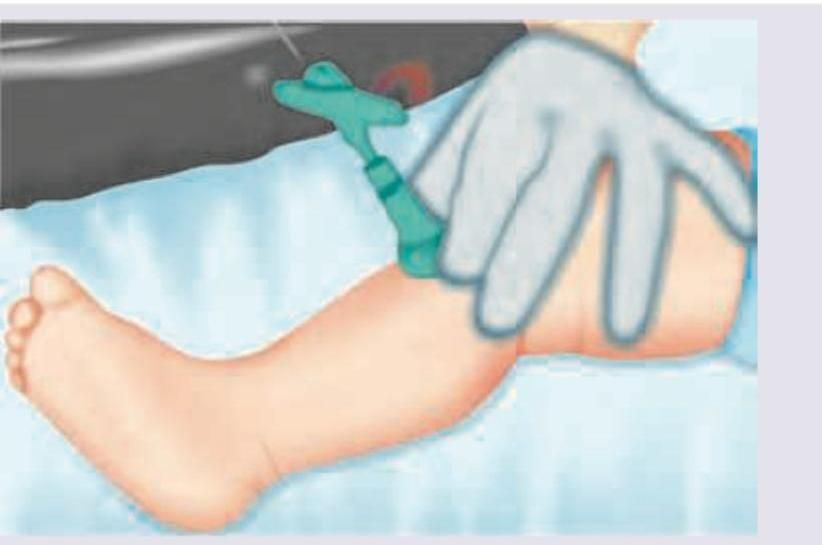
Explanation: **Explanation:** The drug of choice for anaphylactic shock is **Adrenaline (Epinephrine)**. In an emergency setting, the **Intramuscular (IM)** route is the gold standard for initial treatment. **1. Why Option C is Correct:** * **Rapid Absorption:** The vastus lateralis (anterolateral thigh) is highly vascular, ensuring faster peak plasma concentrations compared to the subcutaneous route. * **Safety Profile:** IM administration is safer than IV for initial management as it carries a lower risk of inducing fatal arrhythmias or severe hypertension, which can occur with rapid IV boluses. * **Mechanism:** Adrenaline acts as a physiological antagonist to histamine. Its **α1-agonist** effect causes vasoconstriction (reversing hypotension and mucosal edema), while its **β2-agonist** effect causes bronchodilation. **2. Why Other Options are Incorrect:** * **Option A (IV Hydrocortisone):** Corticosteroids have a slow onset of action (4–6 hours). They are used to prevent "biphasic reactions" (delayed recurrence) but are not life-saving in the acute phase. * **Option B (IV Adrenaline):** This is reserved for patients in profound shock or cardiac arrest who are unresponsive to multiple IM doses. It must be given under cardiac monitoring and in a diluted form (1:10,000). * **Option D (IV Glucose Saline):** While fluid resuscitation is important, it is secondary to the administration of adrenaline. **High-Yield Clinical Pearls for NEET-PG:** * **Standard Dose:** 0.5 mg (0.5 ml of 1:1000 concentration) IM in adults. * **Pediatric Dose:** 0.01 mg/kg (max 0.3 mg) IM. * **Site:** Mid-outer thigh (Vastus lateralis). * **Concentration Ratios:** * **1:1,000** for IM use. * **1:10,000** for IV use (Cardiac arrest).
Explanation: ### Explanation **1. Why Option A is Correct:** Adrenaline (Epinephrine) is the drug of choice for anaphylactic shock. In adults, the standard dose is **0.5 mg (0.5 mL of 1:1000 solution)** administered via the **Intramuscular (IM)** route in the anterolateral thigh. The IM route is preferred over subcutaneous (SC) because it achieves higher and faster peak plasma concentrations, which is critical in a life-threatening emergency. **2. Analysis of Incorrect Options:** * **Option B:** While rare, **cerebral hemorrhage** and cardiac arrhythmias are known potential adverse effects of adrenaline, particularly if it is administered rapidly via the IV route or in patients with underlying hypertension. * **Option C:** Adrenaline has a very short half-life. In anaphylaxis, if the patient does not improve, the dose should be repeated every **5 to 15 minutes**, not every 2–4 hours. * **Option D:** The concentrations differ significantly. The **1:1000 (1 mg/mL)** solution is used for IM injection. For **Intravenous (IV)** use, this must be diluted to **1:10,000 (0.1 mg/mL)** to prevent fatal arrhythmias or severe hypertension. **3. High-Yield Clinical Pearls for NEET-PG:** * **Mechanism of Action:** $\alpha_1$ (vasoconstriction to reduce edema/hypotension), $\beta_1$ (positive inotropy/chronotropy), and $\beta_2$ (bronchodilation and stabilization of mast cells). * **Pediatric Dose:** 0.01 mg/kg (up to a max of 0.3 mg) IM. * **Best Site:** Vastus lateralis (lateral thigh) due to high vascularity. * **Refractory Cases:** If the patient is on **Beta-blockers** and does not respond to adrenaline, the antidote/alternative is **Glucagon**.
Explanation: **Explanation:** **Acetazolamide** is the drug of choice for the prophylaxis of **Acute Mountain Sickness (AMS)**. **Mechanism of Action:** Acetazolamide is a **Carbonic Anhydrase Inhibitor**. At high altitudes, the low partial pressure of oxygen leads to hyperventilation, causing respiratory alkalosis. This alkalosis inhibits the respiratory center, preventing further compensatory breathing. Acetazolamide works by: 1. Inhibiting carbonic anhydrase in the proximal convoluted tubule, leading to **bicarbonate diuresis**. 2. Inducing a mild **metabolic acidosis**, which counteracts the respiratory alkalosis. 3. This acidification of the blood stimulates the central chemoreceptors, increasing the respiratory drive and improving oxygenation (speeding up acclimatization). **Why other options are incorrect:** * **Furosemide (Loop Diuretic):** While it may be used in the treatment of High-Altitude Pulmonary Edema (HAPE) to reduce lung congestion, it has no role in the prophylaxis of AMS and can cause severe dehydration. * **Spironolactone (Aldosterone Antagonist):** It is a potassium-sparing diuretic used in heart failure and cirrhosis; it does not affect the acid-base balance required to stimulate respiration at high altitudes. **High-Yield Clinical Pearls for NEET-PG:** * **Prophylaxis Dose:** Start Acetazolamide 125–250 mg twice daily, 24 hours before ascent. * **Side Effects:** Paresthesia (tingling in extremities) and a metallic taste when consuming carbonated beverages. * **Contraindication:** Avoid in patients with severe **sulfonamide allergy**. * **Treatment of Choice for HAPE:** Nifedipine (decreases pulmonary artery pressure). * **Treatment of Choice for HACE (High-Altitude Cerebral Edema):** Dexamethasone.
Explanation: **Explanation:** **Adrenaline (Epinephrine)** is the drug of choice for anaphylaxis and associated angioedema because it acts as a **physiological antagonist** to histamine and other inflammatory mediators [1]. Its mechanism of action addresses all life-threatening components of anaphylaxis: * **$\alpha_1$ agonist effect:** Causes vasoconstriction, which reduces mucosal edema (treating angioedema) and increases peripheral vascular resistance to combat hypotension [1], [2]. * **$eta_1$ agonist effect:** Increases cardiac output (positive inotropy and chronotropy). * **$eta_2$ agonist effect:** Causes potent bronchodilation and inhibits further mast cell degranulation [2]. **Why other options are incorrect:** * **Corticosteroids (e.g., Hydrocortisone):** These have a slow onset of action (4–6 hours). They are used to prevent "biphasic reactions" (delayed recurrence of symptoms) but are not effective for the acute, life-threatening phase. * **Antihistaminics (e.g., Pheniramine):** These are slow-acting and only compete for H1 receptors. They do not reverse bronchospasm or hypotension and are considered secondary treatments [3]. * **Sodium Cromoglycate:** This is a mast cell stabilizer used for **prophylaxis** of asthma or allergic rhinitis. It is ineffective once degranulation has already occurred. **High-Yield Clinical Pearls for NEET-PG:** * **Route of Choice:** Intramuscular (IM) in the anterolateral thigh is preferred over SC or IV in initial management due to faster and more reliable absorption [1]. * **Concentration:** Use **1:1000** for IM and **1:10,000** for IV (reserved for cardiac arrest or profound shock) [1]. * **Standard Dose:** 0.3-0.5 mg (0.3-0.5 ml of 1:1000) for adults [1]; 0.01 mg/kg for children. * **Drug of Choice for Hereditary Angioedema (Prophylaxis):** Danazol or Stanozolol. (Acute attack: C1 esterase inhibitor concentrate or Icatibant).
Management of Anaphylaxis
Practice Questions
Drugs in Cardiac Arrest
Practice Questions
Status Epilepticus Management
Practice Questions
Acute Stroke Therapeutics
Practice Questions
Toxicological Emergencies
Practice Questions
Antidotes in Emergency Medicine
Practice Questions
Pain Management in Emergency
Practice Questions
Sedation and Paralysis in Emergency
Practice Questions
Drugs in Traumatic Emergencies
Practice Questions
Thrombolysis in Emergency Settings
Practice Questions
Get full access to all questions, explanations, and performance tracking.
Start For Free