Which of the following is a contraindication to topical steroids?
All of the following are topical steroids EXCEPT ?
Which of the following is not a side effect of topical beta blockers?
Which of the following statements about Ciclesonide is incorrect?
What is the primary mechanism by which steroids exert their anti-inflammatory action?
Hydrocortisone Acetate is injected in a painful arthritic TMJ to?
Anti-inflammatory action of steroids is due to
The most potent topical corticosteroid is
Dapsone is NOT used in:
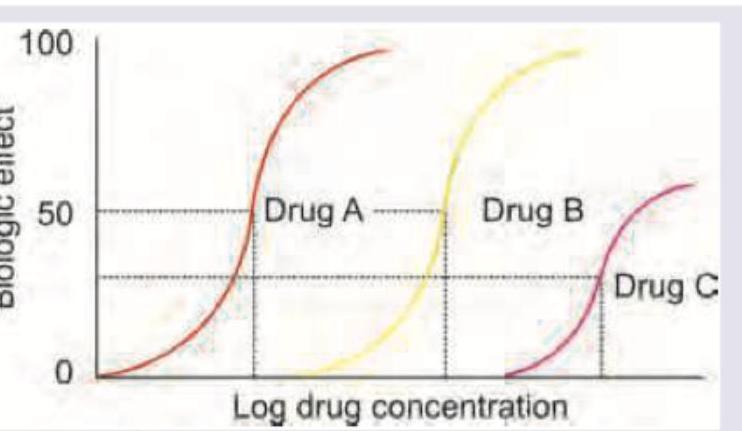
Which of the following statement is correct regarding the given DRC? (AllMS Nov 2016)
Explanation: ***Dendritic ulcer*** - A **dendritic ulcer** is characteristic of **herpes simplex keratitis**, which is an active viral infection of the cornea. - **Topical steroids** are contraindicated because they can suppress the immune response, leading to viral replication, corneal melt, and potentially severe vision loss or perforation. *Herpetic stromal keratitis without epithelial defect* - In cases of **stromal keratitis**, where the infection is deeper and an intact epithelium is present, topical steroids may be used cautiously in conjunction with antiviral agents to reduce inflammation and scarring. - The primary concern with steroids in herpes simplex keratitis is activating viral replication in the presence of an **epithelial defect**, which is not present here. *Elevated intraocular pressure* - **Elevated intraocular pressure** is a known side effect of topical steroid use, especially with prolonged administration, but it is not an absolute contraindication in itself. - It necessitates careful monitoring and may require concurrent glaucoma treatment, but the primary condition needing steroids may still warrant their use. *Non-infectious anterior uveitis* - **Topical corticosteroids** are the **mainstay of treatment** for non-infectious anterior uveitis to reduce inflammation and prevent complications such as synechiae and vision loss. - The benefits of controlling inflammation in uveitis generally outweigh the risks associated with judicious steroid use.
Explanation: ***Prednisolone*** - **Prednisolone** is an **oral/systemic corticosteroid** primarily used for systemic therapy, not as a topical dermatological preparation. - While prednisolone eye drops and ear drops exist, it is NOT a standard topical corticosteroid for skin disorders. - Its high systemic absorption potential makes it unsuitable for dermatological topical applications. *Fluticasone propionate* - **Fluticasone propionate** is a **highly potent synthetic topical corticosteroid** commonly used in dermatology. - Available as creams and ointments for inflammatory skin conditions like eczema, psoriasis, and atopic dermatitis. - Also formulated as nasal spray for allergic rhinitis. *Betamethasone valerate* - **Betamethasone valerate** is a **potent topical corticosteroid** widely used in dermatology. - Available in various formulations (cream, ointment, lotion) for treating inflammatory skin conditions. - Classified as a mid-to-high potency topical steroid, effective for conditions like eczema, psoriasis, and contact dermatitis. *Hydrocortisone valerate* - **Hydrocortisone valerate** is a **moderate-potency topical corticosteroid** derived from hydrocortisone. - Frequently used in dermatological preparations to treat inflammatory skin conditions like dermatitis and eczema. - Safer for prolonged use and application on sensitive areas compared to more potent steroids.
Explanation: ***Heterochromia iridis*** - **Heterochromia iridis** (different colored irises) is a well-known side effect of **prostaglandin analogs** (e.g., latanoprost, bimatoprost), not topical beta blockers. - This change in eye color occurs due to increased **melanin production** in melanocytes. *Asthma* - Topical beta blockers can be absorbed systemically and block **beta-2 receptors** in the lungs, leading to **bronchoconstriction** and exacerbating **asthma**. - This side effect is particularly concerning in patients with a history of **reactive airway disease**. *Hypoglycemia* - Topical beta blockers are listed as a concern for **hypoglycemia risk** because they **mask the adrenergic symptoms of hypoglycemia** (tremor, palpitations, tachycardia). - While they don't directly cause hypoglycemia, masking these warning symptoms can lead to **delayed recognition and treatment**, particularly dangerous in **diabetic patients on insulin or sulfonylureas**. *Bradycardia* - Systemic absorption of topical beta blockers can lead to a decrease in **heart rate** (bradycardia) by blocking **beta-1 receptors** in the heart. - This effect is a significant concern for patients with pre-existing **cardiac conduction disorders** or those taking other medications that lower heart rate.
Explanation: ***Oral candidiasis is common with its use.*** * Ciclesonide is a **prodrug** that is activated in the lungs, which minimizes systemic exposure and reduces the risk of local side effects like **oral candidiasis**. * Therefore, oral candidiasis is **less common** with ciclesonide compared to other inhaled corticosteroids that deliver the active drug directly to the oral cavity. *It is a prodrug activated by bronchial esterase.* * Ciclesonide is indeed a **prodrug** that is converted into its active metabolite, **des-ciclesonide**, by **esterases** primarily found in the lungs. * This specific activation mechanism helps ensure that the drug's therapeutic effects are localized to the airways while minimizing systemic exposure. *It has comparable efficacy to other inhalational corticosteroids.* * Studies have shown that ciclesonide provides **comparable efficacy** to other established inhaled corticosteroids in controlling asthma symptoms and improving lung function. * Its potent anti-inflammatory effects are effective in reducing airway hyperresponsiveness and inflammation. *It has fewer side effects than other inhalational corticosteroids.* * Because ciclesonide is a prodrug activated in the lungs and has a **high protein binding capacity**, it has a reduced likelihood of systemic side effects. * This contributes to a **favorable safety profile**, with a lower incidence of both local and systemic adverse drug reactions compared to some other inhaled corticosteroids. *It has low systemic bioavailability due to extensive first-pass metabolism.* * Ciclesonide has **very low systemic bioavailability** (<1%) when administered via inhalation. * The active metabolite des-ciclesonide that does reach systemic circulation undergoes **extensive first-pass metabolism** in the liver, further reducing systemic exposure. * This pharmacokinetic property contributes to its excellent safety profile and minimal systemic adverse effects.
Explanation: ***Phospholipase A2*** - Steroids exert their primary anti-inflammatory action by inducing the synthesis of **lipocortin-1 (annexin-1)**, which then inhibits **phospholipase A2 (PLA2)**, an enzyme crucial for the release of **arachidonic acid** from cell membrane phospholipids. - By blocking PLA2, steroids prevent the formation of all subsequent inflammatory mediators derived from arachidonic acid, including **prostaglandins**, **leukotrienes**, and **thromboxanes**. - This represents the most **upstream** mechanism of steroid anti-inflammatory action, affecting multiple downstream pathways simultaneously. *Cyclooxygenase* - **Cyclooxygenase (COX)** enzymes, specifically COX-1 and COX-2, are responsible for converting arachidonic acid into **prostaglandins** and **thromboxanes**. - While steroids ultimately reduce COX activity by limiting substrate availability, their direct and primary inhibition is not on COX itself but at an earlier step in the inflammatory cascade. *Lipoxygenase* - The **lipoxygenase (LOX)** pathway converts arachidonic acid into **leukotrienes**, which are potent mediators of inflammation, particularly in asthma and allergic reactions. - Steroids do inhibit the formation of leukotrienes indirectly by blocking their precursor, arachidonic acid, but their direct target is not LOX itself. *Myeloperoxidase* - **Myeloperoxidase** is an enzyme found primarily in **neutrophils** and macrophages, playing a role in oxidative stress and microbial killing by producing hypochlorous acid (bleach). - While steroids can modulate immune cell function, their direct anti-inflammatory mechanism is not through the inhibition of myeloperoxidase activity.
Explanation: ***Decrease the inflammatory response*** - **Hydrocortisone Acetate** is a **corticosteroid**, well-known for its potent anti-inflammatory properties. - Injecting it directly into an arthritic temporomandibular joint (TMJ) helps to reduce local inflammation, thereby alleviating pain and improving joint function. *Lubricate the synovial joint* - While lubrication is important for joint function, **hydrocortisone acetate** does not act as a lubricant like hyaluronic acid. - Its primary mechanism is based on immune modulation and anti-inflammatory effects, not physical lubrication. *Anaesthetize the nerve supply* - **Hydrocortisone acetate** is not a local anesthetic; it does not directly block nerve impulses to provide immediate pain relief through numbness. - Although it reduces pain, this is secondary to its anti-inflammatory action rather than direct neural blockade. *Increase the blood supply* - **Corticosteroids** generally have vasoconstrictive properties, meaning they can *decrease* blood flow rather than increasing it, especially at the site of inflammation. - Increasing blood supply is not a therapeutic goal in managing acute inflammation in an arthritic joint.
Explanation: ***Inhibition of phospholipase A2*** - Steroids exert their potent anti-inflammatory effects primarily by inducing the synthesis of **lipocortin-1 (annexin-1)**, which then inhibits **phospholipase A2 (PLA2)** activity. - This inhibition of PLA2 prevents the release of **arachidonic acid** from cell membrane phospholipids, thereby blocking the entire cascade of downstream inflammatory mediators, including prostaglandins, thromboxanes, and leukotrienes. *Inhibition of lipoxygenase* - While leukotrienes (products of the lipoxygenase pathway) are inflammatory mediators, steroids achieve their effect upstream by blocking the precursor (arachidonic acid) rather than directly inhibiting **lipoxygenase**. - **Zileuton** is an example of a drug that directly inhibits lipoxygenase. *Inhibition of cyclooxygenase* - Steroids do not directly inhibit **cyclooxygenase (COX) enzymes**; this is the primary mechanism of action for **NSAIDs (Nonsteroidal Anti-inflammatory Drugs)** like ibuprofen and aspirin. - By inhibiting COX, NSAIDs primarily block the synthesis of prostaglandins and thromboxanes, but not leukotrienes. *Increased activity of lipoprotein lipase* - Increased activity of **lipoprotein lipase (LPL)** by steroids is related to their metabolic effects, such as promoting fat deposition and contributing to steroid-induced dyslipidemia, rather than their anti-inflammatory action. - LPL's role is in the metabolism of triglycerides in lipoproteins, which is distinct from the inflammatory cascade.
Explanation: ***Clobetasol propionate*** ✓ - **Clobetasol propionate** (usually 0.05%) is classified as a Class I **super high-potency topical corticosteroid**, making it the **most potent** topical corticosteroid available. - Due to its high potency, it's used for **severe inflammatory dermatoses** (e.g., psoriasis, lichen planus) and for **short durations** (typically 2 weeks maximum) to minimize side effects like skin atrophy and adrenal suppression. *Betamethasone valerate* - **Betamethasone valerate** is a **medium-potency (Class III-IV) topical corticosteroid**, significantly less potent than clobetasol propionate. - It is typically used for less severe conditions or in areas where a strong effect is not desirable. *Hydrocortisone acetate* - **Hydrocortisone acetate** is a **low-potency (Class VI-VII) topical corticosteroid**, the weakest among all options. - Primarily used for mild inflammatory skin conditions or for sensitive areas like the face and intertriginous zones. *Triamcinolone acetonide* - **Triamcinolone acetonide** falls into the **medium-to-high potency (Class III-IV)** range, depending on the concentration and formulation. - While stronger than hydrocortisone, it is considerably less potent than clobetasol propionate.
Explanation: ***Alopecia areata*** - **Dapsone** is an **antibiotic** with anti-inflammatory and immunomodulatory properties and is not indicated for the treatment of **alopecia areata**. - Treatment for **alopecia areata** typically involves **corticosteroids** (topical, intralesional, or systemic) or other immunosuppressants. *Dermatitis herpetiformis* - **Dapsone** is the **first-line treatment** for **dermatitis herpetiformis** due to its rapid antipruritic effect, often providing relief within 24-48 hours. - It works by reducing the inflammation and formation of the characteristic **subepidermal blisters** seen in this condition. *Pneumocystis jirovecii pneumonia prophylaxis* - **Dapsone** is an effective **alternative agent** for prophylaxis against **Pneumocystis jirovecii pneumonia (PCP)**, especially in patients who cannot tolerate trimethoprim-sulfamethoxazole. - It is often used in combination with **pyrimethamine** for toxoplasmosis prophylaxis in HIV-infected patients. *Leprosy* - **Dapsone** is a crucial component of **multidrug therapy (MDT)** for both paucibacillary and multibacillary forms of **leprosy**. - It acts as a **bacteriostatic agent** against Mycobacterium leprae and has been a cornerstone of leprosy treatment for decades.
Explanation: ***A and B are full agonists*** - Both Drug A and Drug B reach the **maximum biological effect**, indicated as 100 on the y-axis, meaning they are capable of producing the full response. - A full agonist is a substance that binds to a receptor and produces the **maximum possible biological response**. *C is non-competitive antagonist* - Drug C *does* produce a biological effect, albeit a lower one, making it a **partial agonist**, not an antagonist. - A non-competitive antagonist would **reduce the maximum effect** of the agonist and shift the curve downwards, which is not what is observed here for C. *B is more potent than A* - Drug A achieves 50% of its maximal effect at a **lower concentration** than Drug B (i.e., further to the left on the x-axis). - Therefore, Drug A is **more potent** than Drug B, as potency is inversely related to the concentration required for a given effect. *A is more efficacious than B* - Both Drug A and Drug B reach the **same maximum biological effect** (100 on the y-axis), indicating they have equal efficacy. - Efficacy refers to the **maximum effect** a drug can produce, regardless of the dose.
Get full access to all questions, explanations, and performance tracking.
Start For Free