Which of the following anticholinergic agents is used for the treatment of peptic ulcer disease?
All of the following are true about Ondansetron except?
All of the following are true about Nizatidine except?
Which laxative acts by opening of Chloride channels?
Which drug is used in cancer chemotherapy-induced vomiting?
Magaldrate is converted by gastric acid to which of the following?
Which of the following is a correct triple drug regimen for the treatment of Helicobacter pylori infection?
Which drug is most appropriate for treating diarrhea in a patient treated for colorectal carcinoma with 5-fluorouracil?
A patient presents with GERD. Which drug helps in contraction of LES and increases gastric emptying?
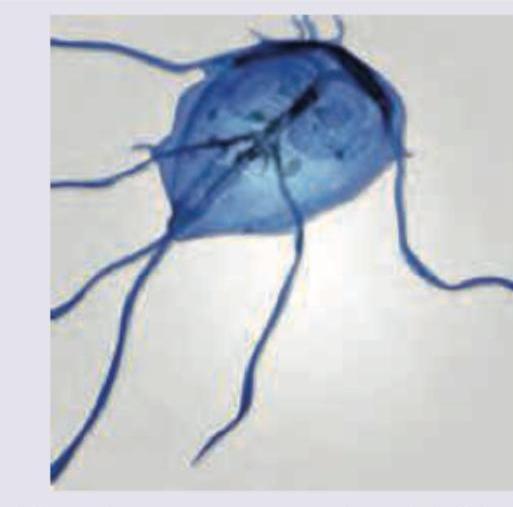
All are used in treatment for the GIT parasite shown below except:
Explanation: **Explanation:** **Correct Option: C. Pirenzepine** Pirenzepine is a selective **M1-muscarinic receptor antagonist**. In the stomach, M1 receptors are located on the intramural ganglia of the vagus nerve. By blocking these receptors, Pirenzepine inhibits gastric acid secretion without significantly affecting heart rate or smooth muscle (which are mediated by M2 and M3 receptors). While largely superseded by Proton Pump Inhibitors (PPIs) and H2 blockers, it remains a classic pharmacological example of a selective anticholinergic used for peptic ulcer disease. **Analysis of Incorrect Options:** * **A. Dicyclomine:** This is a non-selective antispasmodic used primarily for **Irritable Bowel Syndrome (IBS)** and smooth muscle spasms. It does not have a significant effect on gastric acid secretion. * **B. Methacholine:** This is a **cholinergic agonist** (parasympathomimetic). It would stimulate rather than inhibit gastric acid. It is clinically used in the "Methacholine Challenge Test" to diagnose bronchial hyperreactivity (Asthma). * **C. Aclidinium:** This is a long-acting muscarinic antagonist (LAMA) used via inhalation for the maintenance treatment of **COPD**. It targets M3 receptors in the bronchioles. **High-Yield Clinical Pearls for NEET-PG:** * **Telenzepine** is another selective M1 blocker similar to Pirenzepine but more potent. * **Propantheline and Oxyphenonium** are non-selective quaternary ammonium anticholinergics formerly used for ulcers; however, they cause significant side effects like dry mouth and urinary retention. * **Drug of Choice (DOC):** For Peptic Ulcer Disease, the DOC is **Proton Pump Inhibitors (PPIs)** like Omeprazole. For NSAID-induced ulcers, the DOC is also PPIs (though Misoprostol is a specific prophylactic agent).
Explanation: **Explanation:** **Ondansetron** is the prototype of the **5-HT3 receptor antagonists**, a class of potent antiemetics. 1. **Why Option B is the correct answer (The Exception):** Ondansetron is **not a dopamine (D2) antagonist**. Unlike older antiemetics like Metoclopramide or Domperidone, Ondansetron specifically blocks serotonin (5-HT3) receptors. It does not possess any significant activity at dopamine, histamine, or muscarinic receptors, which is why it lacks extrapyramidal side effects (like dystonia). 2. **Analysis of other options:** * **Option A:** It is indeed a **Drug of Choice (DOC)** for preventing and treating chemotherapy-induced nausea and vomiting (CINV), as well as radiotherapy-induced and postoperative vomiting. * **Option C:** Its primary mechanism of action is the competitive blockade of **5-HT3 receptors** located on vagal afferents in the gastrointestinal tract and the Solitary Tract Nucleus. * **Option D:** It acts both peripherally and centrally on the **Chemoreceptor Trigger Zone (CTZ)** and the vomiting center in the medulla to inhibit the emetic reflex. **High-Yield Clinical Pearls for NEET-PG:** * **Side Effects:** The most common side effects are **headache** and constipation. * **ECG Changes:** A critical high-yield fact is that Ondansetron can cause **QT interval prolongation**, requiring caution in patients with electrolyte imbalances or congenital long QT syndrome. * **Metabolism:** It is primarily metabolized by the liver (CYP2D6); dose adjustment is needed in severe hepatic impairment. * **Ineffectiveness:** It is generally **ineffective in Motion Sickness**, which is primarily mediated by H1 and M1 receptors.
Explanation: **Explanation:** Nizatidine is a second-generation H2-receptor antagonist used primarily for peptic ulcer disease and GERD. The correct answer is **Option D** because Nizatidine is associated with **bradycardia**, not tachycardia. **1. Why Option D is correct (The Exception):** Unlike most H2 blockers, Nizatidine inhibits the enzyme **acetylcholinesterase**. This leads to an increase in acetylcholine levels, which exerts a parasympathomimetic effect on the heart, resulting in **bradycardia**. Therefore, the statement that it causes tachycardia is false. **2. Analysis of Incorrect Options:** * **Option A:** Nizatidine is indeed a potent H2-receptor antagonist. It competitively inhibits histamine at the H2 receptors of gastric parietal cells, reducing both basal and stimulated gastric acid secretion. * **Option B:** Nizatidine is unique among H2 blockers (like Cimetidine or Ranitidine) because it undergoes little to no first-pass metabolism, resulting in nearly **100% oral bioavailability**. * **Option C:** Due to its anticholinesterase activity, Nizatidine increases cholinergic stimulation in the GI tract, which **enhances gastric emptying** (prokinetic-like effect). This makes it particularly useful in patients with concurrent gastroparesis. **High-Yield Clinical Pearls for NEET-PG:** * **Bioavailability Trick:** Remember **N**izatidine = **N**early 100%. * **Metabolism:** Unlike Cimetidine, Nizatidine does **not** significantly inhibit Cytochrome P450 enzymes, leading to fewer drug-drug interactions. * **Anti-androgenic effects:** Nizatidine (and Famotidine) does **not** cause gynecomastia or impotence, unlike Cimetidine. * **Prokinetic effect:** It is the only H2 blocker with significant anticholinesterase activity.
Explanation: **Explanation:** **Lubiprostone** is the correct answer. It is a bicyclic fatty acid derivative that acts as a **selective chloride channel activator**. Specifically, it targets the **ClC-2 (Type 2 Chloride Channels)** located on the apical membrane of the intestinal epithelium. By opening these channels, it increases the secretion of chloride-rich fluid into the intestinal lumen. This fluid secretion softens the stool and enhances intestinal motility, making it highly effective for chronic idiopathic constipation and Irritable Bowel Syndrome with constipation (IBS-C). **Analysis of Incorrect Options:** * **A. Docusate:** This is a **stool softener (surfactant)**. It works by lowering the surface tension of the stool, allowing water and lipids to penetrate and soften the fecal mass. * **B. Anthraquinone (e.g., Senna):** This belongs to the **stimulant laxative** group. It undergoes bacterial activation in the colon to produce derivatives that directly irritate the mucosa and stimulate the myenteric plexus to increase peristalsis. * **C. Bisacodyl:** Another **stimulant laxative**. It acts directly on the colonic mucosa to stimulate sensory nerve endings, thereby increasing propulsive contractions. **High-Yield NEET-PG Pearls:** * **Linaclotide & Plecanatide:** These are other secretagogues often compared with Lubiprostone. They act by stimulating **Guanylate Cyclase-C (GC-C)**, increasing cGMP, which ultimately opens the **CFTR** chloride channels. * **Prucalopride:** A highly selective **5-HT4 receptor agonist** used for chronic constipation. * **Methylnaltrexone/Alvimopan:** Peripheral **mu-opioid receptor antagonists** used specifically for opioid-induced constipation without reversing central analgesia.
Explanation: **Explanation:** Chemotherapy-induced nausea and vomiting (CINV) is a complex process involving multiple neurotransmitter pathways in the Chemoreceptor Trigger Zone (CTZ) and the gastrointestinal tract. Effective management often requires a **multimodal approach** targeting different receptors. * **Ondansetron:** A 5-HT3 receptor antagonist. It is the first-line drug for preventing the **acute phase** of CINV (within 24 hours). It works by blocking serotonin receptors on vagal afferents in the gut and the CTZ. * **Aprepitant:** A Neurokinin-1 (NK1) receptor antagonist. It blocks the action of Substance P. It is highly effective for the **delayed phase** of CINV (24–120 hours) and is typically used in highly emetogenic regimens (e.g., Cisplatin). * **Dexamethasone:** A corticosteroid that acts as an **adjuvant antiemetic**. While its exact mechanism is unclear, it is believed to reduce prostaglandin synthesis and decrease blood-brain barrier permeability to emetogenic toxins. It significantly enhances the efficacy of both 5-HT3 and NK1 antagonists. Since all three drugs are standard components of antiemetic protocols (often used in combination as "Triple Therapy"), **Option D** is the correct answer. **High-Yield Clinical Pearls for NEET-PG:** * **Drug of choice for Cisplatin-induced vomiting:** Triple therapy (Ondansetron + Dexamethasone + Aprepitant). * **Drug of choice for Motion Sickness:** Hyoscine (Scopolamine). * **Drug of choice for Morning Sickness (Pregnancy):** Doxylamine + Pyridoxine. * **Side effect of Ondansetron:** QT interval prolongation and headache. * **Palonosetron:** A second-generation 5-HT3 antagonist with a longer half-life, effective for both acute and delayed emesis.
Explanation: **Explanation:** **Magaldrate** is a complex hydrated complex of **magnesium and aluminium hydroxides** (specifically, hydrated magnesium aluminate) [1]. It is not a simple physical mixture but a chemical combination. 1. **Why Option C is correct:** When Magaldrate comes into contact with gastric hydrochloric acid (HCl), it undergoes a chemical reaction that breaks the complex down into its constituent parts: **Magnesium hydroxide** and **Aluminium hydroxide** [1]. These then react further with HCl to form magnesium chloride, aluminium chloride, and water, thereby neutralizing the acid. 2. **Why other options are incorrect:** * **Option A:** This is incomplete. Magaldrate contains both metals, not just magnesium. * **Options B & D:** These include **Calcium carbonate**. Magaldrate does not contain calcium in its chemical structure. Calcium carbonate is a separate antacid (e.g., Tums) known for causing "acid rebound" and constipation. **High-Yield Clinical Pearls for NEET-PG:** * **The "Balanced" Effect:** Magaldrate is designed to balance the side effects of its components. Magnesium salts cause **osmotic diarrhea**, while aluminium salts cause **constipation** [1]. By combining them, the net effect on bowel movements is minimized. * **Potency:** It is considered a high-potency antacid with a sustained buffering action. * **Drug Interactions:** Like all antacids containing multivalent cations ($Mg^{2+}$, $Al^{3+}$), Magaldrate can chelate drugs like **Tetracyclines** and **Fluoroquinolones**, reducing their absorption. * **Contraindication:** Avoid in patients with **Renal Failure** due to the risk of hypermagnesemia and aluminium toxicity.
Explanation: ***Omeprazole + Clarithromycin + Metronidazole*** - This is a **standard triple therapy regimen** containing **1 PPI (Omeprazole) + 2 antibiotics (Clarithromycin + Metronidazole)** - Also known as **PCM regimen**, recommended as first-line therapy for H. pylori eradication - Given for **14 days** with cure rates of 70-85% - Particularly useful in **penicillin-allergic patients** *Metronidazole + Omeprazole + Amoxicillin* - This is actually a **valid triple therapy** (PPI + Amoxicillin + Metronidazole = PAM regimen) - However, this combination is **less preferred** than clarithromycin-based regimens due to lower efficacy in areas with metronidazole resistance - Used as alternative when clarithromycin resistance is high *Omeprazole + Amoxicillin + Metronidazole* - Same as option A (PAM regimen), just reordered - Valid but **less preferred** than clarithromycin-based triple therapy *Metronidazole + Ciprofloxacin + Amoxicillin* - **Missing the PPI component** - incomplete triple therapy - Standard H. pylori triple therapy MUST include a **proton pump inhibitor** - Ciprofloxacin is not a first-line agent for H. pylori
Explanation: ***Loperamide*** - **Loperamide** is the standard, first-line agent used for controlling **chemotherapy-induced diarrhea (CID)**, especially that caused by 5-fluorouracil (5-FU). - High doses of loperamide are often required in a fixed, scheduled regimen (e.g., 2 mg every 2 hours) until diarrhea resolves, to decrease gut motility and intestinal fluid secretion. *Ciprofloxacin* - **Ciprofloxacin** is an antibiotic used when diarrhea is suspected to be infectious or for prophylaxis against **neutropenic fever**, but it is not the symptomatic treatment for 5-FU toxicity. - It does not address the underlying pathology of 5-FU induced enteritis, which involves mucosal damage and malabsorption. *Atropine* - **Atropine** is primarily used to treat acute **cholinergic syndrome** (early diarrhea, sweating, lacrimation) which is a major toxicity associated with the chemotherapy drug **Irinotecan**, not 5-FU. - As an anticholinergic, it is not the preferred or protocol-driven agent for managing severe, non-infectious 5-FU-induced diarrhea. *Ornidazole* - This is an **antibiotic/antiprotozoal** medication, mainly effective against organisms like *Giardia* or *Amoeba*. - It is not indicated for symptomatic management of non-infectious **chemotherapy-induced toxicity** resulting from the direct mucosal damage inflicted by 5-FU.
Explanation: ***Metoclopramide*** - It is a **prokinetic agent** that acts as a D2 dopamine receptor antagonist, which increases esophageal tone, enhances peristalsis, and facilitates **gastric emptying**. - It specifically increases the pressure of the **Lower Esophageal Sphincter (LES)**, reducing reflux associated with GERD. *Pantoprazole* - This is a **Proton Pump Inhibitor (PPI)** that reduces acid production by irreversible inhibition of the H+/K+-ATPase pump in parietal cells [1], [2]. - It does not have any significant effect on **LES contraction** or **gastric motility**. *Vonoprazan* - This is a **Potassium-Competitive Acid Blocker (P-CAB)**, which directly and reversibly inhibits the H+/K+-ATPase pump. - Like other acid suppressants, it decreases acid secretion but does not improve **LES function** or **gastric emptying**. *Ranitidine* - This is an **H2 receptor antagonist** that blocks histamine receptors on parietal cells, leading to decreased acid secretion [3]. - It treats GERD by reducing acidity but has no direct action on **LES tone** or stomach **motility**.
Explanation: ***Albendazole*** - **CORRECTION:** The image displays *Giardia lamblia*, a flagellate protozoan characterized by its **pear-like shape** and multiple flagella. - **Albendazole IS actually used for Giardiasis** as an alternative agent with 80-90% efficacy. - However, it is **NOT a first-line agent** for *Giardia lamblia*. While it has activity against this protozoan, it is primarily known as an **antihelminthic drug** used for **nematode infections**. - First-line agents (metronidazole, tinidazole) are preferred due to better-established efficacy and shorter treatment courses. *Metronidazole* - **Metronidazole** is a **first-line treatment** for **Giardia lamblia** infections due to its high efficacy against anaerobic protozoa. - It works by producing **cytotoxic compounds** that damage parasitic DNA. - Standard regimen: 250mg three times daily for 5-7 days. *Tinidazole* - **Tinidazole** is another **first-line treatment** for **Giardia lamblia**, often preferred for its shorter treatment course and good tolerability. - It belongs to the same class as metronidazole (nitroimidazoles) and acts similarly by disrupting parasitic nucleic acid synthesis. - Single-dose regimen available: 2g as a single dose. *Paromomycin* - **Paromomycin** is an **aminoglycoside antibiotic** that has activity against various intestinal protozoa, including *Giardia lamblia*. - It is particularly useful in **pregnant patients** due to poor systemic absorption (luminal agent). - Efficacy is somewhat lower than nitroimidazoles (55-90% cure rate).
Acid-Peptic Disease Therapeutics
Practice Questions
Proton Pump Inhibitors
Practice Questions
H2 Receptor Antagonists
Practice Questions
Antacids and Mucosal Protectants
Practice Questions
Antiemetics
Practice Questions
Prokinetic Agents
Practice Questions
Laxatives and Purging Agents
Practice Questions
Antidiarrheal Drugs
Practice Questions
Drugs for Inflammatory Bowel Disease
Practice Questions
Pancreatic Enzyme Supplements
Practice Questions
Get full access to all questions, explanations, and performance tracking.
Start For Free