Renal stones are seen as a complication by using the following drug:
Which of the following is an example of topical administration producing only local effects (not systemic)?
Which of the following antidiabetic drugs (other than insulin) is indicated as adjunct therapy for the management of both type I and type II diabetes mellitus?
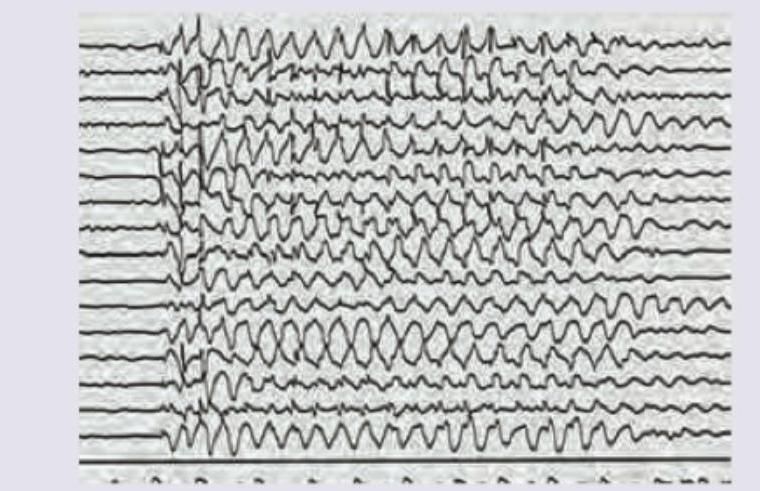
A 6-year-old child has poor school performance. On scolding by teacher abnormal behavior is noted. EEG is performed. Which of the following drugs will cause worsening of the patient?
A young male, Farhan, suffers from a seizure disorder which is characterized by tonic rigidity of limbs followed in 20-30 seconds by tremors progressing to massive jerking of the body. This clonic phase lasts for 1-3 minutes. The anti-seizure drug of choice for this patient is:
A patient presents with painful oral ulcers and target lesions on extremities. Which drug is MOST likely to cause this condition?
Furosemide causes all except -
How do thiazides cause hypercalcemia?
Which diuretic can be used in renal failure?
Which of the following side effects is associated with Spironolactone?
Explanation: ***Zonisamide*** - **Zonisamide** is a sulfonamide derivative that can inhibit **carbonic anhydrase**, leading to metabolic acidosis and increased urinary calcium excretion, which promotes the formation of **kidney stones**. - Patients on zonisamide should be monitored for **renal stone formation** and advised to maintain adequate hydration. *Oxcarbazepine* - **Oxcarbazepine** is an antiepileptic drug known for causing **hyponatremia** and, less commonly, dermatological reactions such as rash. - It is not typically associated with a significant risk of **renal stone formation**. *Phenytoin* - **Phenytoin** is an older antiepileptic drug commonly associated with side effects such as **gingival hyperplasia**, hirsutism, and folate deficiency. - While it has various side effects, **nephrolithiasis** (kidney stones) is not a common or recognized complication. *Tiagabine* - **Tiagabine** is an antiepileptic drug that works by inhibiting GABA reuptake. Its main side effects include dizziness, weakness, and somnolence. - There is no significant evidence to suggest that **tiagabine** causes **renal stone formation**.
Explanation: ***Topical corticosteroid cream*** - When applied to the skin for conditions like dermatitis, topical corticosteroids primarily exert their effects at the site of application, reducing **local inflammation** and itching. - While systemic absorption can occur with potent steroids over large areas, typical use aims for **localized action** without significant systemic effects. *Sublingual nitroglycerin* - This route is designed for **rapid systemic absorption** through the oral mucosa, bypassing first-pass metabolism to quickly treat angina. - The goal is a **widespread vasodilatory effect** throughout the body, not a local one within the mouth. *Transdermal patch* - Transdermal patches, such as those for nicotine or fentanyl, are specifically designed to deliver medication **systemically** through the skin into the bloodstream over a prolonged period. - They provide a **sustained release** and systemic therapeutic effect throughout the body. *Rectal diazepam* - Administered rectally, diazepam is absorbed into the systemic circulation to produce **CNS effects** such as sedation, anxiolysis, or anticonvulsant activity. - Although the administration is local, the intended clinical effect is **systemic** and widespread throughout the body.
Explanation: Pramlintide - Pramlintide is an amylin analog indicated as an adjunct therapy to insulin for both type 1 and type 2 diabetes, helping to regulate post-prandial glucose. - It slows gastric emptying, suppresses postprandial glucagon secretion, and promotes satiety, leading to reduced insulin requirements and improved glycemic control. Sulphonylureas - Sulphonylureas primarily stimulate insulin secretion from pancreatic beta cells, making them effective only in Type 2 diabetes where some beta-cell function is preserved [2]. - They are not indicated for Type 1 diabetes because these patients have absolute insulin deficiency due to beta cell destruction. Metformin - Metformin is a biguanide that primarily reduces hepatic glucose production and improves insulin sensitivity in peripheral tissues. - It is a first-line treatment for Type 2 diabetes but is generally not used for Type 1 diabetes as it does not address the fundamental lack of insulin. Acarbose - Acarbose is an alpha-glucosidase inhibitor that works by delaying carbohydrate absorption from the gastrointestinal tract, thus reducing postprandial glucose spikes [1]. - While it can be used in Type 2 diabetes to manage postprandial hyperglycemia, it is not typically indicated as an adjunct for Type 1 diabetes alongside insulin [3].
Explanation: ***Carbamazepine*** - The EEG image shows **generalized spike-wave complexes at 3 Hz**, which are characteristic of **absence seizures** (also known as petit mal seizures). - **Carbamazepine** is known to **exacerbate absence seizures** and should be avoided in patients with this diagnosis. *Ethosuximide* - This is a **first-line drug** specifically for treating **absence seizures**. - It works by blocking **T-type calcium channels** in the thalamus, effectively reducing spike-wave discharges. *Valproate* - **Valproate** is a broad-spectrum anticonvulsant effective against various seizure types, including **absence seizures**, generalized tonic-clonic seizures, and myoclonic seizures. - It is an appropriate choice if ethosuximide is ineffective or if other seizure types coexist. *Clonazepam* - **Clonazepam** is a **benzodiazepine** that can be used as an add-on therapy for **absence seizures**, especially in refractory cases. - While it has sedative side effects, it does not typically worsen absence seizures; rather, it helps control them.
Explanation: ***Valproic acid***\n- The description of tonic rigidity followed by tremors and massive jerking of the body is characteristic of a **generalized tonic-clonic seizure (GTCS)** [1], [2].\n- **Valproic acid** is a **broad-spectrum antiepileptic drug** and is considered the **drug of choice** for GTCS due to its efficacy across multiple seizure types and favorable profile for long-term management [1].\n- It is the **most commonly recommended first-line agent** for newly diagnosed GTCS in most clinical guidelines [1].\n\n*Clonazepam*\n- **Clonazepam** is a benzodiazepine primarily used for absence seizures, myoclonic seizures, and status epilepticus [1].\n- While it has broad anti-seizure activity, it is **not first-line monotherapy** for long-term management of GTCS due to concerns about **tolerance, dependence, and sedation** [1].\n\n*Ethosuximide*\n- **Ethosuximide** is **specifically indicated only for absence seizures** (petit mal seizures).\n- It has **no efficacy against tonic-clonic seizures** and would be completely inappropriate for this patient.\n\n*Fosphenytoin*\n- **Fosphenytoin** is a prodrug of phenytoin and is an effective treatment for generalized tonic-clonic seizures [1].\n- While phenytoin/fosphenytoin is a valid first-line option for GTCS, **valproic acid is generally preferred** as the drug of choice due to its **broader spectrum of activity**, better tolerability profile, and effectiveness across more seizure types [1].\n- Fosphenytoin is commonly used in both acute management (status epilepticus) and chronic therapy, but requires monitoring for side effects like gingival hyperplasia, hirsutism, and drug interactions.
Explanation: ***Allopurinol*** - **Allopurinol** is a well-known cause of drug-induced **Stevens-Johnson Syndrome (SJS)** or **Toxic Epidermal Necrolysis (TEN)**, which presents with typical mucocutaneous lesions like painful oral ulcers and target lesions on the skin. - The drug is frequently implicated, especially in patients with **renal impairment** or those started on high doses, making it the most likely choice given the severe symptoms. *Metformin* - **Metformin** is a common medication for type 2 diabetes, primarily causing **gastrointestinal side effects** like nausea, diarrhea, and abdominal discomfort. - It is **rarely associated** with severe cutaneous adverse reactions like SJS/TEN. *Atorvastatin* - **Atorvastatin** is a statin commonly used for hyperlipidemia, and its most common side effects include **myalgia**, headache, and gastrointestinal issues. - While it can rarely cause *rashes*, it is **not a typical or frequent cause** of severe mucocutaneous reactions such as target lesions or painful oral ulcers characteristic of SJS/TEN. *Amlodipine* - **Amlodipine**, a calcium channel blocker, is typically associated with side effects such as **edema**, headache, and flushing. - Although drug eruptions can occur with amlodipine, **severe mucocutaneous reactions** like SJS/TEN presenting with target lesions and oral ulcers are **exceedingly rare** and not characteristic of this drug.
Explanation: ***Hypercalcemia*** - Furosemide, a **loop diuretic**, inhibits the reabsorption of calcium in the thick ascending limb of the loop of Henle, leading to increased urinary calcium excretion and thus **hypocalcemia**, not hypercalcemia. - This effect makes loop diuretics useful in managing **hypercalcemia** by promoting calcium excretion. *Hypokalemia* - Furosemide inhibits the Na-K-2Cl cotransporter, leading to increased delivery of sodium to the collecting duct, which enhances potassium secretion and can cause **hypokalemia**. - Monitoring serum potassium levels and potassium supplementation are often necessary during furosemide therapy. *Ototoxicity* - Furosemide can cause **ototoxicity**, particularly with rapid intravenous administration or in patients with renal impairment. - This adverse effect typically manifests as **tinnitus** or **hearing loss**, which can be transient or permanent. *Hyperuricemia* - Furosemide competes with uric acid for secretion in the proximal tubule, leading to decreased uric acid excretion and subsequently **hyperuricemia**. - This can precipitate or exacerbate **gout attacks** in susceptible individuals.
Explanation: ***Decreased calcium excretion*** - Thiazides inhibit the **Na-Cl co-transporter** in the **distal convoluted tubule**, leading to increased reabsorption of calcium [1], [2]. - This increased reabsorption of calcium is mediated by a low intracellular sodium concentration, which enhances the activity of the **Na+/Ca2+ exchanger** on the basolateral membrane [1]. *Increased parathyroid hormone secretion* - Thiazides **do not directly stimulate** parathyroid hormone (PTH) secretion; instead, they *decrease* calcium excretion, which would typically *lower* PTH levels through negative feedback. - Elevated PTH would lead to increased bone resorption and kidney calcium reabsorption, but this is not the **primary mechanism** for thiazide-induced hypercalcemia [2]. *Decreased calcitonin secretion* - **Calcitonin** is a hormone that *lowers* blood calcium levels, and its decrease would theoretically contribute to hypercalcemia. - However, thiazides have **no direct effect** on calcitonin secretion, making this an unlikely primary mechanism. *Increased calcium absorption* - While increased calcium absorption from the gut can contribute to hypercalcemia, thiazides do **not directly increase intestinal calcium absorption**. - Their primary action for influencing calcium levels is within the **kidney**, specifically on reabsorption, not absorption from the GI tract [1], [2].
Explanation: **Explanation:** **Furosemide** is the correct answer because it is a high-ceiling loop diuretic that remains effective even when the Glomerular Filtration Rate (GFR) falls below 30 mL/min. In renal failure, the delivery of solutes to the distal nephron is reduced; loop diuretics are potent enough to inhibit the $Na^+-K^+-2Cl^-$ symporter in the thick ascending limb, maintaining diuresis and managing fluid overload in patients with chronic kidney disease (CKD). **Why the other options are incorrect:** * **Chlorothiazide & Chlorthalidone:** These are Thiazide/Thiazide-like diuretics. They generally lose their efficacy when GFR is less than 30 mL/min (except for Metolazone and Indapamide). Using them in advanced renal failure is ineffective for fluid management. * **Mannitol:** This is an osmotic diuretic. In renal failure, Mannitol is not excreted efficiently, leading to its accumulation in the extracellular fluid. This causes "osmotic shift," drawing water out of cells and potentially leading to acute pulmonary edema or congestive heart failure. It is contraindicated in established anuria. **High-Yield Clinical Pearls for NEET-PG:** * **Drug of Choice:** Furosemide is the drug of choice for acute pulmonary edema and edema associated with CKD. * **Metolazone Exception:** While most thiazides fail in renal failure, Metolazone can be combined with Loop diuretics (Sequential Nephron Blockade) to treat refractory edema in CKD patients. * **Ototoxicity:** Furosemide can cause dose-dependent ototoxicity, especially when administered rapidly IV or combined with aminoglycosides. * **Electrolyte Profile:** Loop diuretics cause "Hypo-everything" (Hypokalemia, Hypomagnesemia, Hypocalcemia), except for Hyperuricemia and Hyperglycemia.
Explanation: **Explanation:** **Spironolactone** is a potassium-sparing diuretic that acts as a competitive antagonist of the **Mineralocorticoid Receptor (Aldosterone receptor)** in the late distal tubule and collecting duct. **Why Hyperkalemia is Correct:** Aldosterone normally promotes the reabsorption of sodium ($Na^+$) and the excretion of potassium ($K^+$) and hydrogen ions ($H^+$). By blocking this receptor, Spironolactone prevents $K^+$ secretion into the tubular lumen. This leads to the retention of potassium in the blood, resulting in **Hyperkalemia**, its most significant and potentially life-threatening side effect. **Analysis of Incorrect Options:** * **A. Alkalosis:** Spironolactone causes **Metabolic Acidosis** (not alkalosis) because it inhibits the excretion of $H^+$ ions. * **B. Hirsutism:** Spironolactone actually has **anti-androgenic** properties (it blocks androgen receptors and inhibits steroidogenesis). Therefore, it is used to *treat* hirsutism in conditions like PCOS. A common side effect in males, however, is **gynecomastia**. * **D. Hyperglycemia:** This is a classic side effect of **Thiazides and Loop diuretics**, which can impair insulin release. Spironolactone does not typically affect blood glucose levels. **High-Yield Clinical Pearls for NEET-PG:** * **Eplerenone** is a more selective aldosterone antagonist with fewer endocrine side effects (less risk of gynecomastia) compared to Spironolactone. * **Drug Interaction:** Avoid combining Spironolactone with ACE inhibitors or ARBs, as this significantly increases the risk of severe hyperkalemia. * **Indication of Choice:** It is the diuretic of choice for patients with **Cirrhosis with Ascites** and is proven to reduce mortality in **Chronic Heart Failure (NYHA Class II-IV)**.
Get full access to all questions, explanations, and performance tracking.
Start For Free