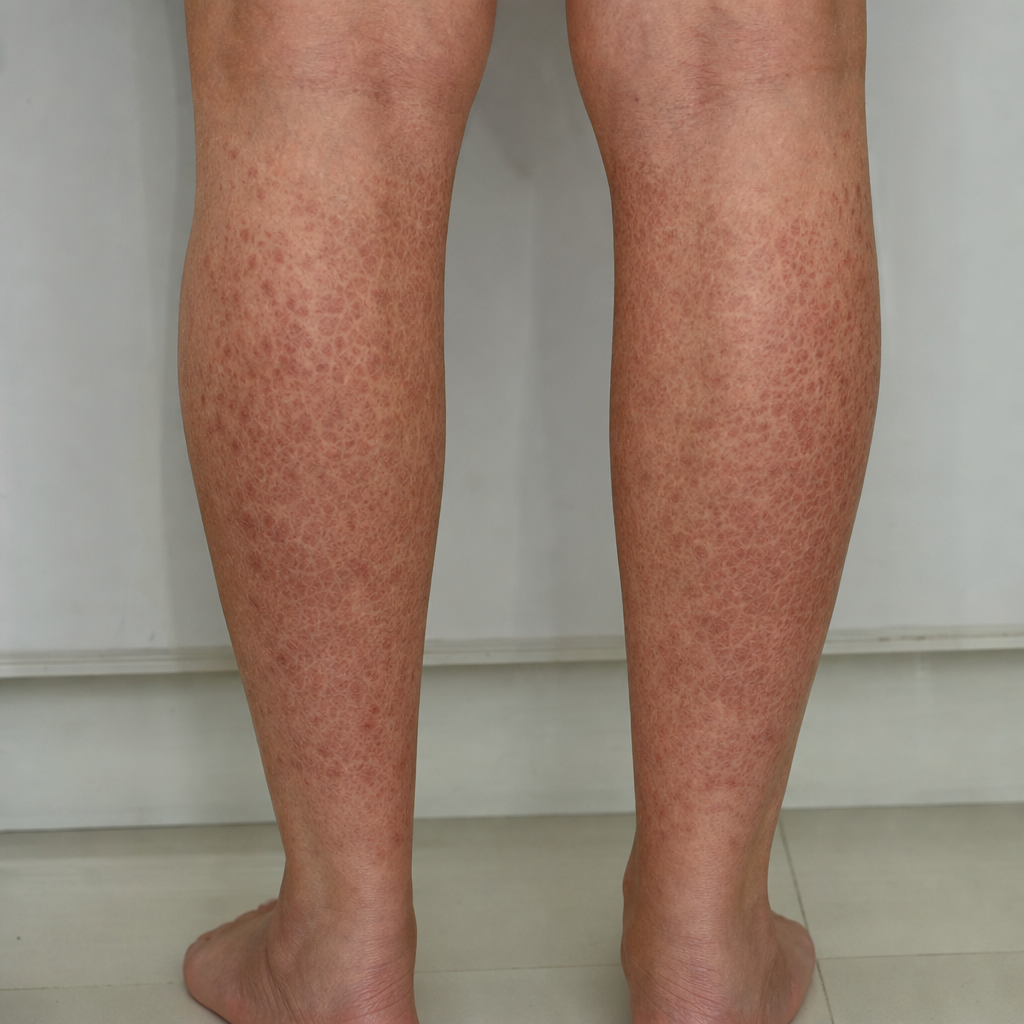
Dantrolene sodium reduces skeletal muscle tone by:
Buspirone is used as a/an?
Which of the following drugs can be used as a transcranial patch for the treatment of parkinsonism?
A 10-year-old boy presents with difficulty in learning at school. He experiences short lapses of awareness with eyelid fluttering every 5–10 minutes. EEG studies reveal brief 3 Hz spike and wave discharges appearing synchronously in all leads. Which of the following drugs would be effective but has the disadvantage that it causes sedation and tolerance?
Which of the following is NOT a feature of opioid intake?
Which of the following adverse effects can occur even after the offending drug has been withdrawn a long time back?
Natalizumab is used in the treatment of which condition?
A hospital nurse is taking Imipramine for a phobic anxiety disorder, and her patient is being treated with chlorpromazine for a psychotic disorder. Which of the following adverse effects is likely to occur in both of them?
Which antiepileptic drug does not act via inhibition of sodium channels?
Which of the following is NOT a serotonin-norepinephrine reuptake inhibitor?
Explanation: ### Explanation **Mechanism of Action (Correct Option D):** Dantrolene sodium is a **peripherally acting** skeletal muscle relaxant. Its primary mechanism involves binding to the **Ryanodine Receptor (RyR1)** channels located on the membrane of the sarcoplasmic reticulum (SR) in skeletal muscle fibers. By blocking these channels, it inhibits the release of calcium ions ($Ca^{2+}$) from the SR into the cytosol. Since $Ca^{2+}$ is essential for the interaction between actin and myosin (excitation-contraction coupling), its reduction leads to decreased muscle contraction without affecting neuromuscular transmission or the electrical excitability of the muscle membrane. **Analysis of Incorrect Options:** * **Option A:** Reducing acetylcholine (ACh) release is the mechanism of **Botulinum toxin**. Dantrolene acts distal to the neuromuscular junction. * **Option B:** Suppressing spinal polysynaptic reflexes is the mechanism of **centrally acting muscle relaxants** like Baclofen (GABA-B agonist) or Diazepam (GABA-A facilitator). * **Option C:** Inhibiting the generation of muscle action potentials is characteristic of **local anesthetics** or certain toxins (like Tetrodotoxin), which block voltage-gated sodium channels. Dantrolene does not interfere with the action potential itself. **High-Yield Clinical Pearls for NEET-PG:** * **Drug of Choice (DOC):** Dantrolene is the life-saving DOC for **Malignant Hyperthermia** (triggered by volatile anesthetics or succinylcholine) and **Neuroleptic Malignant Syndrome (NMS)**. * **Specificity:** It is selective for skeletal muscle because it targets the RyR1 isoform; cardiac and smooth muscles primarily utilize the RyR2 isoform, which is less affected by dantrolene. * **Side Effect:** Significant **hepatotoxicity** can occur with chronic use (monitor LFTs).
Explanation: **Explanation:** Buspirone is a unique non-benzodiazepine drug used primarily as an **anxiolytic**. Its mechanism of action involves acting as a **selective partial agonist at the 5-HT1A receptors** in the brain. Unlike benzodiazepines, it does not interact with the GABA-A receptor complex, which accounts for its distinct clinical profile. **Why the other options are incorrect:** * **Sedative:** Buspirone lacks sedative properties. It does not cause significant drowsiness or cognitive impairment, making it suitable for patients who need to remain alert. * **Muscle relaxant:** It has no effect on skeletal muscle tone, unlike benzodiazepines (e.g., Diazepam), which act on spinal GABA receptors to reduce spasticity. * **Anticonvulsant:** Buspirone does not possess anti-seizure activity and cannot be used in the management of epilepsy or status epilepticus. **High-Yield Clinical Pearls for NEET-PG:** * **Slow Onset:** Unlike benzodiazepines, Buspirone has a delayed onset of action (taking **1–2 weeks** to show effects). It is used for Generalized Anxiety Disorder (GAD) but is **ineffective for acute anxiety or panic attacks**. * **Lack of Dependence:** It has **no potential for abuse**, no withdrawal symptoms, and does not potentiate the effects of alcohol. * **Side Effects:** Common side effects include dizziness, nausea, and headache. It does not cause psychomotor impairment (no "hangover" effect). * **Metabolism:** It is metabolized by **CYP3A4**; therefore, its levels can be increased by grapefruit juice or erythromycin.
Explanation: **Explanation:** **Rotigotine** is a non-ergot dopamine agonist (D2, D3, and D1 receptor stimulator) specifically designed for **transdermal delivery**. It is highly lipophilic, allowing it to be formulated as a once-daily **transdermal patch**. This delivery method provides continuous drug delivery over 24 hours, maintaining stable plasma levels and avoiding the "pulsatile" stimulation of dopamine receptors associated with oral medications, which helps in reducing motor fluctuations in Parkinson’s disease. **Analysis of Incorrect Options:** * **Levodopa (A):** It is the precursor of dopamine and the most effective drug for Parkinsonism. However, it has a short half-life and requires active transport across the gut and blood-brain barrier; it is not available as a patch. * **Apomorphine (C):** A potent dopamine agonist used as "rescue therapy" for acute "off" episodes. Due to extensive first-pass metabolism, it cannot be given orally. It is administered via **subcutaneous injection** or continuous infusion, not a patch. * **Aprantine (D):** This is a distractor. It is not a recognized drug for the treatment of Parkinson’s disease. **High-Yield Clinical Pearls for NEET-PG:** * **Rotigotine Patch:** Useful for patients with dysphagia or those requiring stable nocturnal symptom control. * **Dopamine Agonists:** Divided into Ergot (Bromocriptine, Pergolide) and Non-ergot (Pramipexole, Ropinirole, Rotigotine). Non-ergot derivatives are preferred due to the lack of risk for cardiac valvular fibrosis. * **Side Effects:** Like other dopamine agonists, Rotigotine can cause impulse control disorders (pathological gambling, hypersexuality) and sudden sleep attacks.
Explanation: **Explanation:** The clinical presentation of short lapses of awareness, eyelid fluttering, and the characteristic **3 Hz spike-and-wave discharges** on EEG is diagnostic of **Absence Seizures (Petit Mal)**. **Why Clonazepam is the correct answer:** While Ethosuximide and Valproate are the preferred first-line treatments for absence seizures, the question specifically asks for a drug that is effective but limited by **sedation and the development of tolerance**. **Clonazepam**, a benzodiazepine, fits this profile perfectly. It is highly effective in suppressing absence seizures but is rarely used as a first-line agent because patients quickly develop tolerance to its anti-seizure effects, and it causes significant CNS depression (sedation). **Analysis of Incorrect Options:** * **Ethosuximide (B):** This is the drug of choice for pure absence seizures. It works by blocking T-type Ca²⁺ channels. It does *not* typically cause significant tolerance. * **Valproic acid (D):** The drug of choice for absence seizures associated with generalized tonic-clonic seizures (GTCS). While it has side effects (hepatotoxicity, weight gain), tolerance is not a primary clinical concern. * **Diazepam (A):** While a benzodiazepine, it is primarily used for the acute management of Status Epilepticus (IV) or febrile seizures (rectal). It is not used for the long-term maintenance therapy of absence seizures. **High-Yield NEET-PG Pearls:** * **DOC for Absence Seizures:** Ethosuximide (if pure); Valproate (if mixed with GTCS). * **Mechanism of Ethosuximide:** Inhibition of T-type Calcium channels in thalamic neurons. * **Drugs that Aggravate Absence Seizures:** Phenytoin, Carbamazepine, and Vigabatrin. * **Benzodiazepine Limitation:** The main drawback of using BDZs like Clonazepam or Nitrazepam in chronic epilepsy is **tolerance** (downregulation of GABA-A receptors).
Explanation: **Explanation:** The correct answer is **D. Dilated pupils**. Opioids are central nervous system (CNS) depressants that typically cause **miosis** (pinpoint pupils), not dilation. **1. Why "Dilated Pupils" is the correct choice:** Opioids stimulate the **Edinger-Westphal nucleus** of the oculomotor nerve (CN III), leading to parasympathetic overactivity and constriction of the pupil (miosis). This is a hallmark sign of opioid use and overdose. In contrast, dilated pupils (mydriasis) are usually seen during **opioid withdrawal** or in specific cases like Pethidine (Meperidine) toxicity, which has atropine-like anticholinergic effects. **2. Why the other options are incorrect:** * **A & B (Relaxation and Euphoria):** Opioids act on **mu (μ) receptors** in the reward pathway of the brain (ventral tegmental area and nucleus accumbens), leading to a sense of well-being, detachment from anxiety, and intense pleasure. * **C (Analgesia):** This is the primary therapeutic effect of opioids. They inhibit the transmission of pain signals in the spinal cord and alter the perception of pain in the higher cortical centers. **High-Yield Clinical Pearls for NEET-PG:** * **The Triad of Opioid Overdose:** Coma, Pinpoint pupils, and Respiratory depression. * **Tolerance:** Tolerance develops to most effects (analgesia, euphoria, respiratory depression) **EXCEPT** for miosis and constipation. These two signs remain even in chronic users. * **Exception to Miosis:** **Pethidine** causes mydriasis due to its antimuscarinic action. * **Antidote:** **Naloxone** is the drug of choice for acute opioid poisoning (short-acting IV antagonist).
Explanation: ### Explanation **Correct Answer: B. Tardive dyskinesia** **Mechanism and Rationale:** Tardive dyskinesia (TD) is a delayed-onset extrapyramidal side effect (EPS) caused by long-term use of dopamine receptor antagonists (typically first-generation antipsychotics like Haloperidol). The underlying pathophysiology involves **dopamine receptor supersensitivity** in the nigrostriatal pathway. Due to chronic blockade, the brain upregulates the number and sensitivity of D2 receptors. Consequently, even after the drug is withdrawn, these hypersensitive receptors react exaggeratedly to endogenous dopamine, leading to involuntary choreoathetoid movements (e.g., lip-smacking, tongue protrusion). Crucially, TD is often **irreversible** and can persist or even worsen immediately after drug discontinuation. **Analysis of Incorrect Options:** * **A. Paradoxical tachycardia:** This is an immediate pharmacological response (e.g., seen with atropine at low doses or as a reflex to vasodilators). It resolves once the drug is metabolized and cleared. * **C. Malignant hyperthermia:** This is a life-threatening, acute pharmacogenetic reaction to volatile anesthetics or succinylcholine. It occurs during or immediately after drug exposure and does not manifest long after withdrawal. * **D. Gynaecomastia:** While drugs like Spironolactone or Cimetidine cause this via hormonal imbalance, the effect typically regresses (if not fibrotic) once the offending agent is removed and hormone levels normalize. **NEET-PG High-Yield Pearls:** * **Treatment of TD:** The first step is to switch to an atypical antipsychotic (e.g., **Clozapine**). Specific treatments include VMAT-2 inhibitors like **Valbenazine** or **Deutetrabenazine**. * **The "Withdrawal Dyskinesia" Phenomenon:** Symptoms of TD often appear or worsen when the antipsychotic dose is reduced, as the "masking" effect of the dopamine blockade is removed. * **Risk Factors:** Elderly patients and those with long-term exposure to typical antipsychotics are at the highest risk.
Explanation: **Explanation:** **Natalizumab** is a humanized monoclonal antibody that targets the **$\alpha$4-integrin** (VLA-4) subunit. Its primary mechanism involves blocking the interaction between $\alpha$4-integrin on the surface of leukocytes and **VCAM-1** (Vascular Cell Adhesion Molecule-1) on vascular endothelial cells. By inhibiting this adhesion, it prevents leukocytes from crossing the blood-brain barrier and entering the Central Nervous System (CNS), thereby reducing the inflammatory destruction of myelin in **Multiple Sclerosis (MS)**. It is also used in Crohn’s disease. **Analysis of Incorrect Options:** * **B. Breast Carcinoma:** Treatment typically involves Trastuzumab (anti-HER2) or Pertuzumab, not Natalizumab. * **C. Psoriasis:** Common biologics used include Infliximab (anti-TNF$\alpha$), Ustekinumab (anti-IL-12/23), or Secukinumab (anti-IL-17A). * **D. B-cell Lymphoma:** Rituximab (anti-CD20) is the classic monoclonal antibody used for this condition. **High-Yield Clinical Pearls for NEET-PG:** * **PML Risk:** The most significant adverse effect of Natalizumab is **Progressive Multifocal Leukoencephalopathy (PML)**, caused by the reactivation of the **JC virus**. Patients must be screened for JC virus antibodies before starting therapy. * **Mechanism Mnemonic:** Natalizumab "prevents **N**eutrophils/leukocytes from **A**dhering" to the endothelium. * **FDA Indication:** It is generally reserved as a second-line therapy for relapsing-remitting MS due to the risk of PML.
Explanation: ### Explanation **Correct Answer: C. Orthostatic hypotension** **Mechanism:** The common denominator between **Imipramine** (a Tricyclic Antidepressant - TCA) and **Chlorpromazine** (a Low-potency Typical Antipsychotic) is their significant **alpha-1 ($\alpha_1$) adrenergic receptor blocking activity** [2]. When $\alpha_1$ receptors are blocked, the peripheral vasculature cannot effectively constrict upon standing. This leads to a sudden drop in blood pressure, resulting in **orthostatic (postural) hypotension** [1, 2]. Both drugs are notorious for this side effect, which is a major cause of falls and syncope in patients [2]. --- ### Why the other options are incorrect: * **A. Excessive salivation:** Both drugs possess strong **anticholinergic (antimuscarinic)** properties [2, 3]. This leads to decreased secretions, causing **dry mouth (xerostomia)**, not excessive salivation [2]. * **B. Pupillary constriction:** Due to their anticholinergic effects (blocking the $M_3$ receptors on the pupillary sphincter), both drugs cause **mydriasis (pupillary dilation)** and blurring of vision, rather than constriction (miosis) [2, 3]. * **C. Seizure:** While both drugs can lower the seizure threshold, this is typically a dose-dependent toxicity or an effect of overdose rather than a common adverse effect seen at therapeutic doses in both patients simultaneously. Orthostatic hypotension is a much more frequent clinical occurrence for both classes. --- ### NEET-PG High-Yield Pearls: * **The "3 Cs" of TCA Toxicity:** Coma, Convulsions, and Cardiotoxicity (Arrhythmias due to Na+ channel blockade). * **Chlorpromazine** is a low-potency antipsychotic; it has high sedative and anticholinergic side effects but a lower risk of Extrapyramidal Symptoms (EPS) compared to high-potency drugs like Haloperidol. * **Treatment of TCA-induced hypotension:** Use IV fluids and norepinephrine. Avoid epinephrine as it may worsen hypotension due to "epinephrine reversal" (beta-2 mediated vasodilation in the presence of alpha-blockade).
Explanation: **Explanation:** The correct answer is **Vigabatrin**. **1. Mechanism of Vigabatrin (Correct Answer):** Vigabatrin is a structural analog of GABA that acts as an **irreversible inhibitor of GABA-transaminase (GABA-T)**, the enzyme responsible for the degradation of GABA. By inhibiting this enzyme, it increases the concentration of GABA (the primary inhibitory neurotransmitter) in the synaptic cleft. It does not have any significant activity on voltage-gated sodium channels. **2. Analysis of Incorrect Options (Sodium Channel Blockers):** * **Phenytoin:** A classic example of a drug that blocks voltage-gated sodium channels in their inactive state, preventing high-frequency repetitive firing of action potentials. * **Carbamazepine:** Similar to phenytoin, it stabilizes the inactivated state of sodium channels. It is the drug of choice for trigeminal neuralgia. * **Lamotrigine:** A newer antiepileptic that blocks sodium channels and also inhibits the release of excitatory amino acids like glutamate. **3. High-Yield Clinical Pearls for NEET-PG:** * **Vigabatrin Side Effect:** The most characteristic and high-yield adverse effect is **permanent bilateral concentric visual field contraction (tunnel vision)**. Periodic perimetry is mandatory. * **Drug of Choice:** Vigabatrin is a first-line agent for **Infantile Spasms** (West Syndrome), especially when associated with Tuberous Sclerosis. * **Sodium Channel Blockers Mnemonic:** Remember **"PLC"** (Phenytoin, Lamotrigine, Carbamazepine) and **Valproate** (which has multiple mechanisms) as the primary sodium channel inhibitors. * **Contraindication:** Sodium channel blockers (like Phenytoin and Carbamazepine) can worsen **Absence Seizures** and **Myoclonic Seizures**.
Explanation: **Explanation:** The question asks to identify the drug that does **not** belong to the Serotonin-Norepinephrine Reuptake Inhibitor (SNRI) class. **1. Why Tianeptine is the Correct Answer:** Tianeptine is a unique antidepressant that is chemically classified as a **Selective Serotonin Reuptake Enhancer (SSRE)**. Unlike SSRIs or SNRIs, it paradoxically increases the presynaptic uptake of serotonin, thereby decreasing serotonin levels in the synaptic cleft. It also modulates glutamate neurotransmission and has neuroprotective effects. It is primarily used for Major Depressive Disorder but does not inhibit the reuptake of norepinephrine or serotonin. **2. Why the Other Options are Incorrect:** * **Venlafaxine (A):** The first SNRI introduced. At low doses, it primarily inhibits serotonin reuptake; at higher doses, it significantly inhibits norepinephrine reuptake. * **Duloxetine (B):** A potent SNRI used widely for depression, diabetic neuropathy, fibromyalgia, and stress urinary incontinence. * **Milnacipran (C):** An SNRI with a more balanced inhibition of both serotonin and norepinephrine reuptake compared to venlafaxine. It is frequently used in the management of fibromyalgia. **3. NEET-PG High-Yield Pearls:** * **SNRIs vs. TCAs:** SNRIs are often preferred over Tricyclic Antidepressants (TCAs) because they lack the potent antihistaminic, alpha-adrenergic blocking, and anticholinergic side effects. * **Desvenlafaxine:** This is the active metabolite of venlafaxine. * **Clinical Use:** SNRIs are first-line for depression associated with chronic pain (e.g., Duloxetine). * **Side Effects:** Hypertension is a notable side effect of SNRIs (especially Venlafaxine) due to increased norepinephrine levels.
General Anesthetics
Practice Questions
Local Anesthetics
Practice Questions
Sedative-Hypnotics
Practice Questions
Antiepileptic Drugs
Practice Questions
Antiparkinsonian Drugs
Practice Questions
Opioid Analgesics
Practice Questions
Drugs of Abuse and Addiction
Practice Questions
Psychostimulants
Practice Questions
Hallucinogens
Practice Questions
CNS Stimulants and Cognitive Enhancers
Practice Questions
Get full access to all questions, explanations, and performance tracking.
Start For Free