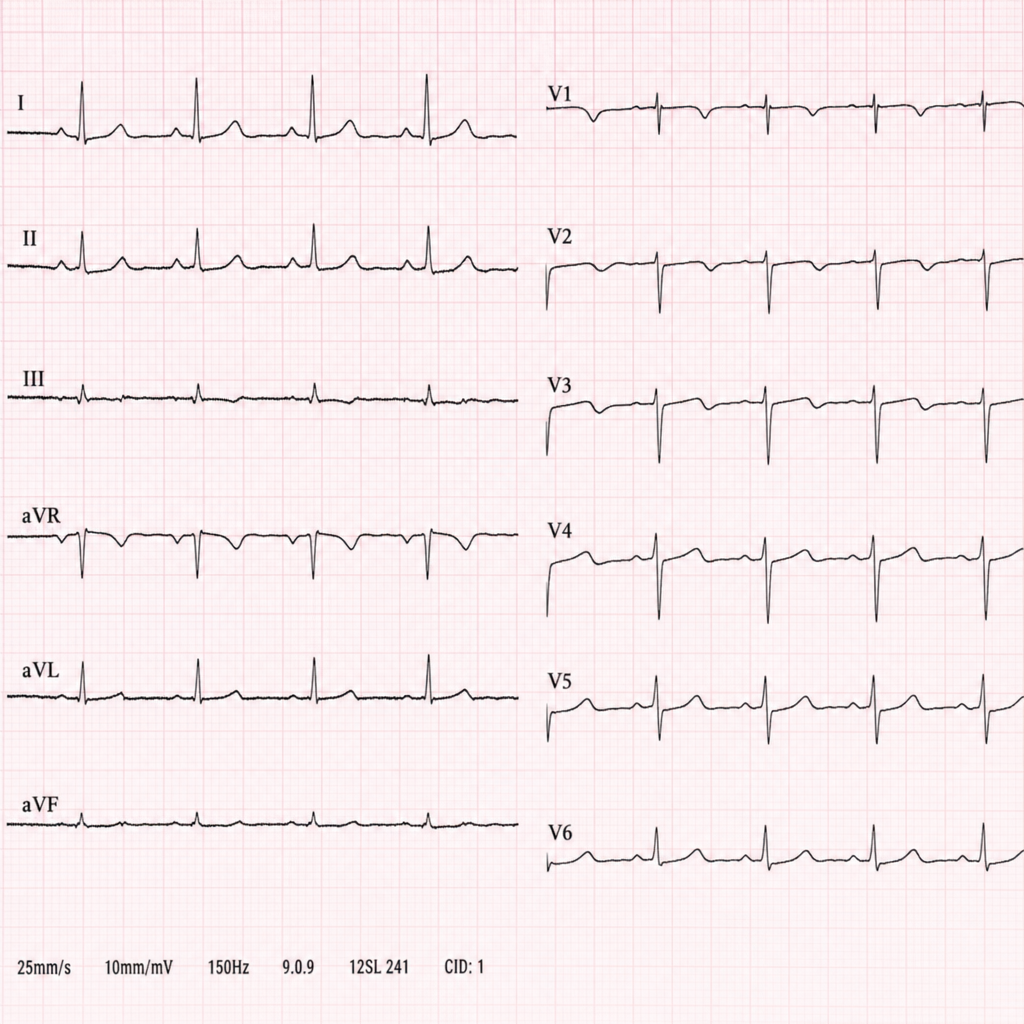
Which of the following is NOT included in the treatment of digoxin overdose?
What is the therapeutic plasma level of digoxin?
Valsartan differs from ramipril in the following respect?
Which among the following is an angiotensin receptor antagonist?
What is the mechanism of action of digitalis?
Which beta-blocker possesses peripheral vasodilator action?
All of the following can be used for the chronic oral treatment of arrhythmia except?
Which of the following is NOT a Class III antiarrhythmic agent?
All of the following are dihydropyridines except:
Which of the following is not a cardioselective beta blocker?
Explanation: **Explanation:** The correct answer is **D. Hemodialysis**. **Why Hemodialysis is NOT used:** Digoxin has a very **large volume of distribution (Vd ≈ 5–7 L/kg)** because it binds extensively to skeletal muscle tissues. It also has a high molecular weight. Because most of the drug is sequestered in the tissues rather than the plasma, extracorporeal removal methods like hemodialysis, peritoneal dialysis, and hemoperfusion are **ineffective** in clearing digoxin from the body. **Analysis of Incorrect Options:** * **A. Potassium:** Digoxin inhibits the Na+/K+ ATPase pump, competing with potassium. Hypokalemia exacerbates digoxin toxicity. If potassium levels are low or normal, cautious potassium supplementation is indicated to displace digoxin from the pump. (Note: In acute massive overdose, hyperkalemia may occur; in such cases, K+ is contraindicated). * **B. Lidocaine:** This is the drug of choice for treating digoxin-induced ventricular arrhythmias because it suppresses abnormal ventricular automaticity without significantly depressing AV conduction. * **C. Phenytoin:** It is particularly useful for digoxin-induced atrial tachycardias with AV block, as it can suppress ectopic foci while actually improving AV conduction. **High-Yield Clinical Pearls for NEET-PG:** * **Antidote of Choice:** Digoxin-specific antibody fragments (**DigiFab/Digibind**) is the definitive treatment for life-threatening toxicity. * **Most Common Arrhythmia:** PVCs (Bigeminy). * **Most Characteristic Arrhythmia:** Atrial Tachycardia with high-grade AV block. * **Visual Side Effect:** Xanthopsia (yellow-green halos around lights). * **ECG Changes (Therapeutic):** "Reverse Tick" or "Sagging" ST-segment depression.
Explanation: **Explanation:** Digoxin is a cardiac glycoside with a **narrow therapeutic index**, meaning the margin between a therapeutic dose and a toxic dose is very small [1]. Monitoring serum drug concentrations is critical for safety and efficacy. 1. **Why Option B is Correct:** The established therapeutic range for digoxin is generally **0.8–1.5 ng/ml** (some texts suggest 0.5–2.0 ng/ml). Within this range, the drug effectively increases vagal tone and inhibits the Na+/K+-ATPase pump to improve cardiac contractility and control ventricular rate in atrial fibrillation without causing significant toxicity [1], [2]. 2. **Why Other Options are Incorrect:** * **Option A (0.1–0.3 ng/ml):** This level is sub-therapeutic and will not provide the desired clinical effect. * **Option C (1.2–2 ng/ml):** While some patients may tolerate up to 2.0 ng/ml, levels above 1.5 ng/ml significantly increase the risk of toxicity, especially in patients with electrolyte imbalances [1], [2]. * **Option D (>2.4 ng/ml):** This is well into the **toxic range**. Digoxin toxicity typically manifests at levels >2.0 ng/ml [2]. **High-Yield Clinical Pearls for NEET-PG:** * **Toxicity Trigger:** Hypokalemia (low potassium) predisposes a patient to digoxin toxicity even if serum levels are within the "normal" range because potassium competes with digoxin for the Na+/K+-ATPase binding site. * **Antidote:** Digoxin-specific antibody fragments (**DigiFab/Digibind**) are used for life-threatening toxicity. * **ECG Changes:** The most common sign of toxicity is **PVCs** (Premature Ventricular Contractions); the most characteristic sign is **Paroxysmal Atrial Tachycardia with AV block** [3]. * **Visual Disturbance:** Xanthopsia (yellow-green vision) is a classic sign of digitalis toxicity.
Explanation: **Explanation:** The core difference between **Valsartan** (an Angiotensin Receptor Blocker - ARB) and **Ramipril** (an ACE Inhibitor) lies in their mechanism of action regarding the kinin system. **1. Why Option A is correct:** ACE (Angiotensin-Converting Enzyme) is identical to **Kininase II**, the enzyme responsible for the degradation of **bradykinin**. * **Ramipril (ACEI):** Inhibits Kininase II, leading to increased levels of bradykinin. This accumulation is responsible for the classic side effects of dry cough and angioedema. * **Valsartan (ARB):** Directly blocks the $AT_1$ receptor without affecting the ACE enzyme. Therefore, it **does not potentiate bradykinin**, making it a preferred alternative for patients who develop a cough on ACE inhibitors. **2. Why other options are incorrect:** * **Option B:** Both ACEIs and ARBs are **contraindicated** in bilateral renal artery stenosis. They prevent $AT_2$-mediated vasoconstriction of the efferent arteriole, which can lead to a precipitous drop in GFR and acute renal failure. * **Option C:** Neither drug impairs carbohydrate tolerance. In fact, both classes are known to **improve insulin sensitivity** and are the drugs of choice for hypertensive diabetic patients due to their nephroprotective effects. * **Option D:** Both ACEIs and ARBs are **teratogenic** (Category X). They have significant fetopathic potential, causing fetal renal anomalies, oligohydramnios, and skull hypoplasia. **Clinical Pearls for NEET-PG:** * **Dry Cough:** Occurs in ~10-15% of patients on ACEIs due to bradykinin and substance P accumulation in the lungs. * **First-line choice:** Both classes are first-line for Heart Failure (reduce remodeling) and Diabetic Nephropathy (reduce proteinuria). * **Hyperkalemia:** Both classes can cause hyperkalemia; monitor potassium levels closely.
Explanation: **Explanation:** The Renin-Angiotensin-Aldosterone System (RAAS) is a critical target in the management of hypertension and heart failure. The drugs listed act on different steps of this pathway. **1. Why Losartan is Correct:** **Losartan** belongs to the class of drugs known as **Angiotensin II Receptor Blockers (ARBs)**. These drugs act by selectively antagonizing the **AT1 receptors**, thereby blocking the actions of Angiotensin II (such as vasoconstriction and aldosterone release) regardless of how the Angiotensin II was synthesized. Unlike ACE inhibitors, ARBs do not interfere with the breakdown of bradykinin. **2. Why the other options are Incorrect:** * **Enalapril, Captopril, and Ramipril:** These drugs are **ACE Inhibitors (ACEIs)**. They work by inhibiting the Angiotensin-Converting Enzyme, which prevents the conversion of Angiotensin I to Angiotensin II. While they also inhibit the RAAS, their mechanism is enzyme inhibition rather than receptor antagonism. **3. High-Yield Clinical Pearls for NEET-PG:** * **Dry Cough:** A common side effect of ACE inhibitors (due to increased bradykinin levels in the lungs). ARBs like Losartan are the preferred alternative for patients who develop this cough. * **Fetotoxicity:** Both ACEIs and ARBs are **contraindicated in pregnancy** as they can cause fetal renal anomalies and oligohydramnios. * **Uricosuric Effect:** Losartan is unique among ARBs because it also increases the excretion of uric acid, making it a preferred choice for hypertensive patients with **gout**. * **Hyperkalemia:** Both classes can cause an increase in serum potassium levels; therefore, they should be used cautiously with potassium-sparing diuretics.
Explanation: ### Explanation **Mechanism of Action (The Correct Answer)** Digitalis (Digoxin) works by **reversibly inhibiting the Na+/K+ ATPase pump** located on the sarcolemma of cardiac myocytes [2, 5]. 1. **Ionic Shift:** Inhibition of this pump leads to an increase in intracellular Sodium ($Na^+$) [4]. 2. **Secondary Effect:** The high intracellular $Na^+$ reduces the concentration gradient that drives the **Na+/Ca2+ exchanger (NCX)** [4]. 3. **Inotropy:** Consequently, $Ca^{2+}$ extrusion from the cell is decreased, leading to increased intracellular $Ca^{2+}$ stores in the sarcoplasmic reticulum. This results in increased force of contraction (**Positive Inotropy**) [2, 4]. **Analysis of Incorrect Options** * **Option B:** There is no significant "Na+/H+ ATPase pump" targeted by digitalis in cardiac management. The primary target is specifically the Sodium-Potassium pump [1]. * **Option C:** Digoxin is primarily excreted **unchanged by the kidneys**. Unlike Digitoxin (which undergoes extensive hepatic metabolism), Digoxin does not rely on active liver metabolites for its primary action. * **Option D:** Digitalis **increases** intracellular calcium concentrations to improve contractility; it does not inhibit blood calcium levels [3]. **NEET-PG High-Yield Pearls** * **Vagal Effect:** Digitalis is also a **parasympathomimetic**; it increases vagal tone, slowing the heart rate (Negative Chronotropy) and AV conduction (Negative Dromotropy), making it useful in Atrial Fibrillation [1]. * **Electrolyte Sensitivity:** **Hypokalemia** predisposes to Digoxin toxicity because $K^+$ and Digoxin compete for the same binding site on the Na+/K+ ATPase pump [2]. * **ECG Changes:** Classic "reverse tick" or "hockey stick" ST-segment depression (Salvador Dali sign). * **Antidote:** Digibind (Digoxin-specific Fab fragments).
Explanation: The correct answer is **Carvedilol**. Beta-blockers are classified into three generations based on their pharmacological properties. [1] Carvedilol is a **third-generation, non-selective beta-blocker** that also possesses **alpha-1 ($\alpha_1$) adrenergic receptor blocking activity**. [3] This dual action results in peripheral vasodilation, which reduces systemic vascular resistance and afterload. [1, 3] **Why the correct option is right:** * **Carvedilol:** By blocking $\beta_1$, $\beta_2$, and $\alpha_1$ receptors, it provides both cardiac protection and vasodilation. [3] It also possesses antioxidant and anti-proliferative properties, making it a cornerstone in the management of chronic heart failure. **Why the other options are incorrect:** * **Propranolol (Option A):** A first-generation, non-selective beta-blocker. [2] It lacks $\alpha$-blocking activity and may actually cause transient peripheral vasoconstriction due to unopposed $\alpha$-action when $\beta_2$ receptors are blocked. * **Atenolol (Option B):** A second-generation, cardioselective ($\beta_1$) blocker. It does not have vasodilatory properties. * **Acebutolol (Option D):** A second-generation, cardioselective blocker with **Intrinsic Sympathomimetic Activity (ISA)**. While it causes less bradycardia, it is not a direct peripheral vasodilator. **High-Yield Clinical Pearls for NEET-PG:** * **Third-Generation Vasodilatory Beta-blockers:** [1] * **Via $\alpha_1$ blockade:** Carvedilol, Labetalol. [3] * **Via Nitric Oxide (NO) release:** Nebivolol (most $\beta_1$ selective). * **Via $\beta_2$ agonism:** Celiprolol. * **Labetalol** is the drug of choice for hypertension in pregnancy (Preeclampsia). [1]
Explanation: **Explanation:** The correct answer is **Esmolol** because of its unique pharmacokinetic profile. In the management of arrhythmias, the choice between oral and parenteral therapy depends on whether the goal is acute termination or chronic prophylaxis. **1. Why Esmolol is the correct answer:** Esmolol is an **ultra-short-acting**, cardioselective $\beta_1$ blocker. It is rapidly metabolized by **red blood cell esterases**, giving it an extremely short half-life of approximately **9 minutes**. Due to this rapid metabolism and its susceptibility to gastric acid, it cannot be administered orally. It is given exclusively via intravenous infusion for the acute management of supraventricular tachycardias (SVT), perioperative hypertension, or atrial fibrillation/flutter where rapid control is required. **2. Analysis of Incorrect Options:** * **Amiodarone (Class III):** Has a very long half-life (weeks to months) and is frequently used orally for the chronic maintenance of sinus rhythm in patients with atrial fibrillation or ventricular arrhythmias. * **Quinidine (Class IA):** An alkaloid that can be administered orally for the long-term prevention of SVT and ventricular tachycardia (though its use is declining due to side effects). * **Verapamil (Class IV):** A non-dihydropyridine calcium channel blocker available in oral formulations for the chronic rate control of atrial fibrillation and prevention of paroxysmal SVT. **Clinical Pearls for NEET-PG:** * **Esmolol "Rule of 9":** Half-life is ~9 minutes; full recovery from its effects occurs within ~20-30 minutes of stopping the infusion. * **Drug of Choice:** Esmolol is the preferred $\beta$-blocker for **Aortic Dissection** and **Thyroid Storm** during surgery due to its titratability. * **Safety:** Because of its short duration, if a patient develops bradycardia or hypotension, simply stopping the infusion resolves the side effects quickly.
Explanation: **Explanation:** The classification of antiarrhythmic drugs is based on the **Vaughan-Williams classification**, which categorizes agents according to their primary mechanism of action on the cardiac action potential. **Why Verapamil is the correct answer:** Verapamil is a **Class IV antiarrhythmic agent**. Its primary mechanism is the blockade of L-type voltage-gated calcium channels. It acts predominantly on the SA and AV nodes, slowing conduction and prolonging the refractory period. It is used primarily for supraventricular tachycardias (SVT) and rate control in atrial fibrillation. **Analysis of Class III Agents (Incorrect Options):** Class III agents are **Potassium (K+) channel blockers**. They prolong Phase 3 repolarization, thereby increasing the Action Potential Duration (APD) and the Effective Refractory Period (ERP). * **Sotalol:** A unique agent with both non-selective beta-blocking (Class II) and K+ channel blocking (Class III) properties. * **Amiodarone:** A broad-spectrum agent that exhibits properties of all four Vaughan-Williams classes but is primarily categorized as Class III. * **Bretylium:** An older Class III agent (also a post-ganglionic adrenergic blocker) used historically for refractory ventricular fibrillation. **High-Yield NEET-PG Pearls:** * **Mnemonic for Class III:** "**A**id **I**s **D**octor **S**otalol" (**A**miodarone, **I**butilide, **D**ofetilide, **S**otalol). * **Amiodarone** contains iodine and is associated with pulmonary fibrosis, thyroid dysfunction (hypo/hyper), and corneal microdeposits. * **Reverse Use-Dependence:** A characteristic of Class III drugs (except Amiodarone) where their effect is more pronounced at slower heart rates, increasing the risk of **Torsades de Pointes**.
Explanation: **Explanation:** Calcium Channel Blockers (CCBs) are classified into two distinct chemical classes based on their site of action and structure: **Dihydropyridines (DHPs)** and **Non-Dihydropyridines**. **1. Why Verapamil is the correct answer:** Verapamil belongs to the **Phenylalkylamine** class of Non-Dihydropyridines. Unlike DHPs, which primarily target vascular smooth muscle, Verapamil is relatively cardioselective. It acts predominantly on the myocardium and the AV node, making it an effective anti-arrhythmic (Class IV) and treatment for angina, but it is not a dihydropyridine. **2. Why the other options are incorrect:** * **Nifedipine (Option A):** The prototype DHP. It is a potent peripheral vasodilator used in hypertension and Raynaud’s phenomenon. * **Nimodipine (Option B):** A DHP with high lipid solubility and selectivity for cerebral vasculature. It is the drug of choice to prevent vasospasm following **Subarachnoid Hemorrhage (SAH)**. * **Felodipine (Option C):** A second-generation DHP characterized by high vascular selectivity and a longer duration of action compared to nifedipine. **NEET-PG High-Yield Pearls:** * **Mnemonic:** Dihydropyridines usually end in the suffix **"-dipine"**. * **Site of Action:** DHPs act on the **L-type calcium channels** in the smooth muscles (vasodilation), while Non-DHPs (Verapamil, Diltiazem) act on the heart (negative inotropy/dromotropy). * **Side Effects:** DHPs commonly cause **ankle edema** and reflex tachycardia. Verapamil is notorious for causing **constipation** and should be avoided in Heart Failure (HFrEF) and Sick Sinus Syndrome. * **Diltiazem:** Belongs to the **Benzothiazepine** class (intermediate between Verapamil and DHPs).
Explanation: **Explanation:** Beta-blockers are classified based on their selectivity for $\beta_1$ receptors (primarily in the heart) versus $\beta_2$ receptors (in the lungs and blood vessels). Cardioselective ($\beta_1$-selective) agents are preferred in patients with asthma or COPD as they minimize bronchoconstriction. **Why Oxprenolol is the Correct Answer:** Oxprenolol is a **non-selective beta-blocker** (blocks both $\beta_1$ and $\beta_2$ receptors). Additionally, it possesses **Intrinsic Sympathomimetic Activity (ISA)**, meaning it acts as a partial agonist, causing less bradycardia at rest compared to pure antagonists. Because it blocks $\beta_2$ receptors, it is not cardioselective. **Analysis of Incorrect Options:** * **A. Esmolol:** An ultra-short-acting $\beta_1$-selective blocker. It is metabolized by RBC esterases and is used intravenously for hypertensive emergencies and supraventricular tachycardias. * **B. Nebivolol:** The **most cardioselective** $\beta_1$ blocker currently available. It also has unique vasodilatory properties mediated by Nitric Oxide (NO) release. * **C. Acebutolol:** A cardioselective $\beta_1$ blocker that also possesses ISA and membrane-stabilizing activity. **NEET-PG High-Yield Pearls:** * **Mnemonic for Cardioselective ($\beta_1$) Blockers:** *"**New** **B**eta **B**lockers **A**re **C**ardioselective **E**xclusively **M**ainly **M**etoprolol"* (**N**ebivolol, **B**isoprolol, **B**etaxolol, **A**tenolol, **A**cebutolol, **C**eliprolol, **E**smolol, **M**etoprolol). * **Non-selective blockers with $\alpha_1$ blocking activity:** Labetalol and Carvedilol (used in heart failure and pregnancy-induced hypertension). * **Sotalol:** A non-selective beta-blocker that also acts as a Class III antiarrhythmic (K+ channel blocker).
Antihypertensive Agents
Practice Questions
Drugs for Heart Failure
Practice Questions
Antiarrhythmic Drugs
Practice Questions
Antianginal Agents
Practice Questions
Lipid-Lowering Drugs
Practice Questions
Anticoagulants and Antiplatelet Drugs
Practice Questions
Thrombolytic Agents
Practice Questions
Drugs Used in Pulmonary Hypertension
Practice Questions
Drugs Used in Shock
Practice Questions
Cardiovascular Effects of Non-Cardiovascular Drugs
Practice Questions
Get full access to all questions, explanations, and performance tracking.
Start For Free