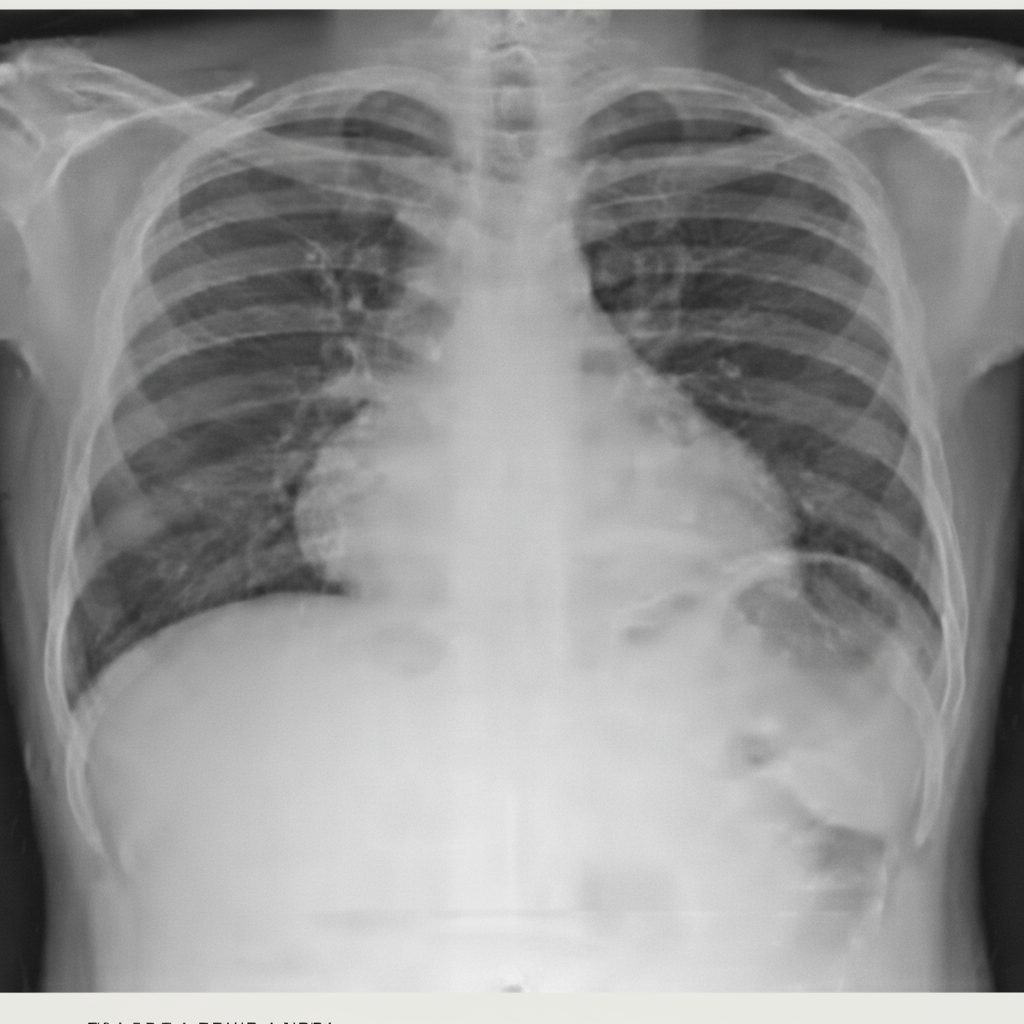
Which of the following drugs can cause QT prolongation?
What is a common side effect of angiotensin receptor blockers?
A patient has been taking digoxin for several years and is about to receive atropine for some other indication. A common side effect of digoxin that can be blocked by atropine is:
Which of the following drugs does not increase the QT interval?
Digoxin toxicity may result from the concurrent administration of digoxin with all of the following drugs EXCEPT?
All of the following medications can be used in congestive cardiac failure, except?
All of the following are antiarrhythmic drugs except?
A hypertensive patient is taking tablet atenolol 200 mg/day in divided doses. After anesthesia, their heart rate fell from 50 beats/min to 40 beats/min. What is the appropriate treatment to improve the heart rate?
What is the mechanism of action of timolol?
Lignocaine is used in which of the following conditions?
Explanation: **Explanation:** **Quinidine** is a **Class IA antiarrhythmic** drug. Its primary mechanism involves blocking fast sodium channels, but it also significantly blocks **delayed rectifier potassium channels ($I_{Kr}$)**. By inhibiting the outward flow of potassium during phase 3 of the cardiac action potential, it delays repolarization, thereby lengthening the action potential duration (APD) and the **QT interval** on the ECG. This prolongation increases the risk of *Torsades de Pointes* (TdP). **Analysis of Incorrect Options:** * **Lithium (A):** While Lithium can cause T-wave flattening or inversion, it is not a classic cause of QT prolongation. Its most common cardiac side effect is sinus node dysfunction. * **Adenosine (C):** Adenosine has an extremely short half-life (seconds) and acts by slowing conduction through the AV node. It actually **shortens** the atrial action potential and does not cause QT prolongation. * **Magnesium (D):** Magnesium sulfate is the **treatment of choice** for drug-induced QT prolongation and *Torsades de Pointes*. It stabilizes the cardiac membrane and does not prolong the QT interval. **NEET-PG High-Yield Pearls:** * **Mnemonic for QT prolonging drugs (ABCDE):** **A**ntiarrhythmics (Class IA & III), **B**iotics (Macrolides, Fluoroquinolones), **C**onvulsants, **D**epressants (TCAs, Antipsychotics), **E**metics (Ondansetron). * **Class IA drugs:** Quinidine, Procainamide, Disopyramide (All prolong QT). * **Class III drugs:** Amiodarone, Sotalol, Dofetilide (All prolong QT). * **Cinchonism:** A classic triad of symptoms (tinnitus, headache, dizziness) associated with Quinidine toxicity.
Explanation: **Explanation:** **Angiotensin Receptor Blockers (ARBs)**, such as Losartan and Valsartan, work by selectively blocking the binding of Angiotensin II to the **AT1 receptor** [1]. This results in potent vasodilation and a reduction in peripheral vascular resistance [1]. **1. Why Postural Hypotension is Correct:** Postural (orthostatic) hypotension is a recognized side effect of most antihypertensive agents, including ARBs [2]. By inhibiting the renin-angiotensin-aldosterone system (RAAS), ARBs reduce sympathetic compensatory mechanisms and decrease intravascular volume (via reduced aldosterone) [1]. This can lead to a sudden drop in blood pressure upon standing, especially in patients who are volume-depleted or concurrently taking diuretics [2]. **2. Why Incorrect Options are Wrong:** * **Urticaria:** This is an allergic reaction and is not a common or characteristic side effect of ARBs. * **Bronchospasm:** This is typically associated with Beta-blockers (due to B2 blockade) or ACE inhibitors (due to bradykinin accumulation). ARBs do not affect bradykinin levels and are safe in asthmatic patients [2]. * **Hypokalemia:** ARBs actually cause **Hyperkalemia** [2]. By blocking AT1 receptors, they inhibit aldosterone secretion, leading to potassium retention in the distal tubules [1], [2]. **High-Yield Clinical Pearls for NEET-PG:** * **The "Cough" Advantage:** Unlike ACE inhibitors, ARBs do **not** cause a dry cough because they do not increase bradykinin levels [2]. * **Teratogenicity:** ARBs are strictly **contraindicated in pregnancy** (Category D) as they cause fetal renal anomalies and skull hypoplasia [2]. * **Renoprotection:** They are the drugs of choice for **Diabetic Nephropathy** because they dilate the efferent arteriole, reducing intraglomerular pressure.
Explanation: Explanation:The correct answer is C. Increased PR interval on the ECG.Mechanism of Action:Digoxin exerts its effects through two primary mechanisms: inhibition of the Na+/K+ ATPase pump (leading to positive inotropy) and parasympathomimetic (vagomimetic) action. By increasing vagal tone, digoxin slows conduction through the Atrioventricular (AV) node. On an ECG, AV nodal delay is represented by an increased PR interval [1]. Since atropine is a muscarinic antagonist (parasympatholytic), it blocks the vagal effects of digoxin on the AV node, thereby preventing or reversing the prolongation of the PR interval.Analysis of Incorrect Options: A. Decreased appetite: This is a common early sign of digoxin toxicity caused by direct stimulation of the Chemoreceptor Trigger Zone (CTZ). It is not mediated by the vagus nerve and thus cannot be blocked by atropine. B. Increased cardiac contractility: This is the therapeutic goal of digoxin, achieved by increasing intracellular calcium via Na+/K+ ATPase inhibition. This mechanical effect is independent of the autonomic nervous system and is not affected by atropine. D. Tachycardia: Digoxin typically causes bradycardia due to its vagomimetic effects. Tachycardia (specifically atrial tachycardia with AV block) is a sign of toxicity, but atropine would likely worsen a tachycardia rather than block it.High-Yield Clinical Pearls for NEET-PG: ECG Changes with Digoxin: Earliest change is a decreased QT interval [1]; most characteristic is the "reverse tick" or "sagging" ST-segment depression (Salvador Dali sign). Vagal Effect: Digoxin is used in Atrial Fibrillation primarily to control ventricular rate by increasing the refractory period of the AV node via the vagus nerve. Antidote: For life-threatening toxicity, the treatment of choice is Digoxin-specific antibody fragments (DigiFab). Atropine is specifically used to treat digoxin-induced symptomatic bradycardia or high-grade AV block.
Explanation: **Explanation:** The correct answer is **Digitalis (Digoxin)**. **Why Digitalis is correct:** Digitalis acts by inhibiting the $Na^+/K^+$ ATPase pump, which leads to an increase in intracellular calcium. Electrophysiologically, Digitalis **shortens the action potential duration (APD)** and the **QT interval**. It is well-known for causing "ST-segment sagging" (reverse tick sign) and a shortened QT interval, which is a classic finding on an ECG of a patient on Digoxin. **Why the other options are incorrect:** * **Amiodarone (Class III Antiarrhythmic):** Its primary mechanism is blocking potassium channels, which prolongs Phase 3 of the action potential, thereby increasing the QT interval. * **Quinidine (Class IA Antiarrhythmic):** It blocks both sodium and potassium channels. By blocking potassium channels, it prolongs repolarization and increases the QT interval. It is a notorious cause of *Torsades de Pointes*. * **Amitriptyline (Tricyclic Antidepressant):** TCAs have "quinidine-like" effects on the heart. They block myocardial sodium and potassium channels, leading to QRS widening and QT interval prolongation, especially in overdose. **High-Yield Clinical Pearls for NEET-PG:** * **QT Prolonging Drugs (Mnemonic: ABCDE):** **A**ntiarrhythmics (Class IA, III), **B**iotics (Macrolides, Fluoroquinolones), **C**an't-be-depressed (TCAs, Antipsychotics), **D**efective electrolytes (Hypokalemia, Hypomagnesemia, Hypocalcemia), **E**metics (Ondansetron). * **Digitalis ECG Changes:** Shortened QT, ST-segment depression (scooped appearance), T-wave inversion, and PR interval prolongation. * **Torsades de Pointes:** A polymorphic ventricular tachycardia associated with a prolonged QT interval. Interestingly, while Amiodarone prolongs the QT, it has a lower risk of causing Torsades compared to other Class III drugs.
Explanation: **Explanation:** The core mechanism of digoxin toxicity involves its competition with **Potassium (K⁺)** for binding at the Na⁺/K⁺-ATPase pump. Any drug that induces **hypokalemia** (low potassium) increases digoxin binding, thereby potentiating its toxicity. **Why Triamterene is the correct answer:** Triamterene is a **potassium-sparing diuretic**. Unlike other diuretics, it prevents the excretion of potassium, potentially leading to hyperkalemia. Elevated extracellular potassium levels actually decrease the binding of digoxin to the Na⁺/K⁺-ATPase pump, thereby **reducing** the risk of digoxin toxicity. **Analysis of Incorrect Options:** * **Quinidine:** This is a classic drug interaction. Quinidine increases digoxin levels by displacing it from tissue binding sites and reducing its renal clearance. * **Furosemide (Loop Diuretic):** These drugs cause significant potassium loss in the urine. The resulting hypokalemia sensitizes the myocardium to digoxin, triggering toxicity. * **Hydrochlorothiazide (Thiazide Diuretic):** Similar to loop diuretics, thiazides promote potassium excretion. Hypokalemia is a major precipitant of digoxin-induced arrhythmias. **NEET-PG High-Yield Pearls:** * **Electrolyte Triggers:** Digoxin toxicity is worsened by **Hypokalemia**, **Hypomagnesemia**, and **Hypercalcemia**. * **ECG Hallmark:** The most common initial sign of toxicity is PVCs; the most characteristic sign is **Paroxysmal Atrial Tachycardia with AV block**. * **Management:** For life-threatening toxicity, the treatment of choice is **Digoxin-specific FAB fragments (Digibind)**. * **Other drugs increasing Digoxin levels:** Verapamil, Amiodarone, and Erythromycin.
Explanation: **Explanation:** The management of Congestive Cardiac Failure (CCF) focuses on reducing preload, afterload, and inhibiting maladaptive neurohumoral remodeling. **Why Trimetazidine is the correct answer:** Trimetazidine is a metabolic modulator that inhibits the enzyme **3-ketoacyl-CoA thiolase**, shifting myocardial metabolism from fatty acid oxidation to glucose oxidation. While it is an effective anti-anginal agent (used in chronic stable angina), it has no established role in the acute or standard management of CCF. It does not provide the hemodynamic benefits (vasodilation or diuresis) required to treat heart failure symptoms or improve survival in CCF. **Analysis of Incorrect Options:** * **Spironolactone:** An aldosterone antagonist (MRA) that prevents myocardial fibrosis and remodeling. It is a "life-prolonging" drug in heart failure (NYHA Class II-IV). * **Nitrates:** These are potent venodilators that reduce **preload**. They are particularly useful in acute heart failure and in combination with Hydralazine (especially in African American patients) to reduce mortality. * **Nesiritide:** A recombinant form of **B-type Natriuretic Peptide (BNP)**. It increases cGMP, leading to potent vasodilation and natriuresis. It is used intravenously in acutely decompensated heart failure to reduce pulmonary capillary wedge pressure. **High-Yield Clinical Pearls for NEET-PG:** * **Drugs reducing mortality in CCF:** ACE inhibitors/ARBs, Beta-blockers (Carvedilol, Metoprolol, Bisoprolol), Spironolactone, and SGLT2 inhibitors (Dapagliflozin). * **Nesiritide Side Effect:** The most common side effect is dose-related hypotension. * **Trimetazidine Side Effect:** Can cause or worsen **Parkinsonian symptoms** (tremors, rigidity) due to its effect on the nigrostriatal pathway.
Explanation: **Explanation:** The correct answer is **Enalapril** because it is an **ACE (Angiotensin-Converting Enzyme) Inhibitor**, not an antiarrhythmic drug. Its primary mechanism involves blocking the conversion of Angiotensin I to Angiotensin II, leading to vasodilation and reduced blood pressure. While ACE inhibitors are used in heart failure and post-MI to prevent cardiac remodeling, they do not possess direct electrophysiological properties to classify them as antiarrhythmics. **Analysis of other options:** * **Lidocaine (Option A):** A Class IB antiarrhythmic. It blocks voltage-gated sodium channels, primarily in the inactivated state. It is a high-yield drug for treating ventricular arrhythmias, especially those associated with acute myocardial infarction. * **Atenolol (Option C):** A Class II antiarrhythmic. It is a cardioselective $\beta_1$-blocker that decreases the slope of Phase 4 depolarization in the SA node, thereby reducing heart rate and conduction velocity. * **Sotalol (Option D):** A Class III antiarrhythmic. It is unique because it possesses both non-selective $\beta$-blocking properties (Class II) and potassium channel blocking properties (Class III), which prolongs the action potential duration and QT interval. **High-Yield Clinical Pearls for NEET-PG:** * **Vaughan-Williams Classification:** Remember the mnemonic **"S**o **B**e **P**otent **C**hannels" (Class I: **S**odium, Class II: **B**eta-blockers, Class III: **P**otassium, Class IV: **C**alcium). * **Lidocaine** is ineffective for atrial arrhythmias because the action potential duration in atria is too short for the drug to bind effectively. * **Sotalol** carries a significant risk of *Torsades de Pointes* due to QT prolongation. * **Enalapril** is a prodrug; its active metabolite is **Enalaprilat**. One of its most common side effects is a dry cough due to increased bradykinin levels.
Explanation: ### Explanation **Correct Option: B. IV Atropine** The patient is experiencing symptomatic bradycardia (HR 40 bpm) likely due to the high dose of **Atenolol** (a cardioselective $\beta_1$ blocker) exacerbated by anesthesia. * **Mechanism:** Beta-blockers reduce heart rate by decreasing sympathetic drive to the SA node. In such cases, the primary treatment for hemodynamically significant bradycardia is **IV Atropine**. * Atropine is a muscarinic antagonist that blocks the parasympathetic (vagal) input to the heart. By inhibiting the "brake" (vagus nerve), it allows the heart rate to increase, effectively counteracting the beta-blocker-induced bradycardia. **Why Other Options are Incorrect:** * **A. IV Adrenaline:** While it increases heart rate, it is generally reserved for cardiac arrest or severe anaphylaxis. In a patient on beta-blockers, adrenaline can cause "unopposed alpha-stimulation," leading to severe hypertension and reflex bradycardia. * **C. IV Isoprenaline:** This is a non-selective beta-agonist. While it can increase heart rate, its effect is competitively inhibited by the high dose of Atenolol already present in the patient's system, making it less effective. * **D. Dobutamine:** This is primarily an inotrope used in cardiogenic shock. Like isoprenaline, its efficacy is reduced in the presence of beta-blockade. **High-Yield Clinical Pearls for NEET-PG:** * **Drug of Choice (DOC) for Beta-blocker Overdose:** If atropine fails, the specific antidote is **IV Glucagon**. Glucagon increases cAMP in the myocardium via independent receptors, bypassing the blocked beta-receptors. * **Atenolol Dosing:** The standard dose is 25–100 mg/day. 200 mg/day is a high dose, increasing the risk of profound bradycardia and loss of cardioselectivity. * **Vagal Tone:** Anesthesia often increases vagal tone; when combined with beta-blockers, it significantly predisposes patients to intraoperative bradyarrhythmias.
Explanation: **Explanation:** **1. Why Option A is Correct:** Timolol is a potent, **nonselective beta-adrenergic receptor antagonist**. It blocks both **$\beta_1$** (found primarily in the heart) and **$\beta_2$** receptors (found in the lungs, blood vessels, and ciliary body) [4]. In ophthalmology, its primary mechanism involves blocking $\beta_2$ receptors on the ciliary epithelium, which reduces the production of aqueous humor, thereby lowering intraocular pressure (IOP) [1]. **2. Why the Other Options are Incorrect:** * **Option B:** Timolol has no significant affinity for alpha-adrenergic receptors. Alpha-blockers (like Phentolamine or Prazosin) work via different pathways, such as vasodilation. * **Option C:** Selective $\beta_1$ blockers (e.g., Atenolol, Metoprolol, or the ophthalmic drug **Betaxolol**) primarily target the heart [2]. While Betaxolol is used in glaucoma, Timolol is nonselective [3]. * **Option D:** Purely selective $\beta_2$ blockers are rarely used clinically as they would cause significant bronchoconstriction without providing cardiac benefits. **3. NEET-PG High-Yield Pearls:** * **Glaucoma:** Timolol is a first-line agent for Open-Angle Glaucoma. Unlike miotics (pilocarpine), it does not affect pupil size or accommodation. * **Contraindications:** Because it is nonselective, systemic absorption can cause **bronchospasm**. It is strictly contraindicated in patients with **Asthma or COPD**. It is also contraindicated in **Bradycardia** or **AV blocks** due to its $\beta_1$ blocking effects on the heart. * **Comparison:** **Betaxolol** is the "cardioselective" ($\beta_1$) alternative used in glaucoma to minimize respiratory side effects, though it is slightly less efficacious than Timolol in lowering IOP [3].
Explanation: **Explanation:** **Lignocaine (Lidocaine)** is a Class IB anti-arrhythmic agent. Its primary mechanism of action involves the blockade of voltage-gated sodium channels in the inactivated state. It has a high affinity for channels in tissues that are depolarized or rapidly firing, which is characteristic of ischemic ventricular myocardium. **Why Ventricular Tachycardia is Correct:** Lignocaine selectively acts on ventricular tissues (Purkinje fibers and ventricular muscle). It shortens the action potential duration (APD) and the effective refractory period (ERP) in normal tissues but increases the ratio of ERP/APD, which helps suppress abnormal automaticity and re-entrant circuits. It is specifically indicated for **acute ventricular arrhythmias** associated with myocardial infarction, cardiac surgery, or digitalis toxicity. **Why Other Options are Incorrect:** * **Atrial Fibrillation, Atrial Flutter, and PSVT (Options A, B, C):** These are all **supraventricular arrhythmias**. Lignocaine is ineffective against supraventricular arrhythmias because the action potential duration in atrial cells is very short. The sodium channels in the atria do not remain in the inactivated state long enough for Class IB drugs to bind effectively. For these conditions, Class II (Beta-blockers), Class IV (Calcium channel blockers), or other Class I/III agents are preferred. **High-Yield Facts for NEET-PG:** * **Route of Administration:** Lignocaine undergoes extensive first-pass metabolism; therefore, it is given only **intravenously** for arrhythmias. * **Drug of Choice:** While historically a first-line agent, **Amiodarone** has now replaced Lignocaine as the drug of choice for stable VT in many protocols, but Lignocaine remains a vital second-line option, especially in ischemia-induced VT. * **Toxicity:** Overdose primarily affects the CNS, causing tremors, seizures (treated with Diazepam), and blurred vision. * **Class IB Mnemonic:** "Lidocaine, Mexiletine, Phenytoin" (**L**et's **M**ake **P**izza).
Antihypertensive Agents
Practice Questions
Drugs for Heart Failure
Practice Questions
Antiarrhythmic Drugs
Practice Questions
Antianginal Agents
Practice Questions
Lipid-Lowering Drugs
Practice Questions
Anticoagulants and Antiplatelet Drugs
Practice Questions
Thrombolytic Agents
Practice Questions
Drugs Used in Pulmonary Hypertension
Practice Questions
Drugs Used in Shock
Practice Questions
Cardiovascular Effects of Non-Cardiovascular Drugs
Practice Questions
Get full access to all questions, explanations, and performance tracking.
Start For Free