Which drug decreases lipoprotein(a) in the blood?
Which beta blocker contains a d-isomer responsible for its action?
Skin blood flow is decreased by ?
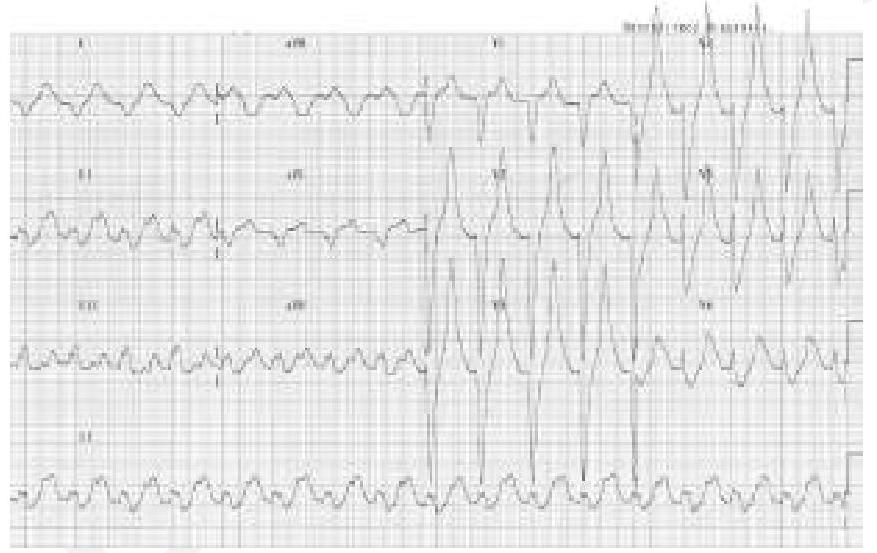
A patient who is a known case of hypertension on multiple anti-hypertensive medications came to OPD. His ECG finding is given below. Which of the following drugs is responsible for the ECG finding? (Image of ECG finding)
Which of the following drugs can be given in patients of primary pulmonary hypertension?
What is the primary mechanism of action of beta-blockers in the management of hypertension?
What is the drug of choice for treating tachycardia induced by digitalis?
Which drug is most classically associated with QT interval prolongation?
What is the primary function of PGI2?
What type of drug is Sacubitril?
Explanation: ***Nicotinic acid (Niacin)*** - **Nicotinic acid**, particularly at higher doses, is known to significantly **reduce lipoprotein(a) [Lp(a)] levels** in the blood, although the exact mechanism is not fully understood. - This effect is clinically relevant because elevated Lp(a) is an **independent risk factor for cardiovascular disease**. *Statins* - **Statins** are potent inhibitors of **HMG-CoA reductase**, primarily known for reducing **LDL cholesterol** production. - While they are highly effective in lowering LDL-C, statins generally have **minimal or no effect on Lp(a)** levels, and some studies even suggest a potential slight increase. *Ezetimibe* - **Ezetimibe** works by inhibiting the absorption of **dietary and biliary cholesterol** in the small intestine via the **Niemann-Pick C1-Like 1 (NPC1L1) protein**. - Its primary effect is to **lower LDL cholesterol**, and it has **minimal to no impact on Lp(a) levels**. *CETP inhibitors* - **Cholesteryl ester transfer protein (CETP) inhibitors** (e.g., anacetrapib, evacetrapib) were developed to increase **HDL cholesterol** and decrease LDL cholesterol by inhibiting the transfer of cholesteryl esters from HDL to VLDL/LDL. - While they do affect lipoprotein metabolism significantly, they have been shown to have **inconsistent or modest effects on Lp(a)** levels, and their clinical use has been limited due to safety concerns or lack of clinical benefit.
Explanation: ***Nebivolol*** - **Nebivolol** is unique among beta-blockers because its **d-isomer (SRRR-nebivolol)** is responsible for its highly selective beta-1 adrenergic receptor antagonism. - The **l-isomer (RSSS-nebivolol)** of nebivolol causes **vasodilation** via nitric oxide release. *Timolol* - **Timolol** is a non-selective beta-blocker that lacks intrinsic sympathomimetic activity and membrane-stabilizing effects. - It exists as a **racemic mixture**, but its beta-blocking activity does not specifically rely on a d-isomer for its primary action. *Esmolol* - **Esmolol** is an ultra-short-acting, cardioselective beta-1 blocker, primarily used intravenously in acute settings due to its rapid metabolism. - Its beta-blocking activity is not attributed to a specific d-isomer; it is a straightforward competitive antagonist. *Propranolol* - **Propranolol** is a non-selective beta-blocker that inhibits both beta-1 and beta-2 adrenergic receptors [1]. - It is often formulated as a **racemic mixture** (a 50:50 mixture of d- and l-isomers), but its beta-blocking effects primarily reside with the l-isomer [1].
Explanation: ***Noradrenaline*** - **Noradrenaline** (norepinephrine) is a potent **vasoconstrictor**, particularly in the skin, which **decreases blood flow** by stimulating alpha-1 adrenergic receptors. - This vasoconstrictive action redirects blood flow to more vital organs during stress or sympathetic activation. *Dopamine* - At low doses, dopamine can cause **renal and mesenteric vasodilation**, while at higher doses it acts similarly to noradrenaline causing **vasoconstriction**. - Its effects on skin blood flow are variable and dose-dependent; it is not primarily known for consistently decreasing skin blood flow like noradrenaline. *Isoprenaline* - **Isoprenaline** (isoproterenol) is a non-selective **beta-adrenergic agonist** that primarily causes **vasodilation** in most vascular beds, thereby **increasing blood flow**. - It would typically **increase skin blood flow** rather than decrease it, due to its strong beta-2 receptor agonism. *Acetylcholine* - **Acetylcholine** is the primary neurotransmitter for **sympathetic innervation of sweat glands** in the skin, but it also causes **vasodilation** when released by parasympathetic nerves. - In the skin, its overall effect on blood flow is typically **vasodilation**, contributing to heat dissipation.
Explanation: ***Spironolactone*** - The ECG shows a **tall, peaked T wave**, which is characteristic of **hyperkalemia**. - **Spironolactone** is a **potassium-sparing diuretic**, and its use, especially in combination with other medications or in patients with **renal impairment**, can lead to **hyperkalemia**. *Prazosin* - Prazosin is an **alpha-1 adrenergic blocker** used for **hypertension**. - It does **not directly affect potassium levels** and is not associated with the ECG changes seen in hyperkalemia. *Metoprolol* - Metoprolol is a **beta-blocker** primarily used for **hypertension**, **angina**, and **arrhythmias**. - It does **not significantly cause hyperkalemia** or the characteristic ECG changes shown. *Hydrochlorothiazide* - Hydrochlorothiazide is a **thiazide diuretic** that typically causes **hypokalemia**, not hyperkalemia, by **increasing potassium excretion**. - The ECG findings associated with hypokalemia would include **flattened T waves** or **prominent U waves**.
Explanation: ***Bosentan*** - **Bosentan** is an **endothelin receptor antagonist** that blocks the vasoconstrictive and proliferative effects of endothelin-1, a key mediator in the pathogenesis of **pulmonary hypertension**. - It is an FDA-approved medication specifically used for the treatment of **pulmonary arterial hypertension (PAH)**, improving exercise capacity and delaying clinical worsening. *Icatibant* - **Icatibant** is a **bradykinin B2 receptor antagonist** used in the treatment of **hereditary angioedema**. - It has no known role or efficacy in the management of **primary pulmonary hypertension**. *Labetalol* - **Labetalol** is a **beta-blocker** with **alpha-1 adrenergic blocking activity** used primarily for systemic **hypertension** and **hypertensive emergencies**. - Beta-blockers are generally **contraindicated** in pulmonary hypertension as they can worsen right heart function and lead to clinical deterioration. *Sodium nitroprusside* - **Sodium nitroprusside** is a **direct arterial and venous vasodilator** used in hypertensive crises and severe heart failure by reducing both preload and afterload. - While it can lower systemic blood pressure, its use in pulmonary hypertension is **limited** due to the risk of **systemic hypotension** and the lack of selective pulmonary vasodilation compared to other agents.
Explanation: ***Decreasing heart rate and contractility to reduce cardiac output.*** - Beta-blockers primarily work by blocking **beta-1 adrenergic receptors** in the heart, leading to a decrease in **heart rate** and **myocardial contractility** [1], [2]. - This reduction in cardiac output directly lowers **blood pressure**, making it a key mechanism in hypertension management [1], [2]. *Direct relaxation of vascular smooth muscle.* - While ultimately leading to lower blood pressure, beta-blockers do not achieve this through **direct relaxation** of vascular smooth muscle. - This mechanism is more characteristic of **calcium channel blockers** or **direct vasodilators** like hydralazine. *Vasodilation through alpha-adrenergic blockade.* - Some beta-blockers, like carvedilol and labetalol, also have **alpha-1 adrenergic blocking properties** which cause vasodilation [1], [3]. - However, the primary mechanism of *most* beta-blockers in hypertension is through their **beta-blocking effects** on the heart, not primarily alpha-blockade [1]. *Inhibition of the renin-angiotensin-aldosterone system (RAAS).* - Beta-blockers can indirectly reduce **renin release** from the kidneys by blocking beta-1 receptors, which is part of the RAAS [1], [2]. - However, direct and primary inhibition of the entire **RAAS** is the mechanism of action for drugs like **ACE inhibitors** and **ARBs**, not beta-blockers.
Explanation: ***Phenytoin*** - Phenytoin is the traditional drug of choice for **digitalis-induced tachyarrhythmias** as it blocks **sodium channels**, suppresses **automaticity**, and uniquely improves **AV conduction**. - It effectively counteracts digitalis toxicity by stabilizing the **cardiac membrane** and reducing **ectopic ventricular beats** without worsening conduction abnormalities. *Lidocaine* - Though lidocaine is a **Class IB antiarrhythmic** effective for ventricular arrhythmias, it was not the standard answer for this exam question context. - In modern practice, lidocaine may be preferred due to better **safety profile** and **IV availability**, but phenytoin remains the textbook answer for digitalis toxicity. *Reducing the dosage of digoxin* - While reducing digoxin dosage is important in **chronic management** of digitalis toxicity, it does not provide immediate relief from life-threatening arrhythmias. - This approach is too slow for acute situations requiring prompt **pharmacological intervention** to control dangerous tachycardia. *Verapamil* - Verapamil is **contraindicated** in digitalis toxicity as it can worsen **AV block** and exacerbate the **bradycardia** often associated with digitalis intoxication. - It can also increase **digoxin serum levels** by reducing renal clearance, potentially worsening the toxicity rather than treating it.
Explanation: ***Quinidine*** - **Quinidine** is a Class IA antiarrhythmic drug that is the **classic textbook example** of drug-induced QT interval prolongation. - It blocks **sodium channels** and **potassium channels**, specifically delayed rectifier potassium channels (IKr). - This blockade of potassium channels **slows repolarization** of the cardiac myocyte, thereby prolonging the **QT interval** and increasing the risk of **Torsades de Pointes**. - Historically, quinidine has been the **prototype drug** used to teach this adverse effect in medical education. *Magnesium Sulfate* - **Magnesium sulfate** is used to **treat Torsades de Pointes**, a polymorphic ventricular tachycardia often associated with **QT prolongation**, but it does not primarily cause QT prolongation itself. - Its mechanism involves stabilizing the cardiac membrane and reducing abnormal electrical activity, rather than lengthening the **QT interval**. *Lignocaine* - **Lignocaine** (Lidocaine) is a Class IB antiarrhythmic drug that primarily blocks **sodium channels**, shortening the action potential duration in some cardiac tissues. - It does **not** significantly prolong the **QT interval**; in some cases, it can even shorten it, making it safer in patients with pre-existing QT prolongation. *Amiodarone* - **Amiodarone** is a Class III antiarrhythmic drug that blocks multiple channels, including **potassium channels**, leading to significant **QT interval prolongation**. - While amiodarone does prolong the QT interval considerably, the question asks for the **"most classically associated"** drug, which is quinidine—the historical prototype for this adverse effect. - The associated risk of **Torsades de Pointes** with amiodarone is lower than with Class IA agents like quinidine due to its **less proarrhythmic** profile, making quinidine the more classic teaching example.
Explanation: ***Inhibits platelet aggregation*** - **PGI2 (prostacyclin)** is a potent inhibitor of **platelet aggregation** by increasing cAMP in platelets, preventing thrombus formation. - In the context of **cardiovascular pharmacology** and **hemostasis**, PGI2's antiplatelet action is clinically emphasized as its **primary therapeutic target**, especially when contrasted with **thromboxane A2 (TXA2)**, which promotes platelet aggregation. - PGI2 is often described as the body's **endogenous antiplatelet agent**, making this its most clinically significant function. - It also causes vasodilation (see below), but when discussing PGI2's "primary function" in most pharmacology contexts, the **antiplatelet effect** is highlighted. *Is a vasodilator* - **TRUE but incomplete**: PGI2 is indeed a potent **vasodilator** through smooth muscle relaxation. - However, many substances cause vasodilation, whereas PGI2's unique and clinically defining role in the **COX pathway** is its opposition to platelet aggregation. - Both functions are physiologically important and work synergistically, but in pharmacological classification, the **antiplatelet action** is typically considered the defining characteristic. *Is pyrogenic* - **Incorrect**: PGI2 does not cause fever. - **PGE2** (not PGI2) is the prostaglandin primarily associated with fever induction (pyrogenic effects). *None of the options* - Incorrect because **inhibits platelet aggregation** accurately describes PGI2's primary pharmacological function. - PGI2 has well-established roles in hemostasis and vascular biology.
Explanation: ***Neutral endopeptidase inhibitor*** - **Sacubitril** is specifically a **neprilysin inhibitor**, which is a type of neutral endopeptidase. - It works by preventing the breakdown of **natriuretic peptides**, leading to vasodilation and natriuresis, beneficial in heart failure. *ACE inhibitor* - **ACE inhibitors** block the conversion of angiotensin I to angiotensin II, leading to vasodilation and reduced aldosterone. - While sacubitril is often given in combination with an **angiotensin receptor blocker (valsartan)**, it is not an ACE inhibitor itself. *Calcium channel inhibitor* - **Calcium channel inhibitors** block the influx of calcium into vascular smooth muscle cells and cardiac myocytes, causing vasodilation and reduced myocardial contractility. - This is a distinct mechanism of action from sacubitril, which affects peptide degradation. *Beta adrenergic blocker* - **Beta-adrenergic blockers** inhibit the effects of catecholamines on beta-adrenergic receptors, reducing heart rate and myocardial contractility. - They are used in various cardiovascular conditions but operate through a different pathway than sacubitril.
Antihypertensive Agents
Practice Questions
Drugs for Heart Failure
Practice Questions
Antiarrhythmic Drugs
Practice Questions
Antianginal Agents
Practice Questions
Lipid-Lowering Drugs
Practice Questions
Anticoagulants and Antiplatelet Drugs
Practice Questions
Thrombolytic Agents
Practice Questions
Drugs Used in Pulmonary Hypertension
Practice Questions
Drugs Used in Shock
Practice Questions
Cardiovascular Effects of Non-Cardiovascular Drugs
Practice Questions
Get full access to all questions, explanations, and performance tracking.
Start For Free