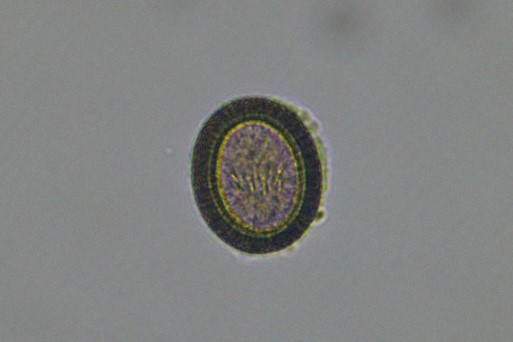
Single-dose mebendazole is effective in the treatment of which of the following helminthic infections?
Which of the following statements about Bedaquiline is TRUE?
Which antibacterial agent can be used intranasally for prophylaxis against recurrent Staphylococcus aureus infection?
All of the following are true regarding cephalosporins, except:
Which of the following is NOT a protease inhibitor?
Which one of the following is best associated with Lumefantrine?
What is the drug of choice for Chagas disease?
Which of the following antibiotics, known for its narrow spectrum of activity and use in managing abdominal abscesses caused by Bacteroides fragilis, can also lead to antibiotic-associated colitis?
A 10-year-old child presents with diarrhea and abdominal pain for 4 days. Stool microscopy reveals findings suggestive of a parasitic infection. Which of the following medications is indicated for treatment?

Which of the following inhibitors of protein synthesis is primarily bactericidal?
Explanation: **Explanation:** **Mebendazole** is a broad-spectrum benzimidazole anthelmintic that acts by inhibiting microtubule synthesis (binding to β-tubulin) and blocking glucose uptake in helminths. **Why Option A is Correct:** For **Enterobius vermicularis (Pinworm)**, a **single dose of 100 mg** of mebendazole is highly effective (cure rates >90%). This is because pinworms reside superficially in the cecum and colon, making them highly susceptible to the drug's luminal concentration. However, because mebendazole is not ovicidal, a second dose is usually repeated after 2 weeks to kill any worms hatched from surviving eggs. **Why Options B and C are Incorrect:** * **Ascaris lumbricoides (Roundworm) and Ancylostoma duodenale (Hookworm):** While mebendazole is a first-line treatment for these infections, a **single dose is often insufficient** for a complete cure, especially in moderate-to-heavy infections. Standard protocols for these soil-transmitted helminths typically require a **3-day course** (100 mg twice daily) to ensure adequate clearance. In contrast, **Albendazole** is preferred for mass drug administration because it *is* effective against Ascaris and Hookworm in a single 400 mg dose. **High-Yield Clinical Pearls for NEET-PG:** * **Mechanism of Action:** Selective inhibition of parasite microtubule polymerization by binding to β-tubulin. * **Albendazole vs. Mebendazole:** Albendazole has better systemic absorption (enhanced by fatty meals), making it superior for tissue-dwelling helminths like Neurocysticercosis and Hydatid disease. * **Contraindication:** Benzimidazoles are generally avoided in the **first trimester of pregnancy** due to potential embryotoxicity/teratogenicity. * **Drug of Choice (DOC):** Mebendazole/Albendazole are DOC for Pinworm, Roundworm, Hookworm, and Whipworm (Trichuris trichiura).
Explanation: **Explanation:** **Bedaquiline** is a diarylquinoline and represents a novel class of antitubercular drugs. 1. **Mechanism of Action (Option A):** Bedaquiline specifically targets the **c-subunit of mycobacterial ATP synthase**, an enzyme essential for energy production in *Mycobacterium tuberculosis*. By inhibiting this enzyme, the drug leads to ATP depletion and bacterial death. This unique mechanism makes it effective against both actively replicating and dormant bacilli. 2. **Analysis of Incorrect Options:** * **Option B:** Bedaquiline is notorious for **prolonging the QT interval**. Patients require baseline and periodic ECG monitoring. Caution is advised when co-administered with other QT-prolonging drugs like Clofazimine or Fluoroquinolones. * **Option C:** It should **never be given as monotherapy** due to the high risk of developing resistance. It is used as part of a combination regimen (e.g., BPaL: Bedaquiline, Pretomanid, and Linezolid) for multidrug-resistant TB (MDR-TB). * **Option D:** There is **no cross-resistance** with Rifampicin or other conventional first-line drugs because its target (ATP synthase) is entirely different from theirs (e.g., RNA polymerase for Rifampicin). **High-Yield Clinical Pearls for NEET-PG:** * **Indication:** Specifically approved for **MDR-TB** and **XDR-TB** when other options are exhausted. * **Metabolism:** It is metabolized by **CYP3A4**; therefore, its levels are decreased by Rifampicin (a potent inducer). * **Half-life:** It has an exceptionally long terminal half-life (approx. 5.5 months) due to extensive tissue binding. * **Black Box Warning:** Increased risk of mortality and QT prolongation.
Explanation: **Explanation:** **Mupirocin** is the drug of choice for the eradication of nasal carriage of *Staphylococcus aureus*, including Methicillin-resistant *S. aureus* (MRSA). The anterior nares are the primary reservoir for *S. aureus* in humans; intranasal application of mupirocin ointment twice daily for five days effectively eliminates the carrier state, thereby preventing recurrent skin and soft tissue infections and reducing surgical site infections in known carriers. **Mechanism of Action:** Mupirocin is a natural product derived from *Pseudomonas fluorescens*. It acts by reversibly binding to bacterial **isoleucyl-tRNA synthetase**, which inhibits protein synthesis. Due to its unique mechanism, there is minimal cross-resistance with other antibiotic classes. **Why other options are incorrect:** * **Cefazolin (Option A):** A first-generation cephalosporin used parenterally for surgical prophylaxis, but it is not used intranasally for decolonization. * **Gentamicin (Option B):** An aminoglycoside used for systemic Gram-negative infections. It is not effective for eradicating nasal staphylococcal carriage and lacks the necessary tissue penetration/formulation for this purpose. * **Moxifloxacin (Option D):** A fourth-generation fluoroquinolone used for respiratory infections. Using a broad-spectrum systemic antibiotic for local decolonization is inappropriate and promotes resistance. **High-Yield NEET-PG Pearls:** * **Mupirocin** is primarily used topically for **Impetigo** (caused by *S. aureus* or *S. pyogenes*). * It is **bactericidal** at high concentrations achieved during topical application. * If resistance to Mupirocin occurs, **Retapamulin** (a pleuromutilin) is an alternative topical agent for impetigo. * Mupirocin is rapidly metabolized to inactive **monic acid** if absorbed systemically, which is why it is strictly restricted to topical use.
Explanation: ### Explanation **1. Why Option B is the Correct Answer (The "Except" Statement):** Cephalosporins are **broad-spectrum** antibiotics. While the spectrum of activity shifts as we move from first to fourth generation, they are never active against *only* Gram-negative organisms. * **First-generation** agents (e.g., Cefazolin) are primarily active against **Gram-positive** cocci (Staphylococci, Streptococci). * As the generations progress (2nd $\rightarrow$ 3rd $\rightarrow$ 4th), there is a sequential increase in Gram-negative coverage, but they retain varying degrees of Gram-positive activity. Therefore, stating they are active *only* against Gram-negative organisms is pharmacologically incorrect. **2. Analysis of Other Options:** * **Option A (Bactericidal):** This is a true statement. Like all beta-lactams, cephalosporins inhibit bacterial cell wall synthesis by binding to **Penicillin-Binding Proteins (PBPs)**, leading to cell lysis and death. * **Option C (Resistant to beta-lactamases):** This is a true statement. One of the primary reasons for developing later generations (3rd, 4th, and 5th) was to increase stability against beta-lactamases produced by resistant bacteria. For example, Ceftriaxone (3rd gen) and Cefepime (4th gen) are significantly more resistant to hydrolysis than 1st-generation agents. **3. High-Yield Clinical Pearls for NEET-PG:** * **The "LAME" Mnemonic:** Cephalosporins lack activity against **L**isteria, **A**typicals (Mycoplasma/Chlamydia), **M**RSA (except 5th gen), and **E**nterococci. * **5th Generation (Ceftaroline):** The only cephalosporin active against **MRSA**. * **Disulfiram-like reaction:** Associated with cephalosporins containing the **methylthiotetrazole (MTT) side chain** (e.g., Cefotetan, Cefoperazone) when consumed with alcohol. * **Biliary Sludge:** A known side effect of high-dose **Ceftriaxone** due to its excretion profile.
Explanation: **Explanation:** The question asks to identify the drug that does not belong to the **Protease Inhibitor (PI)** class of antiretroviral therapy (ART). **1. Why Tenofovir is the Correct Answer:** Tenofovir is a **Nucleotide Reverse Transcriptase Inhibitor (NRTI)**. Unlike most NRTIs (like Zidovudine or Abacavir) which are nucleo**sides** and require three phosphorylation steps to become active, Tenofovir is a nucleo**tide** analog (it already contains a phosphate group) and requires only two phosphorylation steps. It works by competitively inhibiting HIV reverse transcriptase, leading to DNA chain termination. **2. Why the other options are incorrect:** * **Ritonavir, Amprenavir, and Nelfinavir** are all **Protease Inhibitors (PIs)**. * **Mechanism of Action:** PIs bind to the viral protease enzyme (encoded by the *pol* gene), preventing the cleavage of the Gag-Pol polyprotein precursor into functional proteins. This results in the production of immature, non-infectious virions. * **Mnemonic:** Most Protease Inhibitors end with the suffix **"-navir"** (e.g., Atazanavir, Darunavir, Lopinavir). **3. High-Yield Clinical Pearls for NEET-PG:** * **Ritonavir:** It is rarely used for its own antiviral activity; instead, it is used as a **"pharmacokinetic booster"** because it is a potent inhibitor of CYP3A4, increasing the plasma levels of other PIs. * **Side Effects of PIs:** Class-specific side effects include **lipodystrophy** (buffalo hump/central obesity), hyperglycemia (insulin resistance), and hyperlipidemia. * **Tenofovir Side Effects:** It is known for causing **renal toxicity** (Fanconi syndrome) and a decrease in bone mineral density. * **Nelfinavir:** It is unique among PIs as it is not significantly boosted by Ritonavir.
Explanation: **Explanation:** **Lumefantrine** is a long-acting **antimalarial** agent belonging to the aryl-amino alcohol group (structurally related to halofantrine). In modern clinical practice, it is exclusively used in a fixed-dose combination with **Artemether** (an Artemisinin-based Combination Therapy or ACT). 1. **Why it is the correct answer:** Lumefantrine acts as a blood schizonticide against all species of *Plasmodium*, including multi-drug resistant *P. falciparum*. While Artemether provides rapid clearance of parasites, Lumefantrine has a longer half-life (approx. 4–6 days), ensuring the elimination of residual parasites and preventing recrudescence. Its absorption is significantly increased when taken with **fatty food**. 2. **Why other options are incorrect:** * **Antimycobacterial:** Drugs in this category include Isoniazid, Rifampin, or Bedaquiline, used for TB or Leprosy. * **Antifungal:** Includes azoles (Fluconazole), polyenes (Amphotericin B), or echinocandins. * **Antiamoebic:** Includes Nitroimidazoles (Metronidazole) or luminal agents like Diloxanide furoate. **High-Yield Clinical Pearls for NEET-PG:** * **Drug of Choice:** Artemether + Lumefantrine is the first-line treatment for **uncomplicated *P. falciparum* malaria** in most regions (except during the first trimester of pregnancy, where Quinine + Clindamycin is traditionally preferred). * **ECG Changes:** Unlike its relative Halofantrine, Lumefantrine has a minimal risk of QT interval prolongation, making it clinically safer. * **Mechanism:** It is thought to inhibit the formation of β-hematin by forming a complex with hemin, similar to chloroquine.
Explanation: **Explanation:** **Chagas disease**, also known as American Trypanosomiasis, is caused by the protozoan parasite *Trypanosoma cruzi* and is transmitted by the triatomine (reduviid) bug. **Why Benznidazole is correct:** The primary drugs of choice for Chagas disease are **Benznidazole** and **Nifurtimox**. Benznidazole is generally preferred due to better tolerability. These drugs work by producing free radicals and reactive oxygen species that damage the parasite's DNA and proteins. They are most effective in the acute phase of the disease but are also used in chronic cases to prevent disease progression. **Why other options are incorrect:** * **Metronidazole:** While a nitroimidazole like Benznidazole, it is the drug of choice for anaerobic bacterial infections and other protozoal infections like Amoebiasis, Giardiasis, and Trichomoniasis, but it is ineffective against *T. cruzi*. * **Nitazoxanide:** This is a broad-spectrum antiparasitic used primarily for *Cryptosporidium parvum* and *Giardia lamblia* in children. * **Pentamidine:** This is used as an alternative for African Trypanosomiasis (Sleeping Sickness), Leishmaniasis, and *Pneumocystis jirovecii* pneumonia, but not for Chagas disease. **High-Yield Clinical Pearls for NEET-PG:** * **Vector:** Reduviid bug (Kissing bug). * **Clinical Signs:** Look for **Romaña’s sign** (unilateral painless periorbital edema) or a **Chagoma** (skin nodule at the bite site). * **Chronic Complications:** Dilated cardiomyopathy, Megaesophagus, and Megacolon. * **Side Effects:** Benznidazole can cause peripheral neuropathy and dermatitis; Nifurtimox often causes GI upset and CNS toxicity (insomnia, seizures).
Explanation: ### Explanation **Correct Option: B. Clindamycin** **Mechanism and Spectrum:** Clindamycin is a lincosamide antibiotic that inhibits protein synthesis by binding to the **50S ribosomal subunit**. It has a specific, narrow spectrum of activity targeting **Gram-positive cocci** (including MRSA) and, most importantly, **anaerobes**. It is the drug of choice for anaerobic infections above the diaphragm and is highly effective against *Bacteroides fragilis*, a common culprit in abdominal abscesses. **The Clinical Link:** The most notorious adverse effect of Clindamycin is **Antibiotic-Associated Pseudomembranous Colitis**. By suppressing the normal gut flora, it allows the overgrowth of ***Clostridioides difficile***, which releases toxins (Toxin A and B) leading to severe mucosal inflammation and diarrhea. --- ### Why Other Options are Incorrect: * **A. Clarithromycin:** A macrolide used primarily for respiratory tract infections (*H. influenzae*, *Legionella*) and *H. pylori* eradication. It is not the primary choice for anaerobic abdominal abscesses. * **C. Minocycline:** A tetracycline often used for acne or MRSA. While it has a broad spectrum, it is not the standard treatment for *B. fragilis* abscesses and is less commonly associated with *C. difficile* than Clindamycin. * **D. Ticarcillin:** An antipseudomonal penicillin. While it has some anaerobic activity, it is a broad-spectrum agent and is not the "classic" answer associated with the specific induction of pseudomembranous colitis in medical exams. --- ### High-Yield Clinical Pearls for NEET-PG: * **Mnemonic:** "Anaerobes **Above** the diaphragm = **Clindamycin**; **Below** the diaphragm = **Metronidazole**." (Note: Clindamycin is still effective for *B. fragilis*, but Metronidazole is often preferred clinically for GI focus). * **Treatment of *C. difficile*:** If Clindamycin causes colitis, the treatment of choice is **Oral Vancomycin** or **Fidaxomicin**. * **Other Side Effects:** Clindamycin can also cause skin rashes and neuromuscular blockade (potentiates vecuronium).
Explanation: ***Praziquantel*** - **Praziquantel** is the drug of choice for **cestode (tapeworm)** and **trematode (fluke)** infections, which commonly cause diarrhea and abdominal pain with characteristic findings on stool microscopy. - It works by increasing **calcium permeability** in parasite cell membranes, causing paralysis and death of the worm, making it highly effective against **Taenia**, **Schistosoma**, and other flatworms. *Mebendazole* - **Mebendazole** is primarily effective against **nematodes (roundworms)** like **Ascaris**, **Enterobius**, and **Trichuris**, not the parasites typically causing this presentation. - It works by inhibiting **microtubule synthesis** in nematodes but has limited efficacy against **cestodes** and **trematodes**. *Ivermectin* - **Ivermectin** is used for **filariasis**, **strongyloidiasis**, and **onchocerciasis**, not for intestinal parasites causing diarrhea in children. - It enhances **GABA-mediated neurotransmission** in parasites, causing paralysis, but is ineffective against **cestodes** and most intestinal parasites. *Diethylcarbamazine* - **Diethylcarbamazine (DEC)** is specifically used for **filariasis** caused by **Wuchereria bancrofti**, **Brugia malayi**, and **Loa loa**. - It has no activity against intestinal parasites and would be inappropriate for a child presenting with **diarrhea** and **abdominal pain**.
Explanation: ### **Explanation** **1. Why Aminoglycosides are the Correct Answer:** Most protein synthesis inhibitors are **bacteriostatic** because they merely halt bacterial growth by binding to ribosomes. However, **Aminoglycosides** (e.g., Gentamicin, Amikacin) are a unique exception as they are **primarily bactericidal**. Their mechanism involves binding irreversibly to the **30S ribosomal subunit**, which causes: * **Misreading of mRNA:** Leading to the synthesis of non-functional, "nonsense" proteins. * **Membrane Damage:** These abnormal proteins incorporate into the bacterial cell membrane, increasing permeability and leading to cell death. **2. Analysis of Incorrect Options:** * **B. Cephalosporins:** While these are bactericidal, they are **not** inhibitors of protein synthesis. They inhibit **cell wall synthesis** (Beta-lactams). * **C. Tetracyclines:** These bind to the 30S subunit but do so reversibly. They prevent the attachment of aminoacyl-tRNA, making them **bacteriostatic**. * **D. Chloramphenicol:** This agent binds to the 50S subunit and inhibits peptidyl transferase. It is **bacteriostatic** for most organisms (though it can be bactericidal against specific encapsulated organisms like *H. influenzae* and *S. pneumoniae*). **3. NEET-PG High-Yield Pearls:** * **Mnemonic for Bactericidal Protein Synthesis Inhibitors:** Remember **"ABC"** — **A**minoglycosides, **B**acitracin (cell wall), and **C**apreomycin (though Aminoglycosides are the classic example). * **Post-Antibiotic Effect (PAE):** Aminoglycosides exhibit a significant PAE, allowing for once-daily dosing despite a short half-life. * **Synergy:** They are often combined with Beta-lactams (cell wall inhibitors) to facilitate entry into the bacterial cell, especially in treating Enterococcal endocarditis. * **Oxygen Requirement:** Aminoglycosides require oxygen for uptake into the cell; therefore, they are **ineffective against anaerobes**.
Beta-Lactam Antibiotics
Practice Questions
Aminoglycosides
Practice Questions
Macrolides and Ketolides
Practice Questions
Tetracyclines
Practice Questions
Quinolones
Practice Questions
Sulfonamides and Trimethoprim
Practice Questions
Antimycobacterial Drugs
Practice Questions
Antifungal Agents
Practice Questions
Antiviral Drugs
Practice Questions
Antiparasitic Agents
Practice Questions
Principles of Antimicrobial Selection
Practice Questions
Antimicrobial Resistance
Practice Questions
Get full access to all questions, explanations, and performance tracking.
Start For Free