Which of the following drugs used in the therapy of metastatic melanoma is a MEK inhibitor?
Gemcitabine is primarily used in the treatment of which type of cancer?
Cerebellar toxicity is seen with which of the following anticancer drugs?
Which of the following chemotherapeutic agents is associated with secondary leukemia?
Which of the following is true about Bicalutamide?
All of the following are true about Irinotecan except?
All of the following are disadvantages of anticancer drugs, except?
Which of the following anticancer drugs can cross the blood-brain barrier?
Which LHRH analogue is used in the treatment of breast cancer?
Cetuximab and rituximab are examples of which class of therapeutic agents?
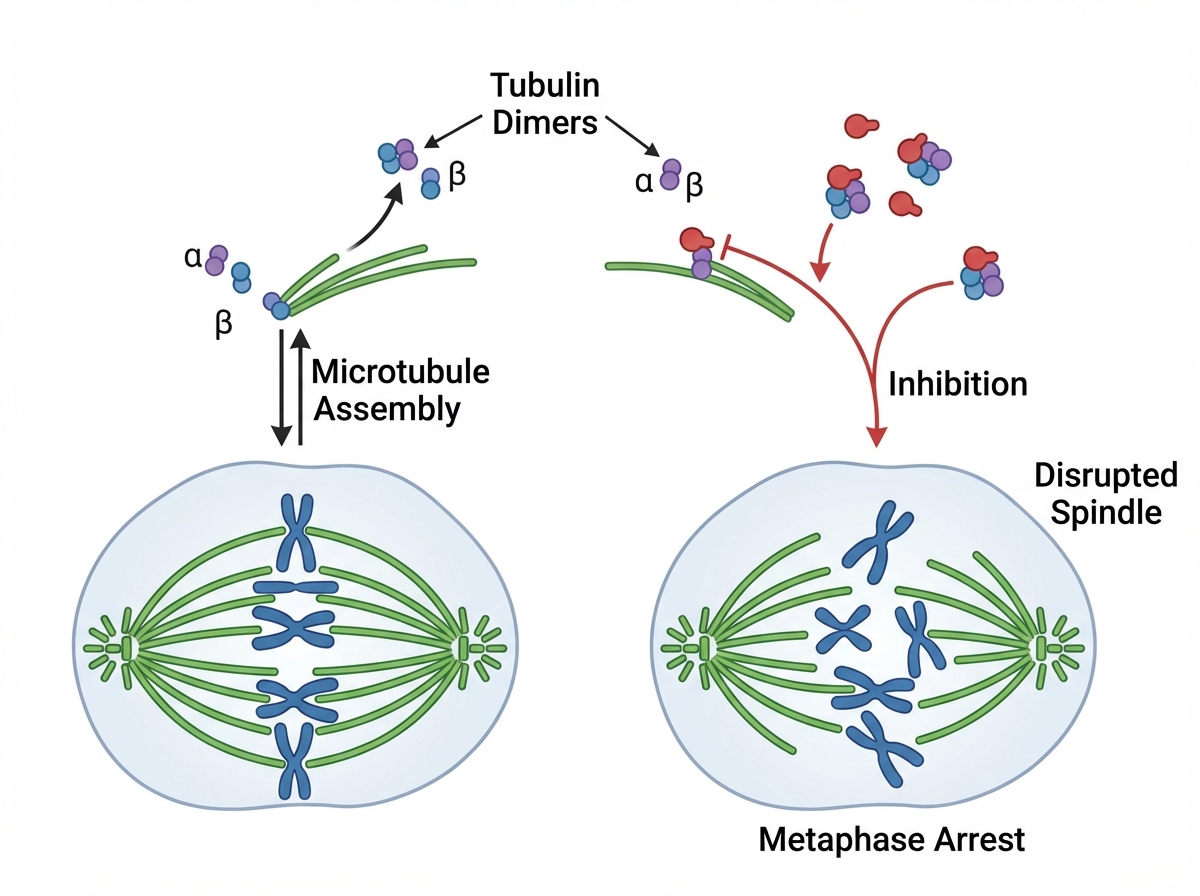
Explanation: **Explanation:** The treatment of metastatic melanoma often targets the **MAPK (Ras-Raf-MEK-ERK) signaling pathway**, which is constitutively active in about 50% of cases due to the **BRAF V600E mutation**. **Correct Option: D. Trametinib** Trametinib is a highly selective, reversible inhibitor of **MEK1 and MEK2** (Mitogen-activated extracellular signal-regulated kinase). By inhibiting MEK, it prevents the phosphorylation of ERK, thereby halting cell proliferation and inducing apoptosis in melanoma cells. It is frequently used in combination with Dabrafenib to delay the development of drug resistance. **Analysis of Incorrect Options:** * **A. Vemurafenib:** This is a selective inhibitor of the mutated **BRAF V600E kinase**. It acts upstream of MEK. * **B. Ipilimumab:** This is a **CTLA-4 inhibitor** (checkpoint inhibitor). It works by enhancing the T-cell mediated immune response against tumor cells rather than targeting intracellular signaling pathways. * **C. Dabrafenib:** Similar to Vemurafenib, this is a **BRAF inhibitor**. **High-Yield Clinical Pearls for NEET-PG:** * **The "Nib" vs. "Mab" Rule:** Small molecule inhibitors end in "-nib" (kinase inhibitors), while monoclonal antibodies end in "-mab". * **Combination Therapy:** Combining a BRAF inhibitor (Dabrafenib) with a MEK inhibitor (Trametinib) is superior to monotherapy because it reduces the incidence of secondary skin cancers (like squamous cell carcinoma) caused by paradoxical MAPK pathway activation. * **Other MEK Inhibitors:** Cobimetinib and Binimetinib. * **Key Side Effect:** MEK inhibitors are uniquely associated with **acneiform rash** and **retinal vein occlusion**.
Explanation: **Explanation:** **Gemcitabine** is a pyrimidine antimetabolite and a deoxycytidine analog. It works by inhibiting DNA synthesis through two mechanisms: it is incorporated into DNA strands (causing chain termination) and it inhibits **ribonucleotide reductase**, the enzyme responsible for producing deoxyribonucleotides. **Why Pancreatic Cancer is Correct:** Gemcitabine is considered the **first-line chemotherapy** for locally advanced or metastatic **pancreatic adenocarcinoma**. It is preferred because it not only provides a modest survival benefit but also significantly improves the "clinical benefit response" (reduction in pain and improved performance status) in these patients. **Analysis of Incorrect Options:** * **A. Colorectal cancer:** The mainstay of treatment is **5-Fluorouracil (5-FU)**, often combined with Oxaliplatin (FOLFOX) or Irinotecan (FOLFIRI). Gemcitabine has limited activity here. * **B. Breast cancer:** While Gemcitabine is used as a second-line agent in metastatic breast cancer (often with Paclitaxel), it is not the *primary* or most characteristic association compared to its role in pancreatic cancer. * **C. Craniopharyngioma:** This is a benign (though locally aggressive) tumor of the sellar region. Treatment is primarily surgical resection and radiotherapy; cytotoxic chemotherapy like Gemcitabine is not standard practice. **High-Yield Clinical Pearls for NEET-PG:** * **Mechanism:** "Masked chain termination"—once Gemcitabine is incorporated, one additional nucleotide is added before DNA synthesis stops, protecting it from repair enzymes. * **Other Indications:** Non-small cell lung cancer (NSCLC), bladder cancer, and ovarian cancer. * **Side Effects:** Myelosuppression (primarily neutropenia) and a flu-like syndrome. * **Metabolism:** It is rapidly deaminated by cytidine deaminase; hence, it has a short half-life.
Explanation: **Explanation:** **Cytarabine (Ara-C)** is the correct answer. It is a pyrimidine analog that inhibits DNA polymerase. **Cerebellar toxicity** (manifesting as ataxia, dysmetria, and nystagmus) is a classic, dose-limiting side effect specifically associated with **High-Dose Cytarabine (HiDAC)** therapy. The mechanism involves the drug’s ability to cross the blood-brain barrier and cause direct damage to Purkinje cells in the cerebellum. This risk is significantly increased in patients with renal impairment, as the drug is cleared renally. **Analysis of Incorrect Options:** * **A. Cisplatin:** Primarily known for its "3 Os": **Ototoxicity** (high-frequency hearing loss), **Ophitoxicity** (optic neuritis), and **Oliguria** (nephrotoxicity). It also causes severe peripheral neuropathy (glove-and-stocking distribution) rather than central cerebellar damage. * **C. Bleomycin:** Its most notorious side effect is **Pulmonary Fibrosis**. It lacks significant neurotoxicity because it does not easily cross the blood-brain barrier. * **D. Actinomycin D:** Primarily causes bone marrow suppression and is a potent vesicant (local tissue necrosis). It is not associated with cerebellar dysfunction. **High-Yield Clinical Pearls for NEET-PG:** * **Cytarabine:** Also causes "Cytarabine Syndrome" (fever, rash, conjunctivitis). Prophylactic **steroid eye drops** are used to prevent chemical conjunctivitis. * **5-Fluorouracil (5-FU):** Another pyrimidine analog that can also cause cerebellar ataxia, though less frequently than high-dose Cytarabine. * **Vincristine:** Most famous for peripheral neuropathy and **paralytic ileus** (autonomic neuropathy). * **Paclitaxel:** Known for peripheral neuropathy and hypersensitivity reactions.
Explanation: **Explanation:** **Cisplatin** is the correct answer because it belongs to the class of **DNA-damaging agents** (specifically platinum compounds, which act similarly to alkylating agents). These drugs work by forming cross-links in DNA, which can lead to permanent mutations in surviving hematopoietic stem cells. This genomic instability significantly increases the long-term risk of developing **secondary malignancies**, most notably **Acute Myeloid Leukemia (AML)**, typically occurring 2–10 years after treatment. **Analysis of Options:** * **Vinblastine (Option A):** A Vinca alkaloid that inhibits microtubule assembly. Its primary dose-limiting toxicity is bone marrow suppression, but it is not typically associated with secondary leukemogenesis. * **Paclitaxel (Option B):** A Taxane that stabilizes microtubules. While it causes neutropenia, it does not directly damage DNA structure in a way that predisposes patients to secondary leukemia. * **Bleomycin (Option C):** An antitumor antibiotic known for causing **pulmonary fibrosis**. It causes DNA strand breaks but is not a classic inducer of secondary leukemia. **High-Yield NEET-PG Pearls:** * **Top Offenders:** The two classes most notorious for secondary leukemia are **Alkylating agents** (e.g., Cyclophosphamide, Melphalan, Busulfan) and **Topoisomerase II inhibitors** (e.g., Etoposide). * **Platinum Analogs:** While Cisplatin is the prototype, Carboplatin also carries this risk. * **Characteristic Presentation:** Secondary leukemia following alkylating agents often involves **11q23 rearrangements** or deletions of chromosomes 5 and 7. * **Cisplatin Triad of Toxicity:** Remember the "3 Os": **O**totoxicity, **O**liguria (Nephrotoxicity), and **O**mited (Nausea/Vomiting - highly emetogenic).
Explanation: **Explanation:** **Bicalutamide** is a non-steroidal, pure **anti-androgen** primarily used in the management of prostate carcinoma. 1. **Mechanism of Action (Option A):** Bicalutamide acts by competitively binding to the **cytosolic androgen receptors** in the target tissue (prostate). By blocking these receptors, it prevents the binding of Dihydrotestosterone (DHT), thereby inhibiting the growth of androgen-dependent cancer cells. 2. **Side Effects (Option B):** Unlike GnRH analogues, bicalutamide does not decrease LH levels; in fact, it may lead to a compensatory increase in LH and testosterone. This excess testosterone is peripherally converted to estrogen via the aromatase enzyme, frequently leading to **gynaecomastia** and breast pain. 3. **Clinical Use (Option C):** While often used in "Combined Androgen Blockade" (CAB) alongside GnRH agonists (to prevent the initial testosterone flare), Bicalutamide is approved for use as **monotherapy** in patients with locally advanced prostate cancer as an alternative to surgical or medical castration. **Conclusion:** Since all statements regarding its mechanism, side effects, and clinical utility are accurate, **Option D (All are true)** is the correct answer. **High-Yield Clinical Pearls for NEET-PG:** * **Comparison with Flutamide:** Bicalutamide is preferred over Flutamide because it has a **longer half-life** (allowing once-daily dosing) and significantly **lower hepatotoxicity**. * **Enzalutamide:** A newer, more potent "second-generation" anti-androgen that inhibits androgen receptor translocation to the nucleus. * **Drug of Choice for Testosterone Flare:** Non-steroidal anti-androgens (like Bicalutamide) are the drugs of choice to prevent the "flare phenomenon" seen at the start of Leuprolide therapy.
Explanation: **Explanation** The question asks for the "except" statement, but based on pharmacological facts, **Option A is actually a TRUE statement.** Irinotecan and Topotecan are S-phase specific antineoplastic agents that inhibit **Topoisomerase I**, preventing the religation of single-strand DNA breaks. *(Note: If this were a standard MCQ where Option A is marked "Correct," it implies the question intended to identify the false statement among others, but all options provided are technically true. In NEET-PG, Irinotecan is a high-yield topic specifically for these four characteristics.)* **Analysis of Options:** * **Option A (True):** Irinotecan inhibits Topoisomerase I. (Contrast: Etoposide and Teniposide inhibit Topoisomerase II). * **Option B (True):** Irinotecan is a prodrug converted to its active metabolite **SN-38** by carboxylesterases. It is primarily eliminated via the liver through glucuronidation by the enzyme **UGT1A1**. * **Option C (True):** It is a first-line agent for **metastatic colorectal cancer**, often used in the FOLFIRI regimen. * **Option D (True):** Irinotecan is notorious for causing **diarrhea**. Early-onset diarrhea (within 24 hours) is due to its **cholinergic properties** (treated with Atropine). Late-onset diarrhea is due to SN-38 toxicity (treated with Loperamide). **NEET-PG Clinical Pearls:** 1. **"I run to the can":** A common mnemonic for Irinotecan-induced diarrhea. 2. **Pharmacogenomics:** Patients with **Gilbert syndrome** or **Crigler-Najjar syndrome** (deficiency in UGT1A1) are at high risk for severe Irinotecan toxicity/neutropenia. 3. **Antidote:** Early diarrhea = Atropine; Late diarrhea = Loperamide.
Explanation: **Explanation:** The goal of cancer chemotherapy is to selectively kill malignant cells while sparing normal tissues. However, most conventional cytotoxic drugs target rapidly dividing cells, leading to significant side effects. **Why "Depression of Angiogenesis" is the correct answer:** Angiogenesis is the process of forming new blood vessels. Tumors require a dedicated blood supply to grow beyond a few millimeters and to metastasize. Therefore, **inhibiting angiogenesis** (using drugs like Bevacizumab, a VEGF inhibitor) is a **therapeutic goal** and an **advantage** of certain anticancer strategies, rather than a disadvantage. By "starving" the tumor of nutrients and oxygen, these drugs limit tumor progression. **Analysis of Incorrect Options (Disadvantages):** * **Low selectivity (Option A):** Most cytotoxic drugs cannot distinguish between a cancer cell and a rapidly dividing normal cell (e.g., GI mucosa, hair follicles), leading to narrow therapeutic indices and systemic toxicity. * **Depression of bone marrow (Option B):** Myelosuppression is the most common dose-limiting toxicity of chemotherapy. It leads to anemia, leukopenia (increasing infection risk), and thrombocytopenia (increasing bleeding risk). * **Depression of immune system (Option D):** Many anticancer drugs are lympholytic or suppress bone marrow precursors, leading to secondary immunodeficiency and susceptibility to opportunistic infections. **High-Yield Clinical Pearls for NEET-PG:** * **Bevacizumab:** A humanized monoclonal antibody against **VEGF**; used in colorectal and renal cell carcinoma. * **Specific Toxicities:** * **Cardiotoxicity:** Doxorubicin/Daunorubicin (prevented by Dexrazoxane). * **Hemorrhagic Cystitis:** Cyclophosphamide/Ifosfamide (prevented by MESNA). * **Pulmonary Fibrosis:** Bleomycin and Busulfan. * **Nephrotoxicity/Ototoxicity:** Cisplatin (prevented by Amifostine and aggressive hydration).
Explanation: **Explanation:** The **Blood-Brain Barrier (BBB)** is a highly selective semipermeable border that prevents most large, polar, or ionized molecules from entering the central nervous system (CNS). For a drug to cross the BBB effectively, it must be highly **lipid-soluble** and have a relatively small molecular weight. **1. Why Nitrosoureas are correct:** Nitrosoureas (e.g., **Carmustine (BCNU)**, **Lomustine (CCNU)**, and **Semustine**) are highly lipophilic alkylating agents. Their chemical structure allows them to diffuse easily across the BBB. Consequently, they are the drugs of choice for treating primary brain tumors (like Glioblastoma Multiforme) and brain metastases. **2. Why the other options are incorrect:** * **Cisplatin:** This is a heavy metal complex (platinum-based). It is highly polar and water-soluble, resulting in very poor CNS penetration. * **Vincristine & Vinblastine:** These are large, complex plant alkaloids (Vinca alkaloids). Due to their high molecular weight and affinity for the P-glycoprotein efflux pump in the BBB, they do not reach therapeutic concentrations in the brain. *Note: Vincristine is notoriously neurotoxic to peripheral nerves but does not cross the BBB to cause central toxicity.* **High-Yield Clinical Pearls for NEET-PG:** * **Pro-drug:** Temozolomide is another oral alkylating agent frequently used for brain tumors due to excellent BBB penetration. * **Intrathecal Route:** Since drugs like Methotrexate and Cytarabine cross the BBB poorly, they must be administered intrathecally to treat or prevent "CNS leukemia." * **Nitrosourea Toxicity:** Apart from myelosuppression, Carmustine is known for causing **pulmonary fibrosis**.
Explanation: **Explanation:** **1. Why Leuprolide is Correct:** Leuprolide is a synthetic **LHRH (GnRH) analogue**. Its mechanism of action depends on the duration of administration. While acute administration stimulates gonadotropin release, **chronic/continuous administration** leads to the downregulation and desensitization of GnRH receptors in the pituitary gland. This results in a profound decrease in LH and FSH levels, leading to "medical castration" (suppression of estrogen in women and testosterone in men). In premenopausal women with hormone-sensitive breast cancer, Leuprolide effectively reduces ovarian estrogen production, thereby inhibiting tumor growth. **2. Why Other Options are Incorrect:** * **Cetrorelix (Option A):** This is a **GnRH antagonist**. While it also suppresses gonadotropins, it is primarily used in controlled ovarian stimulation for infertility treatments (IVF) to prevent premature LH surges, rather than as a standard treatment for breast cancer. * **Anastrozole (Option B):** This is a **selective Aromatase Inhibitor**. It works by blocking the peripheral conversion of androgens to estrogens. It is a first-line treatment for breast cancer in **postmenopausal** women, but it is not an LHRH analogue. * **Tamoxifen (Option C):** This is a **Selective Estrogen Receptor Modulator (SERM)**. It acts by competitively blocking estrogen receptors in breast tissue. While it is a cornerstone of breast cancer therapy, it does not act as an LHRH analogue. **3. NEET-PG High-Yield Pearls:** * **LHRH Analogues:** Include Leuprolide, Goserelin, Buserelin, and Nafarelin. * **Clinical Use:** Used in Prostate Cancer (most common use), Breast Cancer (premenopausal), Endometriosis, and Precocious Puberty. * **The "Flare" Phenomenon:** Initial administration of GnRH agonists causes a transient rise in hormones (flare), which can worsen symptoms (e.g., bone pain in prostate cancer). This is prevented by co-administering Flutamide (an anti-androgen). * **GnRH Antagonists:** (e.g., Degarelix, Abarelix) do NOT cause a hormonal flare.
Explanation: **Explanation:** Monoclonal antibodies (mAbs) are classified based on the percentage of human versus non-human (usually murine/mouse) protein sequences they contain. This classification is easily identified by the **suffix/infix** of the drug name. 1. **Why Chimeric (Option C) is correct:** **Chimeric monoclonal antibodies** contain approximately 65% human and 35% murine protein (specifically, the variable region is murine while the constant region is human). They are identified by the infix **"-xi-"**. * **Cetuximab:** An EGFR inhibitor used in colorectal and head/neck cancers. * **Rituximab:** A CD20 inhibitor used in Non-Hodgkin Lymphoma and CLL. Both contain the "-xi-" infix, confirming their chimeric nature. 2. **Analysis of Incorrect Options:** * **Humanized (Option A):** These contain >90% human protein (only the CDRs are murine). They use the infix **"-zu-"** (e.g., Trastu**zu**mab, Bevacizu**zu**mab). * **Murine (Option B):** These are 100% mouse-derived and use the suffix **"-omab"** (e.g., Ibritumomab). They have a high risk of hypersensitivity (HAMA response). * **Antinuclear antibodies (Option D):** These are autoantibodies produced by the immune system that target the nucleus of one's own cells, used as diagnostic markers for autoimmune diseases (like SLE), not as therapeutic anticancer agents. **High-Yield NEET-PG Pearls:** * **Suffix Mnemonic:** * **-omab:** 100% Mouse (Murine) * **-ximab:** Chimeric (Mixed) * **-zumab:** Humani**z**ed * **-umab:** 100% **U**man (Human) * **Clinical Fact:** Chimeric antibodies like Rituximab carry a higher risk of infusion-related reactions compared to fully human antibodies due to the higher murine content. Pre-medication with paracetamol and antihistamines is often required.
Principles of Cancer Chemotherapy
Practice Questions
Alkylating Agents
Practice Questions
Antimetabolites
Practice Questions
Antitumor Antibiotics
Practice Questions
Plant Alkaloids
Practice Questions
Topoisomerase Inhibitors
Practice Questions
Hormonal Agents
Practice Questions
Targeted Therapy
Practice Questions
Immunotherapy
Practice Questions
Management of Chemotherapy Side Effects
Practice Questions
Get full access to all questions, explanations, and performance tracking.
Start For Free