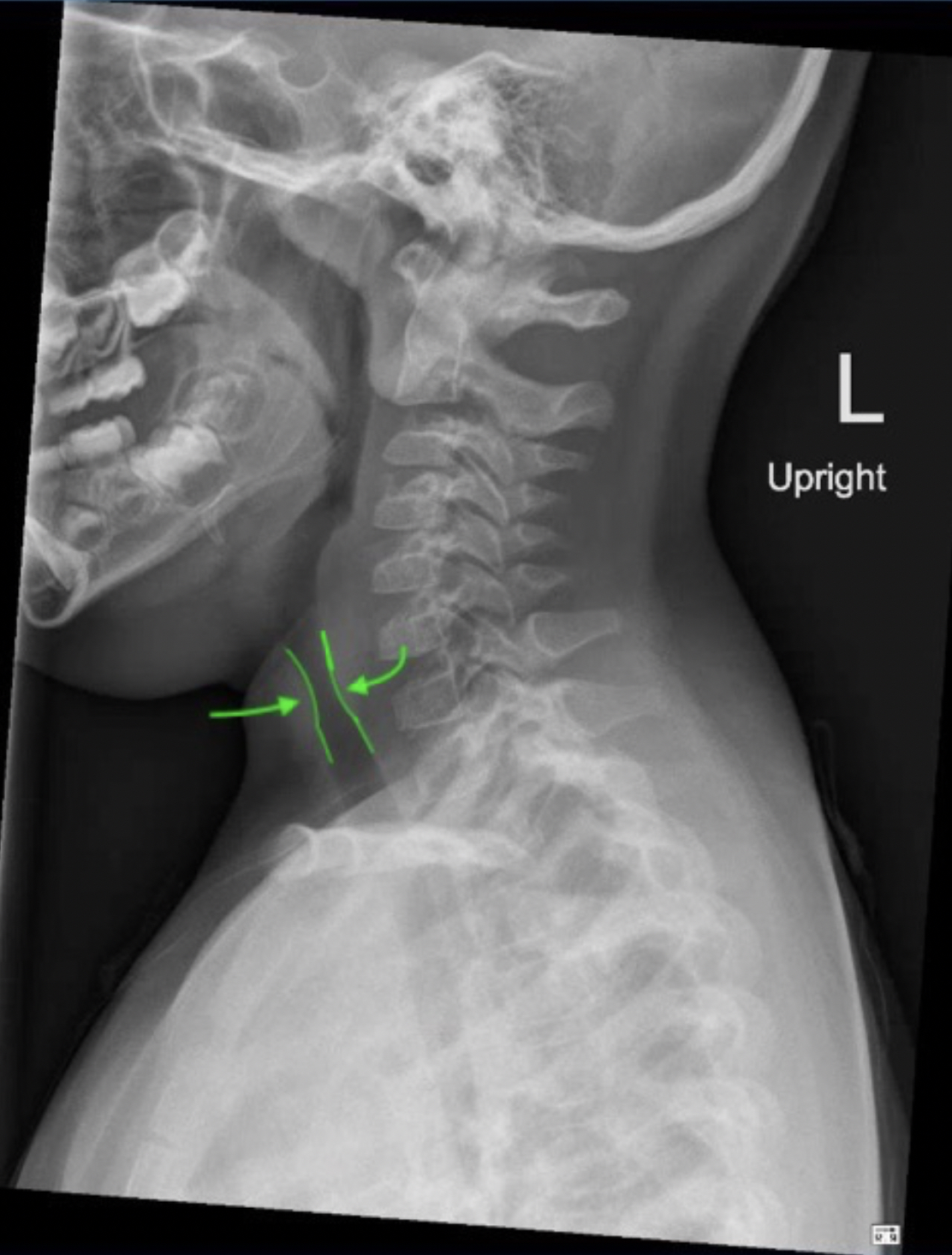
4 year old male, recurrent URTI, has difficulty breathing, High arched palate, Failure to grow and impaired hearing, management is
A child presents with recurrent ear infections and conductive hearing loss. What is the most likely diagnosis?
A 4-year-old boy presents with low-grade fever, inspiratory stridor, and barking cough for the past 5 days. Examination reveals a hoarse voice, a moderately inflamed pharynx, and a slightly increased respiratory rate. His chest x-ray showed subglottic narrowing appearing like a steeple. Which among the following is not indicated in the treatment of this condition?

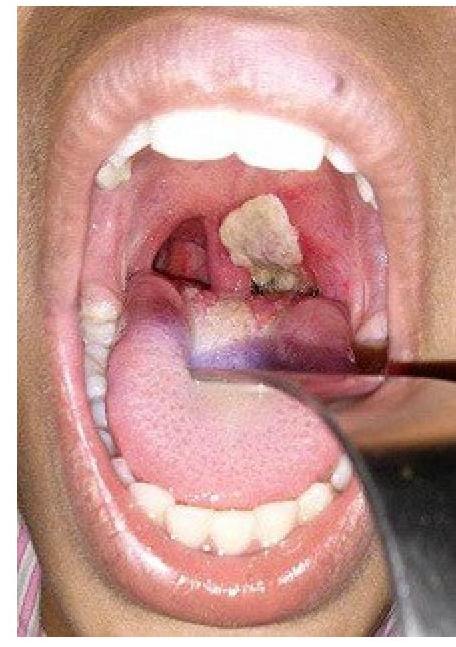
A patient presents with hoarseness of voice and a clinical condition as shown in the image. Identify the lesion:

Most dangerous sign in lower respiratory tract infection (LRTI) in children is:
Which of the following is not associated with primary ciliary dyskinesia?
A 2-month-old child with a birth weight of 2 kg presents with poor feeding, excessive sleepiness, and wheezing. What is the most likely diagnosis?
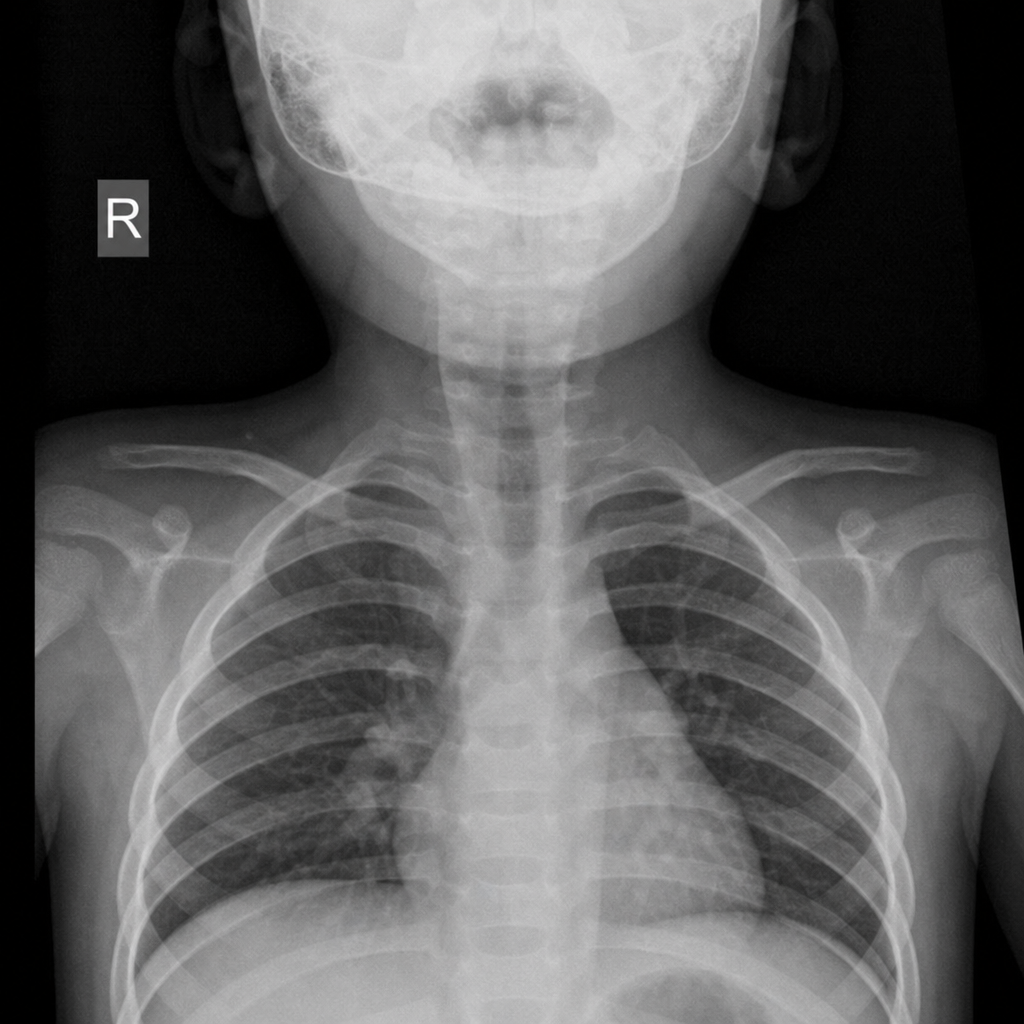
Which of the following conditions is most associated with digital clubbing in children?
A 24 month child, with a weight of 11 kg, has RR of 38 / min, chest indrawing, cough and fever. Management according to IMNCI?
A 10-year-old male child presenting with complaints of poor growth, poor appetite, short stature, clubbing, and recurrent chest infections, along with steatorrhea, is most likely diagnosed with what?
Explanation: ***Referral to ENT and geneticist*** - The constellation of **recurrent URTI**, **high-arched palate**, **failure to grow**, and **impaired hearing** in a 4-year-old child suggests a potential underlying craniofacial anomaly or genetic syndrome. - A **geneticist** can help diagnose underlying genetic conditions, while an **ENT specialist** can address the recurrent upper respiratory tract infections and impaired hearing, which could be related to conditions like **cleft palate** or **CHARGE syndrome**. - This is the **most appropriate initial step** for comprehensive evaluation and diagnosis. *Airway management and feeding support* - While important for immediate stabilization in some cases, these are *supportive measures* that might be necessary *after* a diagnosis is established or to manage acute crises. - They do not address the primary investigation and diagnosis of the complex symptoms presented. *Genetic testing for syndromes* - This is an integral part of the diagnostic process for many syndromes. - However, it's typically performed *after* an initial evaluation by a geneticist and often requires specific indications or panel choices based on clinical findings, rather than being the first and sole management step. *Speech and language therapy* - This is a crucial intervention if speech and language development is affected, which is likely given the impaired hearing and potential palate issues. - However, it addresses a symptom rather than the underlying cause and isn't the initial step for diagnosis or comprehensive management. *Prophylactic antibiotics and immunization* - While recurrent URTIs may warrant consideration of prophylactic measures, this approach treats symptoms without addressing the underlying cause. - Appropriate immunization should already be part of routine care, and prophylactic antibiotics don't address the structural and genetic issues causing the clinical presentation.
Explanation: ***Correct: Glue ear*** - **Glue ear** (otitis media with effusion - OME) is the **most common cause of conductive hearing loss in children** - Frequently develops after **recurrent episodes of acute otitis media**, with persistent middle ear effusion - The thick, glue-like fluid behind the tympanic membrane impairs ossicular movement, causing **conductive hearing loss** - Classic presentation: child with history of recurrent ear infections who develops persistent hearing impairment between acute episodes - Diagnosis confirmed by **tympanometry** showing flat type B curve and **otoscopy** revealing retracted tympanic membrane with fluid level or air bubbles *Incorrect: Chronic otitis media* - Implies **persistent tympanic membrane perforation** with chronic discharge (>6-12 weeks) - More severe, established pathology with potential complications like cholesteatoma - While it causes conductive hearing loss, it's **less common** than OME in typical pediatric presentations - Would expect to see persistent otorrhea and visible perforation on examination *Incorrect: Acute otitis media* - Characterized by **sudden onset** with acute symptoms: otalgia, fever, irritability, bulging red tympanic membrane - While recurrent episodes are common in children, the question describes ongoing conductive hearing loss, suggesting **persistent effusion** rather than isolated acute episodes - Each acute episode resolves, but may be followed by OME *Incorrect: Otitis externa* - **External ear canal** infection ("swimmer's ear"), not a middle ear problem - Presents with ear pain worsened by **tragal pressure** or pinna manipulation, canal edema, and discharge - Does **not cause conductive hearing loss** unless severe canal occlusion occurs - Not associated with recurrent middle ear infections
Explanation: ***Parenteral cefotaxime*** - The clinical presentation (low-grade fever, inspiratory stridor, barking cough, hoarse voice) and the **steeple sign** on chest X-ray are classic for **croup (laryngotracheobronchitis)**, which is predominantly caused by **viral infections**, not bacterial. Therefore, antibiotics like parenteral cefotaxime are generally **not indicated**. - **Cefotaxime** is a broad-spectrum antibiotic used for serious bacterial infections; its use in viral croup would be inappropriate and could contribute to antibiotic resistance. *Nebulized racemic epinephrine* - **Nebulized racemic epinephrine** is a common and effective treatment for moderate to severe croup, as it helps to **vasoconstrict** the subglottic mucosa, reducing edema and improving airflow. - It provides temporary relief from symptoms, especially stridor, by reducing swelling in the airway. *Intramuscular dexamethasone* - **Dexamethasone**, a corticosteroid, is a cornerstone of croup treatment as it reduces inflammation and edema in the airway, improving respiratory symptoms. - It can be administered orally, intravenously, or intramuscularly, and provides sustained relief, typically for 24-48 hours. *Nebulized budesonide* - **Nebulized budesonide** is an alternative corticosteroid treatment for croup that delivers anti-inflammatory medication directly to the airway. - Studies show it is equally effective to dexamethasone for mild to moderate croup, though dexamethasone is often preferred due to ease of administration and longer duration of action. *Helium oxygen mixture* - A **helium-oxygen mixture (heliox)** is a therapeutic gas that is less dense than air, which can reduce the work of breathing in patients with severe airway obstruction, such as refractory croup. - By decreasing airway turbulence, heliox can temporarily improve air movement past the narrowed subglottic area.
Explanation: ***Diphtheria*** - The image shows a **thick, grayish-white pseudomembrane** covering the tonsils and likely extending to other parts of the pharynx, which is a classic sign of diphtheria. - **Hoarseness** indicates laryngeal involvement, a severe complication of diphtheria due to pseudomembrane formation extending to the larynx, potentially causing airway obstruction. *Follicular tonsillitis* - This condition presents with **pus-filled follicles** or spots on the tonsils, which are typically yellow or white, rather than a confluent membrane. - While it causes throat pain and fever, it generally does not lead to the formation of a **firm, adherent pseudomembrane** or significant hoarseness from laryngeal obstruction as seen in diphtheria. *Aphthous ulcer* - An aphthous ulcer is a **small, painful, shallow sore** with a white or yellowish center and a red border, typically found on the non-keratinized oral mucosa. - It does not present as a widespread, thick membranous lesion covering the tonsils and causing hoarseness. *Membranous tonsillitis* - While "membranous tonsillitis" describes the presence of a membrane on the tonsils, this term is often used generally. However, the specific characteristics in the image (thick, grayish, adherent membrane with severe symptoms like hoarseness) are pathognomonic for **diphtheria**. - Other causes of membranous tonsillitis, such as infectious mononucleosis, typically present with a less adherent membrane and often lack the severe systemic toxicity and potential for rapid airway compromise seen in diphtheria.
Explanation: ***Grunting*** - **Grunting** is an expiratory sound produced by partial closure of the glottis to maintain positive end-expiratory pressure (PEEP), indicating **severe respiratory distress** and **impending respiratory failure**. - This compensatory mechanism suggests significant **alveolar collapse** or **pulmonary edema** and is a **critical danger sign** requiring immediate intervention in children with LRTI. - According to WHO and IMNCI guidelines, grunting is classified as a **danger sign** warranting urgent referral and management. *Incorrect: Chest retraction* - **Chest retractions** occur when the intercostal muscles, suprasternal, or subcostal areas pull inward during inspiration due to increased negative intrathoracic pressure. - Although it is a sign of respiratory distress indicating increased work of breathing, it is less dire than grunting, which signifies a more critical phase of respiratory failure. *Incorrect: Tachypnea* - **Tachypnea** (increased respiratory rate) is an early and common sign of LRTI in children, as the body attempts to compensate for hypoxemia or increased metabolic demand. - While concerning, it is often an initial response and, by itself, is not as immediately life-threatening as grunting, which suggests severe impairment of gas exchange. *Incorrect: Abdominal breathing* - **Abdominal breathing** (or diaphragmatic breathing) is a normal compensatory mechanism in infants and young children during respiratory distress. - While it indicates increased work of breathing, it is not as dangerous as grunting, which signifies a more advanced stage of respiratory compromise.
Explanation: ***Hypothyroidism*** - **Hypothyroidism** is a condition related to the thyroid gland's function and is **not directly associated** with defects in ciliary structure or function. - While other systemic conditions can coexist, there is no known mechanistic link between primary ciliary dyskinesia and thyroid dysfunction. *Sterility in males* - **Sterility in males** is a common manifestation of primary ciliary dyskinesia, as the abnormal cilia impair **sperm motility**, preventing effective fertilization. - The **flagellum of sperm** shares structural similarities with cilia, and its dysfunction leads to **immotile spermatozoa**. *Sinusitis* - **Sinusitis** is a hallmark symptom of primary ciliary dyskinesia due to impaired ciliary clearance in the **paranasal sinuses**. - The inability to effectively clear mucus leads to chronic and recurrent **sinus infections** and inflammation. *Respiratory infection* - **Recurrent respiratory infections**, including bronchitis, pneumonia, and bronchiectasis, are characteristic features of primary ciliary dyskinesia. - Defective ciliary action in the **respiratory tract** prevents proper clearance of mucus and pathogens, leading to chronic infections.
Explanation: ***Bronchiolitis*** - This presentation in a 2-month-old, especially with a history of **low birth weight**, points to bronchiolitis, characterized by **poor feeding**, **excessive sleepiness**, and **wheezing**. - **Bronchiolitis** primarily affects infants under 2 years (peak 2-6 months) and presents with signs of **lower respiratory tract involvement** including wheezing, tachypnea, and respiratory distress, which can lead to fatigue and feeding difficulties. - The **wheezing** is the key distinguishing feature indicating **small airway inflammation** typical of bronchiolitis. *Incorrect: Viral upper respiratory tract infection* - While viral URTI can cause nasal congestion and rhinorrhea, it typically affects the **upper airways** (nose, pharynx). - **Wheezing** indicates **lower airway involvement**, making bronchiolitis more likely than simple URTI. - The combination of systemic symptoms (poor feeding, excessive sleepiness) with wheezing suggests more significant lower respiratory disease. *Incorrect: Severe pneumonia* - Though severe pneumonia can cause similar systemic symptoms, **crackles or rales** are more characteristic than **wheezing**. - Pneumonia typically presents with **fever**, **cough**, and **focal consolidation** on examination. - The predominant **wheezing** in this case points more toward bronchiolitis with its diffuse small airway involvement. *Incorrect: Congestive heart failure* - CHF is an important differential in low birth weight infants with poor feeding and respiratory distress. - However, CHF typically presents with **tachycardia**, **hepatomegaly**, **gallop rhythm**, and **bilateral crackles** rather than prominent wheezing. - The **wheezing** without cardiac signs makes bronchiolitis more likely than a primary cardiac cause.
Explanation: ***Cystic fibrosis*** - **Cystic fibrosis** is a common cause of **digital clubbing** in children due to chronic hypoxemia and lung disease, leading to abnormal growth of connective tissue at the nail beds. - The chronic lung infections, bronchiectasis, and airway obstruction characteristic of cystic fibrosis contribute to persistent **tissue hypoxia**, which is a primary driver of clubbing. *Croup* - Croup is an acute viral infection of the upper airway, primarily characterized by a **barking cough** and **stridor**, and generally resolves within a week without chronic complications like clubbing. - It does not cause chronic hypoxemia necessary for the development of digital clubbing. *Bronchiolitis* - **Bronchiolitis** is an acute viral infection of the lower respiratory tract, most common in infants, causing wheezing and respiratory distress, but it is typically a **short-lived illness** without chronic sequelae leading to clubbing. - This condition does not cause prolonged enough or severe enough **hypoxia** to result in clubbing. *Asthma* - While severe, uncontrolled **asthma** can cause intermittent hypoxia, it is typically not associated with chronic digital clubbing, especially in children, unless there are other coincident chronic lung conditions. - Digital clubbing is rare in asthma and often suggests an alternate or co-existing pathology, such as **bronchiectasis** or **cystic fibrosis**.
Explanation: ***Give antibiotics*** - The child presents with **chest indrawing** along with cough and fever, which according to **IMNCI guidelines** classifies as **pneumonia**. - Note: RR of 38/min is **within normal limits** for a 24-month-old child (fast breathing threshold is ≥40/min for 12-59 months age group). - The diagnosis of pneumonia is based on the presence of **chest indrawing**, not fast breathing in this case. - According to **IMNCI**, pneumonia (without danger signs) should be treated with **oral antibiotics** (amoxicillin 250 mg twice daily for 5 days) at the primary care level. - The child should be followed up in 2 days and the mother advised on when to return immediately. *Refer to a higher-level health facility for further management.* - Referral is indicated for **severe pneumonia**, which requires presence of any **general danger sign** (inability to drink/breastfeed, persistent vomiting, convulsions, lethargy/unconsciousness, or stridor in calm child). - This child has **pneumonia** (not severe), so outpatient treatment with oral antibiotics is appropriate. *Monitor at home without medical treatment.* - This would be inappropriate as the child has **pneumonia** requiring antibiotic treatment. - Untreated pneumonia can rapidly progress to severe disease and is a **leading cause of child mortality** in developing countries. *Provide symptomatic treatment with antipyretics only.* - While antipyretics (paracetamol) can be given for fever, they do not treat the underlying **bacterial infection**. - Antibiotics are essential to treat pneumonia and prevent complications and mortality.
Explanation: ***Cystic fibrosis*** - The constellation of **poor growth**, **short stature**, **recurrent chest infections**, **clubbing**, and **steatorrhea** is highly indicative of cystic fibrosis. - **Cystic fibrosis** is a genetic disorder affecting exocrine glands, leading to thick, sticky mucus that clogs the lungs and pancreas, causing malabsorption. *Celiac Disease* - **Celiac disease** primarily affects the small intestine, leading to malabsorption and poor growth. - While it can cause steatorrhea and poor growth, it does not typically present with recurrent chest infections or significant clubbing. *Biliary cirrhosis* - **Biliary cirrhosis** involves liver damage and can cause steatorrhea due to impaired bile flow. - However, it is not typically associated with recurrent chest infections or prominent clubbing unless advanced. *Bronchiectasis* - **Bronchiectasis** is characterized by permanent dilation of the bronchi, leading to chronic cough and recurrent respiratory infections. - While it can cause clubbing and recurrent chest infections, it does not directly cause steatorrhea or poor growth as a primary feature, although malnutrition can occur secondary to chronic illness.
Get full access to all questions, explanations, and performance tracking.
Start For Free