In a 3-year-old child, which of the following is the most common cyst located in the midline of the neck?
An apparently healthy newborn with a good appetite begins feedings with formula. After feeding, when laid down in the crib, the infant experiences projectile vomiting. Which of the following conditions is a probable cause of this vomiting?
What is true about cystic hygroma?
What is the treatment of choice for sternocleidomastoid tumor?
Which imaging modality is considered the gold standard for diagnosing hypertrophic pyloric stenosis?
A male neonate develops small-bowel obstruction due to malrotation of the midgut segment. An x-ray of the abdomen confirms the presence of small-bowel obstruction. The neonate undergoes an emergency laparotomy, untwisting of the malrotated intestines, and partial small-bowel resection for intestinal infarction. Which of the following statements is true of the small intestine (jejunum and ileum)?
What is the least common site of volvulus in a neonate?
Which of the following statements about Bochdalek hernia is FALSE?
A 2-day-old newborn presents with vomiting. Physical examination reveals an olive-sized mass in the epigastric area. Which of the following conditions is this child likely to exhibit?
Which one of the following is most suggestive of neonatal small bowel obstruction?
Explanation: **Explanation:** **1. Why Thyroglossal Cyst is Correct:** The **Thyroglossal Duct Cyst (TGDC)** is the most common congenital neck mass in children. It results from the failure of the thyroglossal duct to obliterate during the descent of the thyroid gland from the foramen cecum (base of tongue) to its final position in the neck. * **Location:** Characteristically found in the **midline** (80% of cases), most commonly at the level of the hyoid bone. * **Clinical Sign:** A pathognomonic feature is that the cyst **moves upward on protrusion of the tongue** (due to its attachment to the hyoid bone and foramen cecum) and on deglutition (swallowing). **2. Why Other Options are Incorrect:** * **Branchial Cyst:** These are remnants of the second branchial cleft. They are typically located **laterally**, along the anterior border of the upper third of the sternocleidomastoid muscle, not in the midline. * **Cystic Hygroma (Lymphangiocele):** These are congenital lymphatic malformations. While they can be large, they are most commonly found in the **posterior triangle** of the neck and are typically soft, painless, and brilliantly transilluminant. **3. NEET-PG High-Yield Pearls:** * **Surgical Management:** The treatment of choice is the **Sistrunk Operation**, which involves excision of the cyst, the entire tract, and the **central portion of the hyoid bone** to prevent recurrence. * **Ectopic Thyroid:** Always perform an ultrasound before surgery to ensure the cyst is not the patient’s only functioning thyroid tissue. * **Most common site:** Subhyoid (most frequent), followed by suprahyoid and thyroid level. * **Complication:** If infected, it may rupture to form a thyroglossal fistula.
Explanation: **Explanation:** The correct answer is **Esophageal hiatal hernia (Option B)**. In this condition, a portion of the stomach protrudes through the esophageal hiatus into the thoracic cavity. This disrupts the normal anti-reflux mechanism of the lower esophageal sphincter (LES). When the infant is laid flat after a feeding, the lack of a functional sphincter and the effect of gravity allow gastric contents to reflux forcefully, leading to **projectile vomiting**. While projectile vomiting is classically associated with Hypertrophic Pyloric Stenosis (HPS), HPS typically presents at 3–6 weeks of age, whereas hiatal hernia can manifest shortly after birth. **Analysis of Incorrect Options:** * **A. Physiological umbilical herniation:** This is a normal developmental stage between the 6th and 10th weeks of gestation where midgut loops reside in the umbilical cord. It does not cause vomiting. * **C. Tetralogy of Fallot:** This is a cyanotic heart disease characterized by "Tet spells" and cyanosis, not gastrointestinal obstruction or projectile vomiting. * **D. Congenital diaphragmatic hernia (CDH):** CDH typically presents in the immediate neonatal period with **respiratory distress** and a scaphoid abdomen. While it involves herniation of abdominal contents, the primary clinical emergency is pulmonary hypoplasia, not post-prandial projectile vomiting. **NEET-PG High-Yield Pearls:** * **Projectile Vomiting (Non-bilious):** Think HPS (3–6 weeks) or Hiatal Hernia/GERD (early infancy). * **Projectile Vomiting (Bilious):** Think Duodenal Atresia (Double-bubble sign) or Malrotation with Volvulus. * **Hiatal Hernia Association:** It is a component of **Saint’s Triad** (Hiatal hernia, Diverticulosis, and Cholelithiasis). * **Management:** Most pediatric hiatal hernias are managed conservatively with thickened feeds and upright positioning (propped up) after meals.
Explanation: ### Explanation **Cystic Hygroma** (also known as macrocystic lymphatic malformation) is a benign congenital malformation of the lymphatic system. **1. Why Option A is Correct:** The fundamental pathology of cystic hygroma is the **congenital sequestration of lymphatic tissue**. During embryogenesis, the primitive lymphatic sacs fail to communicate with the venous system. This leads to the sequestration (trapping) of lymphatic vessels, which subsequently undergo cystic dilatation as they fill with lymph, forming a multiloculated, fluid-filled mass. **2. Why Other Options are Incorrect:** * **Option B:** Unlike strawberry hemangiomas, cystic hygromas **do not resolve spontaneously**. They typically grow in proportion to the child and often require intervention (sclerotherapy or surgical excision) due to the risk of infection or compression of vital structures. * **Option C:** While they occur in the neck (75-80% of cases), they are most commonly found in the **posterior triangle** (lower one-third) of the lateral neck, rather than the upper one-third. **3. High-Yield Clinical Pearls for NEET-PG:** * **Transillumination:** Because they are fluid-filled, cystic hygromas are **brilliantly transilluminant**. * **Associations:** Frequently associated with chromosomal anomalies, most notably **Turner Syndrome (45, XO)** and Down Syndrome (Trisomy 21). * **Presentation:** Usually present at birth (60%) or by age 2 (90%). They are soft, painless, and compressible. * **Complications:** Sudden increase in size usually indicates **intracystic hemorrhage** or infection. * **Treatment of Choice:** **Sclerotherapy** (using agents like OK-432 or Bleomycin) is often the first-line treatment for macrocystic lesions; surgical excision is reserved for cases where sclerotherapy is ineffective or anatomically challenging.
Explanation: **Explanation:** **Sternocleidomastoid (SCM) tumor**, also known as **Congenital Muscular Torticollis (CMT)**, is a benign condition characterized by a firm, non-tender mass within the SCM muscle, typically appearing 2–4 weeks after birth. It is often associated with birth trauma or intrauterine malposition. **Why Physiotherapy is the Correct Answer:** The primary goal of treatment is to stretch the shortened muscle and restore a full range of motion. **Conservative management with physiotherapy** (passive stretching exercises and positioning) is the treatment of choice and is successful in over **90-95% of cases**, especially when initiated within the first year of life. Most "tumors" resolve spontaneously as the child grows, provided the muscle is kept supple. **Why Other Options are Incorrect:** * **Surgical Resection:** Surgery (e.g., bipolar tenotomy or muscle lengthening) is reserved only for refractory cases that fail to improve after 6–12 months of intensive physiotherapy or for children diagnosed late (after 1 year of age) with persistent craniofacial asymmetry. * **Intralesional Steroids:** There is no clinical evidence to support the use of steroids; the pathology involves fibrosis of the muscle, not active inflammation that would respond to steroids. **Clinical Pearls for NEET-PG:** * **Clinical Presentation:** The head is tilted **toward** the affected side, and the chin is rotated **away** from the affected side. * **Associated Finding:** Always screen for **Developmental Dysplasia of the Hip (DDH)**, as there is a 5–10% clinical association between CMT and DDH. * **Pathology:** Histology shows "fibromatosis colli"—replacement of myocytes with dense fibrous tissue. * **Imaging:** Ultrasound is the initial investigation of choice to confirm the diagnosis and rule out other neck masses.
Explanation: **Explanation:** **Hypertrophic Pyloric Stenosis (HPS)** is a condition characterized by the hypertrophy of the circular muscle layers of the pylorus, leading to gastric outlet obstruction. **1. Why Ultrasonography (USG) is the Gold Standard:** USG is the investigation of choice because it is non-invasive, avoids ionizing radiation, and allows for real-time visualization of the pyloric muscle. The diagnostic criteria on USG are highly specific: * **Pyloric muscle thickness:** >3 mm (most sensitive) * **Pyloric channel length:** >14 mm * **Pyloric diameter:** >10 mm * **Target Sign/Donut Sign:** Seen on transverse sections. **2. Why other options are incorrect:** * **CT Scan & MRI:** These are expensive, time-consuming, and often require sedation in infants. They are unnecessary because USG provides superior detail of the pyloric muscle. * **X-ray Abdomen:** While it may show a "single bubble" (distended stomach) or a "caterpillar sign" (hyperperistaltic waves), it is non-specific and cannot confirm the diagnosis of muscle hypertrophy. **Clinical Pearls for NEET-PG:** * **Classic Presentation:** A 3–6 week-old male infant with **non-bilious, projectile vomiting** and a palpable "olive-shaped" mass in the epigastrium. * **Metabolic Profile:** Hypochloremic, hypokalemic, metabolic alkalosis with **paradoxical aciduria** (High-yield). * **Barium Swallow (if USG is inconclusive):** Shows the "String sign" (narrowed canal), "Beak sign," or "Shoulder sign." * **Management:** Initial stabilization with IV fluids (Normal Saline) followed by **Ramstedt’s Pyloromyotomy**.
Explanation: ### Explanation **1. Why the Correct Answer is Right:** The gastrointestinal tract is embryologically divided into the foregut, midgut, and hindgut based on arterial supply. The **midgut** is supplied by the Superior Mesenteric Artery (SMA) and extends from the distal half of the second part of the duodenum to the junction of the proximal two-thirds and distal one-third of the transverse colon. Therefore, the entire **jejunum and ileum** are derived from the midgut. Malrotation occurs due to the failure of the normal 270° counter-clockwise rotation of this midgut segment around the SMA. **2. Why the Incorrect Options are Wrong:** * **Option B:** The midgut enters the physiologic umbilical hernia during the **6th week** of gestation (not the 5th month). This occurs because the rapidly growing liver and kidneys leave insufficient space in the abdominal cavity. * **Option C:** The intestines return to the abdominal cavity during the **10th week** of gestation. Thus, they remain in the physiologic hernia for approximately **4 weeks**, not 4 months. * **Option D:** The **urachus** is a fibrous remnant of the allantois, connecting the urinary bladder to the umbilicus. The small intestine is attached to the posterior abdominal wall via the mesentery, not the urachus. (The vitelline duct, however, connects the midgut to the yolk sac). **3. Clinical Pearls for NEET-PG:** * **Ladd’s Procedure:** The surgical treatment for malrotation involving detorsion, division of Ladd’s bands, and widening the mesenteric base. * **Ladd’s Bands:** Peritoneal bands crossing the duodenum (causing obstruction) to attach an undescended cecum to the RUQ. * **Radiology:** The "Corkscrew sign" on upper GI contrast studies is diagnostic of midgut volvulus. * **SMA/SMV Relationship:** On ultrasound, a reversal of the normal relationship (SMV located to the left of SMA) is highly suggestive of malrotation.
Explanation: **Explanation:** In neonates, the incidence of volvulus is primarily dictated by the length of the mesentery and the degree of intestinal fixation. **Large bowel volvulus** (Option D) is the **least common** site because the colon is generally well-fixed to the retroperitoneum during fetal development. While cecal or sigmoid volvulus can occur in adults, they are extremely rare in the neonatal period unless associated with significant malrotation or an abnormally long mesocolon. **Analysis of Options:** * **Small bowel volvulus (Option B):** This is the **most common** type in neonates, typically occurring secondary to **Malrotation** (Ladd’s bands). The narrow mesenteric base allows the entire midgut to twist, leading to life-threatening ischemia. * **Ileoileal volvulus (Option A):** This is a subset of small bowel volvulus. It can occur as a primary event or secondary to meconium ileus or internal hernias, making it more frequent than colonic involvement. * **Gastric volvulus (Option C):** While uncommon, it occurs more frequently than large bowel volvulus in neonates, often associated with diaphragmatic defects (e.g., Bochdalek hernia) or wandering spleen. **NEET-PG High-Yield Pearls:** * **Gold Standard Investigation:** Upper GI Contrast Study (Barium/Gastrografin swallow) showing the **"Corkscrew appearance"** of the duodenum. * **Clinical Presentation:** Sudden onset **bilious vomiting** in a previously healthy neonate is midgut volvulus until proven otherwise. * **Surgical Management:** **Ladd’s Procedure** (untwisting counter-clockwise, widening the mesenteric base, and performing an appendectomy). * **Whirlpool Sign:** A classic finding on Color Doppler Ultrasound representing the wrapping of the superior mesenteric vein around the artery.
Explanation: **Explanation** Congenital Diaphragmatic Hernia (CDH) is a critical topic for NEET-PG. To identify the false statement, we must analyze the anatomy and epidemiology of the Bochdalek hernia. **Analysis of Options:** * **Option B (The False Statement):** While the question marks this as the "correct" answer (meaning it is the false statement), there appears to be a technical error in the prompt's marking. **Bochdalek hernia DOES occur more commonly on the left side (80-85%)**. If the goal is to find the false statement among these options, all four are actually **true** clinical facts. However, in a typical exam setting, if one were forced to find a "false" nuance, one must ensure the side and location are precise. * **Option A:** This is **true**. Bochdalek hernia accounts for approximately 90-95% of all CDH cases, making it the most common type. * **Option C:** This is **true**. It results from the failure of the **pleuroperitoneal membranes** to fuse with the septum transversum and dorsal mesentery in the **posterolateral** aspect. * **Option D:** This is **true**. It is a developmental defect occurring between the 6th and 10th week of gestation. **Clinical Pearls for NEET-PG:** 1. **The "Classic Triad":** Cyanosis, Dyspnea, and Dextrocardia (if left-sided). 2. **Physical Exam:** Scaphoid abdomen and bowel sounds heard in the chest. 3. **Management:** The primary cause of mortality is **Pulmonary Hypoplasia** and persistent pulmonary hypertension, not the defect itself. 4. **Stabilization:** Always **intubate** immediately; avoid bag-and-mask ventilation as it distends the bowel and further compresses the lungs. 5. **Morgagni Hernia:** The rarer type (5-10%), usually **retrosternal/anterior** and more common on the **right** side.
Explanation: ### Explanation The clinical presentation of a palpable **"olive-sized mass"** in the epigastrium of a neonate is the pathognomonic physical finding for **Infantile Hypertrophic Pyloric Stenosis (IHPS)**. **1. Why "Non-bilious vomiting" is correct:** In IHPS, there is hypertrophy and hyperplasia of the muscular layers of the pylorus, leading to a functional gastric outlet obstruction. Because the obstruction occurs **proximal to the Ampulla of Vater** (where bile enters the duodenum), the vomitus contains only gastric contents and lacks bile. The vomiting is typically "projectile" and occurs shortly after feeding. **2. Analysis of Incorrect Options:** * **Biliary stenosis:** This would typically present with jaundice and acholic stools rather than a palpable abdominal mass and projectile vomiting. * **Duodenal atresia:** While it causes early neonatal vomiting, the obstruction is usually distal to the Ampulla of Vater, resulting in **bilious vomiting**. On X-ray, it shows the "double bubble" sign, not an olive-shaped mass. * **Pancreas divisum:** This is a congenital anomaly of the pancreatic ducts. It is usually asymptomatic in neonates and may present much later in life with recurrent pancreatitis; it does not cause a palpable epigastric mass or projectile vomiting. **3. NEET-PG High-Yield Pearls for IHPS:** * **Demographics:** Most common in first-born males (4:1 ratio); associated with **Erythromycin** use in early infancy. * **Metabolic Profile:** Classic finding is **Hypochloremic, hypokalemic metabolic alkalosis** with paradoxical aciduria. * **Diagnosis:** Ultrasound is the gold standard (Pyloric muscle thickness >4mm or length >14mm). Barium swallow shows the **"String sign"** or "Beak sign." * **Management:** Initial step is fluid resuscitation (Normal Saline). Definitive treatment is **Ramstedt’s Pyloromyotomy**.
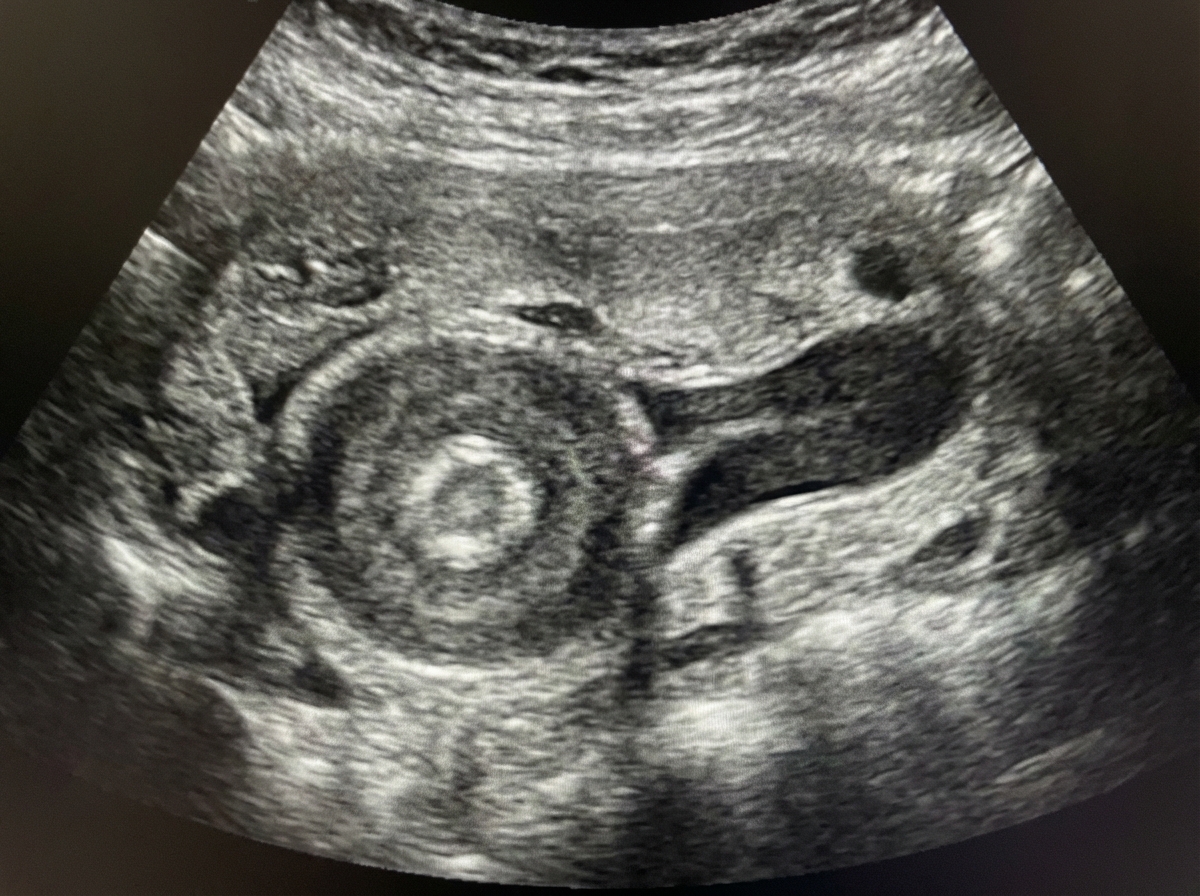
Explanation: **Explanation:** In neonatal surgery, **bilious vomiting** is considered a surgical emergency until proven otherwise. It is the hallmark sign of **neonatal intestinal obstruction** distal to the Ampulla of Vater. The presence of bile (green-colored vomitus) indicates that the obstruction is located in the small bowel (duodenum, jejunum, or ileum), allowing bile to reflux into the stomach. **Analysis of Options:** * **Bilious Vomiting (Correct):** This is the most specific and significant clinical sign of mechanical small bowel obstruction (e.g., malrotation with midgut volvulus, atresias). Non-bilious vomiting usually suggests a more proximal obstruction (e.g., pyloric stenosis). * **Generalized Abdominal Distension:** While common in distal obstructions (ileum/colon), it is often absent in high small bowel obstructions (duodenal atresia), where only the epigastrium may be full. It is also seen in non-obstructive conditions like necrotizing enterocolitis or sepsis. * **Failure to pass meconium:** While 95% of healthy neonates pass meconium within 24 hours, a delay is more suggestive of **large bowel** issues (Hirschsprung disease or meconium ileus) rather than simple small bowel obstruction. * **Refusal of feeds:** This is a highly non-specific symptom seen in almost every neonatal illness, including sepsis, metabolic disorders, and respiratory distress. **High-Yield Pearls for NEET-PG:** * **Double Bubble Sign:** Classic X-ray finding for Duodenal Atresia. * **Triple Bubble Sign:** Suggestive of Jejunal Atresia. * **Gold Standard Investigation:** For suspected malrotation/volvulus, an **Upper GI Contrast Study** is the investigation of choice. * **Target Sign/Pseudokidney Sign:** USG findings for Intussusception (though more common in older infants).
Surgical Conditions of the Newborn
Practice Questions
Congenital Diaphragmatic Hernia
Practice Questions
Esophageal Atresia and Tracheoesophageal Fistula
Practice Questions
Intestinal Atresia and Stenosis
Practice Questions
Malrotation and Volvulus
Practice Questions
Hirschsprung's Disease
Practice Questions
Anorectal Malformations
Practice Questions
Biliary Atresia
Practice Questions
Abdominal Wall Defects
Practice Questions
Inguinal Hernia and Hydrocele
Practice Questions
Intussusception
Practice Questions
Appendicitis in Children
Practice Questions
Get full access to all questions, explanations, and performance tracking.
Start For Free