A 4-year-old unvaccinated child presents with fever, rash, and Bitot spots. What is the appropriate line of management?
A 4-year-old child with mid-arm circumference of 105mm, upon providing therapeutic food, eagerly completed all of it. This patient is considered under?
Chronic malnutrition is best measured by?
For how long is exclusive breastfeeding recommended?
A child presents with the findings shown in the image below. What is the true statement regarding this condition?
Which of the following is an absolute contraindication for breastfeeding?
Which of the following is not true regarding Marasmus in a child?
Which of the following is/are incorrect regarding breastfeeding technique? 1. Infant's chin should be touching the breast 2. Infant's lower lip should be inverted during latching to the breast 3. A greater part of areola above the breast should be covered than below 4. Infant's cheeks should appear full during effective sucking.
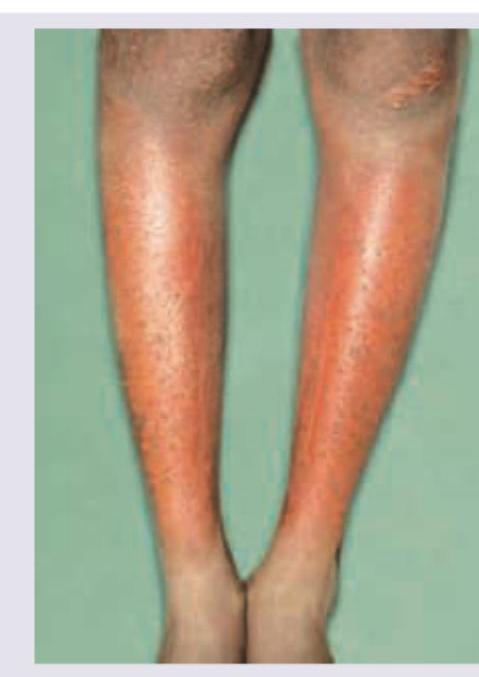
A child is brought from a rural village with complaints of dry skin as shown in the image. Which vitamin deficiency is anticipated?
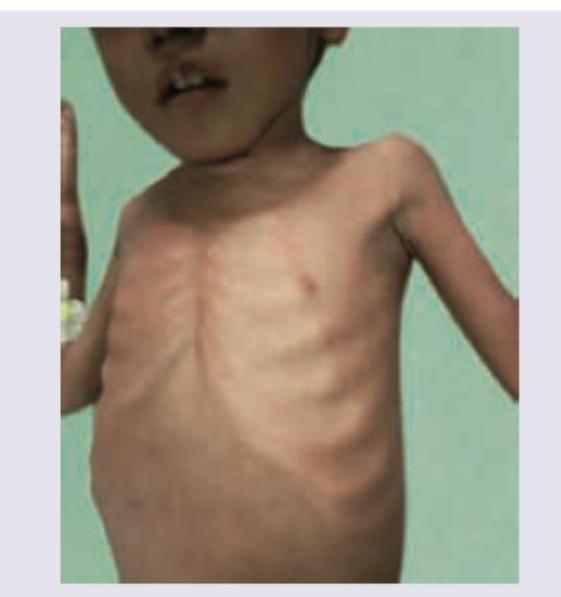
The following image shows the presence of?
Explanation: ***Vitamin A Supplementation*** - **Bitot spots** are pathognomonic for **xerophthalmia** due to **Vitamin A deficiency**, a serious complication of measles in malnourished children - **High-dose Vitamin A supplementation** (200,000 IU on two consecutive days per WHO guidelines) is the **critical priority** to prevent blindness and reduce measles-related mortality - Supportive care (hydration, fever management, nutrition) is also essential but the key differentiator in this question is recognizing and treating the **Vitamin A deficiency** indicated by Bitot spots *Measles Vaccine + Vitamin A Supplementation* - While **Vitamin A** is correct, the **measles vaccine is contraindicated** during acute febrile illness with active measles infection - Vaccination is prophylactic, not treatment for active disease - After recovery, catch-up vaccination should be considered if child remains unvaccinated *Measles Vaccine* - Administering measles vaccine during **acute measles infection** is inappropriate - This option ignores the **urgent need for Vitamin A** when Bitot spots are present - Missing Vitamin A supplementation risks **irreversible blindness** *Supportive Care* - While supportive care (hydration, fever control, nutrition) is essential in measles management, it does not address the **specific deficiency** indicated by Bitot spots - **Vitamin A supplementation is mandatory** when xerophthalmia signs are present - Supportive care alone without Vitamin A carries high risk of **permanent ocular damage**
Explanation: ***Uncomplicated SAM*** - A Mid-Arm Circumference (**MUAC**) of 105mm in a child aged 6–59 months meets the criterion for defining **Severe Acute Malnutrition (SAM)** (MUAC < 115mm). - The eager consumption of therapeutic food implies a **good appetite** (passing the appetite test), which classifies the case as *uncomplicated*, enabling **outpatient treatment** with Ready-to-Use Therapeutic Food (RUTF). - This is the **most specific and accurate classification** for management purposes. *Complicated SAM* - This classification is reserved for children with SAM who fail the **appetite test**, have **bilateral pitting edema**, or present with medical danger signs (e.g., lethargy, severe vomiting, hypothermia, hypoglycemia). - Children with complicated SAM require immediate **inpatient care** for specialized treatment and stabilization. - Since this child has a **good appetite** and no complications mentioned, this classification is incorrect. *Acute malnutrition* - While technically SAM is a form of acute malnutrition, this term is **too broad and non-specific** for clinical management. - Acute malnutrition encompasses both Severe Acute Malnutrition (**SAM**) and Moderate Acute Malnutrition (MAM). - The question requires the **most specific classification** to guide appropriate treatment (RUTF for uncomplicated SAM vs. supplementary foods for MAM vs. inpatient care for complicated SAM). - This is therefore **not the best answer** despite being partially correct. *Normal nutrition* - A MUAC of 105mm is significantly below the threshold for **normal nutritional status** (typically MUAC > 125mm or > 135mm, depending on classification system). - Normal nutritional status would not necessitate the provision of specialized therapeutic food. - This option is clearly incorrect.
Explanation: ***Height for age*** - This index measures **stunting**, which is the definitive indicator of **chronic malnutrition** (long-term failure to achieve expected height). - A low height-for-age indicates that a child has suffered from sustained nutritional deficiencies or repeated infections over a prolonged period. *Weight for age* - This index measures **underweight**, reflecting a mixture of both **acute** and **chronic malnutrition**. - Since it is influenced by both weight loss (wasting) and long-term growth delay (stunting), it is less specific than H/A for solely quantifying chronicity. *Weight for height* - This index measures **wasting**, which is the indicator of **acute malnutrition** (recent, rapid weight loss). - It assesses current nutritional status and is essential for identifying conditions like severe acute malnutrition (SAM). *Body mass index* - BMI is a measure of generalized nutritional status, often used to define overweight or obesity in adults, but it is **not the primary index** for assessing stunting in children. - While correlated with weight-for-height, it does not specifically capture the historical growth failure characterized by low height-for-age.
Explanation: ***6 months*** - The **World Health Organization (WHO)** and the **American Academy of Pediatrics (AAP)** strongly recommend **exclusive breastfeeding for the first 6 months** of life to ensure optimal growth and development. - Breast milk provides all the necessary **nutrients, antibodies, and hydration** required by the infant during this period, offering protection against **infections** and **sudden infant death syndrome (SIDS)**. - After 6 months, **complementary feeding** should be introduced alongside continued breastfeeding up to 2 years or beyond. *3 months* - This duration is **insufficient** as it prevents the infant from receiving the full protective and nutritional benefits provided by breast milk up to 6 months. - Introducing other foods or formula before 6 months can increase the risk of **infections** and **allergy development** due to immature gut immunity. *9 months* - Exclusive breastfeeding for 9 months is **not recommended** because the infant's increasing metabolic demands cannot be met by breast milk alone after 6 months. - By 9 months, insufficient intake of nutrients like **iron** and **zinc** from exclusive breastfeeding can lead to **nutritional deficiencies** and impaired development. *12 months* - Exclusive breastfeeding for 12 months is **inappropriate** as infants require the energy and micronutrients provided by **complementary foods** starting from 6 months of age. - Failure to introduce solids by 12 months can hinder the development of **oral motor skills** and lead to severe **nutritional deficits**.
Explanation: ***Kwashiorkor due to protein malnutrition*** - The image shows a child with characteristic features of **Kwashiorkor**, including generalized **edema** (swollen legs and feet) and a **distended abdomen** due to hypoalbuminemia and hepatomegaly. - This condition is a form of severe acute malnutrition caused primarily by a dietary **protein deficiency**, often in the setting of adequate or near-adequate calorie intake. *Kwashiorkor due to calorie malnutrition* - The primary cause of **Kwashiorkor** is insufficient **protein** intake, which leads to decreased plasma oncotic pressure and edema; a deficiency in calories is not the defining etiological factor. - Severe **calorie deficiency** is the main feature of **Marasmus**, which presents with severe wasting rather than edema. *Marasmus due to protein malnutrition* - The clinical presentation in the image is **Kwashiorkor**, not **Marasmus**, as evidenced by the presence of significant **edema**. - Marasmus is caused by a combined deficiency of **both protein and calories**, leading to severe wasting and an emaciated appearance. *Marasmus due to calorie malnutrition* - **Marasmus** is characterized by severe **wasting** of subcutaneous fat and muscle, resulting in a 'skin and bones' appearance, which is absent in this child. - The presence of a 'pot belly' and **pitting edema** are the hallmark signs that differentiate **Kwashiorkor** from **Marasmus**.
Explanation: ***Galactosemia in infant***- **Galactosemia** is an absolute contraindication as the infant lacks the enzyme needed to metabolize **galactose** found in breast milk (**lactose**).- Ingestion of breast milk leads to the accumulation of toxic metabolites, potentially causing **liver failure**, **cataracts**, and **developmental delay**.*HIV positive mother*- In resource-rich settings, **HIV** is generally considered a contraindication, but it is not universally absolute; in low-resource settings, exclusive breastfeeding might be recommended if formula feeding is unsafe.- Effective maternal **Antiretroviral Therapy (ART)** significantly reduces the risk of transmission via breast milk, making it a relative risk based on local context and ART adherence.*Hepatitis C in mother*- **Hepatitis C virus (HCV)** is generally **not transmitted** through breast milk, and breastfeeding is usually considered safe.- Breastfeeding is only cautioned against if the mother has **bleeding or fissured nipples**, which could theoretically allow blood-borne virus transmission.*Tuberculosis in mother*- Mothers with routine, **active pulmonary TB** can breastfeed if they are on appropriate treatment and wear a mask, as the bacteria is rarely excreted in milk.- If the mother has newly diagnosed, **untreated active TB**, temporary separation and feeding expressed milk may be necessary until she is non-infectious, but breastfeeding is not permanently contraindicated.
Explanation: ***Protein loss is responsible for edema in this patient*** - This statement is **false** because **marasmus** is primarily a **caloric-energy** deficiency, leading to severe wasting and **no edema**. - Edema is the characteristic feature of **Kwashiorkor**, which is primarily due to protein deficiency/loss, leading to decreased oncotic pressure. *Seen due to carbohydrate (caloric) deficiency* - Marasmus results from a severe deficiency of **calories** (energy), often due to inadequate intake of **carbohydrates** and fats. - This leads to the body breaking down its own stores, including muscle and fat, for energy. *Child appears emaciated with loss of subcutaneous fat* - The child with marasmus appears severely wasted, or **emaciated** (looks like 'an old man/woman' or 'skin and bones'). - There is visible loss of **subcutaneous fat** (pinching a fold of skin feels loose, without the layer of fat underneath). *Weight-for-age is less than 60% of expected* - Marasmus is a severe form of Protein Energy Malnutrition (PEM), traditionally documented when the **weight-for-age** is less than **60%** of the expected weight (compared to the standard reference). - The **Gomez classification** uses <60% weight-for-age to define **grade III** (severe) malnutrition, which corresponds to marasmus.
Explanation: **Correct Answer: 2 & 3** Statements 2 and 3 describe **incorrect breastfeeding techniques**: ***Statement 2 (Incorrect)*** - The infant's lower lip should be **everted (rolled outward)**, not inverted - Proper latching requires lips to be wide open, resembling a 'fish mouth' - An inverted lower lip indicates **poor latch** and inadequate breast tissue in the mouth ***Statement 3 (Incorrect)*** - A **greater part of the areola below** the nipple should be covered, not above - This ensures the nipple points toward the roof of the mouth - Asymmetric latch with more lower areola covered is essential for effective milk transfer *Statement 1 (Correct)* - Infant's chin touching the breast is a sign of **proper positioning** - Helps achieve a deep latch and facilitates swallowing - Slightly extends the neck for optimal sucking mechanics *Statement 4 (Correct)* - **Full cheeks** during sucking indicate effective milk transfer - Shows proper seal of lips around the breast - Dimpled or hollow cheeks suggest **ineffective suction** or poor latch *Why other options are incorrect:* - **1 & 4**: Both are correct breastfeeding techniques - **2, 3 & 4**: Incorrectly includes statement 4, which describes proper technique - **1, 2, 3 & 4**: Incorrectly includes statements 1 and 4, which are both correct
Explanation: ***Vitamin A deficiency*** - **Xerosis cutis**, or dry, scaly skin, is a common dermatological manifestation of **vitamin A deficiency**, especially in children from rural areas where dietary intake might be suboptimal. - Severe vitamin A deficiency can lead to **follicular hyperkeratosis** (phrynoderma or "toad skin"), where hair follicles become prominent and hyperkeratotic, resembling the appearance shown in the image. *Vitamin B2 deficiency* - **Vitamin B2 (riboflavin) deficiency** primarily manifests as **cheilosis** (cracks at the corners of the mouth), **angular stomatitis**, and **glossitis**. - While it can cause some skin changes, it typically does not present with widespread severe dry, scaly skin or follicular hyperkeratosis. *Vitamin E deficiency* - **Vitamin E deficiency** is rare and usually associated with neurological symptoms like **ataxia** and **peripheral neuropathy**, as it is an antioxidant crucial for nerve function. - It does not typically cause dry skin or specific dermatological lesions like those seen in the image. *Vitamin B6 deficiency* - **Vitamin B6 (pyridoxine) deficiency** can cause **seborrheic dermatitis-like rash**, which is characterized by red, greasy, scaly patches, often on the face and scalp. - This presentation is distinct from the generalized dry, scaly skin and follicular hyperkeratosis seen in the image.
Explanation: ***Harrison sulcus*** - The image clearly shows a **horizontal groove** along the lower border of the thorax, corresponding to the attachment of the diaphragm, which is characteristic of **Harrison sulcus**. - This finding is typically associated with **rickets** or other conditions causing chronic inspiratory effort, leading to the inward pulling of the ribs. *Pectus excavatum* - **Pectus excavatum** is characterized by a **caved-in or sunken appearance of the sternum**, which is not depicted in the image. - The chest wall in the image shows a horizontal indentation, not a sternal depression. *Rachitic rosary* - **Rachitic rosary** presents as visible or palpable **swellings at the costochondral junctions**, resembling beads. - While rickets could be a cause of the depicted finding, the image specifically highlights a sulcus and not the characteristic bead-like prominences of a rachitic rosary. *Kyphoscoliosis* - **Kyphoscoliosis** involves an **abnormal curvature of the spine** in both the sagittal (kyphosis) and coronal (scoliosis) planes. - The image focuses on the anterior chest wall and does not provide views of the spine to assess for kyphoscoliosis.
Breastfeeding
Practice Questions
Infant Formula Feeding
Practice Questions
Complementary Feeding
Practice Questions
Nutritional Requirements by Age
Practice Questions
Malnutrition and Failure to Thrive
Practice Questions
Obesity in Children
Practice Questions
Vitamin Deficiencies
Practice Questions
Mineral Deficiencies
Practice Questions
Food Allergies and Intolerances
Practice Questions
Nutritional Management of Chronic Diseases
Practice Questions
Eating Disorders
Practice Questions
Parenteral and Enteral Nutrition
Practice Questions
Get full access to all questions, explanations, and performance tracking.
Start For Free