Best solution to be used in hypovolemic shock is:
How is catecholamine resistant shock managed in children?
Haemorrhagic shock due to acute blood loss includes: 1. Increasing pallor 2. Restlessness 3. Air hunger 4. Water-hammer pulse
In hypovolemic shock there is -
Which of the following statements about shock in children is correct?
What is the main goal of fluid resuscitation in a child with septic shock?
Which of the following statements about the ABCDE approach in pediatric Advanced Life Support (PALS) is incorrect?
A six year old child is admitted to the Paediatric ICU for seizures. He has been on treatment with Tacrolimus and Prednisolone. On investigations his blood urea is 68 mg/dL, Serum Sodium is 136 mEq/L likely cause of his seizures-
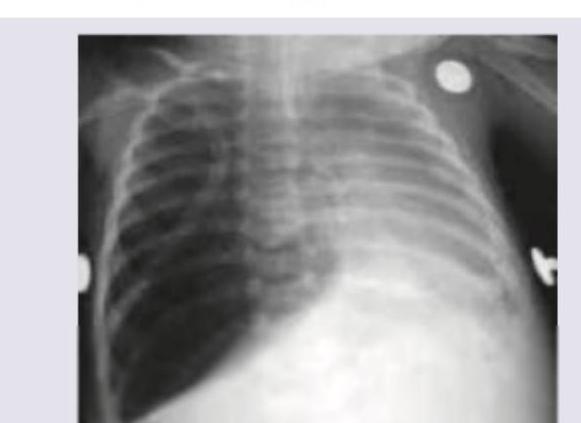
A 4-year-old admitted in ward with pneumonia. He develops sudden onset of breathlessness. What is the next step in management?
What is the capillary refill time in a child with shock?
Explanation: ***Ringer's Lactate solution*** - This **isotonic crystalloid solution** is commonly used in hypovolemic shock because its electrolyte composition is similar to that of human plasma. [2] - The **lactate** component is metabolized by the liver to bicarbonate, which helps to buffer acidosis often associated with shock. [2] *Darrow's solution* - Darrow's solution is a **hypertonic solution** containing high concentrations of potassium, primarily used for severe dehydration and significant potassium deficits, not initial fluid resuscitation in hypovolemic shock. - Its high potassium content can be dangerous in patients with **renal impairment** or who are already hyperkalemic. *5% dextrose* - **5% dextrose in water (D5W)** is an initially isotonic solution, but the dextrose is quickly metabolized, making it effectively a hypotonic solution. [2] - It is primarily used to provide **free water** and is not effective for volume expansion in hypovolemic shock as it does not stay in the intravascular space. [2] *0.9% Nacl* - **0.9% normal saline** is an isotonic crystalloid often used for volume resuscitation but has a higher chloride content than plasma, which can lead to **hyperchloremic metabolic acidosis** with large volumes. [1], [2] - While it expands the intravascular space, Ringer's Lactate is often preferred in situations of significant blood loss or acidosis due to its more balanced electrolyte profile and buffering capacity. [2]
Explanation: ***Hydrocortisone*** - **Hydrocortisone** is the primary treatment for catecholamine-resistant shock in children by addressing the underlying mechanism of receptor unresponsiveness. - It works by **upregulating adrenergic receptors** on vascular smooth muscle, restoring sensitivity to endogenous and exogenous catecholamines. - Additionally provides anti-inflammatory effects and treats relative adrenal insufficiency, which is common in prolonged shock states. - **Standard dosing:** 50-100 mg/m² or 1-2 mg/kg every 6 hours in pediatric shock. *Nor-adrenaline* - **Nor-adrenaline** is a potent catecholamine (alpha and beta agonist) already used in shock management. - In catecholamine-resistant shock, adrenergic receptors are **desensitized or downregulated**, making additional catecholamines less effective. - This is part of the existing therapy that has failed, not the solution to resistance. *Activated protein-C* - **Activated protein-C** (drotrecogin alfa) was used in severe sepsis but has been **withdrawn from the market** due to lack of efficacy and increased bleeding risk. - Not recommended in current pediatric shock guidelines. - Does not address catecholamine receptor unresponsiveness. *Vasopressin* - **Vasopressin** is an important adjunctive agent for catecholamine-resistant shock, acting through **V1 receptors** (non-adrenergic pathway). - Provides vasoconstriction when adrenergic receptors are unresponsive, making it useful in refractory cases. - However, it does not restore catecholamine receptor sensitivity—it bypasses the problem rather than correcting it. - **Hydrocortisone** is preferred as the primary intervention because it addresses the underlying receptor dysfunction, while vasopressin serves as an alternative vasopressor pathway.
Explanation: ***1, 2 & 3*** - **Increasing pallor** occurs due to reduced blood flow to the skin as the body shunts blood to vital organs in response to hypovolemia. - **Restlessness** and **air hunger** are signs of cerebral hypoxia and metabolic acidosis, respectively, as the circulatory system fails to deliver sufficient oxygen to tissues and clear CO2. *1 & 2* - This option is partially correct as **increasing pallor** and **restlessness** are indeed seen in hemorrhagic shock. - However, it incorrectly excludes **air hunger**, which is a significant clinical sign of severe hemorrhage and ensuing metabolic acidosis. *2, 3 & 4* - This option correctly identifies **restlessness** and **air hunger** as features of hemorrhagic shock. - However, **water-hammer pulse** is characteristic of conditions leading to a wide pulse pressure, such as aortic regurgitation, not the narrow pulse pressure seen in hypovolemic shock [1]. *1 & 4* - This option correctly identifies **increasing pallor** as a feature of hemorrhagic shock. - It incorrectly includes **water-hammer pulse**, which is not a sign of hypovolemic shock; rather, a weak, thready pulse is expected due to reduced stroke volume [1].
Explanation: ***Decreased cardiac output*** - **Hypovolemic shock** is fundamentally defined by **decreased circulating blood volume**, which leads to **decreased venous return** to the heart. - According to the **Frank-Starling mechanism**, decreased venous return leads to **decreased preload**, which results in **decreased stroke volume** and consequently **decreased cardiac output**. - This is the **primary hemodynamic characteristic** of hypovolemic shock and is present in ALL cases. - Decreased cardiac output triggers all the compensatory mechanisms seen in hypovolemic shock, including sympathetic activation and RAAS activation. *Afferent arteriolar constriction* - While afferent arteriolar constriction does occur in hypovolemic shock due to **sympathetic activation**, it is a **compensatory response** rather than the primary feature. - The predominant effect at the kidney level is actually a combination of both afferent and efferent arteriolar changes. - This occurs secondary to the decreased cardiac output. *Efferent arteriolar constriction* - **Efferent arteriolar constriction** is mediated primarily by **angiotensin II** and is actually MORE prominent than afferent constriction. - This helps **maintain glomerular filtration rate (GFR)** despite reduced renal blood flow by increasing glomerular hydrostatic pressure. - However, this is also a compensatory response, not the primary feature of hypovolemic shock. *Increased blood flow to kidney* - This is incorrect as hypovolemic shock causes **decreased renal blood flow**. - Blood is redistributed away from the kidneys to vital organs like the heart and brain through compensatory vasoconstriction.
Explanation: ***Tachycardia is a sensitive indicator of shock in children.*** - **Tachycardia** is often the first and most reliable sign of **compensated shock** in children, as their cardiovascular system initially maintains cardiac output by increasing heart rate. - Children have a remarkable ability to compensate for significant fluid loss, and an elevated heart rate helps maintain **perfusion** before blood pressure drops. *Mottling of extremities is an early sign of shock.* - **Mottling** of extremities is typically a sign of **decompensated shock** and indicates significant vasoconstriction and poor tissue perfusion. - It is a **late sign** that suggests the child's compensatory mechanisms are failing. *Confusion and stupor are early signs of shock.* - **Altered mental status**, such as confusion or stupor, usually indicates **severe shock** and reduced cerebral perfusion. - These are generally **late signs** of shock, appearing after initial compensatory mechanisms have failed. *Respiratory rate is a more sensitive indicator of shock than heart rate.* - While **tachypnea** can be present in shock due to metabolic acidosis or compensatory mechanisms, **tachycardia** is a more consistently sensitive and earlier indicator of circulatory compromise. - Respiratory changes can also be influenced by other factors like pain, fever, or respiratory illness, making heart rate a more specific initial marker for shock.
Explanation: ***Restore blood pressure*** - In septic shock, **vasodilation** and extravasation of fluids lead to decreased **effective circulating volume** and profound **hypotension**. - Aggressive fluid resuscitation is critical to restore adequate **mean arterial pressure** and improve **organ perfusion**. *Increase urine output* - While increased urine output is a positive sign of improved renal perfusion, it is a **consequence** of successful resuscitation rather than the primary goal. - The main focus is on addressing the circulatory dysfunction that leads to **oliguria** in the first place. *Reduce heart rate* - A **high heart rate** (tachycardia) in septic shock is a compensatory mechanism to maintain **cardiac output** in the face of reduced preload and systemic vascular resistance. - Reducing heart rate directly is not the primary goal of fluid resuscitation and may even be harmful if **cardiac output** is already compromised. *Decrease fever* - Fever is a systemic inflammatory response to infection and is typically managed with **antipyretics**, not primarily with fluid resuscitation. - While fluids can help prevent complications of hyperthermia like dehydration, the main goal in shock is **hemodynamic stabilization**.
Explanation: ***Dehydration is a component of the ABCDE approach.*** - The **ABCDE approach** in PALS focuses on **Airway, Breathing, Circulation, Disability, and Exposure**, which are immediate life threats. - While dehydration is a crucial clinical concern in children, it's a **diagnostic consideration** and management target, not a primary component of the initial rapid assessment categories (A, B, C, D, E) themselves. - Dehydration may affect circulation (C) but is not itself a separate component of the ABCDE framework. *Airway management is essential in PALS.* - **Airway** is the first step in the ABCDE approach, focusing on ensuring a **patent and protected airway** to allow for effective ventilation. - **Airway management** is critical in pediatric resuscitation to prevent respiratory arrest and optimize oxygen delivery. *Breathing assessment is part of the ABCDE approach.* - **Breathing** is the second step, involving the assessment of **respiratory rate, effort, breath sounds, and oxygen saturation**. - Effective breathing is vital for adequate **oxygenation and ventilation**, and addressing breathing problems is a key part of PALS. *Circulation is a critical component of the ABCDE approach.* - **Circulation** is the third step, involving the assessment of **heart rate, blood pressure, capillary refill time, and peripheral perfusion**. - **Circulatory assessment** helps identify shock or cardiac arrest, which require immediate intervention. - The complete ABCDE also includes **Disability** (neurological status assessment using AVPU or GCS) and **Exposure** (full examination while preventing hypothermia).
Explanation: ***Tacrolimus Toxicity*** - **Tacrolimus** is an immunosuppressant known to cause neurotoxicity, including seizures, particularly at higher concentrations or in susceptible individuals. - The patient's history of **tacrolimus use** and the absence of clear electrolyte imbalances make toxicity a primary concern. *Hyponatremia* - **Hyponatremia** (low serum sodium) is a common cause of seizures. - However, the patient's serum sodium level of **136 meq/L** is within the normal range, ruling out hyponatremia as the cause. *Uremia* - **Uremia**, characterized by a high blood urea nitrogen (BUN) and creatinine, can cause seizures due to the accumulation of toxins. - While the patient's **blood urea of 68 mg/dL** is elevated, it is not severely high enough in isolation to confidently ascribe seizures to uremia without additional clinical context like significantly impaired renal function. *Hypocalcemia* - **Hypocalcemia** (low serum calcium) can lead to seizures and other neurological symptoms. - However, there is no information provided about the patient's calcium levels, and it is less likely given the patient's current medication profile compared to tacrolimus's known side effects.
Explanation: ***Emergency needle thoracostomy*** - This patient, a 4-year-old with pneumonia and sudden breathlessness, likely has a **tension pneumothorax**, which is a life-threatening emergency requiring immediate decompression. The chest X-ray shows a collapsed right lung and a mediastinal shift, consistent with tension pneumothorax. - An **emergency needle thoracostomy** (needle decompression) is the immediate life-saving procedure to relieve the pressure in a tension pneumothorax before more definitive treatment can be initiated. - Performed by inserting a large-bore needle (14-16G) into the **2nd intercostal space, mid-clavicular line** on the affected side. *Intercostal drainage tube insertion* - While an intercostal drainage tube (chest tube) is the definitive treatment for pneumothorax, it takes more time to insert and is not the immediate first step for a **tension pneumothorax** in an unstable patient. - The delay in performing needle decompression could be fatal in a rapidly deteriorating patient with tension pneumothorax. *Decrease mechanical ventilation setting* - Decreasing mechanical ventilation settings would not address the underlying pathology of a tension pneumothorax, which is trapped air causing lung collapse and mediastinal shift. - This action could further compromise the patient's respiratory status if the pneumothorax is severe and the patient is already hypoxemic. *Increase mechanical ventilation setting* - Increasing mechanical ventilation settings would likely worsen a **tension pneumothorax** by forcing more air into the pleural space and increasing intrathoracic pressure. - This would further compromise venous return to the heart and reduce cardiac output, rapidly leading to **cardiovascular collapse**.
Explanation: **Explanation:** Capillary Refill Time (CRT) is a rapid clinical assessment tool used to evaluate peripheral perfusion. In a healthy child, CRT is typically less than 2 seconds. In the setting of **shock**, the body initiates a compensatory sympathetic response, leading to peripheral vasoconstriction to divert blood flow to vital organs (heart and brain). This reduced cutaneous perfusion results in a delayed CRT. * **Why Option C is Correct:** According to the **PALS (Pediatric Advanced Life Support)** and **WHO** guidelines, a CRT of **greater than 3 seconds** is considered a clinical sign of impaired systemic perfusion and is a hallmark of shock in children. It indicates significant peripheral vasoconstriction or decreased cardiac output. * **Why Options A & B are Incorrect:** A CRT of 1 or 2 seconds is considered within the **normal physiological range** for a child in a neutral thermal environment. These values do not indicate the circulatory compromise required to diagnose shock. * **Why Option D is Incorrect:** While a CRT >4 seconds certainly indicates shock, it is a late or more severe finding. The standard diagnostic threshold for identifying the onset of clinical shock is >3 seconds. **High-Yield Clinical Pearls for NEET-PG:** * **Technique:** CRT should be measured by applying firm pressure for 5 seconds to a blanchable skin surface (ideally the fingernail bed or chest) at the level of the heart. * **False Positives:** Cold ambient temperature can prolong CRT even in the absence of shock. * **Septic Shock Paradox:** In "Warm Shock" (early distributive shock), the CRT may actually be **brisk (<1 second)** due to peripheral vasodilation, though "Cold Shock" with delayed CRT is more common in pediatrics. * **Dehydration:** A CRT >3 seconds is also a key predictor of >5% dehydration in children with gastroenteritis.
Get full access to all questions, explanations, and performance tracking.
Start For Free