All of the following are true about the incidence of retinoblastoma except:
Enucleation is done for - a) Retinoblastoma b) Malignant melanoma c) Glaucoma d) Phthisis bulbi
What is the cause of glaucoma in retinoblastoma?
Which of the following features is characteristic of familial retinoblastoma?
Which of the following childhood tumor uses N-myc gene amplification for its prognosis?
The primary indication for enucleation in pediatric patients is:
One year old male child with cat's reflex and raised IOP. What is the most likely diagnosis?
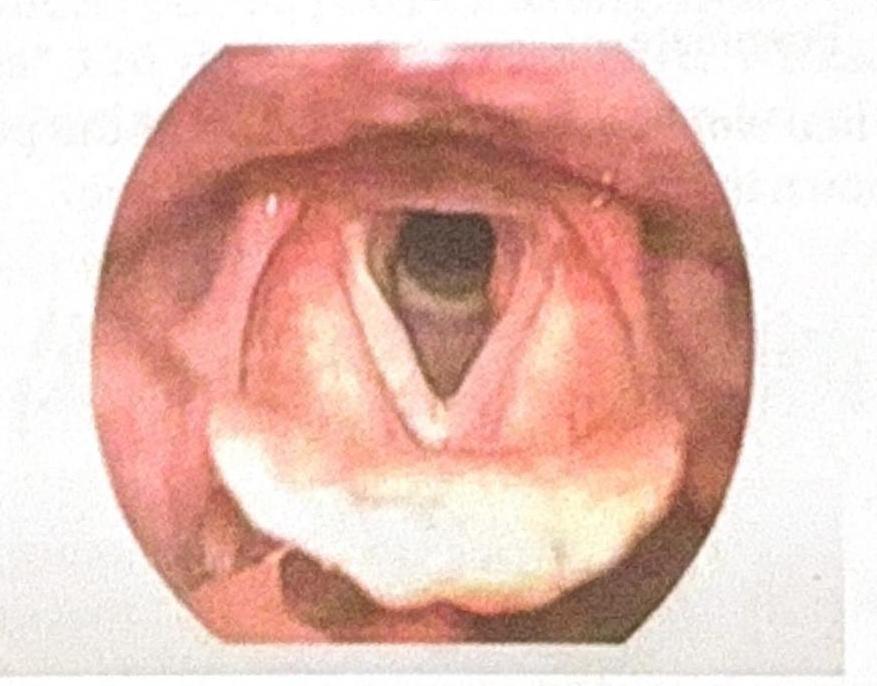
What is the staging system used for the condition seen in the patient after a history of intubation, as shown in the image?

The laser procedure, most often used for treating iris neovascularization is
Which of the following cancers has the highest cure rate?
Explanation: ***More common in African children than Caucasian children*** - This statement is **false**, as retinoblastoma incidence shows **no significant racial predilection**. The reported incidence rates are globally consistent across different ethnic groups. - While healthcare access and outcomes may vary, the inherent genetic predisposition and occurrence rate are similar worldwide, independent of race. *Is the most common intraocular tumour of childhood* - This is a **true** statement; retinoblastoma is indeed the most frequently diagnosed primary **intraocular malignancy** in children. - It accounts for a significant proportion of childhood eye cancers, often presenting before the age of five. *No sex predisposition* - This is a **true** statement; studies consistently show that the incidence of retinoblastoma is **equal between male and female children**. - There is no statistically significant difference in the occurrence of this cancer based on sex. *Occurs in 1 in 14000-34000 live births* - This is a **true** statement; the worldwide incidence of retinoblastoma is estimated to be approximately **1 in 14,000 to 1 in 34,000 live births**. - This relatively low but consistent incidence makes it a rare but significant childhood cancer.
Explanation: ***abd*** - **Enucleation** (surgical removal of the entire eyeball) is indicated for **retinoblastoma** and **malignant melanoma** due to the malignant nature of these conditions and the risk of metastasis. - It is also performed in cases of severe **phthisis bulbi**, where the eye is shrunken, non-functional, and often painful, to alleviate symptoms and for cosmetic reasons. *abc* - This option incorrectly includes **glaucoma** as a primary indication for enucleation. - While severe, painful, and blind glaucomatous eyes might eventually undergo enucleation, it is not the initial or typical treatment; many other medical and surgical options are explored first. *acd* - This option incorrectly includes **glaucoma** for the aforementioned reasons and omits **malignant melanoma**. - **Malignant melanoma** of the choroid is a significant indication for enucleation, especially in larger tumors, due to its metastatic potential. *bcd* - This option incorrectly includes **glaucoma** and omits **retinoblastoma**. - **Retinoblastoma** is a life-threatening pediatric malignancy, and prompt enucleation is often crucial for treatment and survival.
Explanation: ***Neovascularisation*** - Retinoblastoma leads to **neovascularization of the iris (NVI)** and **angle structures** due to tumor necrosis, ischemia, and release of **angiogenic factors (VEGF)**. - The **neovascular membrane** grows over and obstructs the **trabecular meshwork** and anterior chamber angle, causing **secondary neovascular glaucoma**. - This is the **most characteristic and common mechanism** of glaucoma in advanced retinoblastoma. - Neovascular glaucoma in retinoblastoma is typically **refractory to medical treatment** and indicates poor prognosis. *Blockage of trabecular network* - While tumor cells can directly seed into the anterior chamber and block the trabecular meshwork, this mechanism is **less common** than neovascularization. - This option is also **less specific** as it doesn't identify the underlying pathophysiological process (neovascularization) that is characteristic of retinoblastoma-associated glaucoma. - Direct trabecular blockage by tumor cells typically occurs in advanced disease and often coexists with neovascularization. *Mass effect of the tumour* - The tumor mass itself rarely causes glaucoma through direct mechanical compression of outflow pathways. - Retinoblastoma causes glaucoma primarily through **secondary mechanisms** such as inflammation, neovascularization, or cellular seeding, not simple bulk effect. - Massive tumors may cause angle closure, but this is uncommon compared to neovascular mechanisms. *Lysis of the lens* - **Phacolytic glaucoma** from lens protein leakage is rare in retinoblastoma. - While lens damage can occur with advanced tumors, it is **not a typical or characteristic cause** of glaucoma in retinoblastoma. - The primary mechanisms involve the **tumor-angle-trabecular meshwork axis**, not lens pathology.
Explanation: ***Bilateral occurrence*** - Familial retinoblastoma is characterized by **bilateral involvement** of the eyes in approximately 60-70% of cases, as the inherited germline mutation in the **RB1 gene** predisposes both retinas. - The presence of the germline mutation means that every cell in the body carries the predisposition, increasing the likelihood of multiple primary tumor events, often in both eyes. - **Bilaterality** is the key **clinical characteristic** that distinguishes familial from sporadic retinoblastoma (which is typically unilateral). *Autosomal recessive inheritance* - Retinoblastoma, including familial forms, typically follows an **autosomal dominant inheritance pattern** with incomplete penetrance (~90%), not autosomal recessive. - A single mutated copy of the **RB1 gene** inherited from a parent is sufficient to predispose individuals to the disease. *Mutation in the RB gene* - While **germline mutation in the RB1 gene** is indeed present in familial retinoblastoma (and somatic mutations occur in sporadic forms), the question asks for a *characteristic feature* that distinguishes familial from sporadic forms. - Both familial and sporadic retinoblastoma involve RB1 gene dysfunction, but the **clinical presentation** (bilateral vs. unilateral), **age of onset** (earlier in familial), and **heritability** are the distinguishing features, not simply the presence of an RB1 mutation. - The hallmark clinical characteristic is **bilaterality**, not just the genetic mutation. *Higher incidence than sporadic retinoblastoma* - Familial retinoblastoma accounts for only a **smaller proportion** (about 25-40%) of all retinoblastoma cases. - **Sporadic retinoblastoma** (non-heritable, de novo somatic mutation) is actually more common, comprising 60-75% of all cases.
Explanation: ***Neuroblastoma*** - **N-myc gene amplification** is a crucial **prognostic indicator** in neuroblastoma, correlating with aggressive disease and poor outcomes [1]. - Neuroblastoma is a **childhood cancer of neural crest origin**, often presenting as an adrenal mass or in sympathetic ganglia. *Nephroblastoma* - Also known as **Wilms tumor**, it is a childhood kidney cancer. - Its prognosis is more strongly associated with histology (e.g., **anaplasia**) and specific gene mutations like **WT1**, not N-myc amplification. *Retinoblastoma* - This is a **childhood eye cancer**. - Its prognosis is primarily linked to the presence of **RB1 gene mutations** and the extent of retinoblastoma gene protein (pRB) expression, not N-myc. *Rhabdomyosarcoma* - An aggressive **childhood soft tissue sarcoma** with skeletal muscle differentiation. - Prognostic factors often include clinical staging, histology (e.g., **alveolar vs. embryonal**), and specific genetic translocations like **PAX-FOXO1**, rather than N-myc amplification. **References:** [1] Kumar V, Abbas AK, et al.. Robbins and Cotran Pathologic Basis of Disease. 9th ed. Diseases of Infancy and Childhood, pp. 486-487.
Explanation: ***Retinoblastoma*** - **Retinoblastoma** is a malignant tumor of the retina commonly seen in children, and **enucleation** (surgical removal of the eye) is frequently the primary treatment to prevent tumor spread and save the child's life. - The decision for enucleation is based on the tumor's size, location, and potential for dissemination, especially when other globe-sparing therapies are not feasible or fail. *Panophthalmitis* - **Panophthalmitis** is a severe infection involving all coats of the eye and orbital tissues, which can be managed with aggressive antibiotic therapy. - While enucleation might be a last resort in cases of uncontrolled infection and severe pain, it is not the primary indication, especially in pediatric patients where globe salvage is often attempted first. *Acute congestive glaucoma* - **Acute congestive glaucoma** involves a sudden, severe increase in intraocular pressure, causing pain and vision loss, but it is primarily managed with medical and surgical interventions to lower pressure. - Enucleation is not a standard treatment for acute glaucoma unless the eye is blind, painful, and unresponsive to all other treatments, and it is rarely the primary indication in children. *None of the options* - This option is incorrect because **retinoblastoma** is a well-established and common primary indication for enucleation in pediatric patients due to its life-threatening nature.
Explanation: ***Retinoblastoma*** - A **cat's reflex (leukocoria)**, which is a white pupillary reflex, is the most common presenting sign of retinoblastoma in children. - **Raised intraocular pressure (IOP)** can occur in advanced retinoblastoma due to secondary glaucoma caused by tumor growth or neovascularization. *Toxocara canis* - Ocular **toxocariasis** can cause leukocoria and inflammation, but it's typically associated with **granuloma formation** and not usually primary elevated IOP. - This condition is caused by a **parasitic infection** from roundworms, often seen in children with exposure to contaminated soil or pets. *Retinopathy of prematurity* - Primarily affects **premature infants** exposed to high oxygen, leading to abnormal retinal vessel development. - While it can cause leukocoria in severe stages, it would be unusual for a **one-year-old** to present with this primary diagnosis especially with raised IOP. *Toxoplasma gondii infection* - Ocular **toxoplasmosis** typically presents with **chorioretinitis** and can cause inflammation, but **leukocoria** and **raised IOP** are not its primary or most characteristic features. - This is a parasitic infection, congenital or acquired, often presenting with **retinal scars**.
Explanation: ***Cormack and Lehane*** - The **Cormack and Lehane classification** system is used to grade the view of the **larynx** during **direct laryngoscopy** for intubation. - Given the history of intubation and the image showing the laryngeal view, this system is the most appropriate for staging the visual difficulty or success of intubation. *AJCC* - The **American Joint Committee on Cancer (AJCC) staging system** is primarily used for **oncological staging**, classifying the extent of cancer. - It is not relevant for assessing the view of the larynx during intubation. *TNM* - **TNM staging** (Tumor, Node, Metastasis) is a widely used system for classifying the **progression of cancer**. - This system is specific to cancer staging and is not applicable to the assessment of airways for intubation. *Radkowski* - The **Radkowski staging system** is used to classify **pediatric subglottic stenosis**, a narrowing of the airway below the vocal cords. - While it deals with airway issues, the question focuses on the view during intubation, not the severity of subglottic stenosis, and the image does not specifically point to this condition.
Explanation: ***Panretinal photocoagulation (PRP)*** - **PRP** is the most effective laser procedure for **iris neovascularization** and **neovascular glaucoma**, as it ablates the ischemic retina, reducing the production of **vascular endothelial growth factor (VEGF)**. - By destroying the ischemic peripheral retina, PRP reduces the **angiogenic drive** that leads to new vessel formation on the iris and in the angle. *Laser iridoplasty* - This procedure involves applying laser energy to the peripheral iris to cause contraction and widen the **anterior chamber angle**, primarily used for **angle-closure glaucoma**. - While it can open a closed angle, it does not address the underlying **ischemic drive** causing neovascularization. *Laser trabeculoplasty* - This procedure targets the **trabecular meshwork** to improve aqueous humor outflow, commonly used for **open-angle glaucoma**. - It does not directly affect **iris neovascularization** or the ischemic factors driving its development. *Goniophotocoagulation* - This involves directly lasering new vessels in the **anterior chamber angle**, often as an adjunct to PRP, but it's not the primary treatment to prevent **iris neovascularization**. - It treats existing vessels but does not address the underlying cause of **retinal ischemia** that promotes new vessel growth.
Explanation: ***Retinoblastoma*** - This **childhood eye cancer** has an excellent prognosis, with a reported cure rate of **over 95%** when diagnosed early and treated promptly. - Treatment options like **chemotherapy**, **radiation**, **laser therapy**, and **enucleation** contribute to its high survival rate. *Wilm's Tumor* - While **Wilm's tumor** (nephroblastoma) also has a high cure rate in children, typically **around 90%**, it is slightly lower than that of retinoblastoma. - It is a **kidney cancer** primarily affecting children and is highly responsive to treatment. *Rhabdomyosarcoma* - The cure rate for **rhabdomyosarcoma**, a rare and aggressive cancer of the soft tissues, varies significantly based on factors like **tumor location**, **stage**, and **histology**. - Overall survival rates are generally lower than for retinoblastoma and Wilm's tumor, often ranging from **60-70%**. *All of the options* - This option is incorrect because while all three cancers listed have good prognoses, **retinoblastoma** specifically stands out with the highest cure rate among them. - The cure rates for Wilm's tumor and rhabdomyosarcoma, while good, are not as high as that for retinoblastoma.
Get full access to all questions, explanations, and performance tracking.
Start For Free