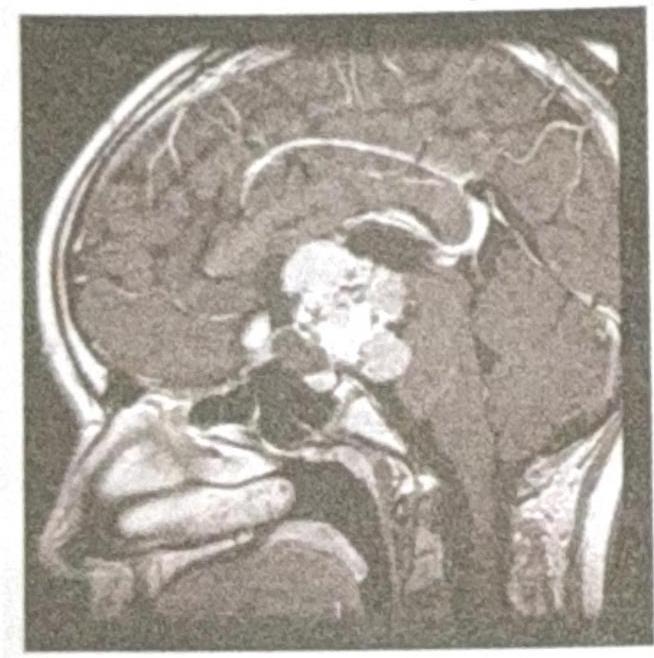
In which of the following conditions are Aniridia and Wilms tumor most likely present?
A child presents with a splenic mass and a mediastinal mass. The child appears pale, has red eyes, and suffers from recurrent infections. What is the most likely diagnosis?
What is the second most common neoplasm seen in children?
All of the following are considered good prognostic factors for acute lymphoblastic leukemia, except?
All of the following are good prognostic factors for childhood ALL except?
What is the treatment for refractory histiocytosis?
All of the following is true about Wilm's tumor except?
What is the commonest tumor among children 1-5 years in South Africa?
A 2-year-old boy presents with an abdominal mass discovered by his foster mother. Medical evaluation reveals aniridia, hypospadias, horseshoe kidney, and hemihypertrophy. What is the most likely diagnosis?
Neuroblastoma originates from which structure?
Explanation: **Explanation:** The association of **Aniridia** (absence of the iris) and **Wilms tumor** (nephroblastoma) is a classic clinical correlation seen in **WAGR Syndrome**. This syndrome is a contiguous gene deletion syndrome involving the **WT1** and **PAX6** genes located on chromosome **11p13**. * **WAGR Syndrome Components:** * **W:** Wilms Tumor (due to *WT1* deletion) * **A:** Aniridia (due to *PAX6* deletion) * **G:** Genitourinary anomalies (e.g., cryptorchidism, hypospadias) * **R:** Range of developmental delays (Intellectual disability) **Why other options are incorrect:** * **Neuroblastoma:** This is the most common extracranial solid tumor in children, typically arising from the adrenal medulla. While it can present with "raccoon eyes" (periorbital ecchymosis) or Opsoclonus-Myoclonus syndrome, it is not associated with aniridia. * **Non-Hodgkin’s Lymphoma:** Presents primarily with lymphadenopathy, mediastinal masses, or abdominal masses (Burkitt’s). It has no genetic link to aniridia. * **Germ Cell Tumors:** These arise from pluripotent stem cells (e.g., Teratomas, Yolk sac tumors). While they can occur in the retroperitoneum, they do not feature the specific genetic deletions seen in WAGR syndrome. **High-Yield Clinical Pearls for NEET-PG:** 1. **Denys-Drash Syndrome:** Wilms tumor + Male pseudohermaphroditism + Early-onset renal failure (diffuse mesangial sclerosis). 2. **Beckwith-Wiedemann Syndrome:** Wilms tumor + Macroglossia + Omphalocele + Hemihypertrophy (linked to *WT2* gene at 11p15.5). 3. **Screening:** Children with sporadic aniridia have a 30% risk of developing Wilms tumor and require serial abdominal ultrasounds every 3 months until age 7.
Explanation: **Explanation:** The clinical presentation of a child with a **mediastinal mass, splenic mass (splenomegaly), and signs of bone marrow failure** (pallor indicating anemia, recurrent infections indicating functional neutropenia) is highly characteristic of **Acute Lymphoblastic Leukemia (ALL)**, specifically the **T-cell subtype**. 1. **Why ALL is correct:** ALL is the most common pediatric malignancy. T-cell ALL (approx. 15% of cases) typically presents in adolescent males with a **mediastinal (thymic) mass**, which can cause superior vena cava syndrome or respiratory distress. The "red eyes" mentioned are a classic sign of **conjunctival suffusion/injection**, often seen in SVC syndrome due to venous congestion from the mediastinal mass. Splenomegaly and marrow failure (pallor/infections) are hallmarks of leukemic infiltration. 2. **Why other options are incorrect:** * **Chronic Myeloid Leukemia (CML):** Rare in children; typically presents with massive splenomegaly but lacks a primary mediastinal mass or acute marrow failure signs. * **Graft versus Host Disease (GVHD):** Occurs post-transplant; presents with skin rash, diarrhea, and jaundice, not localized mediastinal/splenic masses. * **Pulmonary Metastasis:** While it can cause respiratory symptoms, it does not explain the systemic bone marrow failure (pallor/infections) or the primary splenic involvement seen in this age group. **Clinical Pearls for NEET-PG:** * **T-ALL mnemonic:** **T**eenagers, **T**hymic mass, **T**-cell markers (CD2, CD3, CD7). * **Most common subtype:** B-cell ALL (CD10/CALLA positive) is more common than T-cell ALL. * **Good Prognosis:** Age 1–9 years, low WBC count (<50,000), hyperdiploidy, and t(12;21). * **Poor Prognosis:** Age <1 or >10 years, high WBC count, and t(9;22) Philadelphia chromosome.
Explanation: **Explanation:** In pediatric oncology, the frequency of malignancies follows a specific hierarchy that is frequently tested in NEET-PG. **1. Why Brain Tumors are the Correct Answer:** Leukemia (specifically Acute Lymphoblastic Leukemia) is the most common malignancy in children, accounting for approximately 30% of all cases. **Brain tumors (Central Nervous System tumors)** are the **second most common** pediatric neoplasm and the most common **solid** tumor in children, representing about 20-25% of cases. In the pediatric population, the majority of brain tumors are infratentorial (e.g., Medulloblastoma, Juvenile Pilocytic Astrocytoma), unlike in adults where supratentorial tumors predominate. **2. Analysis of Incorrect Options:** * **A. Lymphoma:** This is the third most common pediatric malignancy. It includes both Hodgkin and Non-Hodgkin lymphomas. * **D. Neuroblastoma:** This is the most common **extracranial** solid tumor in children and the most common malignancy in infants (under 1 year of age). * **C. Wilm’s Tumor (Nephroblastoma):** While it is the most common primary renal tumor in children, it ranks lower in overall frequency compared to the options above. **High-Yield Clinical Pearls for NEET-PG:** * **Most common childhood cancer:** Leukemia (ALL). * **Most common solid tumor:** Brain tumor. * **Most common infratentorial tumor:** Juvenile Pilocytic Astrocytoma (overall) or Medulloblastoma (malignant). * **Most common extracranial solid tumor:** Neuroblastoma. * **Most common neonatal malignancy:** Neuroblastoma. * **Most common soft tissue sarcoma:** Rhabdomyosarcoma.
Explanation: In Pediatric Acute Lymphoblastic Leukemia (ALL), prognosis is determined by age, initial tumor burden, and cytogenetic abnormalities. **Explanation of the Correct Answer:** Option **D** is the correct answer because **t(9;22), t(8;14), and t(4;11)** are classic **poor prognostic markers**. * **t(9;22):** The Philadelphia chromosome (BCR-ABL1) is associated with a very poor response to standard chemotherapy. * **t(4;11):** Involves the KMT2A (MLL) gene, typically seen in infant ALL, and carries a dismal prognosis. * **t(8;14):** Characteristic of Mature B-cell (Burkitt) leukemia, which requires aggressive, specific protocols. **Analysis of Incorrect Options (Good Prognostic Factors):** * **A. Age 2–8 years:** This is the "ideal" age window. Infants (<1 year) and adolescents (>10 years) have a significantly worse prognosis. * **B. WBC < 50,000/µL:** A lower initial white cell count indicates a lower total body tumor burden, which correlates with a better outcome. * **C. Hyperdiploidy:** Having >50 chromosomes per cell is one of the strongest indicators of a favorable response to treatment. **High-Yield Clinical Pearls for NEET-PG:** * **Best Prognostic Cytogenetics:** Hyperdiploidy and **t(12;21)** (TEL-AML1). * **Immunophenotype:** Early Pre-B cell ALL has a better prognosis than T-cell or Mature B-cell ALL. * **CNS Involvement:** Presence of blasts in the CSF at diagnosis is a poor prognostic factor. * **Minimal Residual Disease (MRD):** The most important predictor of relapse is the presence of MRD at the end of induction therapy (Day 28).
Explanation: In childhood Acute Lymphoblastic Leukemia (ALL), prognostic factors are categorized based on clinical and cytogenetic features. **Explanation of the Correct Answer:** **Option C (Pre-B cell ALL)** is the correct answer because it is considered an **intermediate** prognostic factor, not a "good" one. In the classification of B-cell lineages, the **Early Pre-B (Common ALL)** subtype (CD10 positive) carries the best prognosis. In contrast, **Pre-B cell ALL** (cytoplasmic immunoglobulin positive) is often associated with the t(1;19) translocation, which historically carried a poorer prognosis, though modern intensive chemotherapy has improved outcomes to an intermediate level. **Analysis of Incorrect Options (Good Prognostic Factors):** * **A. Hyperdiploidy:** Defined as >50 chromosomes per cell. This is one of the strongest indicators of a favorable response to chemotherapy and high cure rates. * **B. Female Sex:** Statistically, girls have a better prognosis than boys. Boys have a higher risk of late relapses, partly due to the testes acting as a "pharmacological sanctuary" where chemotherapy penetration is poor. * **D. t(12;21) Translocation:** Also known as the *TEL-AML1 (ETV6-RUNX1)* fusion, this is the most common genetic abnormality in childhood ALL and is associated with an excellent prognosis. **High-Yield Clinical Pearls for NEET-PG:** * **Age & WBC Count:** The most important clinical prognostic factors. Age **1–9 years** and WBC **<50,000/µL** are favorable. * **Bad Prognostic Factors:** Age <1 or >10 years, WBC >50,000/µL, **Hypodiploidy**, and **t(9;22)** (Philadelphia chromosome/BCR-ABL). * **CNS Involvement:** Presence of blasts in CSF at diagnosis is a poor prognostic sign. * **Rapid Response:** Minimal Residual Disease (MRD) negative status at the end of induction (day 28) is the strongest predictor of long-term survival.
Explanation: **Explanation:** Langerhans Cell Histiocytosis (LCH) is a proliferative disorder of myeloid dendritic cells. The standard first-line treatment for multisystem LCH involves a combination of **Vinblastine and Prednisolone**. However, patients who fail to respond or relapse (refractory LCH) require salvage therapy. **1. Why Cladribine is correct:** **Cladribine (2-CdA)** is a purine nucleoside analog that is highly effective against histiocytic cells. It induces apoptosis in monocytes and dendritic cells by interfering with DNA synthesis and repair. It is currently considered the gold-standard salvage therapy for refractory LCH, often used alone or in combination with Cytarabine, showing high response rates in bone and skin lesions as well as multisystem disease. **2. Why the other options are incorrect:** * **High-dose Methotrexate:** While used in various pediatric malignancies (like ALL or Osteosarcoma), it is not the primary choice for refractory LCH. * **High-dose Cytarabine (Ara-C):** While Cytarabine is used in combination with Cladribine for high-risk refractory cases, Cladribine remains the specific "drug of choice" identified in standard protocols and NEET-PG patterns for this condition. * **Fludarabine:** This is another purine analog used primarily in chronic lymphocytic leukemia (CLL); it does not have the same established efficacy profile as Cladribine for LCH. **Clinical Pearls for NEET-PG:** * **Pathognomonic finding:** Birbeck granules (tennis-racket shaped) on Electron Microscopy. * **Immunophenotype:** Positive for **CD1a, CD207 (Langerin)**, and S100. * **Common Mutation:** **BRAF V600E** mutation is found in about 50-60% of cases, making BRAF inhibitors (e.g., Vemurafenib) a modern targeted therapy option for refractory cases. * **Hand-Schüller-Christian triad:** Diabetes insipidus, Exophthalmos, and Lytic bone lesions.
Explanation: **Explanation:** **Wilms Tumor (Nephroblastoma)** is the most common primary renal malignancy in children, typically occurring between 2–5 years of age. **Why Option C is the correct answer (The Exception):** Wilms tumor is **not** always unilateral. While approximately 90–95% of cases are unilateral, **5–10% of cases are bilateral** (synchronous or metachronous). Bilateral involvement is more frequently associated with genetic syndromes such as WAGR (Wilms, Aniridia, Genitourinary anomalies, Retardation), Denys-Drash, and Beckwith-Wiedemann syndrome. **Analysis of Incorrect Options:** * **Option A:** An asymptomatic, smooth, firm **abdominal lump** that rarely crosses the midline is the most common clinical presentation. * **Option B:** It is indeed the **most common renal neoplasm** in the pediatric age group, accounting for nearly 95% of all childhood kidney tumors. * **Option D:** Wilms tumor is highly **radiosensitive and chemosensitive**. The prognosis is excellent, with overall survival rates exceeding 90% for localized disease using a combination of surgery and chemotherapy (Vincristine, Dactinomycin). **High-Yield Clinical Pearls for NEET-PG:** * **Genetic Association:** Linked to the **WT1 gene** on chromosome **11p13**. * **Histology:** Classically shows a **triphasic pattern** (Blastemal, Stromal, and Epithelial cells). * **Metastasis:** The **lungs** are the most common site of distant hematogenous spread. * **Clinical Warning:** Avoid vigorous palpation of the abdomen in suspected cases to prevent accidental rupture of the tumor capsule and peritoneal seeding.
Explanation: **Explanation:** The correct answer is **Burkitt’s Lymphoma (Option D)**. In the context of sub-Saharan Africa (including parts of South Africa), the epidemiology of childhood cancer differs significantly from Western countries. While leukemia and CNS tumors are common globally, **Burkitt’s Lymphoma (BL)** is the most common childhood malignancy in equatorial Africa and remains highly prevalent across the southern region. This is primarily due to the high incidence of **Endemic Burkitt’s Lymphoma**, which is strongly associated with **Epstein-Barr Virus (EBV)** and chronic **Malaria** infection. These factors act as co-carcinogens, leading to rapid B-cell proliferation and the characteristic **t(8;14)** chromosomal translocation. **Why other options are incorrect:** * **Neuroblastoma (Option A):** This is the most common extracranial solid tumor in infants globally, but it does not surpass the incidence of Burkitt’s in the African pediatric population. * **Wilms’ Tumor (Option B):** While it is the most common primary renal tumor in children, its overall incidence is lower than that of endemic lymphomas in this specific geographic region. * **Neurofibroma (Option C):** This is a benign nerve sheath tumor associated with Neurofibromatosis Type 1; it is not a common childhood malignancy. **High-Yield Clinical Pearls for NEET-PG:** * **Histology:** Look for the **"Starry Sky Appearance"** (macrophages containing apoptotic debris against a background of small non-cleaved lymphocytes). * **Genetics:** Overexpression of the **c-myc** oncogene due to **t(8;14)**. * **Clinical Presentation:** The **Endemic (African) form** typically presents as a **jaw or facial bone mass**, whereas the Sporadic (Western) form usually presents as an abdominal mass (ileocecal region). * **Growth:** It is one of the fastest-growing human tumors with a very high Ki-67 index (nearly 100%).
Explanation: ### Explanation **Correct Answer: B. Wilms Tumor (Nephroblastoma)** The clinical presentation is a classic description of **Wilms tumor** associated with specific congenital syndromes. Wilms tumor is the most common primary renal malignancy in children, typically presenting as an asymptomatic abdominal mass. The key to this diagnosis lies in the associated anomalies: 1. **WAGR Syndrome:** **W**ilms tumor, **A**niridia (absence of iris), **G**enitourinary anomalies (hypospadias, horseshoe kidney), and mental **R**etardation. This is caused by a microdeletion on chromosome **11p13** (WT1 gene). 2. **Beckwith-Wiedemann Syndrome:** Characterized by **hemihypertrophy**, macroglossia, and organomegaly (linked to chromosome **11p15**). **Why other options are incorrect:** * **Neuroblastoma:** While it also presents as an abdominal mass in toddlers, it typically crosses the midline, is irregular/calcified, and is associated with opsoclonus-myoclonus or periorbital ecchymosis (raccoon eyes), not aniridia or hemihypertrophy. * **Hepatoblastoma:** This is a liver tumor. While associated with Beckwith-Wiedemann, it would present with RUQ mass and elevated Alpha-fetoprotein (AFP), without renal or iris anomalies. * **Rhabdomyosarcoma:** The most common soft tissue sarcoma in children, usually presenting in the head/neck or genitourinary tract (sarcoma botryoides), but not linked to this specific constellation of congenital syndromes. **High-Yield Pearls for NEET-PG:** * **Most common site of metastasis:** Lungs (via hematogenous spread). * **Staging:** Unlike many tumors, Wilms tumor staging is based on **surgical evaluation** and pathological findings. * **Denys-Drash Syndrome:** Triad of Wilms tumor, male pseudohermaphroditism, and early-onset renal failure (mesangial sclerosis). * **Management:** Multimodal (Surgery + Chemotherapy ± Radiotherapy). In North America (NWTSG), nephrectomy is usually the first step.
Explanation: **Explanation:** **Neuroblastoma** is the most common extracranial solid tumor of childhood. It originates from **primordial neural crest cells**, which are the embryological precursors to the sympathetic nervous system. 1. **Why Adrenal Medulla is Correct:** The adrenal medulla is derived from neural crest cells (specifically chromaffin cells). Because neuroblastoma arises from these sympathetic progenitor cells, the **adrenal medulla** is the most common primary site (approximately 40–50% of cases), followed by the paraspinal sympathetic ganglia. 2. **Why Other Options are Incorrect:** * **Mediastinum:** While the posterior mediastinum is the second most common site for neuroblastoma (arising from thoracic sympathetic chains), it is a *location*, not the *structure of origin*. * **Chest Wall:** Tumors of the chest wall in children are more likely to be Ewing sarcoma (Askin tumor) or rhabdomyosarcoma, not neuroblastoma. * **Peripheral Nerves:** Neuroblastoma specifically involves the *autonomic* (sympathetic) nervous system, not the general peripheral sensory or motor nerves. **High-Yield Clinical Pearls for NEET-PG:** * **Median Age:** 2 years (usually occurs in children <5 years). * **Clinical Feature:** A firm, irregular, **nontender abdominal mass that crosses the midline** (unlike Wilms tumor, which usually does not cross the midline). * **Biomarkers:** Elevated urinary catecholamines (**VMA and HVA**). * **Pathology:** Characterized by **Homer-Wright rosettes** and Small Round Blue Cells. * **Prognostic Marker:** **N-myc amplification** is the most important indicator of poor prognosis. * **Opsoclonus-Myoclonus Syndrome:** A classic paraneoplastic syndrome associated with neuroblastoma ("dancing eyes, dancing feet").
Leukemias
Practice Questions
Lymphomas
Practice Questions
CNS Tumors
Practice Questions
Neuroblastoma
Practice Questions
Wilms Tumor
Practice Questions
Rhabdomyosarcoma
Practice Questions
Bone Tumors
Practice Questions
Retinoblastoma
Practice Questions
Histiocytosis Syndromes
Practice Questions
Principles of Pediatric Chemotherapy
Practice Questions
Hematopoietic Stem Cell Transplantation
Practice Questions
Late Effects of Cancer Treatment
Practice Questions
Get full access to all questions, explanations, and performance tracking.
Start For Free