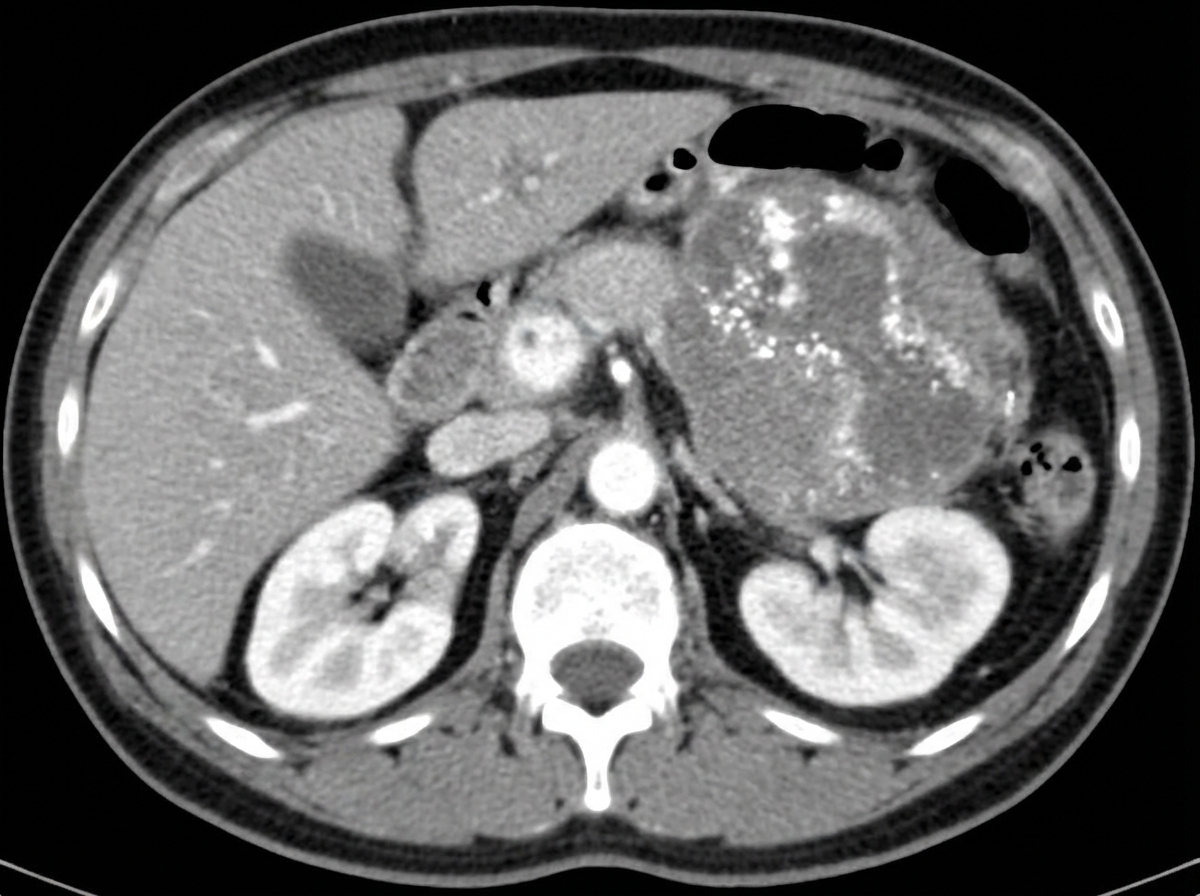
Which of the following statements regarding Wilms tumor is false?
Which of the following is NOT a good prognostic factor for Acute Myeloid Leukemia (AML)?
What is the most common posterior fossa tumor in children?
Which of the following malignancies is seen in a male child with short stature, low IQ, a pulmonary area murmur, and lymphedema?
Which of the following conditions is not typically seen in children?
A 3-year-old child presents with headaches and papilledema on funduscopic examination. One retina shows a vascular tumor, and a CT scan of the head reveals a cystic cerebellar tumor. What is the most likely condition this child is at high risk of developing later in life?
"Blueberry muffin lesion" are seen in which of the following conditions?
A 5-year-old boy presents with loss of appetite, fatigue, malaise, intermittent low-grade fever, bone pain, bruising, and oral gum bleeding. On examination, palpable lymph nodes and spleen are noted. Laboratory investigations reveal a TLC of 9,000/uL, hemoglobin of 5 g/dL, and a platelet count of 9,000/uL. What is the next investigation for diagnosis?
Which of the following is associated with neuroblastoma?
Which of the following factors is associated with a favorable prognosis in Acute Lymphoblastic Leukemia (ALL)?
Explanation: **Explanation:** Wilms tumor (Nephroblastoma) is the most common primary renal malignancy in children. The correct answer is **D** because the peak incidence of Wilms tumor occurs between **2 and 5 years of age**. It is relatively uncommon in infants under the age of 1 year (where Mesoblastic Nephroma is more frequent). **Analysis of Options:** * **Option A (Aniridia):** This is a classic association. Wilms tumor is a component of the **WAGR syndrome** (Wilms tumor, Aniridia, Genitourinary anomalies, and intellectual disability/Range of developmental delays). * **Option B (Beckwith-Wiedemann Syndrome):** This is an overgrowth disorder characterized by macroglossia, omphalocele, and hemihypertrophy. These patients have a significantly increased risk of embryonal tumors, specifically Wilms tumor and hepatoblastoma. * **Option C (WT1/WT2 deletion):** The molecular pathogenesis involves the **WT1 gene** (located on chromosome 11p13) and the **WT2 gene** (located on chromosome 11p15). Deletions or mutations in these regions are central to the development of the tumor. **High-Yield Clinical Pearls for NEET-PG:** * **Presentation:** Most commonly presents as an asymptomatic, smooth, firm **abdominal mass that does not cross the midline** (unlike Neuroblastoma). * **Histology:** Characterized by a "triphasic" pattern consisting of blastemal, stromal, and epithelial cells. * **Denys-Drash Syndrome:** Associated with WT1 mutations, characterized by Wilms tumor, early-onset nephropathy, and male pseudohermaphroditism. * **Metastasis:** The most common site of distant spread is the **lungs**. * **Prognosis:** Generally excellent, with survival rates exceeding 90% for localized disease. Anaplasia is the most important unfavorable prognostic factor.
Explanation: In Acute Myeloid Leukemia (AML), prognosis is determined by cytogenetics, molecular markers, and clinical associations. **Explanation of the Correct Answer:** **C. Acute megakaryoblastic leukemia (AML-M7):** This subtype is generally associated with a **poor prognosis** in the general pediatric population. It often presents with extensive bone marrow fibrosis and carries a high risk of induction failure and relapse. While it has a unique favorable outcome specifically when associated with Down Syndrome, in a general context, it is considered a high-risk subtype. **Explanation of Incorrect Options:** * **A. Age less than 2 years:** In pediatric AML, younger age (specifically infants and toddlers) often correlates with better treatment response and overall survival compared to adolescents, provided high-risk cytogenetics (like KMT2A rearrangements) are absent. * **B. Acute promyelocytic leukemia (APL/M3):** Characterized by the t(15;17) translocation, APL has an **excellent prognosis** due to its high sensitivity to All-trans retinoic acid (ATRA) and arsenic trioxide, leading to high cure rates. * **D. Associated with Down syndrome:** Children with Down Syndrome (DS) and AML (specifically M7) have significantly **better outcomes** than non-DS children. They are highly sensitive to low-dose Cytarabine and have superior event-free survival. **High-Yield Clinical Pearls for NEET-PG:** * **Best Prognostic Factor:** t(15;17) [APL], t(8;21), and inv(16). * **Worst Prognostic Factor:** Monosomy 7, 5q deletion, and FLT3-ITD mutations. * **Down Syndrome Association:** DS children are predisposed to **Transient Myeloproliferative Disorder (TMD)** in the neonatal period and **AML-M7** before age 5. * **Chloroma (Granulocytic Sarcoma):** An extramedullary collection of leukemia cells, often seen in AML-M2 and M4.
Explanation: **Explanation:** The correct answer is **Astrocytoma** (specifically Juvenile Pilocytic Astrocytoma). **1. Why Astrocytoma is correct:** In the pediatric population, brain tumors are the most common solid tumors. While **Medulloblastoma** is the most common *malignant* brain tumor in children, **Astrocytoma** (specifically the low-grade Pilocytic Astrocytoma) is the most common pediatric brain tumor overall and the most common tumor of the posterior fossa. These typically arise in the cerebellum and are characterized histologically by Rosenthal fibers and a "cyst with a mural nodule" appearance on imaging. **2. Why the other options are incorrect:** * **Medulloblastoma:** This is the second most common posterior fossa tumor. It is a highly malignant (WHO Grade IV) primitive neuroectodermal tumor (PNET) arising from the roof of the fourth ventricle. It is the most common *malignant* brain tumor, but less frequent than astrocytomas. * **Glioblastoma multiforme (GBM):** This is the most common primary malignant brain tumor in *adults*. It is rare in children and typically occurs in the supratentorial compartment rather than the posterior fossa. * **Meningioma:** These are common benign tumors in adults (especially females) but are extremely rare in children. **High-Yield Clinical Pearls for NEET-PG:** * **Location Rule:** In children, 60-70% of brain tumors are **infratentorial** (posterior fossa). In adults, the majority are **supratentorial**. * **Imaging:** Pilocytic Astrocytoma typically presents as a large cystic lesion with an enhancing mural nodule in the cerebellum. * **Medulloblastoma:** Often causes obstructive hydrocephalus (drop metastases to the spinal cord are common). * **Ependymoma:** The third most common posterior fossa tumor; it typically arises from the floor of the fourth ventricle and may show "calcification" on CT.
Explanation: The clinical presentation described—short stature, low IQ (intellectual disability), pulmonary area murmur (pulmonic stenosis), and lymphedema—is classic for **Noonan Syndrome**. ### 1. Why Juvenile Myelomonocytic Leukemia (JMML) is Correct Noonan Syndrome is an autosomal dominant "RASopathy" caused by mutations in the RAS-MAPK signaling pathway (most commonly the **PTPN11 gene**). Children with Noonan Syndrome have a significantly increased risk (estimated 8-fold) of developing hematologic malignancies, specifically **Juvenile Myelomonocytic Leukemia (JMML)**. JMML is a rare, aggressive clonal hematopoietic disorder of childhood characterized by the proliferation of monocytic cells. ### 2. Why Other Options are Incorrect * **Retinoblastoma:** Associated with the **RB1 gene** mutation on chromosome 13. It presents with leukocoria and is not linked to the phenotypic features of Noonan Syndrome. * **Hepatocellular Carcinoma:** While associated with metabolic conditions like tyrosinemia or Alagille syndrome, it is not a characteristic complication of Noonan Syndrome. * **Germ Cell Tumors:** These are associated with **Klinefelter Syndrome (47, XXY)**, particularly mediastinal germ cell tumors, rather than Noonan Syndrome. ### 3. Clinical Pearls for NEET-PG * **Noonan Syndrome Phenotype:** Often called "Male Turner Syndrome" (though it affects both sexes) due to shared features like webbed neck, cubitus valgus, and short stature. * **Cardiac Findings:** The most common lesion is **Valvular Pulmonic Stenosis** (hence the pulmonary area murmur), followed by Hypertrophic Cardiomyopathy (HCM). * **Genetic Key:** **PTPN11 mutation** is found in ~50% of cases and is specifically linked to the increased risk of JMML. * **Lymphedema:** Can manifest as dorsal pedal edema in infancy or generalized lymphangiectasia.
Explanation: **Explanation:** The correct answer is **D. Seminoma**. **1. Why Seminoma is the correct answer:** Seminoma is a germ cell tumor of the testis that typically occurs in young to middle-aged adults (peak incidence between **25 and 45 years**). It is extremely rare in the prepubertal pediatric population. In children, the most common malignant germ cell tumor of the testis is the **Yolk Sac Tumor** (Endodermal Sinus Tumor), not Seminoma. **2. Why the other options are incorrect:** * **A. Neuroblastoma:** This is the most common extracranial solid tumor of childhood. It arises from the neural crest cells of the sympathetic nervous system, most commonly in the adrenal medulla. It typically presents in children under 5 years of age. * **B. Retinoblastoma:** This is the most common primary intraocular malignancy of childhood. It is caused by a mutation in the *RB1* gene and usually presents before age 3 with leukocoria (white pupillary reflex). * **C. Hepatoblastoma:** This is the most common primary liver tumor in children, usually occurring in infants and toddlers (median age of 18 months). It is associated with conditions like Beckwith-Wiedemann syndrome and FAP. **Clinical Pearls for NEET-PG:** * **Rule of "Blastomas":** Tumors ending in "-blastoma" (Neuroblastoma, Retinoblastoma, Nephroblastoma/Wilms, Hepatoblastoma) are embryonic in origin and are characteristic of the **pediatric** age group. * **Tumor Markers:** * Hepatoblastoma/Yolk Sac Tumor: **AFP** (Alpha-fetoprotein) * Neuroblastoma: **VMA/HVA** (Urinary catecholamines) * **Most common childhood cancer:** Acute Lymphoblastic Leukemia (ALL). * **Most common childhood solid tumor:** Brain tumors (overall); Neuroblastoma (extracranial).
Explanation: **Explanation:** The clinical presentation of a **cystic cerebellar tumor** (likely Hemangioblastoma) and a **retinal vascular tumor** (Retinal Angioma) in a young child is classic for **Von Hippel-Lindau (VHL) syndrome**. VHL is an autosomal dominant neurocutaneous syndrome caused by a mutation in the *VHL* tumor suppressor gene on **chromosome 3p**. This condition predisposes patients to a specific constellation of benign and malignant tumors. The most significant long-term risk for these patients is the development of **Bilateral Renal Cell Carcinoma (RCC)**, specifically the clear cell subtype, which occurs in approximately 70% of affected individuals by age 60 and is a leading cause of mortality. **Analysis of Incorrect Options:** * **Option A:** Berry aneurysms are associated with **Autosomal Dominant Polycystic Kidney Disease (ADPKD)**, not VHL. * **Option C:** Cancers of the peripheral nerves (e.g., Malignant Peripheral Nerve Sheath Tumors) are associated with **Neurofibromatosis Type 1 (NF1)**. * **Option D:** Decreased GABA and acetylcholine in the striatum describes the pathophysiology of **Huntington’s Disease**, an autosomal dominant trinucleotide repeat disorder. **High-Yield Clinical Pearls for NEET-PG:** * **VHL Components:** Hemangioblastomas (Cerebellum/Spine/Retina), Pheochromocytoma, Renal Cell Carcinoma (Clear cell), and Pancreatic cysts/neuroendocrine tumors. * **Genetics:** VHL gene on **Chromosome 3** (Mnemonic: VHL has 3 letters). * **Screening:** Annual ophthalmologic exams and periodic abdominal imaging (MRI/CT) are essential for early detection of RCC and Pheochromocytoma.
Explanation: **Explanation:** **Blueberry muffin lesions** are a classic clinical sign characterized by multiple, non-tender, firm, blue-to-purple subcutaneous nodules. These represent **extramedullary hematopoiesis** or **cutaneous metastases**. 1. **Why Neuroblastoma is correct:** In neonates, Neuroblastoma (specifically Stage 4S) frequently metastasizes to the skin, liver, and bone marrow. The "blueberry muffin" appearance is a hallmark of these cutaneous metastases. It is the most common extracranial solid tumor of childhood. 2. **Why other options are incorrect:** * **Pheochromocytoma:** A catecholamine-secreting tumor of the adrenal medulla in adults; it presents with hypertension, palpitations, and diaphoresis, not cutaneous nodules. * **Adrenal Incidentaloma:** An asymptomatic adrenal mass found incidentally on imaging; it is a radiological finding rather than a specific clinical syndrome. * **Medullary Thyroid Cancer:** Associated with MEN 2A/2B syndromes; it presents as a thyroid mass and does not typically cause neonatal skin lesions. **Clinical Pearls for NEET-PG:** * **Differential Diagnosis for Blueberry Muffin Baby:** * **TORCH Infections:** Most commonly **Rubella** (due to extramedullary hematopoiesis), CMV, and Toxoplasmosis. * **Hematologic Malignancies:** Congenital Leukemia (especially AML). * **Neuroblastoma (Stage 4S):** The "S" stands for Special; it occurs in infants <12 months and often has a favorable prognosis despite metastases to skin/liver. * **Neuroblastoma Marker:** Elevated urinary catecholamines (VMA and HVA) and N-myc amplification (poor prognosis). * **Homer-Wright Rosettes:** The characteristic histopathological finding in Neuroblastoma.
Explanation: ### Explanation The clinical presentation of a 5-year-old child with **pancytopenia** (anemia, thrombocytopenia, and a normal/low TLC), constitutional symptoms (fever, malaise), bone pain, and **hepatosplenomegaly** is highly suggestive of **Acute Lymphoblastic Leukemia (ALL)**, the most common pediatric malignancy. **Why Bone Marrow Biopsy is the Correct Answer:** In a child presenting with signs of bone marrow failure (bruising, bleeding, fatigue) and organomegaly, the definitive diagnostic step is a **Bone Marrow Aspiration and Biopsy**. This is required to demonstrate the presence of **lymphoblasts**. According to the WHO criteria, a diagnosis of acute leukemia requires **≥20% blasts** in the marrow. It also allows for further essential testing like flow cytometry (immunophenotyping) and cytogenetics, which are crucial for classification and prognosis. **Why Other Options are Incorrect:** * **A & D (Serum Haptoglobin & Reticulocyte Count):** These are investigations for **hemolytic anemia**. While the patient is anemic, hemolysis does not explain the thrombocytopenia, bone pain, or lymphadenopathy. * **C (Antiplatelet Antibody Assay):** This is used in the workup of Immune Thrombocytopenic Purpura (ITP). However, ITP typically presents with isolated thrombocytopenia and **no** hepatosplenomegaly or systemic symptoms. **Clinical Pearls for NEET-PG:** * **Most common pediatric cancer:** Acute Lymphoblastic Leukemia (ALL). * **Peak age:** 2–5 years. * **Commonest subtype:** L1 (FAB classification) or B-cell lineage (Immunophenotype). * **Prognostic markers:** Hyperdiploidy and t(12;21) carry a **good prognosis**, while the Philadelphia chromosome t(9;22) and hypodiploidy carry a **poor prognosis**. * **Sanctuary sites:** The CNS and Testes are common sites of relapse in ALL.
Explanation: **Explanation:** Neuroblastoma is the most common extracranial solid tumor of childhood, arising from primordial neural crest cells of the sympathetic nervous system. * **Mild Hypertension (Option A):** Approximately 90% of neuroblastomas produce catecholamines (VMA and HVA). While the classic "paroxysmal" hypertension seen in pheochromocytoma is rare, mild to moderate hypertension occurs in about 25% of cases due to catecholamine excess or renal artery compression (Goldblatt kidney mechanism). * **Spontaneous Regression (Option B):** Neuroblastoma is unique in oncology for its high rate of spontaneous regression, particularly in **Stage 4S** (S for Special). This occurs mostly in infants under one year of age, where the tumor may undergo complete resolution or mature into a benign ganglioneuroma without aggressive therapy. * **Commonest tumor of the adrenal medulla (Option C):** The adrenal gland is the most common primary site (approx. 40%). In the pediatric population, neuroblastoma is the most common tumor of the adrenal medulla, whereas pheochromocytoma is more common in adults. **Clinical Pearls for NEET-PG:** * **Opsoclonus-Myoclonus Syndrome:** A classic paraneoplastic syndrome ("dancing eyes, dancing feet") associated with favorable-prognosis neuroblastoma. * **Homer-Wright Rosettes:** The characteristic histopathological finding (pseudorosettes). * **N-myc Amplification:** The most important poor prognostic genetic marker. * **Diagnosis:** Elevated urinary catecholamines (VMA/HVA) and MIBG scan (highly sensitive for localization). * **Differentiating from Wilms Tumor:** Neuroblastoma often **crosses the midline**, is calcified on X-ray/CT, and presents with an irregular, "knobby" mass.
Explanation: In Pediatric Acute Lymphoblastic Leukemia (ALL), prognostic factors are critical for risk stratification and treatment planning. **Explanation of the Correct Answer:** **Option A (Child below 1 year of age)** is actually a **poor prognostic factor**, not a favorable one. In the context of this specific question (where Option A is marked as correct), it is important to note that infants (<1 year) have a significantly higher incidence of the **MLL gene rearrangement (t(11;q23))**, which is associated with aggressive disease, CNS involvement, and poor response to chemotherapy. *(Note: In standard medical literature, Options B, C, and D are all favorable factors. If this question asks for a "favorable" factor, Option A is technically the "except" or the outlier.)* **Analysis of Other Options (Favorable Factors):** * **Option B (Low initial WBC count):** A low white blood cell count (typically <50,000/µL for B-ALL) is one of the strongest indicators of a favorable prognosis. * **Option C (Hyperdiploidy):** The presence of >50 chromosomes per cell is associated with high sensitivity to chemotherapy and excellent cure rates. * **Option D (t(12;21) translocation):** Also known as the *TEL-AML1* (ETV6-RUNX1) fusion, this is the most common genetic abnormality in childhood B-ALL and carries a very favorable prognosis. **High-Yield Clinical Pearls for NEET-PG:** * **Age:** 1–9 years is favorable; <1 year or >10 years is unfavorable. * **Gender:** Females generally have a better prognosis than males. * **Cytogenetics:** Favorable = t(12;21), Hyperdiploidy; Unfavorable = t(9;22) [Philadelphia chromosome], t(4;11), Hypodiploidy. * **Response to Treatment:** The most important independent prognostic factor is the **Minimal Residual Disease (MRD)** at the end of induction therapy.
Leukemias
Practice Questions
Lymphomas
Practice Questions
CNS Tumors
Practice Questions
Neuroblastoma
Practice Questions
Wilms Tumor
Practice Questions
Rhabdomyosarcoma
Practice Questions
Bone Tumors
Practice Questions
Retinoblastoma
Practice Questions
Histiocytosis Syndromes
Practice Questions
Principles of Pediatric Chemotherapy
Practice Questions
Hematopoietic Stem Cell Transplantation
Practice Questions
Late Effects of Cancer Treatment
Practice Questions
Get full access to all questions, explanations, and performance tracking.
Start For Free