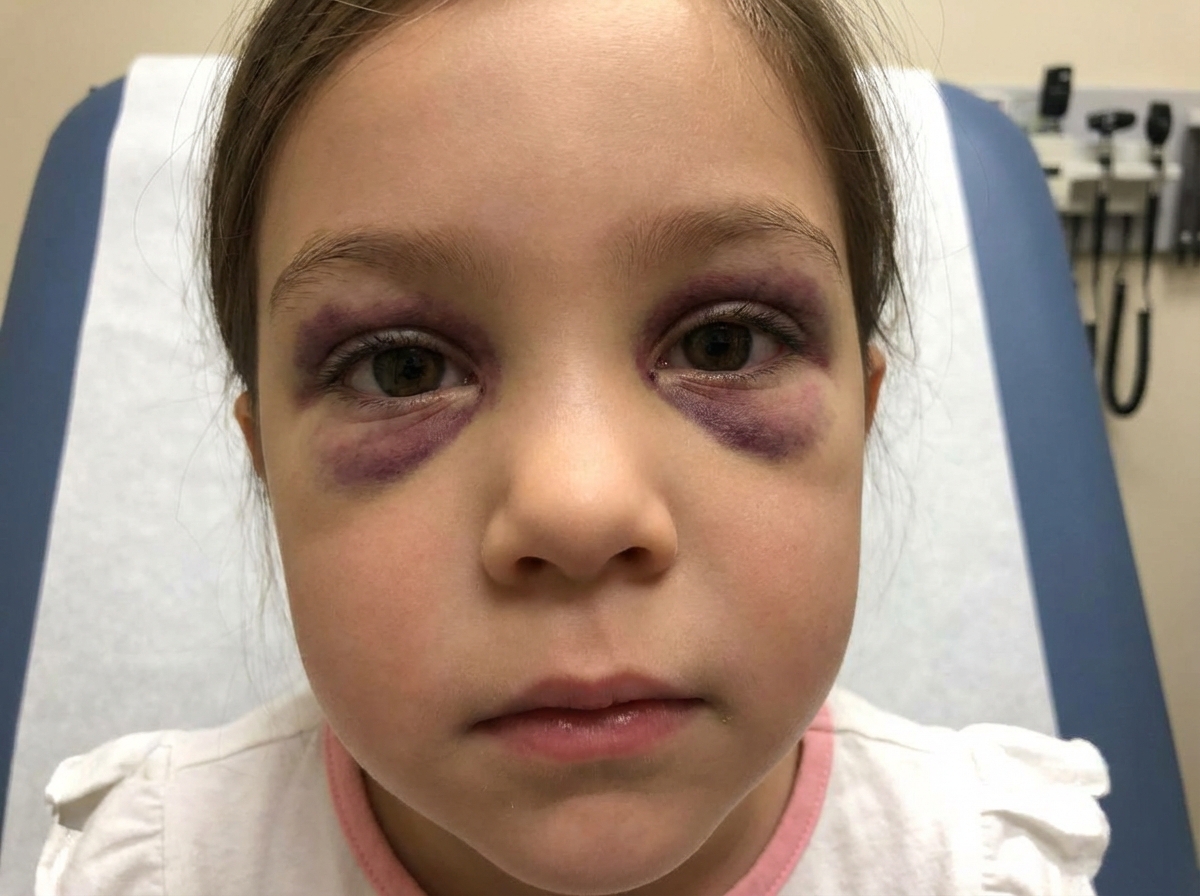
All of the following genetic syndromes are associated with Wilm's tumor except?
A 8-year-old boy presents with a 3-month history of left eye swelling and proptosis with preserved vision. The right eye is normal. A CT scan reveals an intraorbital extraconcal mass lesion. Biopsy shows embryonal rhabdomyosarcoma, and a metastatic workup is normal. What is the standard line of treatment?
A child presents with seborrheic dermatitis, sinusitis, and chronically draining ears. On examination, the child has failure to thrive with hepatosplenomegaly and exophthalmos. What is the probable diagnosis?
Which of the following is the most common hematological malignancy in children with Down syndrome?
In a 6-year-old child with ALL relapse, what is the most common site of relapse?
Which of the following is the most common solid tumor in a child?
Cancer management in which of the following malignancies has dramatically increased survival?
In which of the following conditions are aniridia and hemihypertrophy most likely present?
A 2-year-old male child presents with a lump in the right side of the abdomen. Ultrasound revealed it to be a solid mass. On examination, his right arm and leg were found to be longer. What is the most likely diagnosis?
Which of the following are common childhood tumors?
Explanation: **Explanation:** Wilms tumor (Nephroblastoma) is the most common primary renal tumor of childhood. Its pathogenesis is strongly linked to mutations in the **WT1 gene** (Chromosome 11p13) and the **WT2 gene** (Chromosome 11p15). **Why Option B is correct:** **Opsoclonus-myoclonus-ataxia syndrome (OMS)**, also known as "Dancing Eye-Dancing Feet" syndrome, is a paraneoplastic manifestation most classically associated with **Neuroblastoma**, not Wilms tumor. It is characterized by rapid, involuntary eye movements, muscle jerks, and cerebellar ataxia. **Why the other options are incorrect:** * **WAGR Syndrome (Option A):** A microdeletion at 11p13 involving the *WT1* and *PAX6* genes. It consists of **W**ilms tumor, **A**niridia, **G**enitourinary anomalies, and mental **R**etardation. * **Denys-Drash Syndrome (Option B):** Caused by point mutations in the *WT1* gene. It presents with a triad of early-onset nephropathy (diffuse mesangial sclerosis), male pseudohermaphroditism, and a high risk (>90%) of Wilms tumor. * **Beckwith-Wiedemann Syndrome (Option D):** An imprinting disorder at the *WT2* locus (11p15). Clinical features include macrosomia, macroglossia, omphalocele, and hemihyperplasia. These patients have an increased risk of Wilms tumor and hepatoblastoma. **High-Yield Clinical Pearls for NEET-PG:** 1. **Most common presentation:** Asymptomatic abdominal mass that does not cross the midline (unlike Neuroblastoma). 2. **Staging:** Wilms tumor is staged surgically (NWTS Staging), whereas Neuroblastoma uses the INSS system. 3. **WAGR vs. Denys-Drash:** Both involve *WT1*, but WAGR is a deletion (includes *PAX6*—hence aniridia), while Denys-Drash is a missense mutation. 4. **Perilobar Nephrogenic Rests:** These are precursor lesions found in the kidneys of children with Wilms tumor, especially in bilateral cases.
Explanation: **Explanation:** **Rhabdomyosarcoma (RMS)** is the most common soft tissue sarcoma in children, with the **orbit** being the most frequent site (25% of cases). The **Embryonal** subtype, as seen in this 8-year-old, carries a relatively favorable prognosis compared to the alveolar subtype. 1. **Why Option D is Correct:** The management of orbital RMS is unique because it is highly sensitive to both chemotherapy and radiotherapy. The standard of care is a **multimodal approach**. Since the orbit is a "favorable site," the goal is to achieve cure while preserving the eye and vision. Treatment typically begins with a biopsy followed by **combination chemotherapy** (VAC regimen: Vincristine, Actinomycin-D, and Cyclophosphamide) and **local radiotherapy** to control the primary tumor. 2. **Why Other Options are Incorrect:** * **Option A:** Chemotherapy alone is insufficient for local control; radiation is almost always required in orbital RMS to prevent recurrence. * **Option B:** Wide local excision is often impossible in the orbit without causing significant functional or cosmetic morbidity. * **Option C:** Enucleation (removal of the eye) or exenteration was the historical treatment but is now obsolete. It is only reserved for rare cases of tumor recurrence that fail conservative management. **High-Yield Clinical Pearls for NEET-PG:** * **Most common site of RMS:** Orbit (best prognosis). * **Most common subtype in children:** Embryonal (better prognosis). * **Most common subtype in adolescents/extremities:** Alveolar (worse prognosis; associated with t(2;13) or t(1;13) translocations). * **Characteristic presentation:** Rapidly progressive, painless proptosis. * **Staging:** Orbital RMS is always considered **Stage 1** (Favorable site) regardless of size, provided there are no distant metastases.
Explanation: **Explanation:** The clinical presentation described is a classic manifestation of **Langerhans Cell Histiocytosis (LCH)**, historically known as **Histiocytosis X**. **Why Option A is Correct:** LCH is characterized by the abnormal proliferation of Langerhans cells. The "classic triad" (Hand-Schüller-Christian disease variant) includes **exophthalmos, diabetes insipidus, and lytic bone lesions**. * **Skin:** Seborrheic dermatitis-like rash (often involving the scalp and diaper area) is a hallmark. * **Ears:** Chronic ear discharge (otitis media/externa) unresponsive to antibiotics is a high-yield sign due to infiltration of the mastoid bone. * **Systemic involvement:** Hepatomegaly, splenomegaly, and failure to thrive indicate multisystem involvement, which carries a poorer prognosis. **Why the other options are incorrect:** * **Wegener's Granulomatosis (GPA):** While it involves sinusitis and ear issues, it typically presents in adults with pulmonary nodules and glomerulonephritis (c-ANCA positive), not seborrheic dermatitis or exophthalmos in a child. * **Retinoblastoma:** Presents with leukocoria (white pupillary reflex) and strabismus. While it can cause proptosis, it does not present with seborrheic dermatitis or hepatosplenomegaly. * **Chediak-Higashi Syndrome:** Characterized by partial albinism, recurrent pyogenic infections, and giant cytoplasmic granules in neutrophils, but not lytic bone lesions or chronic seborrheic dermatitis. **Clinical Pearls for NEET-PG:** * **Gold Standard Diagnosis:** Biopsy showing **Birbeck granules** (tennis-racket shaped) on electron microscopy. * **Immunohistochemistry:** Positive for **CD1a, S-100, and CD207 (Langerin)**. * **Bone Lesions:** Most commonly involve the skull, appearing as "punched-out" lytic lesions.
Explanation: Children with Down syndrome (Trisomy 21) have a significantly increased risk (10–20 fold) of developing leukemia. The relationship between Down syndrome and leukemia is unique and age-dependent. **Explanation of the Correct Answer:** **Acute Megakaryoblastic Leukemia (AMKL/AML-M7)** is the most common subtype of Acute Myeloid Leukemia (AML) in children with Down syndrome, especially those under the age of 3. These patients often harbor a mutation in the **GATA1 gene**. Interestingly, children with Down syndrome and AMKL have a much better prognosis and higher sensitivity to chemotherapy (specifically Cytarabine) compared to non-Down syndrome children with the same subtype. **Analysis of Incorrect Options:** * **A. T-cell Acute Lymphoblastic Leukemia:** While ALL is common in children generally, Down syndrome patients are more predisposed to B-cell lineage ALL, not T-cell. * **B. Burkitt Leukemia (L3 ALL):** This is a mature B-cell neoplasm associated with c-myc translocation; it does not have a specific increased prevalence in Down syndrome. * **C. Acute Promyelocytic Leukemia (APL/AML-M3):** Characterized by the t(15;17) translocation, this subtype is not specifically associated with Trisomy 21. **High-Yield Clinical Pearls for NEET-PG:** * **Age Factor:** In Down syndrome, **AML (specifically M7)** is more common in the first 3 years of life. After age 3, **ALL** becomes more common than AML, but AMKL remains the most characteristic "high-yield" association. * **TMD:** Down syndrome neonates may present with **Transient Myeloproliferative Disorder (TMD)**, a self-limiting "leukemoid" condition that resolves spontaneously but increases the risk of developing AMKL later. * **GATA1 Mutation:** This is the hallmark molecular finding in both TMD and AMKL in Down syndrome.
Explanation: **Explanation:** In Acute Lymphoblastic Leukemia (ALL), the **bone marrow** is the most common site of relapse, occurring in approximately 70-80% of cases. Relapse is defined as the reappearance of lymphoblasts at any site after achieving complete remission. Bone marrow involvement can occur in isolation or concurrently with extramedullary sites. **Analysis of Options:** * **A. Bone marrow (Correct):** It remains the primary site of leukemic cell proliferation. Early relapses (within 36 months of diagnosis) carry a poorer prognosis compared to late relapses. * **B. Liver:** While hepatomegaly is a common finding at initial diagnosis due to leukemic infiltration, the liver is not a primary site for isolated relapse. * **C. Testes:** The testes and the Central Nervous System (CNS) are considered **"sanctuary sites"** because the blood-testis and blood-brain barriers limit the penetration of standard systemic chemotherapy. While the testes are the most common site of *extramedullary* relapse in males, they are less common than bone marrow relapse overall. * **D. Lung:** Pulmonary involvement is rare in ALL and is almost never the primary site of relapse. **High-Yield Clinical Pearls for NEET-PG:** * **CNS Relapse:** Presents with signs of increased intracranial pressure (headache, vomiting, papilledema). It is the second most common extramedullary site after the testes. * **Testicular Relapse:** Typically presents as painless, firm, unilateral or bilateral testicular enlargement. * **Prognostic Factor:** The **time to relapse** is the most significant prognostic factor; the longer the initial remission, the better the outcome after relapse. * **Sanctuary Sites:** Always remember that CNS and Testes require specific directed therapy (like intrathecal chemo or radiation) because systemic drugs don't reach them effectively.
Explanation: **Explanation:** **Neuroblastoma** is the most common extracranial solid tumor of childhood. It originates from primordial neural crest cells of the sympathetic nervous system. While brain tumors are the most common solid tumors overall, among non-CNS (extracranial) solid tumors, Neuroblastoma holds the highest incidence, accounting for approximately 7-10% of all childhood cancers. **Analysis of Options:** * **Neuroblastoma (Correct):** It most commonly arises from the adrenal medulla (40%) or the paraspinal sympathetic ganglia. It is the most common solid tumor in infants (<1 year). * **Nephroblastoma (Wilms Tumor):** This is the most common primary **renal** tumor in children, but it is less frequent than Neuroblastoma overall. It typically presents as an asymptomatic abdominal mass that does not cross the midline. * **Mesoblastic Nephroma:** This is the most common renal tumor found in the **neonatal period** (first month of life). It is generally benign and treated with surgical excision. * **Rhabdomyosarcoma:** This is the most common **soft tissue sarcoma** in children, but its overall incidence is lower than that of Neuroblastoma and Wilms tumor. **High-Yield Clinical Pearls for NEET-PG:** * **Most common childhood cancer:** Leukemia (ALL). * **Most common solid tumor overall:** Brain tumors (e.g., Medulloblastoma/Astrocytoma). * **Most common extracranial solid tumor:** Neuroblastoma. * **Key Diagnostic Marker:** Elevated urinary catecholamines (VMA and HVA) are seen in 90% of Neuroblastoma cases. * **Prognostic Marker:** *N-myc* amplification is the most important poor prognostic factor in Neuroblastoma. * **Clinical Sign:** "Dancing eyes, dancing feet" (Opsoclonus-myoclonus syndrome) is a classic paraneoplastic association with Neuroblastoma.
Explanation: **Explanation:** The correct answer is **Acute lymphoblastic leukemia (ALL) in children**. **Why it is correct:** Pediatric ALL is one of the greatest success stories in modern oncology. In the 1960s, the survival rate was less than 10%. Today, with the advent of risk-stratified multi-agent chemotherapy (including induction, consolidation, and long-term maintenance), the 5-year survival rate exceeds **90%**. This dramatic improvement is attributed to optimized protocols, CNS prophylaxis, and better supportive care. **Why the other options are incorrect:** * **Glioblastoma multiforme (GBM):** This remains one of the most aggressive and lethal primary brain tumors. Despite surgery, radiation, and chemotherapy (Temozolomide), the median survival is still only 12–15 months. * **Esophageal carcinoma:** Often diagnosed at an advanced stage, it carries a poor prognosis. Even with multimodal therapy (chemoradiation and surgery), the 5-year survival rate remains relatively low (approx. 20%). * **Cholangiocarcinoma:** This biliary tract cancer is notoriously difficult to treat and often resistant to chemotherapy. It has a very high mortality rate, with 5-year survival rates typically under 10% for unresectable cases. **High-Yield Clinical Pearls for NEET-PG:** * **Most common childhood malignancy:** ALL (Peak age: 2–5 years). * **Best Prognostic Factors in ALL:** Age 1–9 years, low initial WBC count (<50,000/µL), hyperdiploidy (>50 chromosomes), and the presence of *TEL-AML1* (t(12;21)) translocation. * **Poor Prognostic Factors:** Age <1 or >10 years, hypodiploidy, and the Philadelphia chromosome (t(9;22)). * **L-asparaginase:** A key drug in ALL protocols; watch for side effects like pancreatitis and thrombosis.
Explanation: **Explanation:** **Wilms' Tumour (Nephroblastoma)** is the most common primary renal malignancy in children. The correct answer is Wilms' tumour because it is uniquely associated with several well-defined genetic syndromes and congenital anomalies. 1. **WAGR Syndrome:** This is a microdeletion syndrome involving the **WT1 gene** on chromosome 11p13. It is characterized by **W**ilms' tumour, **A**niridia (absence of the iris), **G**enitourinary anomalies, and mental **R**etardation. 2. **Beckwith-Wiedemann Syndrome (BWS):** This is an overgrowth disorder involving the **WT2 gene** on chromosome 11p15. Clinical features include **hemihypertrophy** (asymmetric overgrowth of one side of the body), macroglossia, and organomegaly. Children with BWS have a significantly increased risk of developing Wilms' tumour and hepatoblastoma. **Analysis of Incorrect Options:** * **A. Neuroblastoma:** While it is the most common extracranial solid tumor in children, it typically presents with a calcified abdominal mass crossing the midline, opsoclonus-myoclonus syndrome, or periorbital ecchymosis ("raccoon eyes"), but not aniridia or hemihypertrophy. * **C. Non-Hodgkin's Lymphoma:** Usually presents with painless lymphadenopathy, mediastinal masses, or abdominal pain (intussusception in Burkitt’s), without specific congenital structural anomalies. * **D. Germ Cell Tumour:** These arise from pluripotent stem cells (e.g., Sacrococcygeal teratoma) and do not share the genetic association with 11p deletions or overgrowth syndromes. **High-Yield Clinical Pearls for NEET-PG:** * **Most common presentation:** A smooth, firm abdominal mass that **does not cross the midline**. * **Denys-Drash Syndrome:** Characterized by Wilms' tumour, male pseudohermaphroditism, and early-onset renal failure (nephropathy). * **Staging:** Unlike many tumors, Wilms' is staged based on both surgical and pathological findings. * **Metastasis:** The most common site of distant spread is the **Lungs**.
Explanation: **Explanation:** The clinical presentation of a **2-year-old child** with a **solid abdominal mass** and **hemihypertrophy** (longer right arm and leg) is a classic description of **Wilms' tumor** (also known as Nephroblastoma). **1. Why Wilms' Tumor is Correct:** Wilms' tumor is the most common primary renal malignancy in children. It typically presents as an asymptomatic, smooth, firm abdominal mass that does not cross the midline. A key diagnostic clue in this question is the presence of **hemihypertrophy**, which is part of several overgrowth syndromes associated with Wilms' tumor, most notably the **WAGR syndrome** (Wilms, Aniridia, Genitourinary anomalies, Retardation) and **Beckwith-Wiedemann Syndrome (BWS)**. **2. Why other options are incorrect:** * **Neuroblastoma:** While it is the most common extracranial solid tumor in children, it usually presents as an irregular, nodular mass that **crosses the midline**. It is associated with opsoclonus-myoclonus or periorbital ecchymosis (raccoon eyes), not hemihypertrophy. * **Angiomyolipoma:** This is a benign renal tumor often associated with **Tuberous Sclerosis**. It is rare in a 2-year-old and does not cause hemihypertrophy. * **Nephroblastoma:** Technically, Nephroblastoma is the synonymous medical term for Wilms' tumor. However, in standard medical examinations, when both terms are provided, "Wilms' tumor" is the preferred clinical eponym used in the context of syndromic associations like hemihypertrophy. *(Note: In most standard exams, A and D would not be provided together as they are synonyms; here, A is the designated answer).* **High-Yield Clinical Pearls for NEET-PG:** * **Most common site of metastasis:** Lungs (via hematogenous spread). * **Staging:** Based on surgical findings (unlike Neuroblastoma, which is staged clinically). * **Microscopy:** Characterized by a **triphasic pattern** (Blastemal, Stromal, and Epithelial cells). * **Genetics:** Associated with mutations in the **WT1 gene** (Chromosome 11p13).
Explanation: **Explanation:** The distribution of pediatric malignancies differs significantly from adult oncology. In children, the most common types of cancer are hematological malignancies followed by solid tumors of the central nervous system. 1. **Why Option A is Correct:** * **Acute Lymphoblastic Leukemia (ALL):** This is the most common malignancy in children, accounting for approximately 25–30% of all pediatric cancer cases. Its peak incidence occurs between 2 and 5 years of age. * **Brain Tumors:** These are the most common **solid tumors** in children and the second most common malignancy overall (approx. 20%). Common types include medulloblastoma and astrocytoma. Together, ALL and Brain tumors represent nearly half of all childhood cancer diagnoses. 2. **Analysis of Incorrect Options:** * **Options B & C (Chronic Lymphoblastic Leukemia - CLL):** CLL is almost exclusively a disease of the elderly (median age >70 years). It is virtually non-existent in the pediatric population. * **Option D (Wilms’ Tumor):** While Wilms’ tumor (nephroblastoma) is the most common primary renal tumor in children, its overall incidence is significantly lower (approx. 5–6%) compared to brain tumors. **NEET-PG High-Yield Pearls:** * **Most common childhood cancer:** Acute Lymphoblastic Leukemia (ALL). * **Most common solid tumor:** Brain tumors (Infratentorial tumors are more common in children than adults). * **Most common extracranial solid tumor:** Neuroblastoma (often presents with an abdominal mass that crosses the midline). * **Most common renal tumor:** Wilms’ tumor (typically does *not* cross the midline). * **Most common intraocular tumor:** Retinoblastoma (associated with the RB1 gene).
Leukemias
Practice Questions
Lymphomas
Practice Questions
CNS Tumors
Practice Questions
Neuroblastoma
Practice Questions
Wilms Tumor
Practice Questions
Rhabdomyosarcoma
Practice Questions
Bone Tumors
Practice Questions
Retinoblastoma
Practice Questions
Histiocytosis Syndromes
Practice Questions
Principles of Pediatric Chemotherapy
Practice Questions
Hematopoietic Stem Cell Transplantation
Practice Questions
Late Effects of Cancer Treatment
Practice Questions
Get full access to all questions, explanations, and performance tracking.
Start For Free