All are associated with Wilms tumor except one:
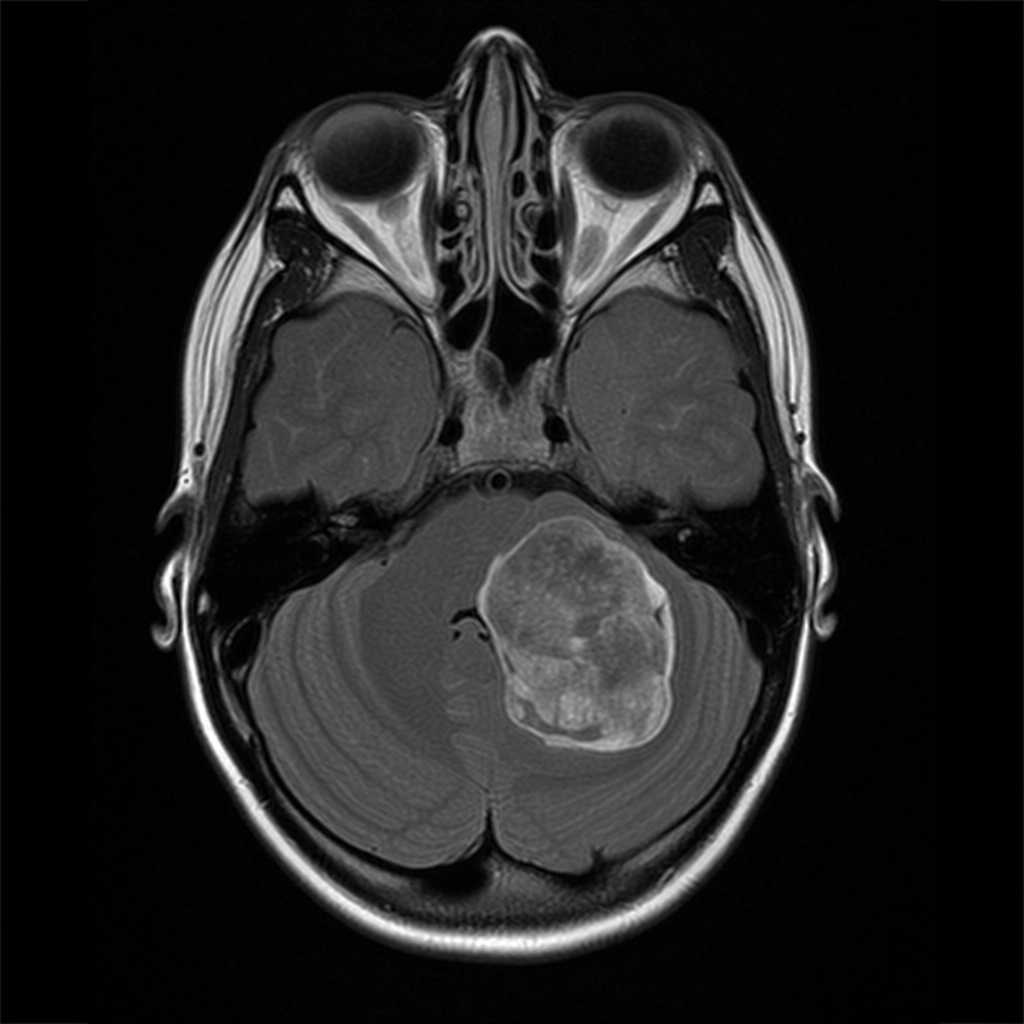
True statement regarding brain tumors in children is:
Commonest presentation of Wilms' tumour is -
All of the following are true about neuroblastoma except -
A 2 year old child with Beckwith-Wiedemann syndrome is brought to you with history of an abdominal mass in the right hypochondrium. It was also associated with thrombocytosis and anemia. A CT showed enlarged pulmonary hilar nodes. What is the most probable diagnosis? Note that viral markers are -ve in this patient.
Most common tumor in children is -
Most common urinary bladder tumour in childhood is?
A child diagnosed with acute lymphocytic leukemia (ALL) is under chemotherapy. Which of the following is a BAD prognostic sign of ALL?
A 2 year old child is seen on a routine visit in the pediatric clinic. Abdominal examination demonstrates a palpable, non-tender mass on the left side of the abdomen. The mother had no idea the mass was present and the pediatrician did not note the presence of the mass at the child's 18-month's visit for immunisation. Physical examination is otherwise unremarkable. If a CT guided biopsy of the mass were performed, which of the following histological patterns would be most suggestive of the likely diagnosis?
Alpha-fetoprotein is elevated in what percentage of children with hepatoblastoma?
Explanation: ***Arthrogryposis multiplex congenita*** - This condition involves **multiple joint contractures** at birth and is not typically associated with an increased risk of **Wilms tumor**. Its pathogenesis differs significantly from the genetic mutations linked to Wilms tumor. - While other congenital anomalies can be linked to Wilms tumor, arthrogryposis is not one of the established **syndromic associations**. *Hemihypertrophy* - **Hemihypertrophy**, an overgrowth of one side of the body, is a well-known risk factor for **Wilms tumor**, often seen in syndromes like Beckwith-Wiedemann syndrome. - It suggests underlying genetic aberrations that can predispose to neoplastic growth, including renal tumors. *Aniridia* - **Aniridia**, the complete or partial absence of the iris, is strongly associated with **WAGR syndrome** (Wilms tumor, Aniridia, Genitourinary anomalies, and intellectual disability), increasing the risk of Wilms tumor. - This association is due to deletions or mutations in the **WT1 gene**, located on chromosome 11p13. *Male pseudohermaphrodite* - **Male pseudohermaphroditism**, particularly those involving abnormal genitourinary development (such as Denys-Drash syndrome or Frasier syndrome), is linked to mutations in the **WT1 gene** and carries a significant risk of developing **Wilms tumor**. - These conditions often present with renal abnormalities and are part of the spectrum of disorders associated with Wilms tumor.
Explanation: ***Mostly is infratentorial*** - Brain tumors in children are **predominantly infratentorial**, meaning they occur in the cerebellum, brainstem, and fourth ventricle. - This anatomical distribution accounts for many common pediatric brain tumors like **medulloblastoma** and **pilocytic astrocytoma**. *Is the most common tumor in children* - **Leukemia** is the most common cancer in children, not brain tumors. - Brain tumors are the **second most common** childhood cancer, after leukemia. *Hydrocephalus is rare* - **Hydrocephalus is common** in pediatric brain tumors, especially those in the posterior fossa, due to obstruction of CSF flow. - Tumors located near the **ventricles** or in the posterior fossa frequently block CSF pathways, leading to hydrocephalus and increased intracranial pressure. *Papilledema is rare* - **Papilledema is common** in children with brain tumors, as it is a sign of increased intracranial pressure. - The elevated pressure within the cranium due to tumor growth or hydrocephalus can compress the **optic nerve sheath**, impairing axoplasmic flow and causing optic disc swelling.
Explanation: ***Abdominal lump*** - A **palpable abdominal mass** is the most common presenting sign, often discovered incidentally by a parent during bathing or dressing. - This mass is typically **firm, smooth, and does not cross the midline**. *Hematuria* - While **hematuria** can occur in Wilms' tumor, it is a less frequent presentation compared to an abdominal lump. - It usually indicates involvement of the **renal collecting system** or rupture of the tumor. *Hydronephrosis* - **Hydronephrosis** is the swelling of a kidney due to a build-up of urine and is not a direct presentation of Wilms' tumor itself, though it can occasionally be a secondary radiological finding if the tumor obstructs urinary outflow. - It is more commonly associated with **ureteral obstruction** from other causes. *Pain in abdomen.* - Abdominal pain may occur, especially if the tumor is large, but it is typically a **secondary symptom** and not the primary presenting complaint. - Pain is often due to rapid tumor growth, hemorrhage within the tumor, or compression of surrounding structures.
Explanation: ***Cafe au lait spots*** - **Neuroblastoma** is a **neuroendocrine tumor** derived from **neural crest cells**, often leading to symptoms related to compression or metastasis, but not typically presenting with **cafe au lait spots**. - **Cafe au lait spots** are characteristic of **neurofibromatosis type 1**, a genetic disorder caused by mutations in the **neurofibromin gene (NF1)**, which is distinct from neuroblastoma. *Opsomyoclonus* - **Opsoclonus-myoclonus syndrome (OMS)**, an **autoimmune paraneoplastic syndrome**, is a known presentation of **neuroblastoma**, especially in younger children. - This syndrome is characterized by **rapid, irregular eye movements (opsoclonus)** and **sudden, jerky muscle contractions (myoclonus)**. *Bone pain* - **Neuroblastoma** commonly **metastasizes to bone** and **bone marrow**, particularly in advanced stages, causing significant **bone pain**. - The presence of bone pain often indicates widespread disease and can be a presenting symptom. *Diarrhea* - **Neuroblastoma** can secrete **vasoactive intestinal peptide (VIP)**, leading to **severe, watery diarrhea**. - This syndrome is known as **VIPoma syndrome** and is a potential paraneoplastic manifestation of neuroblastoma, particularly abdominal tumors.
Explanation: ***Hepatoblastoma*** - The presence of an abdominal mass in the right hypochondrium in a 2-year-old child with **Beckwith-Wiedemann syndrome** strongly points to hepatoblastoma. This genetic syndrome is a known risk factor, and **thrombocytosis** and **anemia** are common paraneoplastic manifestations. - While pulmonary hilar nodes are not typical for hepatoblastoma metastasis, this option best fits the constellation of symptoms including syndrome association, age, and hematological abnormalities when considering liver tumors in children. *Fibrolamellar Ca* - **Fibrolamellar carcinoma** is a rare variant of hepatocellular carcinoma that typically affects **adolescents and young adults**, not children as young as 2 years old. - It is not typically associated with Beckwith-Wiedemann syndrome, and the presentation of thrombocytosis and anemia is less characteristic. *Hepatic hemangioma* - **Hepatic hemangiomas** are benign vascular tumors and are often asymptomatic or cause symptoms due to their mass effect, such as hepatomegaly. - They are not associated with Beckwith-Wiedemann syndrome, nor do they typically cause thrombocytosis or anemia, or enlarged hilar nodes. *Hepatocellular Ca* - **Hepatocellular carcinoma** in children is generally associated with **chronic liver disease** or **viral hepatitis**, which is excluded by negative viral markers. - While possible in older children, it is less common than hepatoblastoma in a 2-year-old, especially with the specific presentation of Beckwith-Wiedemann syndrome and the hematological abnormalities.
Explanation: ***Leukemia*** - **Leukemia** is the most common form of cancer in children, accounting for approximately 30% of all childhood cancers. - Among leukemias, **acute lymphoblastic leukemia (ALL)** is the most prevalent type in pediatric patients. *Wilm's tumor* - **Wilms' tumor** (nephroblastoma) is a kidney cancer and is one of the most common solid tumors in children. - While significant, it is less common overall than leukemia. *Lymphoma* - **Lymphoma** is a cancer of the lymphatic system and is the third most common type of cancer in children. - It includes Hodgkin and non-Hodgkin lymphomas. *Neuroblastoma* - **Neuroblastoma** is a cancer that develops from immature nerve cells found in several areas of the body, often in the adrenal glands. - It is one of the most common cancers in infants but is less common overall in the pediatric population compared to leukemia.
Explanation: ***Rhabdomyosarcoma*** - **Rhabdomyosarcoma (RMS)** is the most common soft tissue sarcoma in children and adolescents, and the **most common primary malignant tumor of the urinary bladder in childhood**. - It arises from embryonic mesenchymal cells that have the potential to differentiate into **striated muscle cells**, which are normally not found in the adult bladder. *Squamous cell carcinoma* - **Squamous cell carcinoma** of the bladder is typically associated with chronic irritation, such as from **schistosomiasis** or long-term catheter use, and is rare in childhood. - It accounts for a very **small percentage of bladder cancers globally** and is generally seen in older populations. *Transitional cell carcinoma* - **Transitional cell carcinoma (TCC)**, also known as urothelial carcinoma, is the **most common type of bladder cancer in adults** but is exceedingly rare in children. - When it does occur in children, it often presents as a **low-grade papillary tumor** with a good prognosis, distinct from the aggressive nature of RMS. *Haemangioma* - **Haemangiomas** are benign vascular tumors that can occur in various locations, including the bladder. - While they can cause symptoms like haematuria, they are **benign and not malignant tumors**, and thus not considered the "most common urinary bladder tumour" in the context of malignancies in childhood.
Explanation: ***Age above 10 years*** - **Age older than 10 years** is considered a **poor prognostic indicator** in children with ALL. - This age group is associated with a higher likelihood of refractory disease and relapse. *Caucasians* - **Caucasian ethnicity** is generally associated with a **better prognosis** in ALL compared to some other ethnic groups. - While ethnic disparities exist, being Caucasian is not considered a bad prognostic sign. *WBC count less than 50000* - A **WBC count less than 50,000/µL** at diagnosis is typically considered a **favorable prognostic indicator** in ALL. - **Hyperleukocytosis** (WBC count **greater than 50,000/µL**) at presentation is associated with a higher tumor burden and worse outcome. *Females* - **Female gender** is generally associated with a **better prognosis** in ALL compared to males. - While overall survival rates are high for both sexes, male gender is often considered a slightly less favorable prognostic factor.
Explanation: ***Triphasic pattern with tubule formation, spindle cells, and blastemal elements*** - The presence of a **palpable, non-tender abdominal mass** in a 2-year-old, previously undetected, is highly suggestive of **Wilms tumor (nephroblastoma)**. - Wilms tumor characteristically exhibits a **triphasic histological pattern** consisting of **blastemal**, **stromal (spindle cells)**, and **epithelial (tubule formation)** elements. *Invasive papillary lesions with delicate connective tissue stalk covered with epithelium resembling that lining the bladder.* - This description typically refers to **papillary urothelial carcinoma**, a tumor of the **bladder or urinary tract**, which is rarely seen in young children and presents with hematuria, not primarily an abdominal mass. - The absence of urinary symptoms and the age of the patient make this an unlikely diagnosis for an abdominal mass. *Cords of clear cells with rounded or polygonal shape and abundant clear cytoplasm* - This histological pattern is characteristic of **clear cell renal carcinoma**, an adult kidney malignancy, not a common pediatric abdominal tumor. - While clear cell renal cell carcinoma can present as an abdominal mass, it is exceptionally rare in a 2-year-old child. *Small dark cells embedded in a finely fibrillar matrix with formation of numerous rosettes* - This description is highly suggestive of **neuroblastoma**, a small round blue cell tumor that arises from neural crest cells (e.g., adrenal gland or sympathetic chain). - While **neuroblastoma** is the second most common abdominal mass in children after Wilms tumor, it typically presents with different histological features and may be associated with systemic symptoms like weight loss, fever, or bone pain. - The **triphasic pattern** described in option A is more specific for Wilms tumor.
Explanation: ***90%*** - Elevated **alpha-fetoprotein (AFP)** is a hallmark of hepatoblastoma, found in approximately **90%** of children with the disease. - AFP levels are used for both **diagnosis** and monitoring treatment response in hepatoblastoma. *10%* - This percentage is too low; a vast majority of children with hepatoblastoma present with significantly elevated **AFP**. - Only a very small minority of hepatoblastoma cases (around 10%) are **AFP-negative**. *100%* - While AFP elevation is very common, it is **not universally present** in all cases of hepatoblastoma. - Approximately **10%** of hepatoblastoma cases do not show elevated AFP. *50%* - This percentage is significantly **underestimated** as AFP elevation is a dominant feature in most hepatoblastoma presentations. - Missing the diagnosis in half the cases based on AFP alone would be a **diagnostic challenge**.
Leukemias
Practice Questions
Lymphomas
Practice Questions
CNS Tumors
Practice Questions
Neuroblastoma
Practice Questions
Wilms Tumor
Practice Questions
Rhabdomyosarcoma
Practice Questions
Bone Tumors
Practice Questions
Retinoblastoma
Practice Questions
Histiocytosis Syndromes
Practice Questions
Principles of Pediatric Chemotherapy
Practice Questions
Hematopoietic Stem Cell Transplantation
Practice Questions
Late Effects of Cancer Treatment
Practice Questions
Get full access to all questions, explanations, and performance tracking.
Start For Free