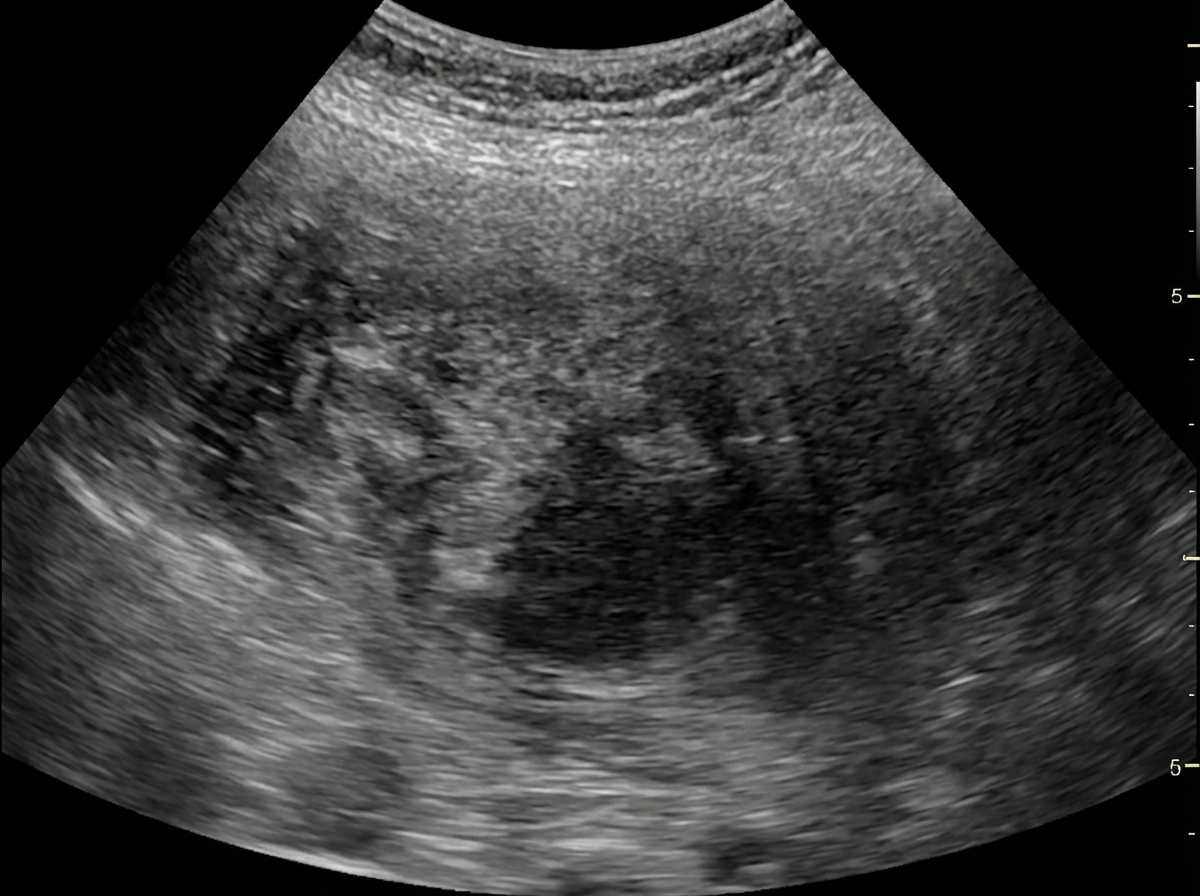
All of the following are causes of vasogenic-type cerebral edema except which of the following?
A Patient falls down often with behavioral change and enuresis. What is the condition associated with him?
What is the most common cause of hydrocephalus in children?
A 50-year-old man presents with persistent headaches, nausea, and vomiting. CT scan reveals a mass compressing the third ventricle. What is the most likely cause of his symptoms?
A 2-week-old female infant has a head circumference of 40 cm, which is greater than the 98th percentile, along with a large, tense fontanelle and downward deviation of the eyes. She has been vomiting her formula and is irritable. Which of the following is the least likely cause of her symptoms?
A 10 year old child presented with headache, vomiting, gait instability and diplopia. On examination he had papilledema and gait ataxia. The most probable diagnosis is –
In a patient with a metallic foreign body in the eye, which investigation should NOT be done?
A 5-day-old infant is diagnosed with a non-communicating hydrocephalus. Which of the following is most likely to lead to such a condition?
Meningomyelocele with progressive hydrocephalus is commonly seen in
In a small child diagnosed with H. influenzae meningitis, what investigation must be done before discharging him from the hospital?
Explanation: ***Hydrocephalus*** - Hydrocephalus causes interstitial edema, not vasogenic edema, due to increased **intraventricular pressure** leading to CSF extravasation into the periventricular white matter. - This is characterized by fluid accumulation in the ventricles due to impaired **CSF flow or absorption**, rather than blood-brain barrier disruption [3]. *Tumors* - **Brain tumors** are a common cause of vasogenic edema because they disrupt the **blood-brain barrier (BBB)**, allowing plasma proteins and fluid to leak into the extracellular space [4]. - The abnormal vasculature associated with tumors is often fenestrated, contributing to increased vascular permeability and **extracellular fluid accumulation**. *Cerebral hemorrhage* - Hemorrhage causes vasogenic edema by disrupting the **blood-brain barrier**, allowing blood components and fluid to leak into the surrounding brain tissue [1]. - The breakdown products of blood, such as **thrombin** and **hemoglobin**, can also directly damage endothelial cells and increase vascular permeability. *Infections* - Infections like **abscesses** or **meningitis** lead to vasogenic edema through inflammation, which increases the permeability of the **blood-brain barrier** [2]. - Inflammatory mediators and **bacterial toxins** can damage endothelial cells, allowing fluid and proteins to extravasate into the extracellular space. **References:** [1] Cross SS. Underwood's Pathology: A Clinical Approach. 6th ed. Common Clinical Manifestations Of Central And Peripheral Nervous System Disease, pp. 703-704. [2] Kumar V, Abbas AK, et al.. Robbins and Cotran Pathologic Basis of Disease. 9th ed. The Central Nervous System, pp. 1275-1276. [3] Kumar V, Abbas AK, et al.. Robbins and Cotran Pathologic Basis of Disease. 9th ed. Peripheral Nerves and Skeletal Muscles, pp. 1256-1257. [4] Cross SS. Underwood's Pathology: A Clinical Approach. 6th ed. Common Clinical Manifestations Of Central And Peripheral Nervous System Disease, pp. 699-700.
Explanation: ***Normal pressure hydrocephalus (NPH)*** - NPH is characterized by the classic triad of symptoms: **gait disturbance** (leading to falls), **dementia/behavioral changes**, and **urinary incontinence** (enuresis) [1]. - These symptoms arise from the accumulation of cerebrospinal fluid (CSF) in the brain's ventricles without a corresponding increase in intracranial pressure [2]. *Parkinson's disease (PD)* - While PD causes **gait instability** and falls, its primary symptoms include **bradykinesia**, **rigidity**, and **resting tremor**, which are not mentioned. - Behavioral changes can occur later in the disease, but **enuresis** is not a hallmark symptom. *Alzheimer's disease (AD)* - AD primarily presents with **progressive memory loss** and cognitive decline, not gait disturbances or enuresis as early or prominent features. - Falls usually occur much later due to advanced cognitive impairment and not as an initial triad component. *Frontotemporal dementia (FTD)* - FTD is characterized by early and prominent **behavioral and personality changes** or language difficulties. - While falls can occur due to executive dysfunction, **gait disturbance** and **enuresis** as part of a triad are not typical presenting features.
Explanation: ***Congenital aqueductal stenosis*** - This is the **most common cause of hydrocephalus in children**, accounting for the majority of congenital hydrocephalus cases. - The **cerebral aqueduct** (connecting the third and fourth ventricles) is narrowed or blocked, preventing normal CSF flow. - Results in **obstructive hydrocephalus** with progressive ventricular enlargement. - Clinical presentation varies from neonatal period to childhood depending on severity. *Post inflammatory obstruction* - An important cause of **acquired hydrocephalus**, typically following meningitis or intraventricular hemorrhage. - Inflammation leads to **fibrosis and scarring** of CSF pathways, particularly affecting the arachnoid villi and basal cisterns. - More common in developing countries with higher rates of CNS infections. - While significant, it is not the overall most common cause in children. *Brain tumour* - Tumors can cause hydrocephalus by **obstructing CSF pathways**, particularly posterior fossa tumors blocking the fourth ventricle. - Common tumor types include medulloblastoma, ependymoma, and cerebellar astrocytoma. - Represents a **less common cause** compared to congenital malformations. *Perinatal injury* - Includes **intraventricular hemorrhage (IVH)** in premature infants and birth trauma. - IVH can lead to post-hemorrhagic hydrocephalus through blood clot obstruction or subsequent inflammation. - More relevant in **premature and low birth weight infants**, but not the most common cause overall.
Explanation: ***Hydrocephalus*** - A mass compressing the **third ventricle** obstructs the flow of **cerebrospinal fluid (CSF)**, leading to its accumulation [1] and causing **hydrocephalus**. [1] - The classic symptoms of increased **intracranial pressure** due to hydrocephalus include persistent headaches, nausea, and vomiting. [1] *Migraine* - While migraines cause severe headaches, they are typically not associated with a **mass effect** or persistent nausea and vomiting directly caused by **ventricular compression**. - **Neurological imaging** in migraine is usually normal, differentiating it from a structural lesion. [1] *Stroke* - Stroke symptoms are generally characterized by focal neurological deficits such as sudden weakness, sensory loss, or speech difficulties, often without a preceding history of **persistent headache** and **nausea** from a growing mass. [1] - While strokes can cause headaches, a mass compressing the third ventricle with associated symptoms points away from an **ischemic** or **hemorrhagic** event as the primary cause. *Meningitis* - Meningitis involves inflammation of the **meninges**, presenting with fever, neck stiffness, and altered mental status, and is typically diagnosed via **CSF analysis**. - A **mass compressing the third ventricle** is not a feature of meningitis, which is an infectious or inflammatory process rather than a space-occupying lesion.
Explanation: ***Intraventricular hemorrhage (Least Likely)*** - **Intraventricular hemorrhage (IVH)** typically occurs in **premature infants** in the **immediate perinatal period** (first few days of life), particularly in those <32 weeks gestation or <1500g birth weight. - If severe enough to cause these pronounced symptoms (macrocephaly, tense fontanelle, sunset eyes), it would have been **diagnosed much earlier** than 2 weeks of age through clinical deterioration and routine cranial ultrasound screening. - While post-hemorrhagic hydrocephalus can develop, the **acute presentation at 2 weeks** in a previously asymptomatic infant makes undiagnosed IVH the **least likely** cause among the options. *Aqueductal stenosis (More Likely)* - **Aqueductal stenosis** is the **most common cause of congenital hydrocephalus**, accounting for approximately 20% of cases. - Obstruction of CSF flow through the cerebral aqueduct leads to progressive ventricular dilatation. - Classic presentation includes **macrocephaly, tense fontanelle, and sunset eyes** (downward gaze deviation), typically becoming evident in the **first few weeks to months** of life as the ventricles progressively enlarge. *Meningitis (More Likely)* - **Neonatal meningitis** can present **acutely within the first 2-4 weeks** of life with nonspecific symptoms including irritability, vomiting, and poor feeding. - Inflammation causes **communicating hydrocephalus** due to impaired CSF absorption at the arachnoid granulations or obstruction from inflammatory exudate. - The **tense fontanelle** is a classic sign of increased intracranial pressure in meningitis. *Brain tumor (More Likely)* - While **rare in neonates**, congenital brain tumors can obstruct CSF pathways, causing **obstructive hydrocephalus**. - Tumors such as **choroid plexus papilloma** or **teratoma** can present in the neonatal period with signs of increased intracranial pressure. - Progressive growth can lead to **acute presentation** at 2 weeks with rapidly evolving symptoms.
Explanation: ***Midline posterior fossa tumour*** - The combination of **headache, vomiting, papilledema (signs of increased intracranial pressure)**, **gait instability, and ataxia** strongly suggests a **midline posterior fossa tumor** in a child. These tumors often obstruct CSF flow, leading to hydrocephalus and cerebellar symptoms. - Common tumors in this location in children include **medulloblastoma** and **pilocytic astrocytoma**, which frequently present with these symptoms due to their proximity to the **fourth ventricle** and **cerebellum**. *Suprasellar tumour* - **Suprasellar tumors** typically present with **visual field deficits** (e.g., bitemporal hemianopia) due to compression of the optic chiasm, and/or **endocrine dysfunction** (e.g., growth delay, diabetes insipidus). - While they can cause hydrocephalus and increased intracranial pressure if large, the prominent **gait instability and ataxia** point away from a primary suprasellar lesion as the most likely cause. *Hydrocephalus* - **Hydrocephalus** itself explains the **increased intracranial pressure (headache, vomiting, papilledema)** and sometimes **gait instability (ataxia)**. - However, hydrocephalus is usually a *consequence* of an underlying obstruction, and in a child presenting acutely with cerebellar dysfunction, a **tumor blocking CSF flow in the posterior fossa** is the most probable underlying cause, not hydrocephalus as the primary diagnosis. *Brain stem tumour* - **Brain stem tumors** typically cause **cranial nerve deficits** (e.g., facial weakness, dysphagia), **long tract signs (hemiparesis)**, and often **multiple types of ataxia**, alongside signs of increased intracranial pressure if they obstruct CSF flow. - While gait instability and diplopia can occur, the overall picture of prominent **gait ataxia** and papilledema without other focal cranial nerve signs makes a primary midline posterior fossa tumor compressing the cerebellum and fourth ventricle more likely.
Explanation: ***MRI*** - **Magnetic Resonance Imaging (MRI)** is contraindicated in patients with suspected **metallic foreign bodies** in the eye. - The powerful magnetic fields of an MRI can cause the metallic object to move, potentially leading to further **tissue damage** or even loss of vision. *X-ray* - **X-rays** are often the initial investigation of choice for detecting **radio-opaque foreign bodies** within the eye. - They can effectively localize larger metallic objects and are readily available in most emergency settings. *CT* - **Computed Tomography (CT)** scans provide detailed cross-sectional images and are excellent for precisely localizing **intraocular foreign bodies**, especially smaller ones. - CT can differentiate between metallic and non-metallic objects and assess for associated injuries like orbital fractures. *USG* - **Ultrasound (USG)** of the eye can be useful for detecting **intraocular foreign bodies**, especially if they are non-metallic or located in the posterior segment. - It can also assess for associated complications such as **retinal detachment** or vitreous hemorrhage.
Explanation: ***Obstruction in the circulation of the cerebrospinal fluid*** - **Non-communicating hydrocephalus**, by definition, is caused by an **obstruction within the ventricular system** that prevents CSF from reaching the subarachnoid space. - In a newborn, common causes of such obstruction include **aqueductal stenosis** or malformations like **Dandy-Walker syndrome**. *Disturbances in the resorption of cerebrospinal fluid* - This typically leads to **communicating hydrocephalus**, where CSF can flow freely within the ventricles but is not adequately absorbed into the venous system. - Examples include **arachnoid granulations** dysfunction or **post-meningitic scarring**. *Excess production of cerebrospinal fluid* - This is a very rare cause of hydrocephalus, usually associated with conditions like a **choroid plexus papilloma**. - This would lead to a **communicating hydrocephalus** as the obstruction is not within the ventricular system itself. *Increased size of the head* - An **increased head size (macrocephaly)** is a *symptom* or *sign* of hydrocephalus in an infant, not a cause. - The elevated intracranial pressure from the accumulated CSF leads to the expansion of the skull bones before the sutures fuse.
Explanation: ***Arnold Chiari II*** - **Arnold Chiari II malformation** is characterized by the downward displacement of the **cerebellar vermis and tonsils**, along with the brainstem, through the foramen magnum. - This malformation is almost always associated with **meningomyelocele** and often leads to **hydrocephalus** due to obstruction of CSF flow at the level of the foramen magnum and aqueductal stenosis. *Vein of Galen malformation* - A **Vein of Galen malformation** is an arteriovenous malformation located in the brain, which can cause high-output cardiac failure in neonates. - It can lead to hydrocephalus due to venous congestion but is not typically associated with **meningomyelocele**. *Dandy-Walker malformation* - **Dandy-Walker malformation** involves a hypoplastic or absent **cerebellar vermis**, cystic dilation of the fourth ventricle, and an enlarged posterior fossa. - While it often presents with hydrocephalus, it is not directly associated with **meningomyelocele**. *Choroid plexus papilloma* - A **Choroid plexus papilloma** is a rare, benign tumor that typically causes **hydrocephalus** due to **overproduction of CSF**. - It is not associated with **meningomyelocele** or Chiari malformations.
Explanation: ***Hearing assessment*** - **Sensorineural hearing loss** is a significant and common complication of *H. influenzae* meningitis, occurring in up to 30% of children. - Early detection through a **hearing assessment** is crucial for intervention and to minimize long-term developmental impact. *CT scan* - A CT scan is typically performed during the acute phase of meningitis to rule out complications like **hydrocephalus** or **brain abscess**, not routinely before discharge for long-term sequelae. - While it can identify structural abnormalities, it does not directly assess **auditory function**. *X-ray skull* - An X-ray of the skull has very limited utility in the diagnosis or follow-up of meningitis. - It does not provide information about brain pathology or potential **hearing damage**. *MRI* - MRI is a more sensitive imaging modality than CT for detecting subtle brain parenchymal changes and is sometimes used in complicated cases of meningitis. - However, like CT, it is not the primary investigation required to assess for **hearing loss** as a post-meningitis sequela before discharge.
Get full access to all questions, explanations, and performance tracking.
Start For Free