A 4-year-old girl with Henoch-Schönlein purpura presents with abdominal pain, palpable purpura, hematuria, and nephrotic-range proteinuria. Renal biopsy shows mesangial proliferative glomerulonephritis with IgA deposits. What is the most appropriate treatment plan for this patient?
A child presents with bedwetting at night, and urinalysis is normal. What is the next management step?
A 3-year-old child presents with a history of recurrent urinary tract infections, poor growth, and hypertension. What is the most likely diagnosis?
A 5-year-old boy presents with a history of nocturnal enuresis and recurrent urinary tract infections. What is the most appropriate initial investigation?
A 7-year-old child presents with hematuria, hypertension, and periorbital edema. Laboratory tests show elevated antistreptolysin O (ASO) titers. What is the most likely diagnosis?
In HSP gross hematuria is seen in what % of children?
An 8-year-old child presents with hematuria 5 days after a throat infection. What is the most likely diagnosis?
A 6-year-old boy came with a history of recurrent urinary tract infections. Imaging was done and showed retrograde flow of urine from the bladder into the ureters. What is the most likely diagnosis based on the imaging findings?
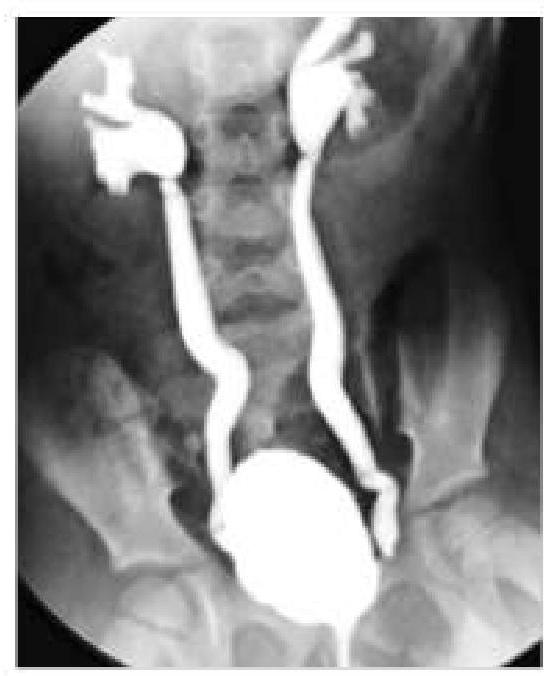
Which of the following is NOT typically associated with posterior urethral valves?
Which of the following statements about chronic pyelonephritis in children is true?
Explanation: ***High-dose corticosteroids + ACE inhibitors*** * **High-dose corticosteroids** are indicated for **severe Henoch-Schönlein purpura nephritis** characterized by nephrotic-range proteinuria and significant renal involvement, as they help reduce inflammation and proteinuria. * **ACE inhibitors** are crucial for mitigating **proteinuria** and providing **renoprotection**, especially in the presence of significant proteinuria, by reducing intraglomerular pressure. *Plasmapheresis + cyclophosphamide* * **Plasmapheresis** is generally reserved for rapidly progressive glomerulonephritis, severe cryoglobulinemic vasculitis, or anti-glomerular basement membrane disease, which is not described here. * **Cyclophosphamide** is a potent immunosuppressant typically used in severe, refractory cases or for specific types of vasculitis and lupus nephritis; it is not a first-line treatment for HSP nephritis. *Observation and supportive care* * **Observation and supportive care** are appropriate for mild cases of HSP, typically those with only skin symptoms or mild abdominal pain without significant renal involvement or proteinuria. * Given the presence of **nephrotic-range proteinuria and mesangial proliferative glomerulonephritis**, this patient requires more aggressive intervention to prevent long-term renal damage. *Rituximab + antihypertensive therapy* * **Rituximab**, a B-cell depleting agent, is used for certain autoimmune conditions like ANCA-associated vasculitis or refractory nephrotic syndrome, but it is not a standard first-line treatment for HSP nephritis. * While **antihypertensive therapy** is often necessary in renal disease, it is primarily for blood pressure control and does not address the underlying inflammatory process or nephrotic-range proteinuria as effectively as corticosteroids and ACE inhibitors.
Explanation: ***Behavioral therapy*** - **Behavioral therapy**, including **urotherapy** and **bedwetting alarms**, is the first-line treatment for **monosymptomatic nocturnal enuresis** (bedwetting without other lower urinary tract symptoms or underlying medical conditions). - These methods help children recognize and respond to a full bladder during sleep, and success rates can be high with consistent use. - Active behavioral intervention is recommended when a child presents for evaluation, particularly if the condition is affecting the child's self-esteem or quality of life. *Monitor and reassess* - While some cases of enuresis resolve spontaneously (especially in younger children), **active management** with behavioral interventions is the appropriate next step once a child presents for evaluation with **monosymptomatic nocturnal enuresis** after medical causes have been ruled out. - Simply observing without intervention is not considered optimal management when a family seeks help, as behavioral therapies are non-invasive, effective, and can prevent psychosocial impact. *Refer to urology* - **Referral to urology** is generally reserved for cases where there are **red flags** or associated symptoms (e.g., daytime wetting, urgency, frequency, dysuria, recurrent UTIs, abnormal physical examination), suggesting a more complex urological issue. - Since the urinalysis is normal and no other symptoms are mentioned, a urology referral is not the initial next step. *Start desmopressin* - **Desmopressin** is a **pharmacological treatment** often considered after behavioral and lifestyle interventions have been tried and failed, or in situations where a quick temporary response is needed (e.g., sleepovers, camps). - It is not the initial first-line management step for uncomplicated nocturnal enuresis, though it may be used in combination with behavioral therapy in persistent cases.
Explanation: ***Vesicoureteral reflux (VUR)*** - **Vesicoureteral reflux** is a common cause of recurrent **urinary tract infections (UTIs)** in children, leading to potential **renal scarring** and subsequent **hypertension** and **poor growth**. - The reflux of urine from the bladder back into the ureters can introduce bacteria into the kidneys, causing pyelonephritis and long-term renal damage. *Nephrotic syndrome* - Characterized by **massive proteinuria**, **hypoalbuminemia**, **edema**, and **hyperlipidemia**, which are not mentioned in the child's presentation. - While it can lead to complications such as acute kidney injury, **recurrent UTIs** and hypertension are not primary features of nephrotic syndrome. *Acute glomerulonephritis* - Typically presents with **hematuria**, **proteinuria**, **edema**, and **hypertension**, often following a streptococcal infection. - **Recurrent UTIs** and **poor growth** are not characteristic presenting symptoms of acute glomerulonephritis. *Polycystic kidney disease* - This is a genetic disorder characterized by the growth of numerous cysts in the kidneys, leading to **enlarged kidneys**, **hypertension**, and eventual kidney failure. - While it can manifest with hypertension, **recurrent UTIs** and **poor growth** are less specific primary indicators compared to VUR.
Explanation: ***Renal ultrasound*** - A **renal ultrasound** is the most appropriate initial investigation as it is non-invasive and can assess for structural abnormalities of the **kidneys** and **bladder**, such as hydronephrosis, renal scarring, or bladder wall thickening, which may contribute to **nocturnal enuresis** and **recurrent UTIs**. - It helps rule out conditions like **vesicoureteral reflux (VUR)** indirectly by showing **dilated ureters** or **renal pelvis**, guiding further, more invasive tests if needed. *Voiding cystourethrogram* - A **voiding cystourethrogram (VCUG)** is primarily used to diagnose and grade **vesicoureteral reflux (VUR)**, which is often associated with recurrent UTIs. - While important, it is typically performed *after* an ultrasound has identified potential abnormalities or if the clinical suspicion for VUR is high due to persistent UTIs despite antibiotic prophylaxis. *Intravenous pyelogram* - An **intravenous pyelogram (IVP)** uses contrast dye and X-rays to visualize the urinary tract, providing detailed anatomical and functional information. - However, it is an **invasive procedure** involving radiation and contrast exposure, and is generally reserved for more complex cases or when other less invasive imaging (like ultrasound) has not provided sufficient diagnostic information. *Urodynamic studies* - **Urodynamic studies** assess bladder function, including storage, emptying, and sphincteric control. - These are usually reserved for cases where **neuropathic bladder dysfunction** or complex functional voiding issues are suspected, especially after initial anatomical assessments have been completed.
Explanation: ***Post-Streptococcal Glomerulonephritis*** - This diagnosis is strongly supported by the triad of **hematuria**, **hypertension**, and **periorbital edema** in a child, coupled with **elevated ASO titers**, indicating a recent streptococcal infection. - The disease typically presents 1-3 weeks after a **pharyngeal** or **skin infection** with nephritogenic strains of Group A Streptococcus. *IgA Nephropathy* - While it can cause **hematuria**, it is often **macroscopic** and occurs **concurrently with or shortly after an upper respiratory infection**, unlike the delayed presentation associated with PSGN. - It would not typically present with significantly **elevated ASO titers** as a primary diagnostic feature. *Henoch-Schönlein Purpura* - Characterized by **palpable purpura**, **arthralgia**, and **abdominal pain**, in addition to potential renal involvement, which are not mentioned in this presentation. - Renal involvement in HSP is also an **IgA vasculitis**, and while it can cause hematuria, the classic systemic symptoms are missing. *Nephrotic Syndrome* - Characterized by **massive proteinuria**, **hypoalbuminemia**, and **severe edema**, often without significant hematuria or hypertension initially. - Elevated ASO titers are not a typical feature of nephrotic syndrome.
Explanation: ***10 - 20%*** - **Gross (macroscopic) hematuria** in **Henoch-Schönlein purpura (HSP)** occurs in approximately **10-20%** of children with the condition. - While **microscopic hematuria** is present in the majority (80-100%) of children with renal involvement, **visible blood in urine** is less common. - This represents a **significant but minority proportion** of HSP cases with renal manifestations. *5 - 10%* - This range represents the **lower estimates** for gross hematuria in HSP, which may be seen in some cohorts. - While some studies report rates in this range, the **consensus estimate** is slightly higher at 10-20%. *20 - 30%* - This percentage is **higher than typically reported** for gross hematuria in children with HSP. - This range may represent **overall renal involvement** (which can be 30-50%) rather than specifically **gross hematuria**. - **Microscopic hematuria** occurs at much higher rates than gross hematuria in HSP. *30 - 40%* - This percentage significantly **overestimates** the incidence of **gross hematuria** in HSP. - Such high rates might reflect **any urinary abnormality** or **microscopic hematuria**, not specifically visible blood in urine. - Gross hematuria remains a **minority finding** even among children with renal involvement in HSP.
Explanation: ***Post streptococcal glomerulonephritis*** - **Post-streptococcal glomerulonephritis (PSGN)** is the most common cause of acute glomerulonephritis in children aged 5-12 years. - Typically presents with **hematuria 1-2 weeks (7-21 days, average 10 days)** after a streptococcal pharyngitis or 3-6 weeks after skin infection. - **5 days post-throat infection** falls within the early range of the latent period for PSGN. - Clinical features include **gross hematuria ("cola-colored" urine)**, **edema**, **hypertension**, and **low C3 complement levels**. - The time interval and clinical presentation in this 8-year-old child are classic for PSGN. *IgA nephropathy* - IgA nephropathy presents with **synpharyngitic hematuria** - occurring **within 1-2 days** (24-48 hours) of an upper respiratory infection. - The **5-day interval** in this case is too long for typical IgA nephropathy presentation. - More common in older children and young adults, and shows normal C3 complement levels. *Nephrotic syndrome* - **Nephrotic syndrome** is characterized by **massive proteinuria (>40 mg/m²/hr)**, **hypoalbuminemia (<2.5 g/dL)**, **edema**, and **hyperlipidemia**. - The primary presentation is **edema and frothy urine**, not acute gross hematuria following infection. - Hematuria, if present, is typically microscopic rather than macroscopic. *Alport syndrome* - **Alport syndrome** is a hereditary nephritis caused by **collagen type IV defects**. - Presents with **persistent microscopic hematuria** from early childhood, often with **sensorineural hearing loss** and **ocular abnormalities**. - Does not have the acute temporal relationship with throat infection seen in this case.
Explanation: ***Vesicoureteric reflux (VUR)*** - VUR is defined by the **retrograde flow of urine from the bladder into the ureters**, which directly matches the imaging finding described - This is the **most common cause of recurrent UTIs in children**, as reflux allows bacteria to ascend from the bladder to the kidneys - Diagnosed by **voiding cystourethrogram (VCUG)**, which shows contrast refluxing into ureters during micturition - Graded from I to V based on severity; can lead to **reflux nephropathy** and renal scarring if untreated *Urinary bladder diverticulum* - An **outpouching of the bladder wall** through weakened muscle layers - May predispose to UTIs due to urinary stasis within the diverticulum, but does **not cause retrograde flow into ureters** - Imaging would show a **saccular projection** from the bladder, not ureteral filling *Vesicocolic fistula* - An **abnormal communication between bladder and colon**, typically from inflammatory bowel disease, malignancy, or trauma in adults (rare in children) - Presents with **pneumaturia (air in urine)**, fecaluria, and recurrent UTIs - Would not demonstrate **retrograde ureteral flow** on imaging *Urinary bladder hernia* - Protrusion of bladder through a **hernial defect** (inguinal, femoral, or abdominal wall) - Presents as a **reducible mass** that may increase with Valsalva - Does not cause **ureteral reflux** and has a distinct clinical and radiological presentation
Explanation: ***Painful stress incontinence*** - **Posterior urethral valves (PUV)** primarily affect male infants and lead to chronic, not acute, obstruction. **Stress incontinence** is rare and not a typical presenting symptom. It usually occurs in older women due to **pelvic floor weakness**. - While urinary symptoms are present, they are usually related to **poor bladder emptying** and **overflow incontinence**, not painful stress incontinence. *Palpable bladder* - **Posterior urethral valves (PUV)** cause outflow obstruction, leading to a chronically distended and often **palpable bladder** due to the accumulation of urine. - This is a common finding in male infants with PUV, indicating the severity of the obstruction and **incomplete bladder emptying**. *Hydronephrosis* - The obstruction caused by **posterior urethral valves** leads to backflow of urine, resulting in **dilation of the ureters** and **renal pelvis**, which is known as hydronephrosis. - **Bilateral hydronephrosis** is a common and serious consequence, often detected prenatally and indicating obstructive uropathy. *Recurrent UTI* - The chronic residual urine in the bladder due to **posterior urethral valves** provides a fertile ground for bacterial growth, leading to an increased risk of **recurrent urinary tract infections**. - **Incomplete bladder emptying** and **urinary stasis** are primary factors contributing to this susceptibility.
Explanation: ***Associated with renal scarring*** - **Chronic pyelonephritis** in children is definitively associated with **renal scarring**, which is a major cause of chronic kidney disease and hypertension in later life - Repeated inflammatory episodes from recurrent infections damage the renal parenchyma, resulting in **permanent fibrotic changes and cortical scarring** - This is the correct statement about chronic pyelonephritis *Not associated with Intrarenal reflux - INCORRECT* - This statement is FALSE - **Intrarenal reflux** (reflux of urine into the collecting ducts within the kidney) is a **significant factor** in the development of renal scarring in children with vesicoureteral reflux (VUR) - Intrarenal reflux allows infected urine to reach the renal parenchyma directly, initiating the inflammatory cascade that leads to pyelonephritis and scarring *Not more common in females than males - INCORRECT* - This statement is FALSE - **Urinary tract infections (UTIs)** and chronic pyelonephritis are **significantly more common in females** than males, particularly after infancy - This is due to anatomical differences including a **shorter urethra** in females, which facilitates bacterial ascent from the perineum to the bladder *Not associated with Ureteric reflux - INCORRECT* - This statement is FALSE - **Vesicoureteral reflux (VUR)** is the **primary predisposing factor** for chronic pyelonephritis and renal scarring in children - VUR allows the abnormal backward flow of urine from the bladder into the ureters and kidneys, facilitating bacterial ascent and recurrent pyelonephritis
Urinary Tract Infections
Practice Questions
Vesicoureteral Reflux
Practice Questions
Glomerulonephritis
Practice Questions
Nephrotic Syndrome
Practice Questions
Acute Kidney Injury
Practice Questions
Chronic Kidney Disease
Practice Questions
Renal Tubular Disorders
Practice Questions
Congenital Anomalies of the Kidney
Practice Questions
Hydronephrosis
Practice Questions
Hypertension in Children
Practice Questions
Hemolytic Uremic Syndrome
Practice Questions
Renal Replacement Therapy in Children
Practice Questions
Get full access to all questions, explanations, and performance tracking.
Start For Free