What is the frequency of renal involvement in Henoch-Schonlein Purpura (HSP)?
The final stage of congenital nephrotic syndrome occurs due to gene mutations affecting which of the following proteins?
A 20-year-old male presents with features of acute renal failure 5 days after an episode of diarrhea. Blood examination shows thrombocytopenia and Hb 10 gm%. What is the likely cause?
An 8-year-old boy presents with headaches, dizziness, and malaise approximately 2 weeks after a severe sore throat. His mother describes puffiness of his face and darkening of his urine. She also notes that her son is passing less urine and that he is becoming increasingly short of breath. On physical examination, there is anasarca, hypertension (190/130 mm Hg), and tachycardia. The urine is scanty and brownish red. Urinalysis shows 3+ proteinuria. Microscopic examination of the urine discloses numerous RBCs, as well as occasional granular and red cell casts. A renal biopsy is stained by direct immunofluorescence microscopy for complement C3. Which of the following is the most likely cause of acute postinfectious glomerulonephritis in the patient?
What condition carries a high risk of renal dysplasia?
Which of the following statements about nephrotic syndrome in a child are true or false? 1. Minimal change nephrotic syndrome accounts for 80-85% of cases. 2. Serum albumin level is typically below 2.5 g/dL. 3. Cyclosporine and azathioprine are the mainstay of therapy. 4. Pretreatment biopsy is performed in all cases.
Potter's Facies is seen with which of the following conditions?
Which of the following findings is considered proteinuria in a case of nephrotic syndrome?
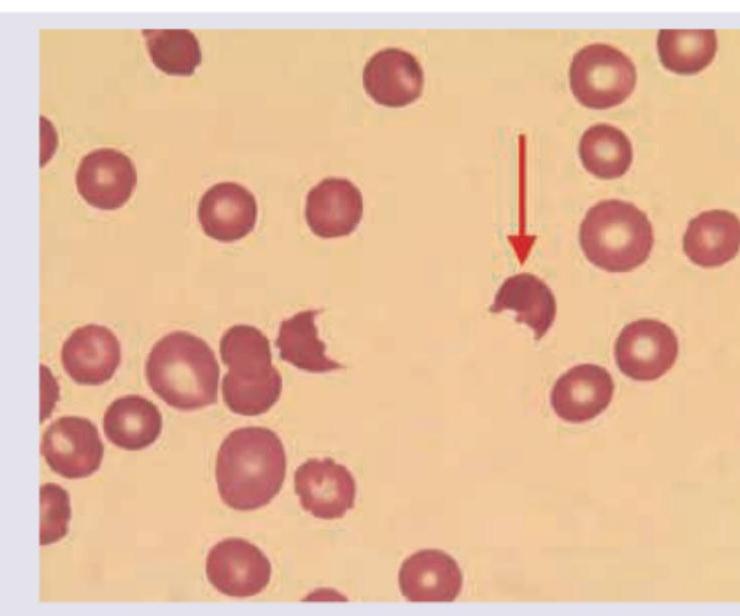
What is the characteristic finding in the peripheral smear of a patient with hemolytic uremic syndrome?
What is the most common cause of rapidly progressive glomerulonephritis in children?
Explanation: **Explanation:** Henoch-Schönlein Purpura (HSP), now commonly referred to as **IgA Vasculitis**, is the most common systemic vasculitis in children. It is characterized by the classic tetrad of palpable purpura, arthritis/arthralgia, abdominal pain, and renal involvement. **1. Why 40-60% is correct:** Renal involvement (HSP Nephritis) occurs in approximately **40-60%** of affected children. While the cutaneous and gastrointestinal symptoms often appear first, renal manifestations—ranging from microscopic hematuria and proteinuria to nephritic or nephrotic syndrome—typically develop within 4 to 6 weeks of the initial presentation. It is the most serious complication of HSP, as it determines the long-term prognosis of the patient. **2. Analysis of Incorrect Options:** * **A (20-40%):** This underestimates the prevalence. While some mild cases may go undetected, prospective screening shows a higher incidence. * **B (>80%):** This is too high. While skin involvement is present in 100% of cases and GI symptoms in ~75%, renal involvement does not occur in the vast majority. * **D (10%):** This is significantly lower than the established clinical data for pediatric populations. **3. NEET-PG High-Yield Pearls:** * **Pathology:** Renal biopsy shows mesangial IgA deposition, identical to **IgA Nephropathy (Berger’s Disease)**; hence, HSP is often considered the systemic version of IgA Nephropathy. * **Prognosis:** Most children recover fully, but **1-5%** may progress to End-Stage Renal Disease (ESRD). * **Monitoring:** All patients with HSP require serial urinalysis and blood pressure monitoring for at least **6 months** post-diagnosis to catch late-onset nephritis. * **Treatment:** While steroids help with GI pain, they do not prevent the development of renal disease. Severe nephritis may require immunosuppressants (e.g., Cyclophosphamide).
Explanation: **Explanation:** The correct answer is **Nephrin (Option C)**. Congenital Nephrotic Syndrome of the Finnish type (CNF) is an autosomal recessive disorder caused by a mutation in the **NPHS1 gene**, which encodes the protein **Nephrin**. **Why Nephrin is correct:** Nephrin is a transmembrane protein located in the **slit diaphragm** between the foot processes of podocytes. It acts as a primary molecular sieve, preventing the leakage of albumin into the urine. In CNF, the absence or dysfunction of Nephrin leads to the complete breakdown of the filtration barrier, resulting in massive proteinuria starting in utero or shortly after birth. **Analysis of Incorrect Options:** * **Option A: Podocin:** Mutations in the **NPHS2 gene** encode Podocin. While this causes Steroid-Resistant Nephrotic Syndrome (SRNS), it typically presents in early childhood (Autosomal Recessive) rather than the classic congenital Finnish type. * **Option B: Alpha-actinin-4:** Mutations in the **ACTN4 gene** lead to an Autosomal Dominant form of Focal Segmental Glomerulosclerosis (FSGS), usually presenting in adolescence or adulthood. * **Option C: CD2-associated protein (CD2AP):** This protein anchors Nephrin to the actin cytoskeleton. Mutations are rare but are associated with sporadic cases of FSGS rather than classic congenital nephrotic syndrome. **NEET-PG High-Yield Pearls:** * **Finnish Type (NPHS1):** Presents with a large placenta (>25% of birth weight) and elevated maternal serum alpha-fetoprotein (MSAFP). * **Treatment:** CNF is resistant to steroids; definitive management requires bilateral nephrectomy followed by dialysis and renal transplantation. * **Denys-Drash Syndrome:** Characterized by early-onset nephrotic syndrome, Wilms tumor, and male pseudohermaphroditism (WT1 gene mutation).
Explanation: ### Explanation The clinical presentation of **Acute Renal Failure (ARF)**, **Thrombocytopenia**, and **Anemia** (Microangiopathic Hemolytic Anemia) following a diarrheal episode is the classic triad of **Hemolytic Uremic Syndrome (HUS)**. **1. Why Option A is correct:** HUS is primarily caused by **Shiga toxin-producing *E. coli* (STEC)**, most commonly serotype **O157:H7**. The toxin causes endothelial injury in the glomerular microvasculature, leading to platelet aggregation (thrombocytopenia) and the formation of microthrombi. As Red Blood Cells (RBCs) pass through these narrowed vessels, they are mechanically shredded, resulting in **schistocytes** (fragmented cells) and hemolytic anemia. The renal involvement manifests as oliguria and azotemia. **2. Why the other options are incorrect:** * **B. Hereditary Spherocytosis:** This is a congenital membrane defect causing extravascular hemolysis in the spleen. It presents with jaundice and splenomegaly, not acute renal failure or thrombocytopenia. * **C. Hemolytic Crises:** While this involves rapid RBC destruction (often seen in G6PD deficiency or Sickle Cell Disease), it does not typically present with the specific triad of thrombocytopenia and prodromal diarrhea leading to ARF. * **D. Chronic Glomerulonephritis:** This presents with a long-term history of hypertension, proteinuria, and shrunken kidneys, rather than an acute onset following a gastrointestinal infection. **Clinical Pearls for NEET-PG:** * **Most common cause of ARF in children:** HUS. * **Peripheral Smear:** Look for **Schistocytes** (helmet cells). * **D+ HUS (Typical):** Associated with diarrhea (STEC). * **D- HUS (Atypical):** Associated with complement dysregulation (Factor H deficiency). * **Management:** Primarily supportive (dialysis, transfusion). **Antibiotics and anti-motility agents are contraindicated** as they may increase toxin release.
Explanation: ### Explanation **Correct Answer: C. Group A beta-hemolytic streptococci** This patient presents with the classic triad of **Acute Post-Streptococcal Glomerulonephritis (PSGN)**: edema (anasarca), hypertension, and hematuria (smoky/cola-colored urine) following a latent period (2 weeks) after a sore throat. The underlying mechanism is a **Type III hypersensitivity reaction**. Nephritogenic strains of Group A beta-hemolytic streptococci (GAS) lead to the formation of immune complexes that deposit in the glomerular basement membrane. This triggers complement activation (C3), resulting in the characteristic "lumpy-bumpy" or granular appearance on immunofluorescence and "subepithelial humps" on electron microscopy. The presence of **Red Blood Cell (RBC) casts** is pathognomonic for glomerular bleeding. **Analysis of Incorrect Options:** * **A. Escherichia coli:** Commonly causes Urinary Tract Infections (UTIs) and Hemolytic Uremic Syndrome (HUS). While HUS presents with renal failure, it is characterized by microangiopathic hemolytic anemia and thrombocytopenia, not post-infectious nephritic syndrome. * **B. Epstein-Barr virus:** Can cause infectious mononucleosis and is occasionally associated with interstitial nephritis, but it is not a classic cause of post-infectious glomerulonephritis with RBC casts. * **D. Klebsiella sp.:** A common cause of gram-negative pneumonia and UTIs, but it does not trigger the immunologic glomerular injury seen in PSGN. **NEET-PG High-Yield Pearls:** * **Latent Period:** Typically 1–3 weeks after pharyngitis and 3–6 weeks after pyoderma (impetigo). * **Serology:** Low C3 levels are characteristic (normalize in 6–8 weeks). Anti-Streptolysin O (ASO) titers are elevated after pharyngitis, while Anti-DNase B is more sensitive for skin infections. * **Biopsy Indication:** Not usually required unless there is persistent low C3, rapidly progressive renal failure, or atypical presentation. * **Prognosis:** Excellent in children (>95% recover completely); more guarded in adults.
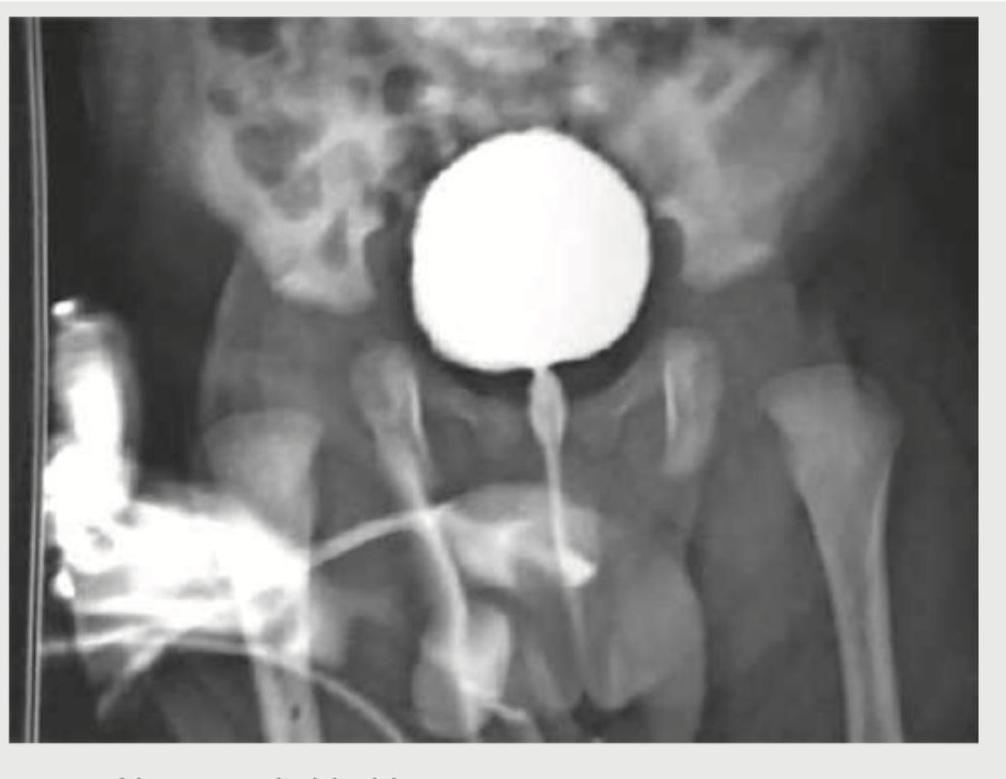
Explanation: **Explanation:** **Posterior Urethral Valve (PUV)** is the most common cause of lower urinary tract obstruction (LUTO) in male infants. The high risk of **renal dysplasia** in PUV is explained by the **"Pop-off Mechanism"** and the timing of the insult. During fetal development, the obstruction causes high intravesical pressure, which is transmitted back to the developing metanephros. This increased pressure disrupts normal nephrogenesis, leading to irreversible cystic renal dysplasia (Potter sequence in severe cases). The degree of dysplasia is often inversely proportional to the presence of "pop-off" valves (like a VUR or urinoma) which can sometimes decompress the system. **Analysis of Incorrect Options:** * **Bladder Exstrophy:** While this is a severe malformation of the genitourinary tract, the primary issue is a failure of the abdominal wall to close. It is not typically associated with high-pressure obstructive uropathy in utero, so renal dysplasia is rare at birth. * **Anorectal Malformation (ARM):** ARMs are frequently associated with renal anomalies (as part of the VACTERL association), most commonly renal agenesis or ectopia, but they do not physiologically cause renal dysplasia via obstruction. * **Neonatal Sepsis:** This is an acquired systemic infection. While it can lead to Acute Kidney Injury (AKI) due to hypoperfusion or nephrotoxicity, it does not cause structural renal dysplasia. **Clinical Pearls for NEET-PG:** * **Classic Triad of PUV:** Distended bladder, weak urinary stream, and a palpable renal mass (hydronephrosis). * **Diagnosis:** The gold standard investigation is **Voiding Cystourethrogram (VCUG)**, which shows a dilated posterior urethra and a "spinning top" bladder. * **Antenatal Ultrasound:** Look for the **"Keyhole sign"** (dilated bladder and posterior urethra). * **Prognosis:** Serum creatinine at the end of the first year of life is the best predictor of long-term renal function.
Explanation: **Explanation:** Nephrotic syndrome in children is characterized by the triad of massive proteinuria (>40 mg/m²/hr), hypoalbuminemia, and edema. 1. **Statement 1 is True:** Minimal Change Disease (MCD) is the most common histological subtype in children, accounting for approximately **80–85%** of cases. It typically presents between ages 1 and 7 and is highly steroid-responsive. 2. **Statement 2 is True:** Hypoalbuminemia is a hallmark of the condition. Diagnostic criteria generally define it as a serum albumin level **<2.5 g/dL**. This leads to decreased oncotic pressure and subsequent edema. 3. **Statement 3 is False:** The mainstay of therapy is **Corticosteroids (Prednisolone)**. Cyclosporine is a second-line agent used for steroid-resistant or dependent cases. Azathioprine has limited efficacy in MCD and is rarely used. 4. **Statement 4 is False:** Pretreatment biopsy is **not** indicated in most children. Since the majority have MCD, a trial of steroids is initiated empirically. Biopsy is reserved for "atypical" presentations (age <1 or >12 years, gross hematuria, hypertension, or low complement levels) and steroid resistance. **High-Yield Clinical Pearls for NEET-PG:** * **First-line treatment:** Prednisolone at 2 mg/kg/day (max 60 mg) for 6 weeks, followed by 1.5 mg/kg alternate days for 6 weeks. * **Most common complication:** Infections (specifically **Spontaneous Bacterial Peritonitis** caused by *S. pneumoniae*). * **Hyperlipidemia:** Common due to increased hepatic synthesis of lipoproteins triggered by low oncotic pressure. * **Relapse definition:** Urine albumin 3+ or 4+ for 3 consecutive days.
Explanation: **Explanation:** **Potter’s Facies** is a characteristic physical appearance of a newborn resulting from **oligohydramnios** (low amniotic fluid). The correct answer is **Bilateral renal agenesis**, as fetal urine is the primary contributor to amniotic fluid volume in the second and third trimesters. **The Underlying Concept: Potter Sequence** When kidneys fail to develop (bilateral renal agenesis) or are obstructed, the lack of fetal urine leads to severe oligohydramnios. This results in: 1. **Mechanical Compression:** The uterine walls press directly against the fetus, causing the "Potter’s Facies" (flattened nose, recessed chin, prominent epicanthal folds, and low-set, "pressed" ears). 2. **Pulmonary Hypoplasia:** Amniotic fluid is essential for lung development; its absence is the most common cause of death in these neonates. 3. **Limb Deformities:** Clubbed feet and joint contractures due to lack of space for movement. **Analysis of Incorrect Options:** * **Xanthogranulomatous pyelonephritis:** A chronic inflammatory process (often due to *Proteus* infection) resulting in a non-functioning kidney, but it is usually unilateral and occurs later in life. * **Hepatic fibrosis:** While associated with Autosomal Recessive Polycystic Kidney Disease (ARPKD)—which *can* cause Potter sequence—isolated hepatic fibrosis does not cause oligohydramnios. * **Kasabach-Merritt Syndrome:** A rare condition involving giant hemangiomas and consumptive coagulopathy (thrombocytopenia); it has no association with renal development. **High-Yield Pearls for NEET-PG:** * **Potter Type I:** ARPKD (Infantile type). * **Potter Type II:** Renal Agenesis (Multicystic dysplastic kidney). * **Potter Type III:** ADPKD (Adult type presenting in infancy). * **Potter Type IV:** Obstructive uropathy (e.g., Posterior Urethral Valves). * **Most common cause of death:** Pulmonary hypoplasia, not renal failure.
Explanation: Nephrotic syndrome in children is clinically defined by a triad of **massive proteinuria**, hypoalbuminemia (<3 g/dL), and edema. The diagnosis hinges on quantifying "nephrotic-range" proteinuria, which can be measured using three different methods, all of which are represented in the options. ### **Explanation of Options:** * **Option A (Timed Urine Collection):** The gold standard for defining nephrotic-range proteinuria in pediatrics is a protein excretion rate of **>40 mg/m²/hr**. This is calculated via a timed (usually 24-hour) urine collection. * **Option B (Spot Protein:Creatinine Ratio):** Since 24-hour collections are difficult in children, a random "spot" urine sample is often used. A **Protein:Creatinine ratio (uPCR) >2 mg/mg** (or >200 mg/mmol) correlates accurately with nephrotic-range proteinuria. * **Option C (Urine Dipstick):** This is the most common screening tool. A semi-quantitative reading of **3+ or 4+** (which corresponds to >300 mg/dL or 1000 mg/dL respectively) on a fresh morning sample is diagnostic of heavy proteinuria. Since all three criteria are valid methods to define nephrotic-range proteinuria, **Option D** is the correct answer. ### **High-Yield Clinical Pearls for NEET-PG:** * **Definition of Remission:** Urine dipstick 0 or Trace for 3 consecutive days. * **Definition of Relapse:** Urine dipstick ≥2+ for 3 consecutive days. * **Most Common Cause:** Minimal Change Disease (MCD) is the most common cause of nephrotic syndrome in children (80-85%). * **First-line Treatment:** Prednisolone (2 mg/kg/day) for 6 weeks, followed by 1.5 mg/kg on alternate days for 6 weeks. * **Key Complication:** Spontaneous Bacterial Peritonitis (most common organism: *Streptococcus pneumoniae*).
Explanation: **Explanation:** Hemolytic Uremic Syndrome (HUS) is characterized by the classic triad of **Microangiopathic Hemolytic Anemia (MAHA)**, thrombocytopenia, and acute kidney injury. The primary pathology involves endothelial injury, leading to the formation of microthrombi in small vessels (predominantly glomerular capillaries). As Red Blood Cells (RBCs) attempt to pass through these partially occluded vessels, they are mechanically shredded by fibrin strands. This process results in the hallmark finding on a peripheral smear: **Fragmented RBCs (Schistocytes/Helmet cells)** and **Burr cells (Echinocytes)**. **Analysis of Options:** * **Option D (Correct):** The combination of fragmented RBCs (schistocytes) and Burr cells is the diagnostic morphological feature of MAHA seen in HUS. * **Option A:** While Burr cells are seen in uremia (renal failure), they are not the *only* finding. In HUS, the mechanical fragmentation (schistocytes) is equally critical for diagnosis. * **Option B:** Anisopoikilocytosis refers to variation in size and shape; while present, it is a non-specific finding seen in many anemias (like Iron Deficiency) and is not diagnostic of HUS. * **Option C:** A leukemoid reaction (high WBC count) may occur in severe infections but is not a characteristic feature of the RBC morphology required to diagnose HUS. **High-Yield Clinical Pearls for NEET-PG:** * **Most common cause:** Shiga toxin-producing *E. coli* (STEC), specifically serotype **O157:H7**. * **Triad:** Microangiopathic Hemolytic Anemia + Thrombocytopenia + Acute Renal Failure. * **Lab findings:** Increased LDH, decreased haptoglobin, and a **Negative Direct Coombs Test** (distinguishes it from autoimmune hemolysis). * **Management:** Primarily supportive; **Antibiotics and Platelet transfusions are generally avoided** as they may worsen the toxin release and microthrombi formation.
Explanation: **Explanation:** **Rapidly Progressive Glomerulonephritis (RPGN)**, also known as crescentic glomerulonephritis, is a clinical syndrome characterized by a rapid decline in renal function (usually >50% loss of GFR within weeks to months) and the presence of crescents in more than 50% of glomeruli on biopsy. **Why Pauci-immune GN is correct:** In the pediatric population, RPGN is categorized into three types based on immunofluorescence (IF) findings. While Post-Streptococcal Glomerulonephritis (PSGN) is the most common cause of *acute* GN, when it comes to the specific clinical entity of **RPGN**, **Pauci-immune glomerulonephritis (Type III)**—associated with ANCA-associated vasculitides like Granulomatosis with Polyangiitis (GPA)—is the most common cause. It is characterized by a lack of significant immune complex or anti-GBM antibody deposits on IF. **Analysis of Incorrect Options:** * **A. Goodpasture Syndrome (Type I):** This is caused by anti-GBM antibodies. It is a classic cause of RPGN but is significantly rarer in children compared to adults. * **B. Membranous Glomerulonephritis:** This typically presents as Nephrotic Syndrome, not as a rapidly progressive nephritic picture. * **C. IgA Nephropathy:** While it is the most common primary glomerulonephritis worldwide, it usually presents as recurrent gross hematuria. It only rarely progresses to a crescentic (RPGN) phase. **High-Yield Clinical Pearls for NEET-PG:** * **Classification of RPGN:** * **Type I:** Anti-GBM (Linear IF) - e.g., Goodpasture. * **Type II:** Immune Complex (Granular IF) - e.g., PSGN, SLE, HSP. * **Type III:** Pauci-immune (Negative IF) - e.g., Wegener’s (GPA), Microscopic Polyangiitis. * **Histology:** The "Crescent" is formed by the proliferation of **parietal epithelial cells** and infiltration of monocytes/macrophages into Bowman’s space. * **Most common cause of RPGN overall (Children):** Pauci-immune GN. * **Most common cause of Acute Nephritic Syndrome (Children):** PSGN.
Urinary Tract Infections
Practice Questions
Vesicoureteral Reflux
Practice Questions
Glomerulonephritis
Practice Questions
Nephrotic Syndrome
Practice Questions
Acute Kidney Injury
Practice Questions
Chronic Kidney Disease
Practice Questions
Renal Tubular Disorders
Practice Questions
Congenital Anomalies of the Kidney
Practice Questions
Hydronephrosis
Practice Questions
Hypertension in Children
Practice Questions
Hemolytic Uremic Syndrome
Practice Questions
Renal Replacement Therapy in Children
Practice Questions
Get full access to all questions, explanations, and performance tracking.
Start For Free